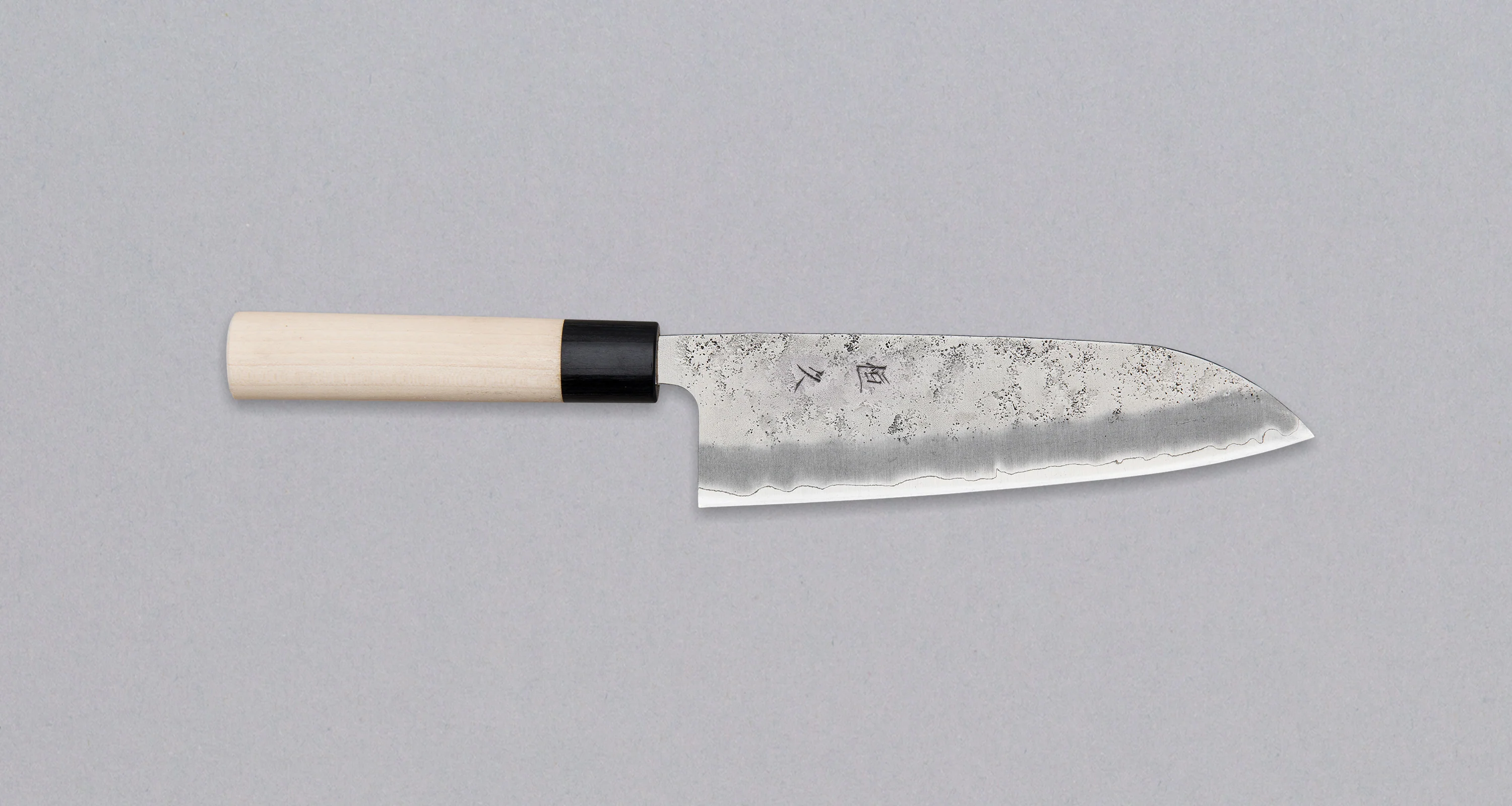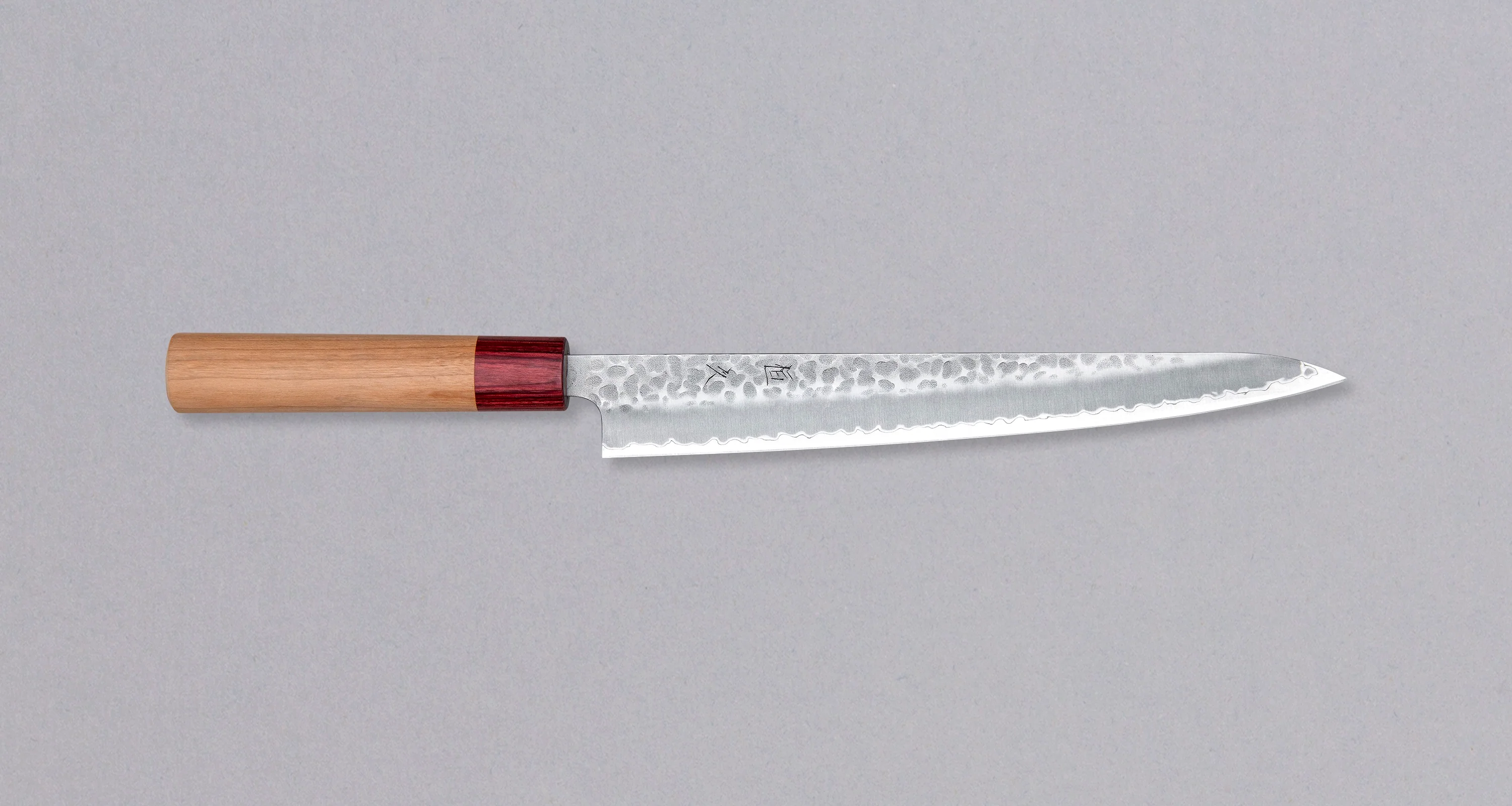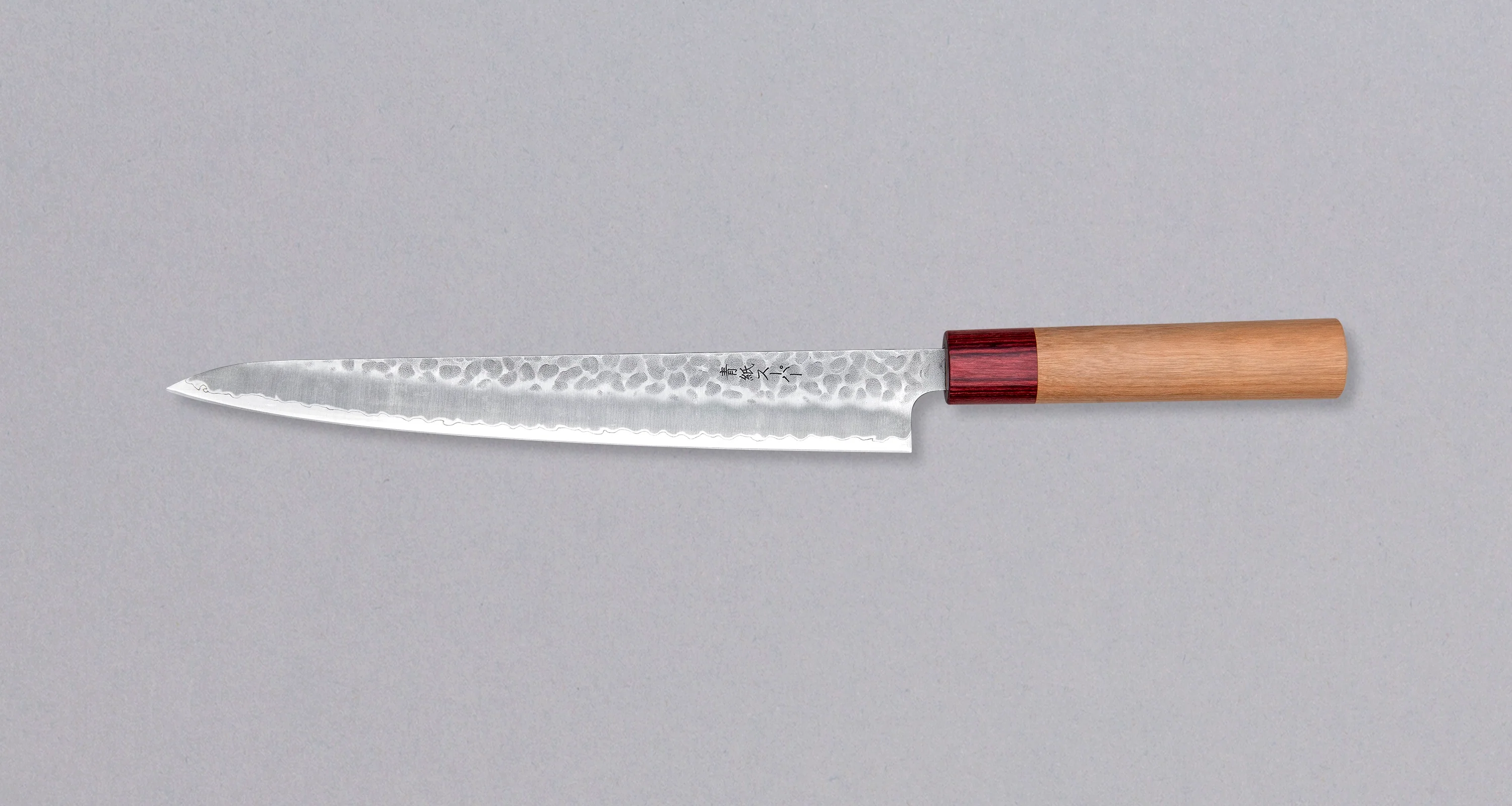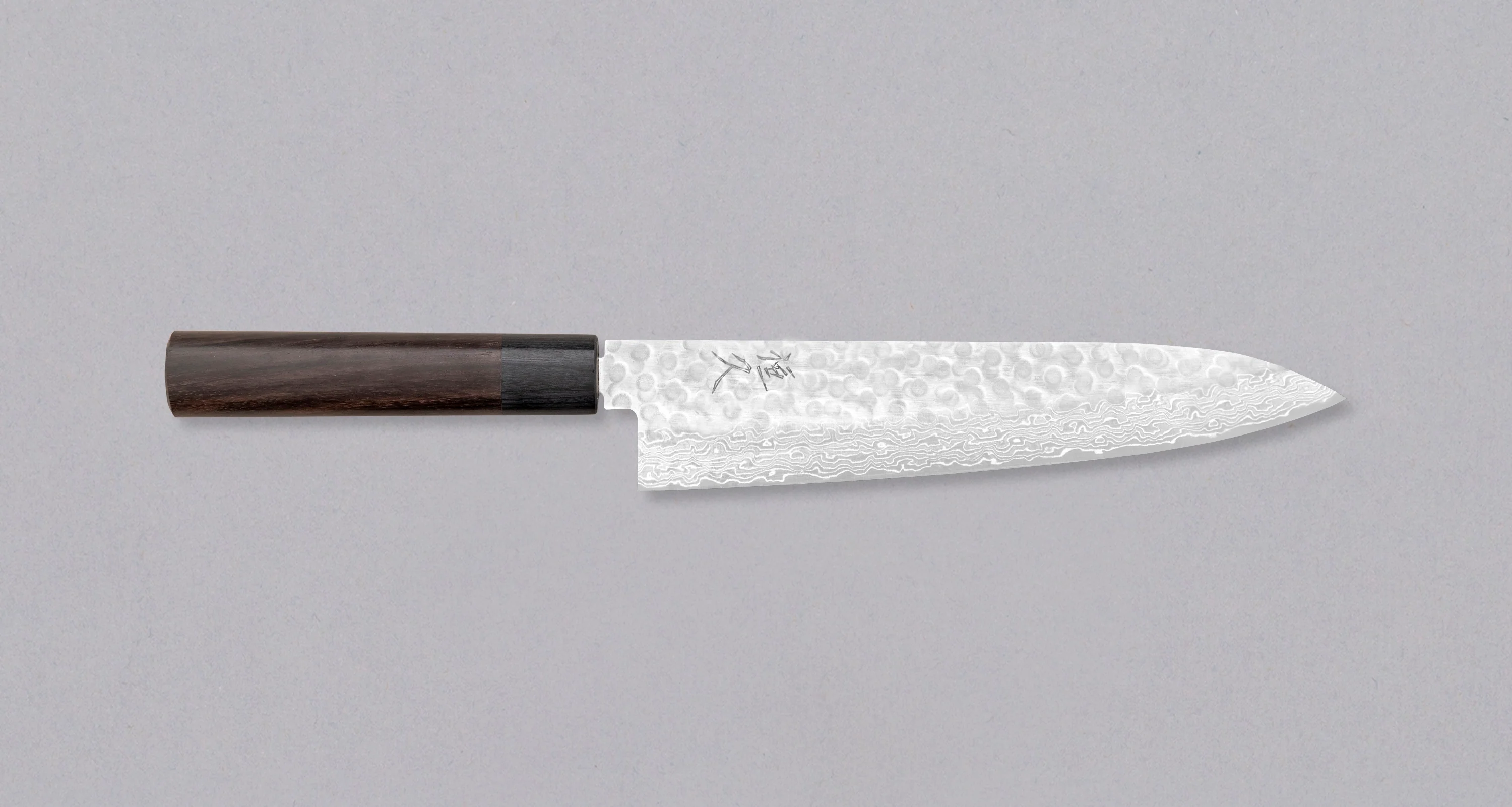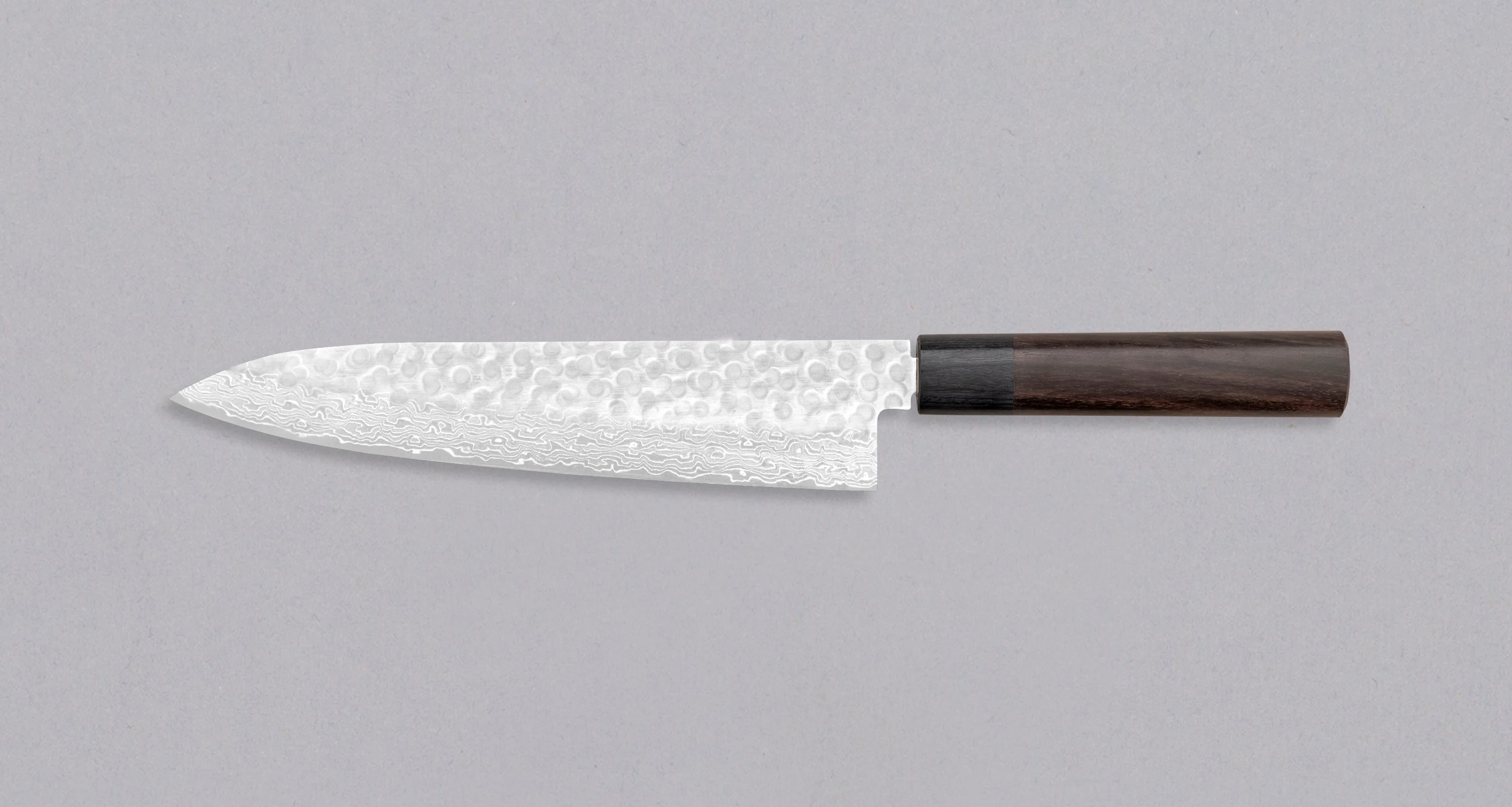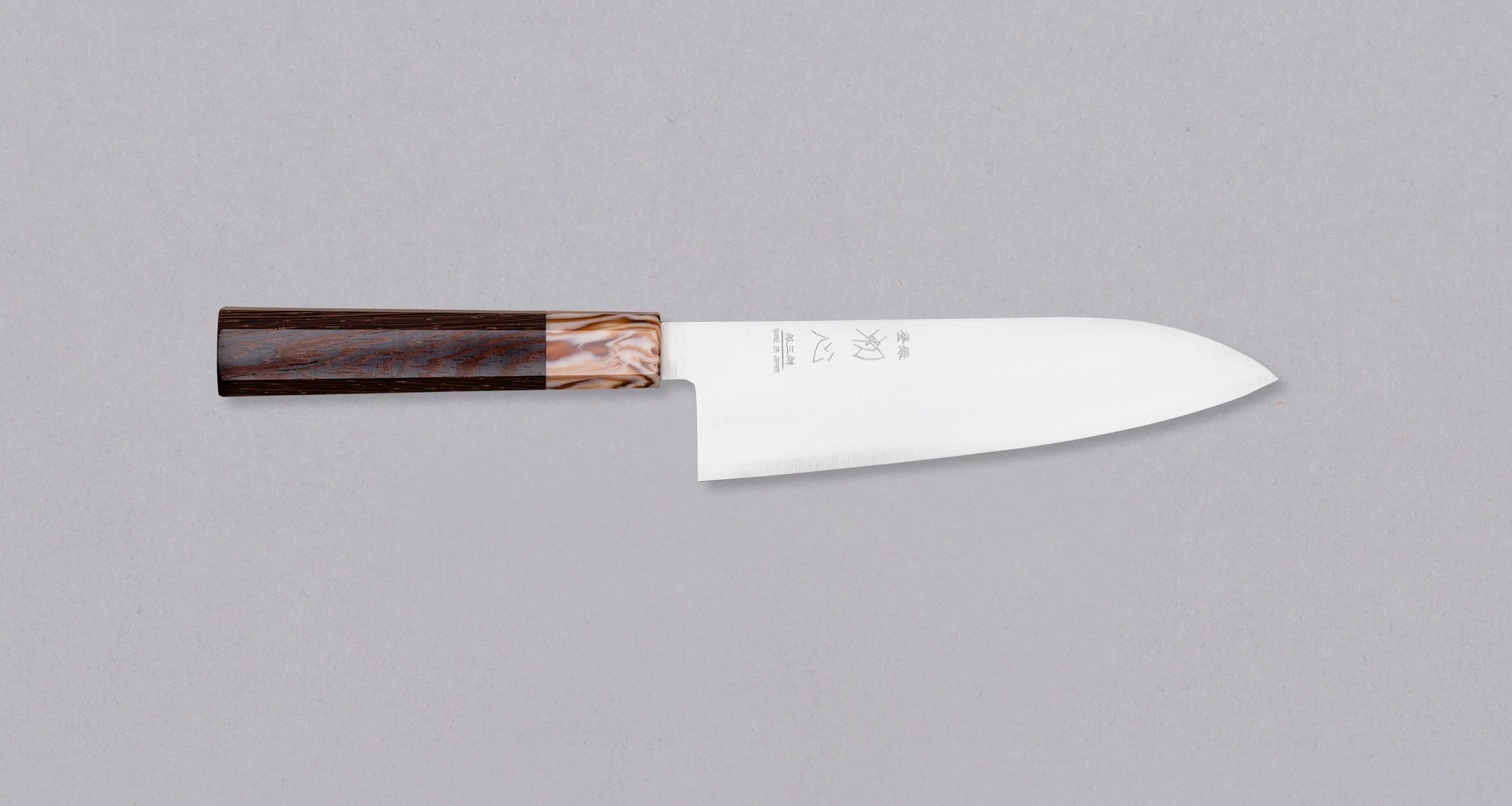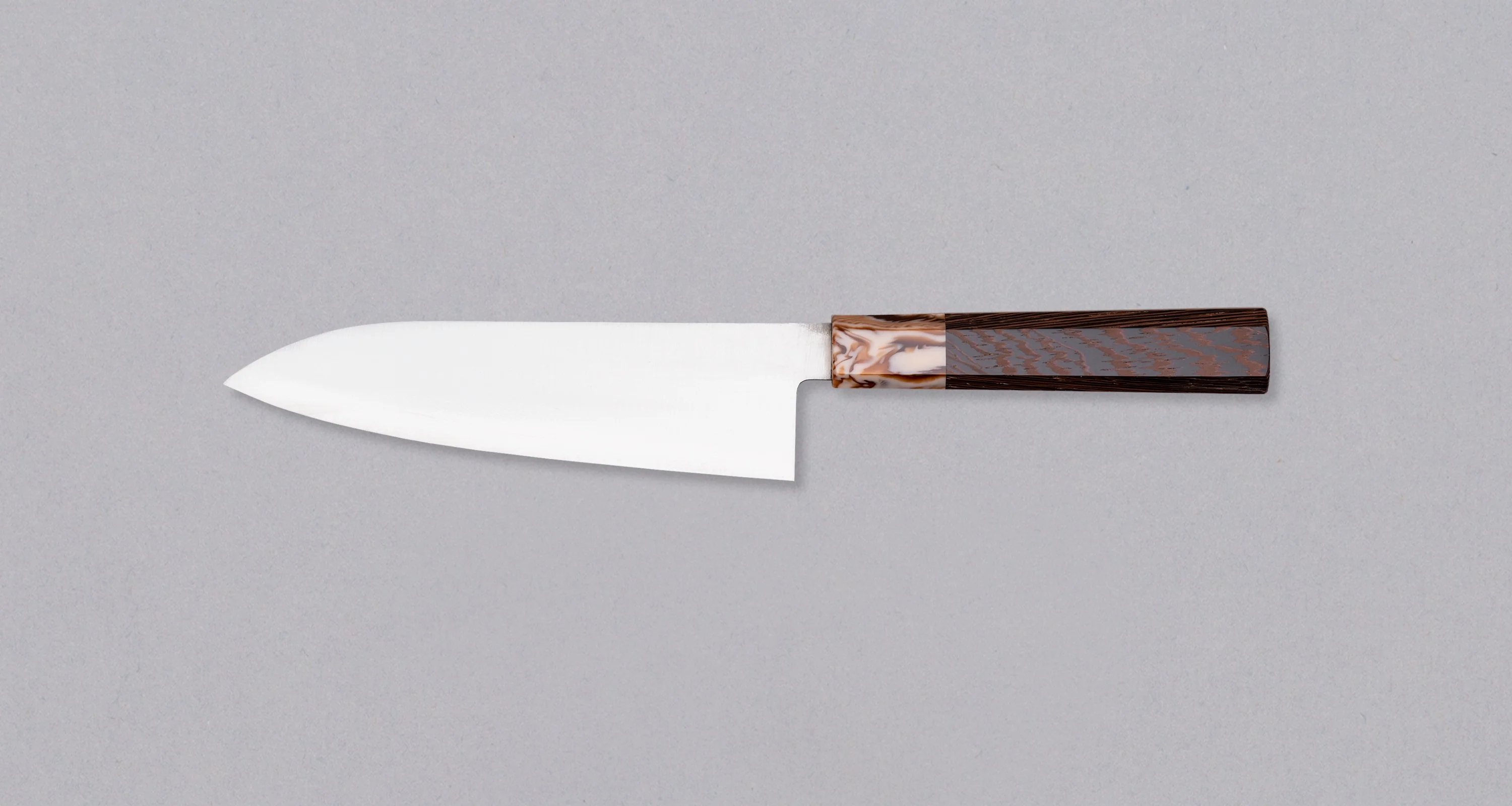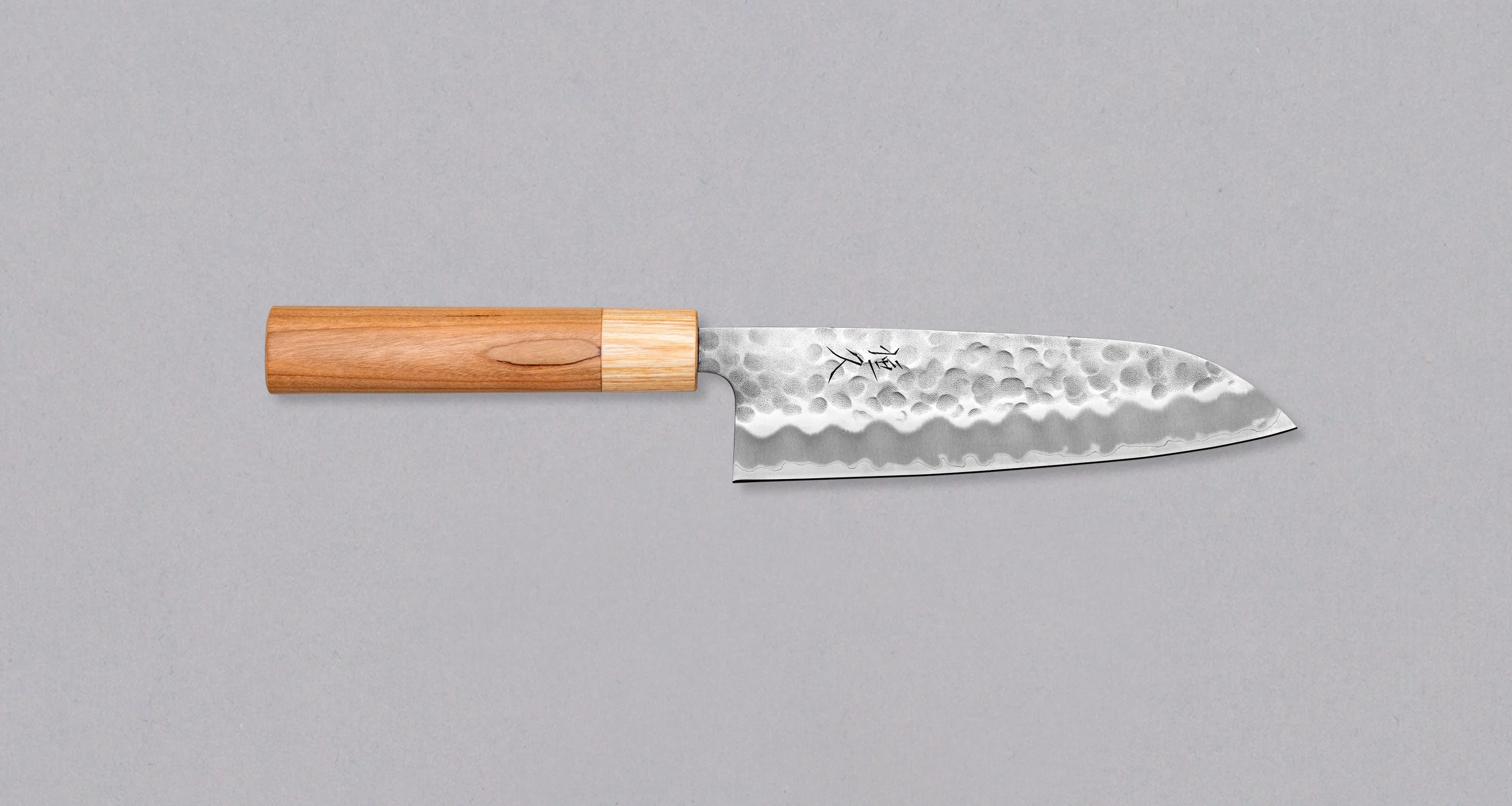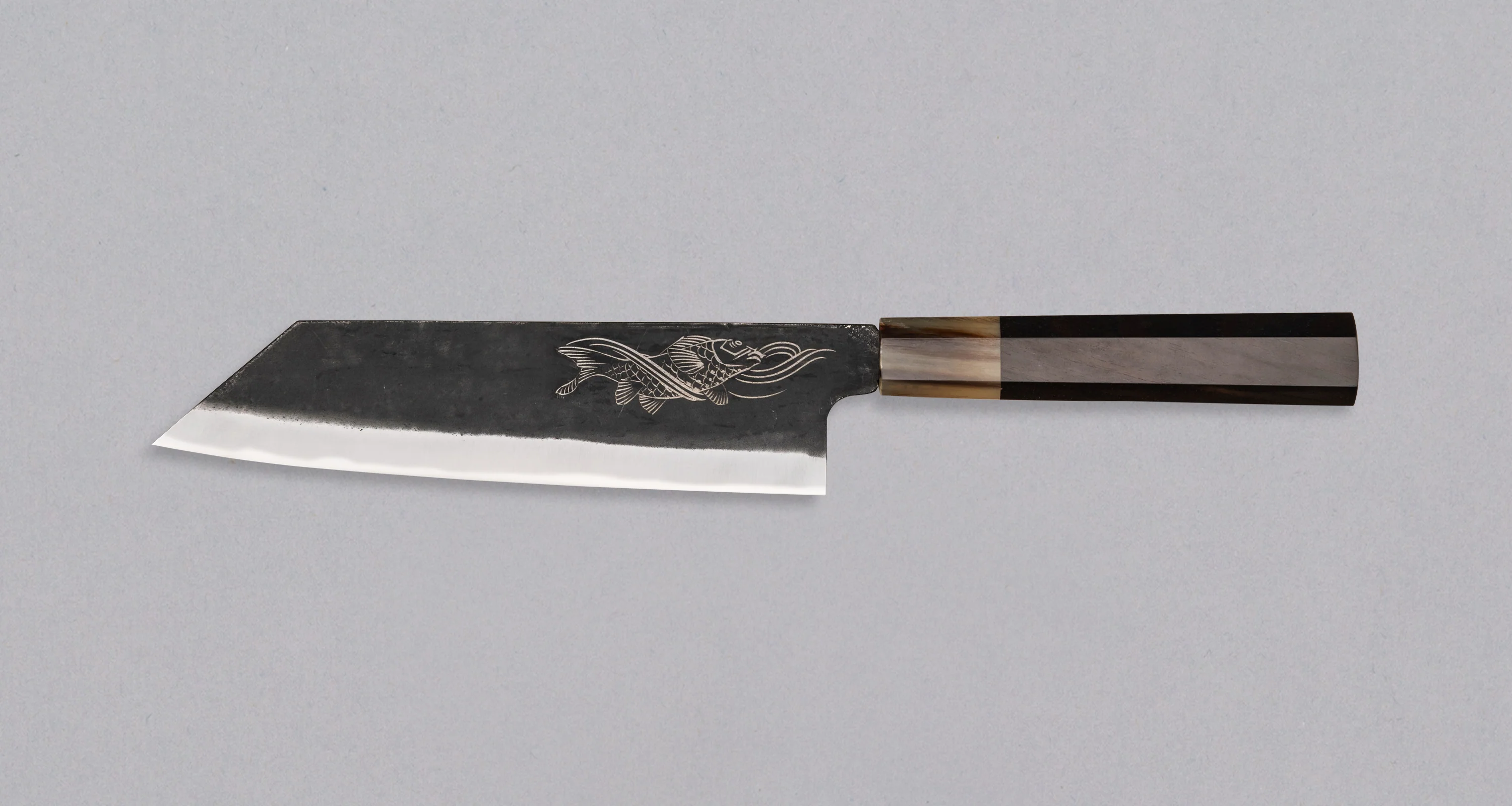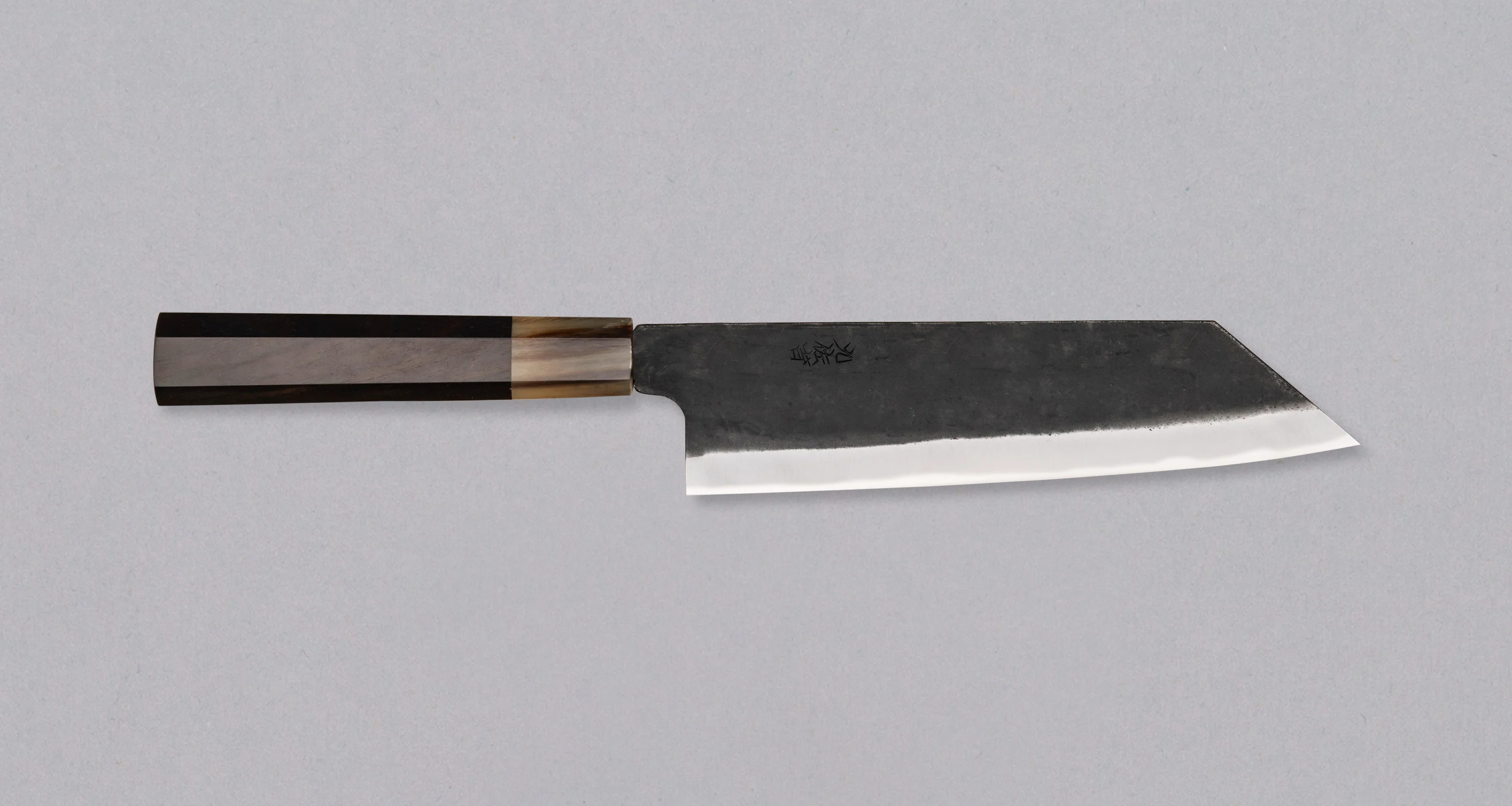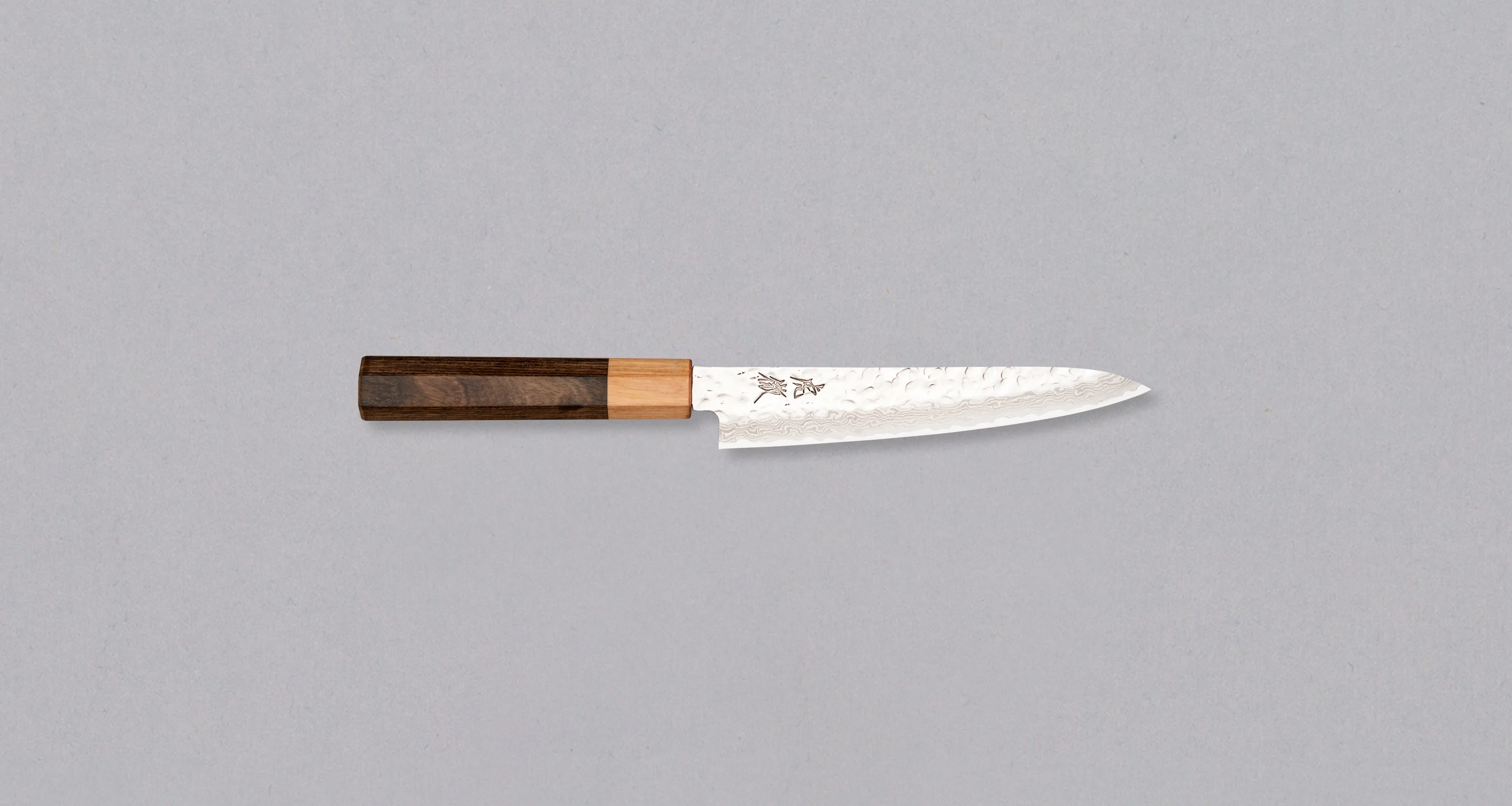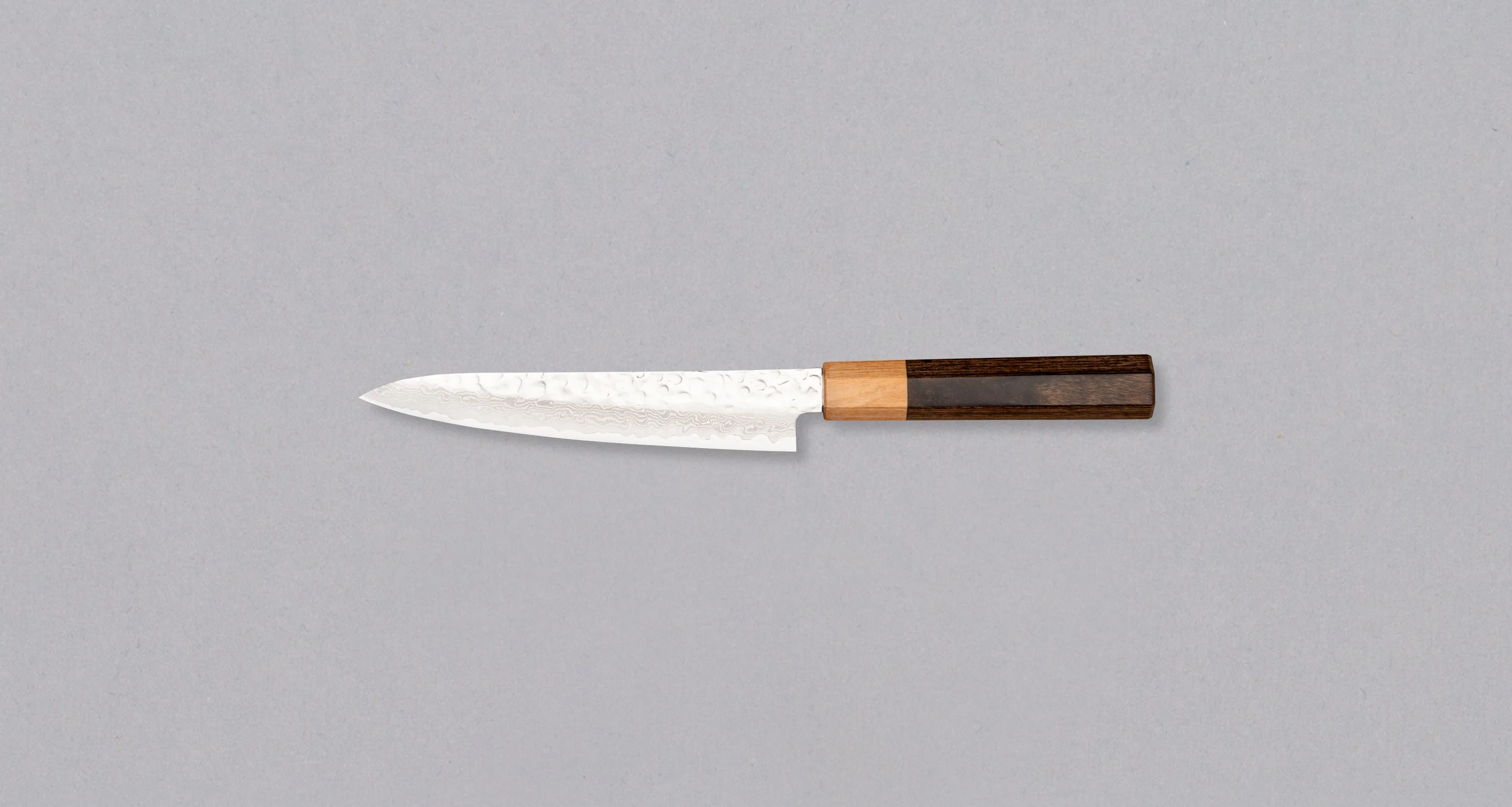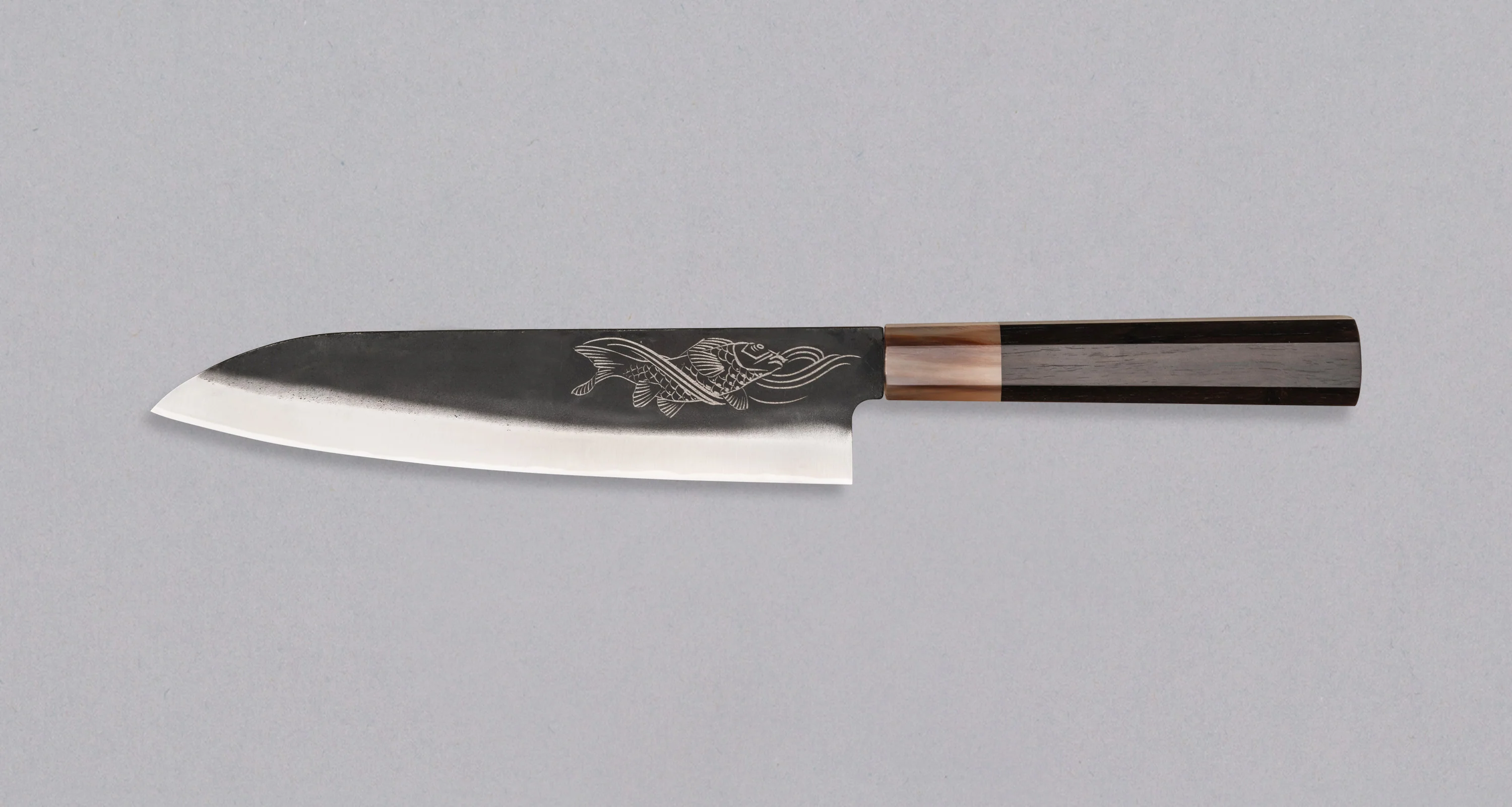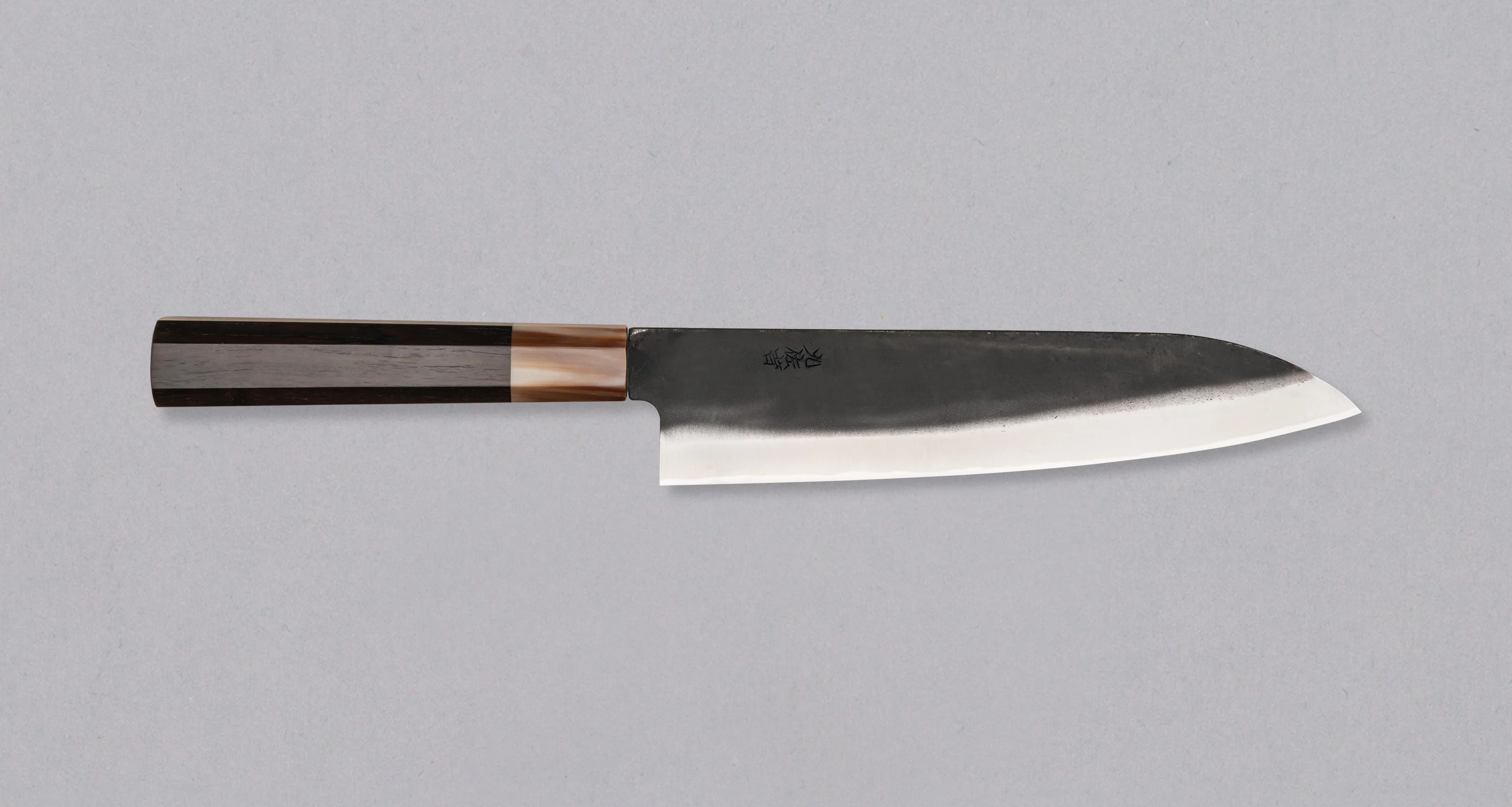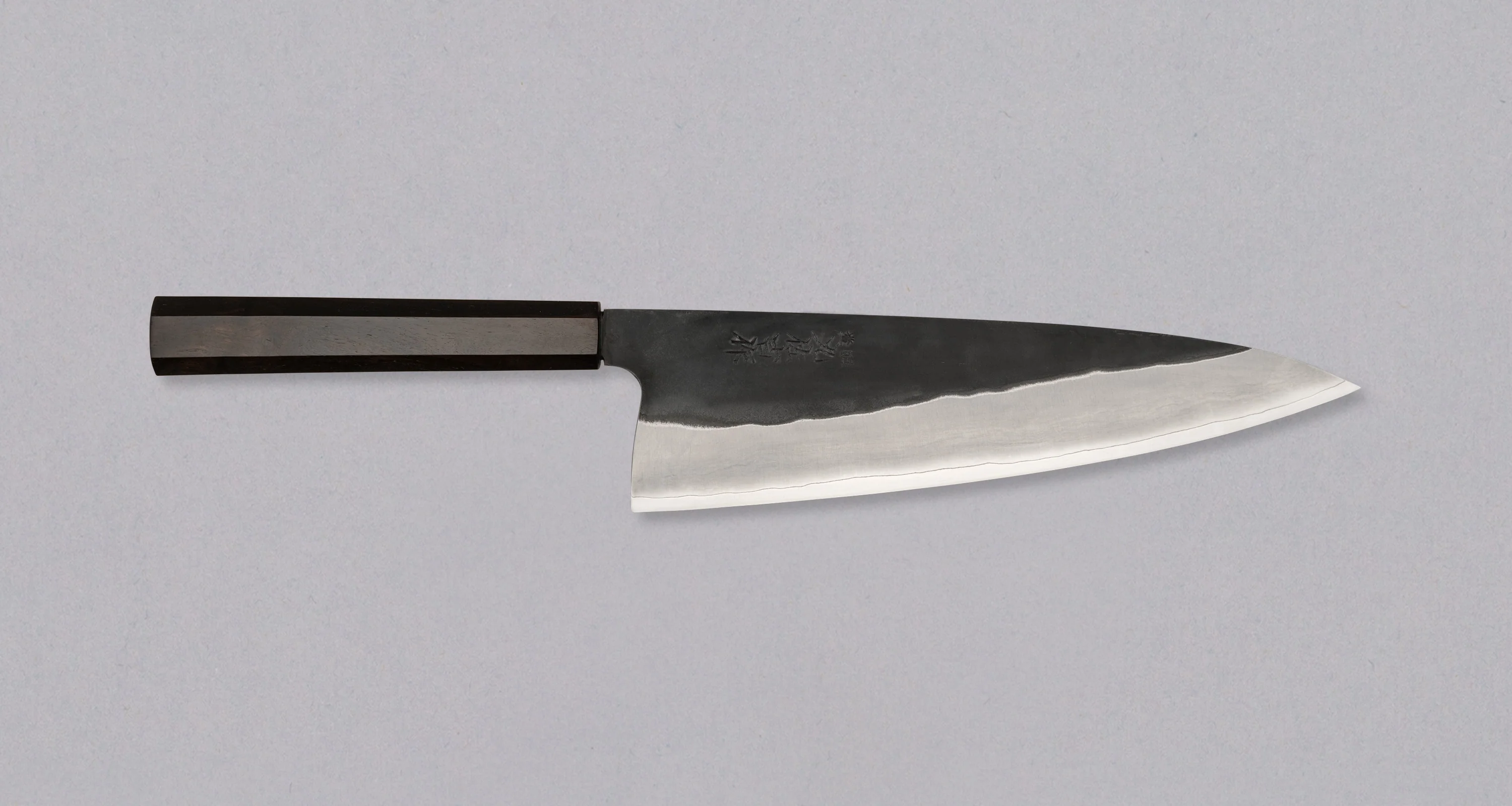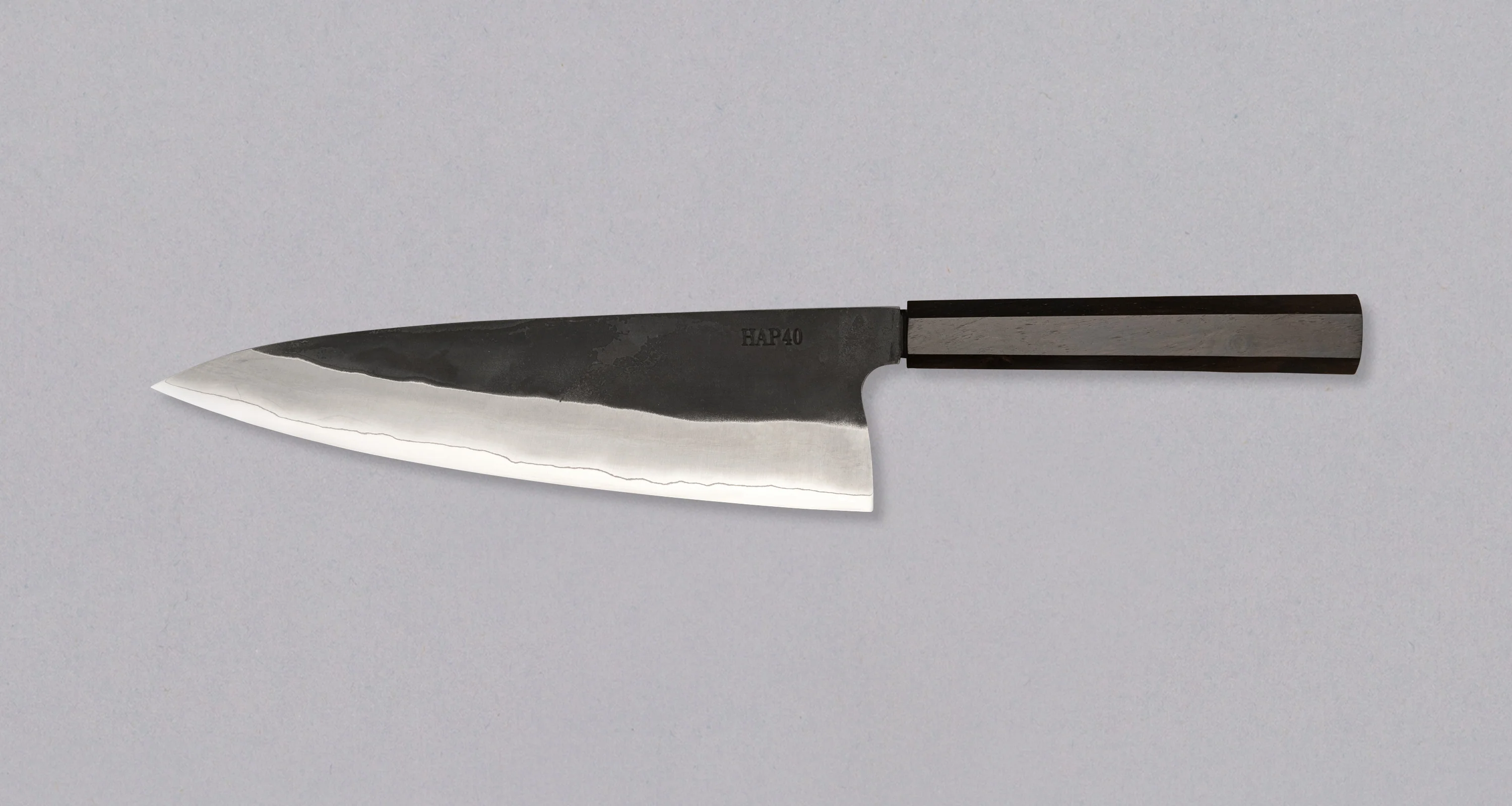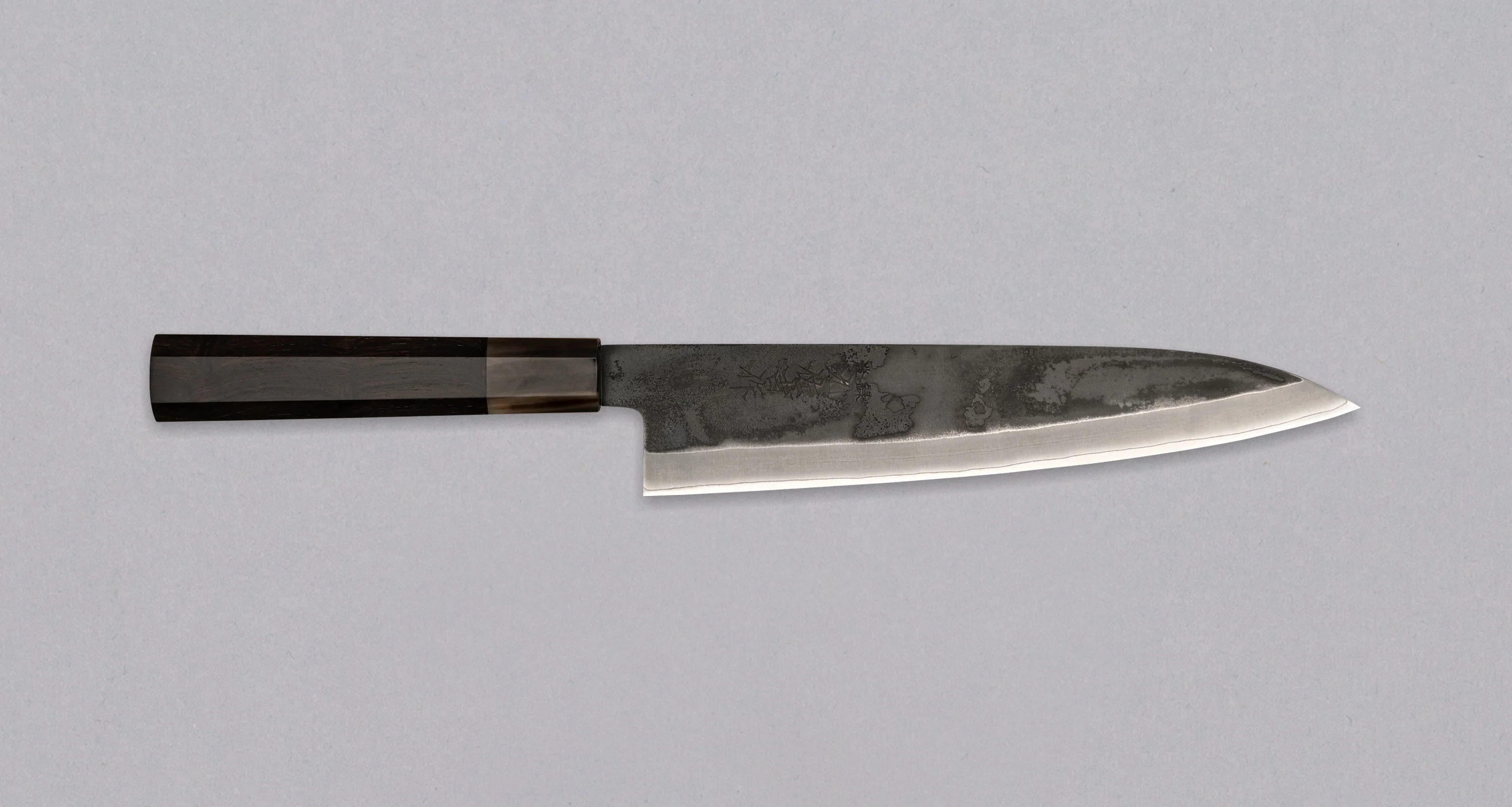
ZDP-189 Gyuto Black Ebony Blond Buffalo 210mm (8.3")
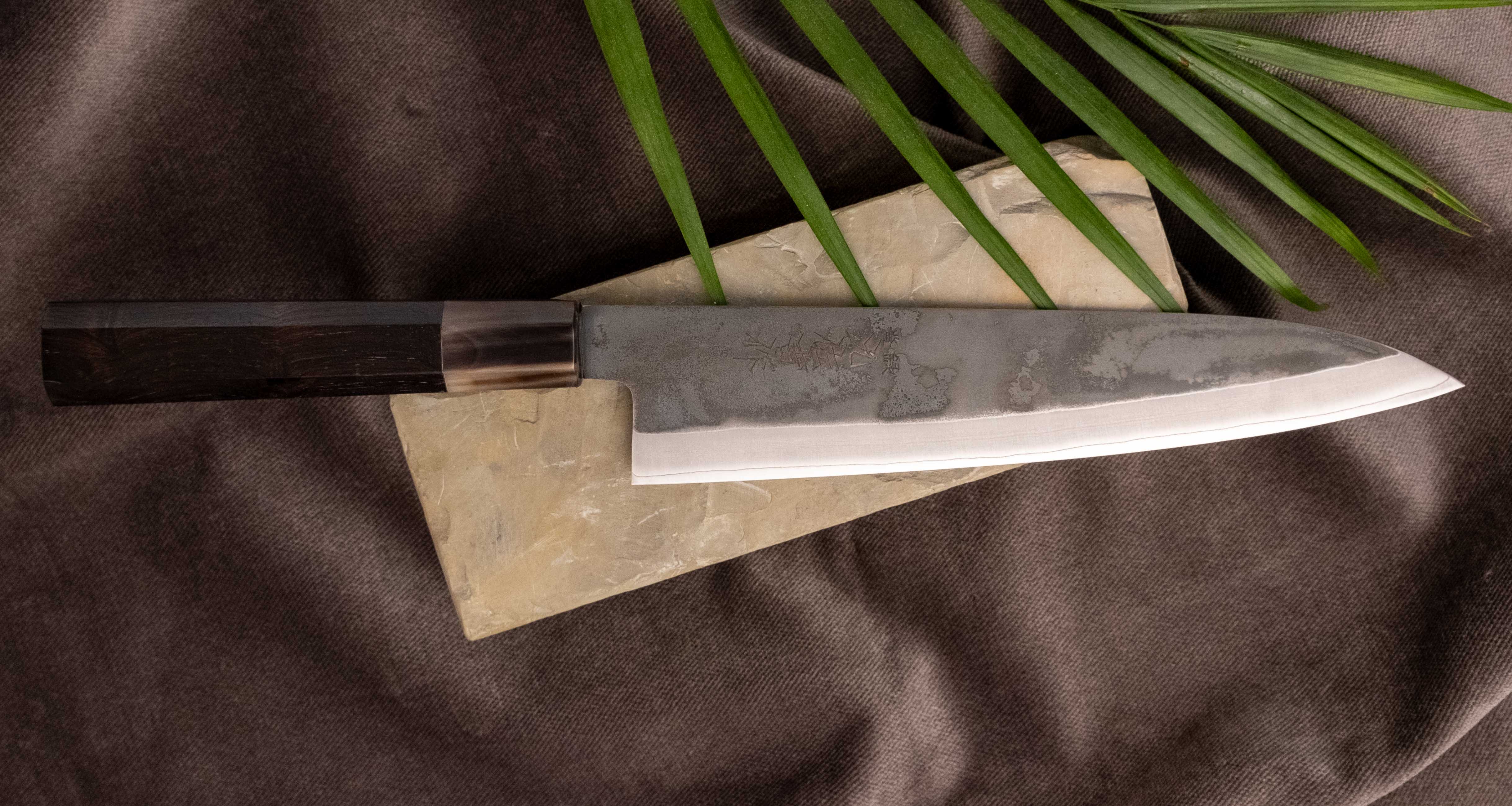
ZDP-189 Gyuto Black Ebony Blond Buffalo 210mm (8.3") is a multi-purpose knife from our ZDP-189 series, which we designed in collaboration with the Yoshida Hamono smithy. With this series, we fused Japanese tradition and knowledge of blade design and materials processing, and what came out is a versatile kitchen knife made of powder steel that is simple to use and maintain. To top it off, it boasts incredible properties, characteristic of only the best performing and most practical Japanese blades!
HAP-40 Gyuto Black embodies the best characteristics we could possibly expect from a kitchen knife:
- The length of the blade (210mm / 8.3") allows for efficient work even with larger chunks of meat.
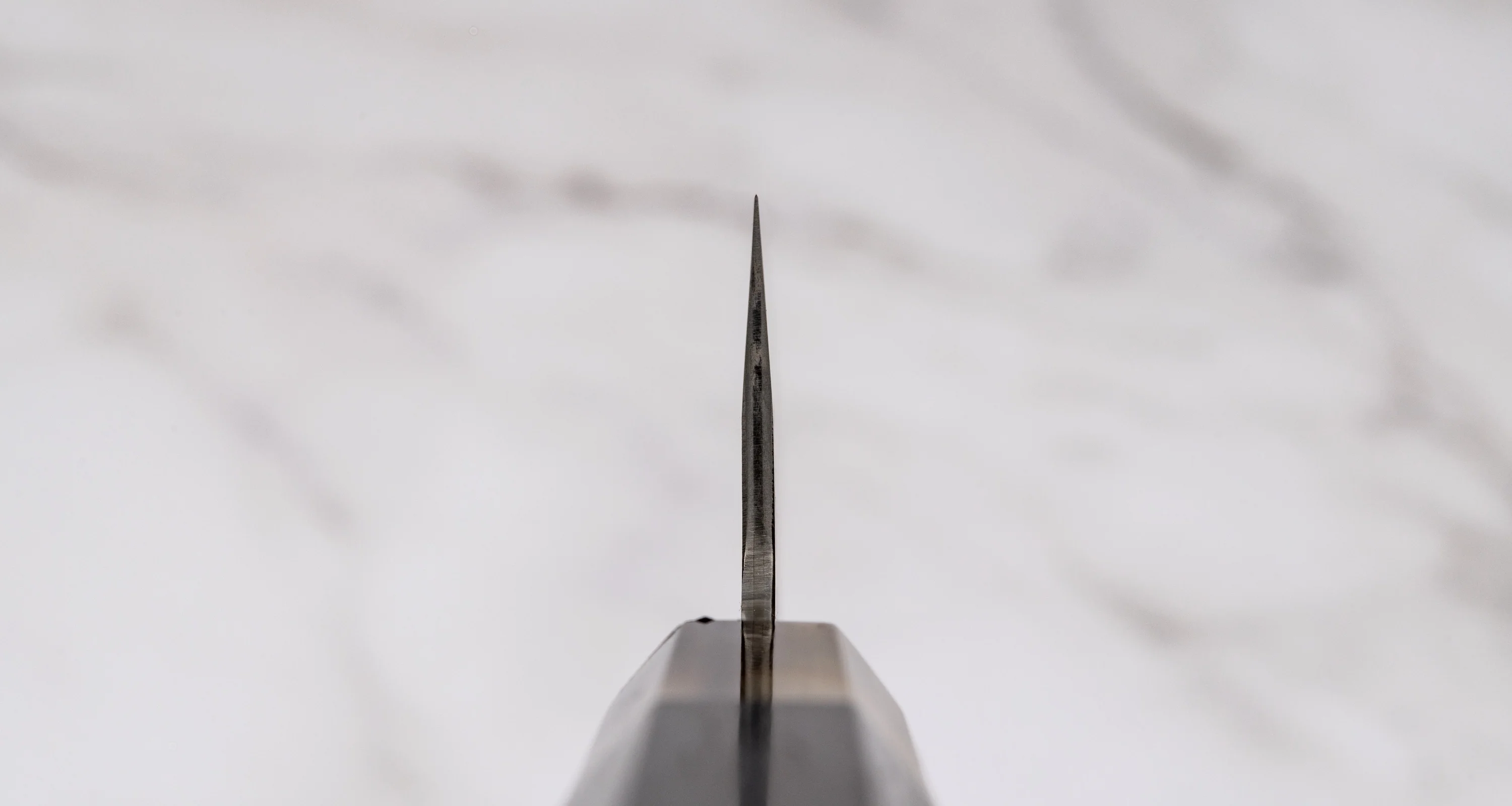
- The blade tapers off towards the tip and lends itself perfectly to precise work with food.
- Fine – and extremely long-lasting– sharpness.
- Very hard powder steel with a hardness of 65-67 HRC.
- Simple maintenance and sharpening.
BLADE SHAPE:
Gyuto is the Japanese version of the classic Western Chef’s knife. It can be used with a variety of different cutting techniques to take on a wide range of kitchen tasks. Gyuto stands for “beef sword” in Japanese and was initially used to cut meat. Today, gyuto is one of the most indispensable knives in a kitchen and can do just about everything, obviously also cut a large chunk of beef.
STEEL:
The heart of the knife is made of ZDP-189 steel, which we selected because systematic testing has proven its superior qualities and long-lasting sharpness.
The steel contains as much as 3% Carbon (C), which is one of the main elements contributing strength and typically found in amounts of up to only 1% in other types of solid steel, while the Chromium (Cr) content, which prevents corrosion, amounts to nearly 20%. It also features 0.60% Tungsten (W), which considerably increases the abrasion resistance of steel, 1.4% Molybdenum (Mo), which helps to preserve the strength and power of steel under variable temperatures, and 0.10% Vanadium (V), the key element in increasing steel strength. Heat treatment produces steel with a hardness of 65-67 HRC.
|
ZDP-189 composition: C 3.00 % | Cr 20.00 % | W 0.60 % | Mo 1.40 % | V 0.10 % | Mn 0.50 % | Si 0.40 % |
LAMINATION:
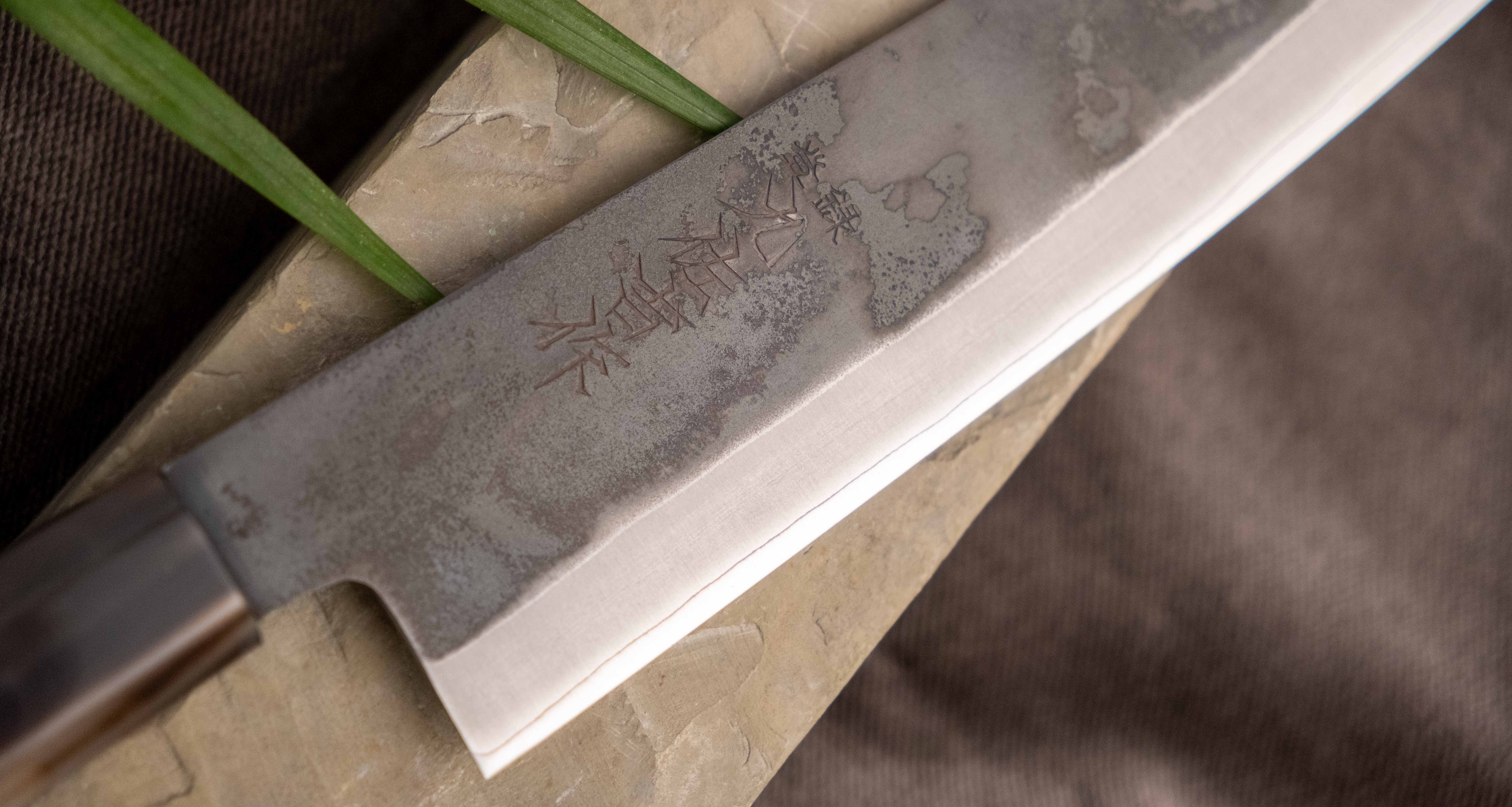
Osamu-san chose a warikomi (also called “split and insert”) method. A glowing hot piece of iron is split and a piece of steel is inserted. The new material is now forged into one piece composed of a very hard steel core in a jacket of two external layers of softer, stainless steel. This creates a highly durable kitchen knife with a slightly more pliable core. The main advantage of these knives is that they are thin, sharp and retain their edge very well.
GEOMETRY:
It has a double bevel (symmetrical) blade.
BLADE FINISH:
The blade has a dark finish which is the reason why this look is also called kuro-uchi - the word “kuro” means black. This look is traditional and robust, with an unprocessed top part of the blade that has already developed a dark patina.
HANDLE:
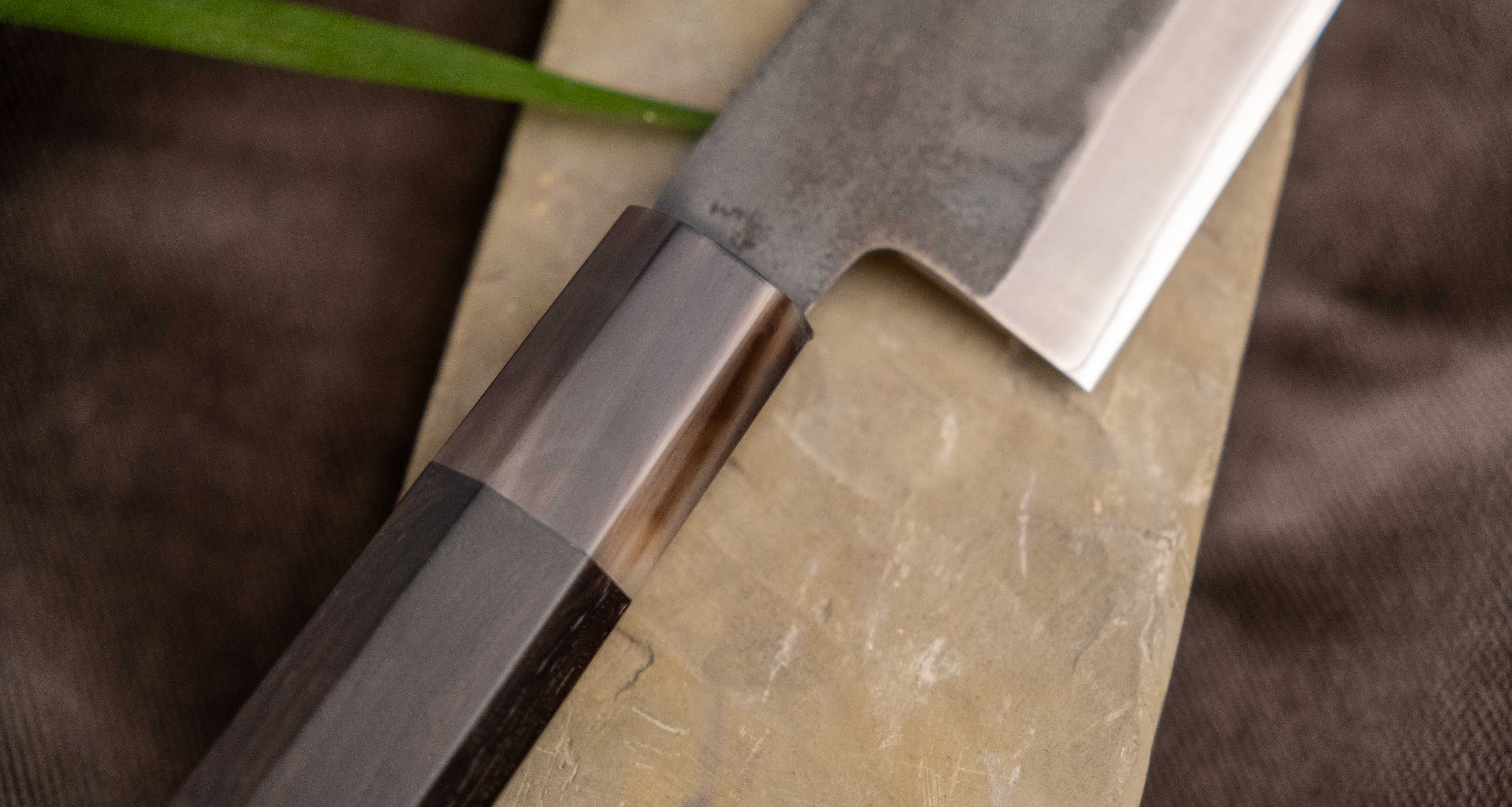
The knife features a traditional octagonal Japanese handle made from ebony wood, paired with a blonde buffalo horn ferrule. Designed for both left- and right-handed users, it offers a balanced and comfortable grip. Ebony is renowned for its exceptional hardness and density, which makes it one of the most durable and resistant woods. It is polished to a high gloss, creating a luxurious and elegant appearance and smooth feel that fits into the hand seamlessly. The octagon shape of the handle provides a comfortable and secure grip, allowing for precise control during use.
ABOUT THE BLACKSMITH:
The knife is manufactured at the smithy of Yoshida Hamono in Japan, a family company with an age-long tradition in manufacturing state-of-the-art tools and Japanese swords, i.e., katanas, by hand. Yoshida Hamono has a great deal of experience forging ZDP-189 steel in the traditional manner.
Original: $445.13
-65%$445.13
$155.80More Images

ZDP-189 Gyuto Black Ebony Blond Buffalo 210mm (8.3")
ZDP-189 Gyuto Black Ebony Blond Buffalo 210mm (8.3") is a multi-purpose knife from our ZDP-189 series, which we designed in collaboration with the Yoshida Hamono smithy. With this series, we fused Japanese tradition and knowledge of blade design and materials processing, and what came out is a versatile kitchen knife made of powder steel that is simple to use and maintain. To top it off, it boasts incredible properties, characteristic of only the best performing and most practical Japanese blades!
HAP-40 Gyuto Black embodies the best characteristics we could possibly expect from a kitchen knife:
- The length of the blade (210mm / 8.3") allows for efficient work even with larger chunks of meat.
- The blade tapers off towards the tip and lends itself perfectly to precise work with food.
- Fine – and extremely long-lasting– sharpness.
- Very hard powder steel with a hardness of 65-67 HRC.
- Simple maintenance and sharpening.
BLADE SHAPE:
Gyuto is the Japanese version of the classic Western Chef’s knife. It can be used with a variety of different cutting techniques to take on a wide range of kitchen tasks. Gyuto stands for “beef sword” in Japanese and was initially used to cut meat. Today, gyuto is one of the most indispensable knives in a kitchen and can do just about everything, obviously also cut a large chunk of beef.
STEEL:
The heart of the knife is made of ZDP-189 steel, which we selected because systematic testing has proven its superior qualities and long-lasting sharpness.
The steel contains as much as 3% Carbon (C), which is one of the main elements contributing strength and typically found in amounts of up to only 1% in other types of solid steel, while the Chromium (Cr) content, which prevents corrosion, amounts to nearly 20%. It also features 0.60% Tungsten (W), which considerably increases the abrasion resistance of steel, 1.4% Molybdenum (Mo), which helps to preserve the strength and power of steel under variable temperatures, and 0.10% Vanadium (V), the key element in increasing steel strength. Heat treatment produces steel with a hardness of 65-67 HRC.
|
ZDP-189 composition: C 3.00 % | Cr 20.00 % | W 0.60 % | Mo 1.40 % | V 0.10 % | Mn 0.50 % | Si 0.40 % |
LAMINATION:
Osamu-san chose a warikomi (also called “split and insert”) method. A glowing hot piece of iron is split and a piece of steel is inserted. The new material is now forged into one piece composed of a very hard steel core in a jacket of two external layers of softer, stainless steel. This creates a highly durable kitchen knife with a slightly more pliable core. The main advantage of these knives is that they are thin, sharp and retain their edge very well.
GEOMETRY:
It has a double bevel (symmetrical) blade.
BLADE FINISH:
The blade has a dark finish which is the reason why this look is also called kuro-uchi - the word “kuro” means black. This look is traditional and robust, with an unprocessed top part of the blade that has already developed a dark patina.
HANDLE:
The knife features a traditional octagonal Japanese handle made from ebony wood, paired with a blonde buffalo horn ferrule. Designed for both left- and right-handed users, it offers a balanced and comfortable grip. Ebony is renowned for its exceptional hardness and density, which makes it one of the most durable and resistant woods. It is polished to a high gloss, creating a luxurious and elegant appearance and smooth feel that fits into the hand seamlessly. The octagon shape of the handle provides a comfortable and secure grip, allowing for precise control during use.
ABOUT THE BLACKSMITH:
The knife is manufactured at the smithy of Yoshida Hamono in Japan, a family company with an age-long tradition in manufacturing state-of-the-art tools and Japanese swords, i.e., katanas, by hand. Yoshida Hamono has a great deal of experience forging ZDP-189 steel in the traditional manner.
Product Information
Product Information
Shipping & Returns
Shipping & Returns
Description
ZDP-189 Gyuto Black Ebony Blond Buffalo 210mm (8.3") is a multi-purpose knife from our ZDP-189 series, which we designed in collaboration with the Yoshida Hamono smithy. With this series, we fused Japanese tradition and knowledge of blade design and materials processing, and what came out is a versatile kitchen knife made of powder steel that is simple to use and maintain. To top it off, it boasts incredible properties, characteristic of only the best performing and most practical Japanese blades!
HAP-40 Gyuto Black embodies the best characteristics we could possibly expect from a kitchen knife:
- The length of the blade (210mm / 8.3") allows for efficient work even with larger chunks of meat.
- The blade tapers off towards the tip and lends itself perfectly to precise work with food.
- Fine – and extremely long-lasting– sharpness.
- Very hard powder steel with a hardness of 65-67 HRC.
- Simple maintenance and sharpening.
BLADE SHAPE:
Gyuto is the Japanese version of the classic Western Chef’s knife. It can be used with a variety of different cutting techniques to take on a wide range of kitchen tasks. Gyuto stands for “beef sword” in Japanese and was initially used to cut meat. Today, gyuto is one of the most indispensable knives in a kitchen and can do just about everything, obviously also cut a large chunk of beef.
STEEL:
The heart of the knife is made of ZDP-189 steel, which we selected because systematic testing has proven its superior qualities and long-lasting sharpness.
The steel contains as much as 3% Carbon (C), which is one of the main elements contributing strength and typically found in amounts of up to only 1% in other types of solid steel, while the Chromium (Cr) content, which prevents corrosion, amounts to nearly 20%. It also features 0.60% Tungsten (W), which considerably increases the abrasion resistance of steel, 1.4% Molybdenum (Mo), which helps to preserve the strength and power of steel under variable temperatures, and 0.10% Vanadium (V), the key element in increasing steel strength. Heat treatment produces steel with a hardness of 65-67 HRC.
|
ZDP-189 composition: C 3.00 % | Cr 20.00 % | W 0.60 % | Mo 1.40 % | V 0.10 % | Mn 0.50 % | Si 0.40 % |
LAMINATION:
Osamu-san chose a warikomi (also called “split and insert”) method. A glowing hot piece of iron is split and a piece of steel is inserted. The new material is now forged into one piece composed of a very hard steel core in a jacket of two external layers of softer, stainless steel. This creates a highly durable kitchen knife with a slightly more pliable core. The main advantage of these knives is that they are thin, sharp and retain their edge very well.
GEOMETRY:
It has a double bevel (symmetrical) blade.
BLADE FINISH:
The blade has a dark finish which is the reason why this look is also called kuro-uchi - the word “kuro” means black. This look is traditional and robust, with an unprocessed top part of the blade that has already developed a dark patina.
HANDLE:
The knife features a traditional octagonal Japanese handle made from ebony wood, paired with a blonde buffalo horn ferrule. Designed for both left- and right-handed users, it offers a balanced and comfortable grip. Ebony is renowned for its exceptional hardness and density, which makes it one of the most durable and resistant woods. It is polished to a high gloss, creating a luxurious and elegant appearance and smooth feel that fits into the hand seamlessly. The octagon shape of the handle provides a comfortable and secure grip, allowing for precise control during use.
ABOUT THE BLACKSMITH:
The knife is manufactured at the smithy of Yoshida Hamono in Japan, a family company with an age-long tradition in manufacturing state-of-the-art tools and Japanese swords, i.e., katanas, by hand. Yoshida Hamono has a great deal of experience forging ZDP-189 steel in the traditional manner.