![Yoshida Gyuto SUJ-2 Kuro-uchi 210mm (8.3") [Koi Fish]](/images/sharpedgestore.shop/images/product/yoshida-gyuto-suj-2-kuro-uchi-210mm-koi-fish-1.jpg)
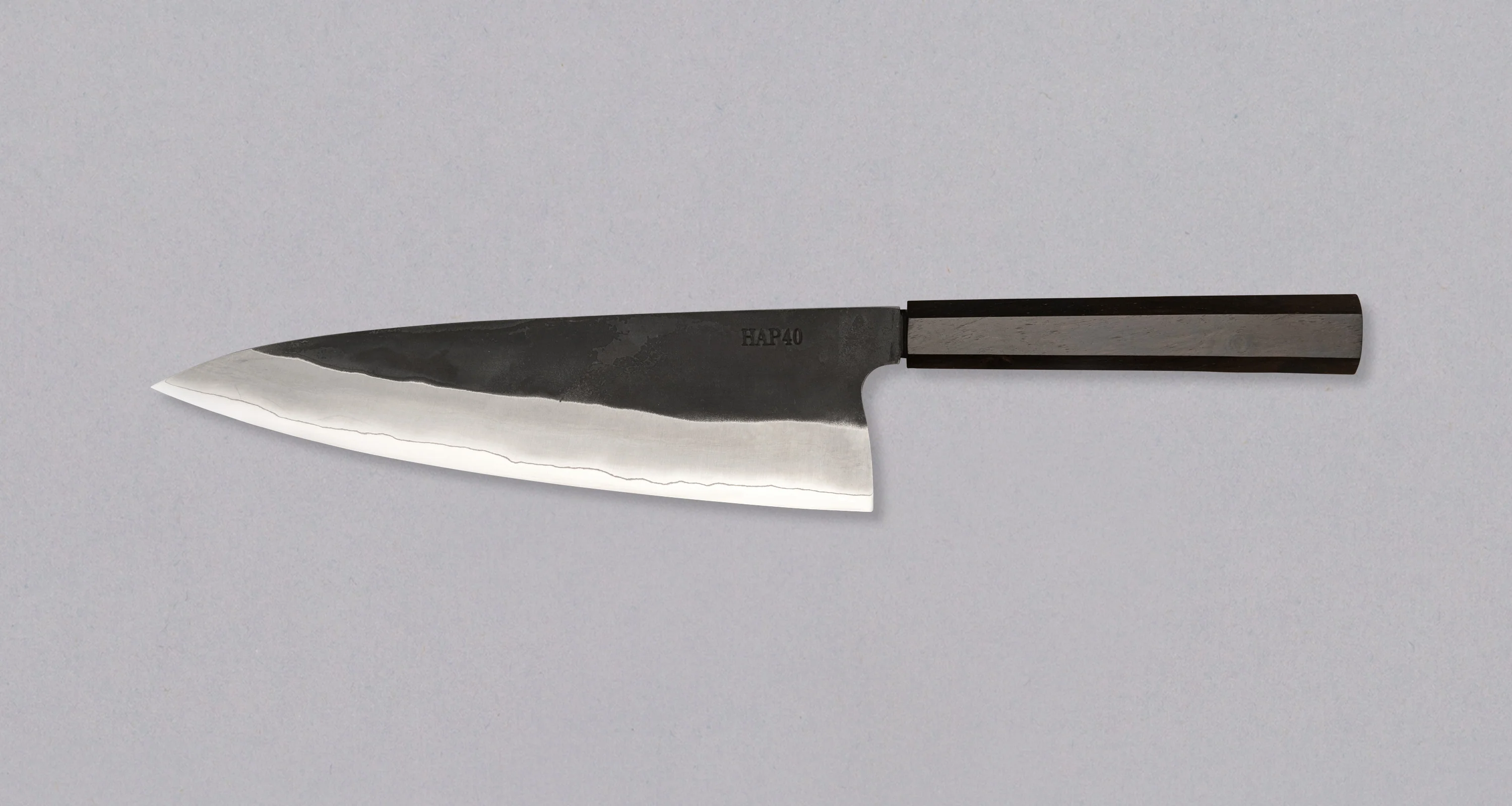
Yoshida Gyuto SUJ-2 Kuro-uchi 210mm (8.3") [Koi Fish]
The Yoshida Gyuto SUJ-2 Kuro-uchi 210mm (8.3") is a handmade, versatile knife designed for a wide range of cutting tasks. Part of the Yoshida Hamono Kuro-uchi series, this knife is crafted from durable SUJ-2 steel (64.7 HRC), which offers exceptional edge retention and features a kuro-uchi finish for a rustic appearance and added durability. The high-end ebony handle provides a comfortable and secure grip, ensuring precise control while slicing, dicing, and chopping. With its traditional Japanese rustic design and unique koi fish engraving, this knife is an ideal choice for anyone looking to purchase their first Japanese blade and makes a fantastic gift for culinary enthusiasts.
The blade is handmade at the Yoshida Hamono Smithy in Saga Prefecture, located in the south of Japan. Every step of the process—lamination, forging, grinding, and heat treatment—is completed in-house. The extremely thin blade is crafted from SUJ-2 steel, known for its fine particle structure, which enhances cutting precision and provides exceptional sharpness and agility in use. With a hardness of 64.7 HRC, this steel ensures both edge retention and ease of sharpening. However, this high-performance blade does require some extra care—after each use, it should be rinsed and dried immediately to prevent rust.
|
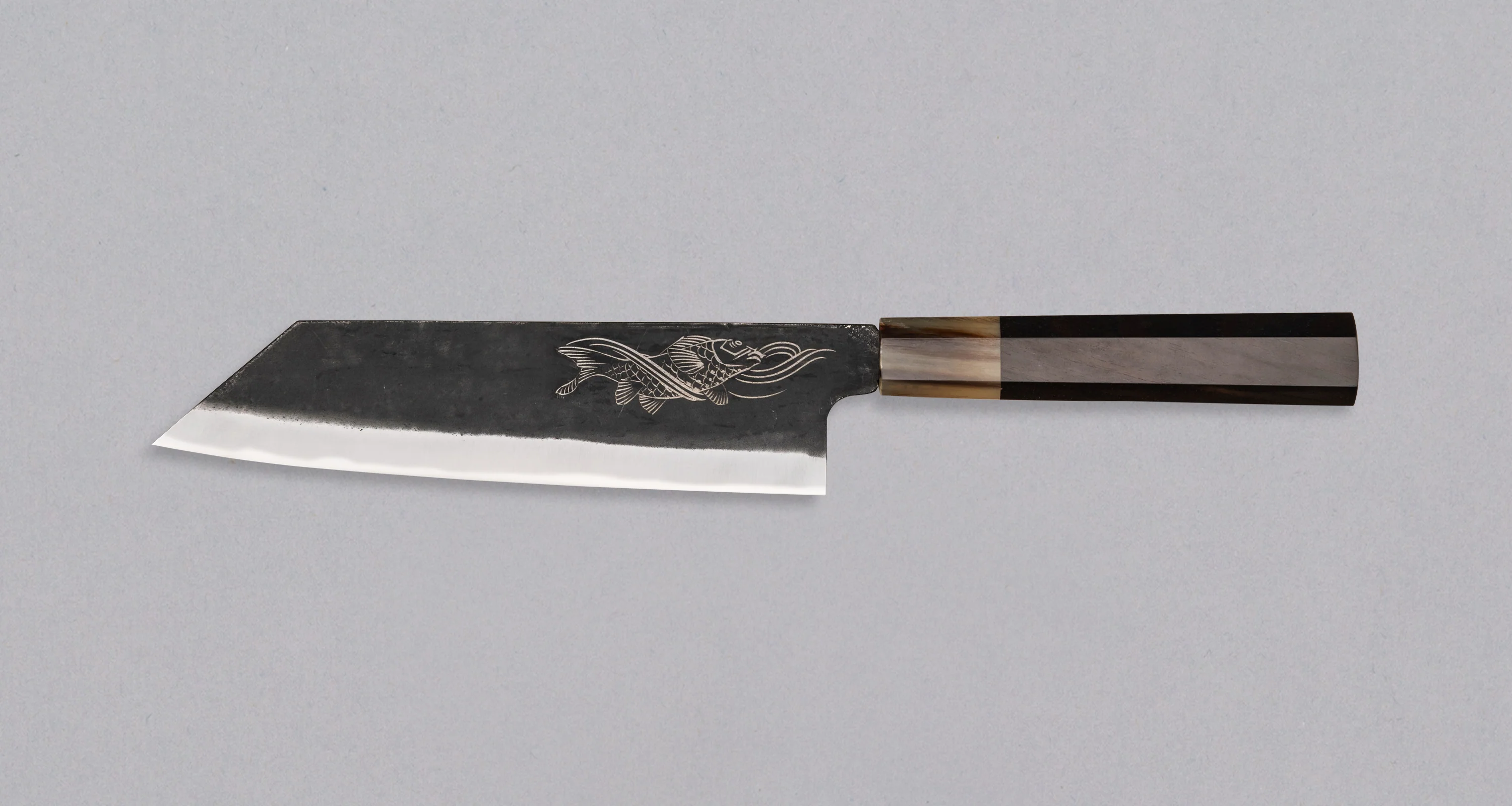
To make this knife even more special, we engraved our unique Japanese koi fish illustration on the blade. The Japanese koi fish, known for its vibrant colors and graceful movements, is a symbol of strength, perseverance, and good fortune. In Japanese tradition, koi are admired for their resilience, as they are said to swim upstream and even transform into dragons, symbolizing the ability to overcome obstacles and achieve greatness. This design was created by the skilled tattoo artist Iva (@ivatattoo), owner of @rozatiger.tattoo. She is a passionate fan of all things related to Japan and specializes in Japanese motifs. |
BLADE SHAPE:
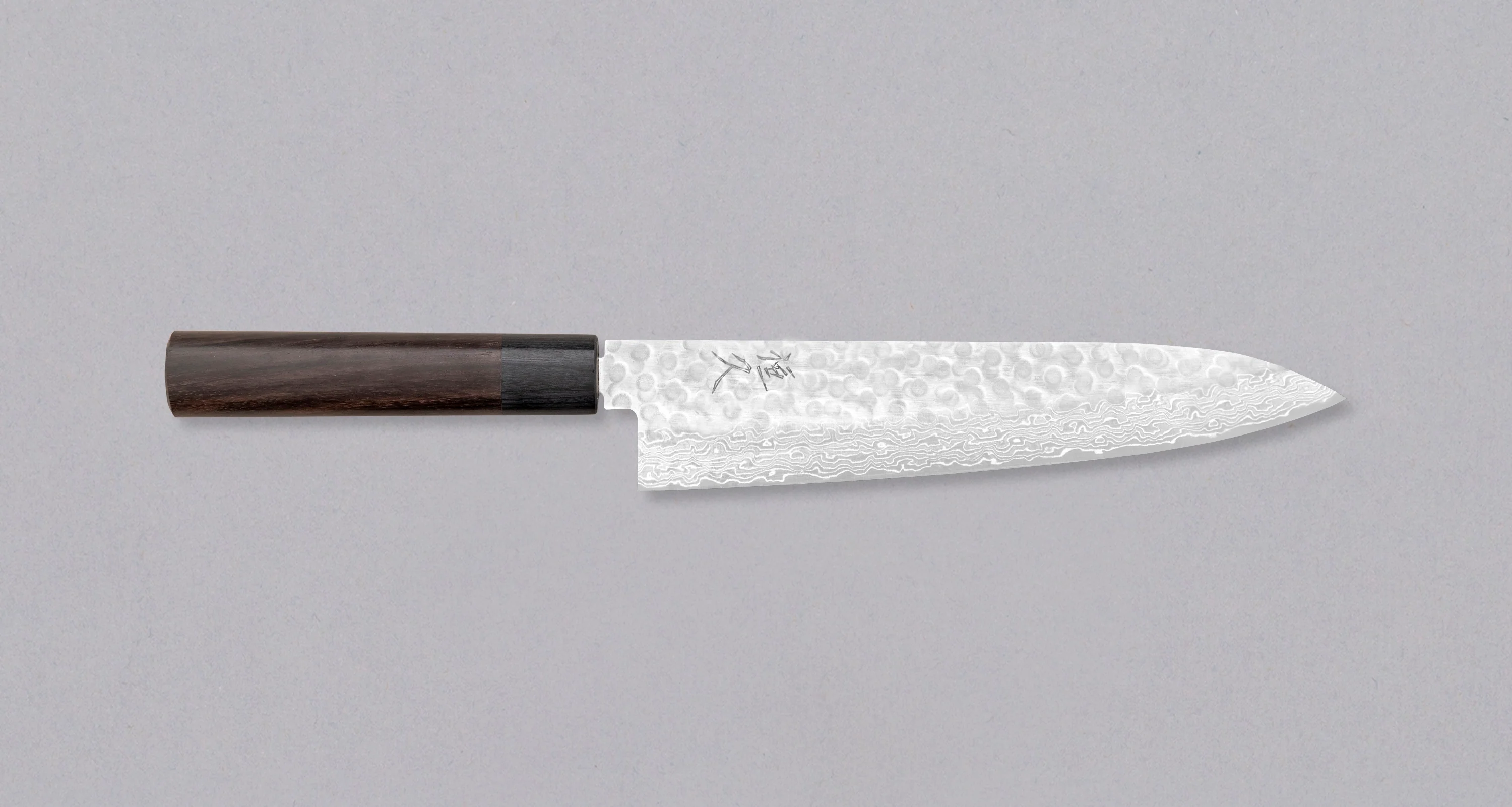
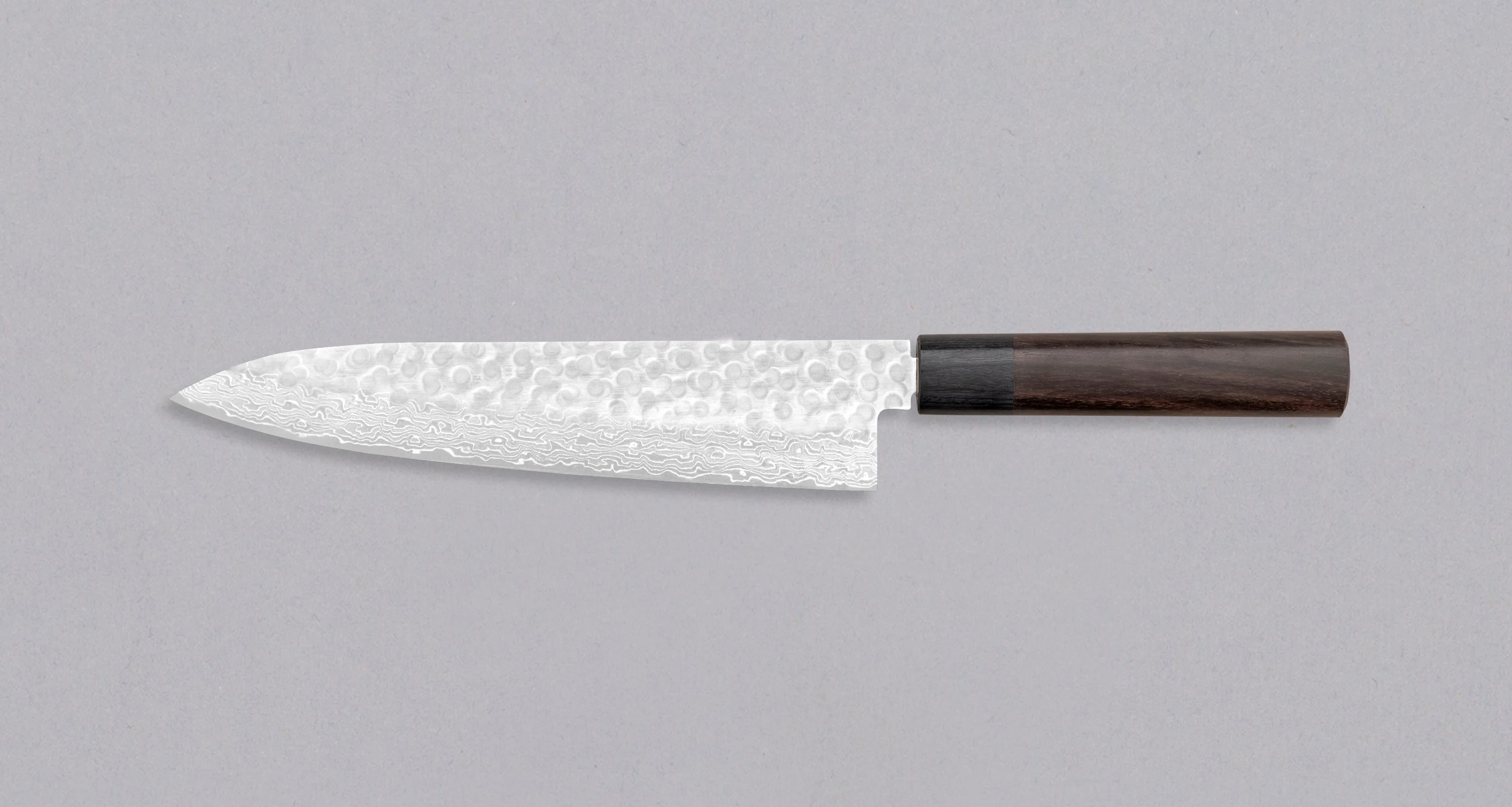
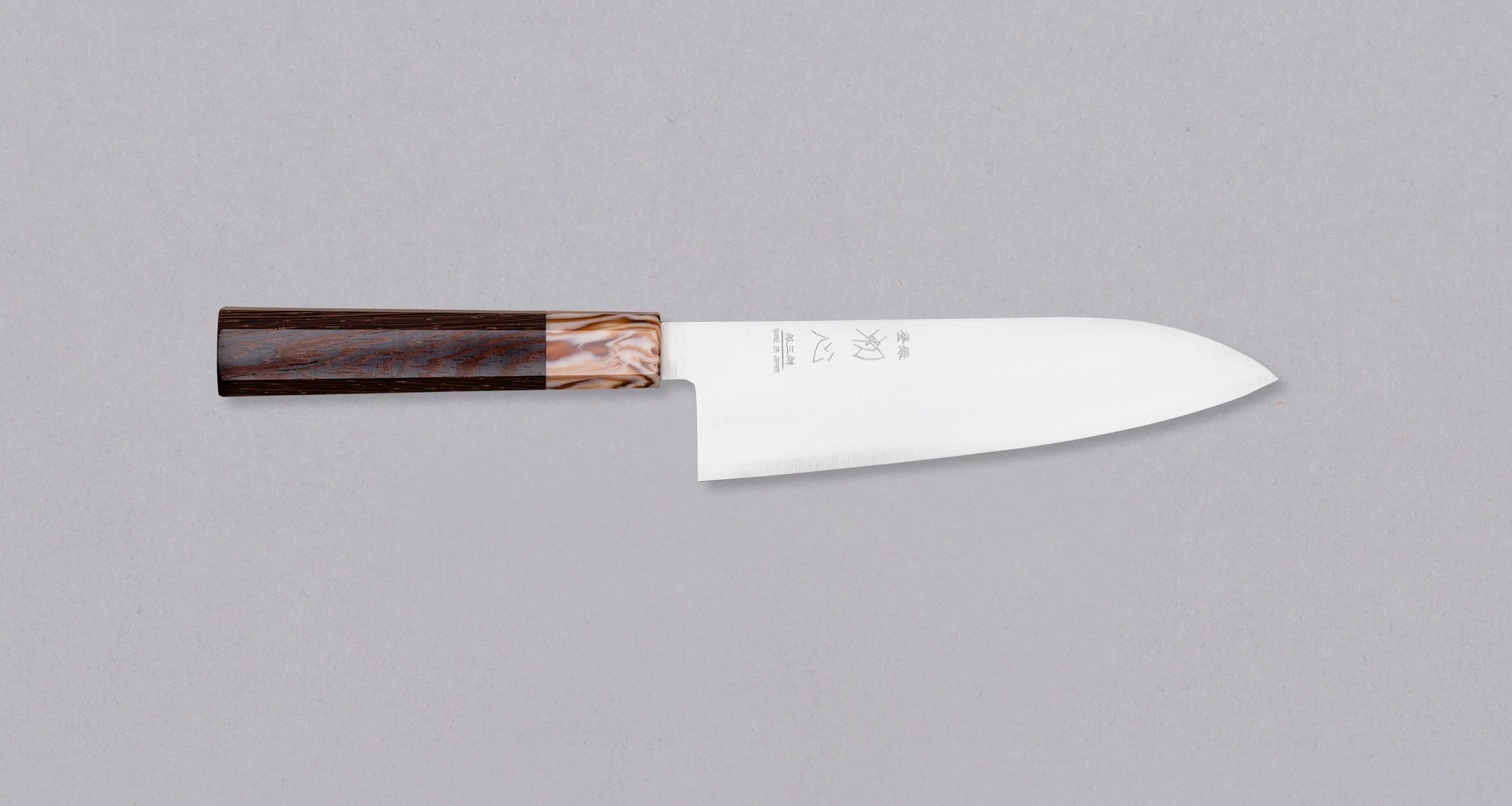
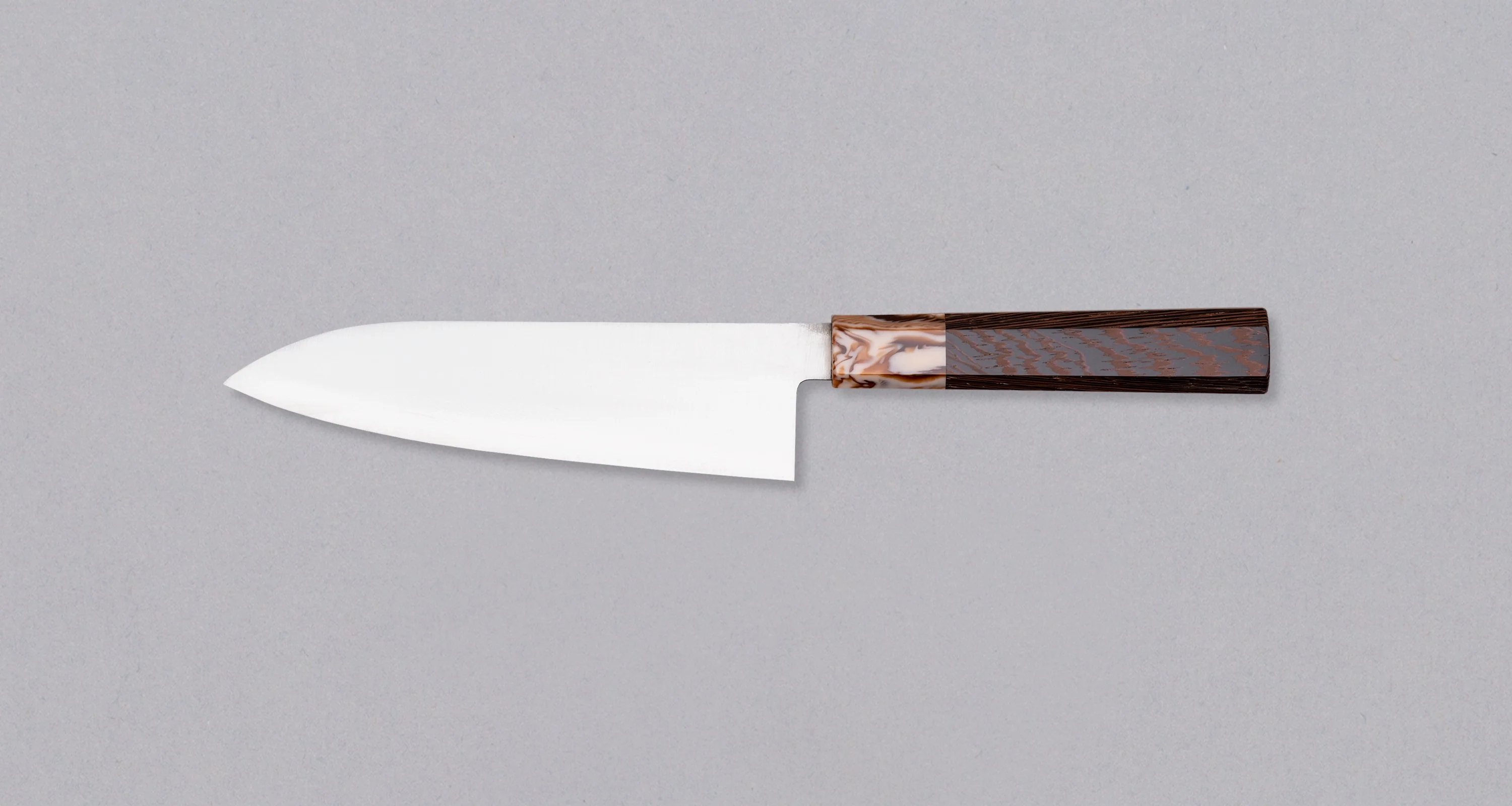
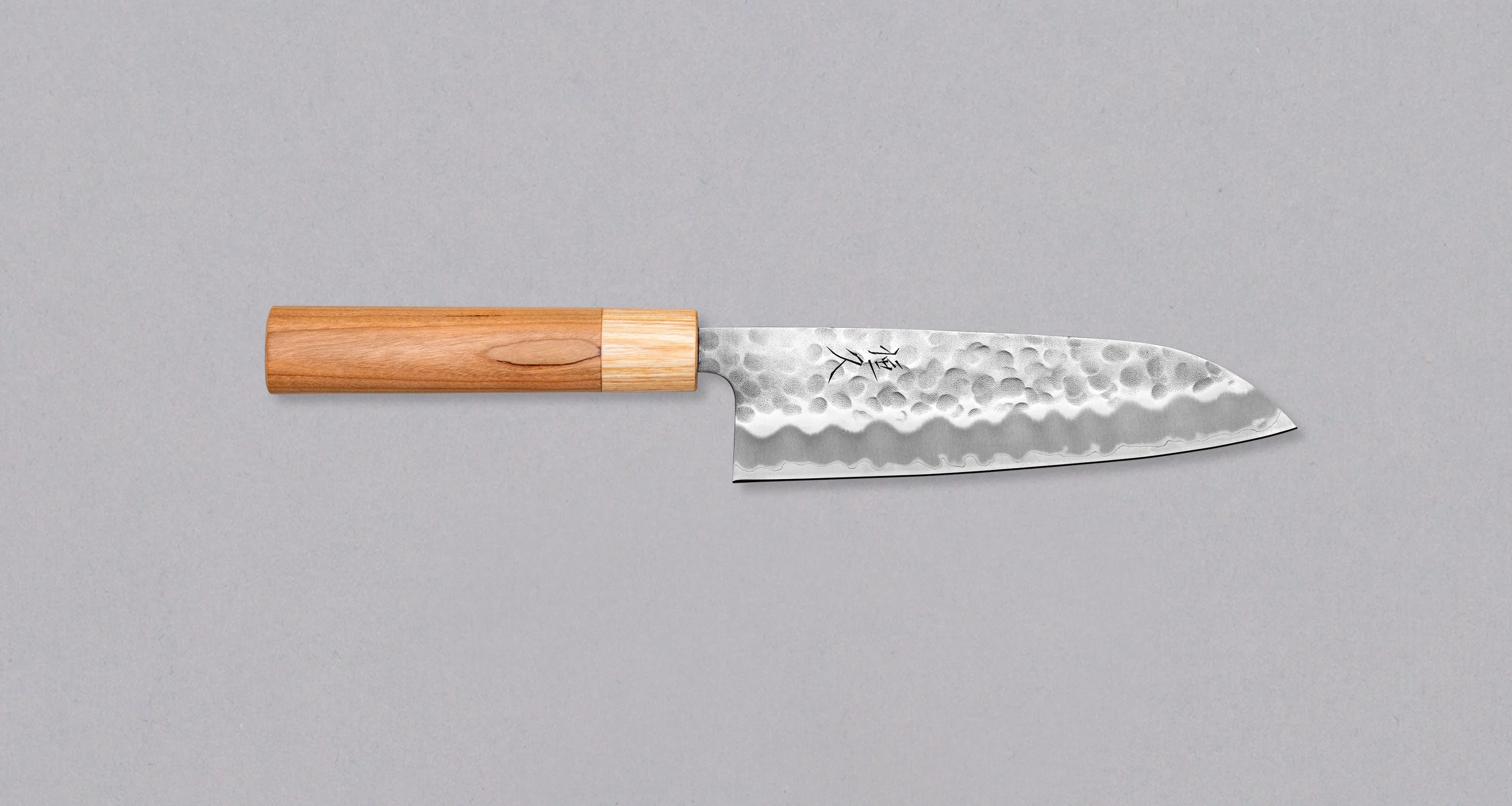
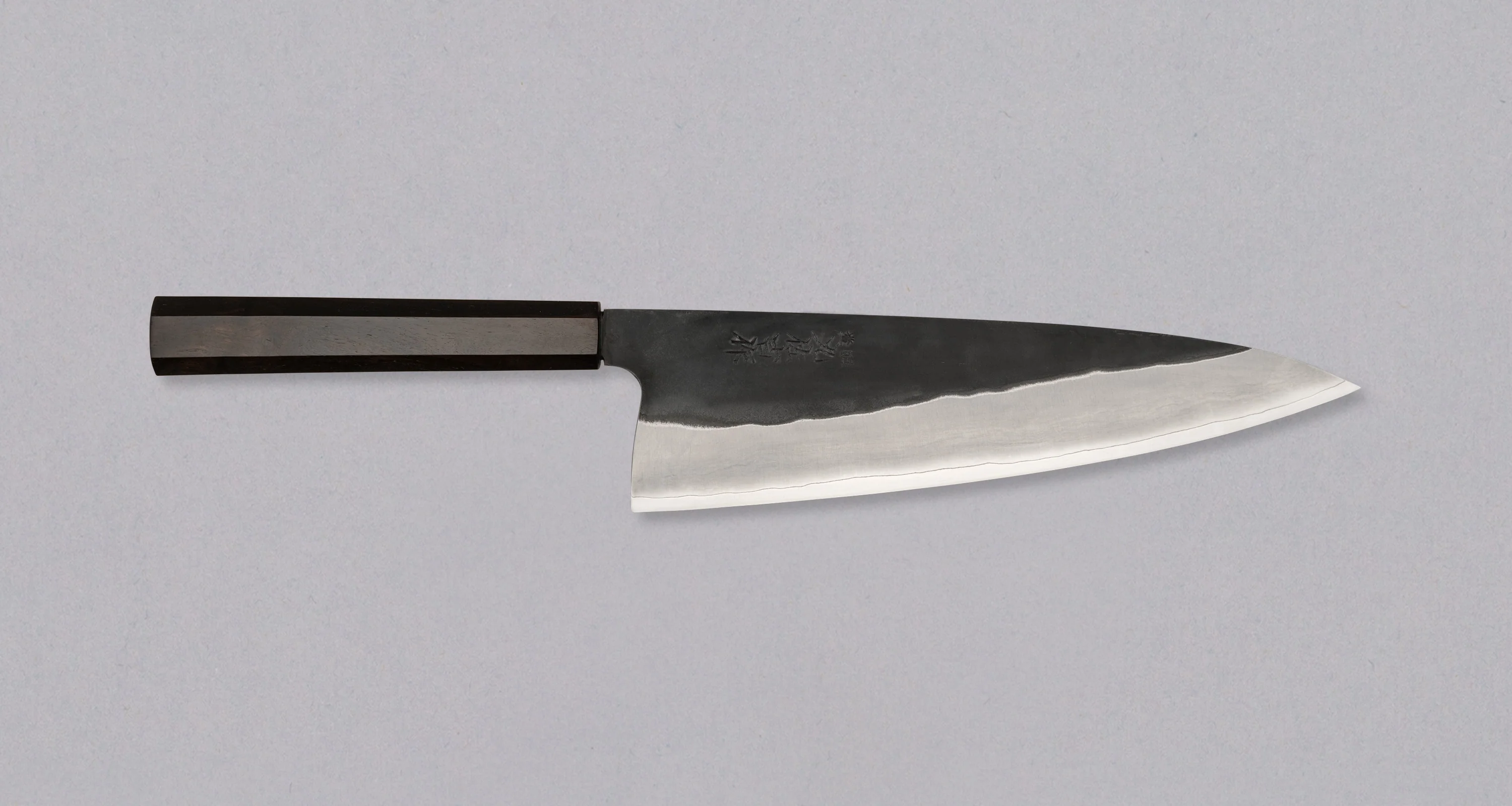
The gyuto is the Japanese equivalent of the Western chef's knife and is considered the most versatile and useful blade shape in the modern kitchen. It features a wide profile for easy food transfer and a slight curve extending from the heel to the tip, allowing for quick and efficient chopping using various cutting techniques on the cutting board. A pointed tip allows piercing and precise, delicate work. It is ideal for cutting meat, fish, and vegetables, particularly excelling with larger cuts of meat and substantial quantities of vegetables, making it an excellent tool for meal prep.
*Only a plastic saya fits this blade. Due to the hand-forged nature and the slightly non-standard size of the blade, the 210mm wooden saya does not fit properly.
STEEL:
The blade is forged from SUJ-2 steel, which offers impressive capabilities. With an above-average hardness of 64+ HRC, it stays sharp for a very long time, but at the same time is easy to resharpen.
❗ Because SUJ-2 steel does not contain a lot of chromium, such a blade will develop some patina during use. The advantage of this steel, however, is that it has a very fine, gentle sharpness, is easy to sharpen, and stays sharp for a very long time. Ballistol or Camellia oil is recommended for the care of such blades. After use, rinse it well and dry it.
|
SUJ-2 CHARACTERISTICS:
|
LAMINATION:
The blade’s core was laminated using the san-mai method to improve its structural integrity and subsequent ability to withstand impacts and prevent chipping. San-mai translates to “three layers” in Japanese, referring to a blade that is composed of a primary, inner layer of harder steel (hagane) and of two secondary, outer layers of softer steel (jigane) that protect the prior.
→ Read more on Blade Construction: Lamination.
GEOMETRY:
It has a double bevel (symmetrical) blade (50/50) with a convex v-edge grind. Viewed from the back of the blade, the knife is heavier and stronger at the handle and thinner and more precise at the tip. This blade shape makes the knife easier to use because the blade is very responsive, easily maneuverable and nicely balanced. This type of blade design is also called distal taper - you can read more about it in the article on blade geometry.
BLADE FINISH:
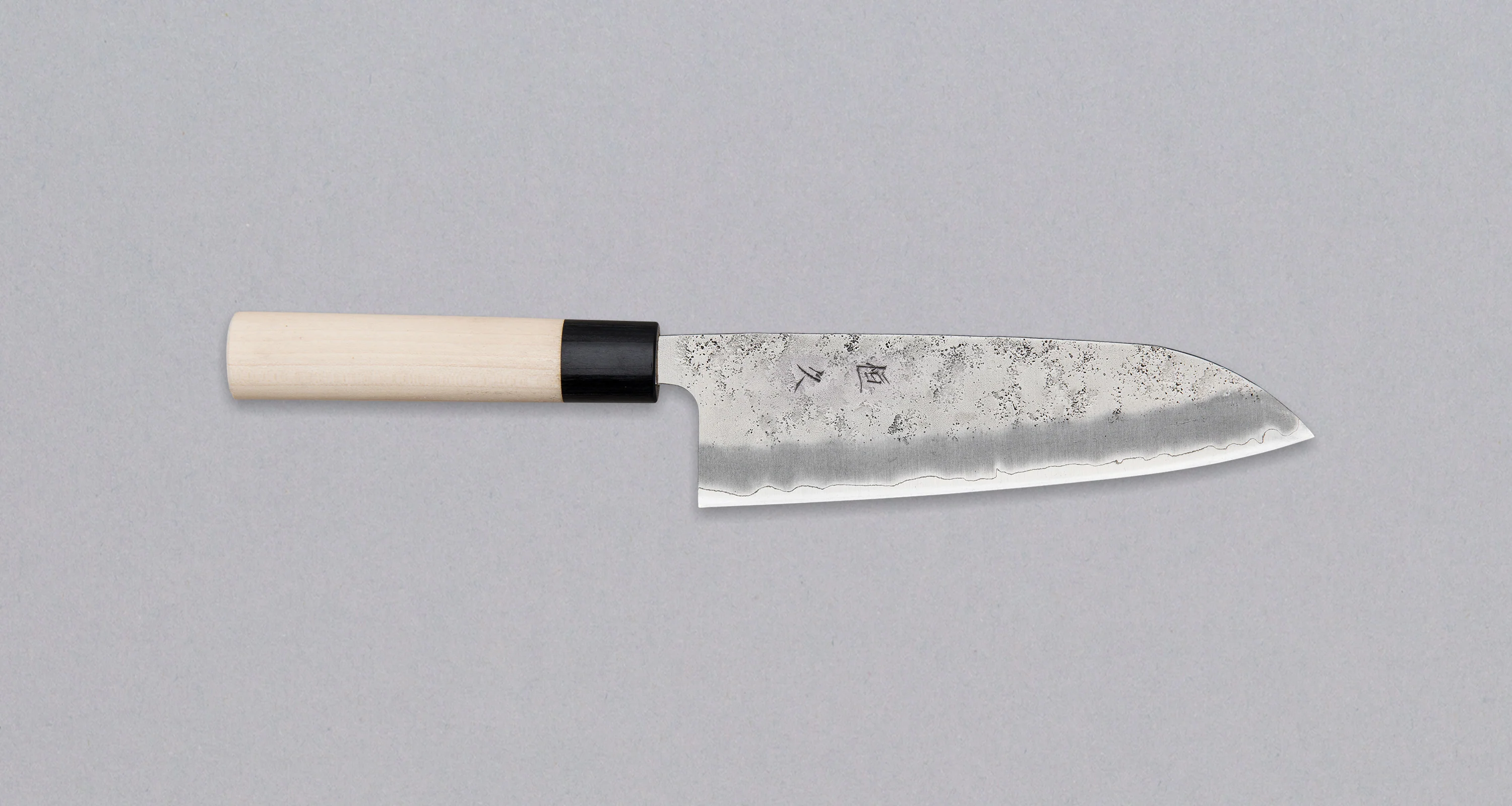
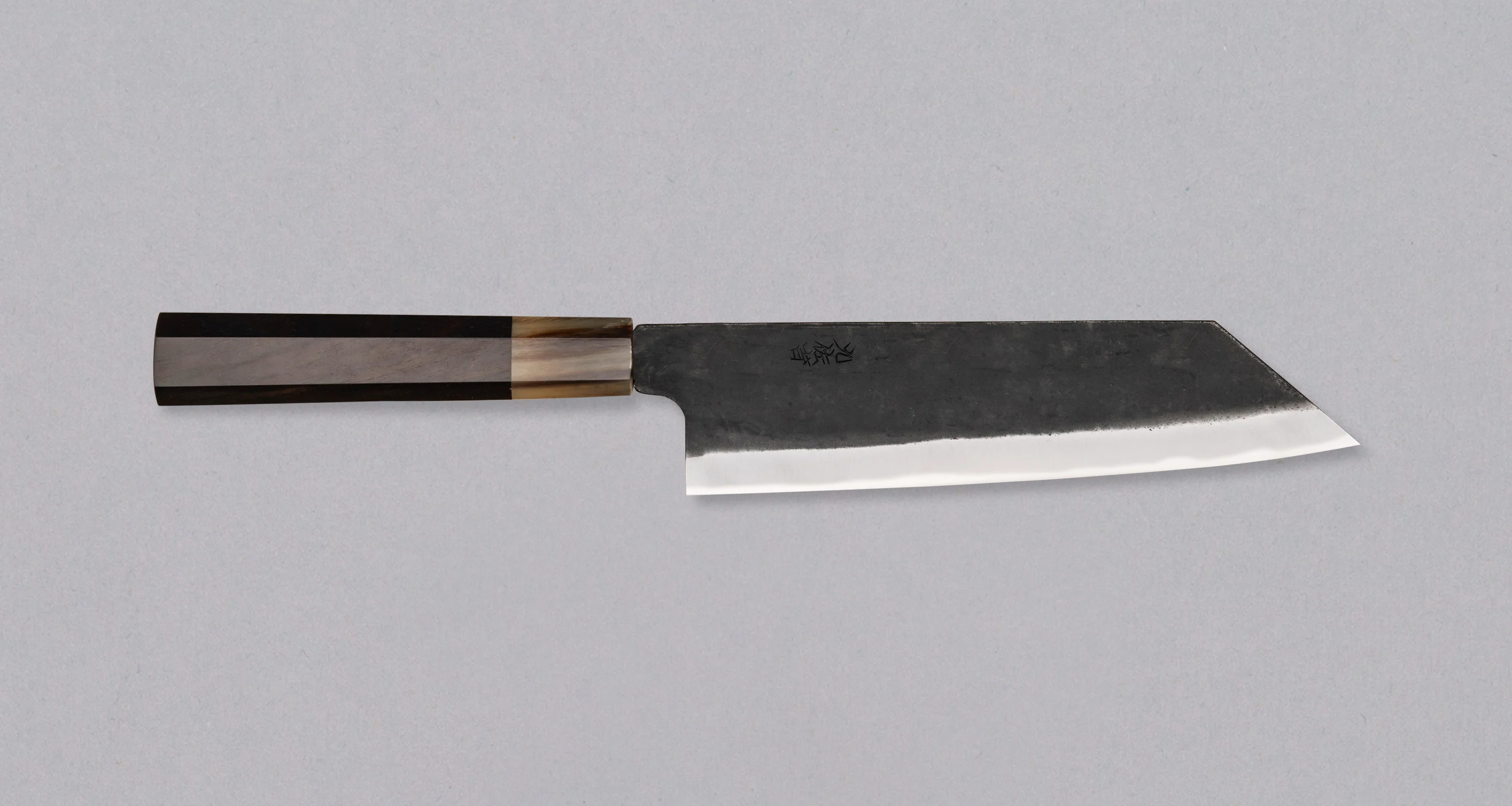
The blade has a dark finish, which is the reason this look is called kuro-uchi - the word “kuro” means black. This look is traditional and robust, with an unprocessed top part of the blade that has already developed a dark patina. The engraving on the blade 九佐吉 means: Yoshida Hamono, Saga, Kyushu.
HANDLE:
The blade is fitted with a traditional Japanese wa handle in an octagonal shape, crafted from chocolate brown ebony wood and topped with a ferrule made of light-colored buffalo horn. Ebony is a rare and precious wood with an exceptionally hard and dense structure, making the handle highly durable and resistant to moisture.
The slightly flattened octagonal shape of the handle helps it align well with the cutting board, and its symmetrical shape makes it suitable for both left- and right-handed users. This handle provides excellent blade control when slicing. Additionally, the compact grip minimizes the possibility of slipping during use.
ABOUT THE BLACKSMITH:
The knife is manufactured at the smithy of Yoshida Hamono in Japan, a family company with an age-long tradition in manufacturing state-of-the-art tools and Japanese swords, i.e., katanas, by hand. Yoshida Hamono has a great deal of experience forging ZDP-189 steel in the traditional manner.
Original: $269.42
-65%$269.42
$94.30More Images
![Yoshida Gyuto SUJ-2 Kuro-uchi 210mm (8.3") [Koi Fish] - Image 2](/images/sharpedgestore.shop/images/product/yoshida-gyuto-suj-2-kuro-uchi-210mm-koi-fish-2.jpg)
![Yoshida Gyuto SUJ-2 Kuro-uchi 210mm (8.3") [Koi Fish] - Image 3](/images/sharpedgestore.shop/images/product/yoshida-gyuto-suj-2-kuro-uchi-210mm-koi-fish-3.jpg)
![Yoshida Gyuto SUJ-2 Kuro-uchi 210mm (8.3") [Koi Fish] - Image 4](/images/sharpedgestore.shop/images/product/yoshida-gyuto-suj-2-kuro-uchi-210mm-koi-fish-4.jpg)
![Yoshida Gyuto SUJ-2 Kuro-uchi 210mm (8.3") [Koi Fish] - Image 5](/images/sharpedgestore.shop/images/product/yoshida-gyuto-suj-2-kuro-uchi-210mm-koi-fish-5.jpg)
![Yoshida Gyuto SUJ-2 Kuro-uchi 210mm (8.3") [Koi Fish] - Image 6](/images/sharpedgestore.shop/images/product/yoshida-gyuto-suj-2-kuro-uchi-210mm-koi-fish-6.jpg)
![Yoshida Gyuto SUJ-2 Kuro-uchi 210mm (8.3") [Koi Fish] - Image 7](/images/sharpedgestore.shop/images/product/yoshida-gyuto-suj-2-kuro-uchi-210mm-koi-fish-7.jpg)
Yoshida Gyuto SUJ-2 Kuro-uchi 210mm (8.3") [Koi Fish]
The Yoshida Gyuto SUJ-2 Kuro-uchi 210mm (8.3") is a handmade, versatile knife designed for a wide range of cutting tasks. Part of the Yoshida Hamono Kuro-uchi series, this knife is crafted from durable SUJ-2 steel (64.7 HRC), which offers exceptional edge retention and features a kuro-uchi finish for a rustic appearance and added durability. The high-end ebony handle provides a comfortable and secure grip, ensuring precise control while slicing, dicing, and chopping. With its traditional Japanese rustic design and unique koi fish engraving, this knife is an ideal choice for anyone looking to purchase their first Japanese blade and makes a fantastic gift for culinary enthusiasts.
The blade is handmade at the Yoshida Hamono Smithy in Saga Prefecture, located in the south of Japan. Every step of the process—lamination, forging, grinding, and heat treatment—is completed in-house. The extremely thin blade is crafted from SUJ-2 steel, known for its fine particle structure, which enhances cutting precision and provides exceptional sharpness and agility in use. With a hardness of 64.7 HRC, this steel ensures both edge retention and ease of sharpening. However, this high-performance blade does require some extra care—after each use, it should be rinsed and dried immediately to prevent rust.
|
To make this knife even more special, we engraved our unique Japanese koi fish illustration on the blade. The Japanese koi fish, known for its vibrant colors and graceful movements, is a symbol of strength, perseverance, and good fortune. In Japanese tradition, koi are admired for their resilience, as they are said to swim upstream and even transform into dragons, symbolizing the ability to overcome obstacles and achieve greatness. This design was created by the skilled tattoo artist Iva (@ivatattoo), owner of @rozatiger.tattoo. She is a passionate fan of all things related to Japan and specializes in Japanese motifs. |
BLADE SHAPE:
The gyuto is the Japanese equivalent of the Western chef's knife and is considered the most versatile and useful blade shape in the modern kitchen. It features a wide profile for easy food transfer and a slight curve extending from the heel to the tip, allowing for quick and efficient chopping using various cutting techniques on the cutting board. A pointed tip allows piercing and precise, delicate work. It is ideal for cutting meat, fish, and vegetables, particularly excelling with larger cuts of meat and substantial quantities of vegetables, making it an excellent tool for meal prep.
*Only a plastic saya fits this blade. Due to the hand-forged nature and the slightly non-standard size of the blade, the 210mm wooden saya does not fit properly.
STEEL:
The blade is forged from SUJ-2 steel, which offers impressive capabilities. With an above-average hardness of 64+ HRC, it stays sharp for a very long time, but at the same time is easy to resharpen.
❗ Because SUJ-2 steel does not contain a lot of chromium, such a blade will develop some patina during use. The advantage of this steel, however, is that it has a very fine, gentle sharpness, is easy to sharpen, and stays sharp for a very long time. Ballistol or Camellia oil is recommended for the care of such blades. After use, rinse it well and dry it.
|
SUJ-2 CHARACTERISTICS:
|
LAMINATION:
The blade’s core was laminated using the san-mai method to improve its structural integrity and subsequent ability to withstand impacts and prevent chipping. San-mai translates to “three layers” in Japanese, referring to a blade that is composed of a primary, inner layer of harder steel (hagane) and of two secondary, outer layers of softer steel (jigane) that protect the prior.
→ Read more on Blade Construction: Lamination.
GEOMETRY:
It has a double bevel (symmetrical) blade (50/50) with a convex v-edge grind. Viewed from the back of the blade, the knife is heavier and stronger at the handle and thinner and more precise at the tip. This blade shape makes the knife easier to use because the blade is very responsive, easily maneuverable and nicely balanced. This type of blade design is also called distal taper - you can read more about it in the article on blade geometry.
BLADE FINISH:
The blade has a dark finish, which is the reason this look is called kuro-uchi - the word “kuro” means black. This look is traditional and robust, with an unprocessed top part of the blade that has already developed a dark patina. The engraving on the blade 九佐吉 means: Yoshida Hamono, Saga, Kyushu.
HANDLE:
The blade is fitted with a traditional Japanese wa handle in an octagonal shape, crafted from chocolate brown ebony wood and topped with a ferrule made of light-colored buffalo horn. Ebony is a rare and precious wood with an exceptionally hard and dense structure, making the handle highly durable and resistant to moisture.
The slightly flattened octagonal shape of the handle helps it align well with the cutting board, and its symmetrical shape makes it suitable for both left- and right-handed users. This handle provides excellent blade control when slicing. Additionally, the compact grip minimizes the possibility of slipping during use.
ABOUT THE BLACKSMITH:
The knife is manufactured at the smithy of Yoshida Hamono in Japan, a family company with an age-long tradition in manufacturing state-of-the-art tools and Japanese swords, i.e., katanas, by hand. Yoshida Hamono has a great deal of experience forging ZDP-189 steel in the traditional manner.
Product Information
Product Information
Shipping & Returns
Shipping & Returns
Description
The Yoshida Gyuto SUJ-2 Kuro-uchi 210mm (8.3") is a handmade, versatile knife designed for a wide range of cutting tasks. Part of the Yoshida Hamono Kuro-uchi series, this knife is crafted from durable SUJ-2 steel (64.7 HRC), which offers exceptional edge retention and features a kuro-uchi finish for a rustic appearance and added durability. The high-end ebony handle provides a comfortable and secure grip, ensuring precise control while slicing, dicing, and chopping. With its traditional Japanese rustic design and unique koi fish engraving, this knife is an ideal choice for anyone looking to purchase their first Japanese blade and makes a fantastic gift for culinary enthusiasts.
The blade is handmade at the Yoshida Hamono Smithy in Saga Prefecture, located in the south of Japan. Every step of the process—lamination, forging, grinding, and heat treatment—is completed in-house. The extremely thin blade is crafted from SUJ-2 steel, known for its fine particle structure, which enhances cutting precision and provides exceptional sharpness and agility in use. With a hardness of 64.7 HRC, this steel ensures both edge retention and ease of sharpening. However, this high-performance blade does require some extra care—after each use, it should be rinsed and dried immediately to prevent rust.
|
To make this knife even more special, we engraved our unique Japanese koi fish illustration on the blade. The Japanese koi fish, known for its vibrant colors and graceful movements, is a symbol of strength, perseverance, and good fortune. In Japanese tradition, koi are admired for their resilience, as they are said to swim upstream and even transform into dragons, symbolizing the ability to overcome obstacles and achieve greatness. This design was created by the skilled tattoo artist Iva (@ivatattoo), owner of @rozatiger.tattoo. She is a passionate fan of all things related to Japan and specializes in Japanese motifs. |
BLADE SHAPE:
The gyuto is the Japanese equivalent of the Western chef's knife and is considered the most versatile and useful blade shape in the modern kitchen. It features a wide profile for easy food transfer and a slight curve extending from the heel to the tip, allowing for quick and efficient chopping using various cutting techniques on the cutting board. A pointed tip allows piercing and precise, delicate work. It is ideal for cutting meat, fish, and vegetables, particularly excelling with larger cuts of meat and substantial quantities of vegetables, making it an excellent tool for meal prep.
*Only a plastic saya fits this blade. Due to the hand-forged nature and the slightly non-standard size of the blade, the 210mm wooden saya does not fit properly.
STEEL:
The blade is forged from SUJ-2 steel, which offers impressive capabilities. With an above-average hardness of 64+ HRC, it stays sharp for a very long time, but at the same time is easy to resharpen.
❗ Because SUJ-2 steel does not contain a lot of chromium, such a blade will develop some patina during use. The advantage of this steel, however, is that it has a very fine, gentle sharpness, is easy to sharpen, and stays sharp for a very long time. Ballistol or Camellia oil is recommended for the care of such blades. After use, rinse it well and dry it.
|
SUJ-2 CHARACTERISTICS:
|
LAMINATION:
The blade’s core was laminated using the san-mai method to improve its structural integrity and subsequent ability to withstand impacts and prevent chipping. San-mai translates to “three layers” in Japanese, referring to a blade that is composed of a primary, inner layer of harder steel (hagane) and of two secondary, outer layers of softer steel (jigane) that protect the prior.
→ Read more on Blade Construction: Lamination.
GEOMETRY:
It has a double bevel (symmetrical) blade (50/50) with a convex v-edge grind. Viewed from the back of the blade, the knife is heavier and stronger at the handle and thinner and more precise at the tip. This blade shape makes the knife easier to use because the blade is very responsive, easily maneuverable and nicely balanced. This type of blade design is also called distal taper - you can read more about it in the article on blade geometry.
BLADE FINISH:
The blade has a dark finish, which is the reason this look is called kuro-uchi - the word “kuro” means black. This look is traditional and robust, with an unprocessed top part of the blade that has already developed a dark patina. The engraving on the blade 九佐吉 means: Yoshida Hamono, Saga, Kyushu.
HANDLE:
The blade is fitted with a traditional Japanese wa handle in an octagonal shape, crafted from chocolate brown ebony wood and topped with a ferrule made of light-colored buffalo horn. Ebony is a rare and precious wood with an exceptionally hard and dense structure, making the handle highly durable and resistant to moisture.
The slightly flattened octagonal shape of the handle helps it align well with the cutting board, and its symmetrical shape makes it suitable for both left- and right-handed users. This handle provides excellent blade control when slicing. Additionally, the compact grip minimizes the possibility of slipping during use.
ABOUT THE BLACKSMITH:
The knife is manufactured at the smithy of Yoshida Hamono in Japan, a family company with an age-long tradition in manufacturing state-of-the-art tools and Japanese swords, i.e., katanas, by hand. Yoshida Hamono has a great deal of experience forging ZDP-189 steel in the traditional manner.