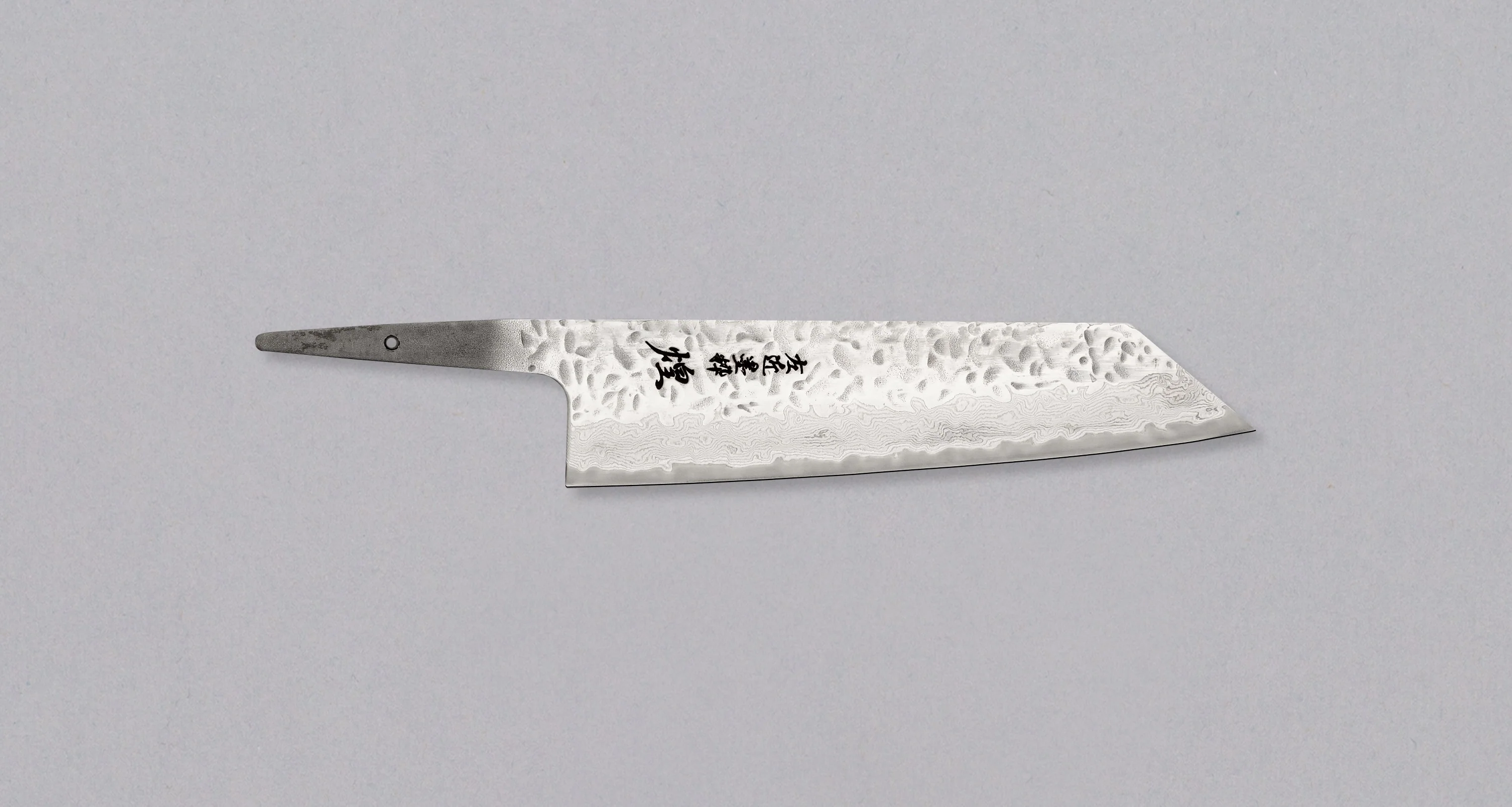
Hokiyama Bunka Damascus AUS-10 170mm (6.7") - BLADE
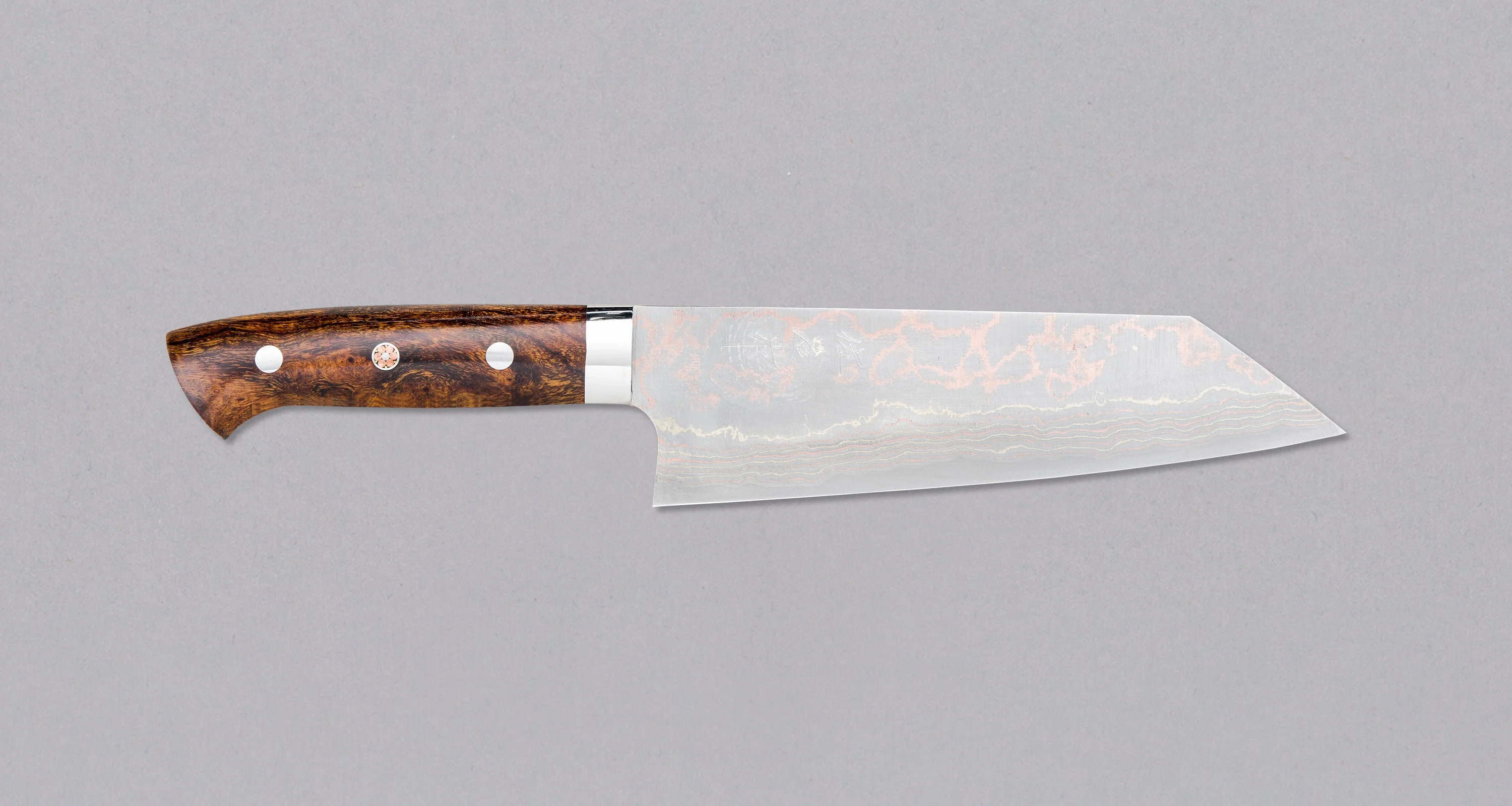
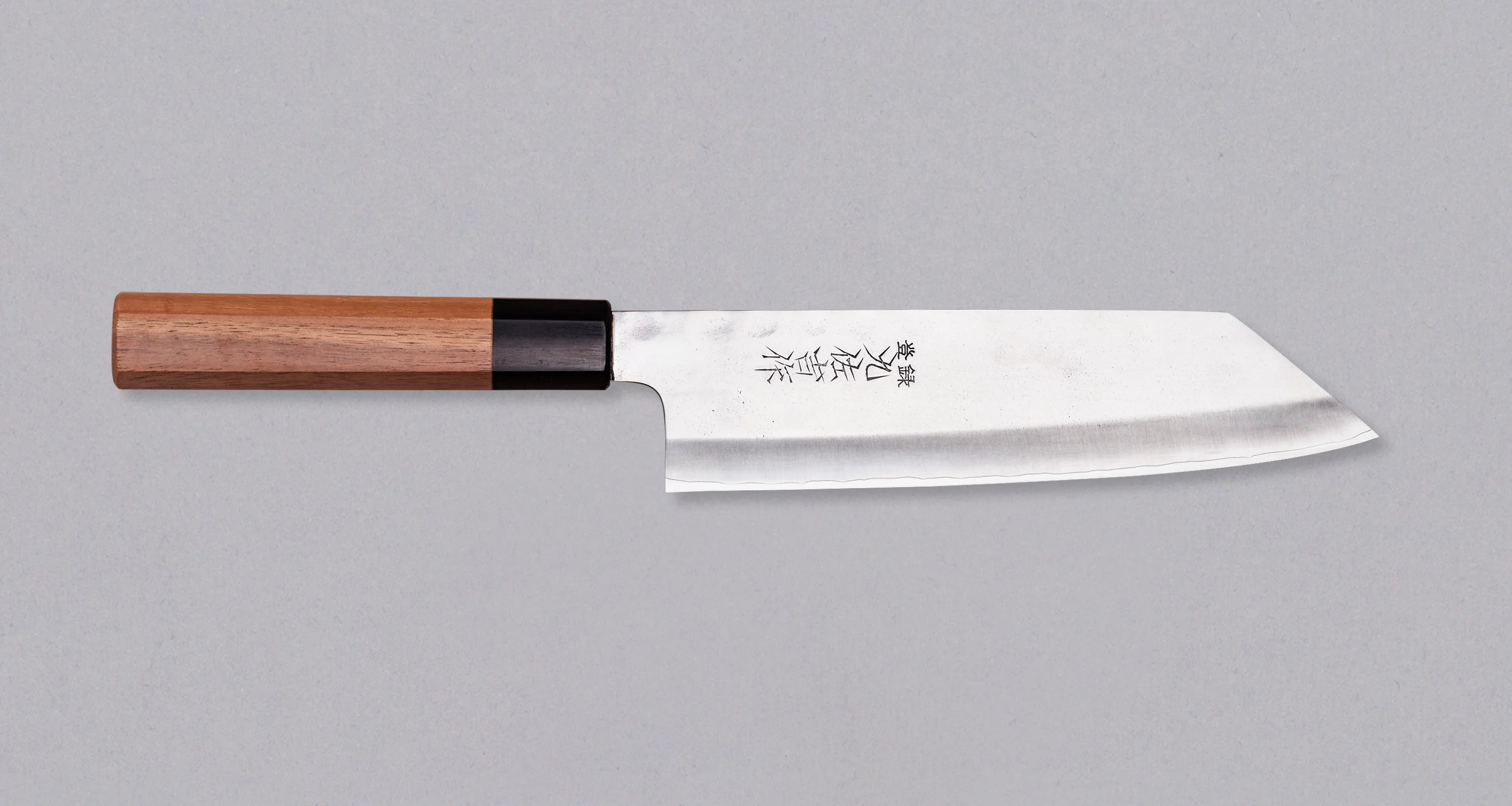
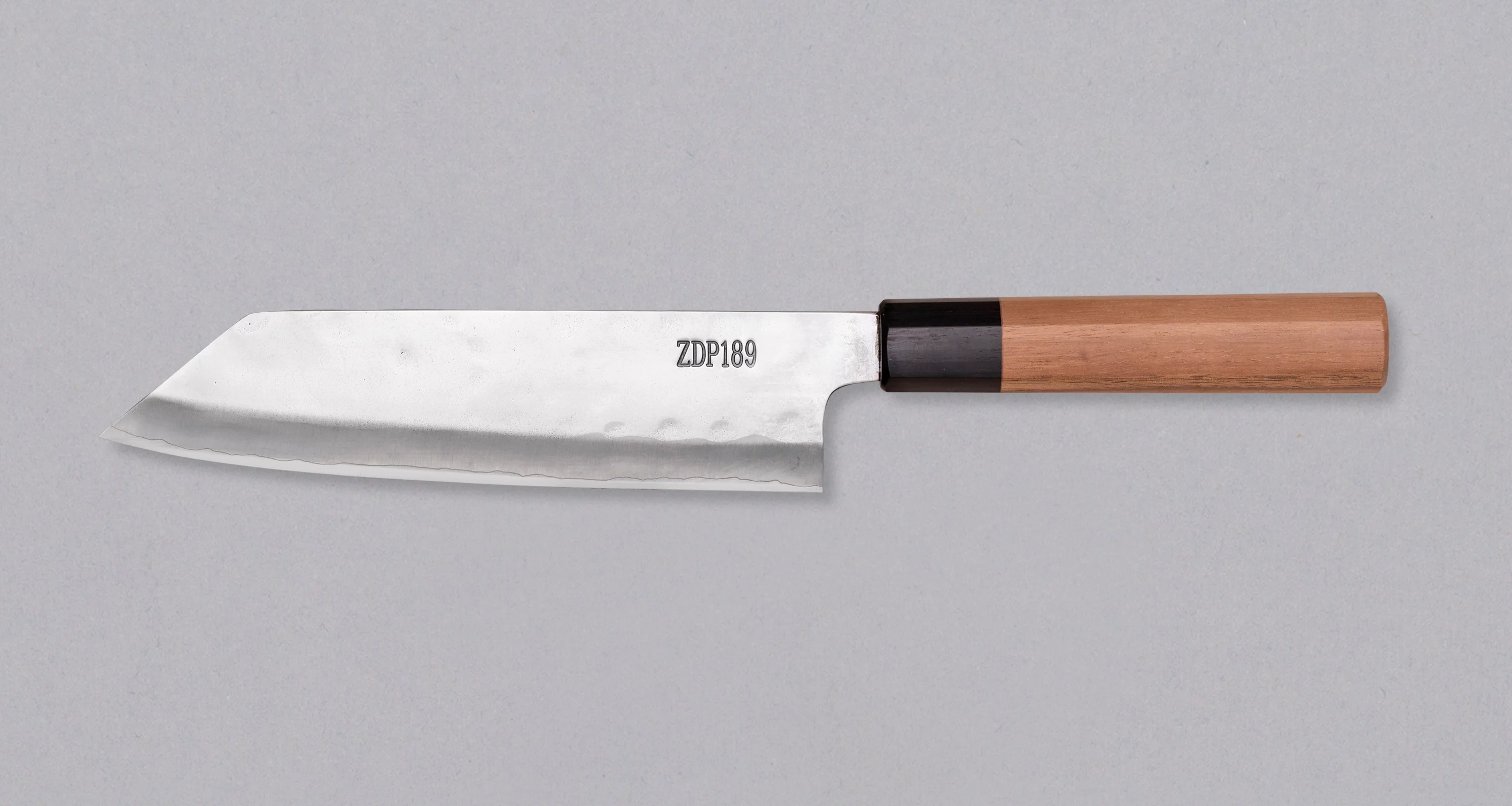
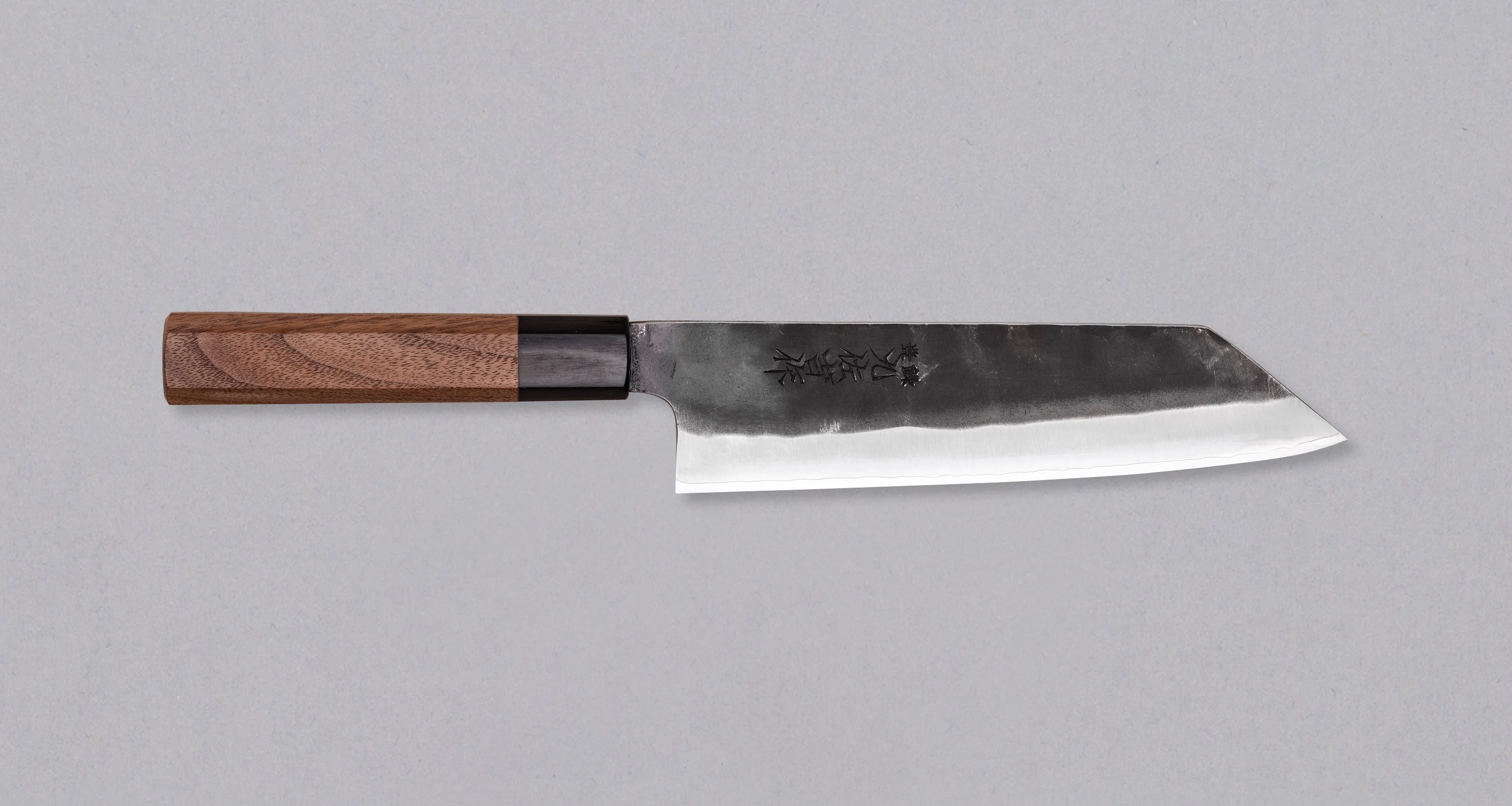
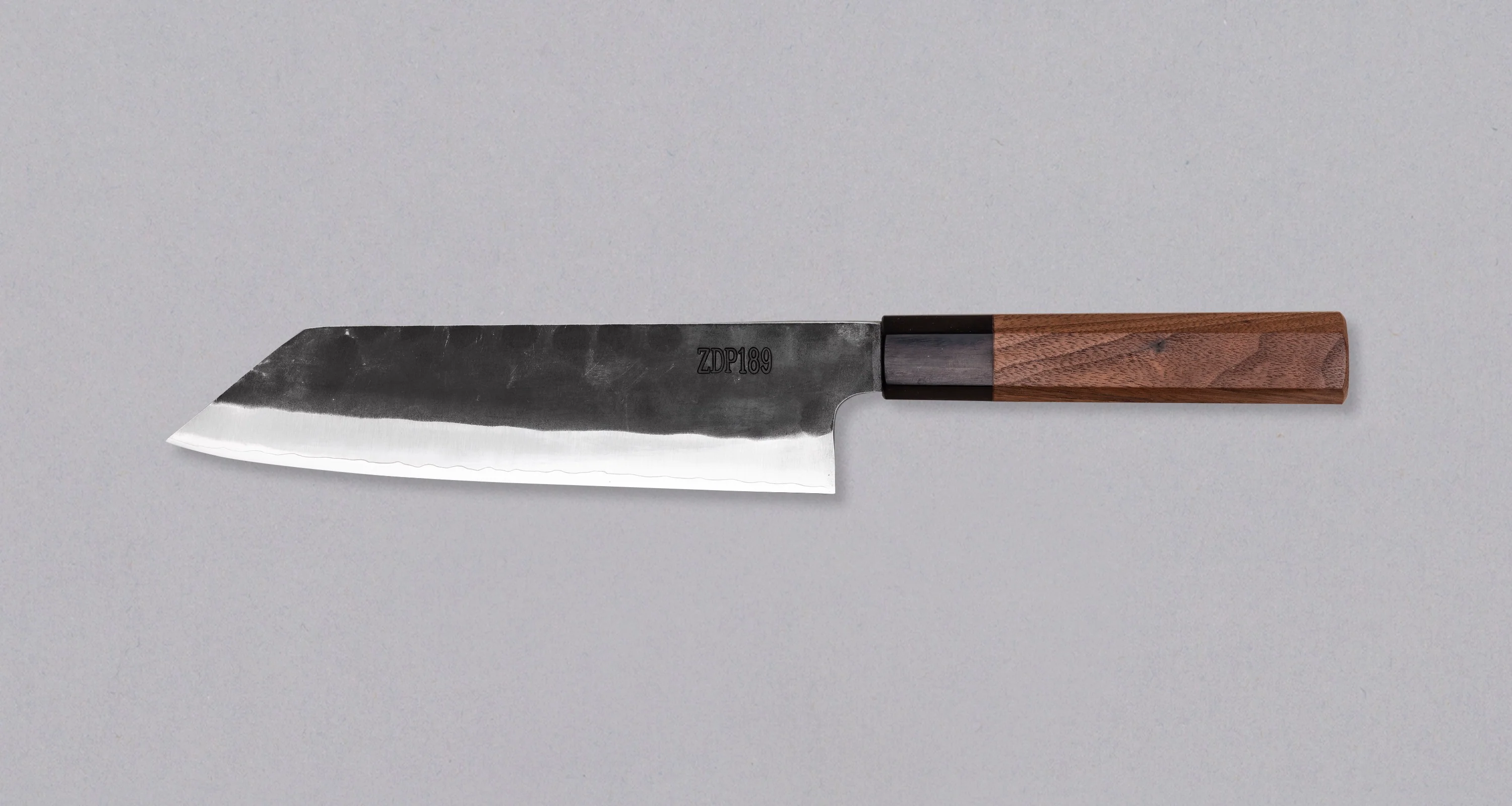
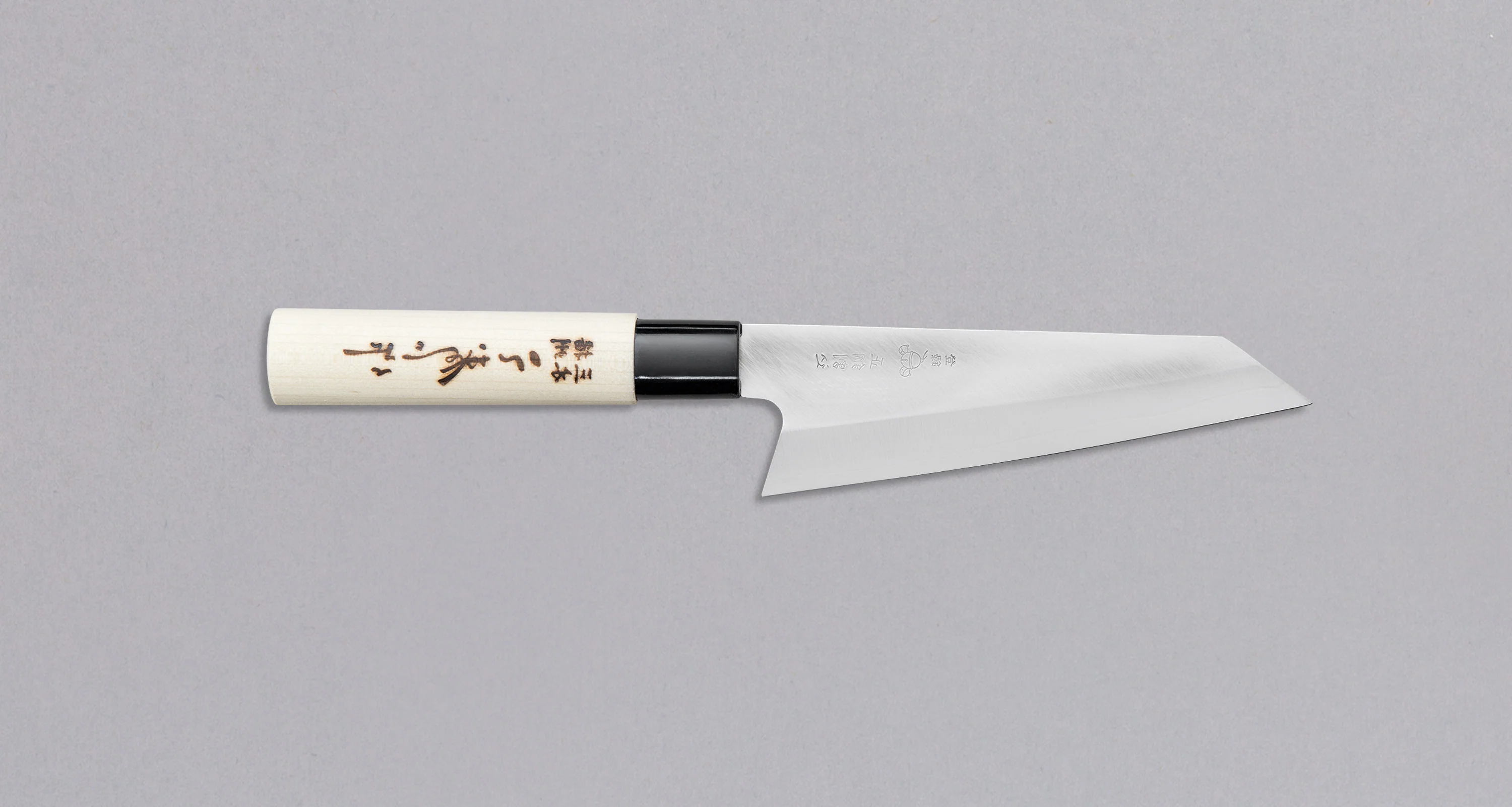
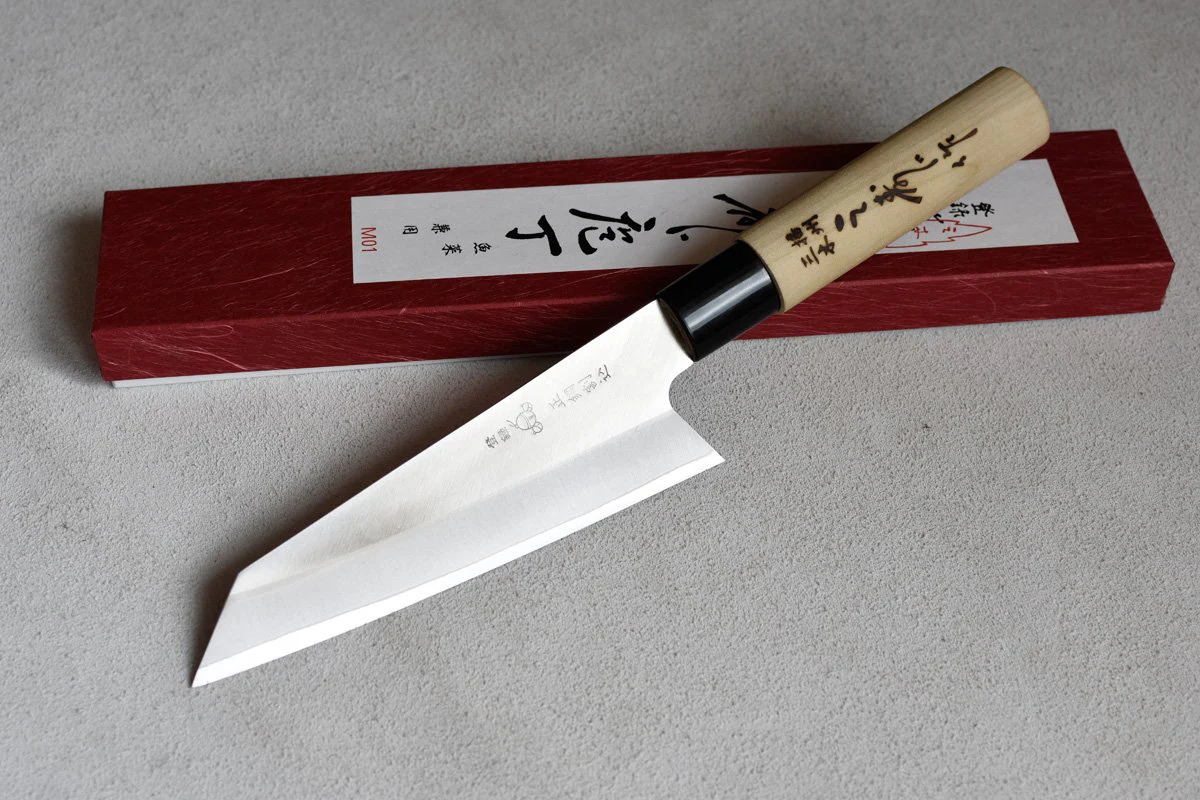
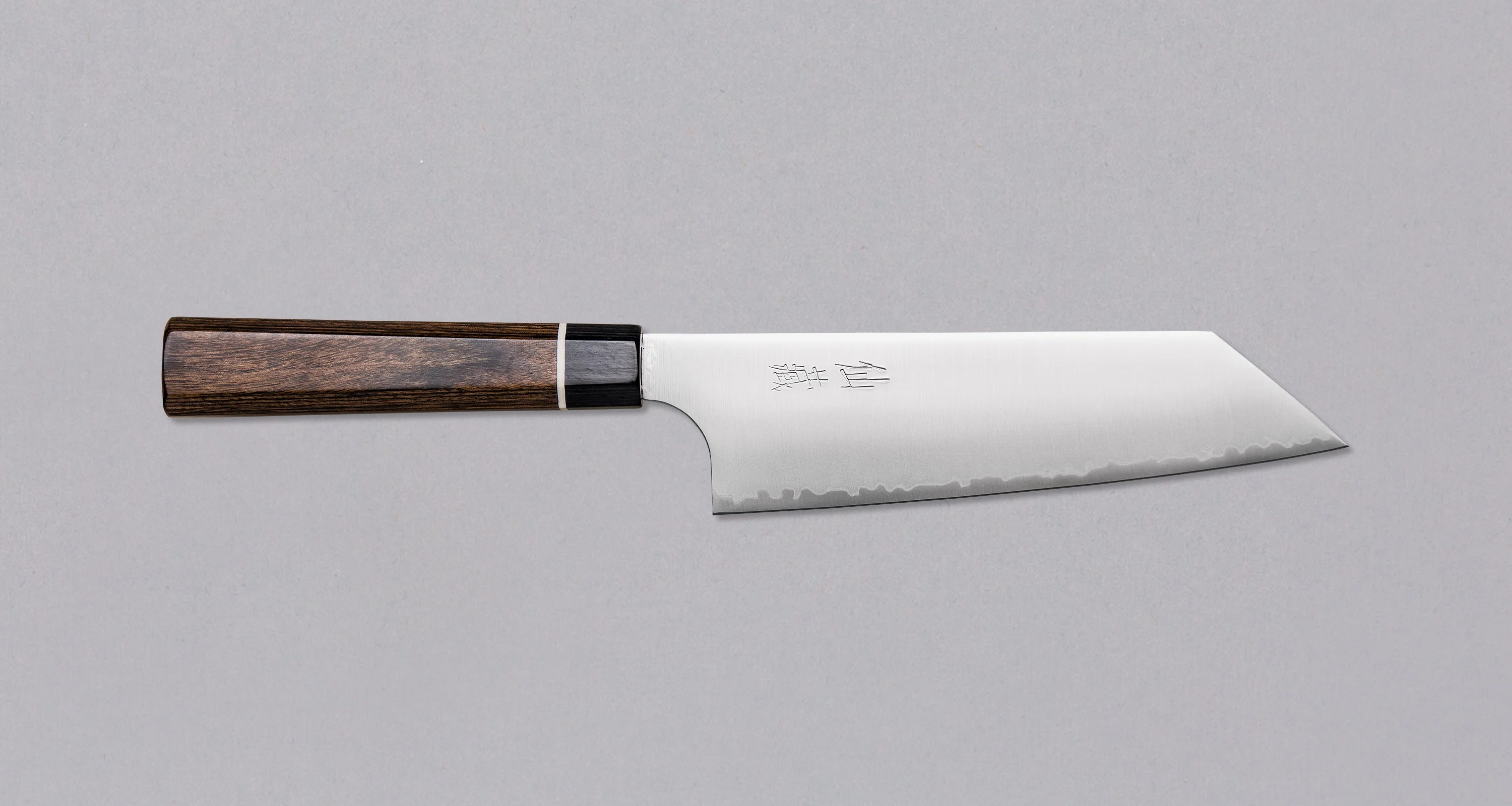
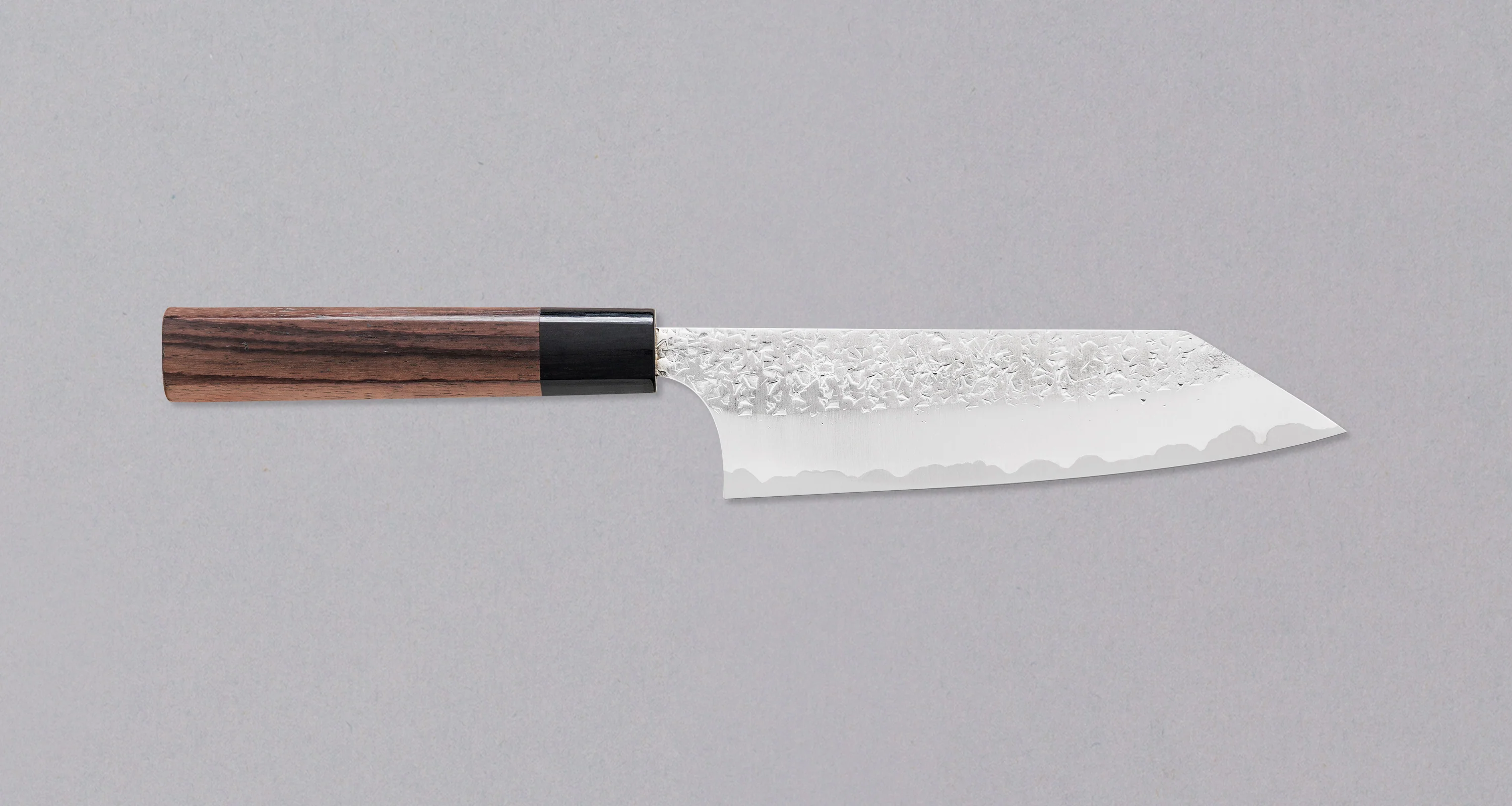
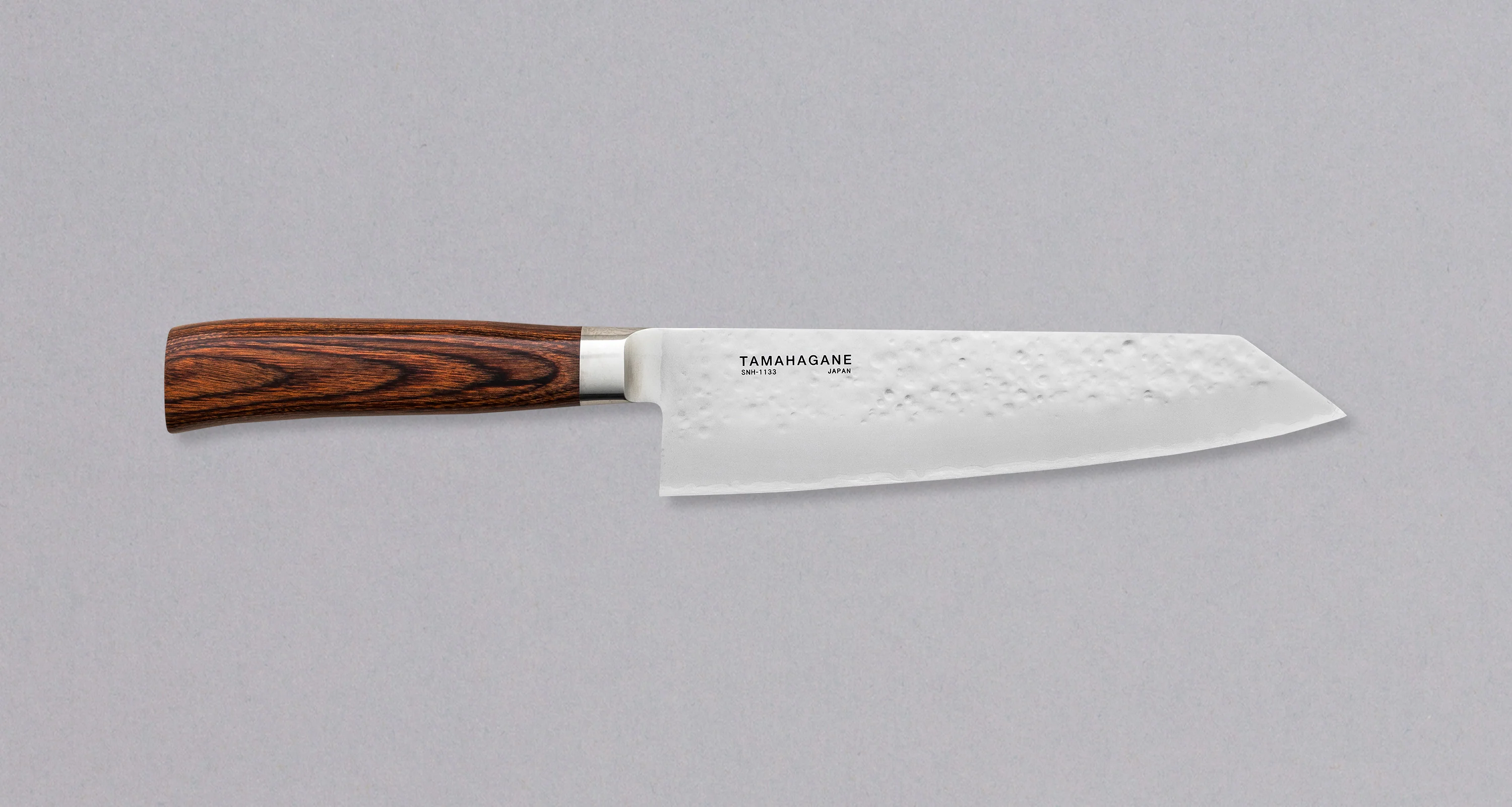
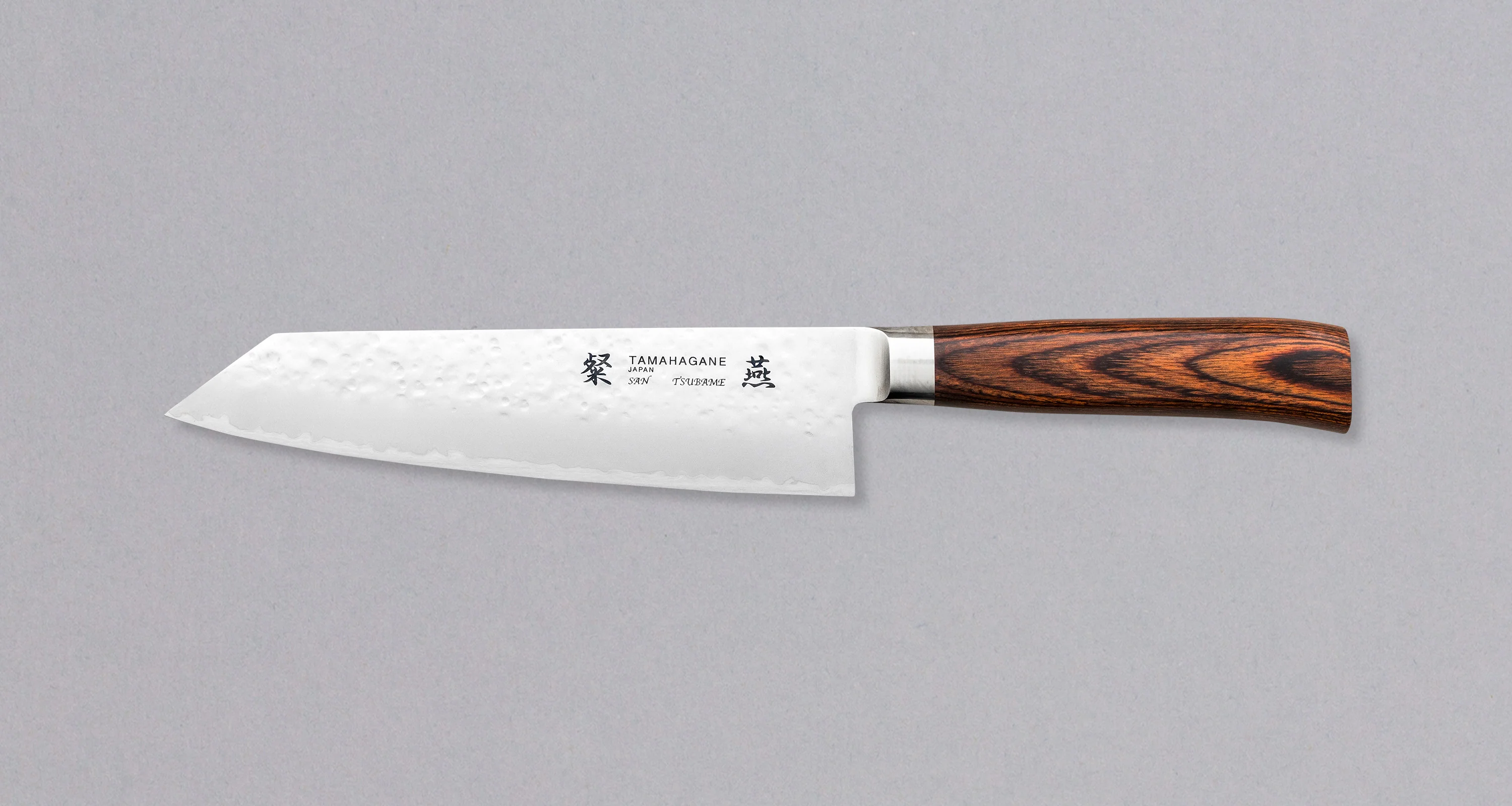
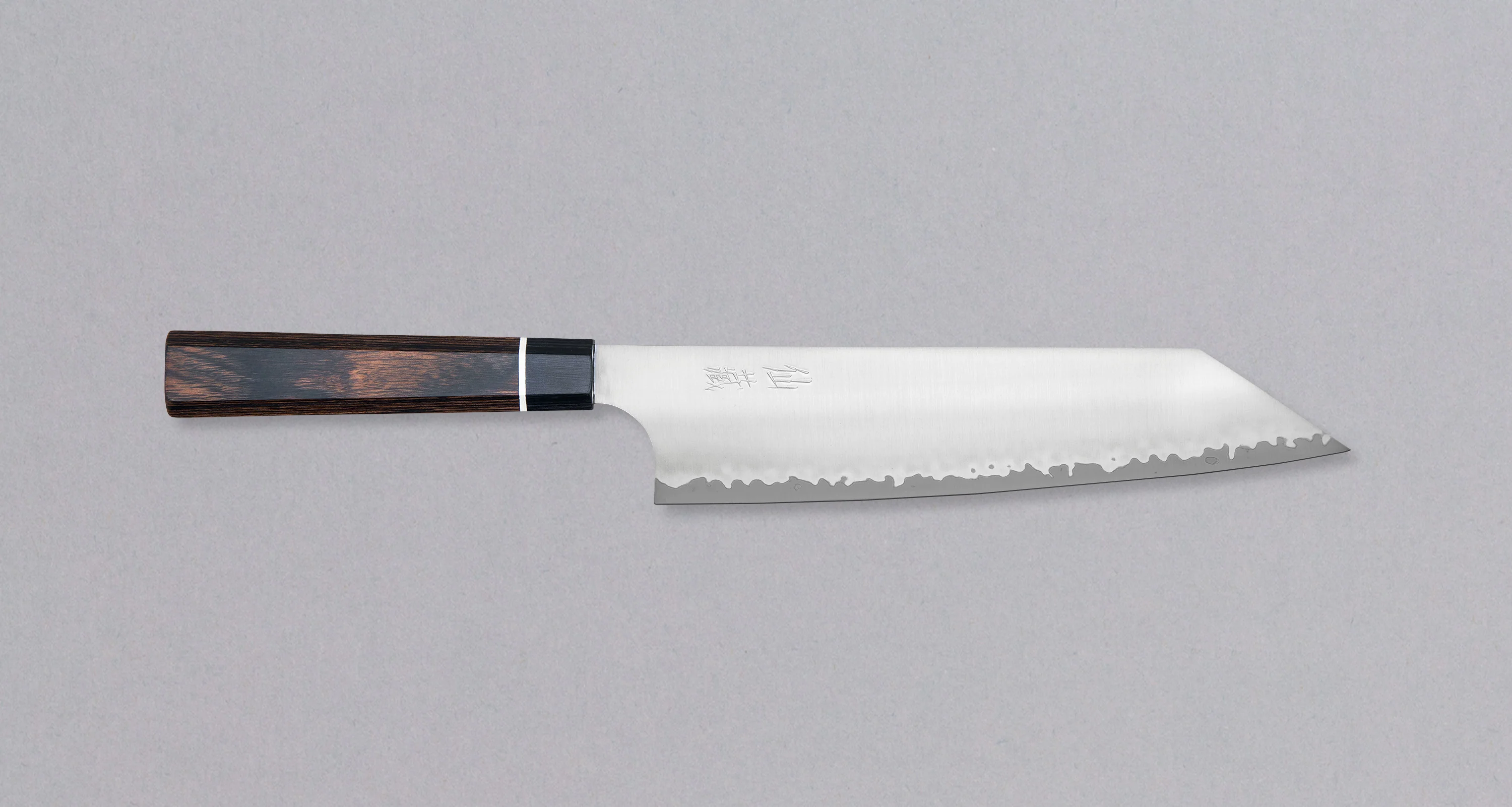
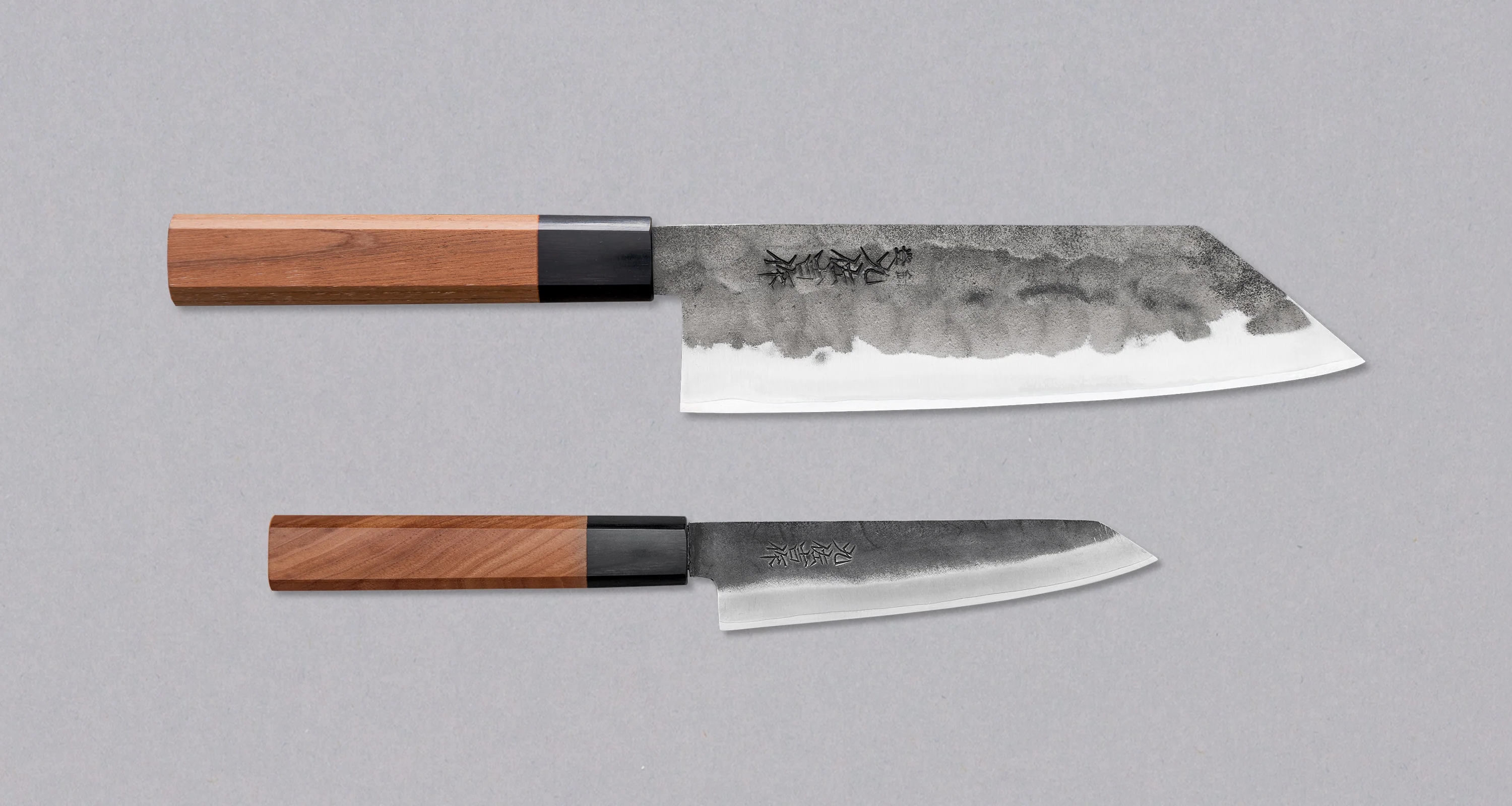
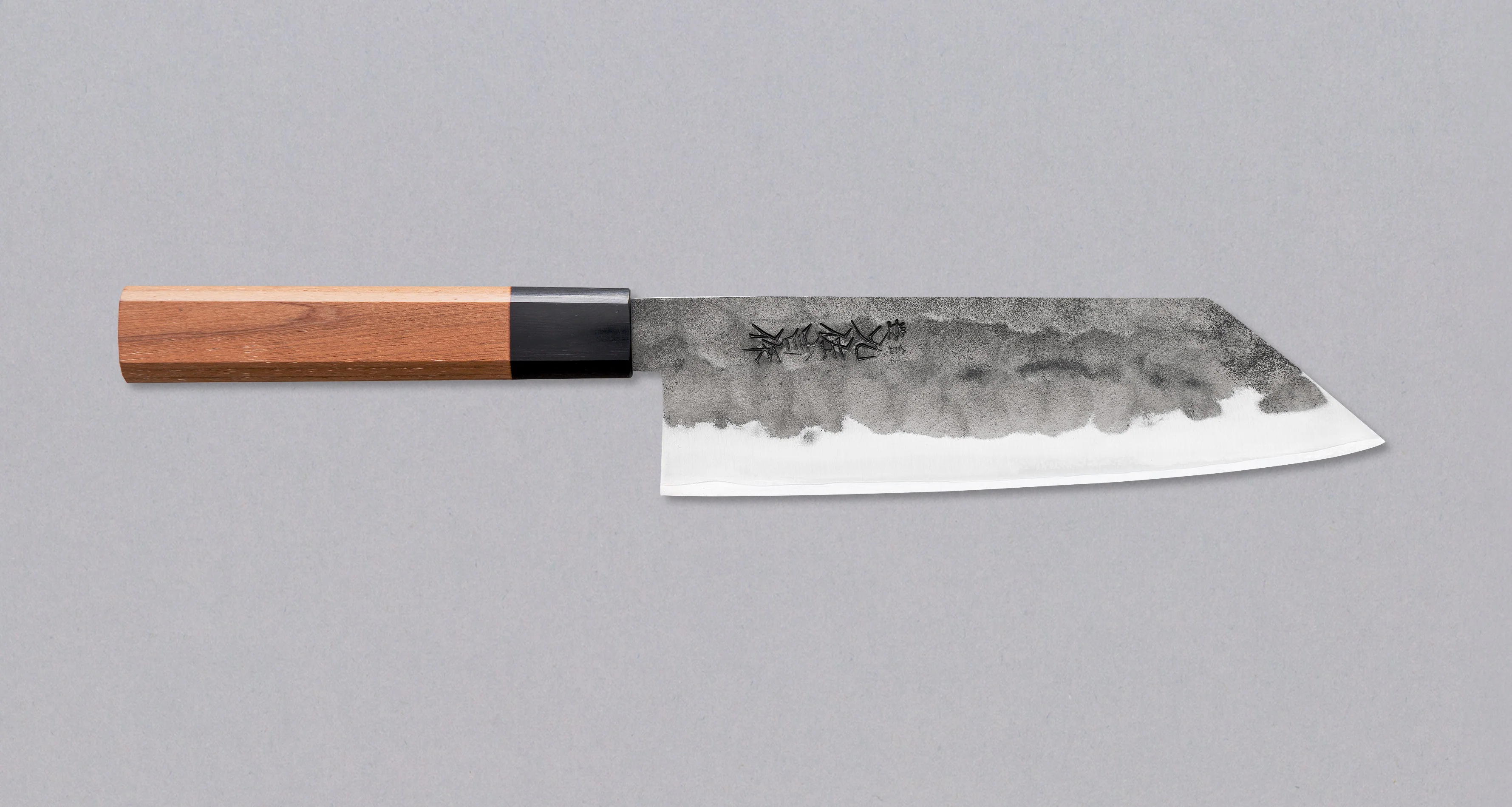
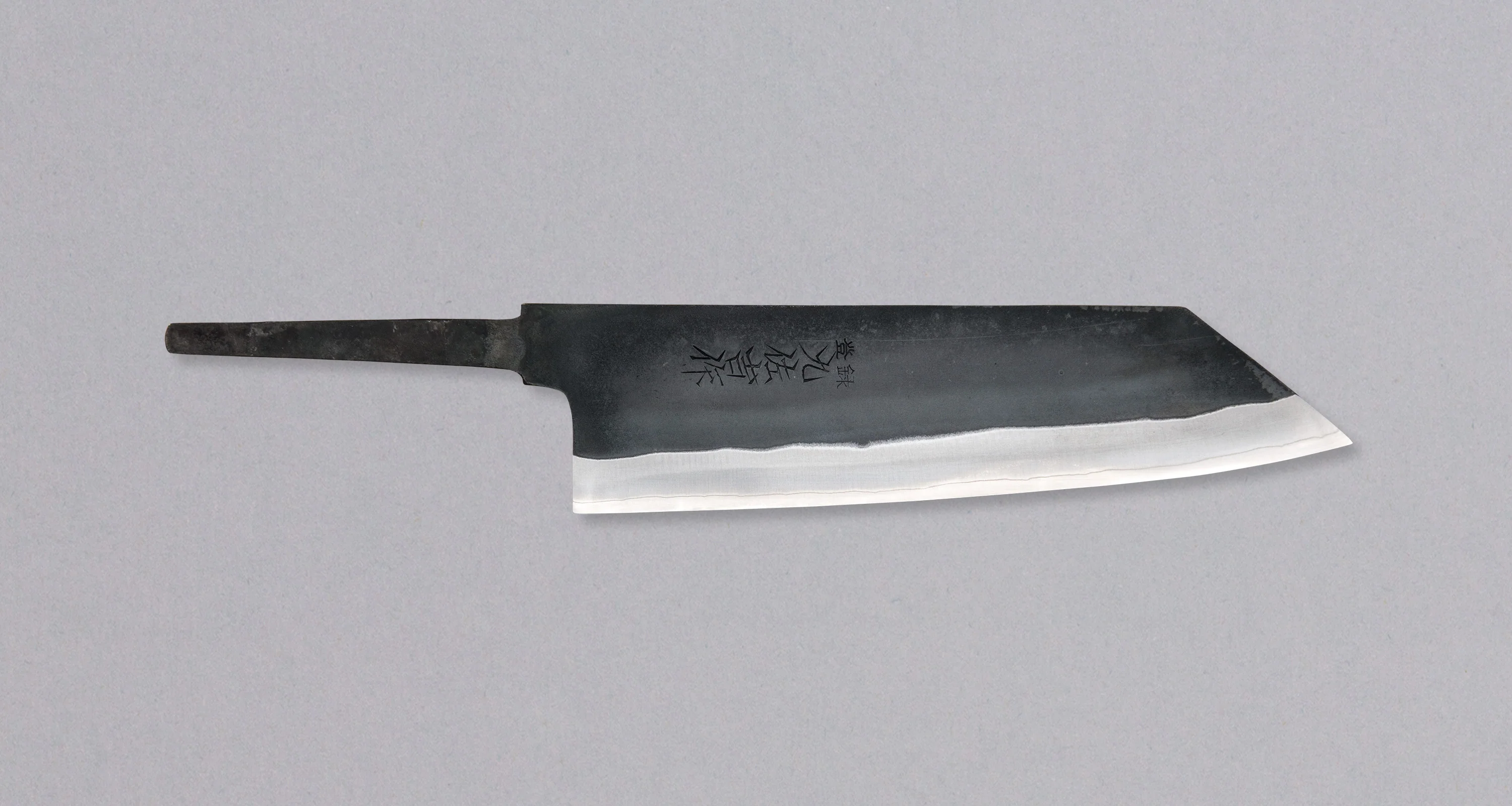
The Hokiyama Bunka AUS-10 Damascus 170mm is a small, handy bunka blade with a stunning damascus and tsuchime blade finish. The bunka shape works great for preparing vegetables, meat, and fish, and this smaller version is great for people who find larger knives too unwieldy, as it offers great control for either short or long cuts. The thin, pointy reverse tanto tip allows for extra precise cuts and carvings.
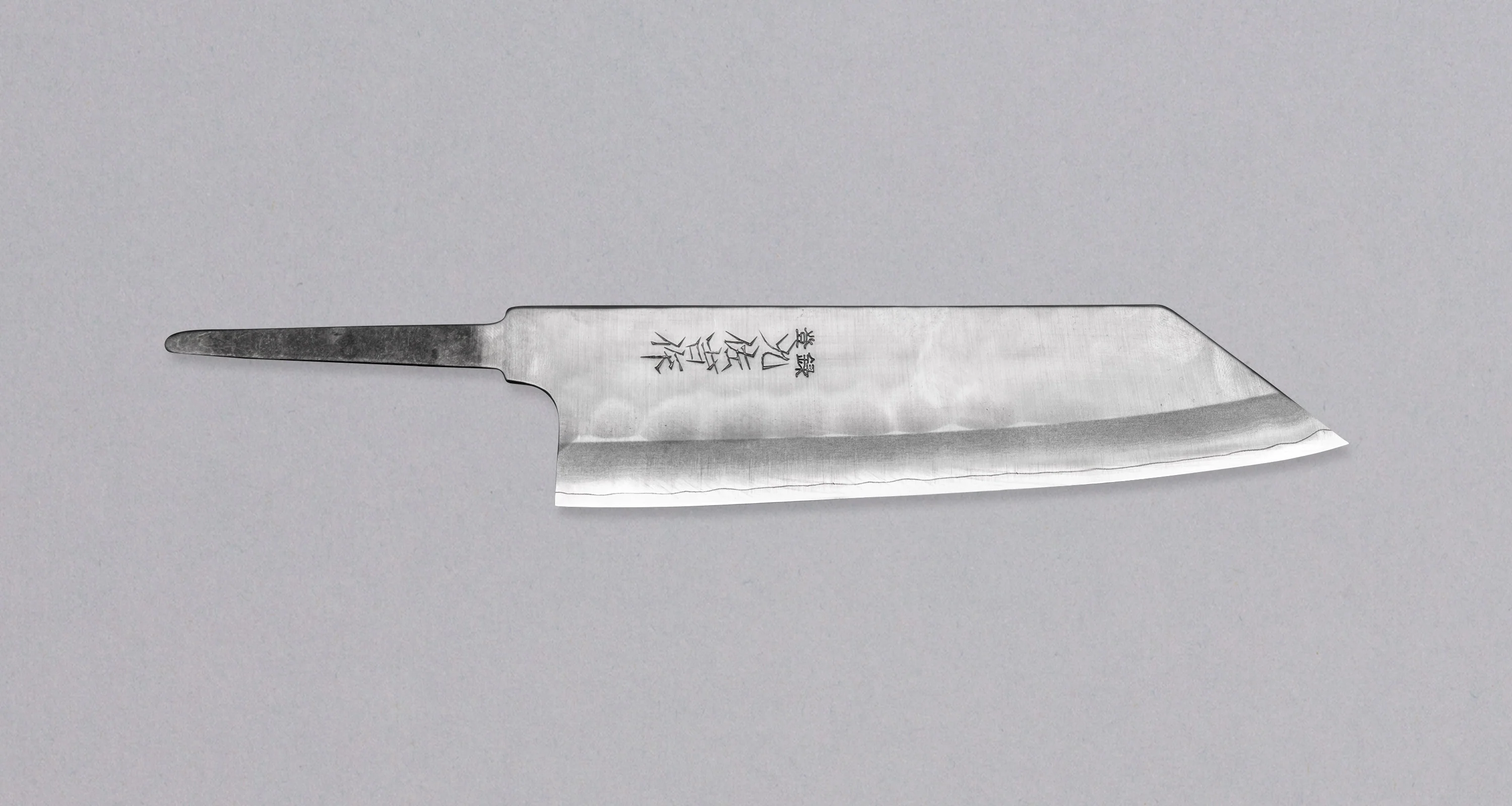
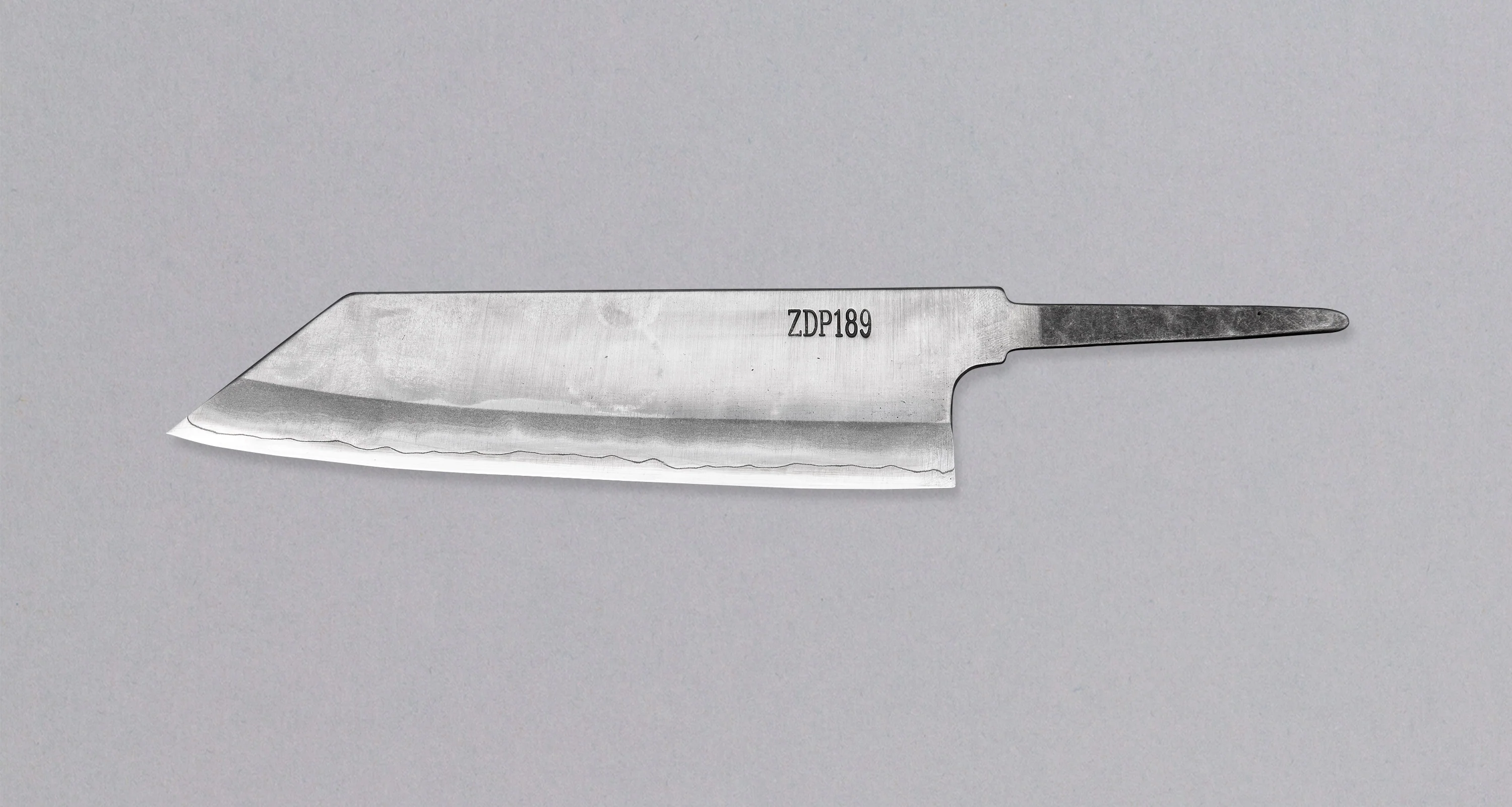
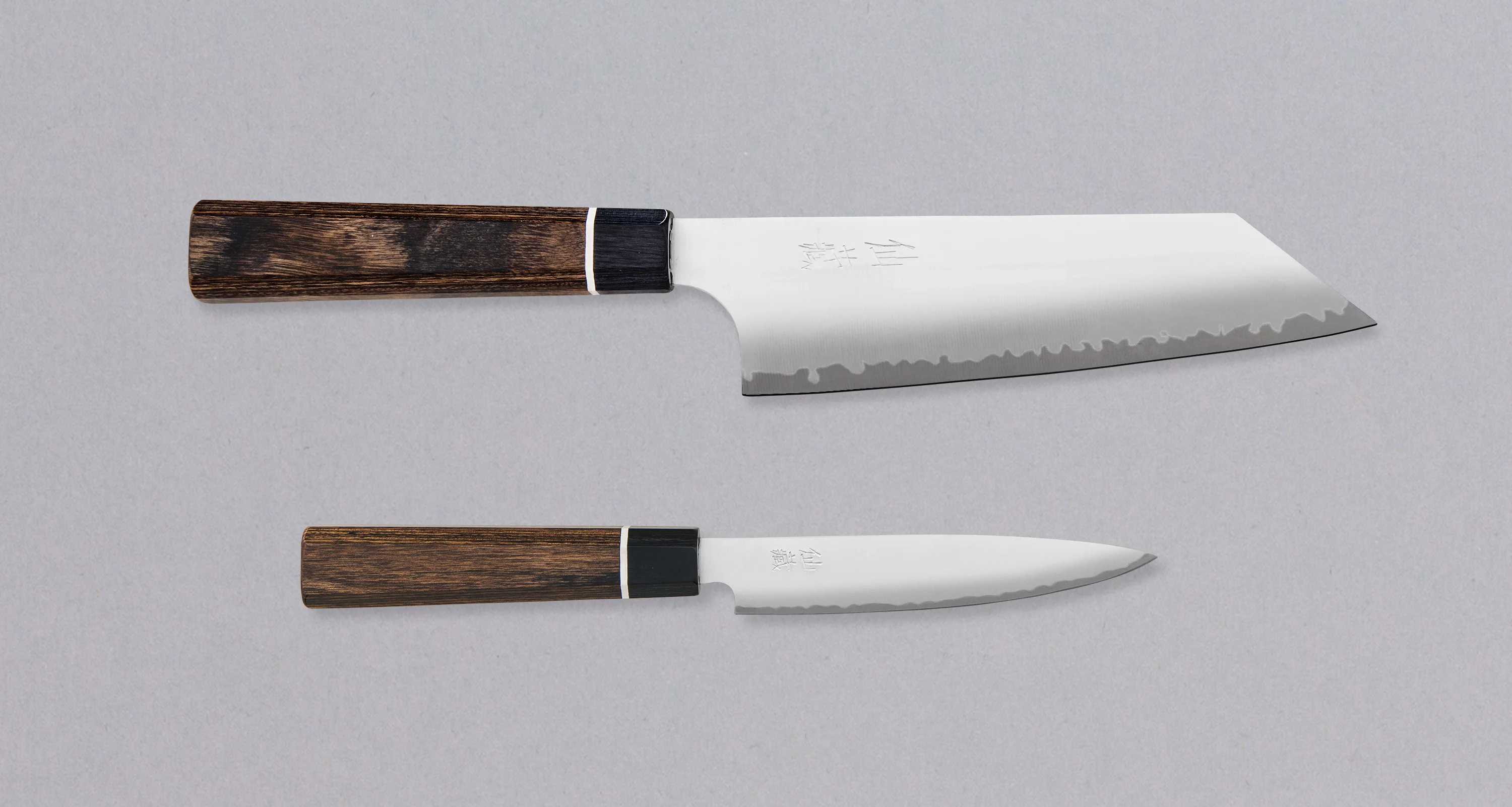
This blade is available without a handle. Now is your chance to make your own handle or order it separately so you can put together a one-of-a-kind knife that is perfectly suited to your taste and needs.
BLADE SHAPE:
Bunka is one of the most versatile and useful blade shapes in the modern kitchen. It has a wide profile for easy food transfer and tends to be fairly flat towards the heel, enabling easy and fast chopping on the cutting board. A pointed tip allows piercing and precise, delicate work. A slight curve between the tip and the midsection makes the belly great for rocking the blade back and forth when cutting. It can be used for cutting meat, fish, and vegetables.
You can learn everything you need to know about the Japanese bunka knife in our article.
STEEL:
The heart of this bunka is made of Aichi's AUS-10 stainless steel, which was hardened to around 59-60 HRC. Due to its high content of Chromium (Cr), AUS-10 steel will resist corrosion very well.
BLADE FINISH:
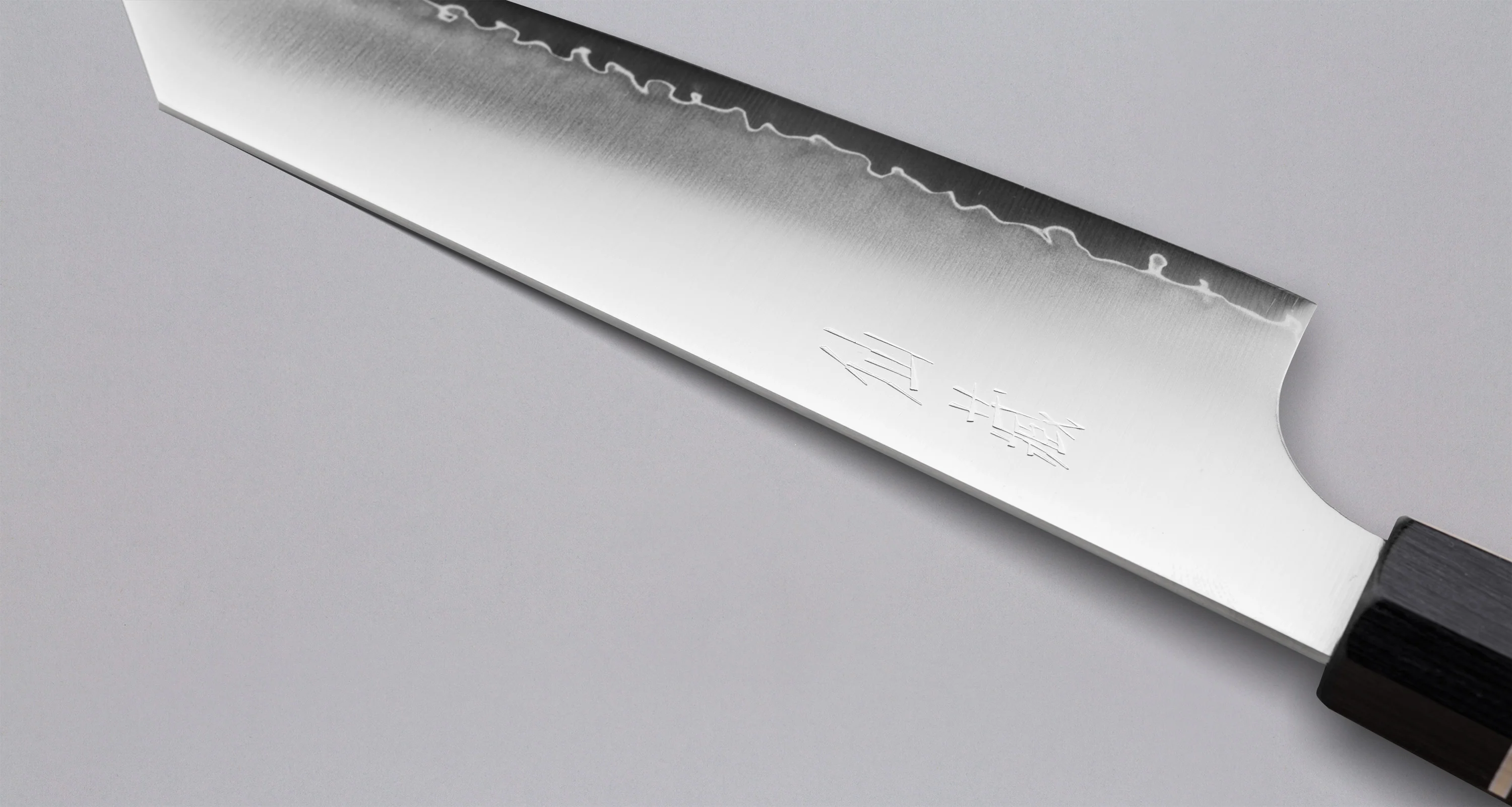
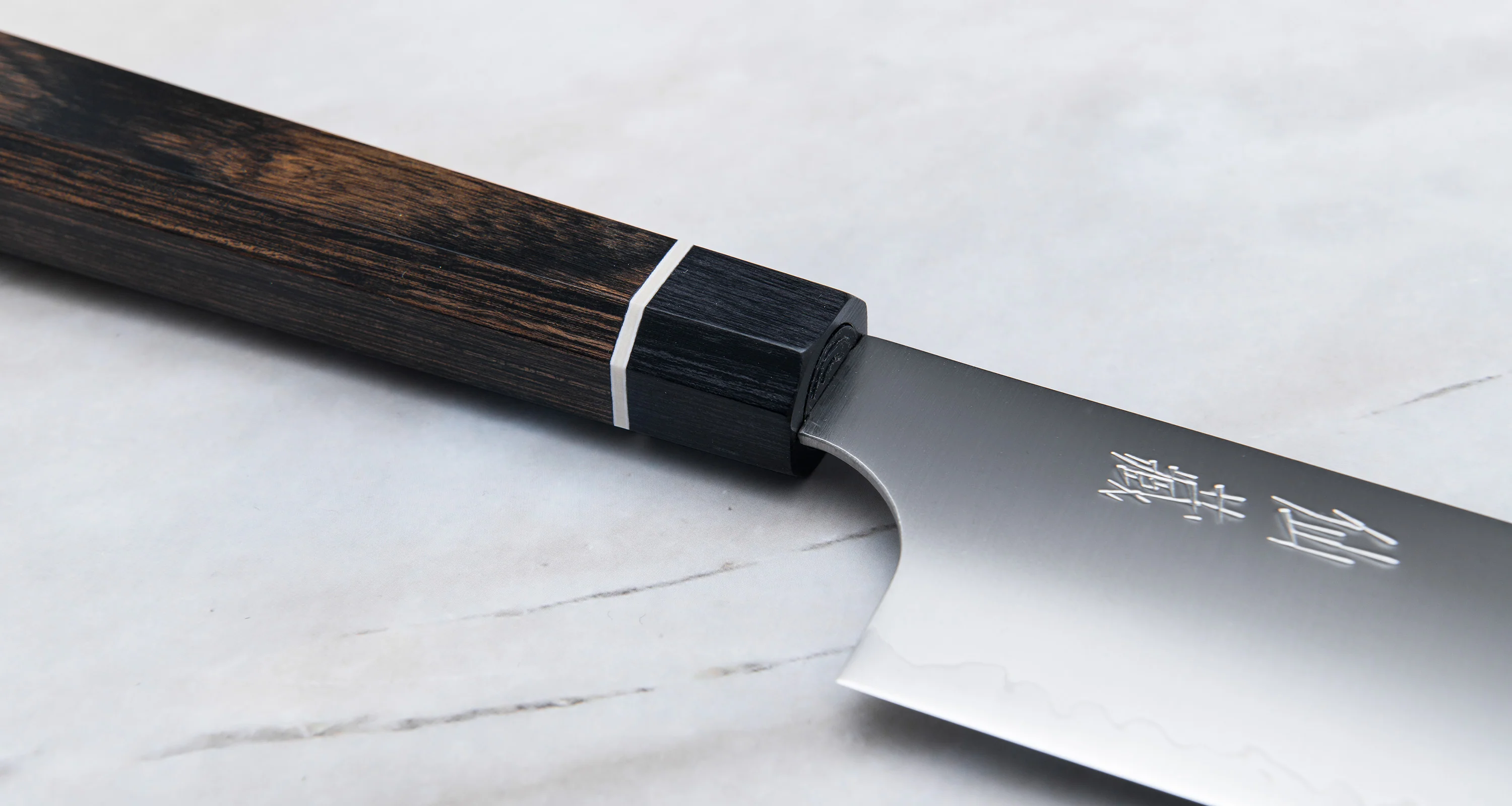
The upper part of the blade features a hammered pattern, which then transforms into an intricate damascus finish that flows down to the cutting edge. The blade was treated with hammer blows, resulting in a textured tsuchime look, which gives it a beautiful finish and also prevents food from sticking to the blade.
BLADE GEOMETRY:
The blade has a double bevel (symmetrical) blade (50/50) with a flat v-edge grind, so it is suitable for both left- and right-handed users. It tapers distally towards the tip.
LAMINATION:
At the very edge, one can spot a pronounced, curvy line (matte finish) that travels along the entire length of the blade. This is the line between the core and the 33 softer, outer layers of steel that serve as additional protection of the core steel. Such a sandwich of the harder core steel and softer outer steel layers is called san-mai clad. Most of today's Japanese knives are made this way.
BLACKSMITH:
Hokiyama Hamono is a leading smithy in Kochi Prefecture in Japan. They have recently celebrated their 100-year anniversary, founded in 1919. Hokiyama Hamono is known for their quality as they follow the tradition of hand-made blades that has been around for over 800 years. They retain the handiwork and traditional craftsmanship that is passed down from generation to generation, while striving for the ever-new knowledge and innovation.
Original: $169.85
-65%$169.85
$59.45More Images
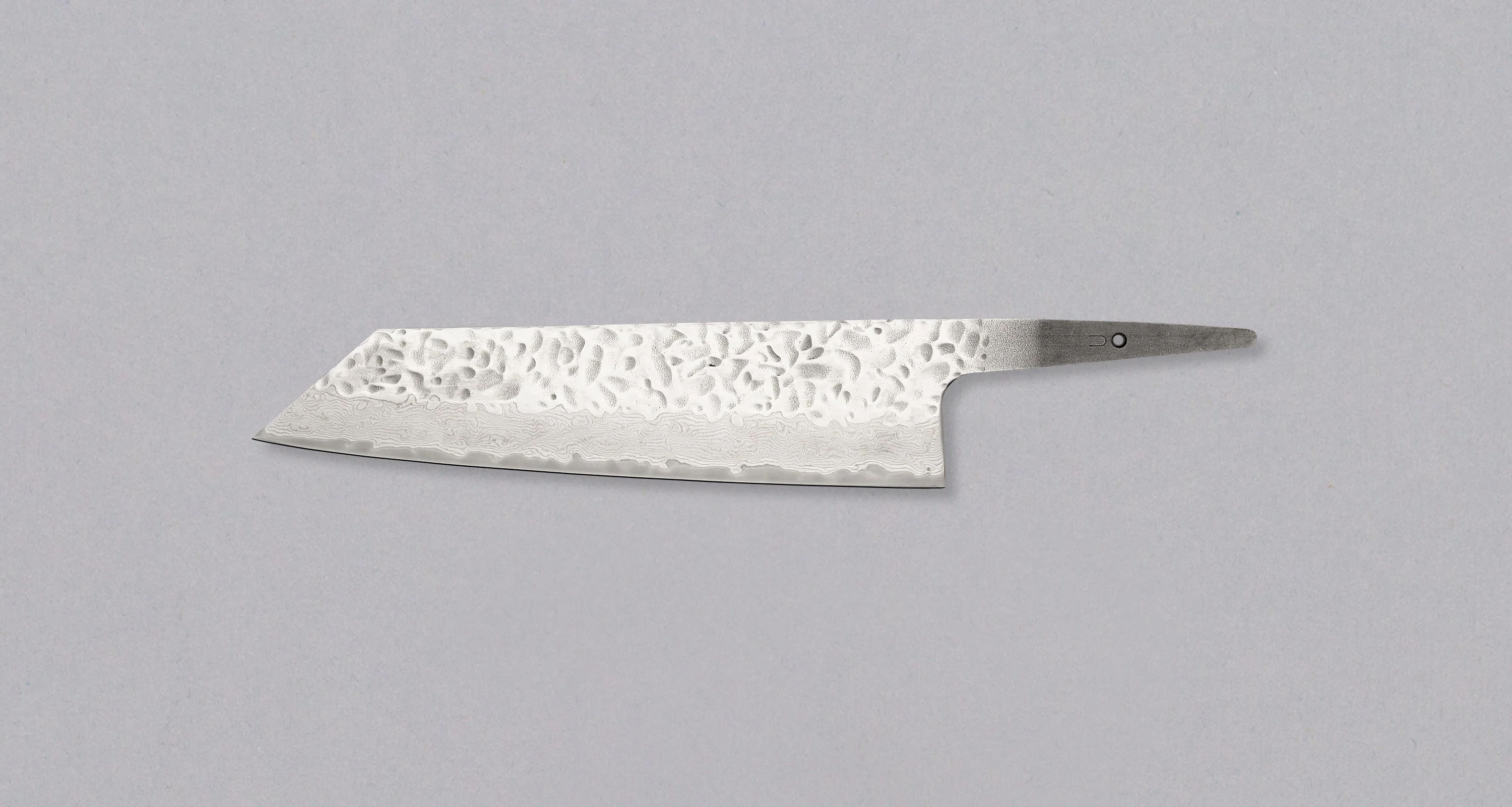
Hokiyama Bunka Damascus AUS-10 170mm (6.7") - BLADE
The Hokiyama Bunka AUS-10 Damascus 170mm is a small, handy bunka blade with a stunning damascus and tsuchime blade finish. The bunka shape works great for preparing vegetables, meat, and fish, and this smaller version is great for people who find larger knives too unwieldy, as it offers great control for either short or long cuts. The thin, pointy reverse tanto tip allows for extra precise cuts and carvings.
This blade is available without a handle. Now is your chance to make your own handle or order it separately so you can put together a one-of-a-kind knife that is perfectly suited to your taste and needs.
BLADE SHAPE:
Bunka is one of the most versatile and useful blade shapes in the modern kitchen. It has a wide profile for easy food transfer and tends to be fairly flat towards the heel, enabling easy and fast chopping on the cutting board. A pointed tip allows piercing and precise, delicate work. A slight curve between the tip and the midsection makes the belly great for rocking the blade back and forth when cutting. It can be used for cutting meat, fish, and vegetables.
You can learn everything you need to know about the Japanese bunka knife in our article.
STEEL:
The heart of this bunka is made of Aichi's AUS-10 stainless steel, which was hardened to around 59-60 HRC. Due to its high content of Chromium (Cr), AUS-10 steel will resist corrosion very well.
BLADE FINISH:
The upper part of the blade features a hammered pattern, which then transforms into an intricate damascus finish that flows down to the cutting edge. The blade was treated with hammer blows, resulting in a textured tsuchime look, which gives it a beautiful finish and also prevents food from sticking to the blade.
BLADE GEOMETRY:
The blade has a double bevel (symmetrical) blade (50/50) with a flat v-edge grind, so it is suitable for both left- and right-handed users. It tapers distally towards the tip.
LAMINATION:
At the very edge, one can spot a pronounced, curvy line (matte finish) that travels along the entire length of the blade. This is the line between the core and the 33 softer, outer layers of steel that serve as additional protection of the core steel. Such a sandwich of the harder core steel and softer outer steel layers is called san-mai clad. Most of today's Japanese knives are made this way.
BLACKSMITH:
Hokiyama Hamono is a leading smithy in Kochi Prefecture in Japan. They have recently celebrated their 100-year anniversary, founded in 1919. Hokiyama Hamono is known for their quality as they follow the tradition of hand-made blades that has been around for over 800 years. They retain the handiwork and traditional craftsmanship that is passed down from generation to generation, while striving for the ever-new knowledge and innovation.
Product Information
Product Information
Shipping & Returns
Shipping & Returns
Description
The Hokiyama Bunka AUS-10 Damascus 170mm is a small, handy bunka blade with a stunning damascus and tsuchime blade finish. The bunka shape works great for preparing vegetables, meat, and fish, and this smaller version is great for people who find larger knives too unwieldy, as it offers great control for either short or long cuts. The thin, pointy reverse tanto tip allows for extra precise cuts and carvings.
This blade is available without a handle. Now is your chance to make your own handle or order it separately so you can put together a one-of-a-kind knife that is perfectly suited to your taste and needs.
BLADE SHAPE:
Bunka is one of the most versatile and useful blade shapes in the modern kitchen. It has a wide profile for easy food transfer and tends to be fairly flat towards the heel, enabling easy and fast chopping on the cutting board. A pointed tip allows piercing and precise, delicate work. A slight curve between the tip and the midsection makes the belly great for rocking the blade back and forth when cutting. It can be used for cutting meat, fish, and vegetables.
You can learn everything you need to know about the Japanese bunka knife in our article.
STEEL:
The heart of this bunka is made of Aichi's AUS-10 stainless steel, which was hardened to around 59-60 HRC. Due to its high content of Chromium (Cr), AUS-10 steel will resist corrosion very well.
BLADE FINISH:
The upper part of the blade features a hammered pattern, which then transforms into an intricate damascus finish that flows down to the cutting edge. The blade was treated with hammer blows, resulting in a textured tsuchime look, which gives it a beautiful finish and also prevents food from sticking to the blade.
BLADE GEOMETRY:
The blade has a double bevel (symmetrical) blade (50/50) with a flat v-edge grind, so it is suitable for both left- and right-handed users. It tapers distally towards the tip.
LAMINATION:
At the very edge, one can spot a pronounced, curvy line (matte finish) that travels along the entire length of the blade. This is the line between the core and the 33 softer, outer layers of steel that serve as additional protection of the core steel. Such a sandwich of the harder core steel and softer outer steel layers is called san-mai clad. Most of today's Japanese knives are made this way.
BLACKSMITH:
Hokiyama Hamono is a leading smithy in Kochi Prefecture in Japan. They have recently celebrated their 100-year anniversary, founded in 1919. Hokiyama Hamono is known for their quality as they follow the tradition of hand-made blades that has been around for over 800 years. They retain the handiwork and traditional craftsmanship that is passed down from generation to generation, while striving for the ever-new knowledge and innovation.