ZDP-189 Bunka Silver 190mm (7.5")
ZDP-189 Bunka was designed in harmony with our values (excellence, quality, and reliability), in line with those originating from the steadfast Japanese tradition. We also devoted special attention to certain aesthetics inspired by Japanese mysticism and a respectful attitude to tradition, nature, raw materials, the constituent elements, and the final product – in short, the quintessential values of Japanese culture.
The knife is manufactured at the smithy of Yoshida Hamono in Japan, a family company with an age-long tradition in manufacturing state-of-the-art tools and Japanese swords, i.e. katanas, by hand. Yoshida Hamono has a great deal of experience forging ZDP-189 steel in the traditional manner. See the photo story from our visit to their smithy.
BLADE SHAPE:
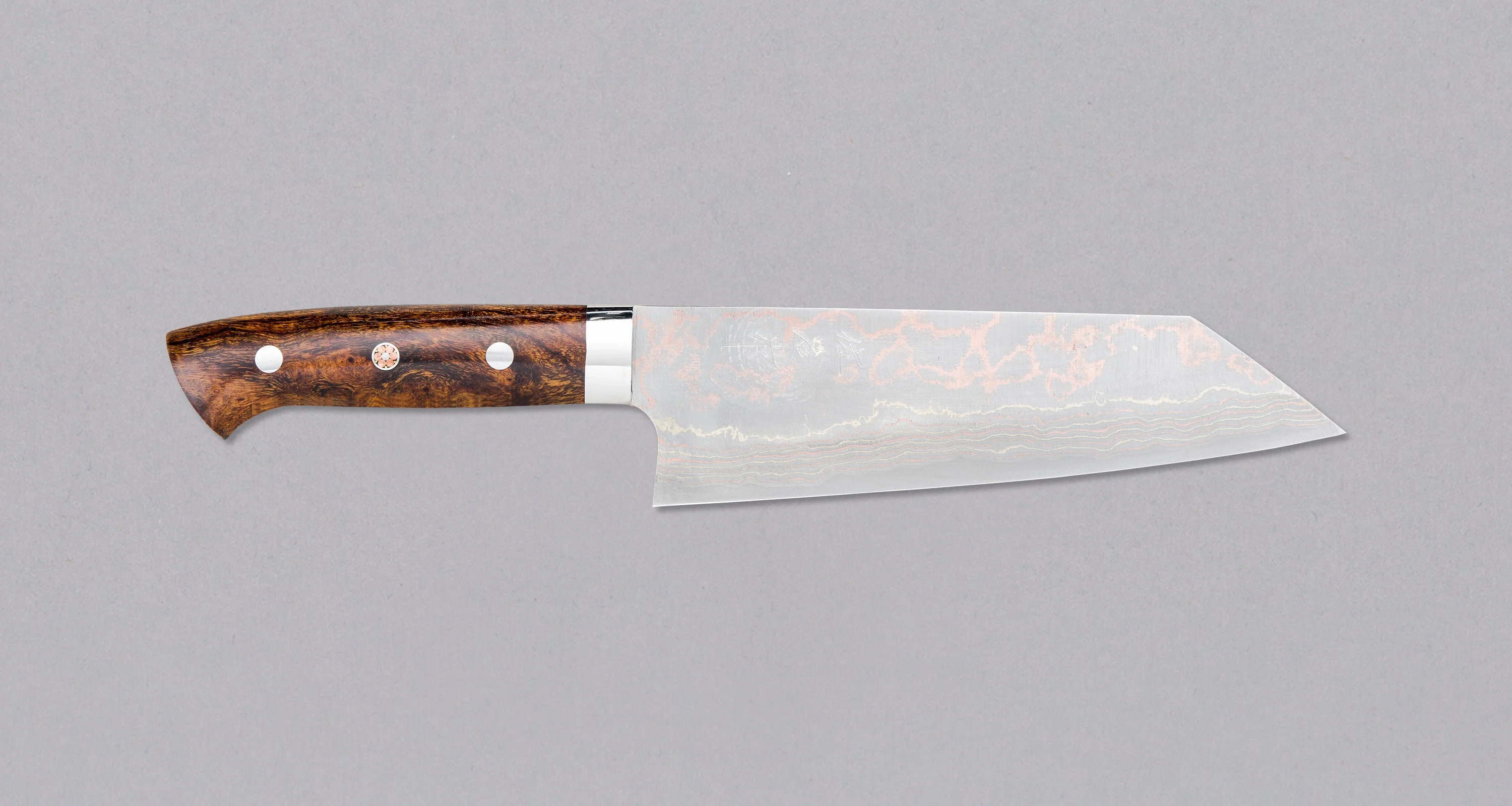
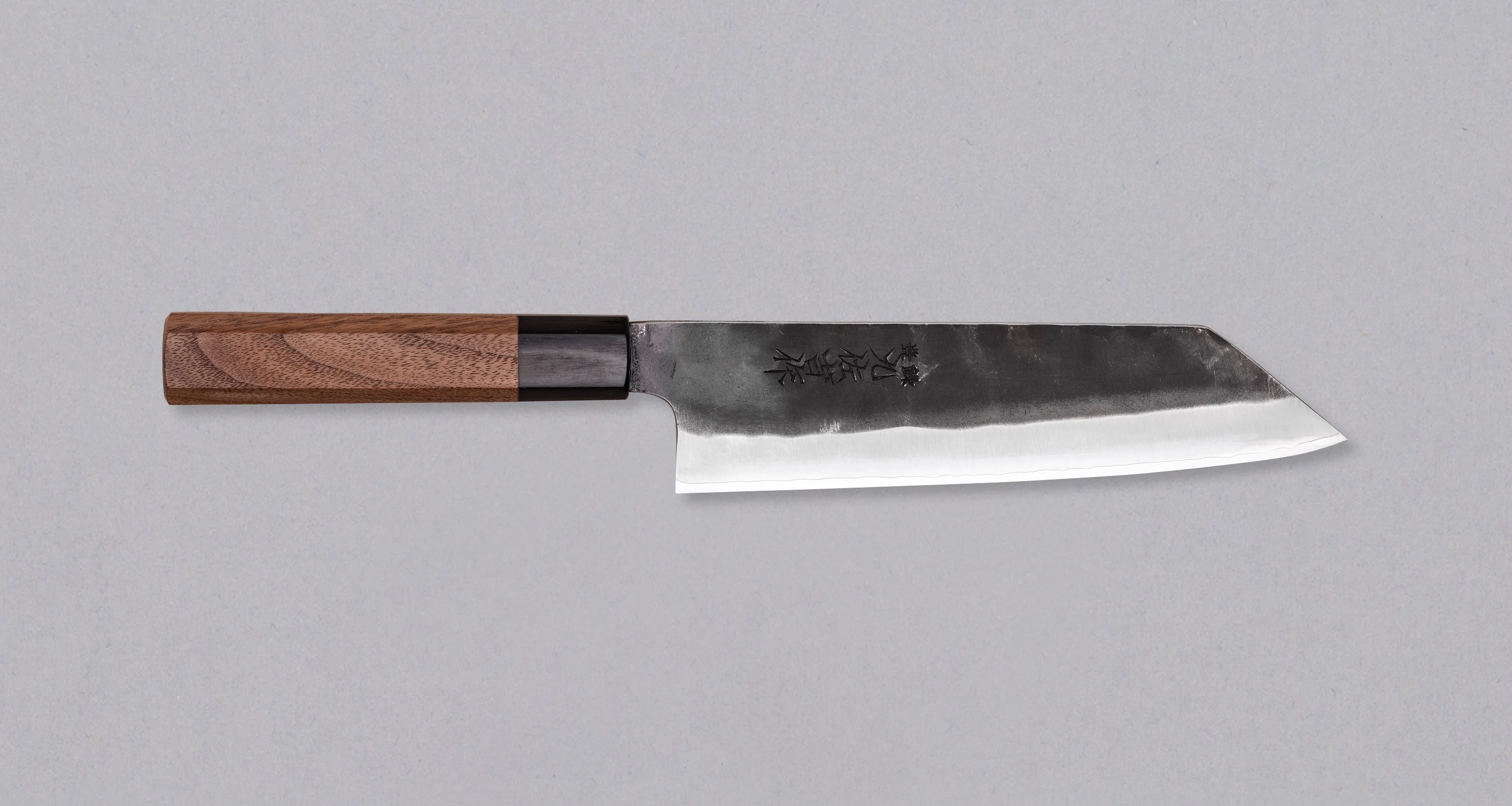
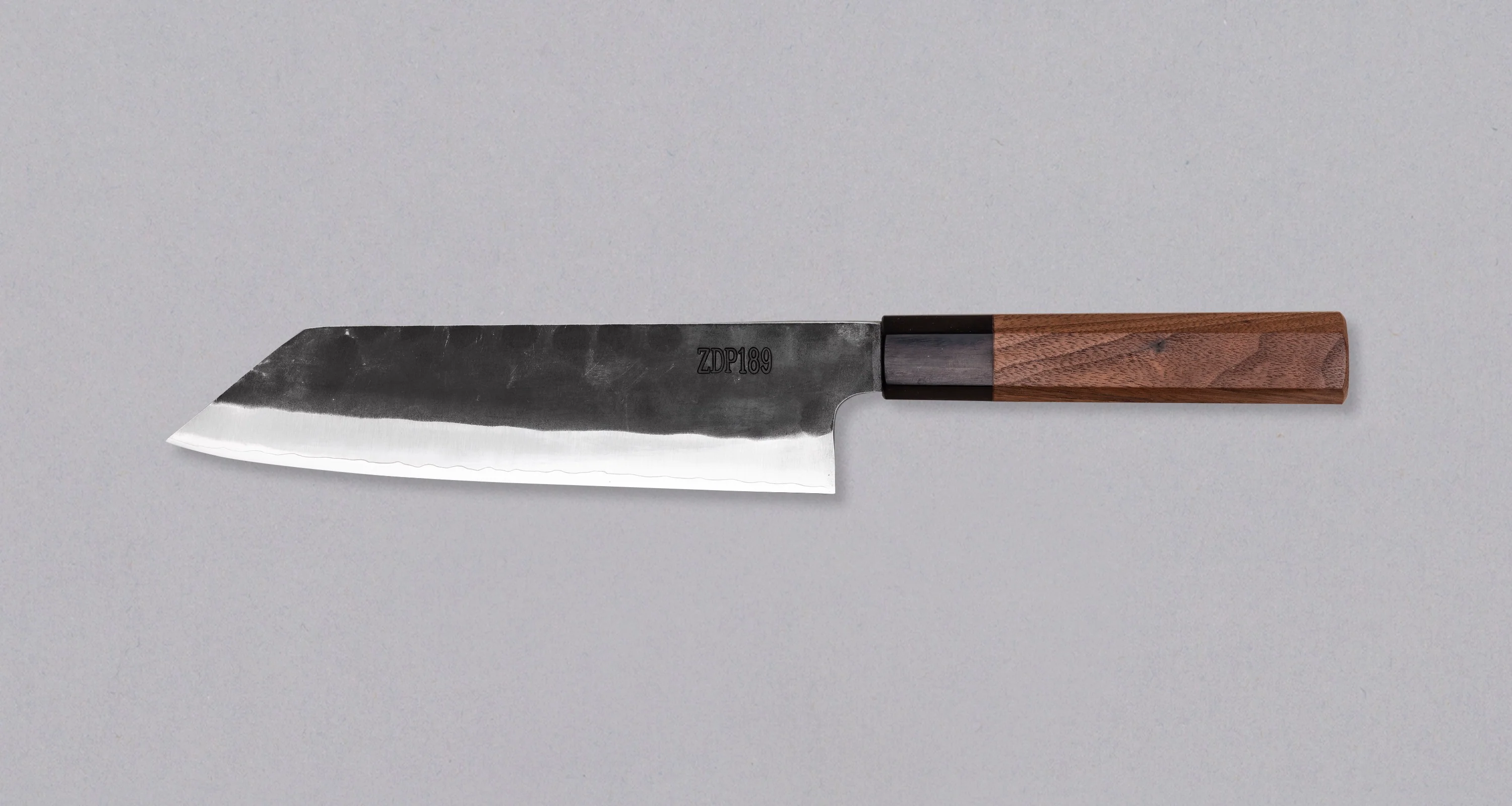
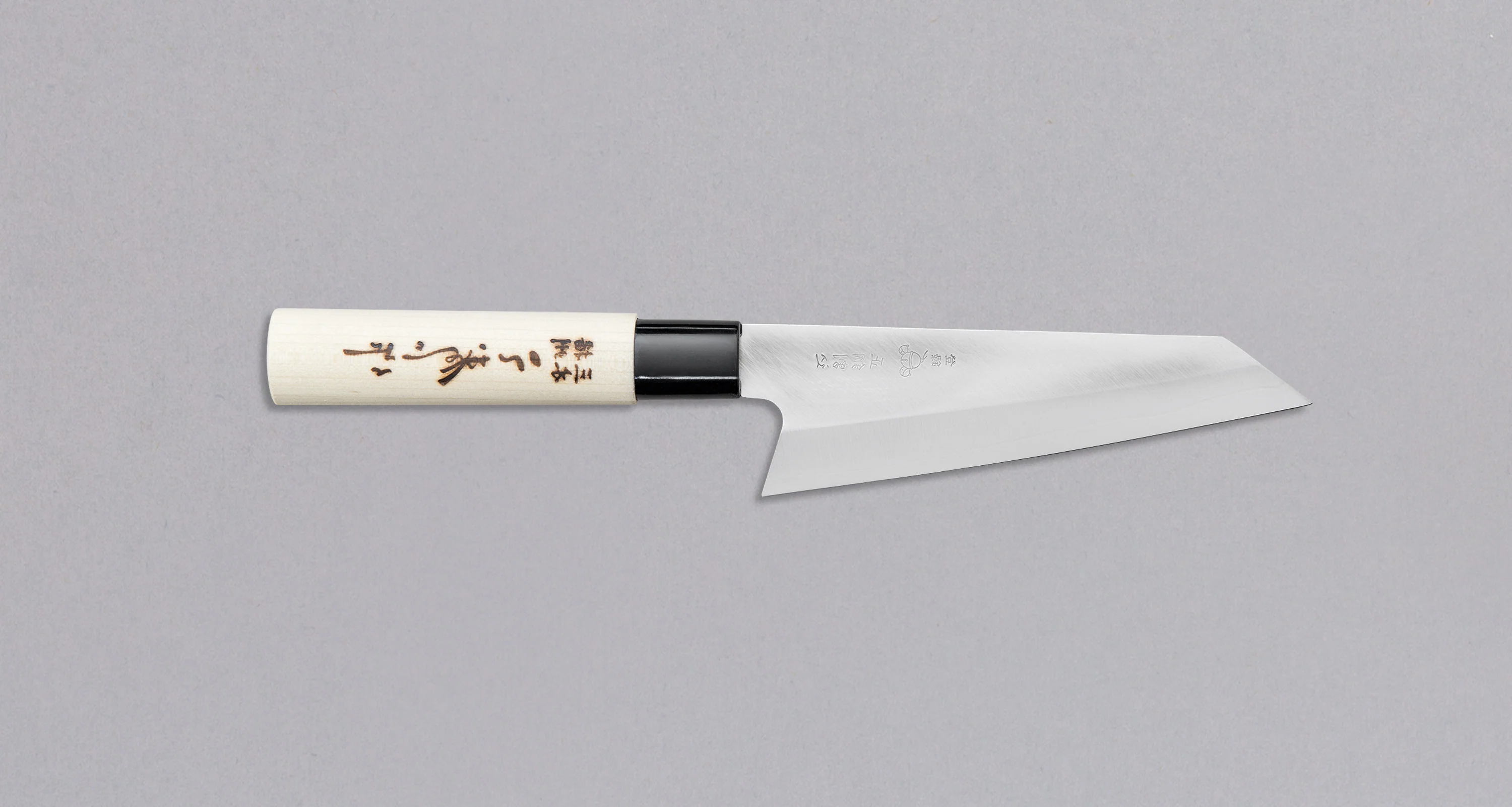
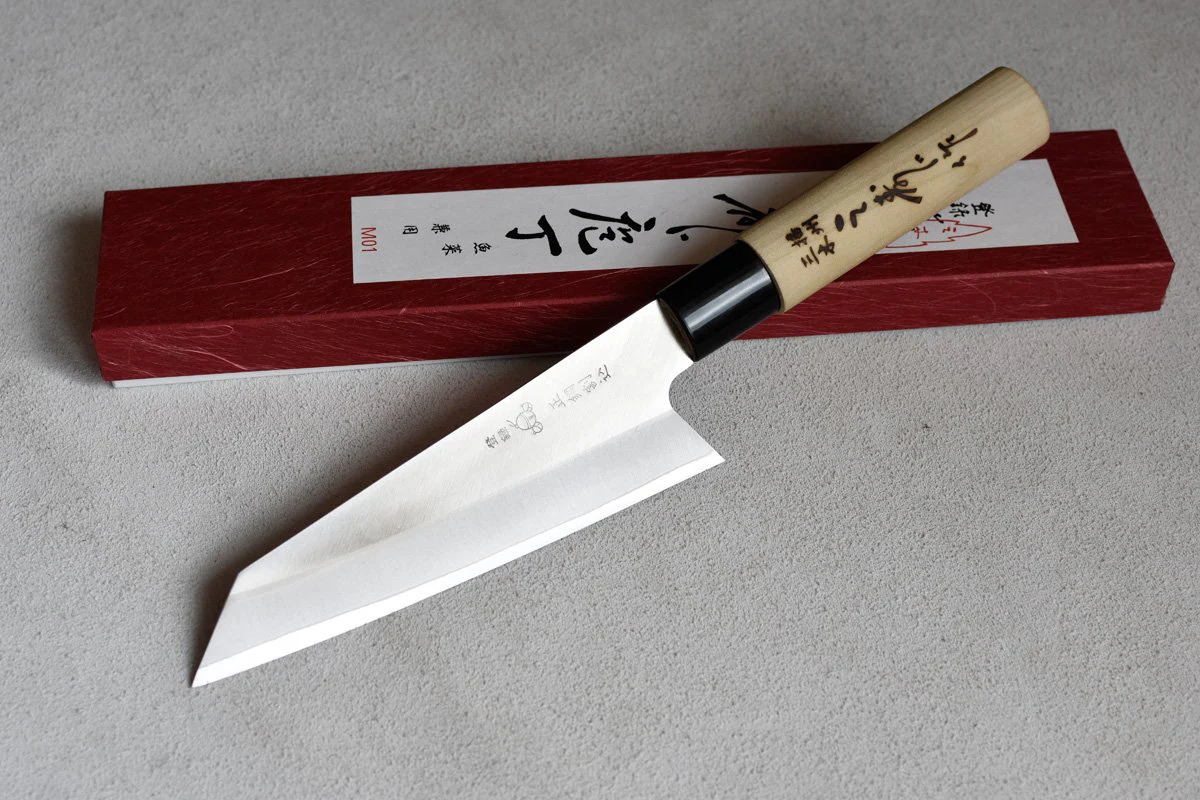
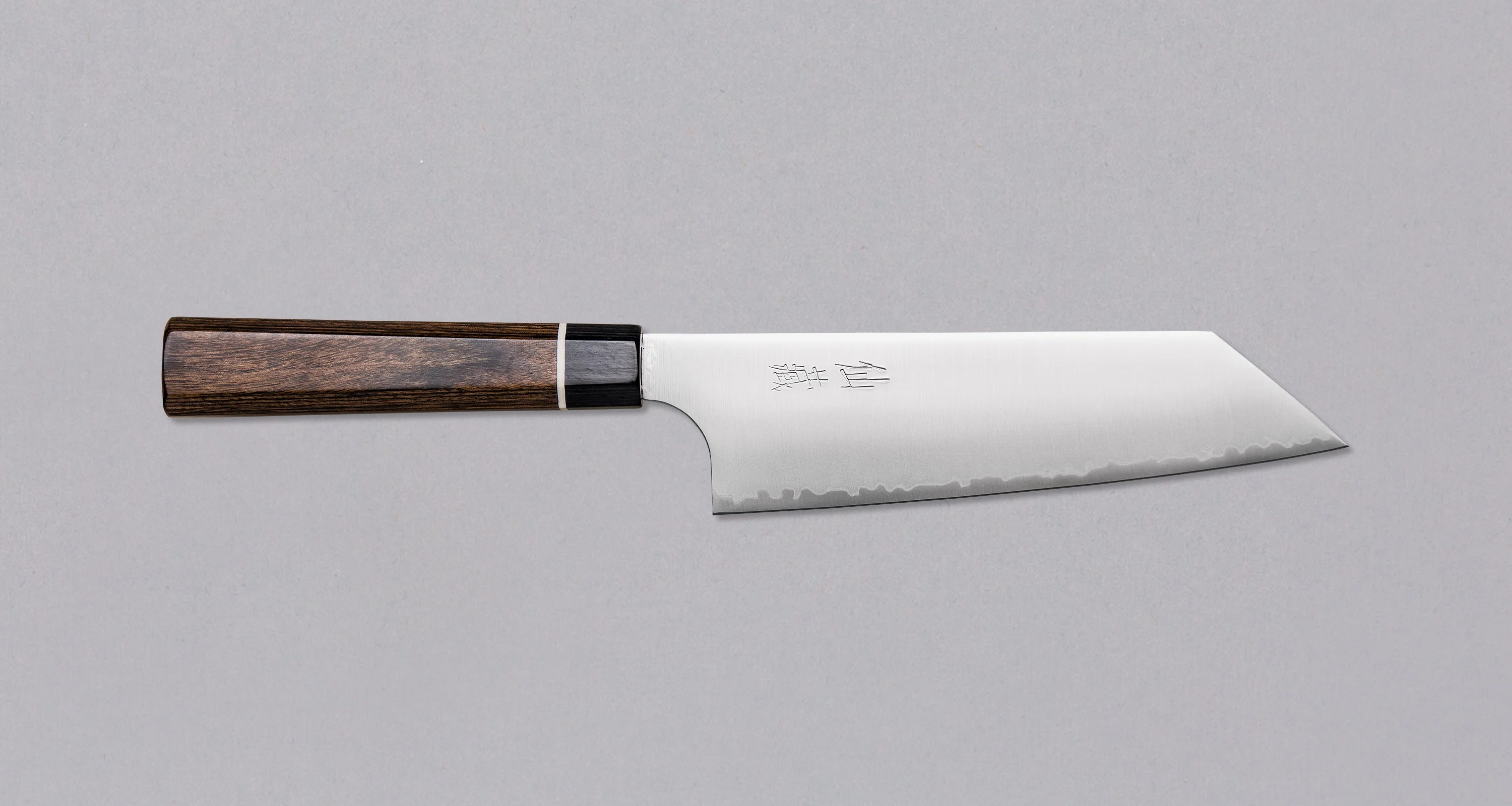
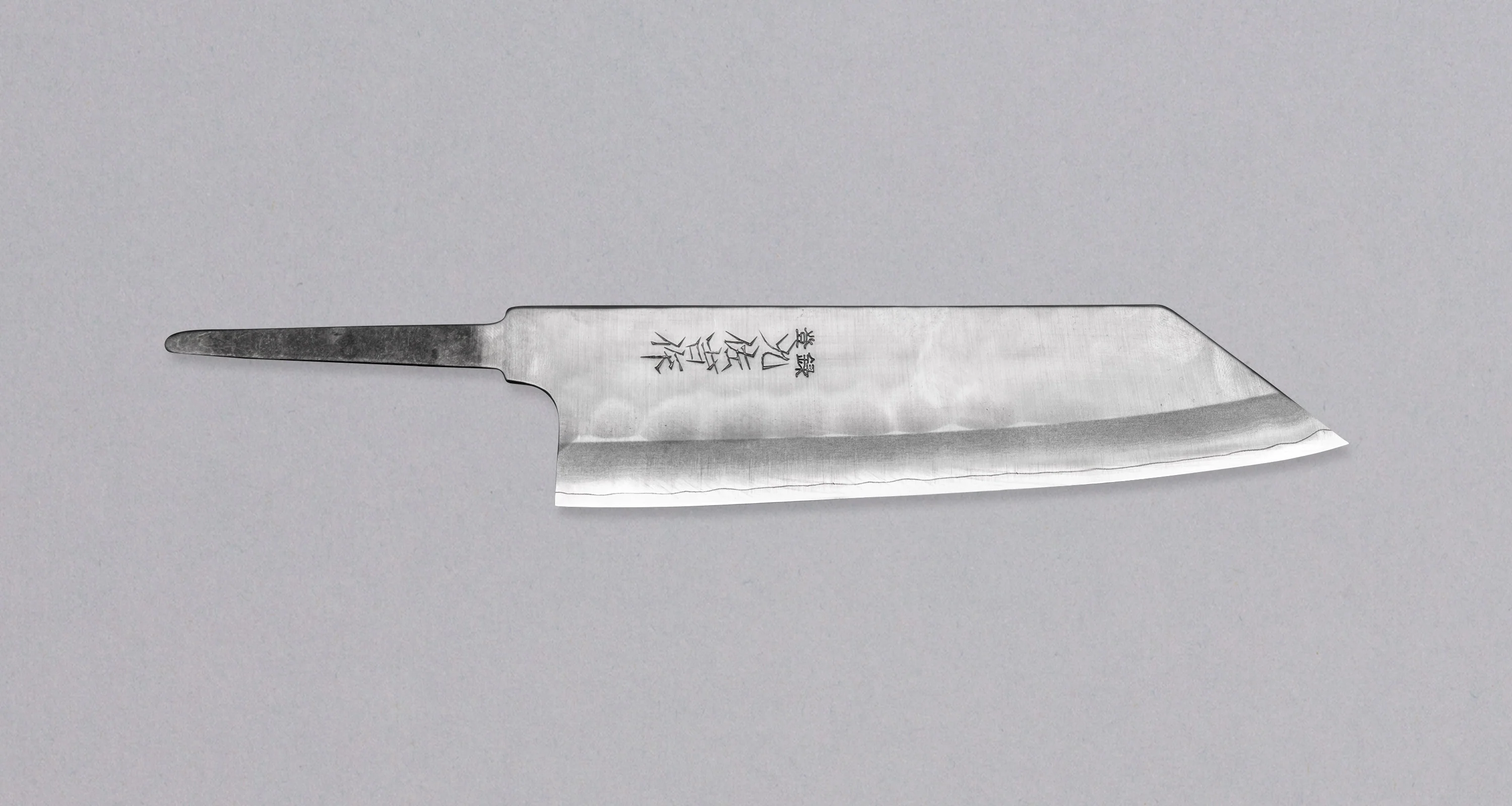
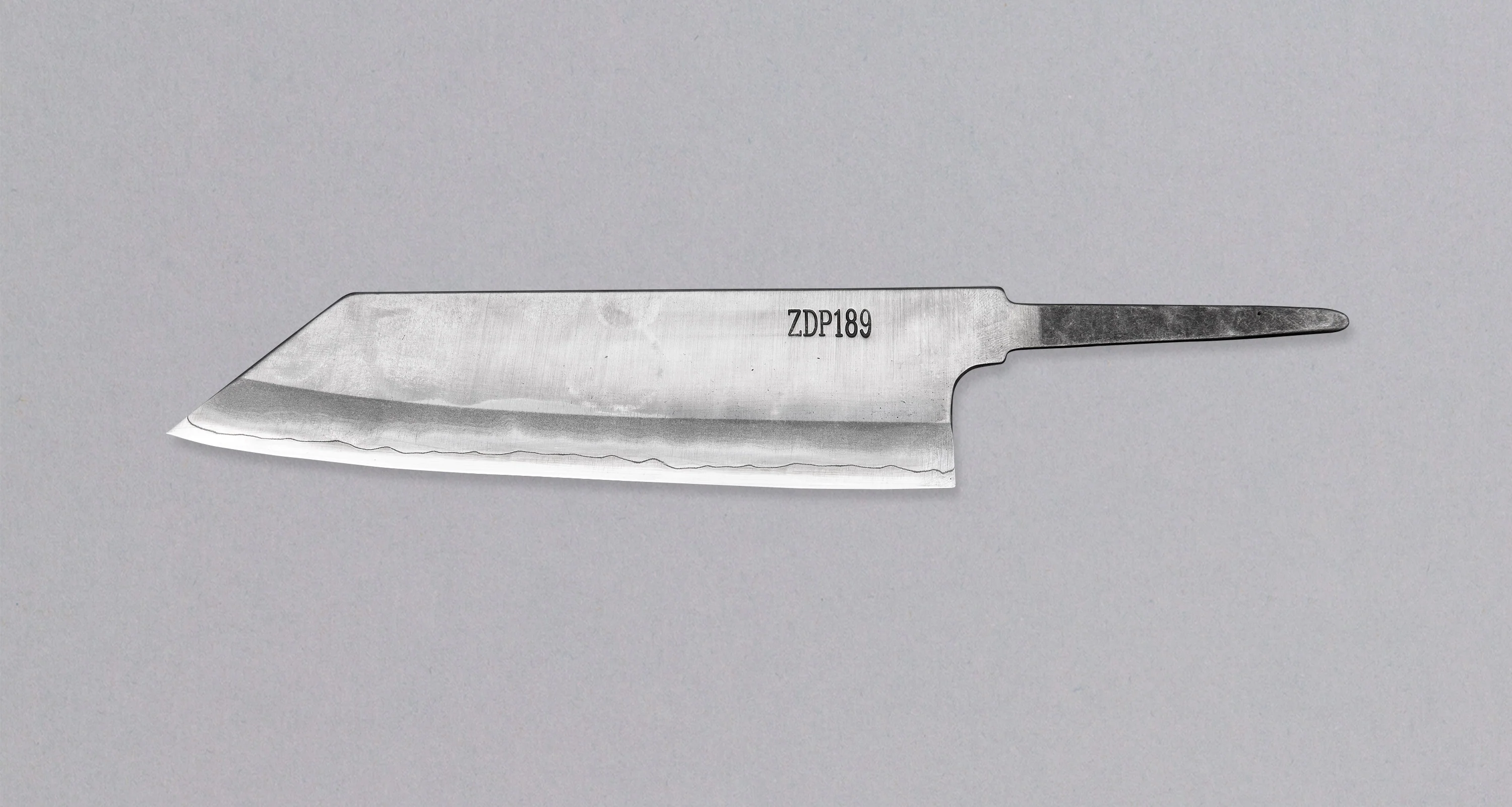
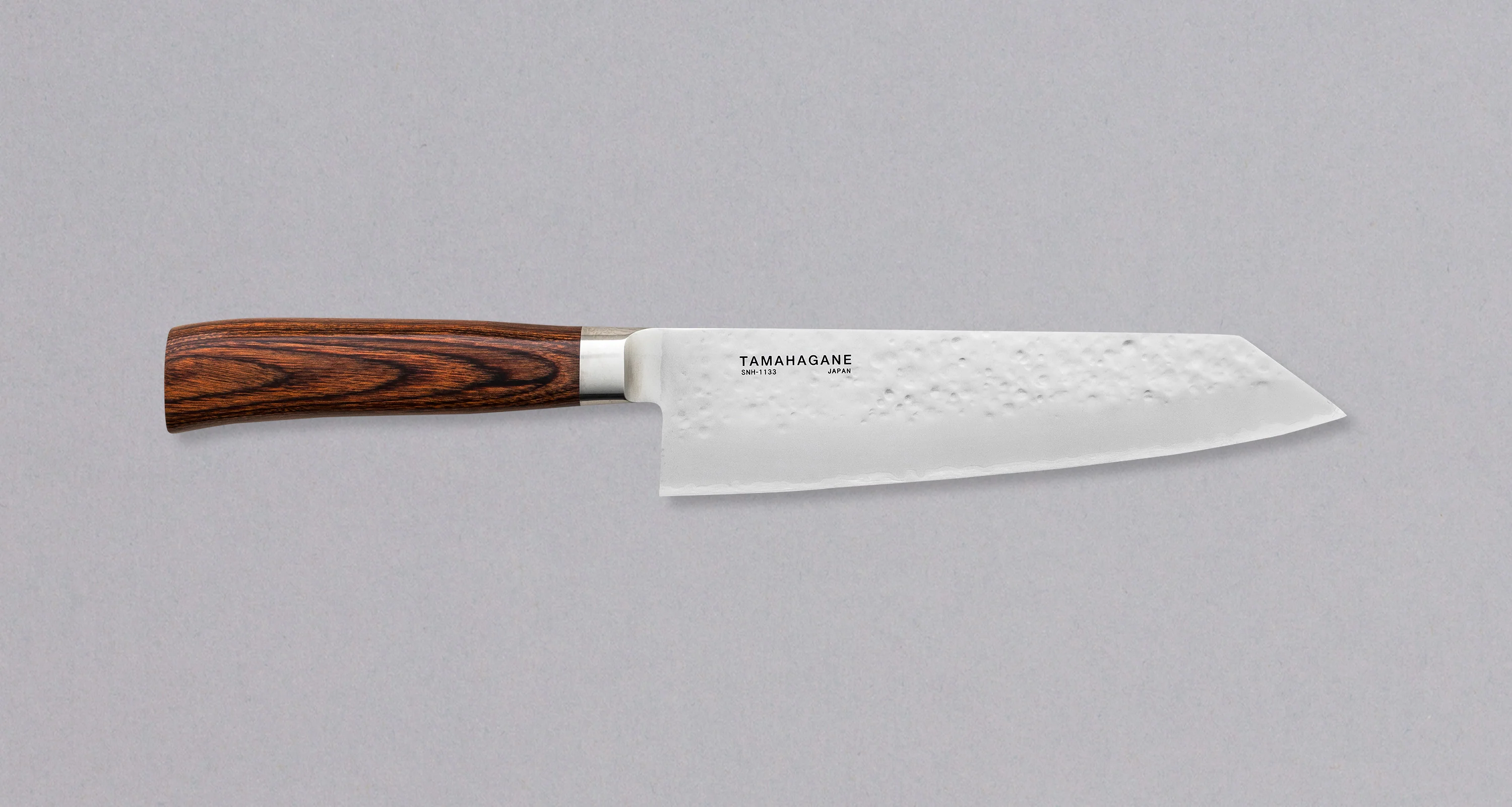
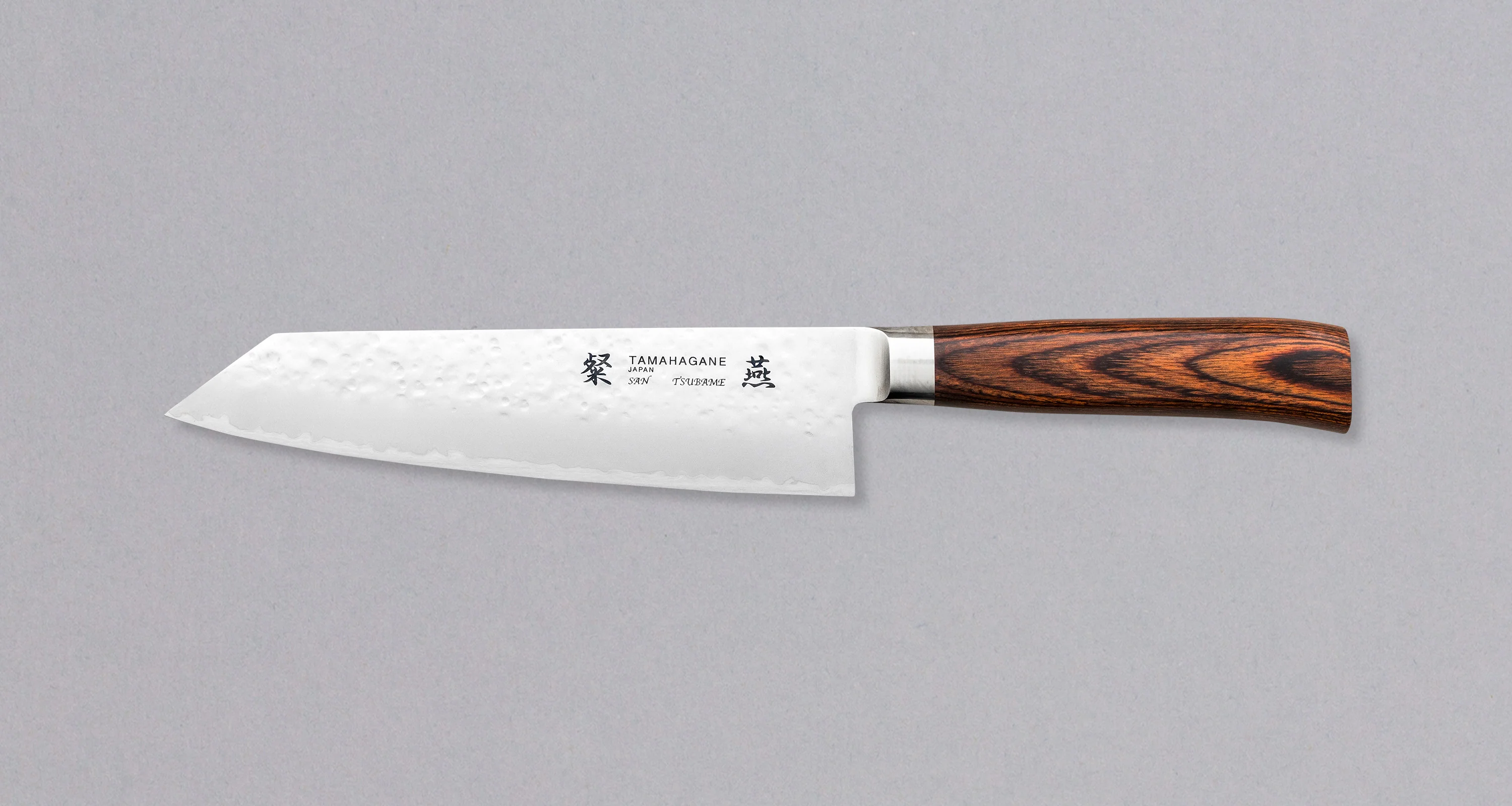
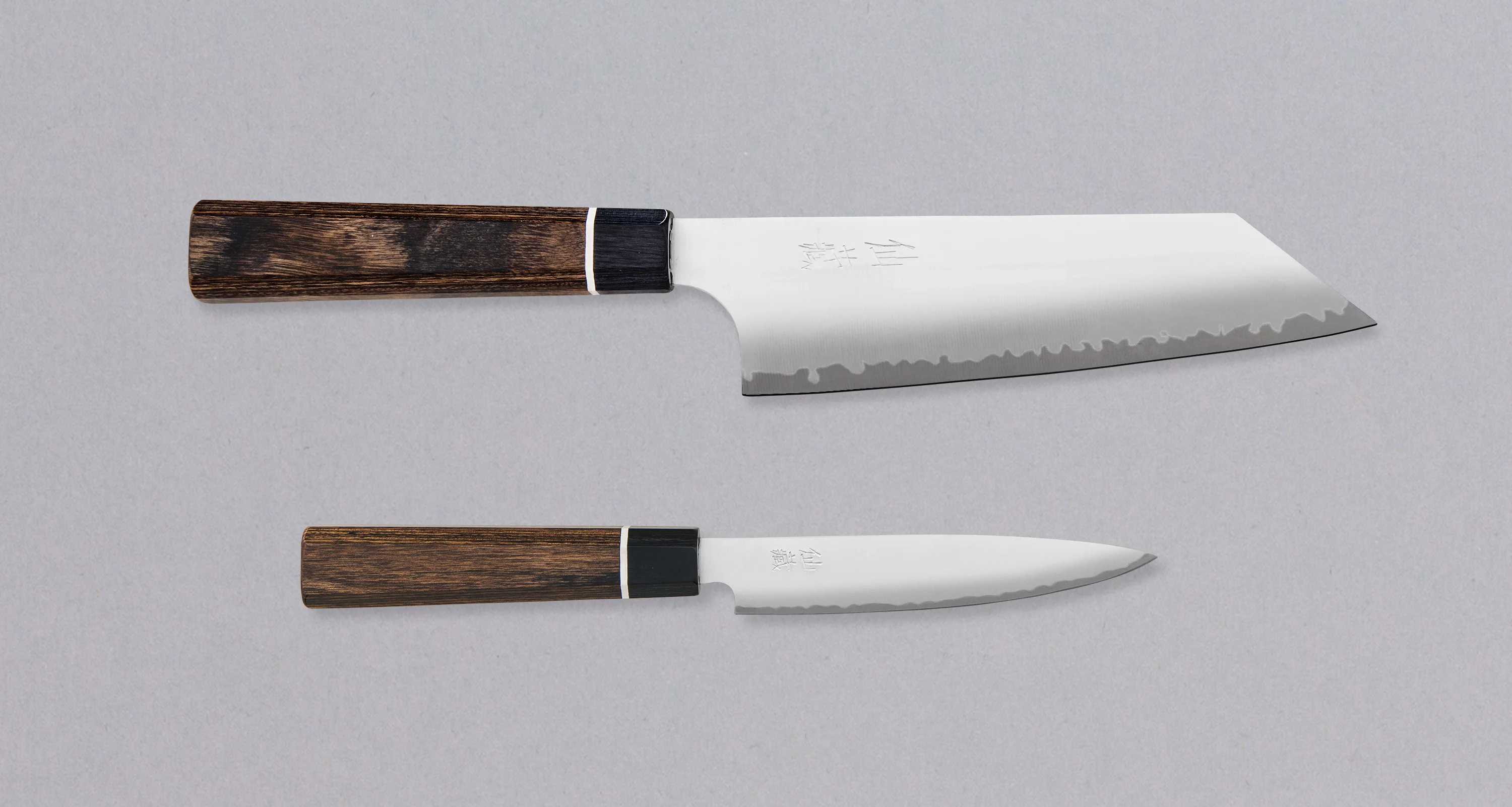
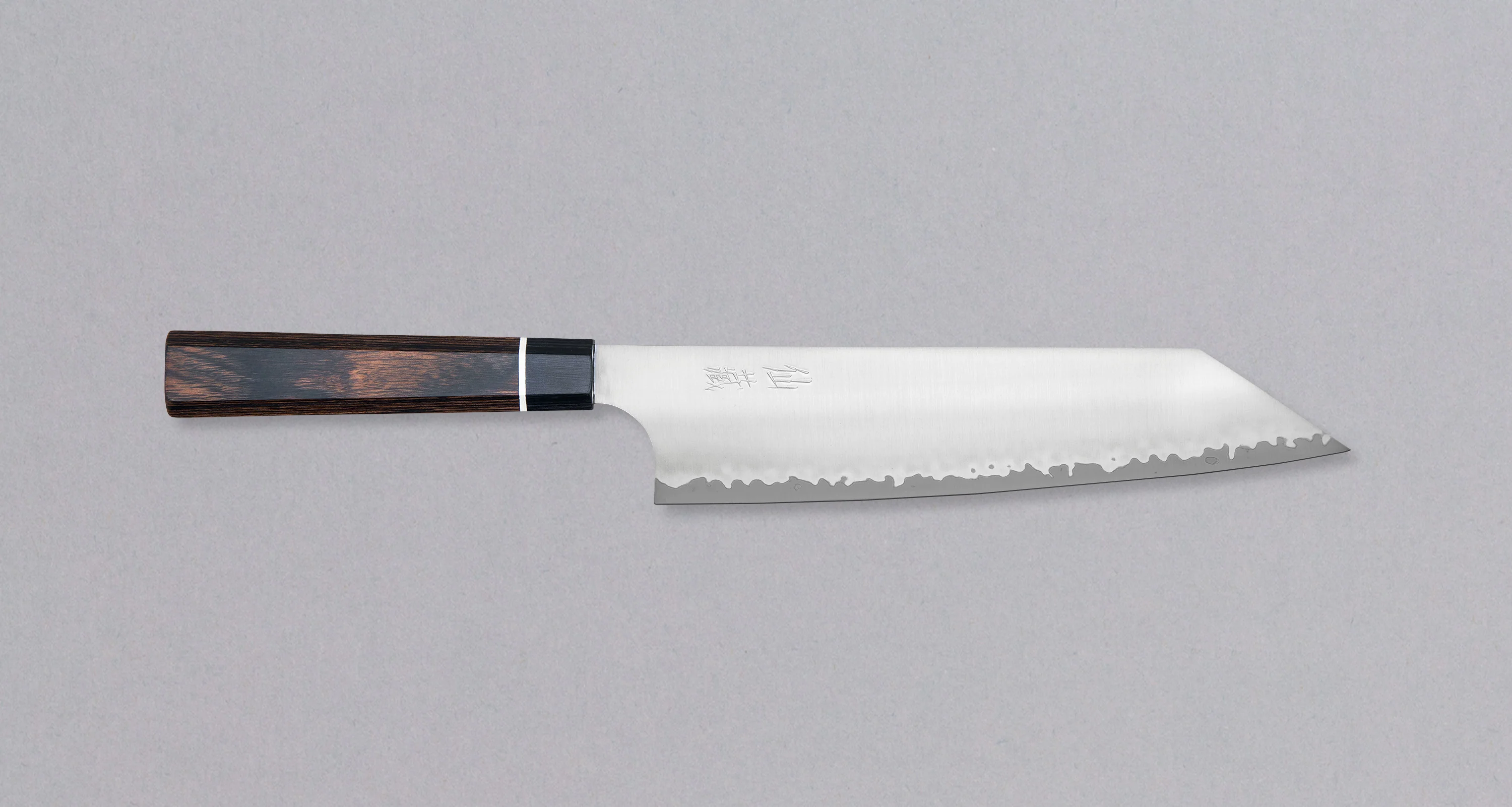
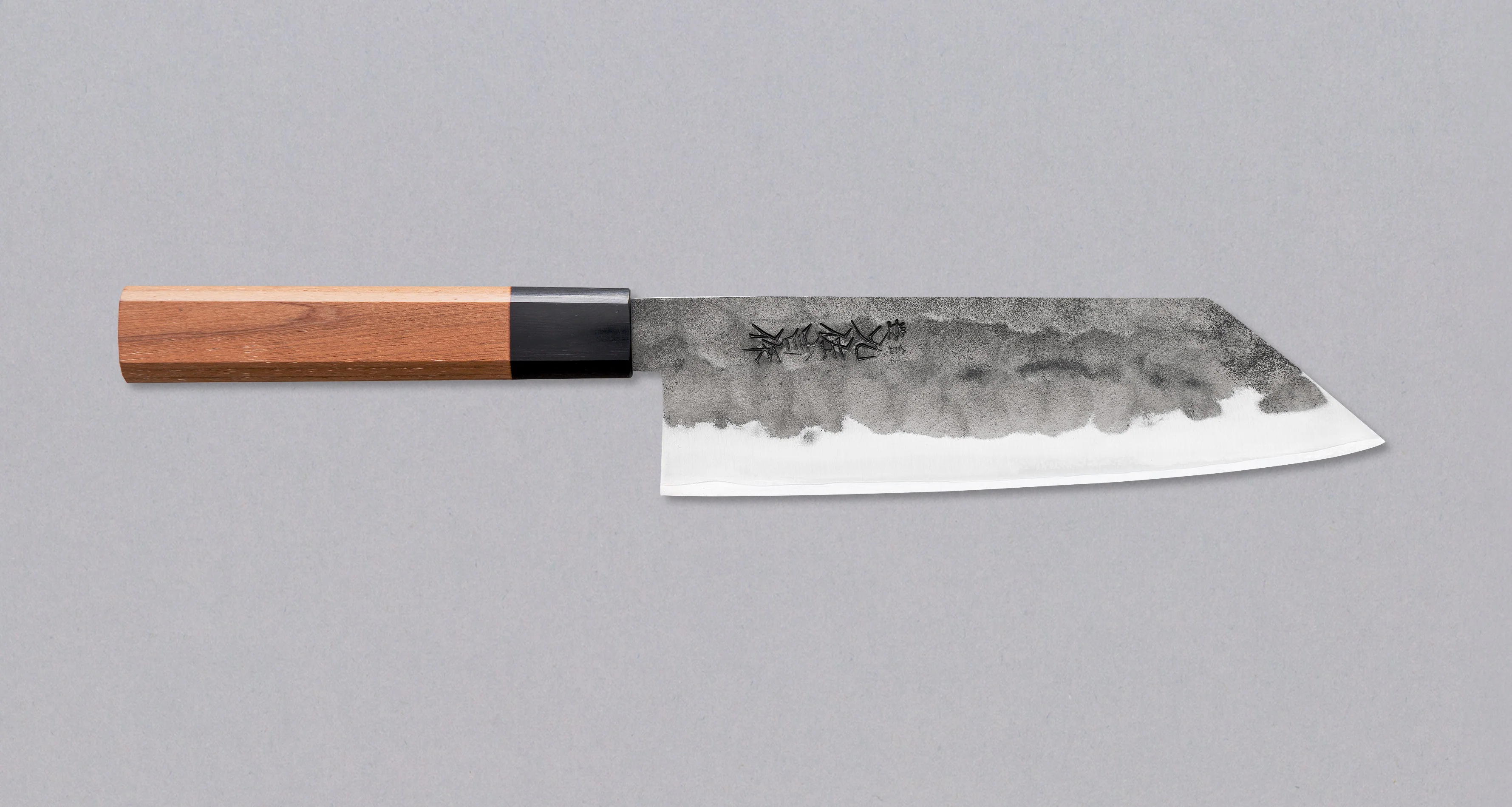
The shape of the blade is called Bunka which means culture in Japanese. Bunka makes for a highly versatile knife suitable for cutting vegetables, meat, and fish.
With its typical functionality, Bunka design is intended for versatile use in Western cuisine:
- It has a flexible profile that is wide enough at the handle,
- a gently designed belly of the blade suitable for making either long or short cuts,
- a flat back side of the blade,
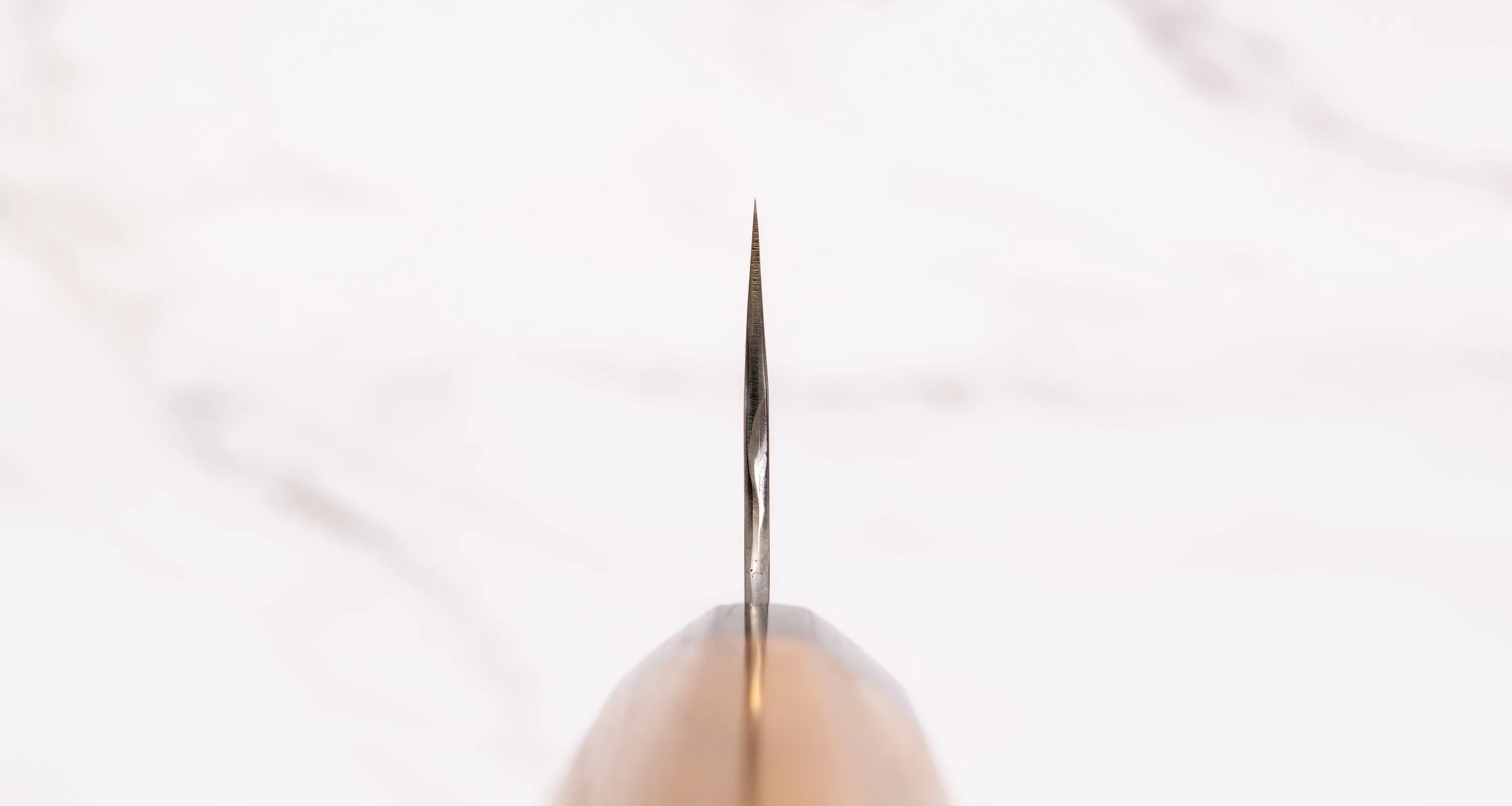
- and a thin pointy reverse tanto tip for precise cuts and carvings.
The angle of the spine rapidly changes to meet the tip, which is referred to as a »K-Tip«. Besides looking badass, this shape allows the user precision and makes getting to the hard-to-get-places a bit easier.
STEEL:
The heart of the knife is made of ZDP-189 steel, which we selected because systematic testing has proven its superior qualities and long-lasting sharpness.
The steel contains as much as 3% Carbon (C), which is one of the main elements contributing strength and typically found in amounts of up to only 1% in other types of solid steel, while the Chromium (Cr) content, which prevents corrosion, amounts to nearly 20%. It also features 0.60% Tungsten (W), which considerably increases the abrasion resistance of steel, 1.4% Molybdenum (Mo), which helps to preserve the strength and power of steel under variable temperatures, and 0.10% Vanadium (V), the key element in increasing steel strength. Heat treatment produces steel with a hardness of 65-67 HRC.
ZDP-189 composition: C 3.00 % | Cr 20.00 % | W 0.60 % | Mo 1.40 % | V 0.10 % | Mn 0.50 % | Si 0.40 %
LAMINATION:
The steel is laminated, meaning that the core is made of very strong steel covered with an external layer of softer stainless steel - also known as warikomi clad. The softer external layer protects the core steel from external factors.
The hard core of a knife is sandwiched between two layers of softer steel, reaching only up to a half of the blade’s width. This specific type of construction is used for steels that are very challenging to forge, for example for certain types of powder steels. A glowing hot piece of iron is split and a piece of steel is inserted. The material is now forged into one piece. This creates a highly durable kitchen knife with a slightly more pliable core. The main advantage of these knives is that they are thin, sharp and retain their edge very well. Warikomi is also called the “split and insert method”.
GEOMETRY:
Bunka has a double bevel (symmetrical) blade with a low profile and a V-edge grind, which gives it a good balance between the ease of cutting and robustness. This kind of grind produces very sharp edges and is wonderful at making very thin slices.
BLADE FINISH:
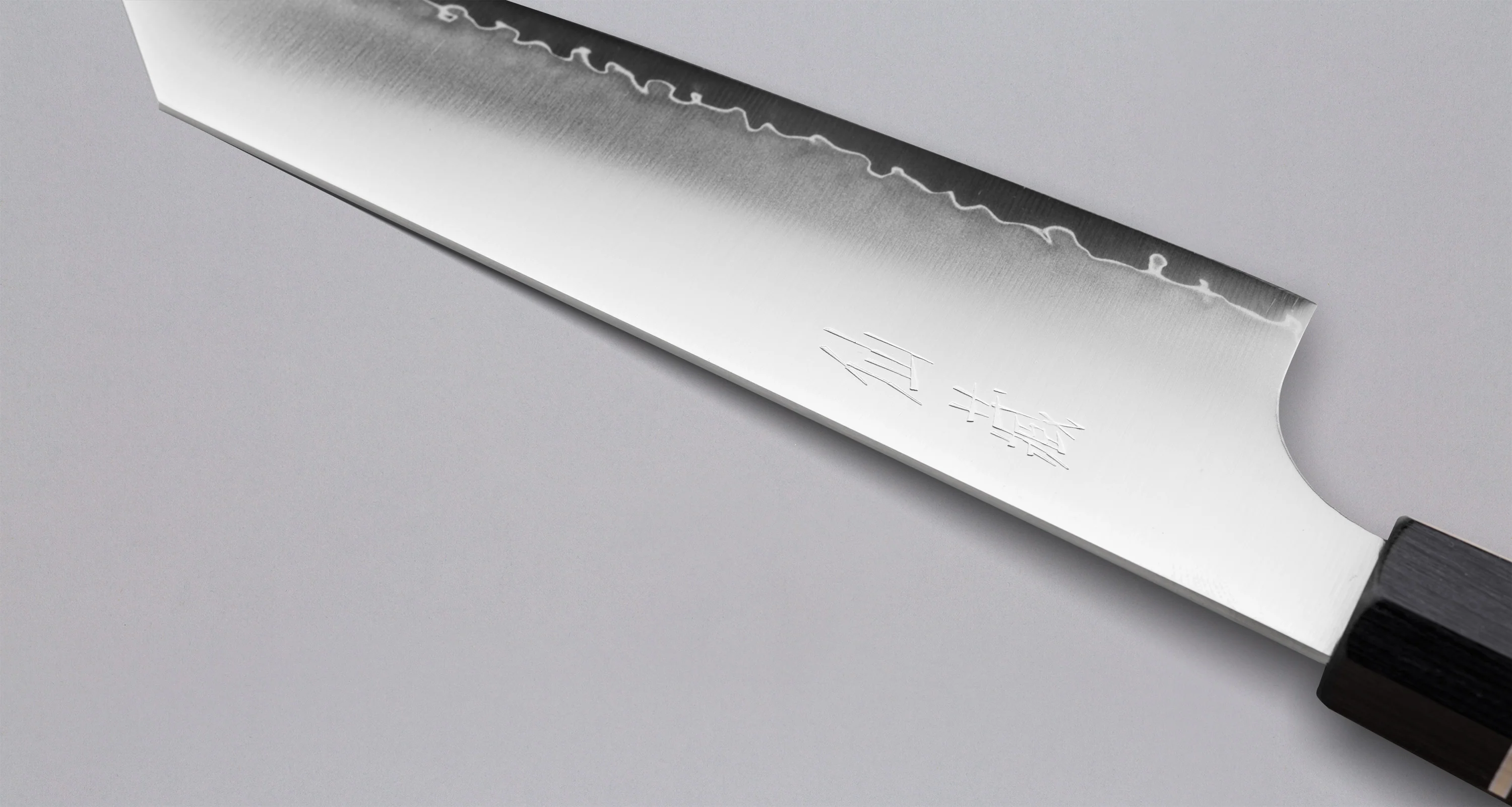
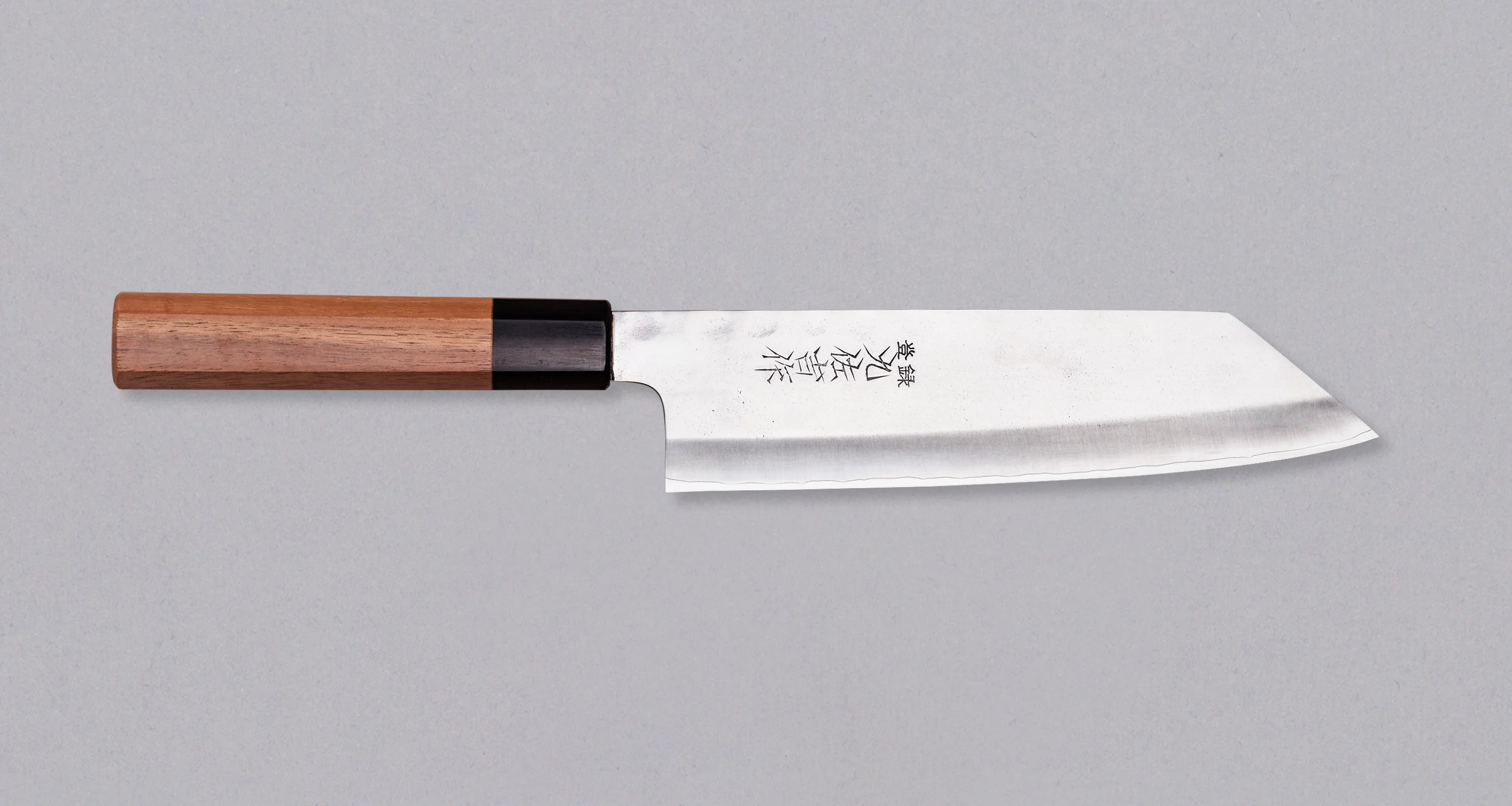
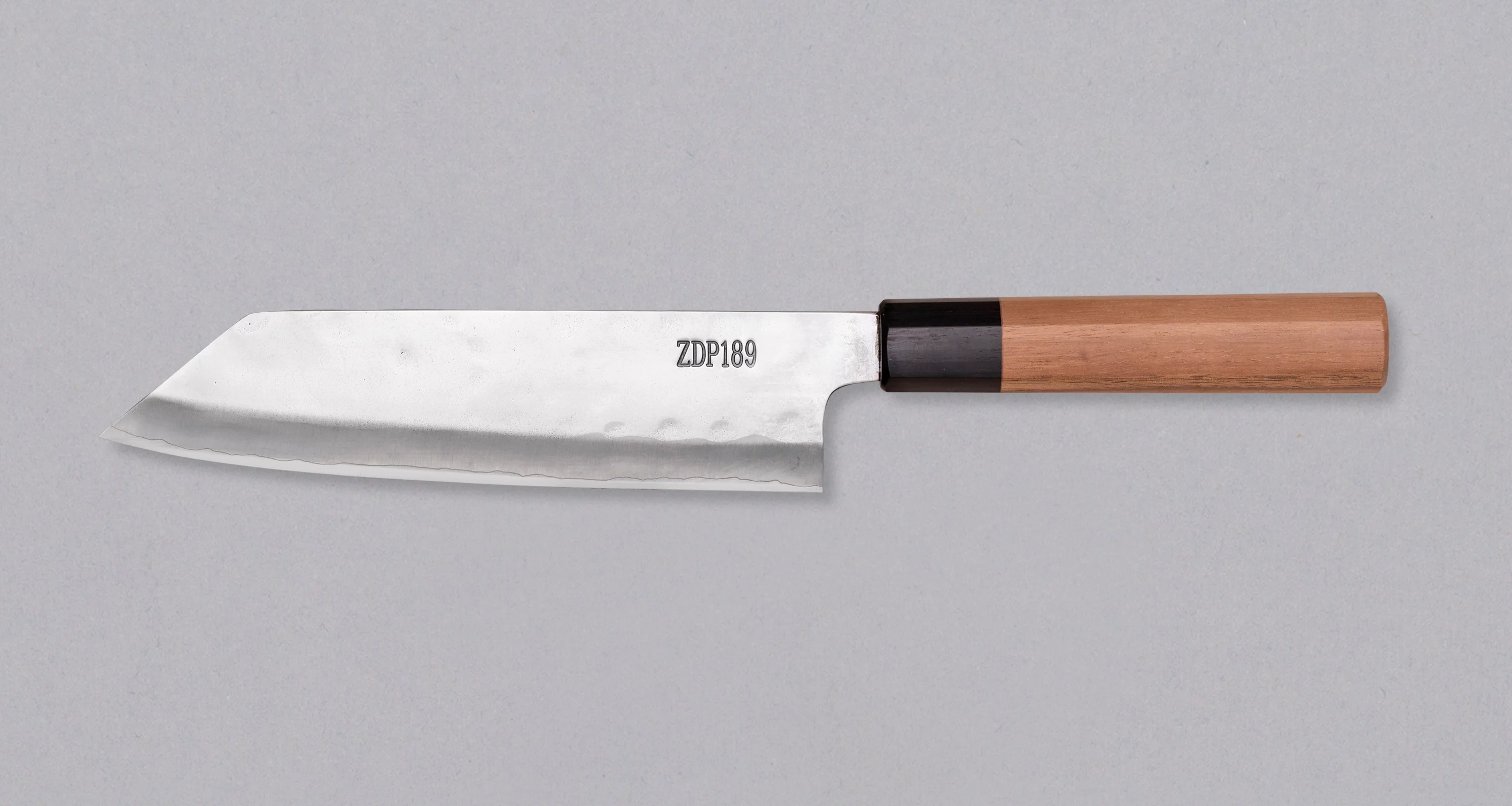
The blade is finished with a mirror polish hairline finish, which is suitable for the finest cuts. The single hairline, running along the length of the blade (just above the edge of the blade), marks the separation between the softer and the harder, core ZDP-189 steel.
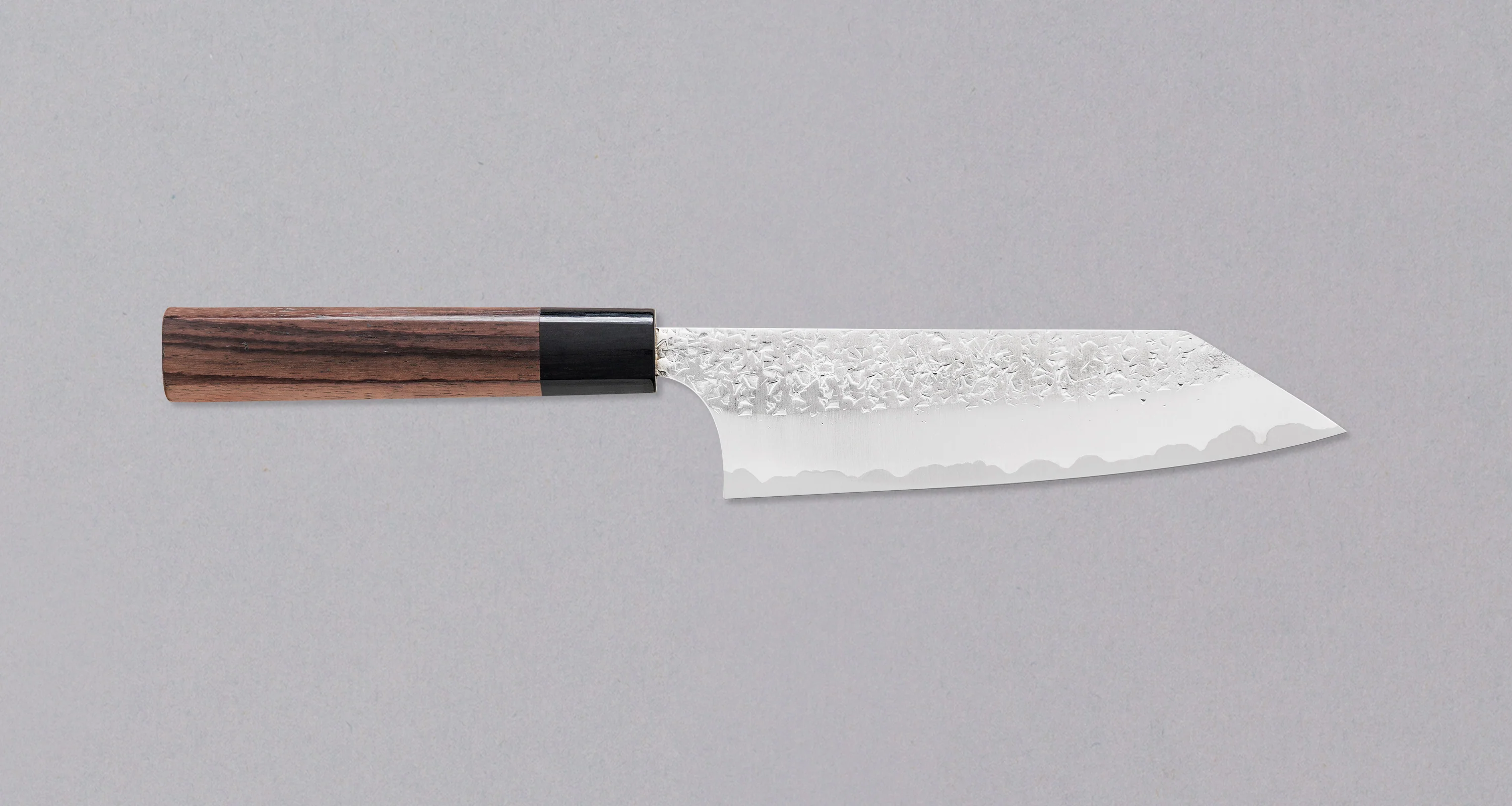
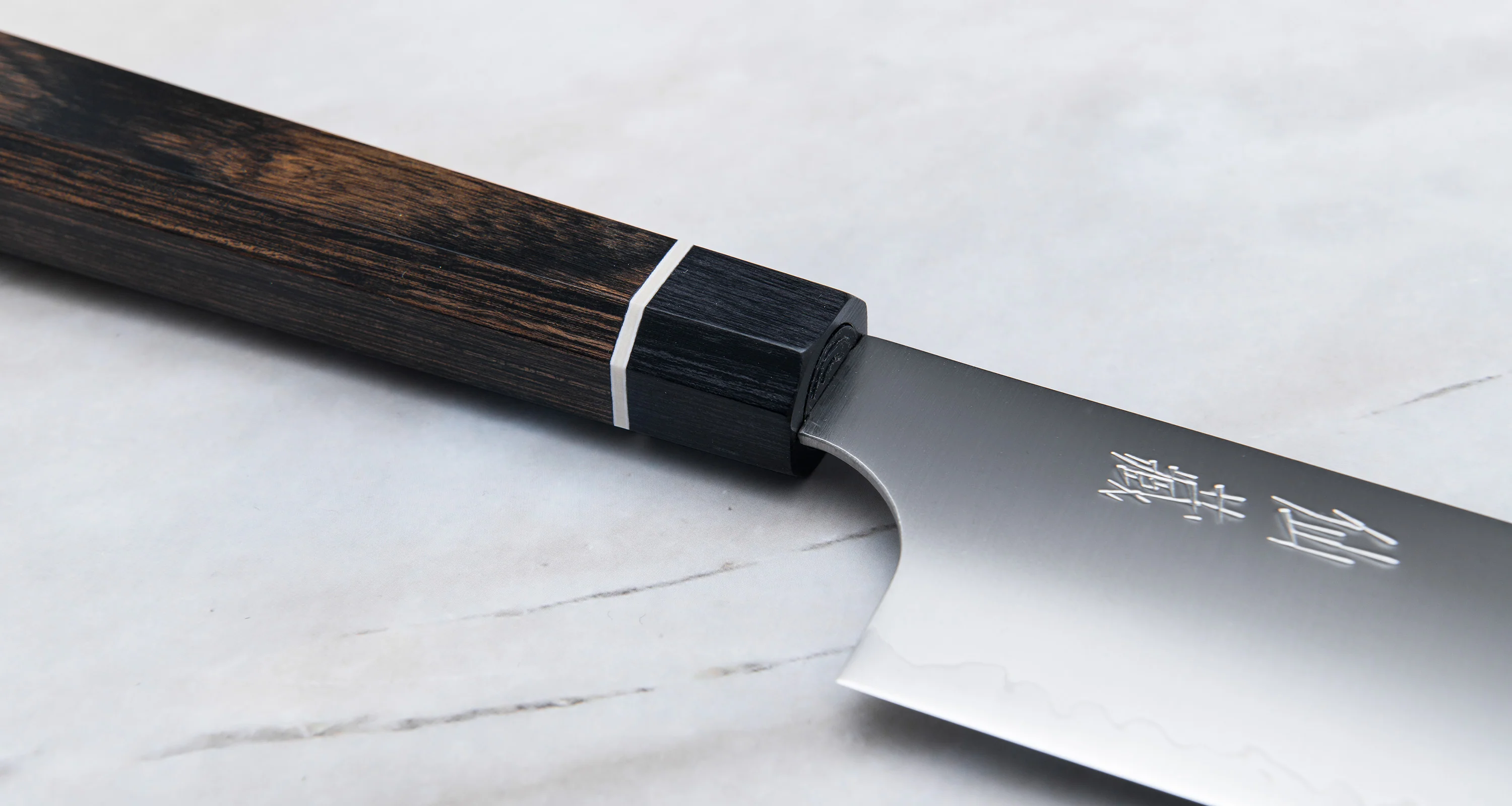
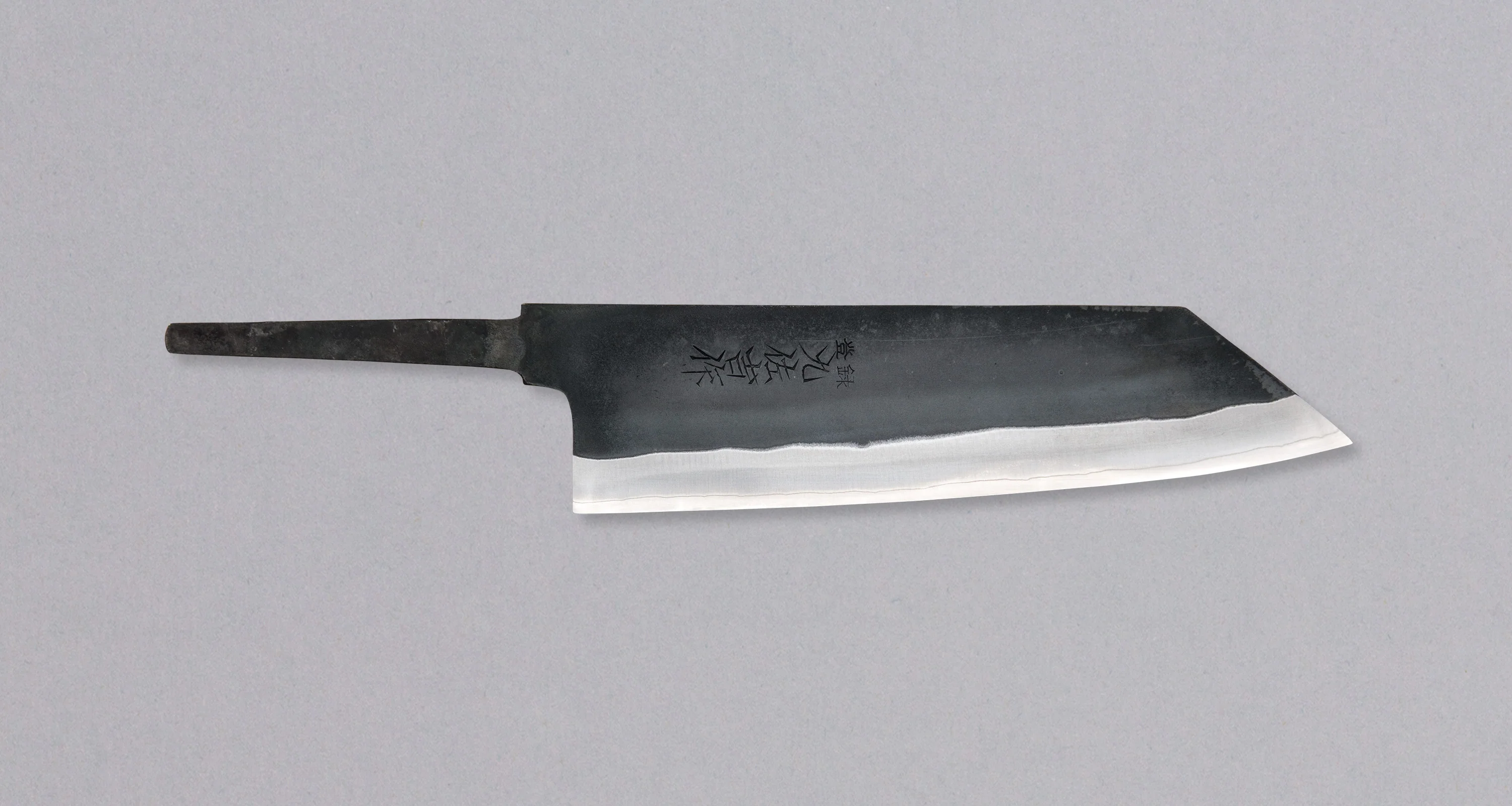
The knife bears barely visible impressions of the hand-forging process (round hammer dents on the blade), which gives it a beautiful rustic finish and also prevents food from sticking to the blade. Kanji 登録 九佐吉作 "registered as work of Yoshida Smithy in Saga Prefecture, Kyushu, Japan" has been chiseled onto the blade.
HANDLE:
Bunka Silver was fitted a traditional Japanese wooden handle, called Wa handle. The wooden handle is made of walnut wood with an octagonal shape, so it will fit equally well into the hands of right- or left-handed users.
BLACKSMITH:
The knife is manufactured at the smithy of Yoshida Hamono in Japan, a family company with an age-long tradition in manufacturing state-of-the-art tools and Japanese swords (katanas) by hand. Yoshida Hamono has a great deal of experience forging ZDP-189 steel in the traditional manner. See the photo story from our visit to their smithy.
|
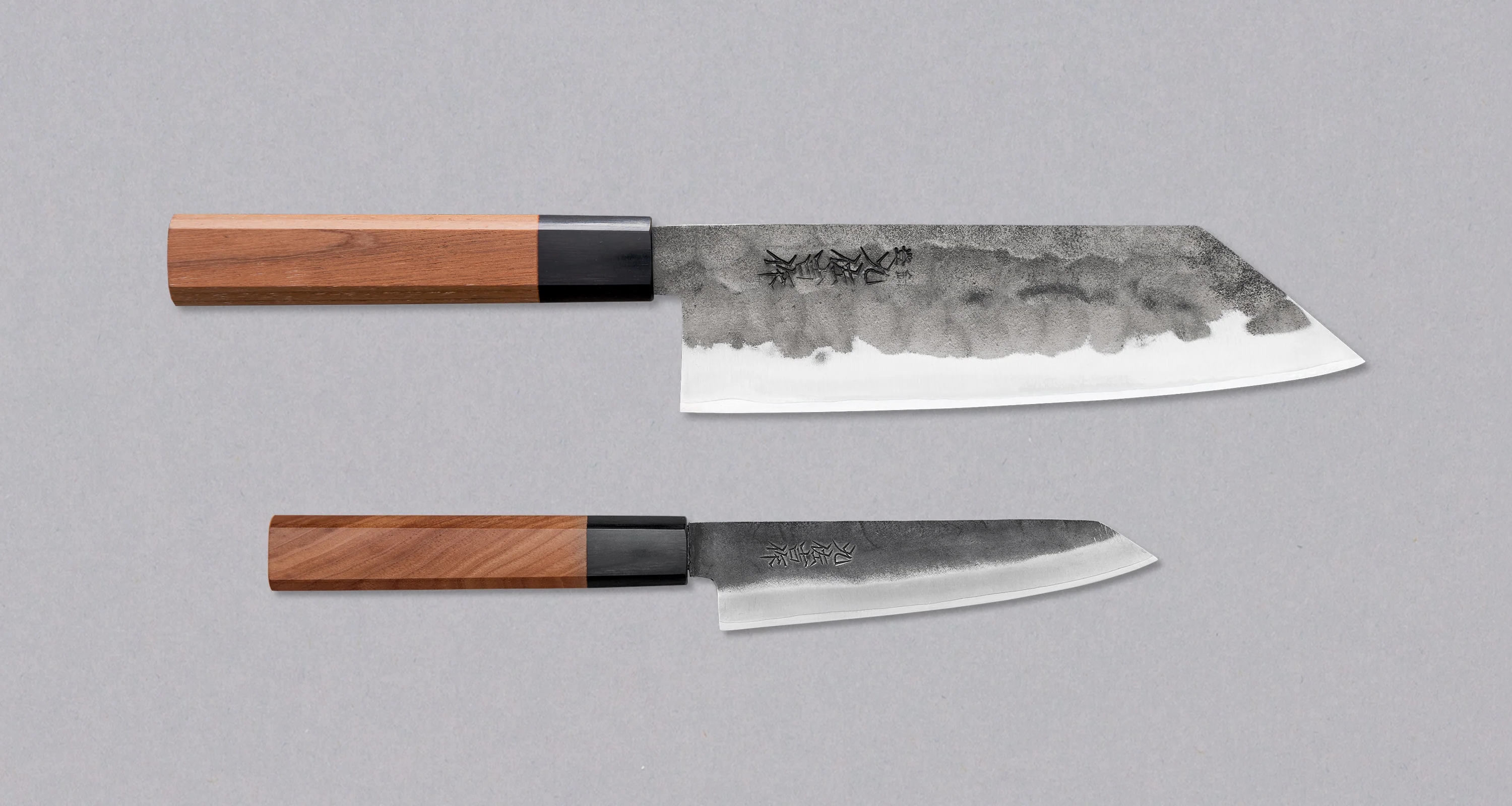
The knife is laminated, forged, and heat treated by the blacksmith in his small smithy in the south of Japan. The kuro-uchi finish has a touch of rusticity and robustness that comes with the purely handmade blade. Handles are in different shades of brown, from dark brown to light brown. Therefore, each piece is completely unique. |
Original: $392.42
-65%$392.42
$137.35More Images
ZDP-189 Bunka Silver 190mm (7.5")
ZDP-189 Bunka was designed in harmony with our values (excellence, quality, and reliability), in line with those originating from the steadfast Japanese tradition. We also devoted special attention to certain aesthetics inspired by Japanese mysticism and a respectful attitude to tradition, nature, raw materials, the constituent elements, and the final product – in short, the quintessential values of Japanese culture.
The knife is manufactured at the smithy of Yoshida Hamono in Japan, a family company with an age-long tradition in manufacturing state-of-the-art tools and Japanese swords, i.e. katanas, by hand. Yoshida Hamono has a great deal of experience forging ZDP-189 steel in the traditional manner. See the photo story from our visit to their smithy.
BLADE SHAPE:
The shape of the blade is called Bunka which means culture in Japanese. Bunka makes for a highly versatile knife suitable for cutting vegetables, meat, and fish.
With its typical functionality, Bunka design is intended for versatile use in Western cuisine:
- It has a flexible profile that is wide enough at the handle,
- a gently designed belly of the blade suitable for making either long or short cuts,
- a flat back side of the blade,
- and a thin pointy reverse tanto tip for precise cuts and carvings.
The angle of the spine rapidly changes to meet the tip, which is referred to as a »K-Tip«. Besides looking badass, this shape allows the user precision and makes getting to the hard-to-get-places a bit easier.
STEEL:
The heart of the knife is made of ZDP-189 steel, which we selected because systematic testing has proven its superior qualities and long-lasting sharpness.
The steel contains as much as 3% Carbon (C), which is one of the main elements contributing strength and typically found in amounts of up to only 1% in other types of solid steel, while the Chromium (Cr) content, which prevents corrosion, amounts to nearly 20%. It also features 0.60% Tungsten (W), which considerably increases the abrasion resistance of steel, 1.4% Molybdenum (Mo), which helps to preserve the strength and power of steel under variable temperatures, and 0.10% Vanadium (V), the key element in increasing steel strength. Heat treatment produces steel with a hardness of 65-67 HRC.
ZDP-189 composition: C 3.00 % | Cr 20.00 % | W 0.60 % | Mo 1.40 % | V 0.10 % | Mn 0.50 % | Si 0.40 %
LAMINATION:
The steel is laminated, meaning that the core is made of very strong steel covered with an external layer of softer stainless steel - also known as warikomi clad. The softer external layer protects the core steel from external factors.
The hard core of a knife is sandwiched between two layers of softer steel, reaching only up to a half of the blade’s width. This specific type of construction is used for steels that are very challenging to forge, for example for certain types of powder steels. A glowing hot piece of iron is split and a piece of steel is inserted. The material is now forged into one piece. This creates a highly durable kitchen knife with a slightly more pliable core. The main advantage of these knives is that they are thin, sharp and retain their edge very well. Warikomi is also called the “split and insert method”.
GEOMETRY:
Bunka has a double bevel (symmetrical) blade with a low profile and a V-edge grind, which gives it a good balance between the ease of cutting and robustness. This kind of grind produces very sharp edges and is wonderful at making very thin slices.
BLADE FINISH:
The blade is finished with a mirror polish hairline finish, which is suitable for the finest cuts. The single hairline, running along the length of the blade (just above the edge of the blade), marks the separation between the softer and the harder, core ZDP-189 steel.
The knife bears barely visible impressions of the hand-forging process (round hammer dents on the blade), which gives it a beautiful rustic finish and also prevents food from sticking to the blade. Kanji 登録 九佐吉作 "registered as work of Yoshida Smithy in Saga Prefecture, Kyushu, Japan" has been chiseled onto the blade.
HANDLE:
Bunka Silver was fitted a traditional Japanese wooden handle, called Wa handle. The wooden handle is made of walnut wood with an octagonal shape, so it will fit equally well into the hands of right- or left-handed users.
BLACKSMITH:
The knife is manufactured at the smithy of Yoshida Hamono in Japan, a family company with an age-long tradition in manufacturing state-of-the-art tools and Japanese swords (katanas) by hand. Yoshida Hamono has a great deal of experience forging ZDP-189 steel in the traditional manner. See the photo story from our visit to their smithy.
|
The knife is laminated, forged, and heat treated by the blacksmith in his small smithy in the south of Japan. The kuro-uchi finish has a touch of rusticity and robustness that comes with the purely handmade blade. Handles are in different shades of brown, from dark brown to light brown. Therefore, each piece is completely unique. |
Product Information
Product Information
Shipping & Returns
Shipping & Returns
Description
ZDP-189 Bunka was designed in harmony with our values (excellence, quality, and reliability), in line with those originating from the steadfast Japanese tradition. We also devoted special attention to certain aesthetics inspired by Japanese mysticism and a respectful attitude to tradition, nature, raw materials, the constituent elements, and the final product – in short, the quintessential values of Japanese culture.
The knife is manufactured at the smithy of Yoshida Hamono in Japan, a family company with an age-long tradition in manufacturing state-of-the-art tools and Japanese swords, i.e. katanas, by hand. Yoshida Hamono has a great deal of experience forging ZDP-189 steel in the traditional manner. See the photo story from our visit to their smithy.
BLADE SHAPE:
The shape of the blade is called Bunka which means culture in Japanese. Bunka makes for a highly versatile knife suitable for cutting vegetables, meat, and fish.
With its typical functionality, Bunka design is intended for versatile use in Western cuisine:
- It has a flexible profile that is wide enough at the handle,
- a gently designed belly of the blade suitable for making either long or short cuts,
- a flat back side of the blade,
- and a thin pointy reverse tanto tip for precise cuts and carvings.
The angle of the spine rapidly changes to meet the tip, which is referred to as a »K-Tip«. Besides looking badass, this shape allows the user precision and makes getting to the hard-to-get-places a bit easier.
STEEL:
The heart of the knife is made of ZDP-189 steel, which we selected because systematic testing has proven its superior qualities and long-lasting sharpness.
The steel contains as much as 3% Carbon (C), which is one of the main elements contributing strength and typically found in amounts of up to only 1% in other types of solid steel, while the Chromium (Cr) content, which prevents corrosion, amounts to nearly 20%. It also features 0.60% Tungsten (W), which considerably increases the abrasion resistance of steel, 1.4% Molybdenum (Mo), which helps to preserve the strength and power of steel under variable temperatures, and 0.10% Vanadium (V), the key element in increasing steel strength. Heat treatment produces steel with a hardness of 65-67 HRC.
ZDP-189 composition: C 3.00 % | Cr 20.00 % | W 0.60 % | Mo 1.40 % | V 0.10 % | Mn 0.50 % | Si 0.40 %
LAMINATION:
The steel is laminated, meaning that the core is made of very strong steel covered with an external layer of softer stainless steel - also known as warikomi clad. The softer external layer protects the core steel from external factors.
The hard core of a knife is sandwiched between two layers of softer steel, reaching only up to a half of the blade’s width. This specific type of construction is used for steels that are very challenging to forge, for example for certain types of powder steels. A glowing hot piece of iron is split and a piece of steel is inserted. The material is now forged into one piece. This creates a highly durable kitchen knife with a slightly more pliable core. The main advantage of these knives is that they are thin, sharp and retain their edge very well. Warikomi is also called the “split and insert method”.
GEOMETRY:
Bunka has a double bevel (symmetrical) blade with a low profile and a V-edge grind, which gives it a good balance between the ease of cutting and robustness. This kind of grind produces very sharp edges and is wonderful at making very thin slices.
BLADE FINISH:
The blade is finished with a mirror polish hairline finish, which is suitable for the finest cuts. The single hairline, running along the length of the blade (just above the edge of the blade), marks the separation between the softer and the harder, core ZDP-189 steel.
The knife bears barely visible impressions of the hand-forging process (round hammer dents on the blade), which gives it a beautiful rustic finish and also prevents food from sticking to the blade. Kanji 登録 九佐吉作 "registered as work of Yoshida Smithy in Saga Prefecture, Kyushu, Japan" has been chiseled onto the blade.
HANDLE:
Bunka Silver was fitted a traditional Japanese wooden handle, called Wa handle. The wooden handle is made of walnut wood with an octagonal shape, so it will fit equally well into the hands of right- or left-handed users.
BLACKSMITH:
The knife is manufactured at the smithy of Yoshida Hamono in Japan, a family company with an age-long tradition in manufacturing state-of-the-art tools and Japanese swords (katanas) by hand. Yoshida Hamono has a great deal of experience forging ZDP-189 steel in the traditional manner. See the photo story from our visit to their smithy.
|
The knife is laminated, forged, and heat treated by the blacksmith in his small smithy in the south of Japan. The kuro-uchi finish has a touch of rusticity and robustness that comes with the purely handmade blade. Handles are in different shades of brown, from dark brown to light brown. Therefore, each piece is completely unique. |