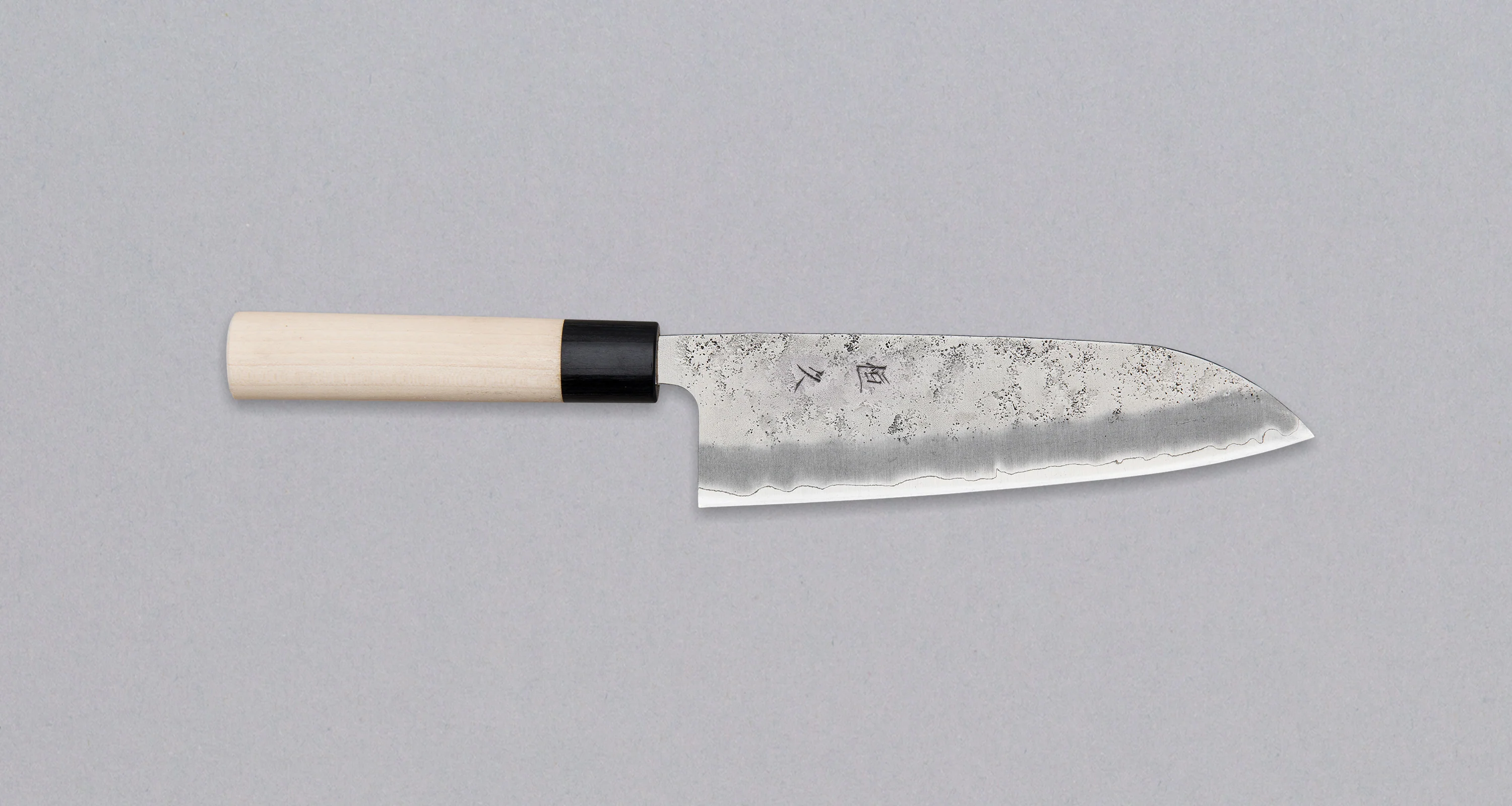
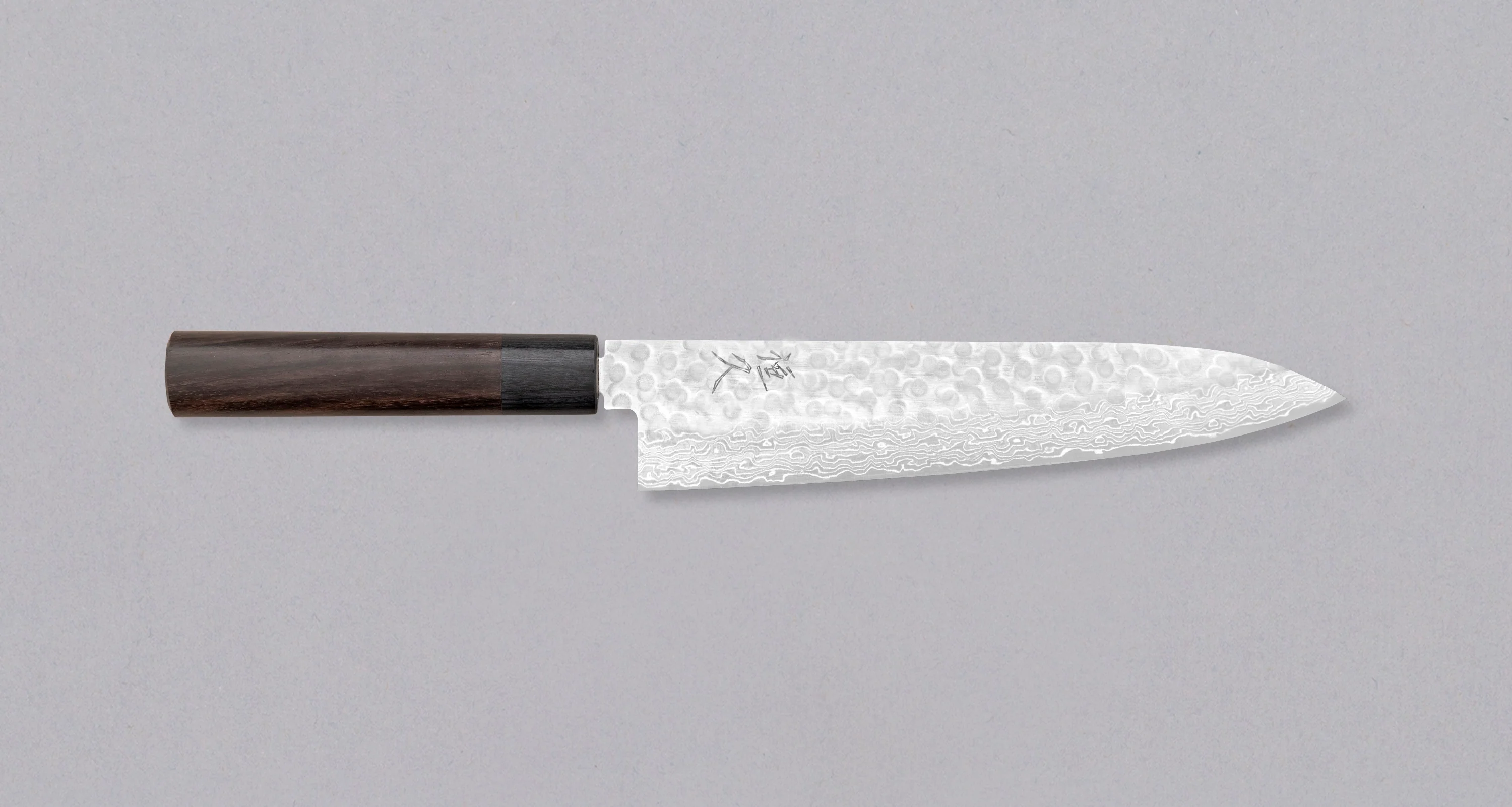
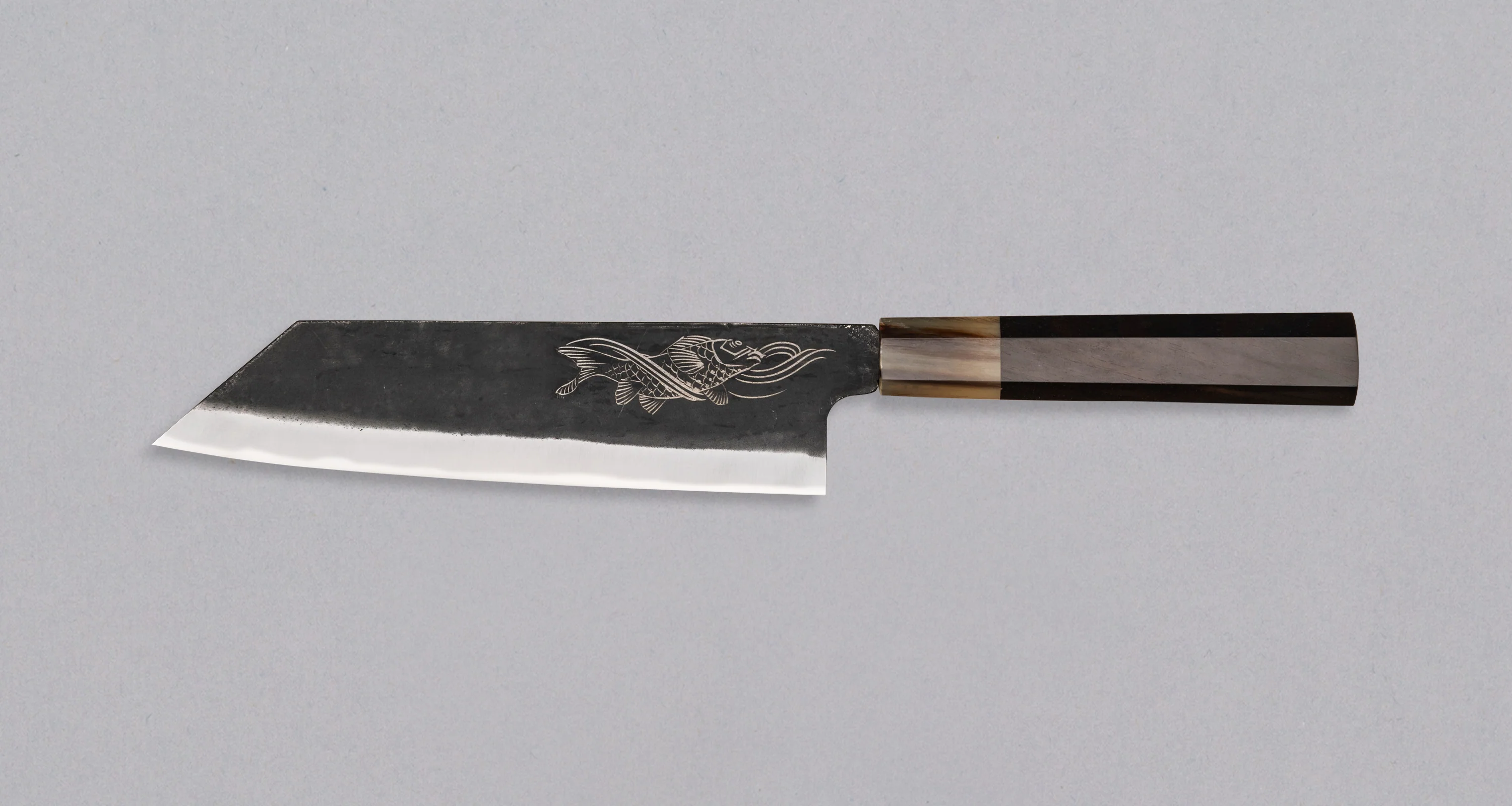
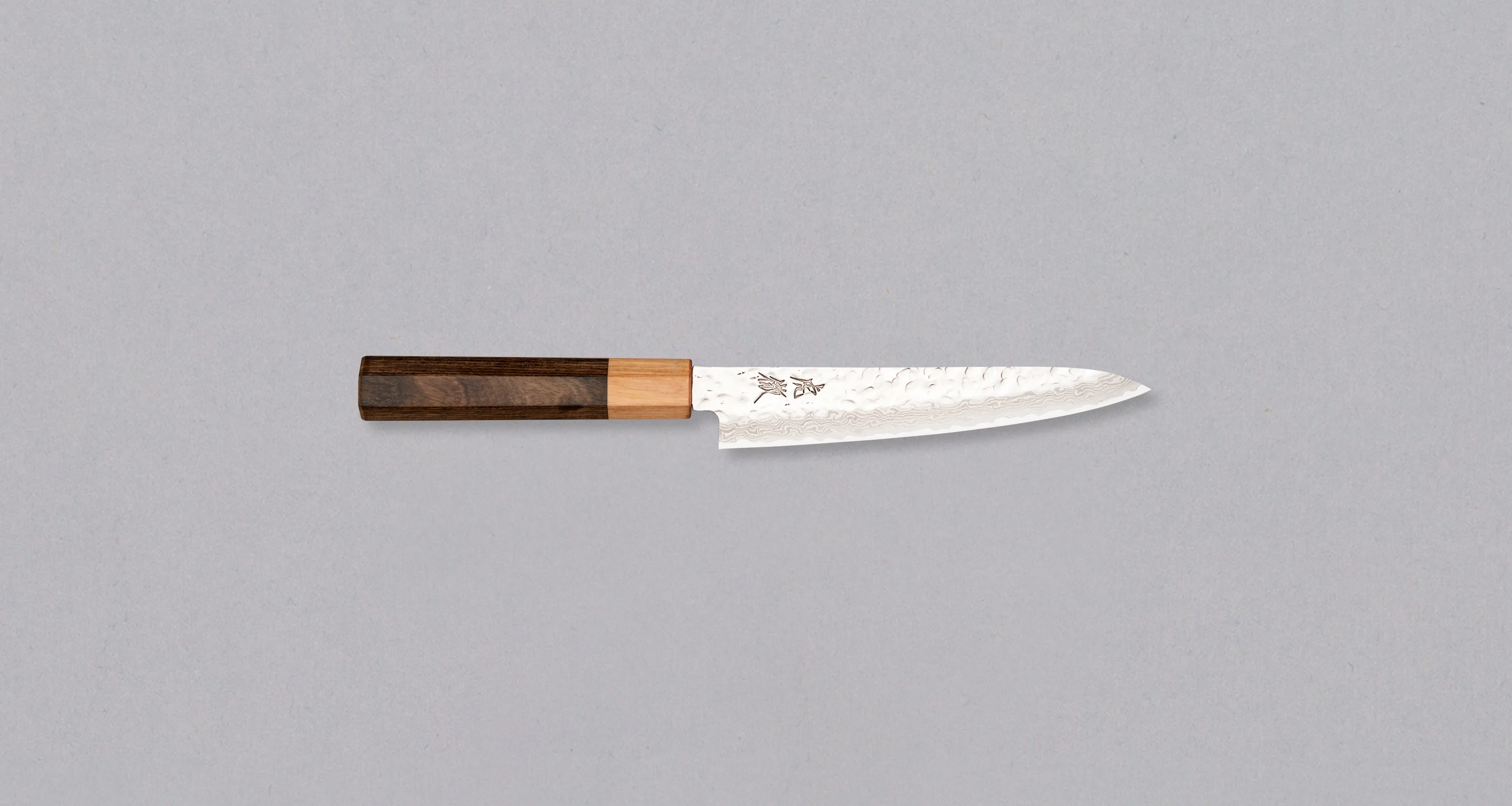
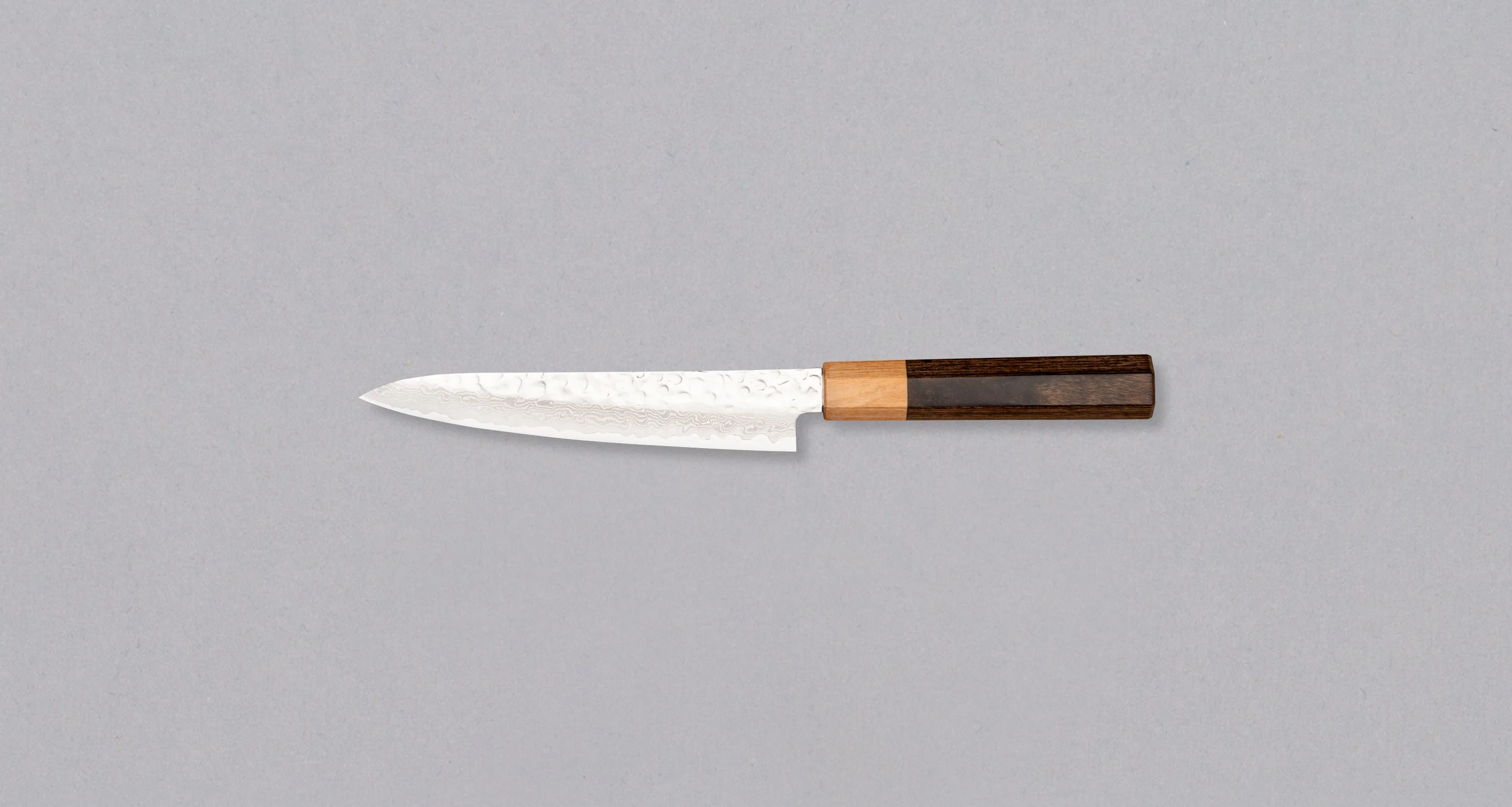
Hikari Ko Santoku SLD Satin Polish 150mm (5.9")
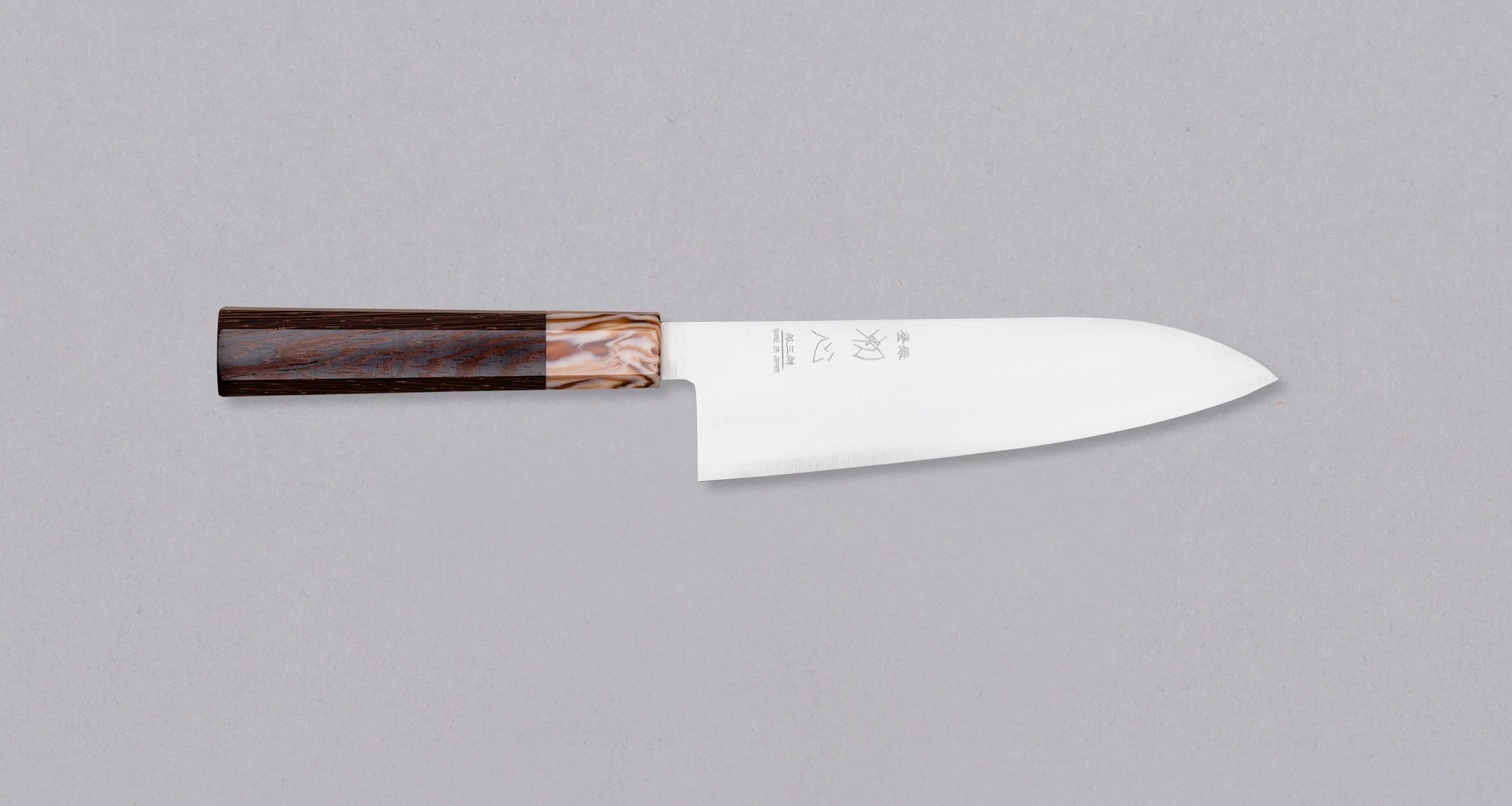
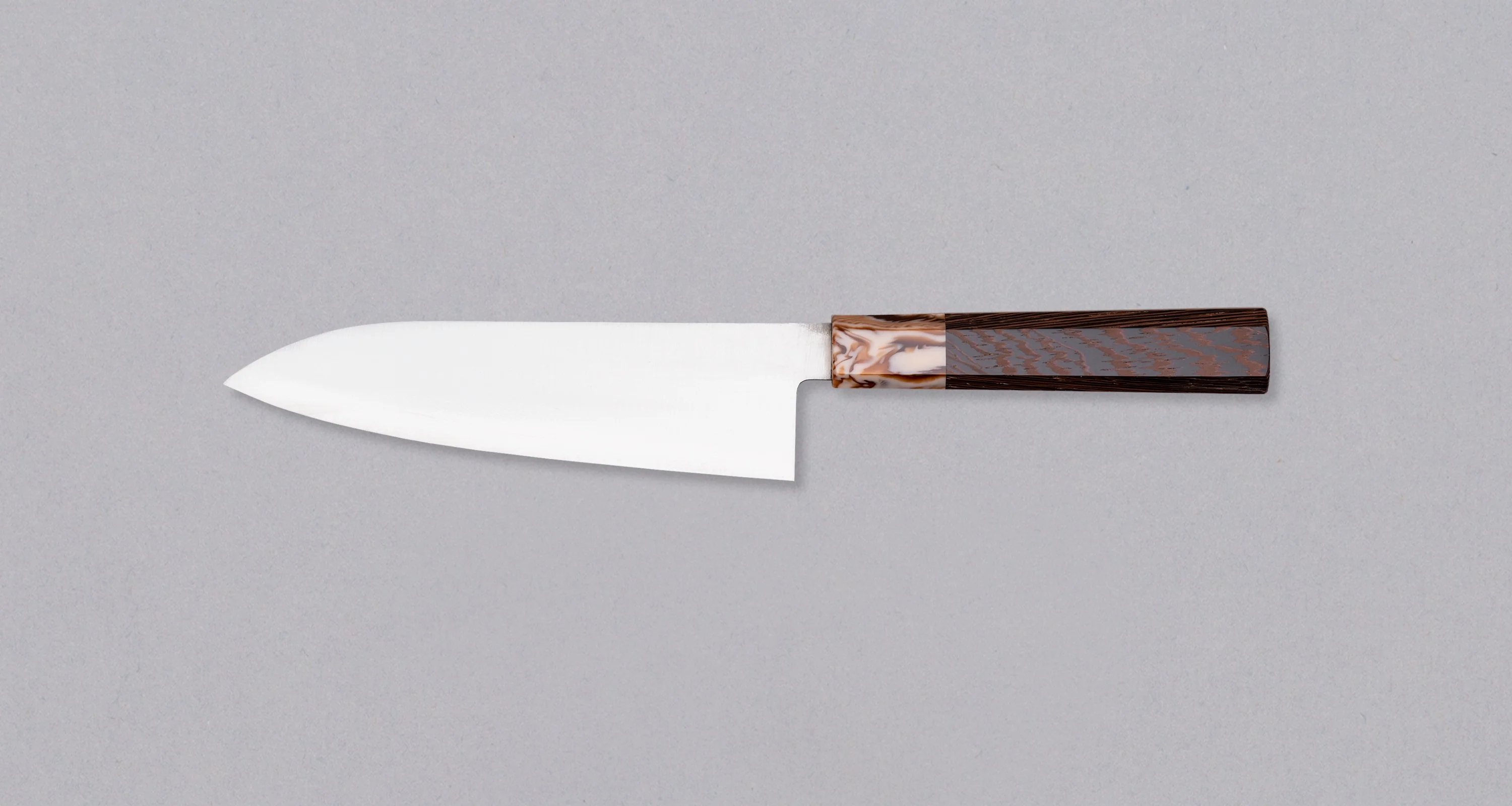
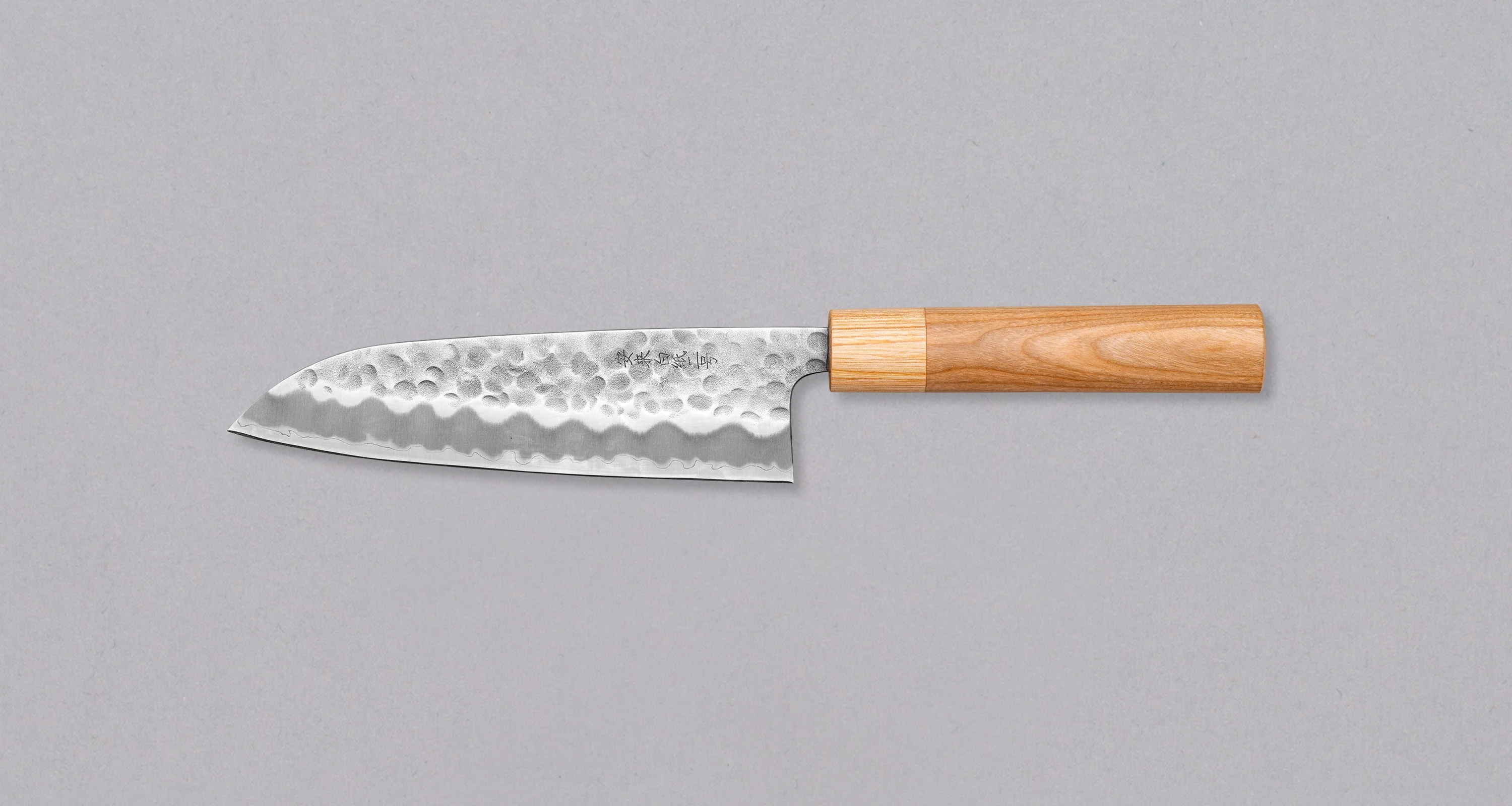
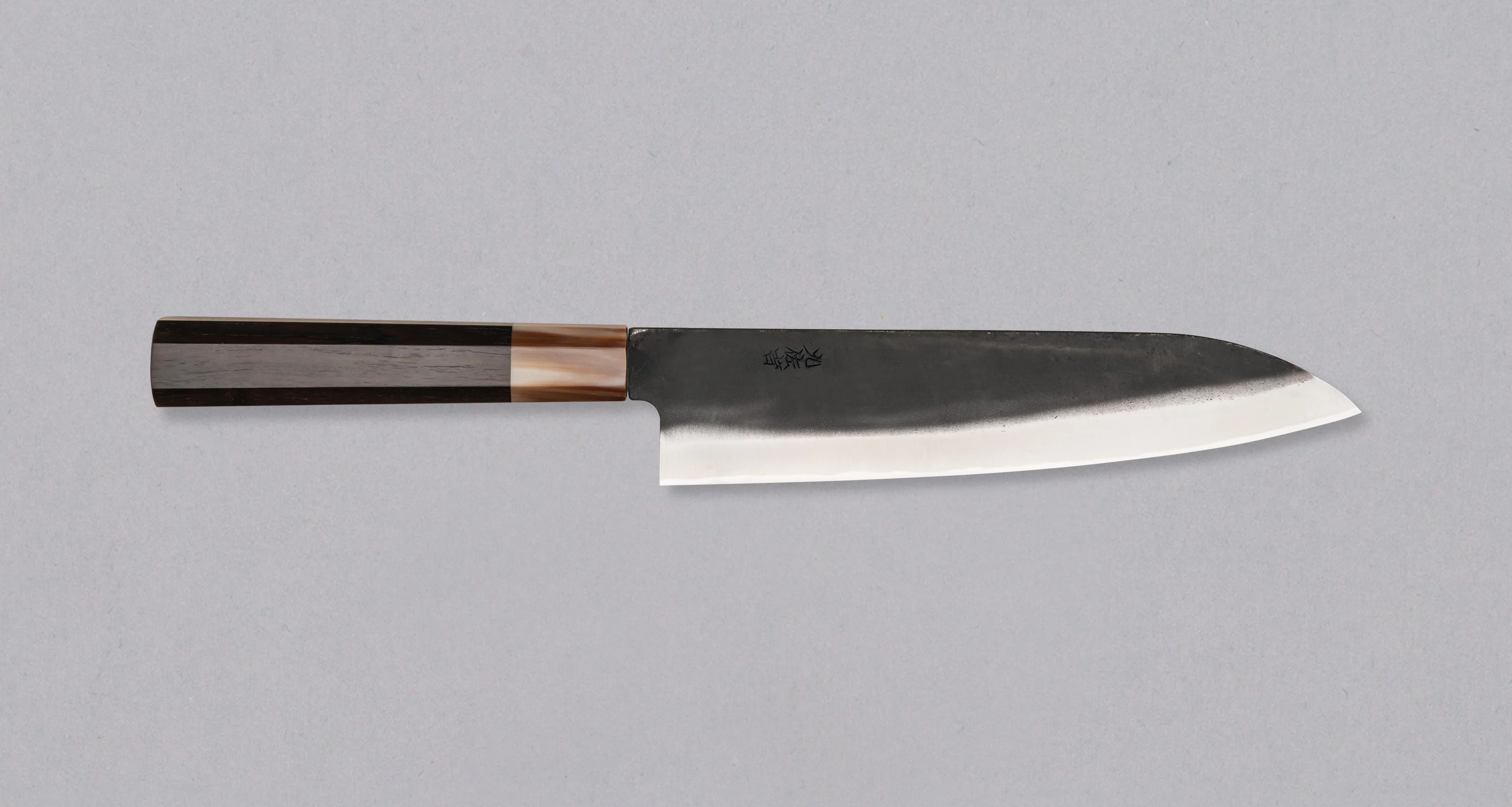
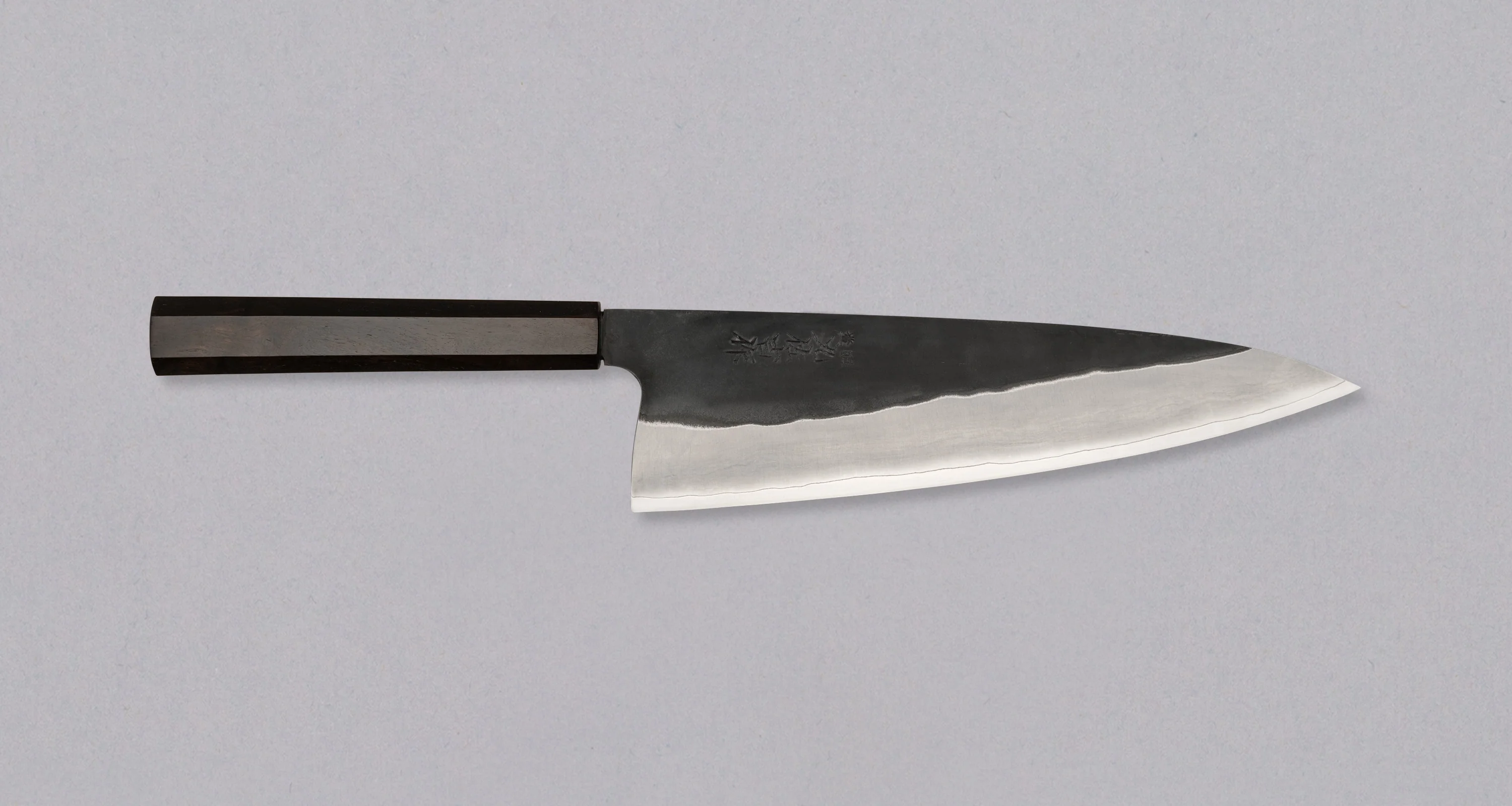
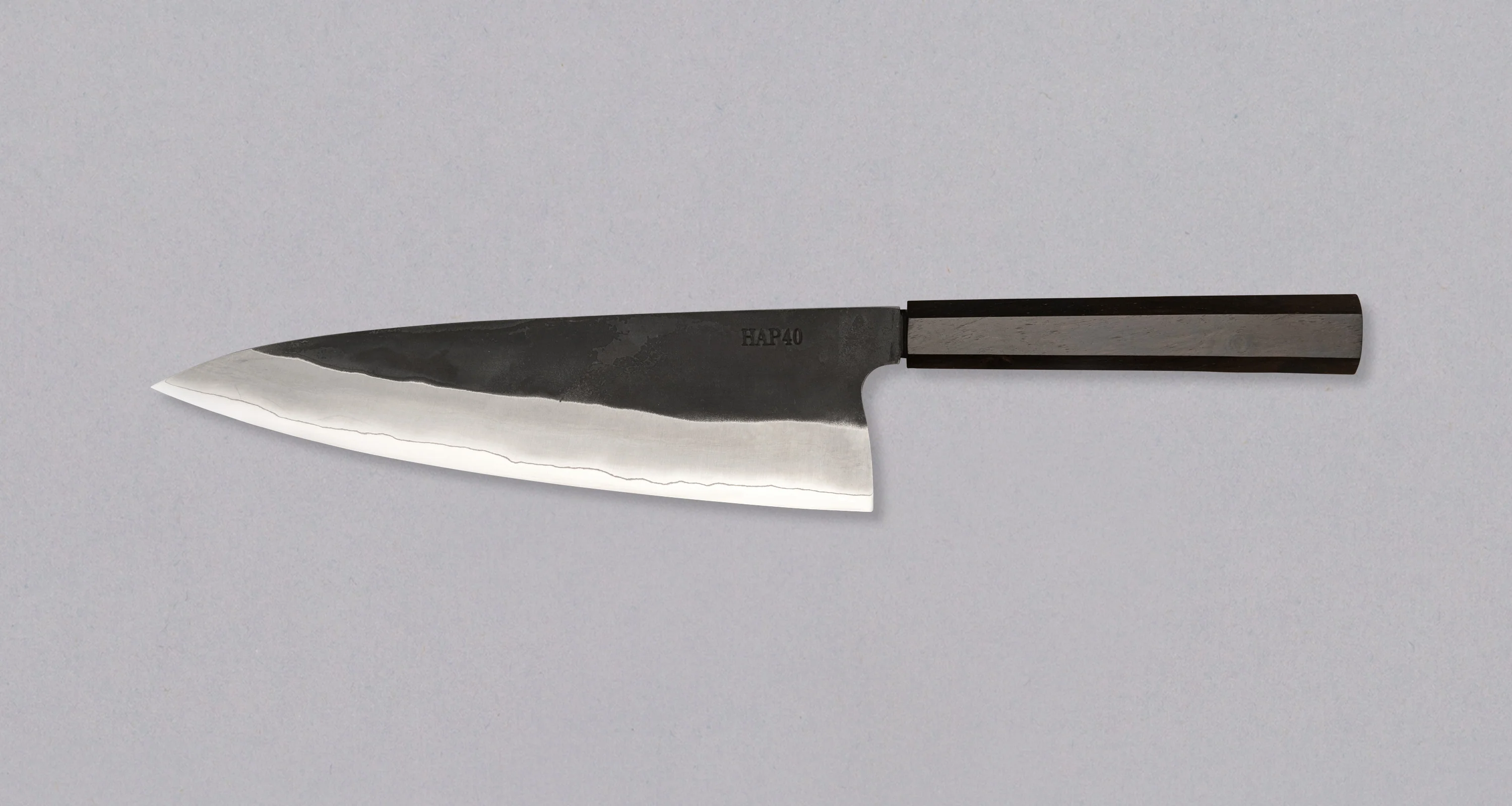
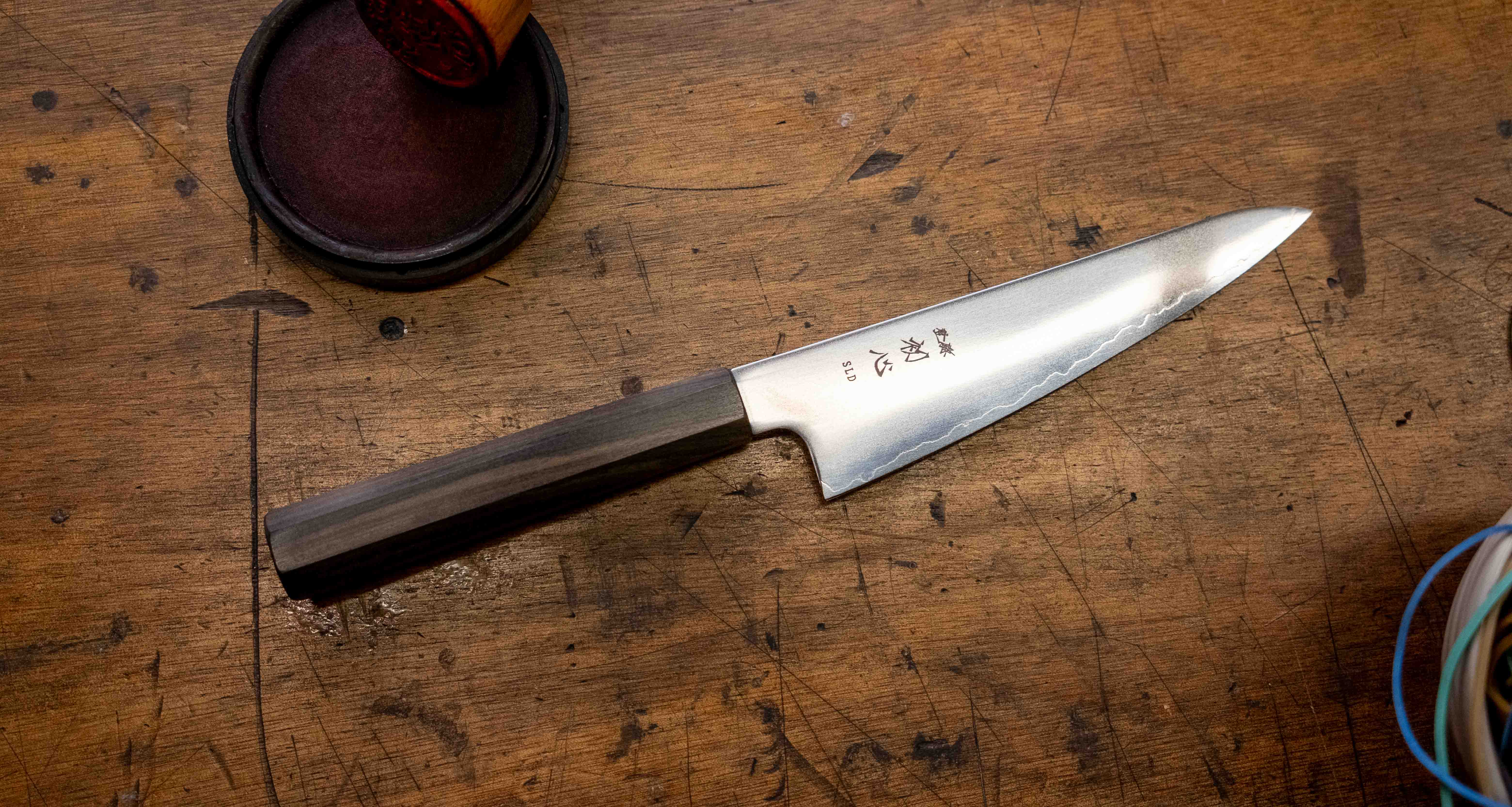
A sleek and compact Japanese chef’s knife for everyday prep. The Hikari Ko Santoku SLD Satin Polish 150mm (5.9") features a thin, razor-sharp blade made of high-performance SLD steel, known for its exceptional edge retention and durability. The satin finish reduces friction and helps prevent food from sticking, making slicing and chopping feel effortless. Its wide blade profile and compact size make it ideal for precise, controlled cuts, especially on smaller cutting boards. Finished with a durable octagonal bubinga wood handle, this knife offers a secure, comfortable grip for both left- and right-handed users.
BLADE SHAPE:
Ko-Santoku is a smaller version of Santoku so if you guessed that “ko” means small or short, you nailed it. Ko-Santoku, 150mm long, is a love child of the Santoku and Petty knife. The slightly curved belly allows for gentle rocking, and the rounded tip adds precision for more delicate prep work.
STEEL:
SLD steel by Hitachi is a high-performance tool steel known for outstanding edge retention, toughness, and semi-stainless corrosion resistance. Originally made for industrial blades, it’s now trusted in Japanese kitchen knives for its 60–62 HRC hardness and low-maintenance sharpness—perfect for serious home cooks and professionals alike. Because SLD isn't completely stainless, clean it and dry it off when you're done using it.
SLD Steel Composition - Carbon (C) 1.5%, Silicon (SI) 0.3%, Manganese (Mn) 0.4%, Chromium (Cr) 12%, Molybdenum (Mo) 0.9%, Vanadium (V) 0.3%
LAMINATION:
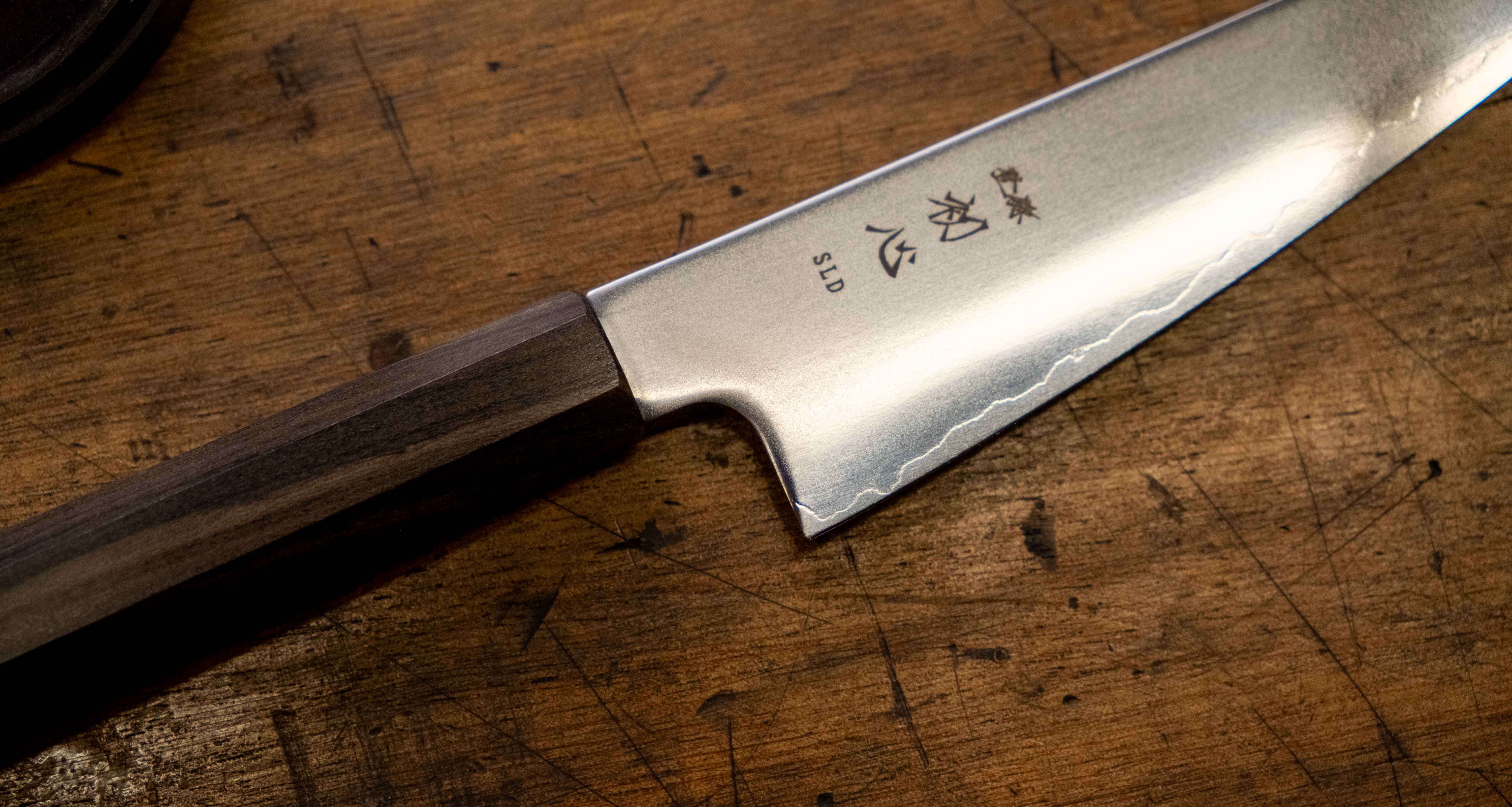
The core layer, consisting of the harder SLD stainless steel, was sandwiched between layers of softer, more pliable steel. This technique is called san-mai and is used to protect the hard core from outside factors and physical impacts, which could otherwise lead to breakage.
GEOMETRY:
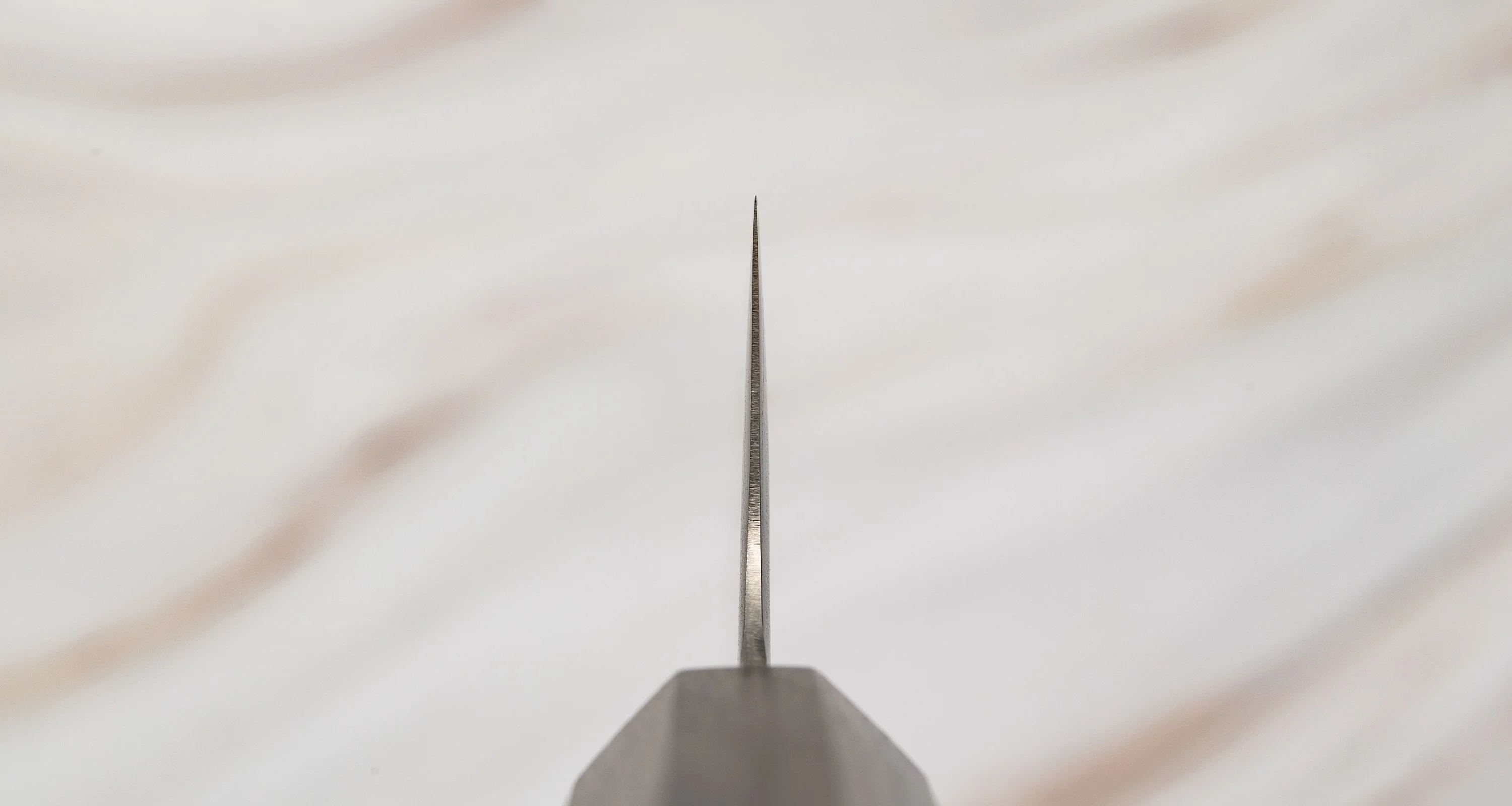
It has a double bevel (symmetrical) blade. The cutting edge is sharpened to a 50/50 angle and stays sharp even after hours of constant use.
BLADE FINISH:
This knife features a matte, satin finish with a pronounced line at the bottom of the blade. This line indicates the border between the two softer, outer layers of steel, and the strong SLD core steel, seen exposed at the very edge of the blade.
HANDLE:
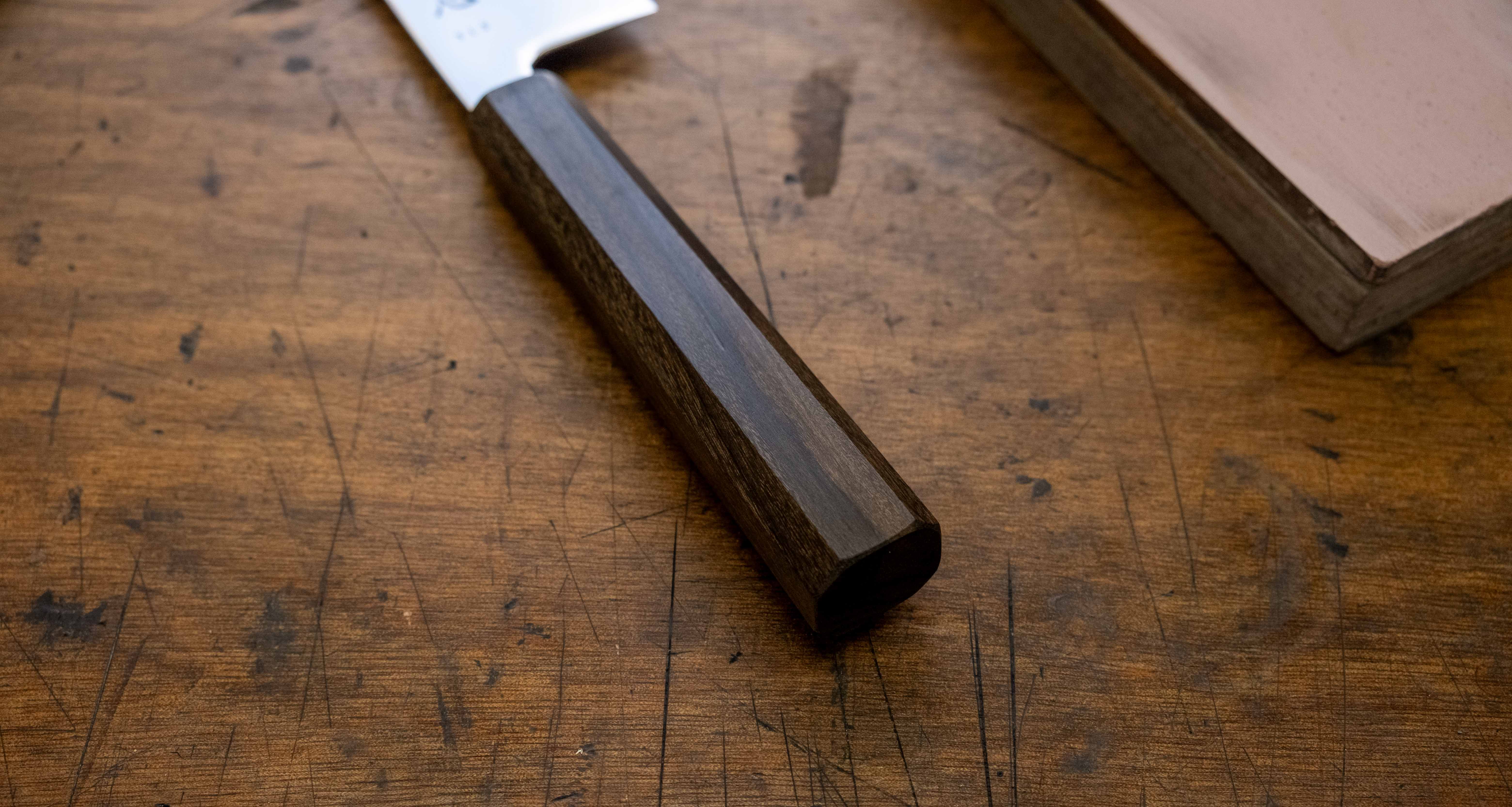
The knife features an octagon Japanese (Wa) style handle made out of bubinga wood. The octagon shape of the handle provides a comfortable and secure grip, allowing for precise control during use. Bubinga is a durable and dense tropical wood, known for its distinct brown color with dark patterns. Its strength and stability make it popular for crafting knife handles, furniture, and musical instruments. It has a beautiful texture and polishes well, giving it a smooth and elegant appearance.
More Images

Hikari Ko Santoku SLD Satin Polish 150mm (5.9")
A sleek and compact Japanese chef’s knife for everyday prep. The Hikari Ko Santoku SLD Satin Polish 150mm (5.9") features a thin, razor-sharp blade made of high-performance SLD steel, known for its exceptional edge retention and durability. The satin finish reduces friction and helps prevent food from sticking, making slicing and chopping feel effortless. Its wide blade profile and compact size make it ideal for precise, controlled cuts, especially on smaller cutting boards. Finished with a durable octagonal bubinga wood handle, this knife offers a secure, comfortable grip for both left- and right-handed users.
BLADE SHAPE:
Ko-Santoku is a smaller version of Santoku so if you guessed that “ko” means small or short, you nailed it. Ko-Santoku, 150mm long, is a love child of the Santoku and Petty knife. The slightly curved belly allows for gentle rocking, and the rounded tip adds precision for more delicate prep work.
STEEL:
SLD steel by Hitachi is a high-performance tool steel known for outstanding edge retention, toughness, and semi-stainless corrosion resistance. Originally made for industrial blades, it’s now trusted in Japanese kitchen knives for its 60–62 HRC hardness and low-maintenance sharpness—perfect for serious home cooks and professionals alike. Because SLD isn't completely stainless, clean it and dry it off when you're done using it.
SLD Steel Composition - Carbon (C) 1.5%, Silicon (SI) 0.3%, Manganese (Mn) 0.4%, Chromium (Cr) 12%, Molybdenum (Mo) 0.9%, Vanadium (V) 0.3%
LAMINATION:
The core layer, consisting of the harder SLD stainless steel, was sandwiched between layers of softer, more pliable steel. This technique is called san-mai and is used to protect the hard core from outside factors and physical impacts, which could otherwise lead to breakage.
GEOMETRY:
It has a double bevel (symmetrical) blade. The cutting edge is sharpened to a 50/50 angle and stays sharp even after hours of constant use.
BLADE FINISH:
This knife features a matte, satin finish with a pronounced line at the bottom of the blade. This line indicates the border between the two softer, outer layers of steel, and the strong SLD core steel, seen exposed at the very edge of the blade.
HANDLE:
The knife features an octagon Japanese (Wa) style handle made out of bubinga wood. The octagon shape of the handle provides a comfortable and secure grip, allowing for precise control during use. Bubinga is a durable and dense tropical wood, known for its distinct brown color with dark patterns. Its strength and stability make it popular for crafting knife handles, furniture, and musical instruments. It has a beautiful texture and polishes well, giving it a smooth and elegant appearance.
Product Information
Product Information
Shipping & Returns
Shipping & Returns
Description
A sleek and compact Japanese chef’s knife for everyday prep. The Hikari Ko Santoku SLD Satin Polish 150mm (5.9") features a thin, razor-sharp blade made of high-performance SLD steel, known for its exceptional edge retention and durability. The satin finish reduces friction and helps prevent food from sticking, making slicing and chopping feel effortless. Its wide blade profile and compact size make it ideal for precise, controlled cuts, especially on smaller cutting boards. Finished with a durable octagonal bubinga wood handle, this knife offers a secure, comfortable grip for both left- and right-handed users.
BLADE SHAPE:
Ko-Santoku is a smaller version of Santoku so if you guessed that “ko” means small or short, you nailed it. Ko-Santoku, 150mm long, is a love child of the Santoku and Petty knife. The slightly curved belly allows for gentle rocking, and the rounded tip adds precision for more delicate prep work.
STEEL:
SLD steel by Hitachi is a high-performance tool steel known for outstanding edge retention, toughness, and semi-stainless corrosion resistance. Originally made for industrial blades, it’s now trusted in Japanese kitchen knives for its 60–62 HRC hardness and low-maintenance sharpness—perfect for serious home cooks and professionals alike. Because SLD isn't completely stainless, clean it and dry it off when you're done using it.
SLD Steel Composition - Carbon (C) 1.5%, Silicon (SI) 0.3%, Manganese (Mn) 0.4%, Chromium (Cr) 12%, Molybdenum (Mo) 0.9%, Vanadium (V) 0.3%
LAMINATION:
The core layer, consisting of the harder SLD stainless steel, was sandwiched between layers of softer, more pliable steel. This technique is called san-mai and is used to protect the hard core from outside factors and physical impacts, which could otherwise lead to breakage.
GEOMETRY:
It has a double bevel (symmetrical) blade. The cutting edge is sharpened to a 50/50 angle and stays sharp even after hours of constant use.
BLADE FINISH:
This knife features a matte, satin finish with a pronounced line at the bottom of the blade. This line indicates the border between the two softer, outer layers of steel, and the strong SLD core steel, seen exposed at the very edge of the blade.
HANDLE:
The knife features an octagon Japanese (Wa) style handle made out of bubinga wood. The octagon shape of the handle provides a comfortable and secure grip, allowing for precise control during use. Bubinga is a durable and dense tropical wood, known for its distinct brown color with dark patterns. Its strength and stability make it popular for crafting knife handles, furniture, and musical instruments. It has a beautiful texture and polishes well, giving it a smooth and elegant appearance.