![Yoshida Ajikiri SUJ-2 Kuro-uchi 100mm (3.9") [Rosewood-Cedar/Octagon]](/images/sharpedgestore.shop/images/product/yoshida-ajikiri-suj-2-kuro-uchi-100mm-rosewood-cedar-octagon-1.jpg)
Yoshida Ajikiri SUJ-2 Kuro-uchi 100mm (3.9") [Rosewood-Cedar/Octagon]
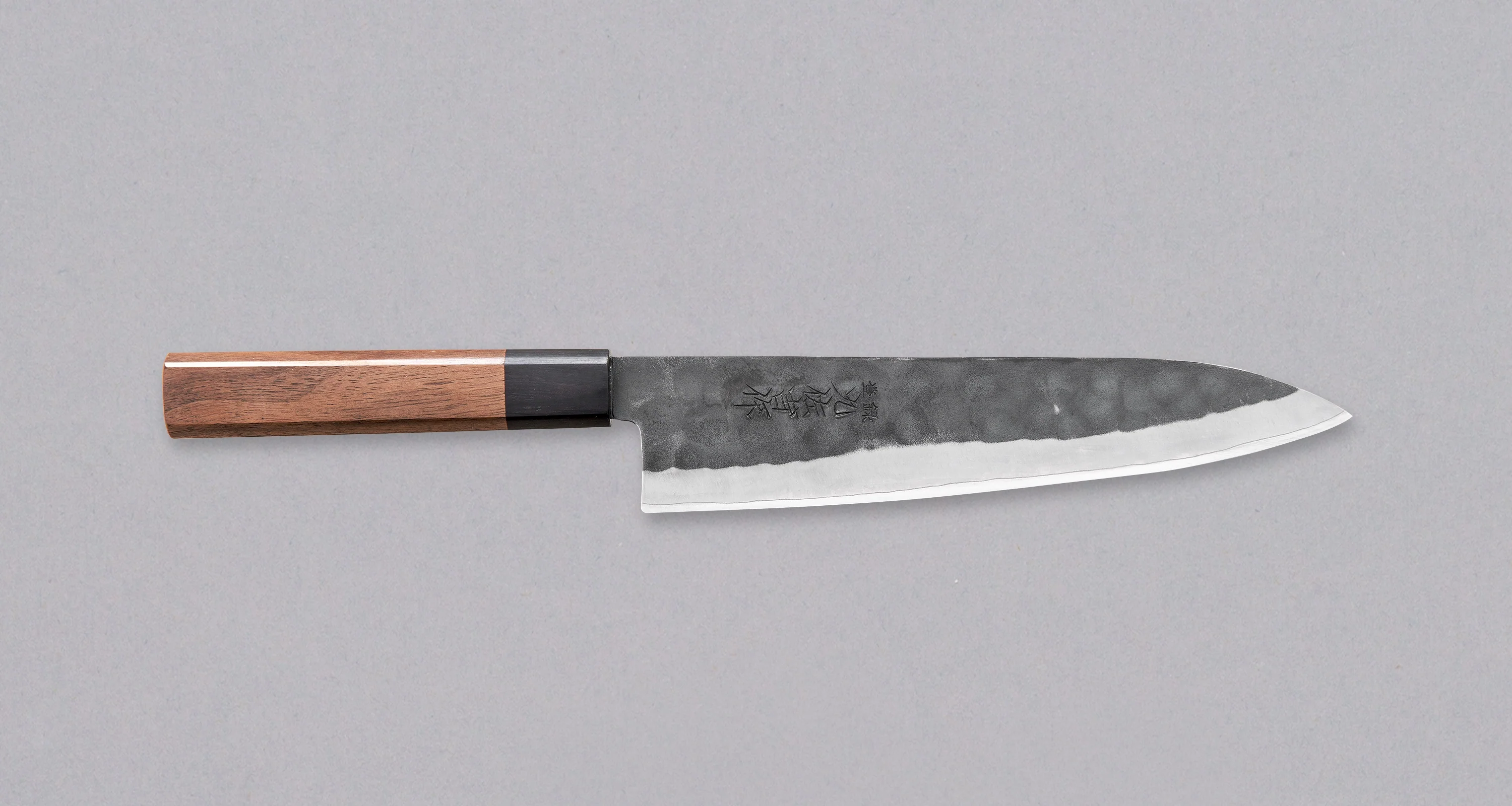
Yoshida Ajikiri SUJ-2 Kuro-uchi 100mm (3.9") [Rosewood-Cedar] blade is fitted with an octagonal rosewood handle, topped with a ferrule made of cedar wood. It is also available without a handle (in case you would like to fit it with a custom handle of your choice).
The price of this knife is very affordable for the quality of a hand-forged knife. The blade is forged from SUJ-2 steel, which offers incredible capacities, hardness is 63-64 HRC, and at the same time, the knife is very easy to resharpen. The blade requires some extra maintenance. After use, rinse it well and dry it. The name kuro-uchi refers to the blade finish, which is unprocessed on top and has already developed a dark patina, which protects the blade from rust.
BLADE PROFILE:
The ajikiri is a smaller, thinner version of the traditional Japanese deba knife. It is designed for smaller fish, such as mackerel, from which its name is derived - in Japanese, 'Aji' means mackerel, and combined with the word 'kiri' (jap. knife), the name 鯵切 ajikiri literally means 'a knife for a mackerel'.
STEEL:
The blade is forged in SUJ-2 steel, which offers incredible capacities, hardness is 63-64 HRC, and at the same time, the knife is very easy to resharpen. The blade requires some extra maintenance. After use, rinse it well and dry it.
LAMINATION:
The blade’s core was laminated using the san-mai method to improve its structural integrity and subsequent ability to withstand impacts and prevent chipping. San-mai translates to “three layers” in Japanese, referring to a blade that is composed of a primary, inner layer of harder steel (hagane) and of two secondary, outer layers of softer steel (jigane) that protect the prior.
→ Read more on Blade Construction: Lamination.
GEOMETRY:
It has a double bevel (symmetrical) blade (50/50) with a convex v-edge grind.
BLADE FINISH:
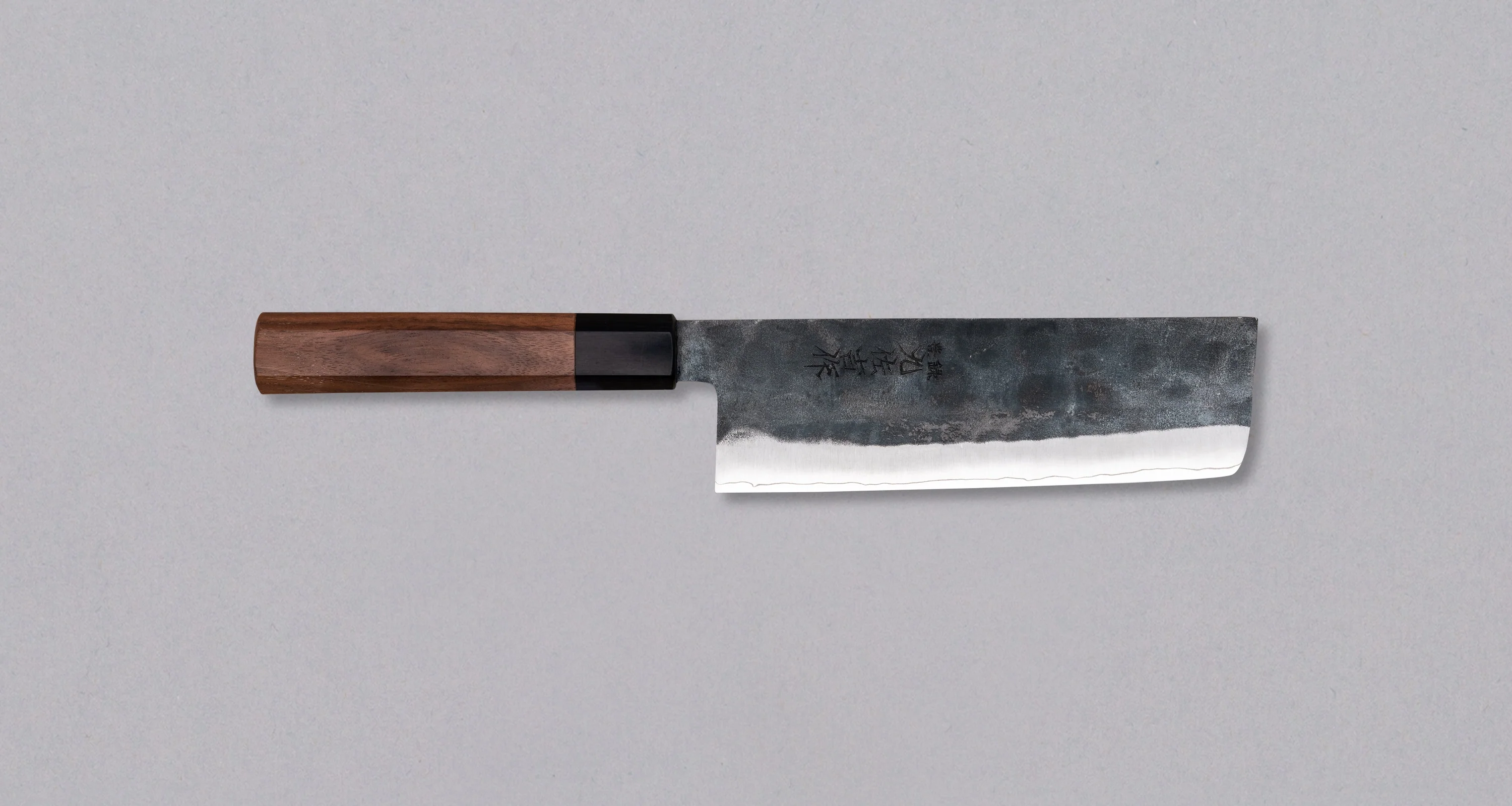
The blade sports a raw kurouchi finish which gives it a rustic appearance. The stamp on the blade 吉 (Kichi) means luck.
HANDLE:
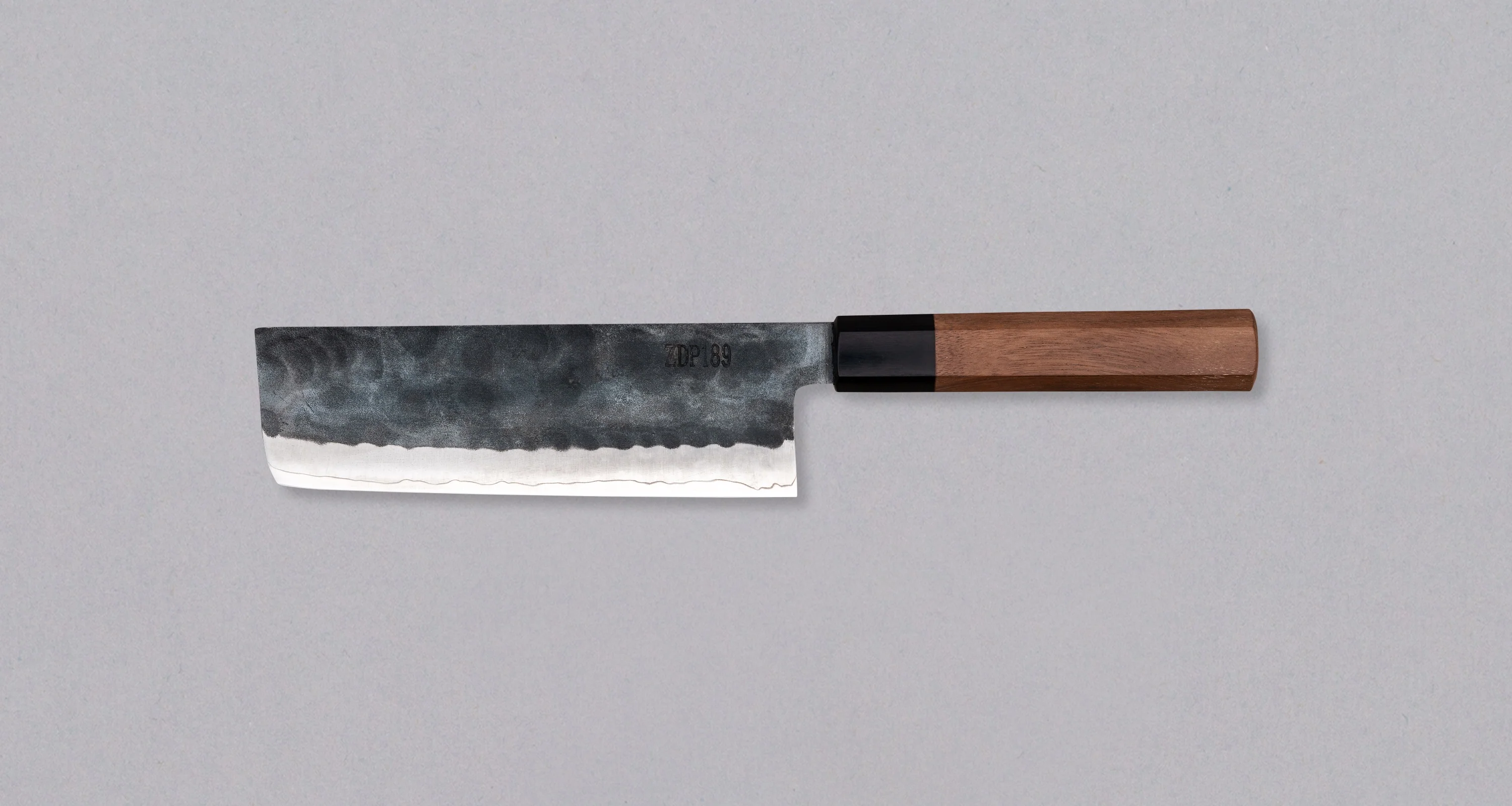
The blade is fitted with a traditional Japanese wa hande in an octagonal shape. It is made from rosewood and topped with a ferrule made from cedar wood. The same blade with a handle of the same material but in an oval shape is available here.
SMITHY:
Yoshida Hamono is a family-owned Japanese company with an age-long tradition in manufacturing state-of-the-art tools and Japanese swords (katanas) by hand. The company has a workshop in the Japanese town of Saga. It is well-known for manufacturing metal products in tested corrosion-resistant materials, such as VG-10, Ginsan and Swedish steel. You can learn more about them and our visit to their workshop here.
Original: $128.85
-65%$128.85
$45.10More Images
![Yoshida Ajikiri SUJ-2 Kuro-uchi 100mm (3.9") [Rosewood-Cedar/Octagon] - Image 2](/images/sharpedgestore.shop/images/product/yoshida-ajikiri-suj-2-kuro-uchi-100mm-rosewood-cedar-octagon-2.jpg)
![Yoshida Ajikiri SUJ-2 Kuro-uchi 100mm (3.9") [Rosewood-Cedar/Octagon] - Image 3](/images/sharpedgestore.shop/images/product/yoshida-ajikiri-suj-2-kuro-uchi-100mm-rosewood-cedar-octagon-3.jpg)
![Yoshida Ajikiri SUJ-2 Kuro-uchi 100mm (3.9") [Rosewood-Cedar/Octagon] - Image 4](/images/sharpedgestore.shop/images/product/yoshida-ajikiri-suj-2-kuro-uchi-100mm-rosewood-cedar-octagon-4.jpg)
![Yoshida Ajikiri SUJ-2 Kuro-uchi 100mm (3.9") [Rosewood-Cedar/Octagon] - Image 5](/images/sharpedgestore.shop/images/product/yoshida-ajikiri-suj-2-kuro-uchi-100mm-rosewood-cedar-octagon-5.jpg)
Yoshida Ajikiri SUJ-2 Kuro-uchi 100mm (3.9") [Rosewood-Cedar/Octagon]
Yoshida Ajikiri SUJ-2 Kuro-uchi 100mm (3.9") [Rosewood-Cedar] blade is fitted with an octagonal rosewood handle, topped with a ferrule made of cedar wood. It is also available without a handle (in case you would like to fit it with a custom handle of your choice).
The price of this knife is very affordable for the quality of a hand-forged knife. The blade is forged from SUJ-2 steel, which offers incredible capacities, hardness is 63-64 HRC, and at the same time, the knife is very easy to resharpen. The blade requires some extra maintenance. After use, rinse it well and dry it. The name kuro-uchi refers to the blade finish, which is unprocessed on top and has already developed a dark patina, which protects the blade from rust.
BLADE PROFILE:
The ajikiri is a smaller, thinner version of the traditional Japanese deba knife. It is designed for smaller fish, such as mackerel, from which its name is derived - in Japanese, 'Aji' means mackerel, and combined with the word 'kiri' (jap. knife), the name 鯵切 ajikiri literally means 'a knife for a mackerel'.
STEEL:
The blade is forged in SUJ-2 steel, which offers incredible capacities, hardness is 63-64 HRC, and at the same time, the knife is very easy to resharpen. The blade requires some extra maintenance. After use, rinse it well and dry it.
LAMINATION:
The blade’s core was laminated using the san-mai method to improve its structural integrity and subsequent ability to withstand impacts and prevent chipping. San-mai translates to “three layers” in Japanese, referring to a blade that is composed of a primary, inner layer of harder steel (hagane) and of two secondary, outer layers of softer steel (jigane) that protect the prior.
→ Read more on Blade Construction: Lamination.
GEOMETRY:
It has a double bevel (symmetrical) blade (50/50) with a convex v-edge grind.
BLADE FINISH:
The blade sports a raw kurouchi finish which gives it a rustic appearance. The stamp on the blade 吉 (Kichi) means luck.
HANDLE:
The blade is fitted with a traditional Japanese wa hande in an octagonal shape. It is made from rosewood and topped with a ferrule made from cedar wood. The same blade with a handle of the same material but in an oval shape is available here.
SMITHY:
Yoshida Hamono is a family-owned Japanese company with an age-long tradition in manufacturing state-of-the-art tools and Japanese swords (katanas) by hand. The company has a workshop in the Japanese town of Saga. It is well-known for manufacturing metal products in tested corrosion-resistant materials, such as VG-10, Ginsan and Swedish steel. You can learn more about them and our visit to their workshop here.
Product Information
Product Information
Shipping & Returns
Shipping & Returns
Description
Yoshida Ajikiri SUJ-2 Kuro-uchi 100mm (3.9") [Rosewood-Cedar] blade is fitted with an octagonal rosewood handle, topped with a ferrule made of cedar wood. It is also available without a handle (in case you would like to fit it with a custom handle of your choice).
The price of this knife is very affordable for the quality of a hand-forged knife. The blade is forged from SUJ-2 steel, which offers incredible capacities, hardness is 63-64 HRC, and at the same time, the knife is very easy to resharpen. The blade requires some extra maintenance. After use, rinse it well and dry it. The name kuro-uchi refers to the blade finish, which is unprocessed on top and has already developed a dark patina, which protects the blade from rust.
BLADE PROFILE:
The ajikiri is a smaller, thinner version of the traditional Japanese deba knife. It is designed for smaller fish, such as mackerel, from which its name is derived - in Japanese, 'Aji' means mackerel, and combined with the word 'kiri' (jap. knife), the name 鯵切 ajikiri literally means 'a knife for a mackerel'.
STEEL:
The blade is forged in SUJ-2 steel, which offers incredible capacities, hardness is 63-64 HRC, and at the same time, the knife is very easy to resharpen. The blade requires some extra maintenance. After use, rinse it well and dry it.
LAMINATION:
The blade’s core was laminated using the san-mai method to improve its structural integrity and subsequent ability to withstand impacts and prevent chipping. San-mai translates to “three layers” in Japanese, referring to a blade that is composed of a primary, inner layer of harder steel (hagane) and of two secondary, outer layers of softer steel (jigane) that protect the prior.
→ Read more on Blade Construction: Lamination.
GEOMETRY:
It has a double bevel (symmetrical) blade (50/50) with a convex v-edge grind.
BLADE FINISH:
The blade sports a raw kurouchi finish which gives it a rustic appearance. The stamp on the blade 吉 (Kichi) means luck.
HANDLE:
The blade is fitted with a traditional Japanese wa hande in an octagonal shape. It is made from rosewood and topped with a ferrule made from cedar wood. The same blade with a handle of the same material but in an oval shape is available here.
SMITHY:
Yoshida Hamono is a family-owned Japanese company with an age-long tradition in manufacturing state-of-the-art tools and Japanese swords (katanas) by hand. The company has a workshop in the Japanese town of Saga. It is well-known for manufacturing metal products in tested corrosion-resistant materials, such as VG-10, Ginsan and Swedish steel. You can learn more about them and our visit to their workshop here.