Tsunehisa Santoku Ginsanko Nashiji 180mm (7.1")
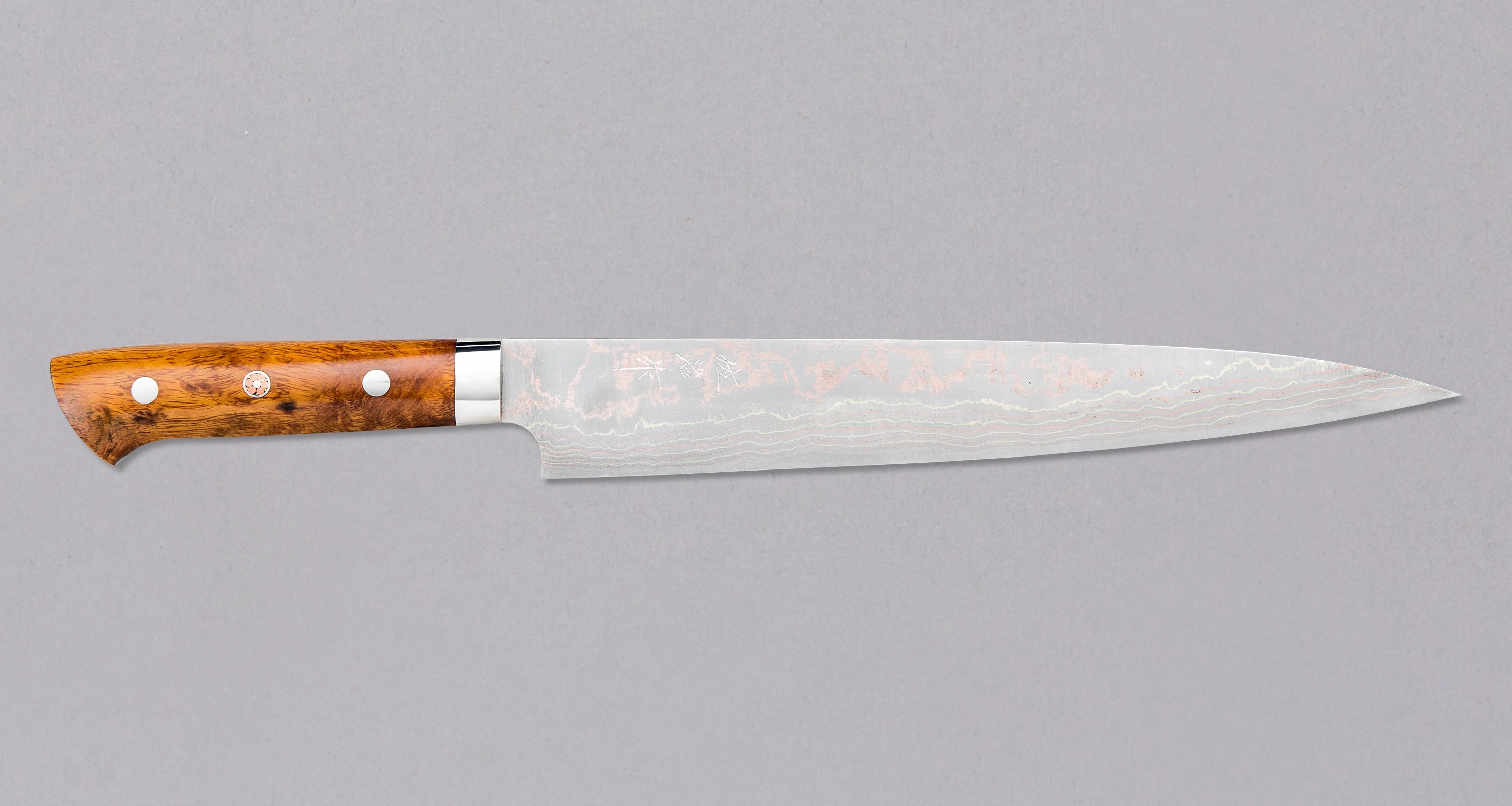
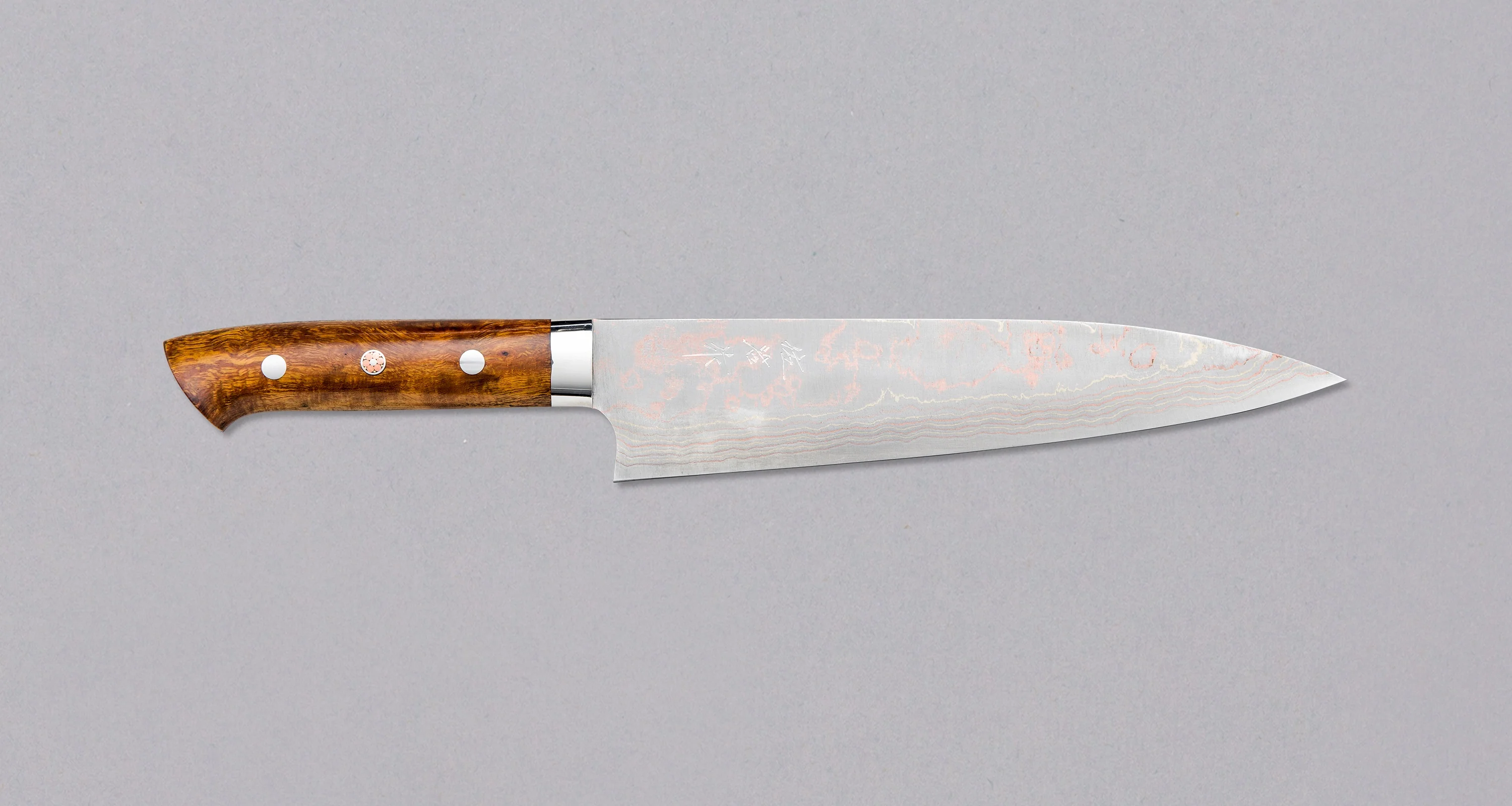
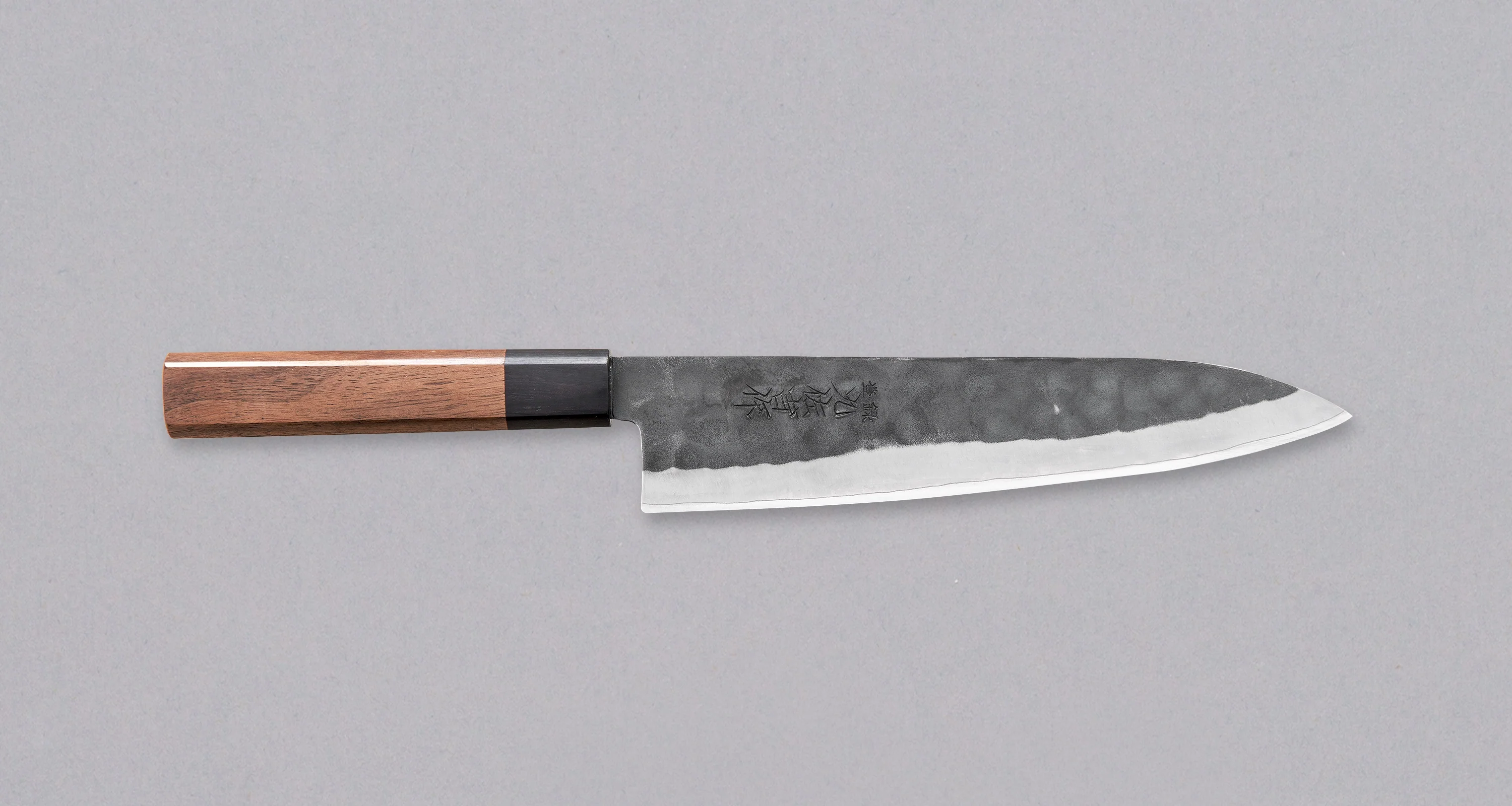
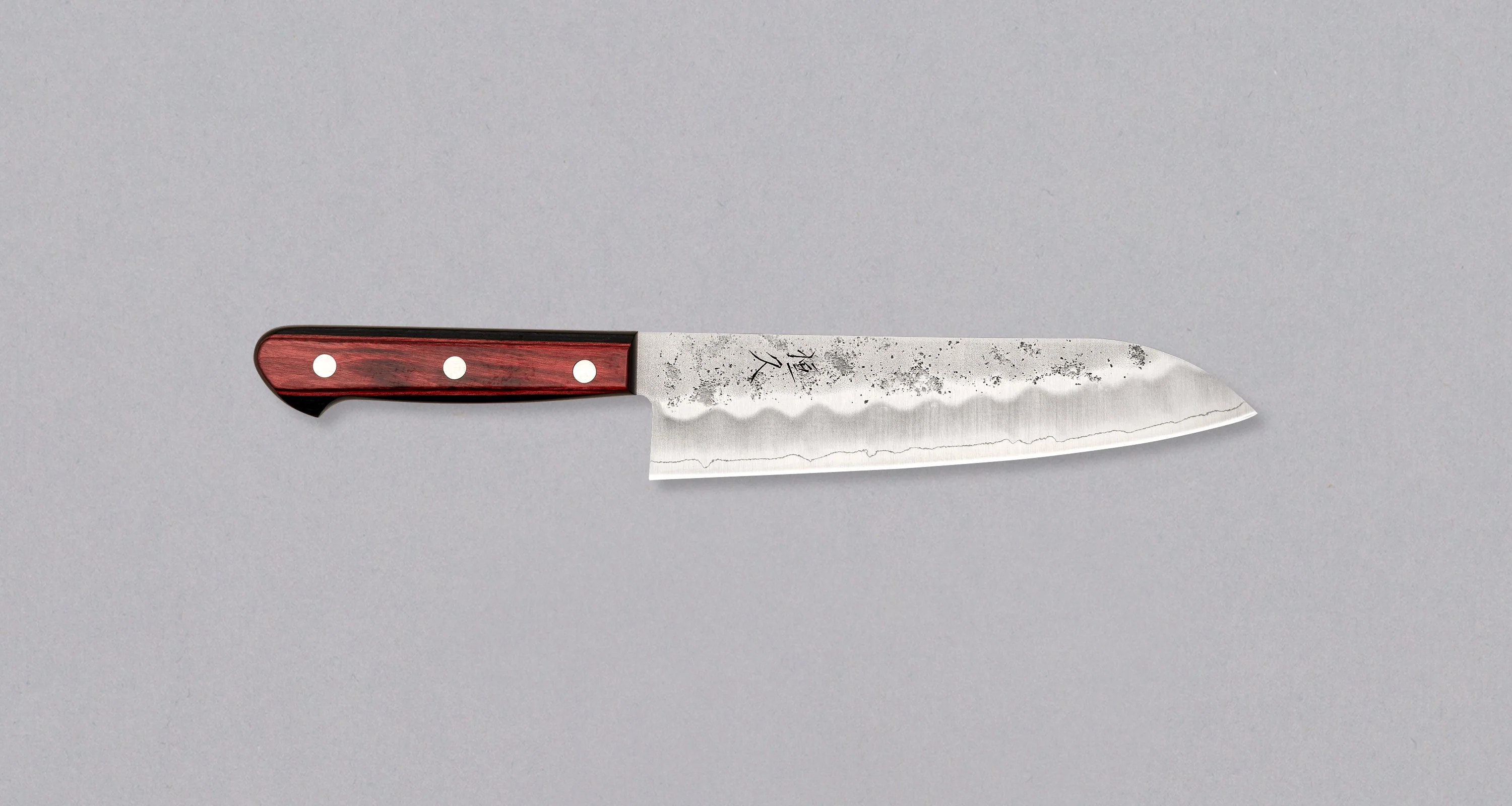
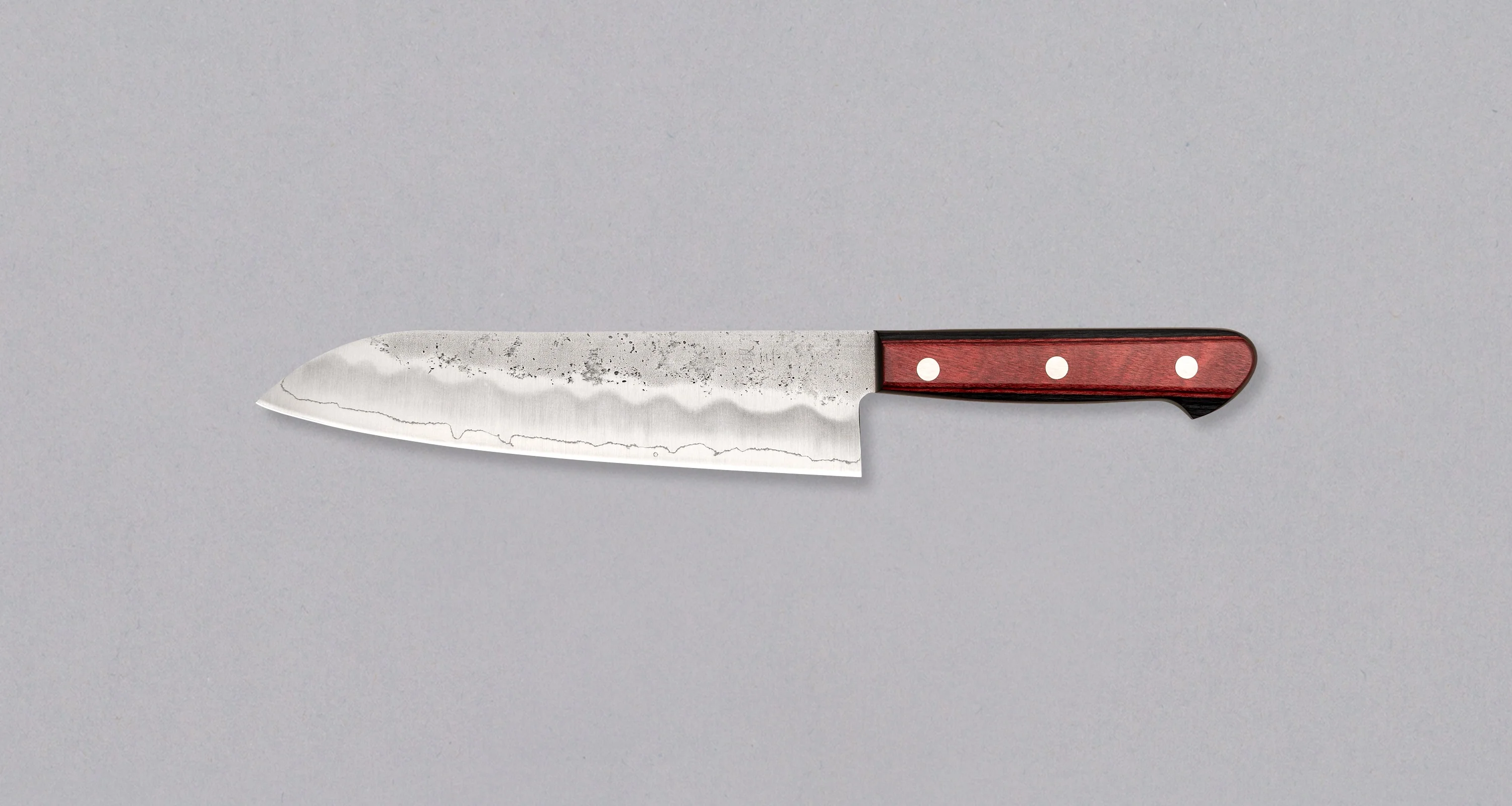
Tsunehisa Santoku Ginsanko Nashiji 180mm is a multi-purpose Japanese kitchen knife that will shine with all kinds of chopping, slicing and rocking motions on the kitchen board. Tsunehisa combined their proven blade shape, unique Nashiji blade finish and stainless steel (Ginsanko or Silver III Steel with a hardness of 63 HRC!), then matched it with a lightweight Western style handle made of pakka wood (known for its durability and comfortable grip).
The not-so-common feature of this santoku is the color of the pakka wood handle. Red is not a color many Japanese blacksmiths decide on for their knives, but we felt it was a bold choice that definitely paid off! The knife stands out from the crowd, but not in a flashy way.
This gyuto works best together with Tsunehisa Petty Ginsanko Nashiji to complement it. Suitable for first-time buyers of a Japanese kitchen knife. It can also serve as a wonderful gift!
BLADE SHAPE:
Santoku is one of the most versatile and efficient blade shapes in the kitchen, perfect for slicing, dicing, and chopping meat, fish, and vegetables. Its wide blade makes it easy to scoop and transfer ingredients, while the relatively flat edge excels at straight-down chopping and push-cutting on the cutting board. The slightly curved belly allows for gentle rocking, and the rounded tip adds precision for more delicate prep work.
STEEL:
Hitachi's Silver III steel, also named Ginsan steel or Ginsanko, which was hardened to around 63 HRC. Due to its high content of Chromium (Cr), Ginsan steel will resist corrosion very well. Despite it being a stainless steel, it feels and behaves very similarly to carbon steels, due to its extremely pure composition. This also means it will sharpen very well and easily.
LAMINATION:
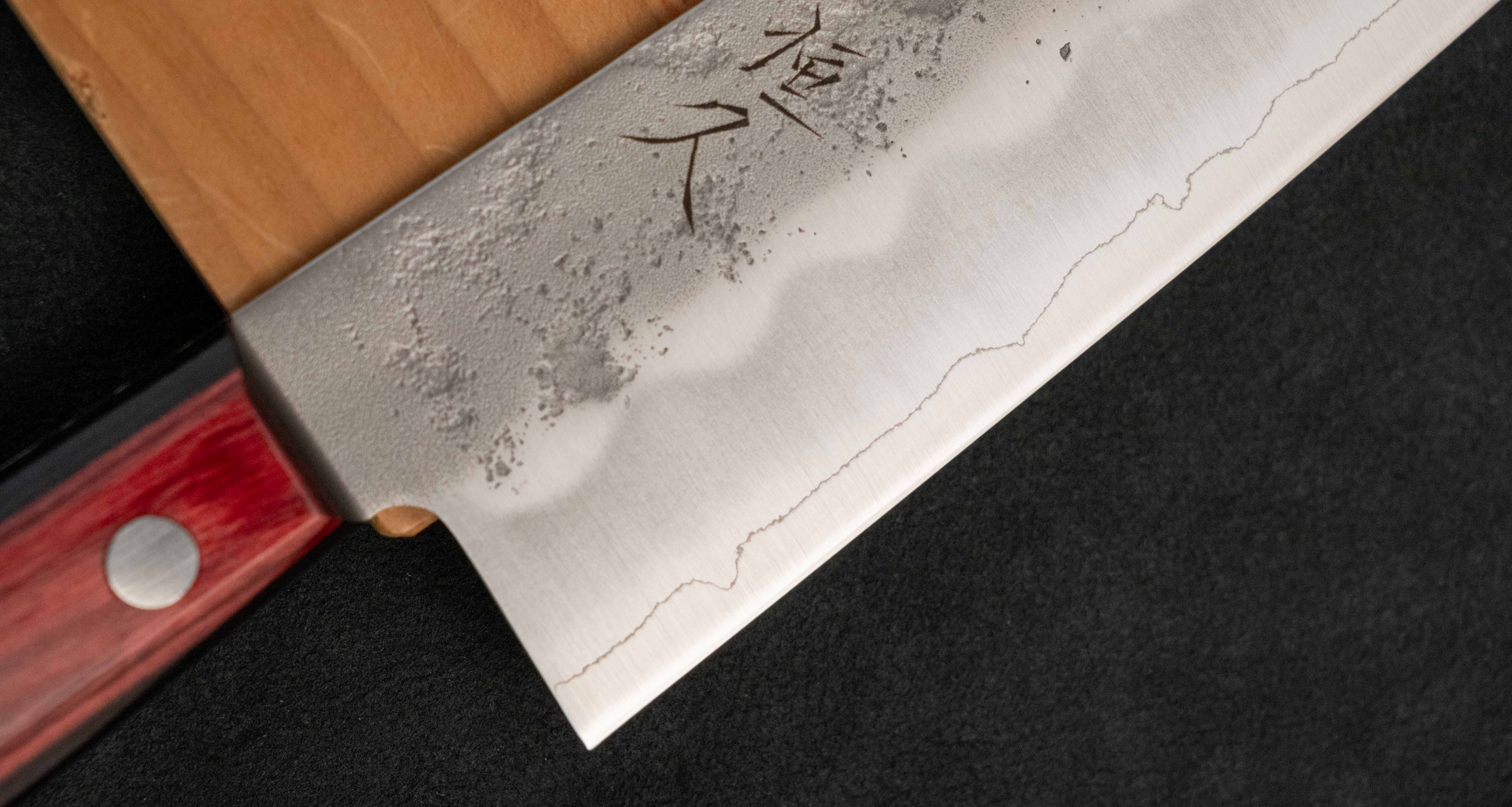
The core layer consisting of the harder Ginsan steel was sandwiched between two layers of softer steel. This technique is called san-mai and is used to protect the hard (but delicate) core from outside factors and physical impacts, which could lead to breakage.
GEOMETRY:
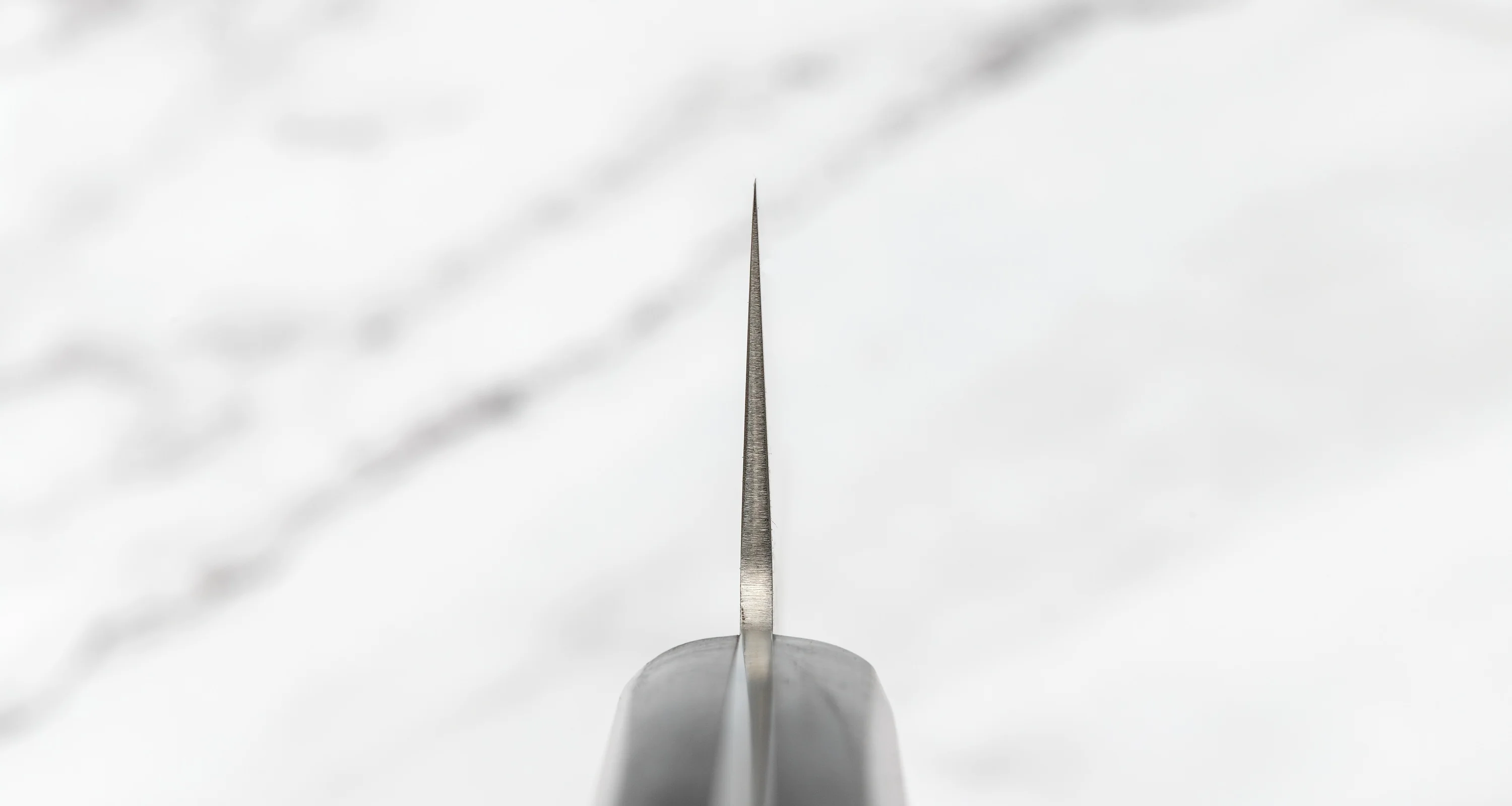
It has a double bevel (symmetrical) blade.
BLADE FINISH:
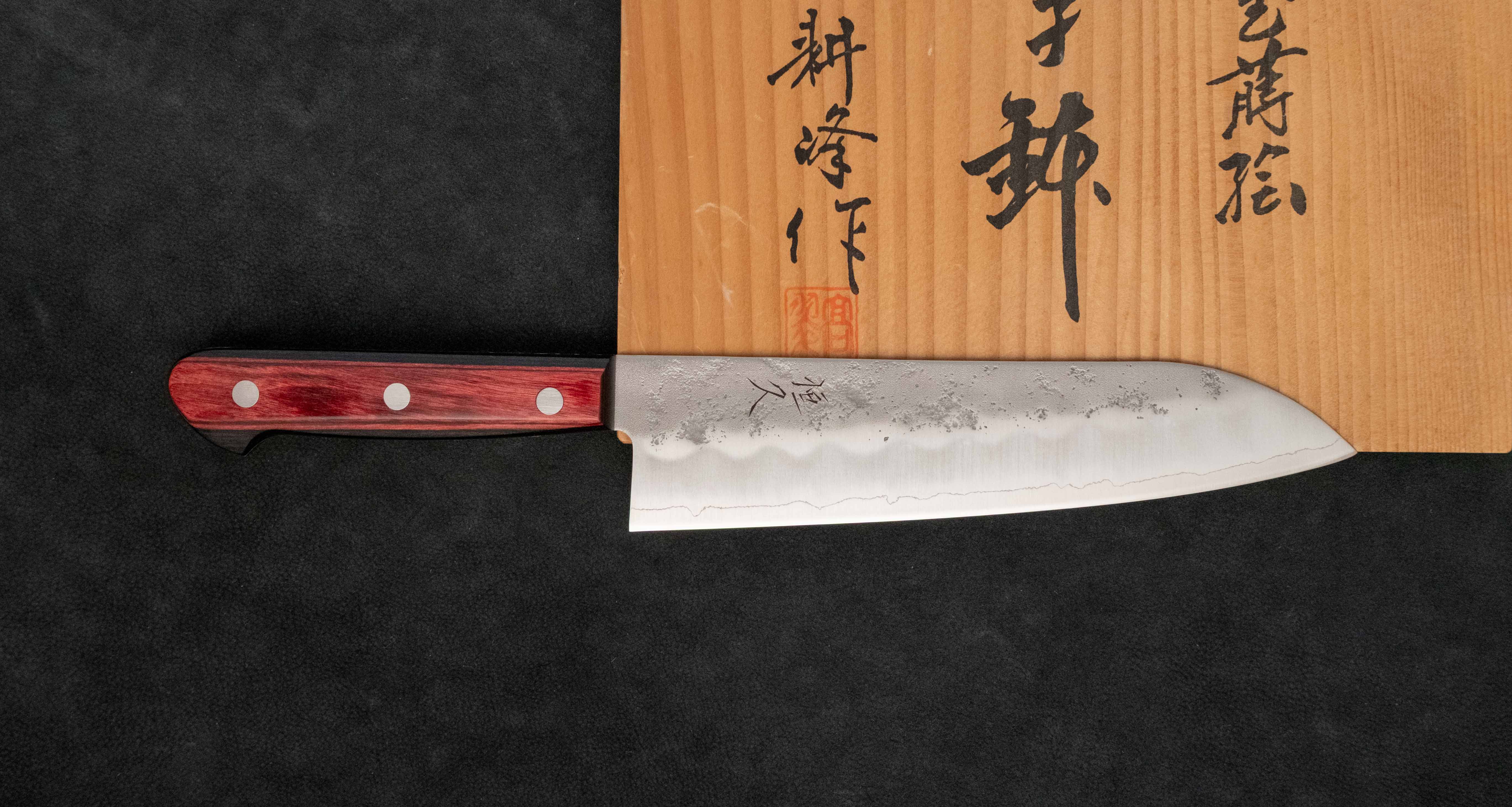
The blade features a Nashiji finish, which translates to "the skin of an (Asian) pear". It refers to the slightly matte surface of the upper part of the blade, which not only has aesthetic value but is also practical, since the uneven surface reduces the sticking of the food to the blade when slicing.
HANDLE:
This knife was fitted with a Western style (Yo) handle, made out of a combination of red and black pakka wood.
ABOUT THE BLACKSMITH:
Tsunehisa is a brand that combines a variety of high quality knives from different knife centers in Japan such as Tosa, Seki and Sakai. Their philosophy is that each region has its own steel and different manufacturing processes. For example, Tosa is known for its Ginsanko and Aus-8 steels, Seki is famous for producing excellent blades from the V-Gold steel group, and Sakai for its single-edged Honyaki knives.
More Images
Tsunehisa Santoku Ginsanko Nashiji 180mm (7.1")
Tsunehisa Santoku Ginsanko Nashiji 180mm is a multi-purpose Japanese kitchen knife that will shine with all kinds of chopping, slicing and rocking motions on the kitchen board. Tsunehisa combined their proven blade shape, unique Nashiji blade finish and stainless steel (Ginsanko or Silver III Steel with a hardness of 63 HRC!), then matched it with a lightweight Western style handle made of pakka wood (known for its durability and comfortable grip).
The not-so-common feature of this santoku is the color of the pakka wood handle. Red is not a color many Japanese blacksmiths decide on for their knives, but we felt it was a bold choice that definitely paid off! The knife stands out from the crowd, but not in a flashy way.
This gyuto works best together with Tsunehisa Petty Ginsanko Nashiji to complement it. Suitable for first-time buyers of a Japanese kitchen knife. It can also serve as a wonderful gift!
BLADE SHAPE:
Santoku is one of the most versatile and efficient blade shapes in the kitchen, perfect for slicing, dicing, and chopping meat, fish, and vegetables. Its wide blade makes it easy to scoop and transfer ingredients, while the relatively flat edge excels at straight-down chopping and push-cutting on the cutting board. The slightly curved belly allows for gentle rocking, and the rounded tip adds precision for more delicate prep work.
STEEL:
Hitachi's Silver III steel, also named Ginsan steel or Ginsanko, which was hardened to around 63 HRC. Due to its high content of Chromium (Cr), Ginsan steel will resist corrosion very well. Despite it being a stainless steel, it feels and behaves very similarly to carbon steels, due to its extremely pure composition. This also means it will sharpen very well and easily.
LAMINATION:
The core layer consisting of the harder Ginsan steel was sandwiched between two layers of softer steel. This technique is called san-mai and is used to protect the hard (but delicate) core from outside factors and physical impacts, which could lead to breakage.
GEOMETRY:
It has a double bevel (symmetrical) blade.
BLADE FINISH:
The blade features a Nashiji finish, which translates to "the skin of an (Asian) pear". It refers to the slightly matte surface of the upper part of the blade, which not only has aesthetic value but is also practical, since the uneven surface reduces the sticking of the food to the blade when slicing.
HANDLE:
This knife was fitted with a Western style (Yo) handle, made out of a combination of red and black pakka wood.
ABOUT THE BLACKSMITH:
Tsunehisa is a brand that combines a variety of high quality knives from different knife centers in Japan such as Tosa, Seki and Sakai. Their philosophy is that each region has its own steel and different manufacturing processes. For example, Tosa is known for its Ginsanko and Aus-8 steels, Seki is famous for producing excellent blades from the V-Gold steel group, and Sakai for its single-edged Honyaki knives.
Product Information
Product Information
Shipping & Returns
Shipping & Returns
Description
Tsunehisa Santoku Ginsanko Nashiji 180mm is a multi-purpose Japanese kitchen knife that will shine with all kinds of chopping, slicing and rocking motions on the kitchen board. Tsunehisa combined their proven blade shape, unique Nashiji blade finish and stainless steel (Ginsanko or Silver III Steel with a hardness of 63 HRC!), then matched it with a lightweight Western style handle made of pakka wood (known for its durability and comfortable grip).
The not-so-common feature of this santoku is the color of the pakka wood handle. Red is not a color many Japanese blacksmiths decide on for their knives, but we felt it was a bold choice that definitely paid off! The knife stands out from the crowd, but not in a flashy way.
This gyuto works best together with Tsunehisa Petty Ginsanko Nashiji to complement it. Suitable for first-time buyers of a Japanese kitchen knife. It can also serve as a wonderful gift!
BLADE SHAPE:
Santoku is one of the most versatile and efficient blade shapes in the kitchen, perfect for slicing, dicing, and chopping meat, fish, and vegetables. Its wide blade makes it easy to scoop and transfer ingredients, while the relatively flat edge excels at straight-down chopping and push-cutting on the cutting board. The slightly curved belly allows for gentle rocking, and the rounded tip adds precision for more delicate prep work.
STEEL:
Hitachi's Silver III steel, also named Ginsan steel or Ginsanko, which was hardened to around 63 HRC. Due to its high content of Chromium (Cr), Ginsan steel will resist corrosion very well. Despite it being a stainless steel, it feels and behaves very similarly to carbon steels, due to its extremely pure composition. This also means it will sharpen very well and easily.
LAMINATION:
The core layer consisting of the harder Ginsan steel was sandwiched between two layers of softer steel. This technique is called san-mai and is used to protect the hard (but delicate) core from outside factors and physical impacts, which could lead to breakage.
GEOMETRY:
It has a double bevel (symmetrical) blade.
BLADE FINISH:
The blade features a Nashiji finish, which translates to "the skin of an (Asian) pear". It refers to the slightly matte surface of the upper part of the blade, which not only has aesthetic value but is also practical, since the uneven surface reduces the sticking of the food to the blade when slicing.
HANDLE:
This knife was fitted with a Western style (Yo) handle, made out of a combination of red and black pakka wood.
ABOUT THE BLACKSMITH:
Tsunehisa is a brand that combines a variety of high quality knives from different knife centers in Japan such as Tosa, Seki and Sakai. Their philosophy is that each region has its own steel and different manufacturing processes. For example, Tosa is known for its Ginsanko and Aus-8 steels, Seki is famous for producing excellent blades from the V-Gold steel group, and Sakai for its single-edged Honyaki knives.