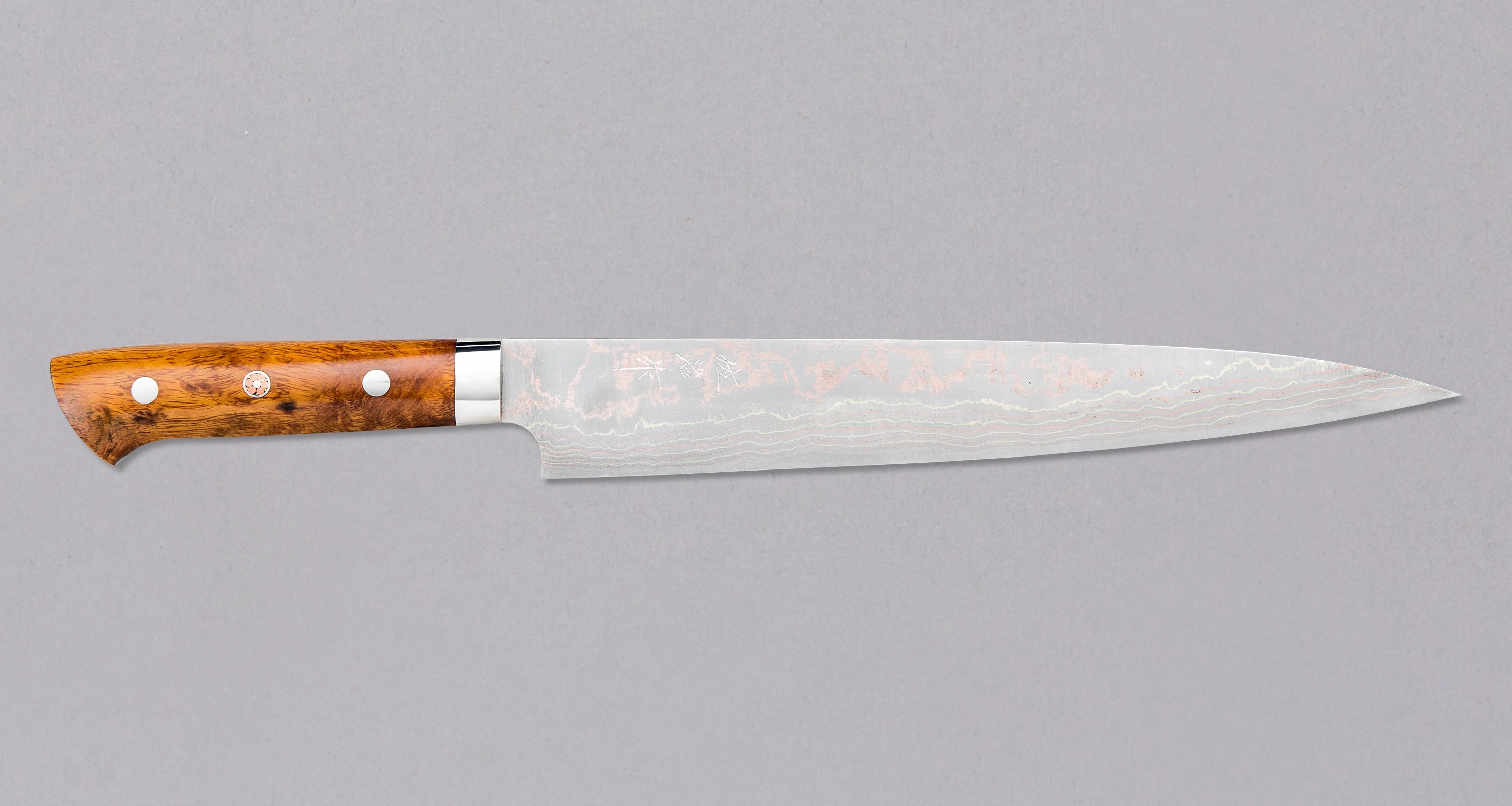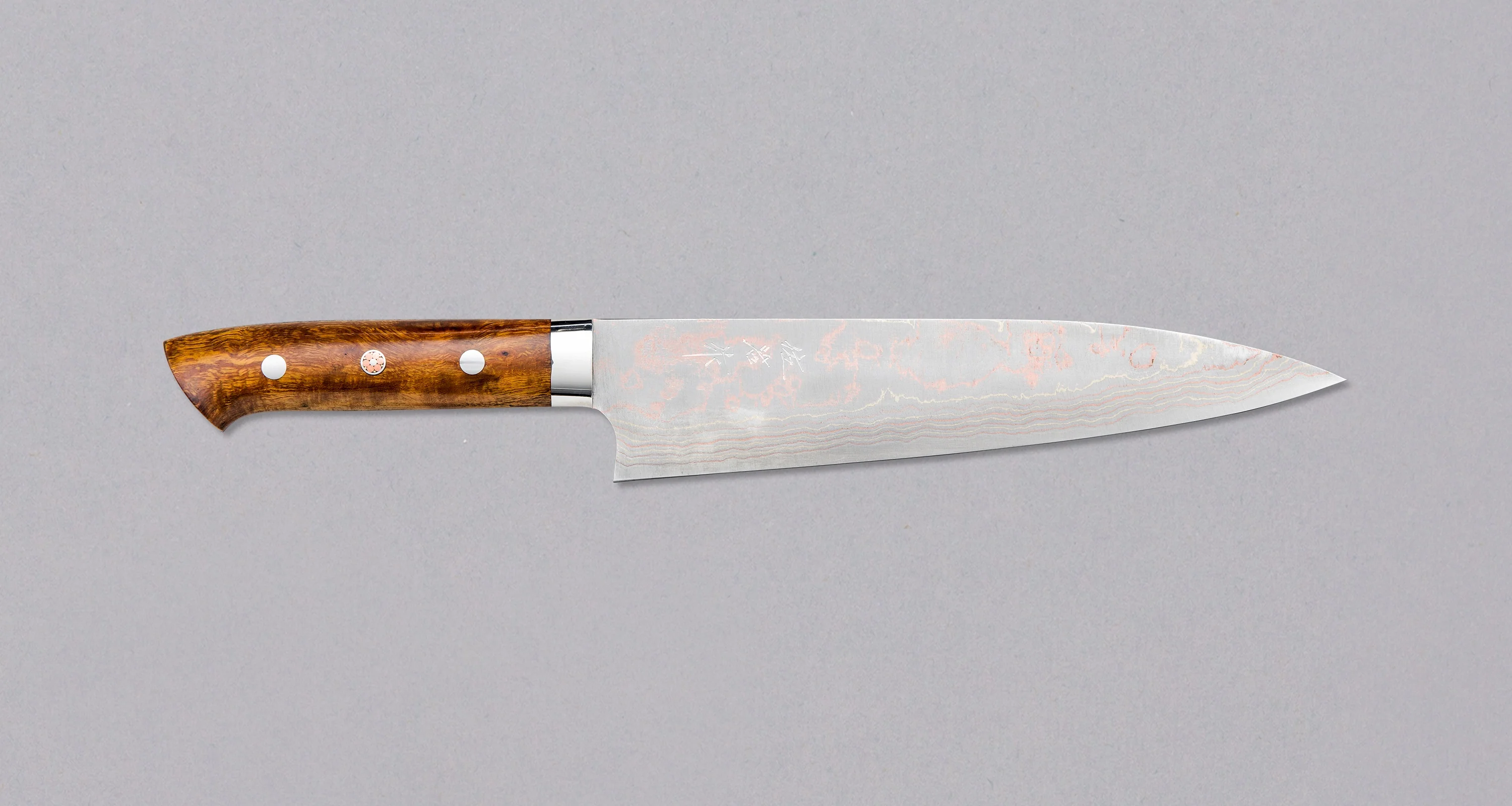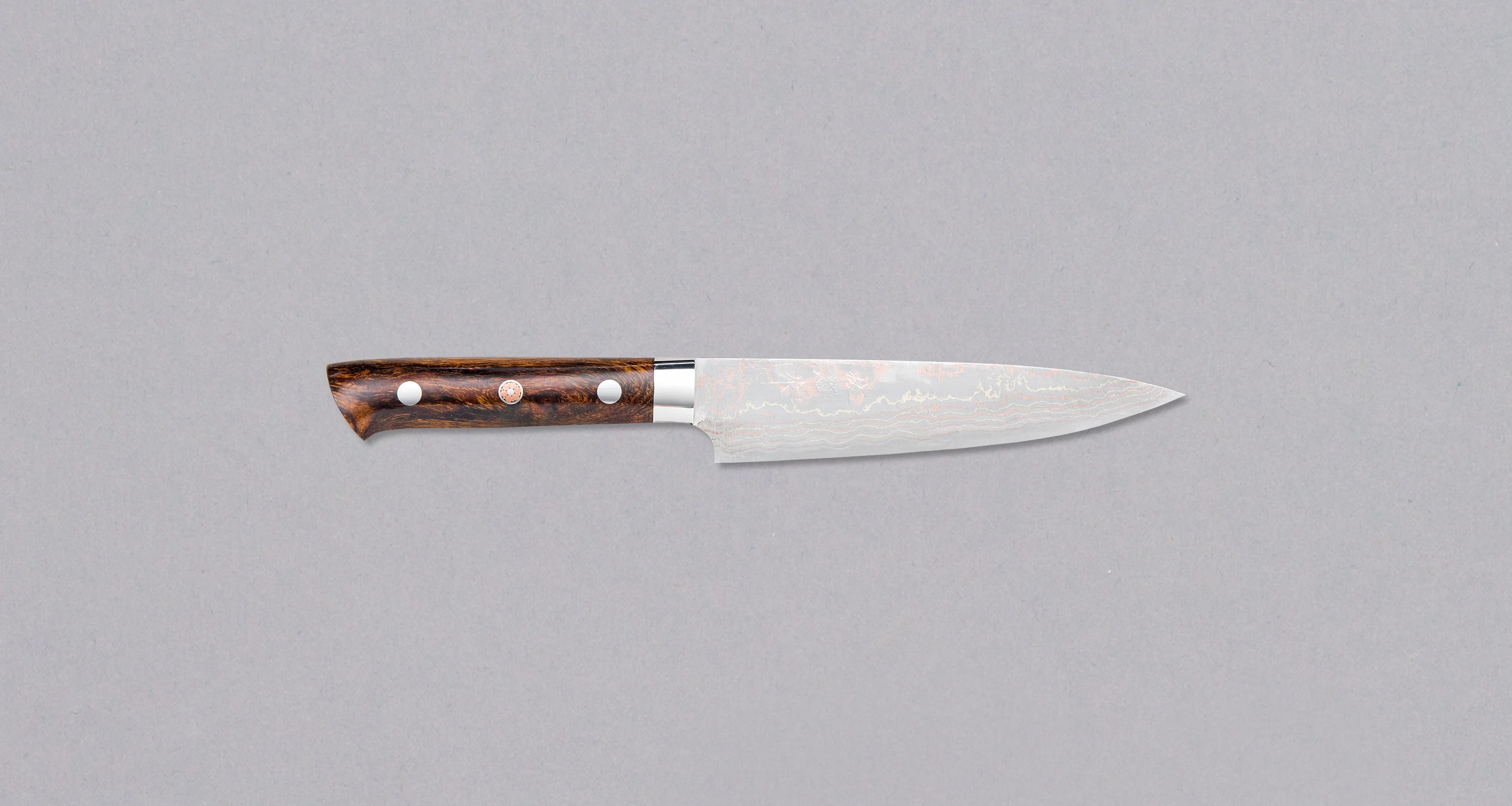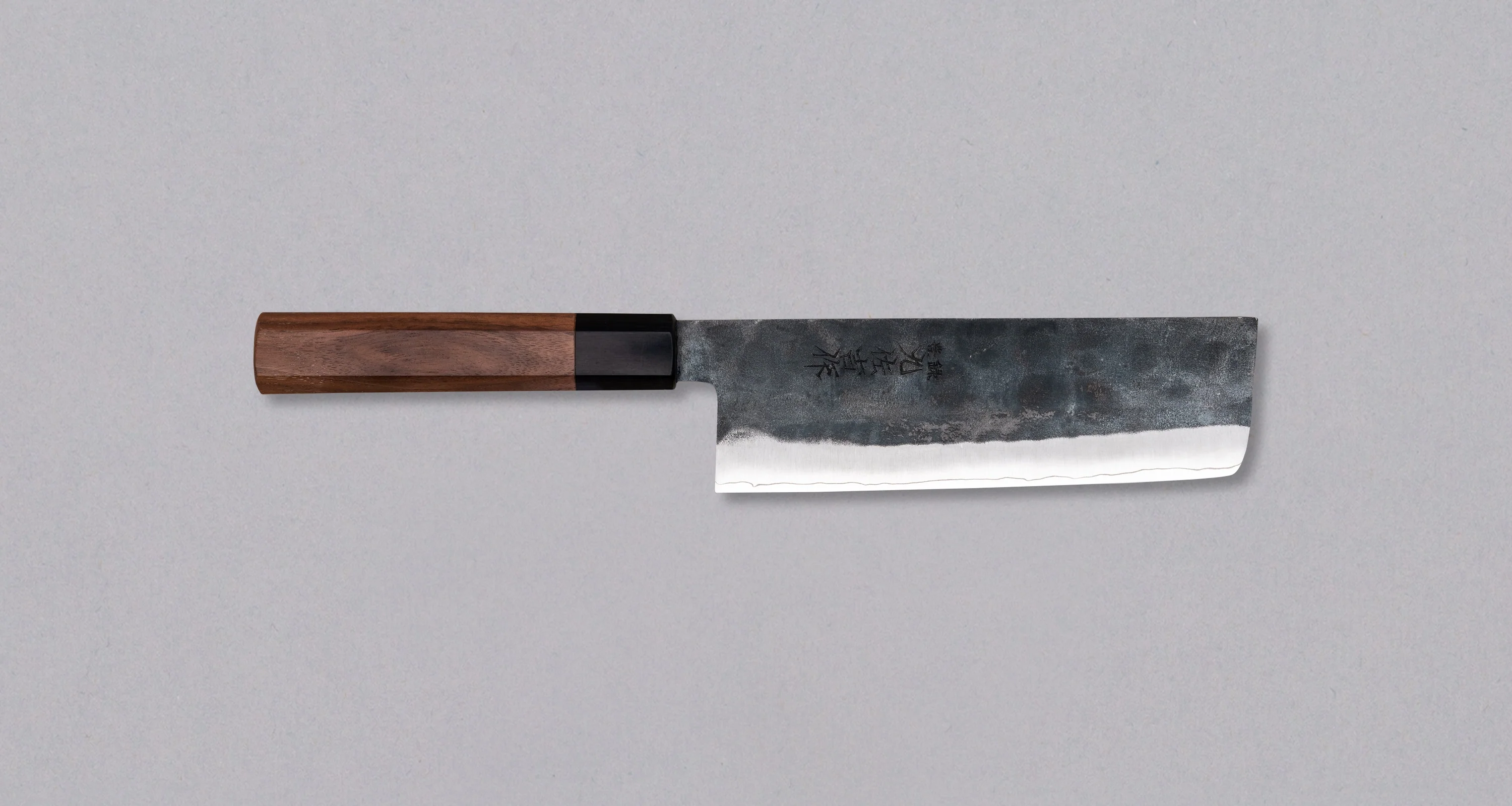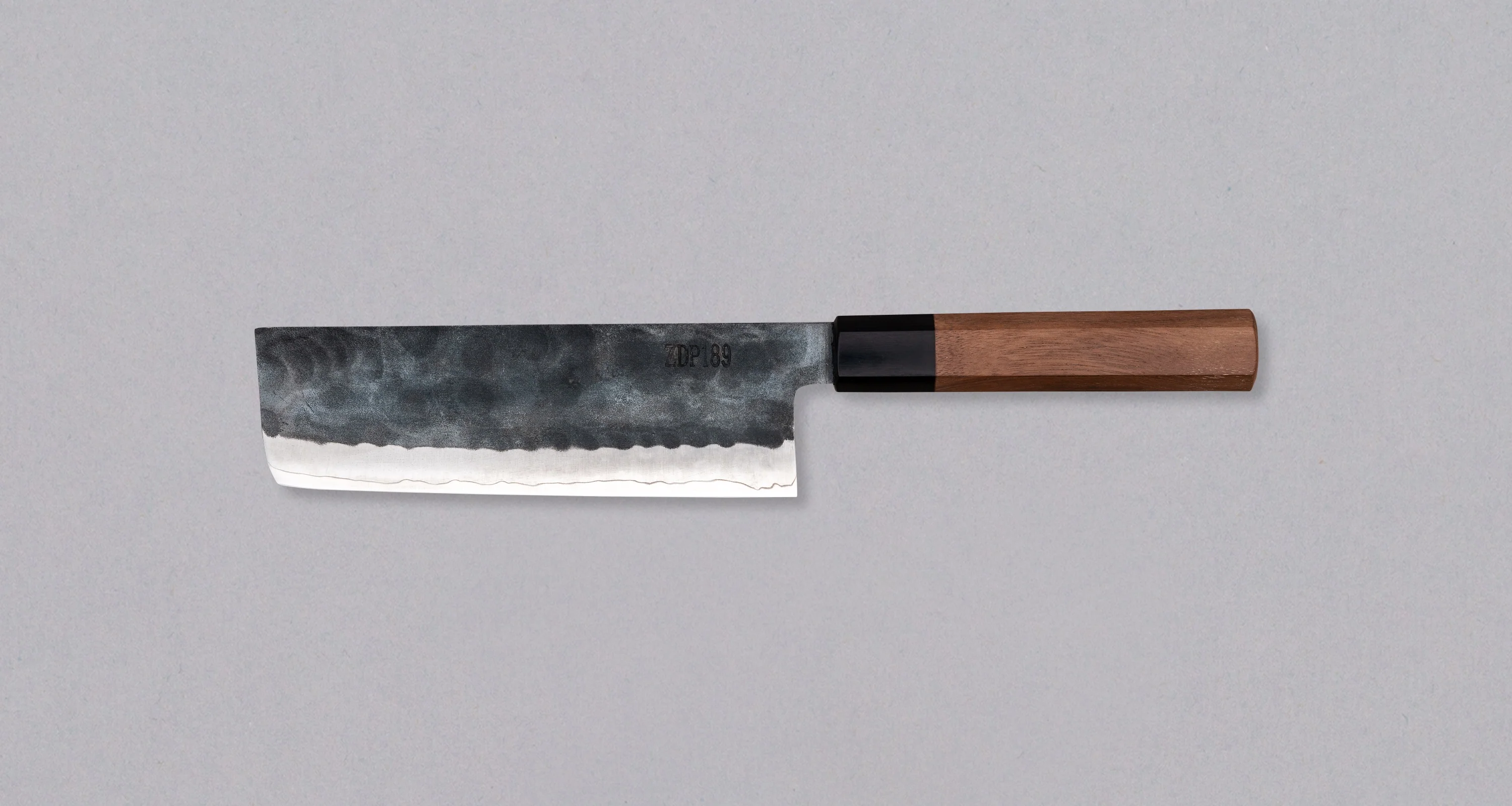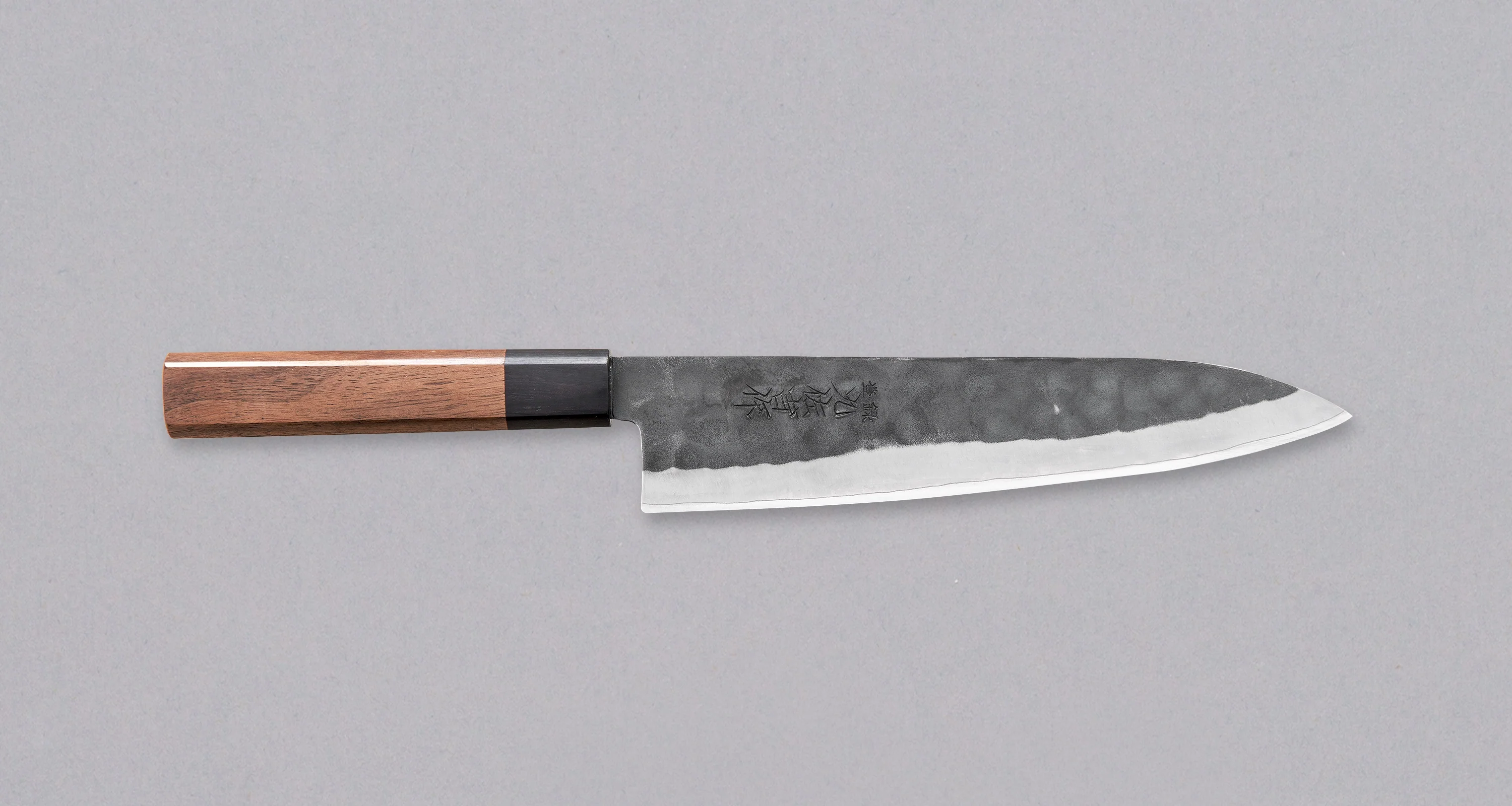
Tsunehisa Santoku AS Migaki 165mm (6.5")
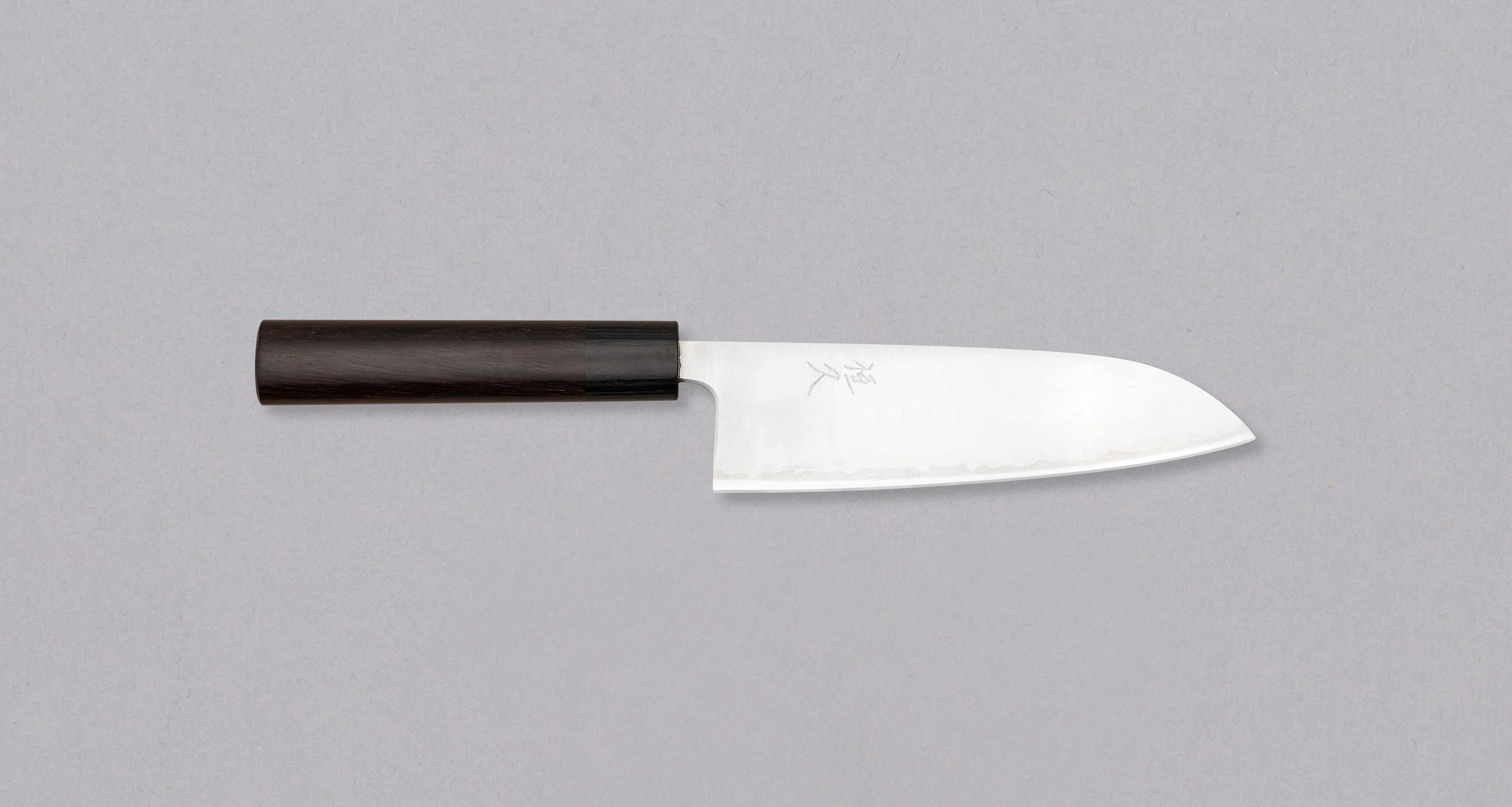
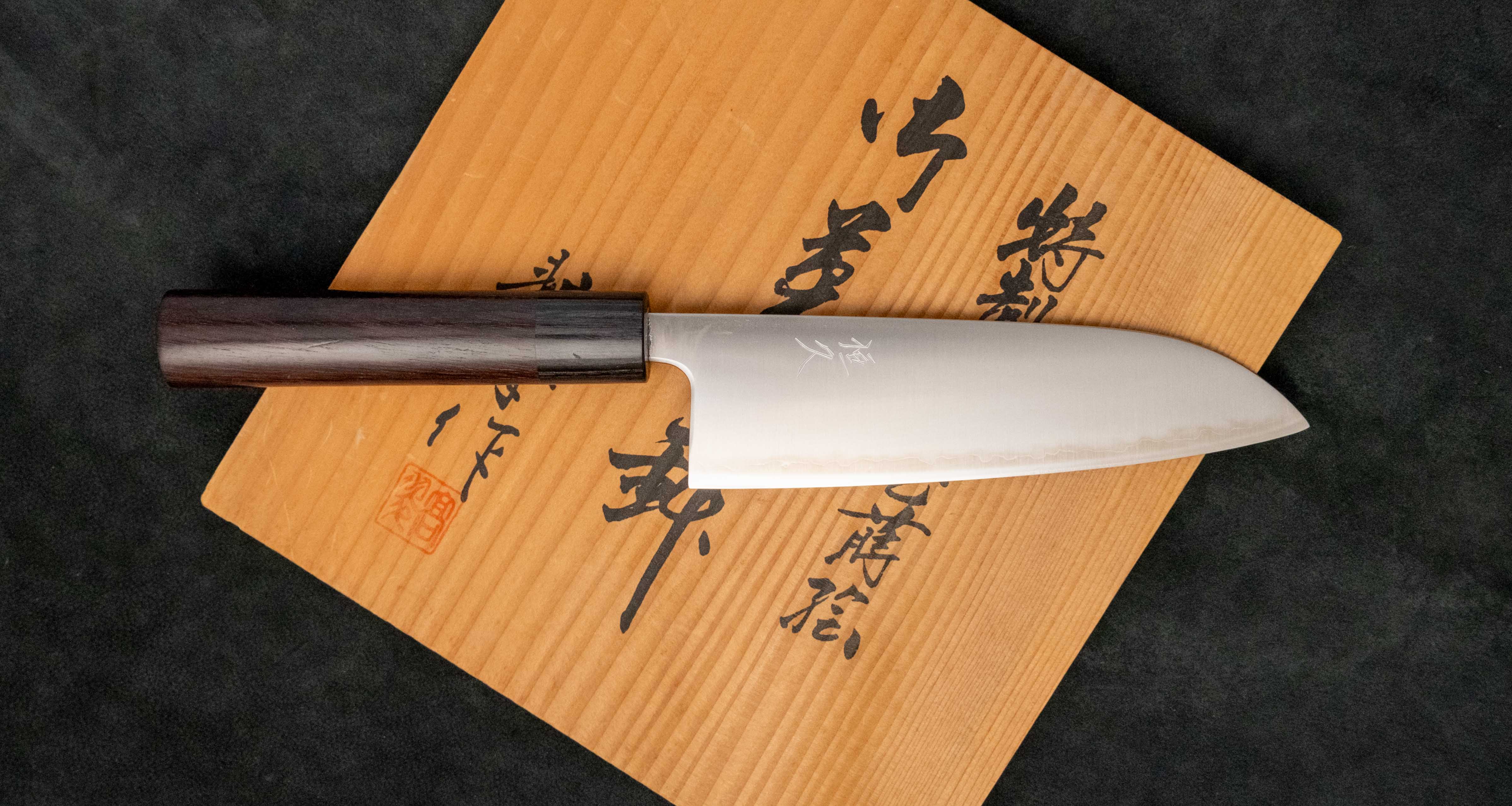
Tsunehisa Santoku AS Migaki 165mm is a multi-purpose Japanese kitchen knife, suitable for preparing meat, fish and vegetables. Don’t let its simple looks fool you, though, as its core is forged out of Aogami Super steel – the most advanced carbon steel on the market, coveted for its very fine sharpness and edge retention.
BLADE SHAPE:
Santoku is one of the most versatile and efficient blade shapes in the kitchen, perfect for slicing, dicing, and chopping meat, fish, and vegetables. Its wide blade makes it easy to scoop and transfer ingredients, while the relatively flat edge excels at straight-down chopping and push-cutting on the cutting board. The slightly curved belly allows for gentle rocking, and the rounded tip adds precision for more delicate prep work.
STEEL:
Aogami Super is the crème de la crème when it comes to high-carbon Japanese steels. If you’re looking for the finest sharpness, this is the steel you should be looking at. It is also very easy to sharpen, and the blades can be forged very thin. It has great wear resistance due to high amounts of tungsten and chromium, the latter also adding to its corrosion resistance.
This doesn’t mean that Aogami Super blades will resist corrosion as well as stainless steels, as they will develop a patina, while leaving them exposed to water or other food acids could even result in rusting (so don’t forget to wipe them dry after use!). If you’re willing to just put this extra attention to the knife’s maintenance, though, you will be rewarded with a fine sharpness like no other.
Aogami Super is made up of carbon (C) 1.50%, tungsten (W) 2.50%, vanadium (V) 0.50%, chromium (Cr) 0.50%, manganese (Mn) 0.30%, silicon (Si) 0.20%.
LAMINATION:
High-carbon steel is hard, but brittle for this same reason. This makes the blades more prone to breakage and chipping. To prevent that, blacksmiths “sandwich" the blade’s core, made from Aogami Super steel, between two layers of softer steels. This improves the blade’s flexibility and toughness. The trace of this lamination process is the curvy line right above the cutting edge, which is the border between the blade’s core (hagane) and the outer, protective layer (jigane).
GEOMETRY:
It has a double bevel (symmetrical) blade.
BLADE FINISH:
The blade was treated to a high polish, also called a migaki finish.
HANDLE:
Traditional oval Japanese (Wa) style handle made out of rosewood with a black pakka ferrule.
ABOUT THE BLACKSMITH:
Tsunehisa is a brand that combines a variety of high quality knives from different knife centers in Japan such as Tosa, Seki and Sakai. Their philosophy is that each region has its own steel and different manufacturing processes. For example, Tosa is known for its Ginsanko and Aus-8 steels, Seki is famous for producing excellent blades from the V-Gold steel group, and Sakai for its single-edged Honyaki knives.
More Images



Tsunehisa Santoku AS Migaki 165mm (6.5")
Tsunehisa Santoku AS Migaki 165mm is a multi-purpose Japanese kitchen knife, suitable for preparing meat, fish and vegetables. Don’t let its simple looks fool you, though, as its core is forged out of Aogami Super steel – the most advanced carbon steel on the market, coveted for its very fine sharpness and edge retention.
BLADE SHAPE:
Santoku is one of the most versatile and efficient blade shapes in the kitchen, perfect for slicing, dicing, and chopping meat, fish, and vegetables. Its wide blade makes it easy to scoop and transfer ingredients, while the relatively flat edge excels at straight-down chopping and push-cutting on the cutting board. The slightly curved belly allows for gentle rocking, and the rounded tip adds precision for more delicate prep work.
STEEL:
Aogami Super is the crème de la crème when it comes to high-carbon Japanese steels. If you’re looking for the finest sharpness, this is the steel you should be looking at. It is also very easy to sharpen, and the blades can be forged very thin. It has great wear resistance due to high amounts of tungsten and chromium, the latter also adding to its corrosion resistance.
This doesn’t mean that Aogami Super blades will resist corrosion as well as stainless steels, as they will develop a patina, while leaving them exposed to water or other food acids could even result in rusting (so don’t forget to wipe them dry after use!). If you’re willing to just put this extra attention to the knife’s maintenance, though, you will be rewarded with a fine sharpness like no other.
Aogami Super is made up of carbon (C) 1.50%, tungsten (W) 2.50%, vanadium (V) 0.50%, chromium (Cr) 0.50%, manganese (Mn) 0.30%, silicon (Si) 0.20%.
LAMINATION:
High-carbon steel is hard, but brittle for this same reason. This makes the blades more prone to breakage and chipping. To prevent that, blacksmiths “sandwich" the blade’s core, made from Aogami Super steel, between two layers of softer steels. This improves the blade’s flexibility and toughness. The trace of this lamination process is the curvy line right above the cutting edge, which is the border between the blade’s core (hagane) and the outer, protective layer (jigane).
GEOMETRY:
It has a double bevel (symmetrical) blade.
BLADE FINISH:
The blade was treated to a high polish, also called a migaki finish.
HANDLE:
Traditional oval Japanese (Wa) style handle made out of rosewood with a black pakka ferrule.
ABOUT THE BLACKSMITH:
Tsunehisa is a brand that combines a variety of high quality knives from different knife centers in Japan such as Tosa, Seki and Sakai. Their philosophy is that each region has its own steel and different manufacturing processes. For example, Tosa is known for its Ginsanko and Aus-8 steels, Seki is famous for producing excellent blades from the V-Gold steel group, and Sakai for its single-edged Honyaki knives.
Product Information
Product Information
Shipping & Returns
Shipping & Returns
Description
Tsunehisa Santoku AS Migaki 165mm is a multi-purpose Japanese kitchen knife, suitable for preparing meat, fish and vegetables. Don’t let its simple looks fool you, though, as its core is forged out of Aogami Super steel – the most advanced carbon steel on the market, coveted for its very fine sharpness and edge retention.
BLADE SHAPE:
Santoku is one of the most versatile and efficient blade shapes in the kitchen, perfect for slicing, dicing, and chopping meat, fish, and vegetables. Its wide blade makes it easy to scoop and transfer ingredients, while the relatively flat edge excels at straight-down chopping and push-cutting on the cutting board. The slightly curved belly allows for gentle rocking, and the rounded tip adds precision for more delicate prep work.
STEEL:
Aogami Super is the crème de la crème when it comes to high-carbon Japanese steels. If you’re looking for the finest sharpness, this is the steel you should be looking at. It is also very easy to sharpen, and the blades can be forged very thin. It has great wear resistance due to high amounts of tungsten and chromium, the latter also adding to its corrosion resistance.
This doesn’t mean that Aogami Super blades will resist corrosion as well as stainless steels, as they will develop a patina, while leaving them exposed to water or other food acids could even result in rusting (so don’t forget to wipe them dry after use!). If you’re willing to just put this extra attention to the knife’s maintenance, though, you will be rewarded with a fine sharpness like no other.
Aogami Super is made up of carbon (C) 1.50%, tungsten (W) 2.50%, vanadium (V) 0.50%, chromium (Cr) 0.50%, manganese (Mn) 0.30%, silicon (Si) 0.20%.
LAMINATION:
High-carbon steel is hard, but brittle for this same reason. This makes the blades more prone to breakage and chipping. To prevent that, blacksmiths “sandwich" the blade’s core, made from Aogami Super steel, between two layers of softer steels. This improves the blade’s flexibility and toughness. The trace of this lamination process is the curvy line right above the cutting edge, which is the border between the blade’s core (hagane) and the outer, protective layer (jigane).
GEOMETRY:
It has a double bevel (symmetrical) blade.
BLADE FINISH:
The blade was treated to a high polish, also called a migaki finish.
HANDLE:
Traditional oval Japanese (Wa) style handle made out of rosewood with a black pakka ferrule.
ABOUT THE BLACKSMITH:
Tsunehisa is a brand that combines a variety of high quality knives from different knife centers in Japan such as Tosa, Seki and Sakai. Their philosophy is that each region has its own steel and different manufacturing processes. For example, Tosa is known for its Ginsanko and Aus-8 steels, Seki is famous for producing excellent blades from the V-Gold steel group, and Sakai for its single-edged Honyaki knives.