Tsunehisa Ryo-Deba Aogami #2 Kuro-uchi 180mm (7.1")
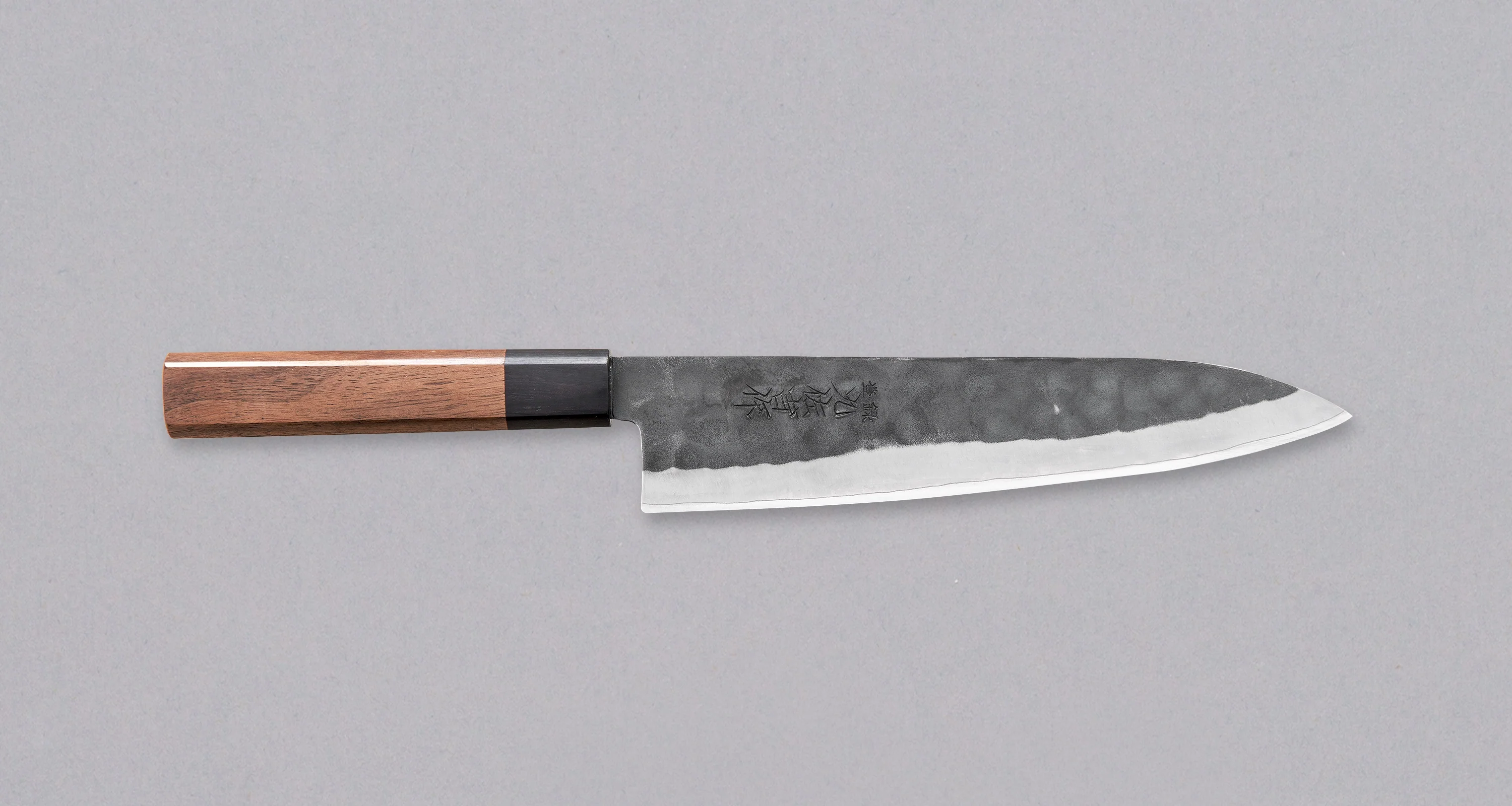
One of the most robust and unique deba knives in our collection, the Tsunehisa Ryo-Deba Aogami #2 Kuro-uchi 180mm (7.1") stands out with its double-bevel grind — unlike most traditional deba knives that are single-beveled. This makes it easier to sharpen, suitable for both left- and right-handed users, and incredibly effective for heavy-duty work like breaking down large fish or poultry.
Crafted with a thick spine and forward balance, this knife is ideal for tasks that demand power, precision, and control. A favorite among professionals and big game fishing enthusiasts, it’s a rugged tool built for serious prep work.
BLADE SHAPE:
Deba is one of the “big three” traditional Japanese knives, alongside usuba and yanagiba. Designed specifically for preparing whole fish, the deba excels at:
- Cleaning and gutting
- Filleting with minimal flesh damage
- Portioning
- Cutting through smaller bones, fins, and heads
The 180mm deba is the go-to choice for those who need maximum power and cutting length. It’s the largest size in the standard deba lineup, built for tackling big fish like salmon, tuna, or monkfish — or for those who prefer more blade to work with when portioning poultry or prepping meat with bones.
While it sacrifices a bit of nimbleness compared to the 150mm or 165mm, the 180mm makes up for it with sheer cutting strength and efficiency. This is the blade for confident, experienced users who want a traditional Japanese fish-processing knife that can handle serious volume and heavier prep with ease.
STEEL:
This knife’s core is forged from Aogami #2 (Blue #2) — a traditional high-carbon steel known for:
- Outstanding edge retention
- Smooth, precise sharpening
- Excellent performance under demanding use
Due to its carbon-rich composition, this steel can develop a patina over time and may rust if not dried properly. Regular maintenance is essential to keep it performing at its best.
⚠️ Read more about knife care here.
LAMINATION:
To strengthen the brittle core steel and improve resistance to shock and lateral stress, the blade is constructed using the san-mai method (three-layer laminate). This construction helps absorb impact and protects the cutting edge from chipping during heavy use.
GEOMETRY:
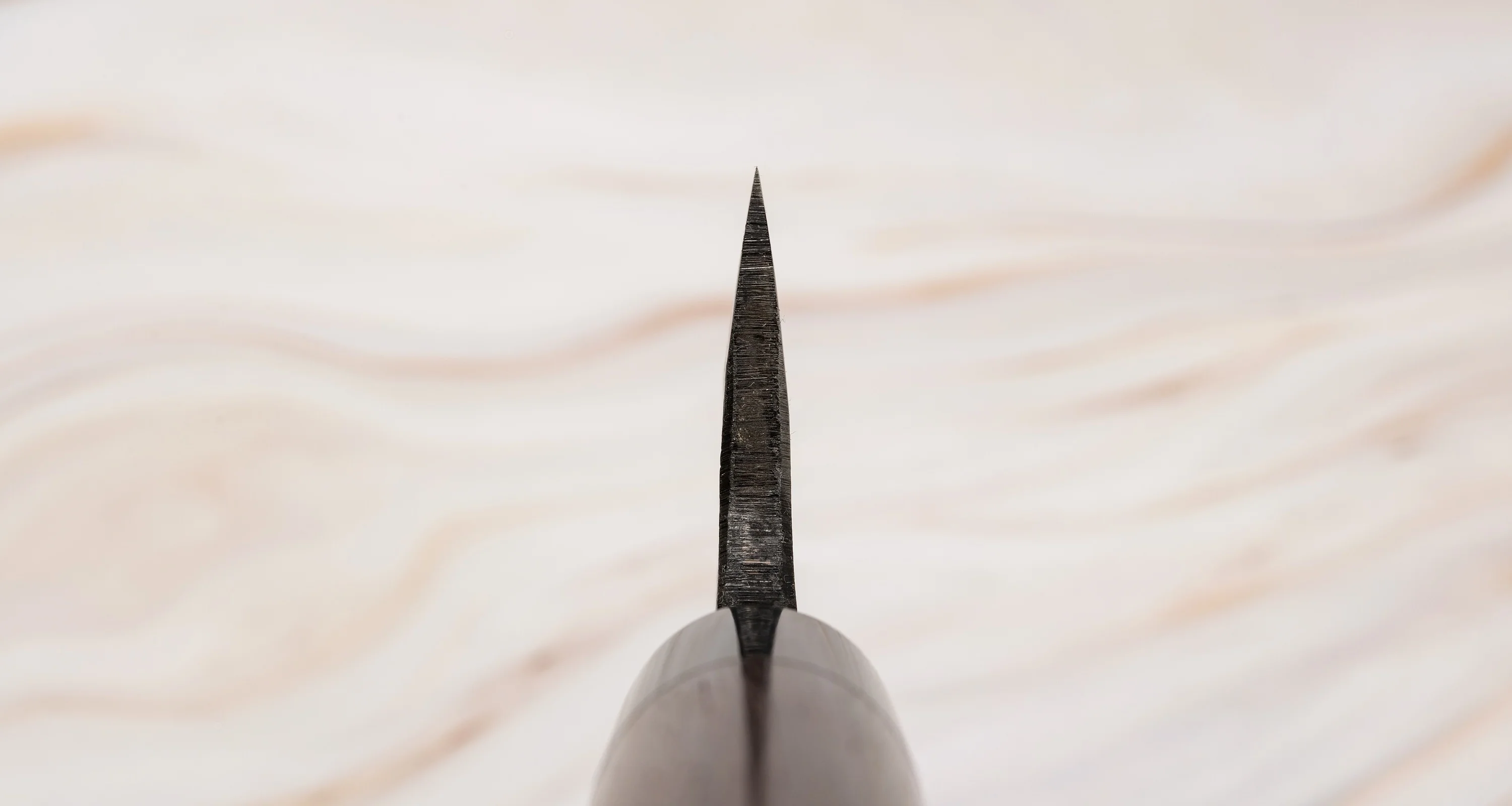
The blade features a double-bevel edge with a subtle convex (hamaguri) grind, providing excellent food release and durability. It also has a distal taper — thicker and heavier at the heel, and gradually thinning toward the tip. This shape increases responsiveness, improves balance, and offers excellent control for delicate work. This type of blade design is called distal taper - you can read more about it in the article on blade geometry.
BLADE FINISH:
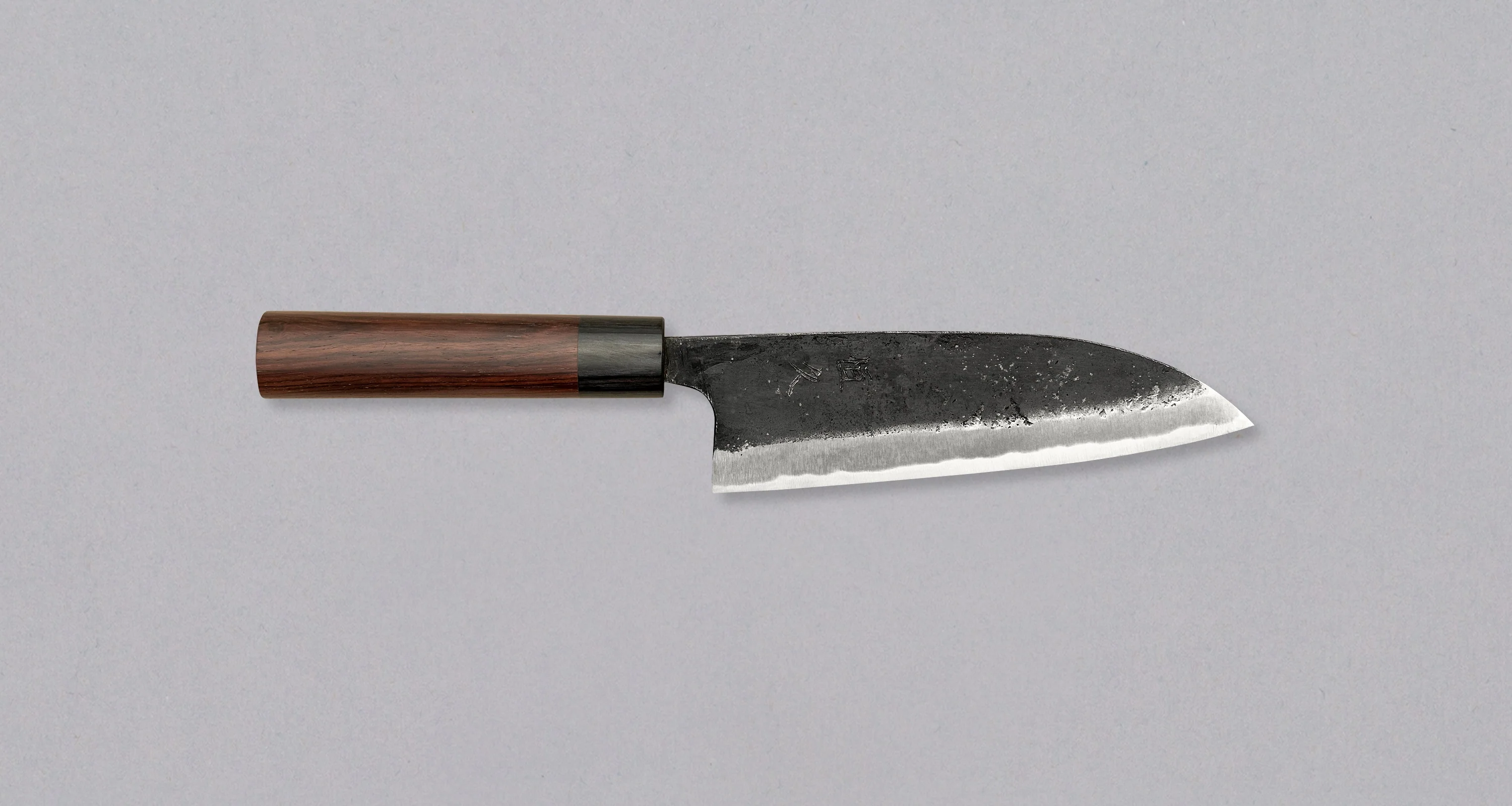
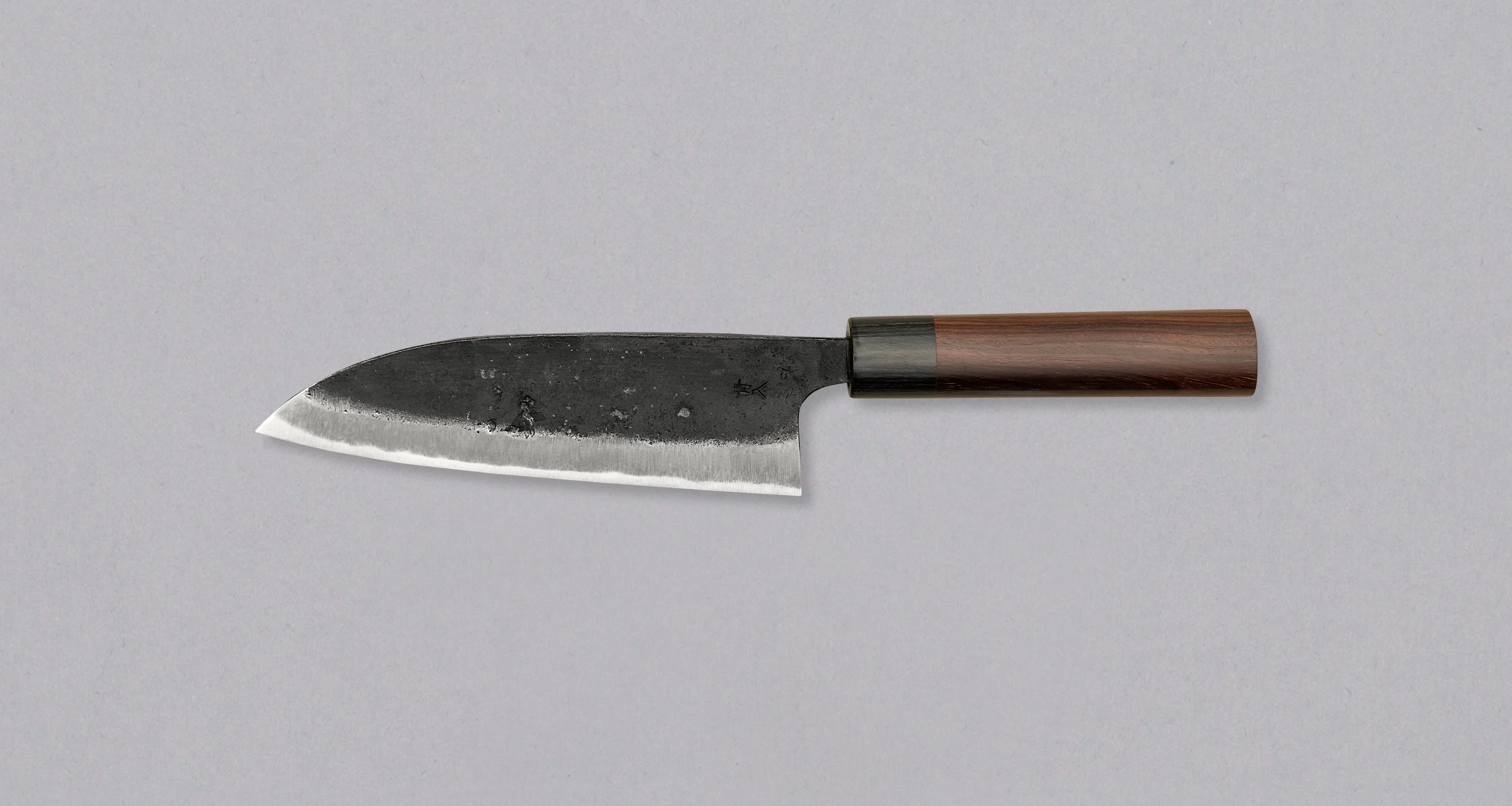
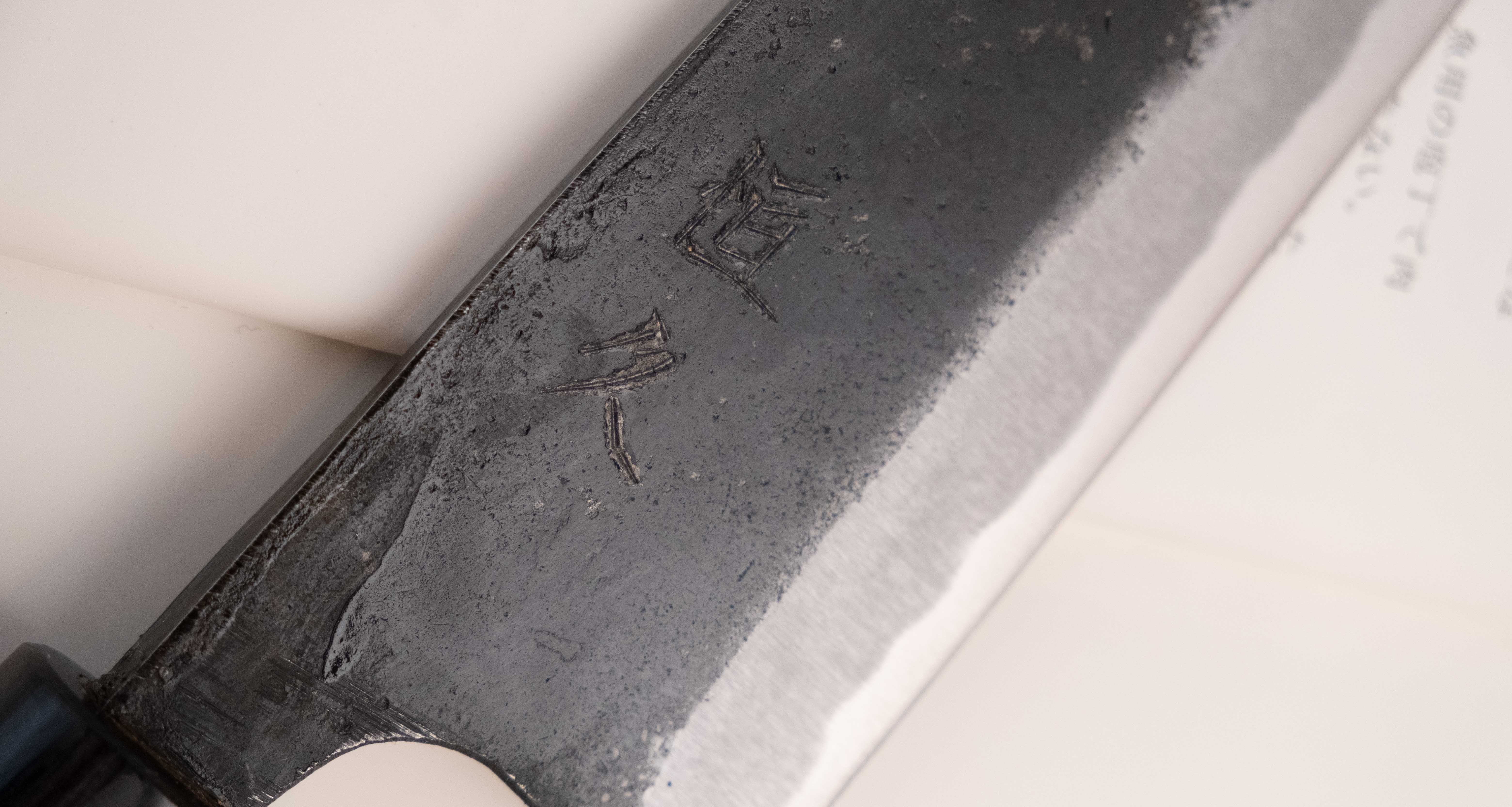
The blade has a kuro-uchi blade finish. The Kuro-uchi finish on Aogami #2 blades provides a protective layer against rust and other external elements that can otherwise damage the surface. The kuro-uchi finish (kuro - ‘black’) is a layer of raw, protective patina on the outer steel. It gets a nice contrast from the hand-chiseled kanji on the blade. The kireha (lower part of the blade or ‘blade road’) has a classic cloudy kasumi finish.
HANDLE:
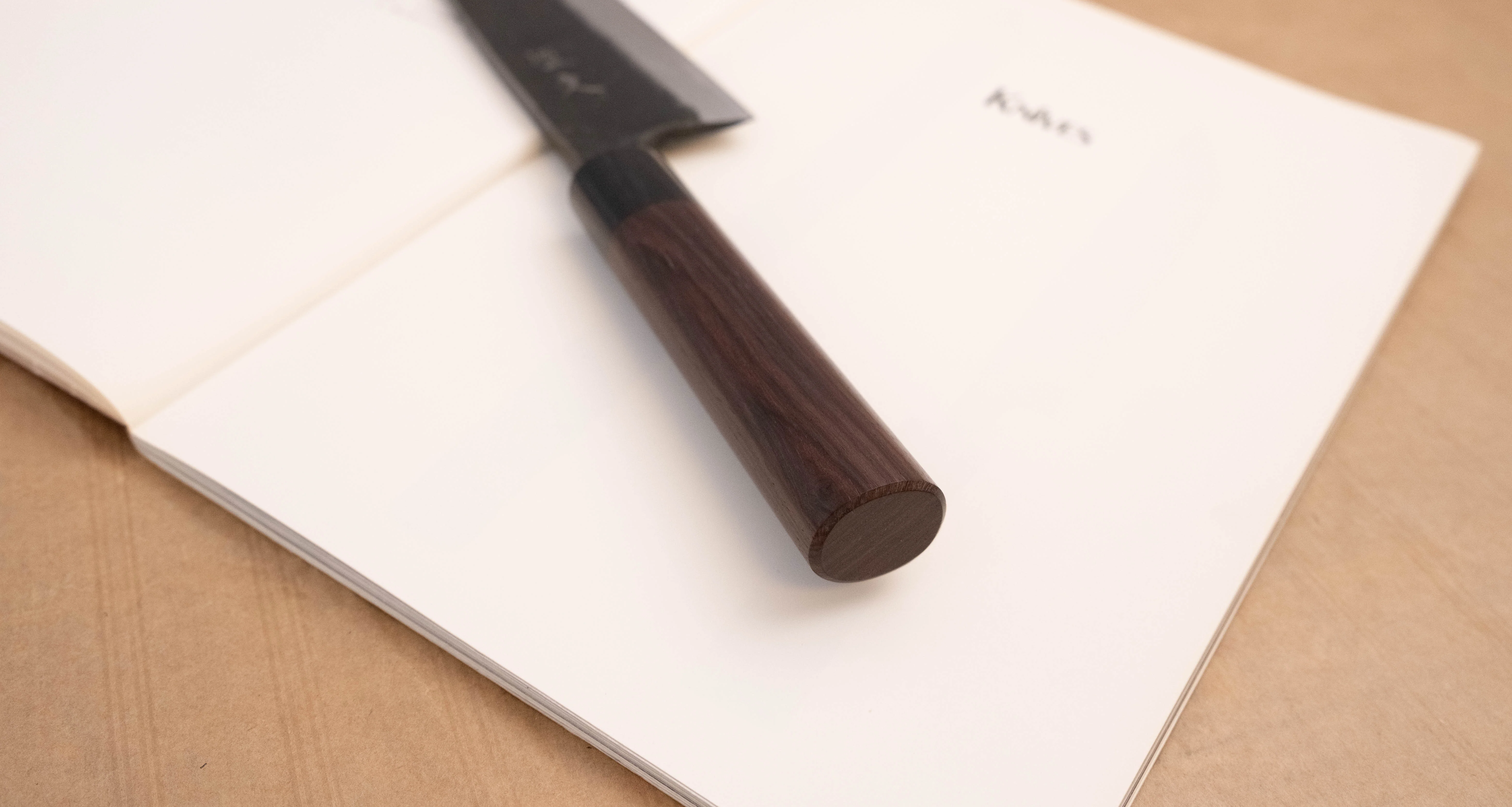
Japanese (Wa) style handle is made out of rosewood and is topped with a black pakka wood ferrule. The oval handle allows a comfortable and firm grip, suitable for both left- and right-handed users.
THE SMITHY:
Tsunehisa is a collective brand representing a selection of high-performance Japanese knives made in various regional workshops across Japan — including Tosa, Sakai, and Seki. Each knife combines regionally specialized steel with traditional craftsmanship and modern practicality.
Their aim is simple: create well-balanced, performance-driven kitchen tools that meet the needs of professionals and passionate cooks around the world.
Original: $251.85
-65%$251.85
$88.15More Images
Tsunehisa Ryo-Deba Aogami #2 Kuro-uchi 180mm (7.1")
One of the most robust and unique deba knives in our collection, the Tsunehisa Ryo-Deba Aogami #2 Kuro-uchi 180mm (7.1") stands out with its double-bevel grind — unlike most traditional deba knives that are single-beveled. This makes it easier to sharpen, suitable for both left- and right-handed users, and incredibly effective for heavy-duty work like breaking down large fish or poultry.
Crafted with a thick spine and forward balance, this knife is ideal for tasks that demand power, precision, and control. A favorite among professionals and big game fishing enthusiasts, it’s a rugged tool built for serious prep work.
BLADE SHAPE:
Deba is one of the “big three” traditional Japanese knives, alongside usuba and yanagiba. Designed specifically for preparing whole fish, the deba excels at:
- Cleaning and gutting
- Filleting with minimal flesh damage
- Portioning
- Cutting through smaller bones, fins, and heads
The 180mm deba is the go-to choice for those who need maximum power and cutting length. It’s the largest size in the standard deba lineup, built for tackling big fish like salmon, tuna, or monkfish — or for those who prefer more blade to work with when portioning poultry or prepping meat with bones.
While it sacrifices a bit of nimbleness compared to the 150mm or 165mm, the 180mm makes up for it with sheer cutting strength and efficiency. This is the blade for confident, experienced users who want a traditional Japanese fish-processing knife that can handle serious volume and heavier prep with ease.
STEEL:
This knife’s core is forged from Aogami #2 (Blue #2) — a traditional high-carbon steel known for:
- Outstanding edge retention
- Smooth, precise sharpening
- Excellent performance under demanding use
Due to its carbon-rich composition, this steel can develop a patina over time and may rust if not dried properly. Regular maintenance is essential to keep it performing at its best.
⚠️ Read more about knife care here.
LAMINATION:
To strengthen the brittle core steel and improve resistance to shock and lateral stress, the blade is constructed using the san-mai method (three-layer laminate). This construction helps absorb impact and protects the cutting edge from chipping during heavy use.
GEOMETRY:
The blade features a double-bevel edge with a subtle convex (hamaguri) grind, providing excellent food release and durability. It also has a distal taper — thicker and heavier at the heel, and gradually thinning toward the tip. This shape increases responsiveness, improves balance, and offers excellent control for delicate work. This type of blade design is called distal taper - you can read more about it in the article on blade geometry.
BLADE FINISH:
The blade has a kuro-uchi blade finish. The Kuro-uchi finish on Aogami #2 blades provides a protective layer against rust and other external elements that can otherwise damage the surface. The kuro-uchi finish (kuro - ‘black’) is a layer of raw, protective patina on the outer steel. It gets a nice contrast from the hand-chiseled kanji on the blade. The kireha (lower part of the blade or ‘blade road’) has a classic cloudy kasumi finish.
HANDLE:
Japanese (Wa) style handle is made out of rosewood and is topped with a black pakka wood ferrule. The oval handle allows a comfortable and firm grip, suitable for both left- and right-handed users.
THE SMITHY:
Tsunehisa is a collective brand representing a selection of high-performance Japanese knives made in various regional workshops across Japan — including Tosa, Sakai, and Seki. Each knife combines regionally specialized steel with traditional craftsmanship and modern practicality.
Their aim is simple: create well-balanced, performance-driven kitchen tools that meet the needs of professionals and passionate cooks around the world.
Product Information
Product Information
Shipping & Returns
Shipping & Returns
Description
One of the most robust and unique deba knives in our collection, the Tsunehisa Ryo-Deba Aogami #2 Kuro-uchi 180mm (7.1") stands out with its double-bevel grind — unlike most traditional deba knives that are single-beveled. This makes it easier to sharpen, suitable for both left- and right-handed users, and incredibly effective for heavy-duty work like breaking down large fish or poultry.
Crafted with a thick spine and forward balance, this knife is ideal for tasks that demand power, precision, and control. A favorite among professionals and big game fishing enthusiasts, it’s a rugged tool built for serious prep work.
BLADE SHAPE:
Deba is one of the “big three” traditional Japanese knives, alongside usuba and yanagiba. Designed specifically for preparing whole fish, the deba excels at:
- Cleaning and gutting
- Filleting with minimal flesh damage
- Portioning
- Cutting through smaller bones, fins, and heads
The 180mm deba is the go-to choice for those who need maximum power and cutting length. It’s the largest size in the standard deba lineup, built for tackling big fish like salmon, tuna, or monkfish — or for those who prefer more blade to work with when portioning poultry or prepping meat with bones.
While it sacrifices a bit of nimbleness compared to the 150mm or 165mm, the 180mm makes up for it with sheer cutting strength and efficiency. This is the blade for confident, experienced users who want a traditional Japanese fish-processing knife that can handle serious volume and heavier prep with ease.
STEEL:
This knife’s core is forged from Aogami #2 (Blue #2) — a traditional high-carbon steel known for:
- Outstanding edge retention
- Smooth, precise sharpening
- Excellent performance under demanding use
Due to its carbon-rich composition, this steel can develop a patina over time and may rust if not dried properly. Regular maintenance is essential to keep it performing at its best.
⚠️ Read more about knife care here.
LAMINATION:
To strengthen the brittle core steel and improve resistance to shock and lateral stress, the blade is constructed using the san-mai method (three-layer laminate). This construction helps absorb impact and protects the cutting edge from chipping during heavy use.
GEOMETRY:
The blade features a double-bevel edge with a subtle convex (hamaguri) grind, providing excellent food release and durability. It also has a distal taper — thicker and heavier at the heel, and gradually thinning toward the tip. This shape increases responsiveness, improves balance, and offers excellent control for delicate work. This type of blade design is called distal taper - you can read more about it in the article on blade geometry.
BLADE FINISH:
The blade has a kuro-uchi blade finish. The Kuro-uchi finish on Aogami #2 blades provides a protective layer against rust and other external elements that can otherwise damage the surface. The kuro-uchi finish (kuro - ‘black’) is a layer of raw, protective patina on the outer steel. It gets a nice contrast from the hand-chiseled kanji on the blade. The kireha (lower part of the blade or ‘blade road’) has a classic cloudy kasumi finish.
HANDLE:
Japanese (Wa) style handle is made out of rosewood and is topped with a black pakka wood ferrule. The oval handle allows a comfortable and firm grip, suitable for both left- and right-handed users.
THE SMITHY:
Tsunehisa is a collective brand representing a selection of high-performance Japanese knives made in various regional workshops across Japan — including Tosa, Sakai, and Seki. Each knife combines regionally specialized steel with traditional craftsmanship and modern practicality.
Their aim is simple: create well-balanced, performance-driven kitchen tools that meet the needs of professionals and passionate cooks around the world.