![Tsunehisa Kiritsuke AS Kuro-uchi 240mm (9.4") [Rosewood]](/images/sharpedgestore.shop/images/product/tsunehisa-kiritsuke-as-kuro-uchi-240mm-1.jpg)
Tsunehisa Kiritsuke AS Kuro-uchi 240mm (9.4") [Rosewood]
Tsunehisa Kiritsuke AS Kuro-uchi 240mm (9.4") is the perfect knife for those who like their knives like they like their coffee: dark, bold, and capable of keeping you sharp!
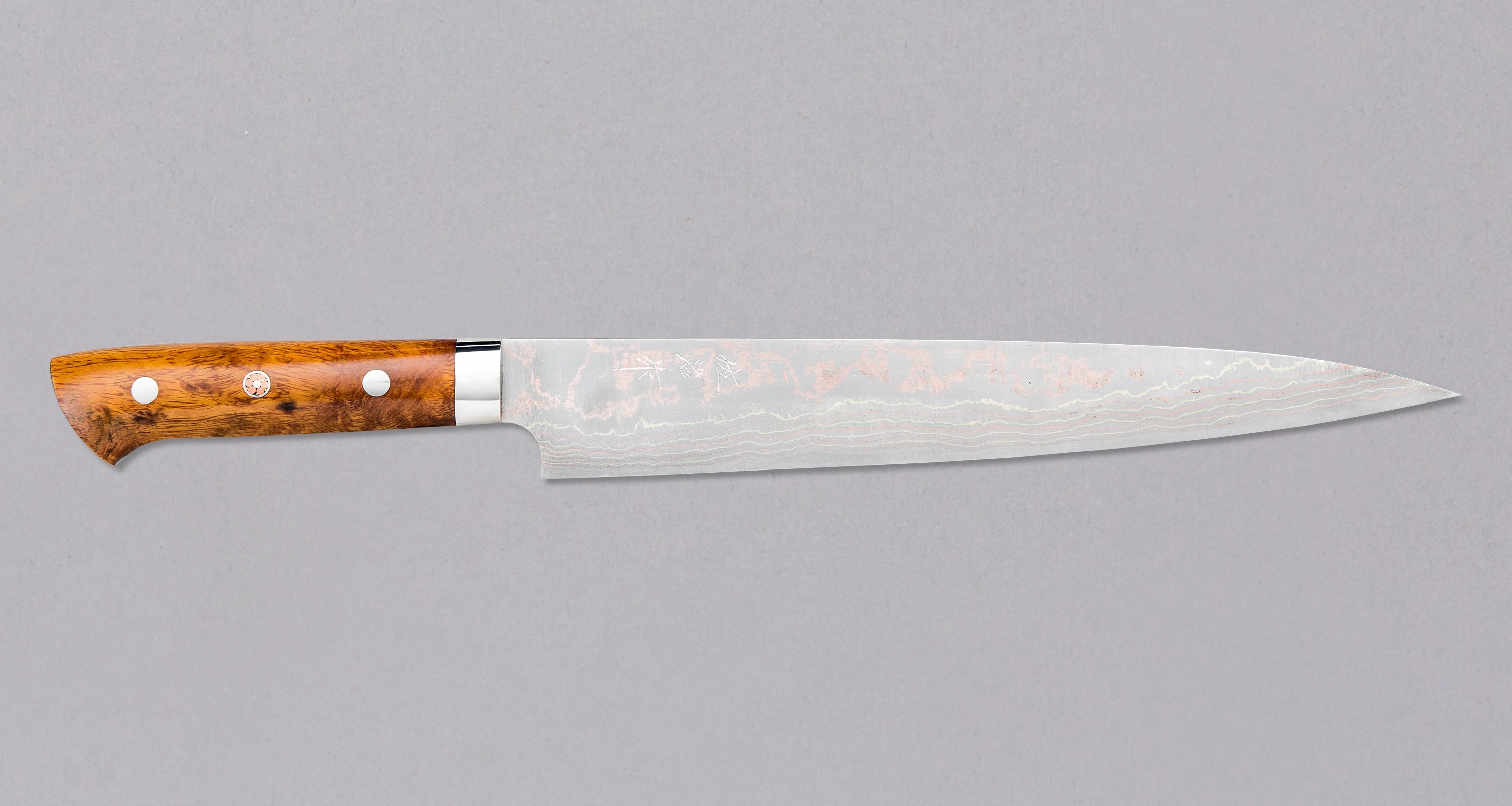
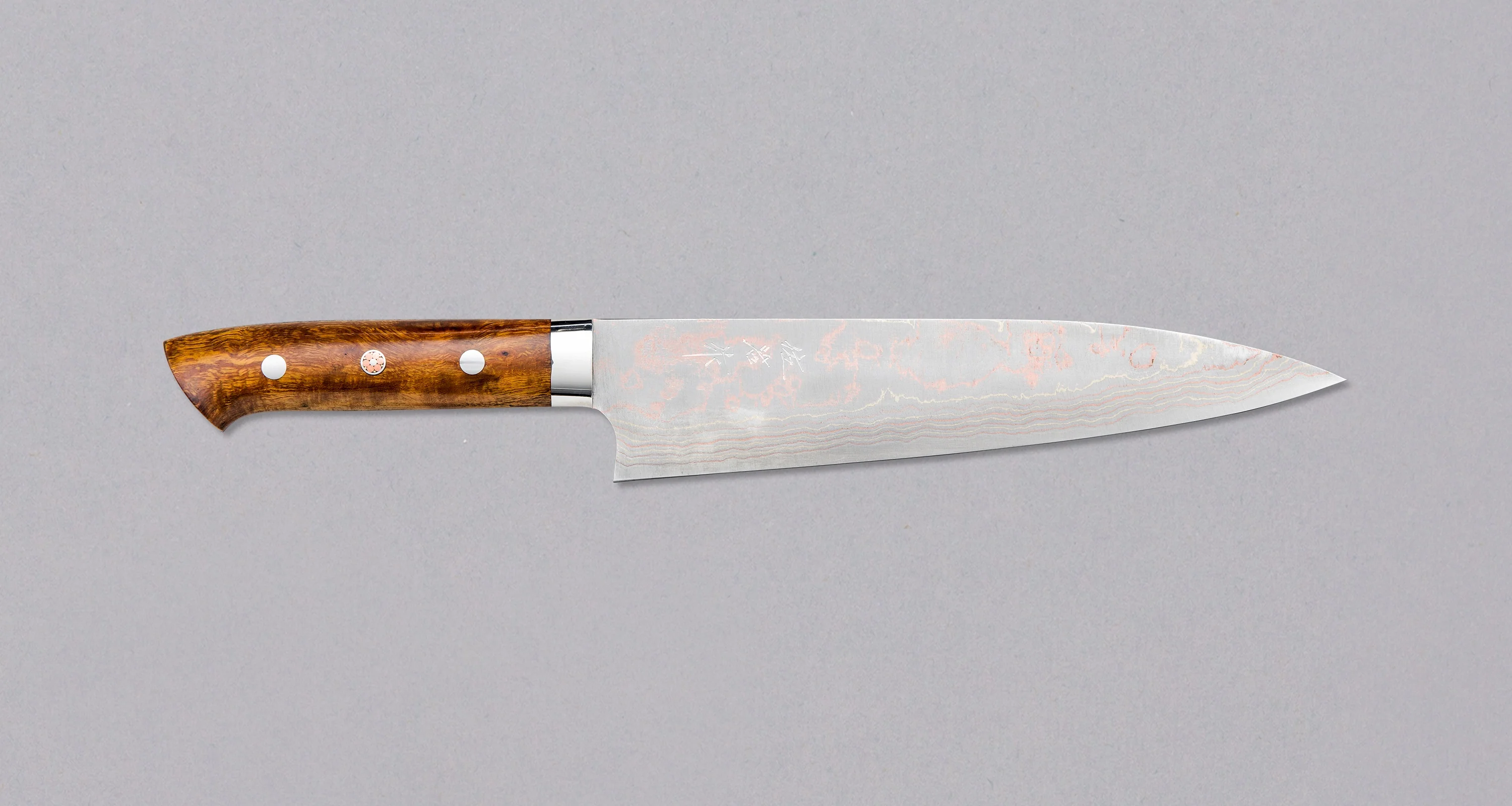
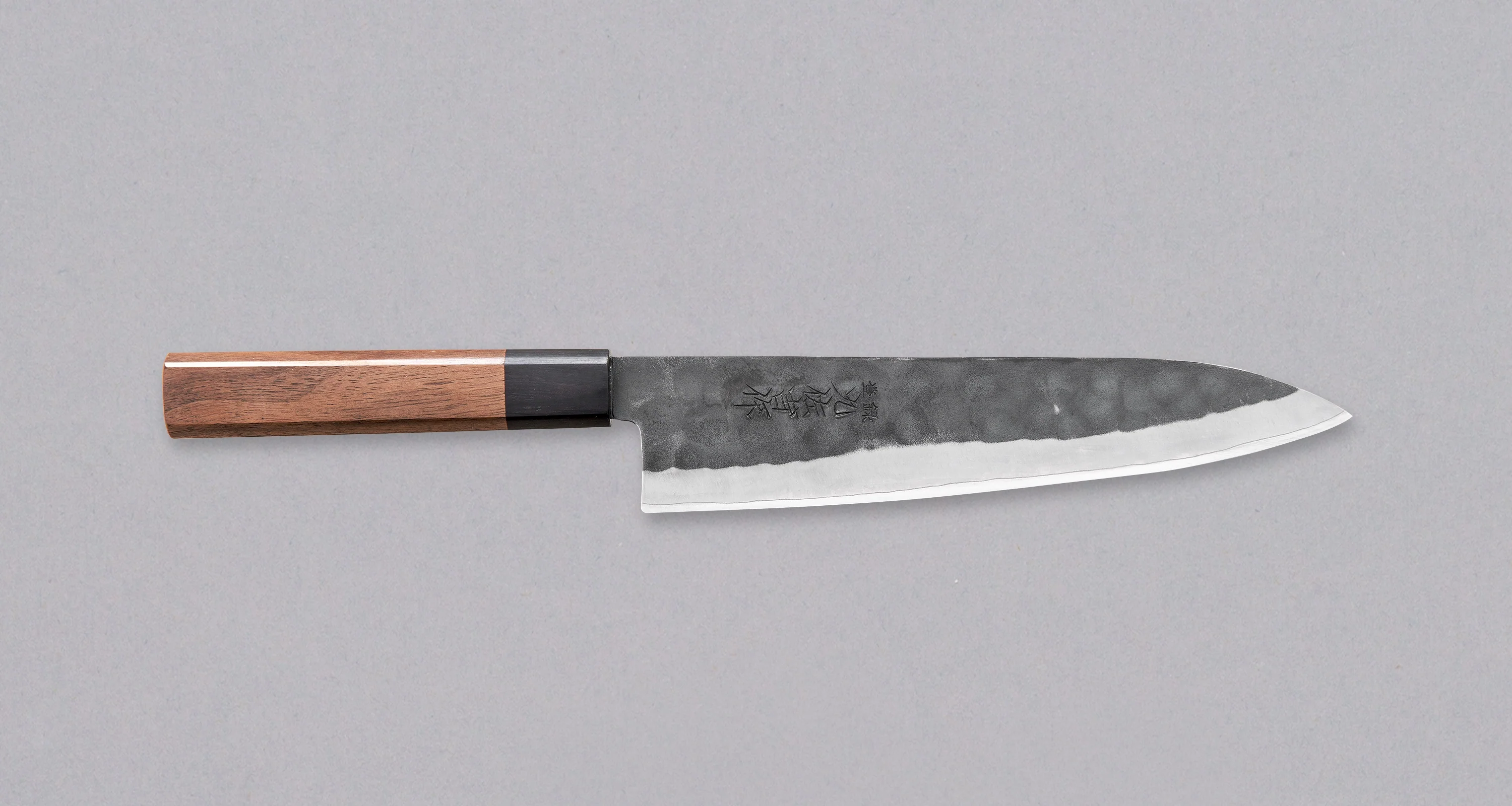
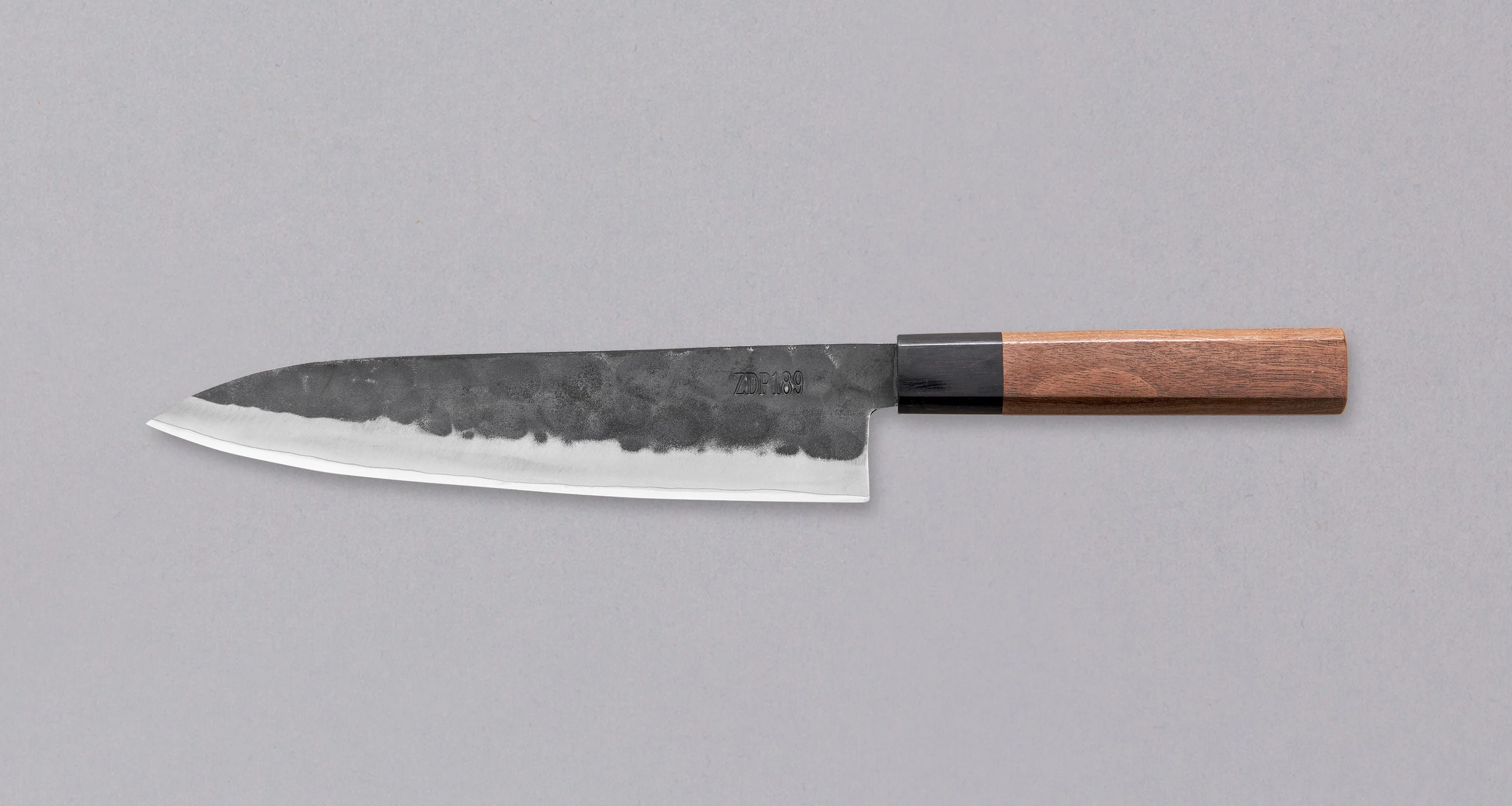
Tsunehisa Kiritsuke AS Kuro-uchi 240mm (9.4") is a great multi-purpose knife with a black Kuro-uchi protective patina and tsuchime hammer indentations. The kiritsuke blade shape is a multifunctional Japanese kitchen knife, suitable for everyday use, but its 240mm (9.4") blade length makes it especially suited for cutting larger pieces of meat and fish. The Kuro-uchi (black) patina on the upper part of the knife gives it a unique and rustic appearance.
The knives in the Tsunehisa kuro-uchi finish and hammer indentations series are san-mai laminated and made from Hitachi's Aogami Super Steel, which ranks among the very best high-grade Japanese steels. The core is protected by stainless outer layers for anti-rust properties and easy maintenance. A traditional Japanese Wa rosewood handle with a maple ferrule was fitted to the blade. The handle is oval and thus suitable for both the right and the left hand.
BLADE SHAPE:
Kiritsuke knives are double-bevel hybrids between the traditional Japanese knife yanagiba (slicer knife, mostly used for sushi) and the usuba (knife specialized to cut vegetables). This means kiritsuke knives can be used for all sorts of tasks in the kitchen, from making sashimi, slicing through ribeye, to chopping veggies. Traditionally, kiritsuke knives were only allowed to be used by the Executive Chef of the restaurant, but we'll look away if you're not (yet) the head chef. 😜
STEEL:
The core of this knife is Hitachi's Super Blue Steel (Aogami Super), which is the very top quality of traditional Japanese steels. This knife was heat-treated to around 63 HRC. It is a very hard steel, meaning that it will retain a super-fine sharpness for a long time. In addition, due to the high carbon content (1.4-1.5%), the knife is very easy to sharpen. Among the high carbon steels, Aogami Super is also the least sensitive to rust. It also contains 0.4% vanadium as an admixture for micronized metal grains, which gives the steel more toughness. Aogami Super is rated as the most advanced carbon steel. The outer layers are of softer, stainless steel, giving the knife extra rust protection.
LAMINATION:
A high hardness of around 63 HRC means that the blade won’t be very tough, so the blade’s core was laminated using the san-mai method to improve its structural integrity and subsequent ability to withstand impacts and prevent chipping. San-mai translates to “three layers” in Japanese, referring to a blade that is composed of a primary, inner layer of harder steel (hagane) and of two secondary, outer layers of softer steel (jigane) that protect the prior.
BLADE FINISH:
Kuro-uchi finish, the unprocessed (black) part on the top side of the blade has already developed a dark patina, which protects the blade and gives it a traditional Japanese look. The knife bears visible impressions of the hand-forging process (round hammer dents on the blade), which gives it a beautiful finish and also prevents food from sticking to the blade.
HANDLE:
The traditional Japanese Wa handle is oval and smooth, made from rosewood and topped with a maple wood ferrule. It’s suitable for both left- and right-handed users.
BLACKSMITH:
Tsunehisa is a brand that combines a variety of high quality knives from different knife centers in Japan such as Tosa, Seki and Sakai. Their philosophy is that each region has its own steel and different manufacturing processes. For example, Tosa is known for its Ginsanko and Aus-8 steels, Seki is famous for producing excellent blades from the V-Gold steel group, and Sakai for its single-edged Honyaki knives.
More Images
![Tsunehisa Kiritsuke AS Kuro-uchi 240mm (9.4") [Rosewood] - Image 2](/images/sharpedgestore.shop/images/product/tsunehisa-kiritsuke-as-kuro-uchi-240mm-2.jpg)
![Tsunehisa Kiritsuke AS Kuro-uchi 240mm (9.4") [Rosewood] - Image 3](/images/sharpedgestore.shop/images/product/tsunehisa-kiritsuke-as-kuro-uchi-240mm-3.jpg)
![Tsunehisa Kiritsuke AS Kuro-uchi 240mm (9.4") [Rosewood] - Image 4](/images/sharpedgestore.shop/images/product/tsunehisa-kiritsuke-as-kuro-uchi-240mm-4.jpg)
![Tsunehisa Kiritsuke AS Kuro-uchi 240mm (9.4") [Rosewood] - Image 5](/images/sharpedgestore.shop/images/product/tsunehisa-kiritsuke-as-kuro-uchi-240mm-5.jpg)
![Tsunehisa Kiritsuke AS Kuro-uchi 240mm (9.4") [Rosewood] - Image 6](/images/sharpedgestore.shop/images/product/tsunehisa-kiritsuke-as-kuro-uchi-240mm-6.jpg)
Tsunehisa Kiritsuke AS Kuro-uchi 240mm (9.4") [Rosewood]
Tsunehisa Kiritsuke AS Kuro-uchi 240mm (9.4") is the perfect knife for those who like their knives like they like their coffee: dark, bold, and capable of keeping you sharp!
Tsunehisa Kiritsuke AS Kuro-uchi 240mm (9.4") is a great multi-purpose knife with a black Kuro-uchi protective patina and tsuchime hammer indentations. The kiritsuke blade shape is a multifunctional Japanese kitchen knife, suitable for everyday use, but its 240mm (9.4") blade length makes it especially suited for cutting larger pieces of meat and fish. The Kuro-uchi (black) patina on the upper part of the knife gives it a unique and rustic appearance.
The knives in the Tsunehisa kuro-uchi finish and hammer indentations series are san-mai laminated and made from Hitachi's Aogami Super Steel, which ranks among the very best high-grade Japanese steels. The core is protected by stainless outer layers for anti-rust properties and easy maintenance. A traditional Japanese Wa rosewood handle with a maple ferrule was fitted to the blade. The handle is oval and thus suitable for both the right and the left hand.
BLADE SHAPE:
Kiritsuke knives are double-bevel hybrids between the traditional Japanese knife yanagiba (slicer knife, mostly used for sushi) and the usuba (knife specialized to cut vegetables). This means kiritsuke knives can be used for all sorts of tasks in the kitchen, from making sashimi, slicing through ribeye, to chopping veggies. Traditionally, kiritsuke knives were only allowed to be used by the Executive Chef of the restaurant, but we'll look away if you're not (yet) the head chef. 😜
STEEL:
The core of this knife is Hitachi's Super Blue Steel (Aogami Super), which is the very top quality of traditional Japanese steels. This knife was heat-treated to around 63 HRC. It is a very hard steel, meaning that it will retain a super-fine sharpness for a long time. In addition, due to the high carbon content (1.4-1.5%), the knife is very easy to sharpen. Among the high carbon steels, Aogami Super is also the least sensitive to rust. It also contains 0.4% vanadium as an admixture for micronized metal grains, which gives the steel more toughness. Aogami Super is rated as the most advanced carbon steel. The outer layers are of softer, stainless steel, giving the knife extra rust protection.
LAMINATION:
A high hardness of around 63 HRC means that the blade won’t be very tough, so the blade’s core was laminated using the san-mai method to improve its structural integrity and subsequent ability to withstand impacts and prevent chipping. San-mai translates to “three layers” in Japanese, referring to a blade that is composed of a primary, inner layer of harder steel (hagane) and of two secondary, outer layers of softer steel (jigane) that protect the prior.
BLADE FINISH:
Kuro-uchi finish, the unprocessed (black) part on the top side of the blade has already developed a dark patina, which protects the blade and gives it a traditional Japanese look. The knife bears visible impressions of the hand-forging process (round hammer dents on the blade), which gives it a beautiful finish and also prevents food from sticking to the blade.
HANDLE:
The traditional Japanese Wa handle is oval and smooth, made from rosewood and topped with a maple wood ferrule. It’s suitable for both left- and right-handed users.
BLACKSMITH:
Tsunehisa is a brand that combines a variety of high quality knives from different knife centers in Japan such as Tosa, Seki and Sakai. Their philosophy is that each region has its own steel and different manufacturing processes. For example, Tosa is known for its Ginsanko and Aus-8 steels, Seki is famous for producing excellent blades from the V-Gold steel group, and Sakai for its single-edged Honyaki knives.
Product Information
Product Information
Shipping & Returns
Shipping & Returns
Description
Tsunehisa Kiritsuke AS Kuro-uchi 240mm (9.4") is the perfect knife for those who like their knives like they like their coffee: dark, bold, and capable of keeping you sharp!
Tsunehisa Kiritsuke AS Kuro-uchi 240mm (9.4") is a great multi-purpose knife with a black Kuro-uchi protective patina and tsuchime hammer indentations. The kiritsuke blade shape is a multifunctional Japanese kitchen knife, suitable for everyday use, but its 240mm (9.4") blade length makes it especially suited for cutting larger pieces of meat and fish. The Kuro-uchi (black) patina on the upper part of the knife gives it a unique and rustic appearance.
The knives in the Tsunehisa kuro-uchi finish and hammer indentations series are san-mai laminated and made from Hitachi's Aogami Super Steel, which ranks among the very best high-grade Japanese steels. The core is protected by stainless outer layers for anti-rust properties and easy maintenance. A traditional Japanese Wa rosewood handle with a maple ferrule was fitted to the blade. The handle is oval and thus suitable for both the right and the left hand.
BLADE SHAPE:
Kiritsuke knives are double-bevel hybrids between the traditional Japanese knife yanagiba (slicer knife, mostly used for sushi) and the usuba (knife specialized to cut vegetables). This means kiritsuke knives can be used for all sorts of tasks in the kitchen, from making sashimi, slicing through ribeye, to chopping veggies. Traditionally, kiritsuke knives were only allowed to be used by the Executive Chef of the restaurant, but we'll look away if you're not (yet) the head chef. 😜
STEEL:
The core of this knife is Hitachi's Super Blue Steel (Aogami Super), which is the very top quality of traditional Japanese steels. This knife was heat-treated to around 63 HRC. It is a very hard steel, meaning that it will retain a super-fine sharpness for a long time. In addition, due to the high carbon content (1.4-1.5%), the knife is very easy to sharpen. Among the high carbon steels, Aogami Super is also the least sensitive to rust. It also contains 0.4% vanadium as an admixture for micronized metal grains, which gives the steel more toughness. Aogami Super is rated as the most advanced carbon steel. The outer layers are of softer, stainless steel, giving the knife extra rust protection.
LAMINATION:
A high hardness of around 63 HRC means that the blade won’t be very tough, so the blade’s core was laminated using the san-mai method to improve its structural integrity and subsequent ability to withstand impacts and prevent chipping. San-mai translates to “three layers” in Japanese, referring to a blade that is composed of a primary, inner layer of harder steel (hagane) and of two secondary, outer layers of softer steel (jigane) that protect the prior.
BLADE FINISH:
Kuro-uchi finish, the unprocessed (black) part on the top side of the blade has already developed a dark patina, which protects the blade and gives it a traditional Japanese look. The knife bears visible impressions of the hand-forging process (round hammer dents on the blade), which gives it a beautiful finish and also prevents food from sticking to the blade.
HANDLE:
The traditional Japanese Wa handle is oval and smooth, made from rosewood and topped with a maple wood ferrule. It’s suitable for both left- and right-handed users.
BLACKSMITH:
Tsunehisa is a brand that combines a variety of high quality knives from different knife centers in Japan such as Tosa, Seki and Sakai. Their philosophy is that each region has its own steel and different manufacturing processes. For example, Tosa is known for its Ginsanko and Aus-8 steels, Seki is famous for producing excellent blades from the V-Gold steel group, and Sakai for its single-edged Honyaki knives.