Tsunehisa Honesuki VG-10 Damascus Black 150mm (5.9")
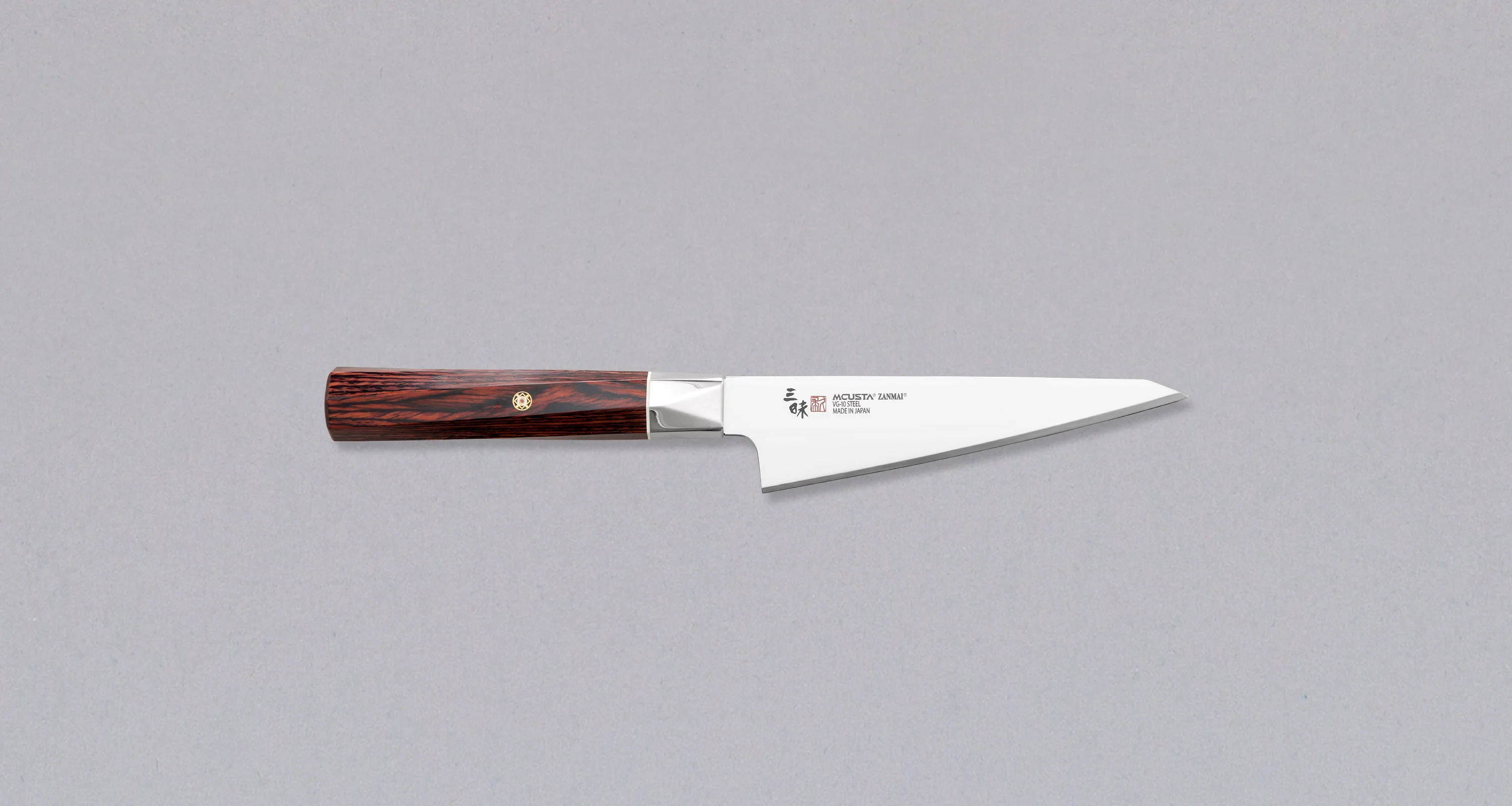
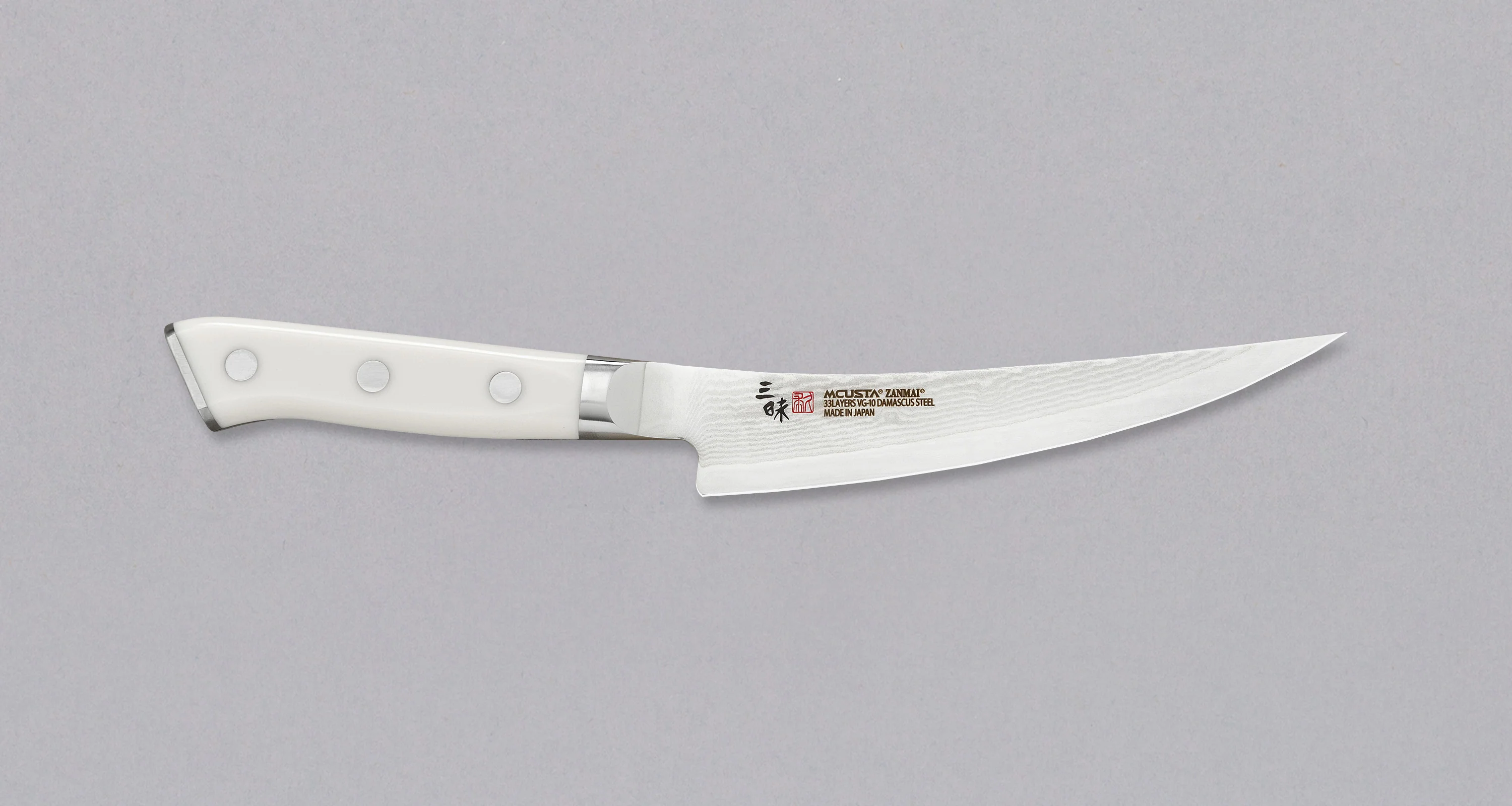
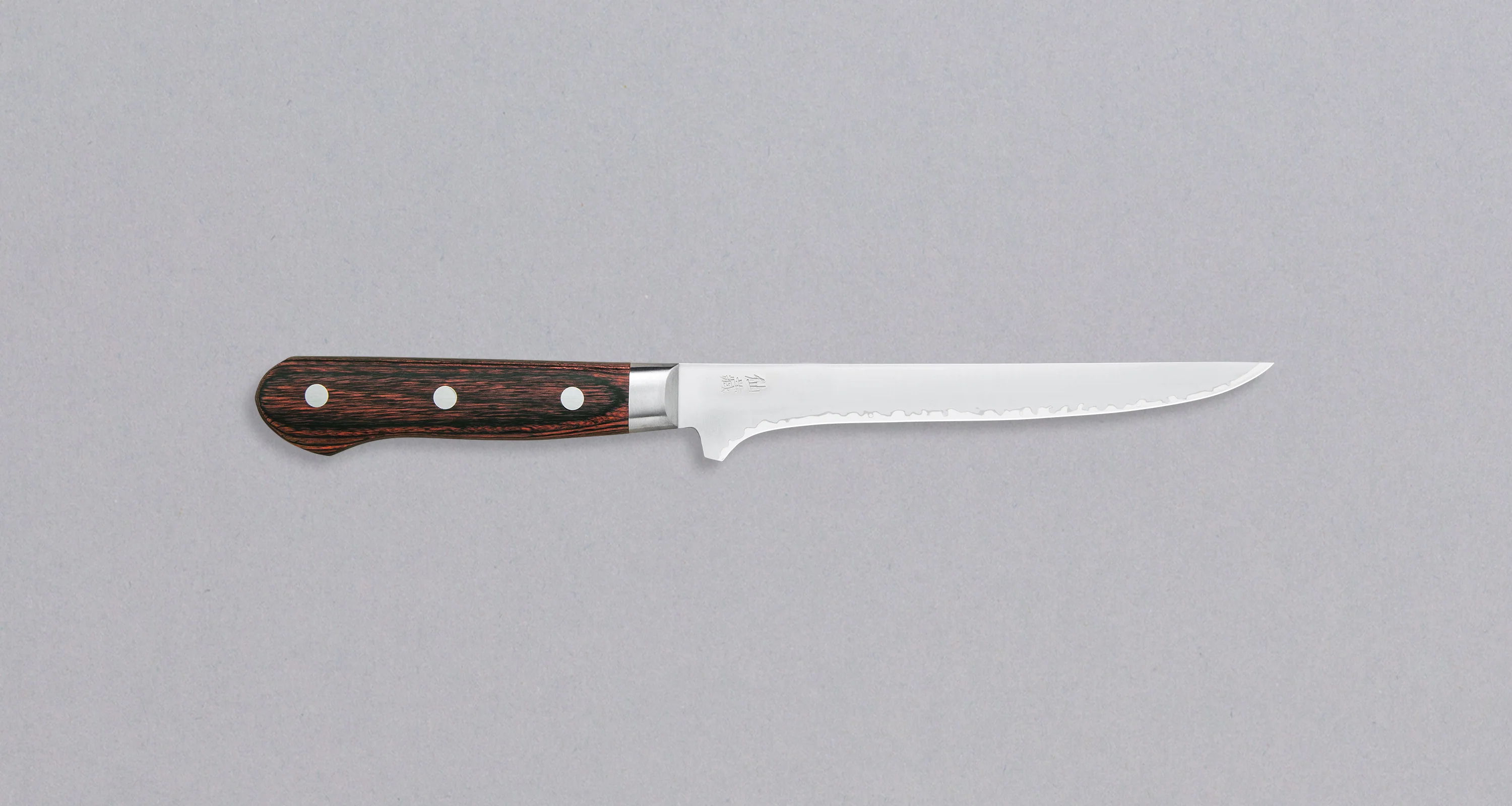
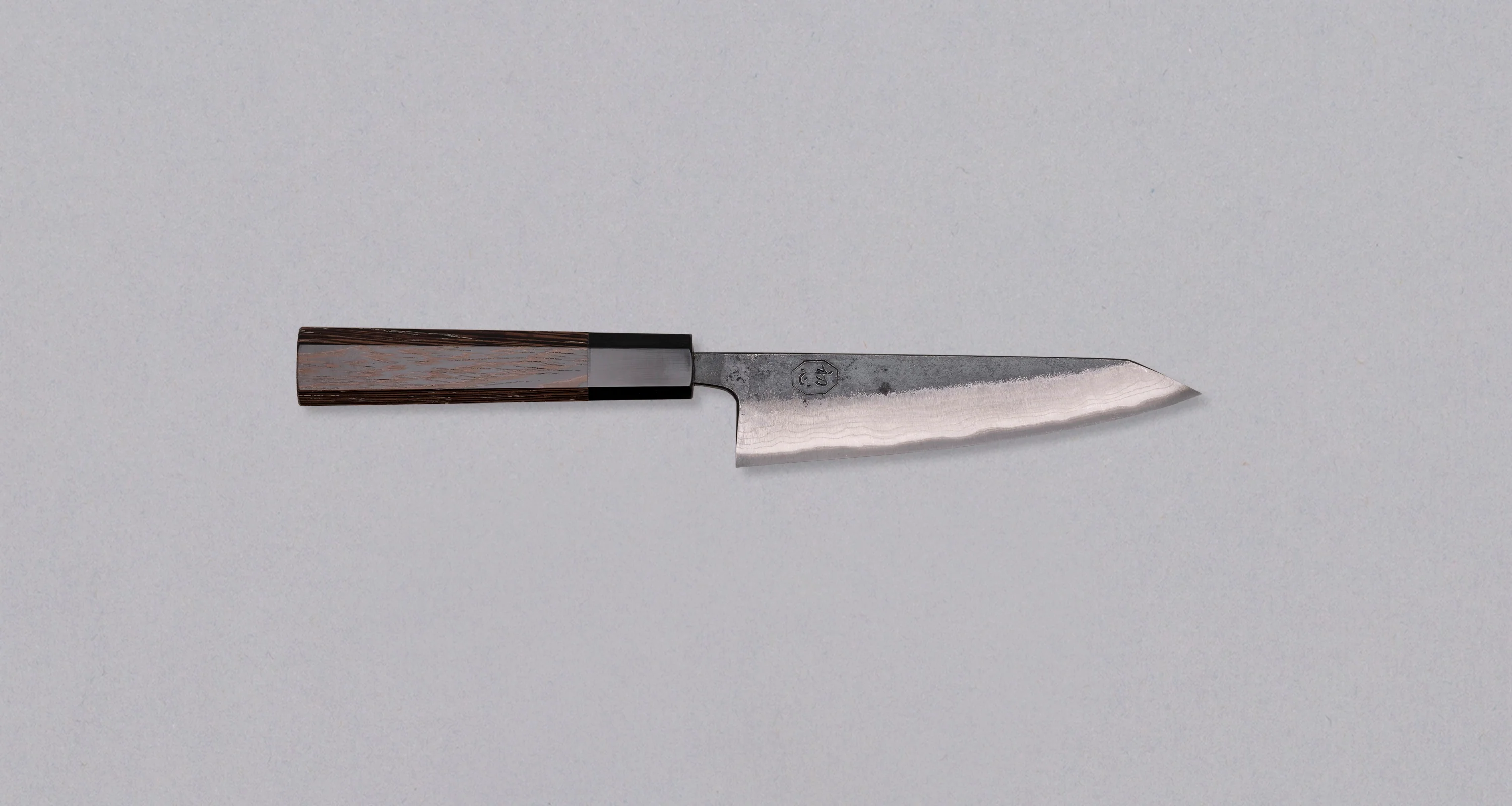
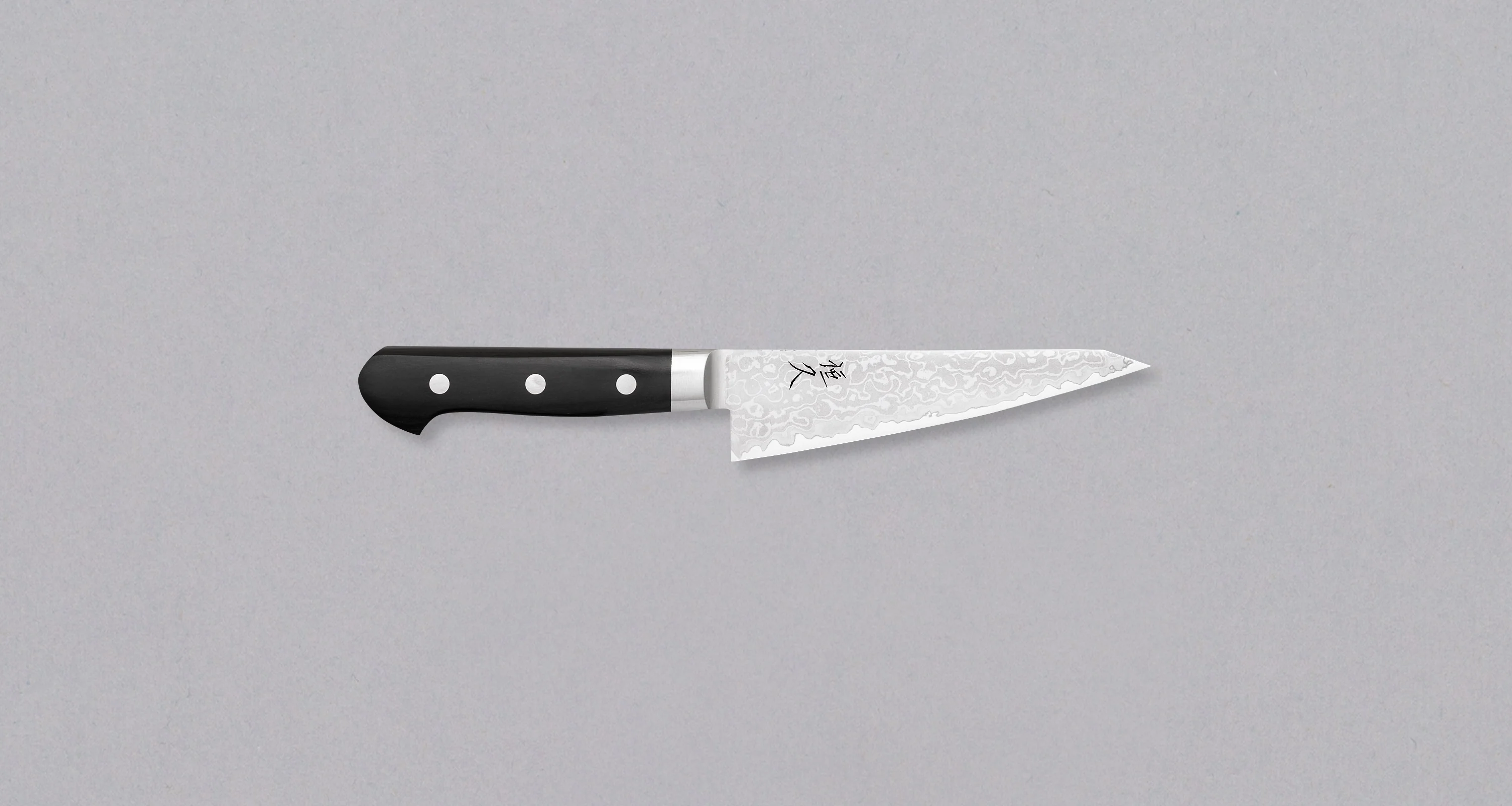
Tsunehisa Honesuki VG-10 Damascus Black 150mm is a Japanese boning knife, intended for the preparation of poultry. Whereas it is not suitable for cutting through bone, it handles cartilage and tendons wonderfully, and its sturdy heel can be used for scraping meat off the bones.
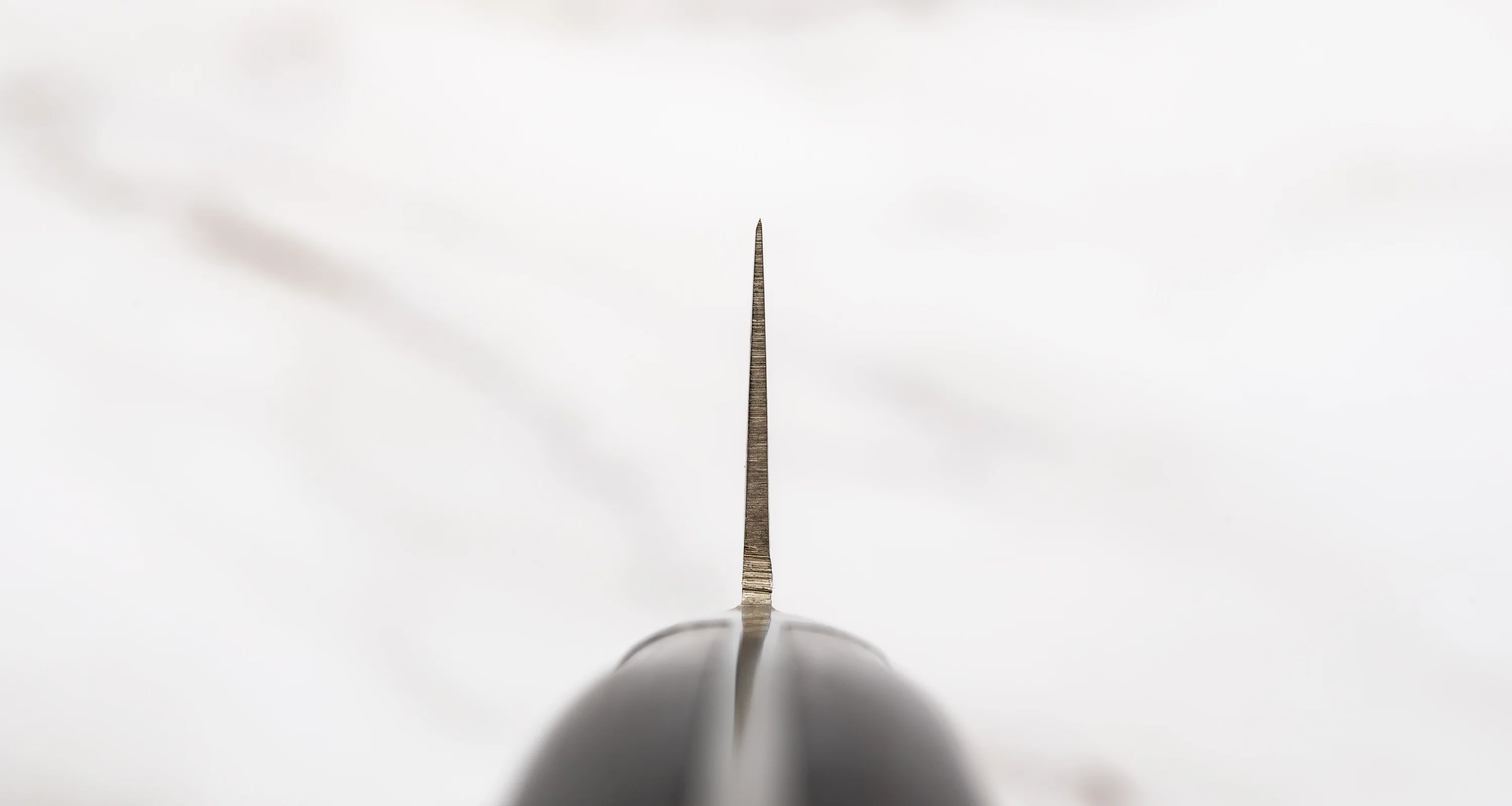
The thin yet stable blade is made from premium VG‑10 steel, one of the most advanced stainless steels for kitchen knives. It offers easy maintenance and exceptionally fine sharpness that lasts a long time, making it an excellent choice for both professional and home kitchens.
BLADE SHAPE:
Originally intended for poultry and small animals (such as rabbits), the Honesuki is a Japanese-style knife that is highly effective for larger butchering and filleting of fish. Its blade features a thick heel that is ideal for scraping meat off bones, as well as a thinner tip that allows for precise cuts.
The reverse tanto tip design increases the strength of the tip, which can be used to easily pierce the skin, as well as to make precise cuts in tight spots, like the joints. Its shape also allows for making quick turns, great for trimming away fat and connective tissue.
While it is not advisable to use excessive force when cutting through bone with this knife, it is well-suited for separating tendons and cartilage.
STEEL:
VG-10 (V for Vanadium, G for "gold" as in "gold standard") is made by Takefu Special Steel Company, a relatively small steel company that around 60 years ago managed to find just the right balance of different elements to create the most popular Japanese knife making steel today.
VG-10 steel is stainless steel with relatively high Carbon (C) content (1%), 15% Chromium (Cr), 1% Molybdenum (Mo), 0.3% Vanadium (V) and 1.5% Cobalt (Co). The combination of Cr, Mo, and V forms a lot of hard carbides, making the steel abrasion resistant which translates to long-lasting, smooth sharpness.
LAMINATION:
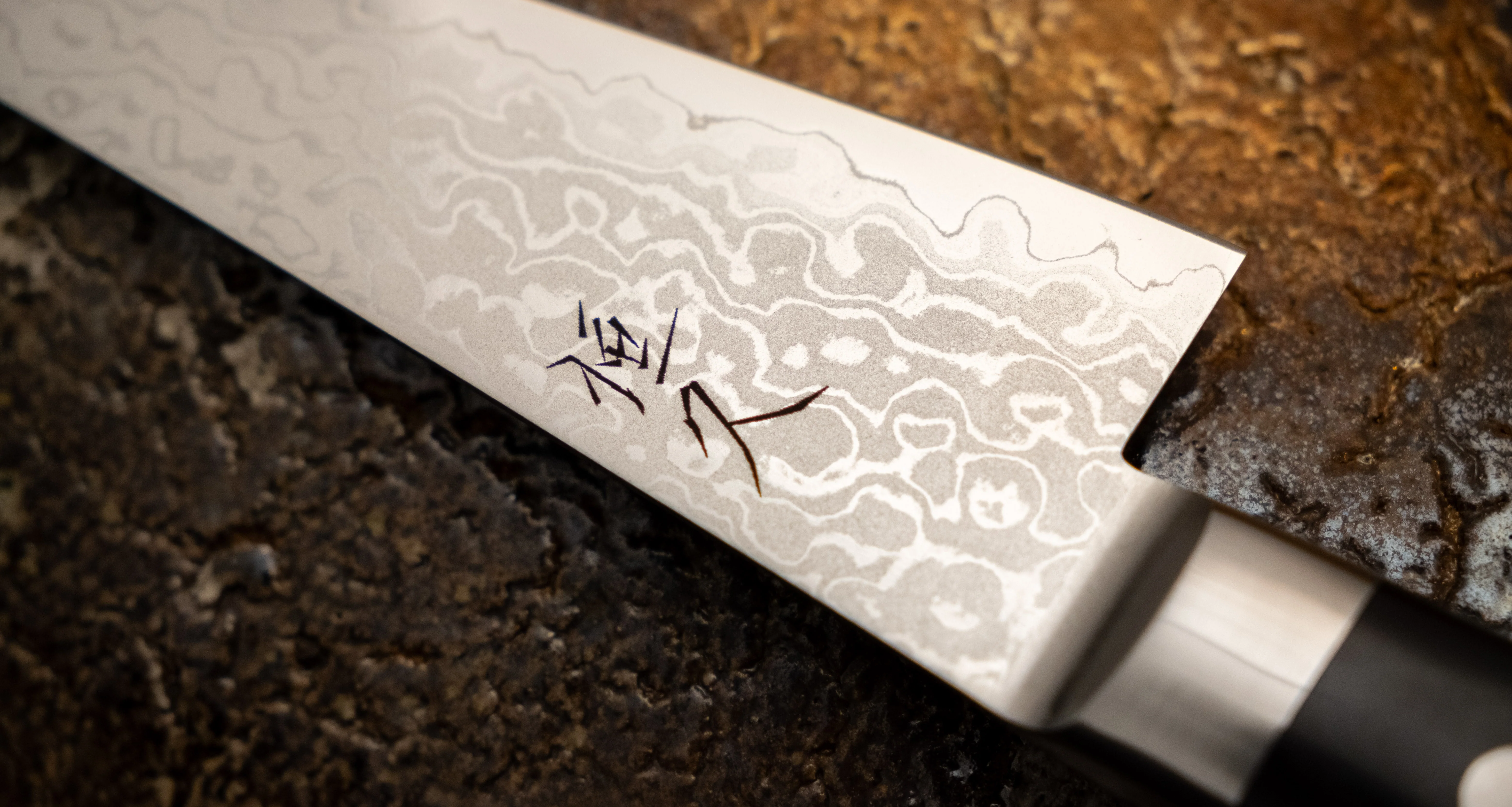
The blade consists of multiple layers of steel which are forged welded together in what is known a san-mai construction. This technique is used to protect the hard (but delicate) core from outside factors, such as rust and physical impacts, which could lead to breakage.
BLADE FINISH:
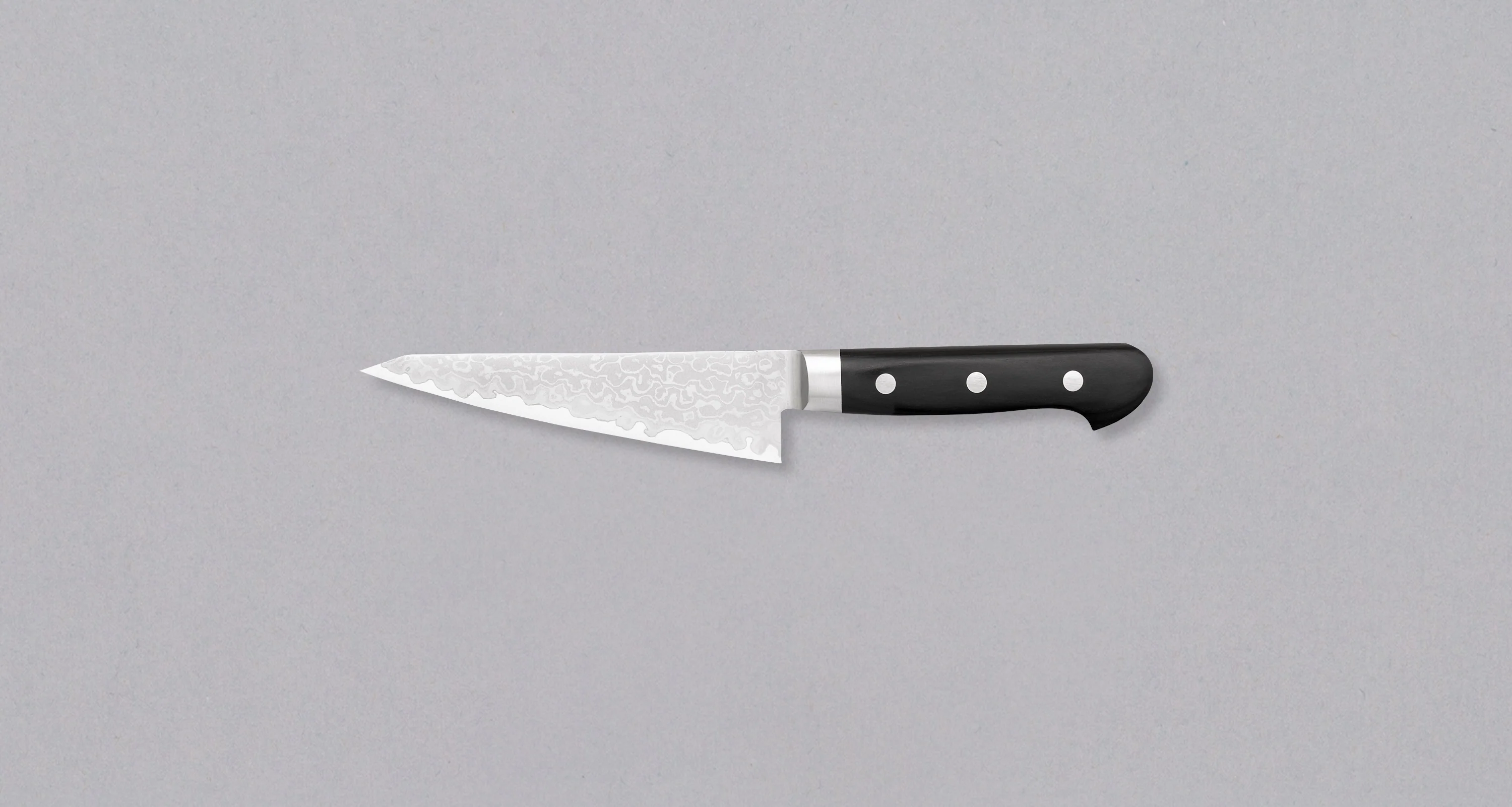
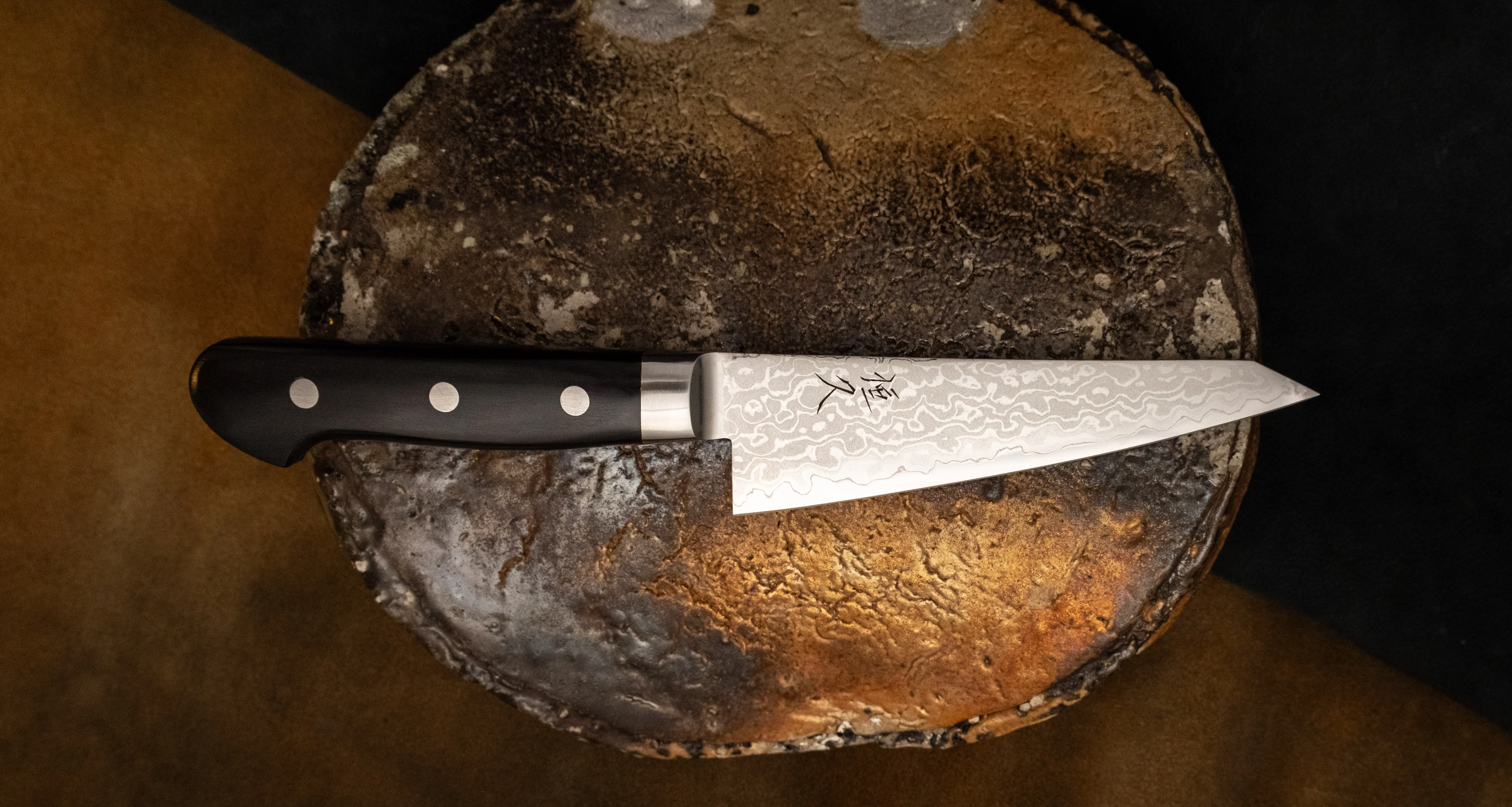
The blade sports a beautiful black Damascus finish.
HANDLE:
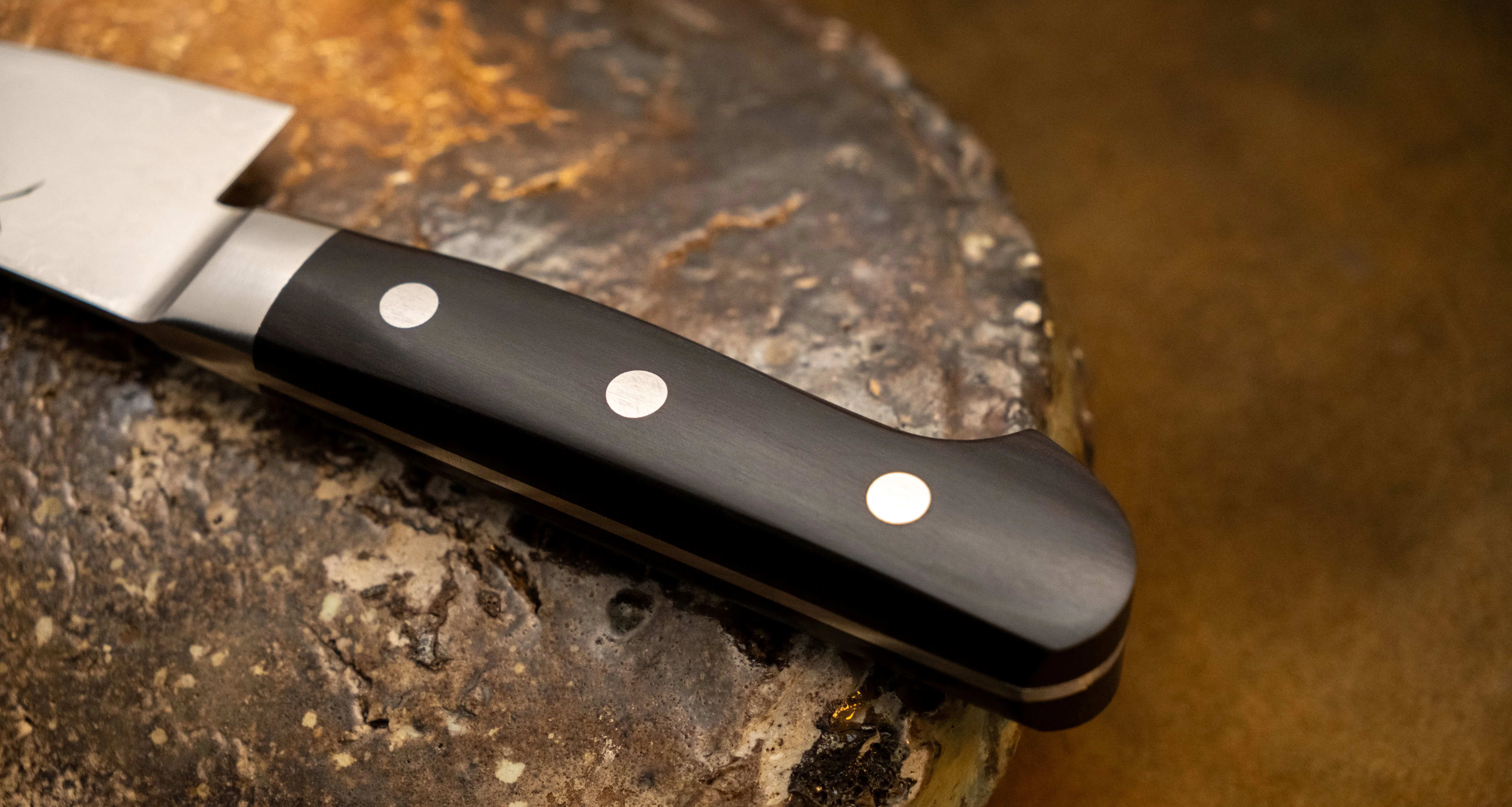
A durable and fairly light micarta handle is used, allowing for an ergonomic and fatigue-less grip. It features a stainless bolster and three rivets for a secure handle fixation, reducing the possibility of cracks in the handle.
More Images
Tsunehisa Honesuki VG-10 Damascus Black 150mm (5.9")
Tsunehisa Honesuki VG-10 Damascus Black 150mm is a Japanese boning knife, intended for the preparation of poultry. Whereas it is not suitable for cutting through bone, it handles cartilage and tendons wonderfully, and its sturdy heel can be used for scraping meat off the bones.
The thin yet stable blade is made from premium VG‑10 steel, one of the most advanced stainless steels for kitchen knives. It offers easy maintenance and exceptionally fine sharpness that lasts a long time, making it an excellent choice for both professional and home kitchens.
BLADE SHAPE:
Originally intended for poultry and small animals (such as rabbits), the Honesuki is a Japanese-style knife that is highly effective for larger butchering and filleting of fish. Its blade features a thick heel that is ideal for scraping meat off bones, as well as a thinner tip that allows for precise cuts.
The reverse tanto tip design increases the strength of the tip, which can be used to easily pierce the skin, as well as to make precise cuts in tight spots, like the joints. Its shape also allows for making quick turns, great for trimming away fat and connective tissue.
While it is not advisable to use excessive force when cutting through bone with this knife, it is well-suited for separating tendons and cartilage.
STEEL:
VG-10 (V for Vanadium, G for "gold" as in "gold standard") is made by Takefu Special Steel Company, a relatively small steel company that around 60 years ago managed to find just the right balance of different elements to create the most popular Japanese knife making steel today.
VG-10 steel is stainless steel with relatively high Carbon (C) content (1%), 15% Chromium (Cr), 1% Molybdenum (Mo), 0.3% Vanadium (V) and 1.5% Cobalt (Co). The combination of Cr, Mo, and V forms a lot of hard carbides, making the steel abrasion resistant which translates to long-lasting, smooth sharpness.
LAMINATION:
The blade consists of multiple layers of steel which are forged welded together in what is known a san-mai construction. This technique is used to protect the hard (but delicate) core from outside factors, such as rust and physical impacts, which could lead to breakage.
BLADE FINISH:
The blade sports a beautiful black Damascus finish.
HANDLE:
A durable and fairly light micarta handle is used, allowing for an ergonomic and fatigue-less grip. It features a stainless bolster and three rivets for a secure handle fixation, reducing the possibility of cracks in the handle.
Product Information
Product Information
Shipping & Returns
Shipping & Returns
Description
Tsunehisa Honesuki VG-10 Damascus Black 150mm is a Japanese boning knife, intended for the preparation of poultry. Whereas it is not suitable for cutting through bone, it handles cartilage and tendons wonderfully, and its sturdy heel can be used for scraping meat off the bones.
The thin yet stable blade is made from premium VG‑10 steel, one of the most advanced stainless steels for kitchen knives. It offers easy maintenance and exceptionally fine sharpness that lasts a long time, making it an excellent choice for both professional and home kitchens.
BLADE SHAPE:
Originally intended for poultry and small animals (such as rabbits), the Honesuki is a Japanese-style knife that is highly effective for larger butchering and filleting of fish. Its blade features a thick heel that is ideal for scraping meat off bones, as well as a thinner tip that allows for precise cuts.
The reverse tanto tip design increases the strength of the tip, which can be used to easily pierce the skin, as well as to make precise cuts in tight spots, like the joints. Its shape also allows for making quick turns, great for trimming away fat and connective tissue.
While it is not advisable to use excessive force when cutting through bone with this knife, it is well-suited for separating tendons and cartilage.
STEEL:
VG-10 (V for Vanadium, G for "gold" as in "gold standard") is made by Takefu Special Steel Company, a relatively small steel company that around 60 years ago managed to find just the right balance of different elements to create the most popular Japanese knife making steel today.
VG-10 steel is stainless steel with relatively high Carbon (C) content (1%), 15% Chromium (Cr), 1% Molybdenum (Mo), 0.3% Vanadium (V) and 1.5% Cobalt (Co). The combination of Cr, Mo, and V forms a lot of hard carbides, making the steel abrasion resistant which translates to long-lasting, smooth sharpness.
LAMINATION:
The blade consists of multiple layers of steel which are forged welded together in what is known a san-mai construction. This technique is used to protect the hard (but delicate) core from outside factors, such as rust and physical impacts, which could lead to breakage.
BLADE FINISH:
The blade sports a beautiful black Damascus finish.
HANDLE:
A durable and fairly light micarta handle is used, allowing for an ergonomic and fatigue-less grip. It features a stainless bolster and three rivets for a secure handle fixation, reducing the possibility of cracks in the handle.