Tomita Higonokami Shirogami #2 Tsuchime 75mm (3")
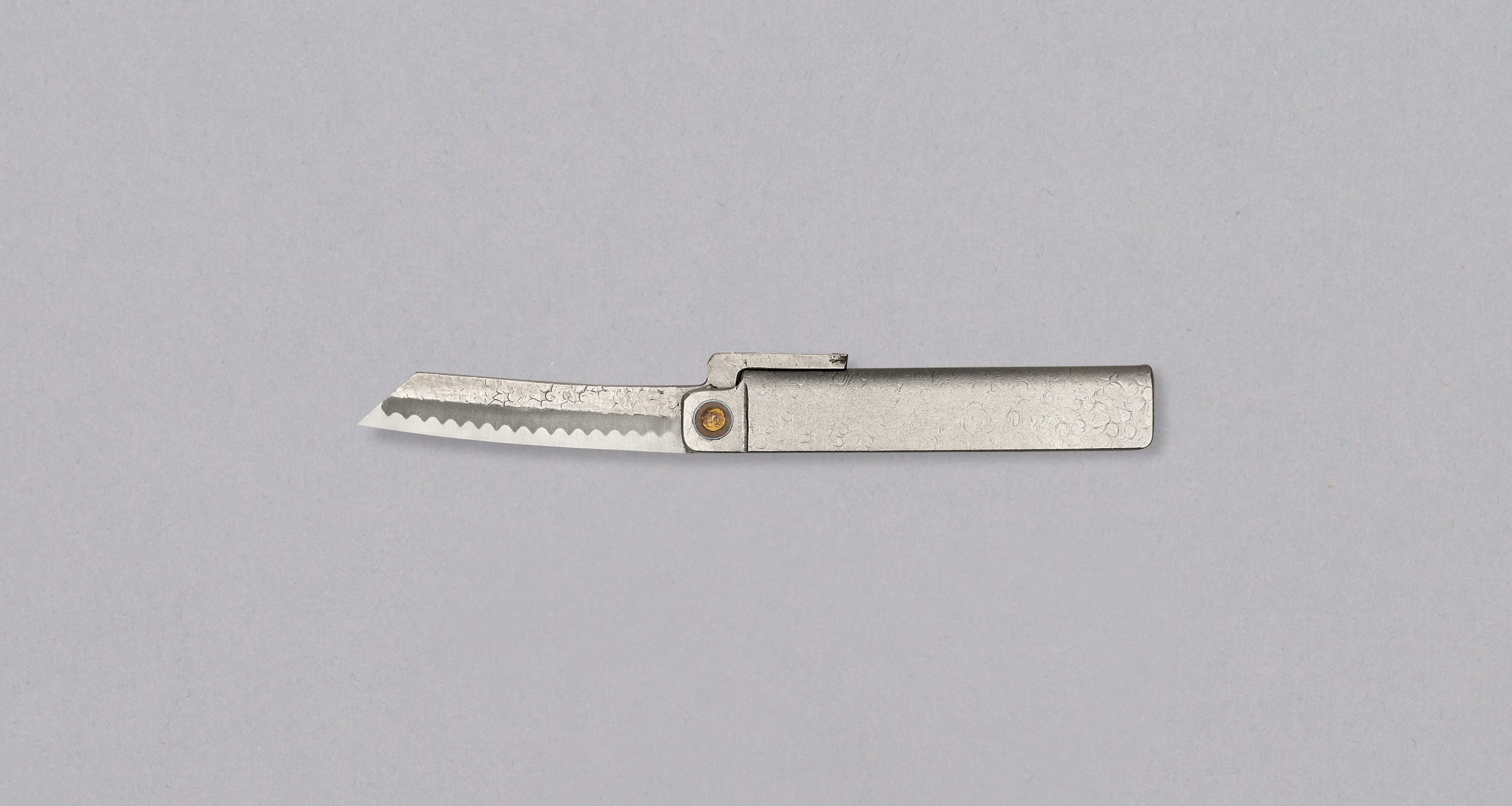
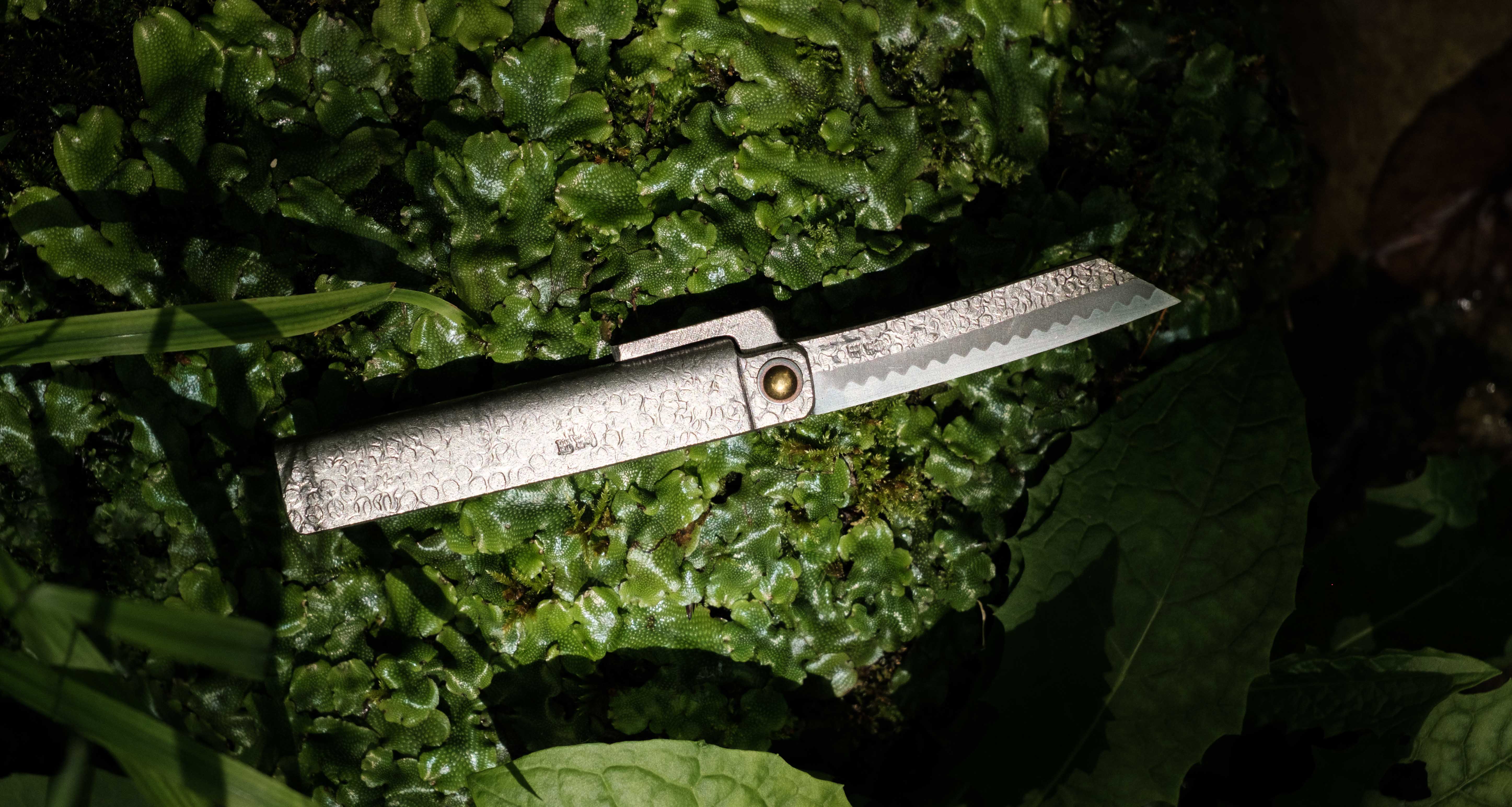
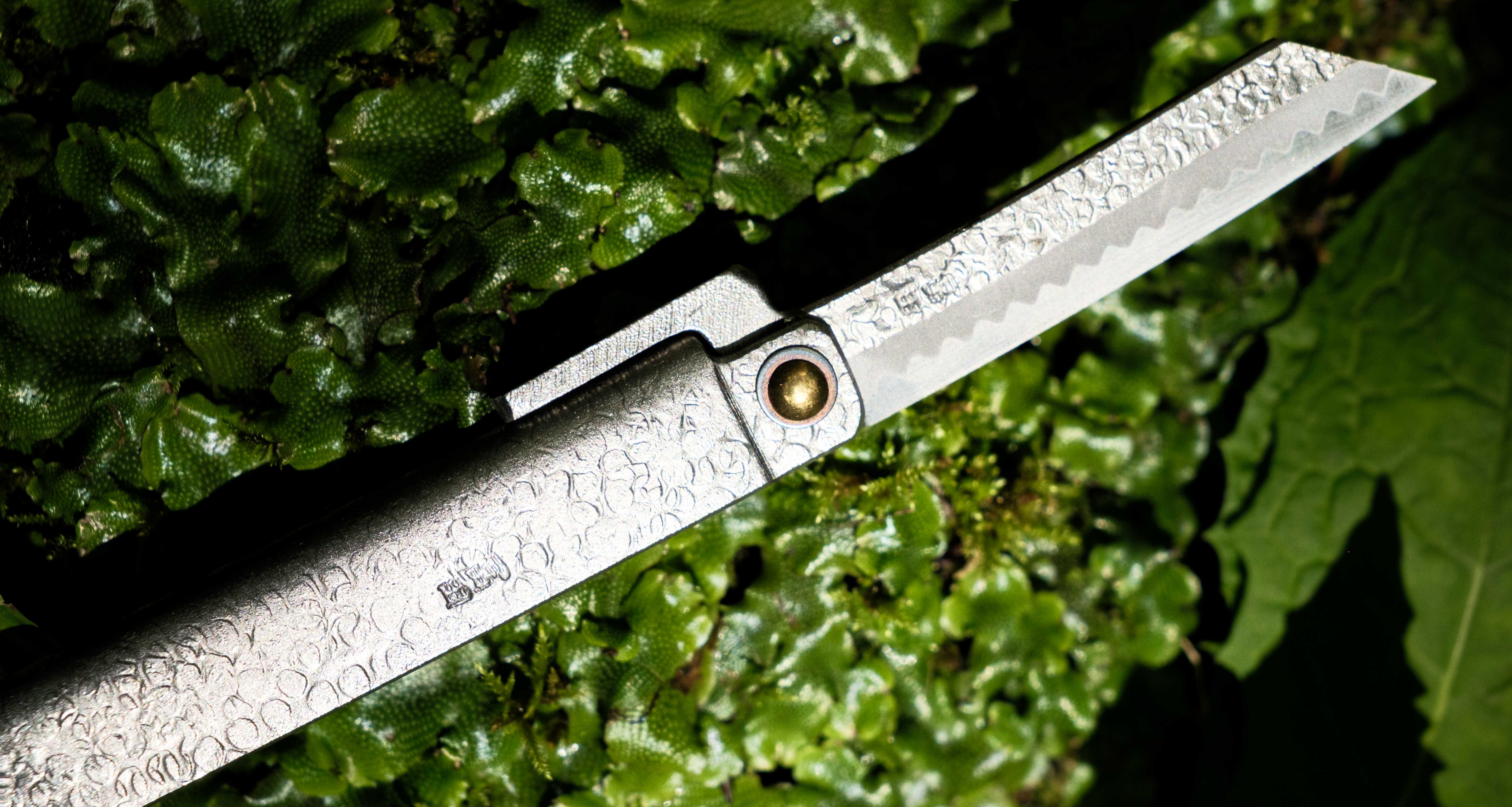
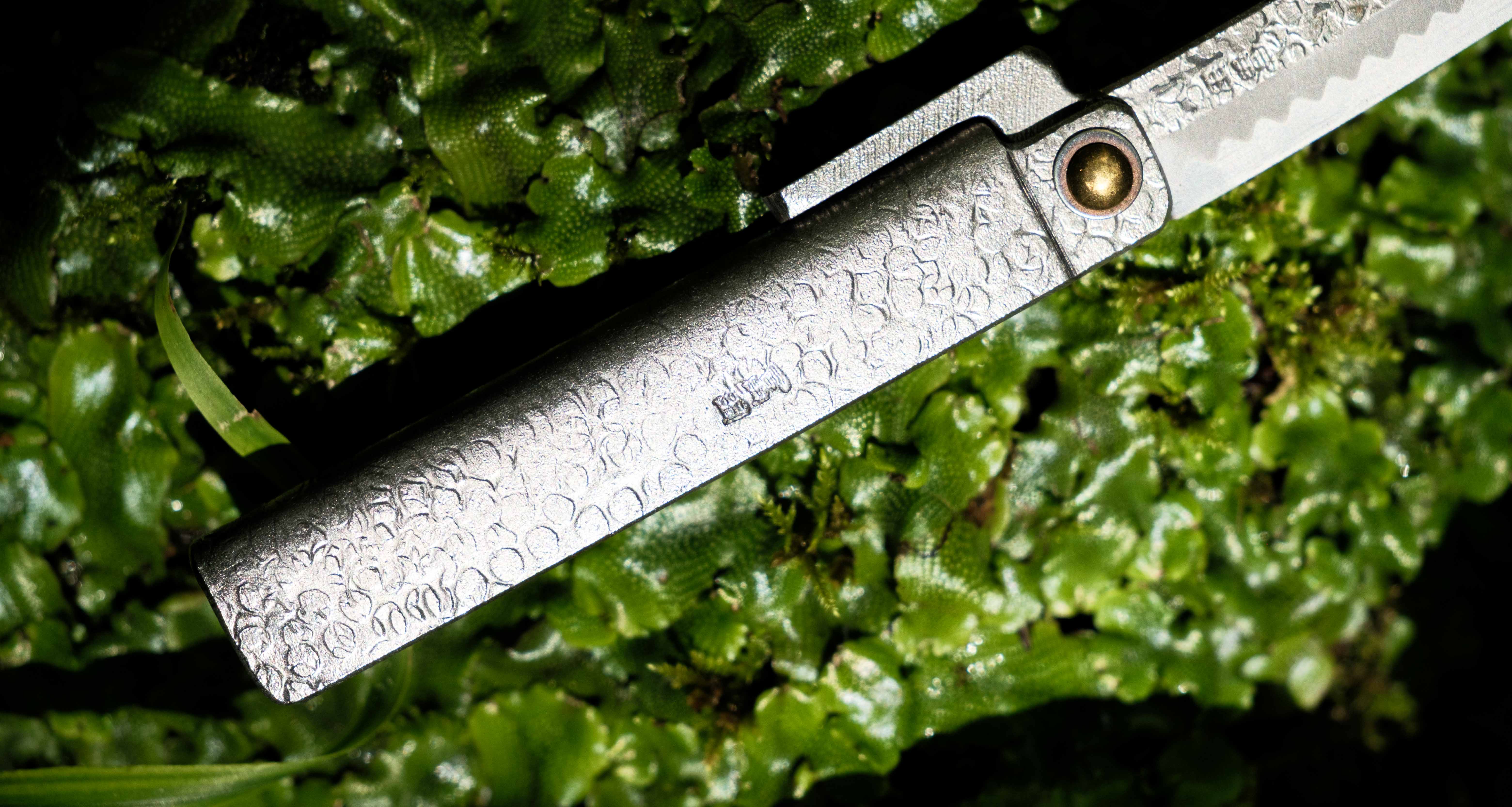
This Japanese Higonokami folding knife is all about straightforward design. The hand-hammered Tsuchime handle adds subtle texture and grip, while the Shirogami #2 steel offers easy maintenance and excellent sharpness retention.
Forged by the late Master Tomita Osamu, the knife blends traditional craftsmanship with clean, minimal form. Each piece comes in a paulownia wood box, hand-signed by the maker—a thoughtful detail that makes this knife feel extra special.
For everyday use or as a meaningful gift. It’s the kind of knife you’ll enjoy carrying with you, using for small daily tasks, or giving to someone who appreciates quality and tradition. Over time, the blade will develop a patina.
BLADE SHAPE:
Higonokami is the most famous Japanese pocket knife. It enjoys the same kind of fame in Japan as the Swiss army knife does in Switzerland and around the globe.
The shape of the Higonokami pocket knife is based on the katana, which is not a coincidence, since knife manufacturing is deeply embedded in the samurai tradition. The knife first appeared in 1896 in response to reforms in the 19th century, which banned the production of weapons, so blacksmiths began to produce knives, among others also these small pocket Higonokamis.
STEEL:
Shirogami #2 is a traditional high-carbon steel in Japanese knife manufacturing. Due to its high carbon content, it can reach a hardness of over 60 HRC, which means that blades forged from it will have excellent edge retention. The blades will sharpen easily and will be able to achieve a very fine sharpness, owing to the steel’s very pure composition. For the same reason, the steel isn’t corrosion resistant and the blade will develop a protective patina over time. Therefore, it’s recommended you wipe the blade dry between and after use and oil it regularly.
LAMINATION:
The core layer was sandwiched between 2 layers of softer steel. This technique is called san-mai and is used to protect the hard (but delicate) core from outside factors and physical impacts, which could lead to breakage.
GEOMETRY:
It has a double bevel (symmetrical) blade.
BLADE FINSIH:
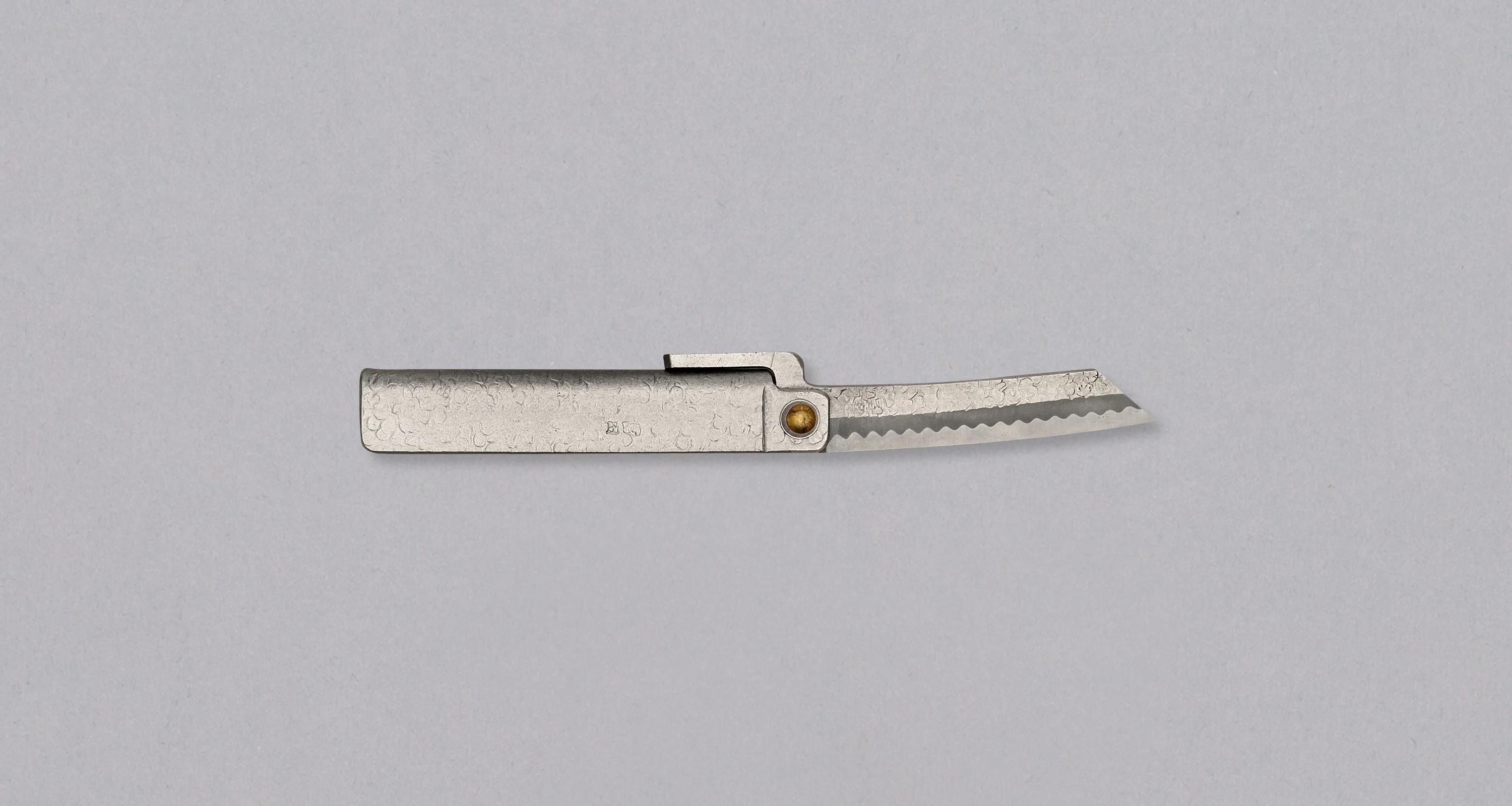
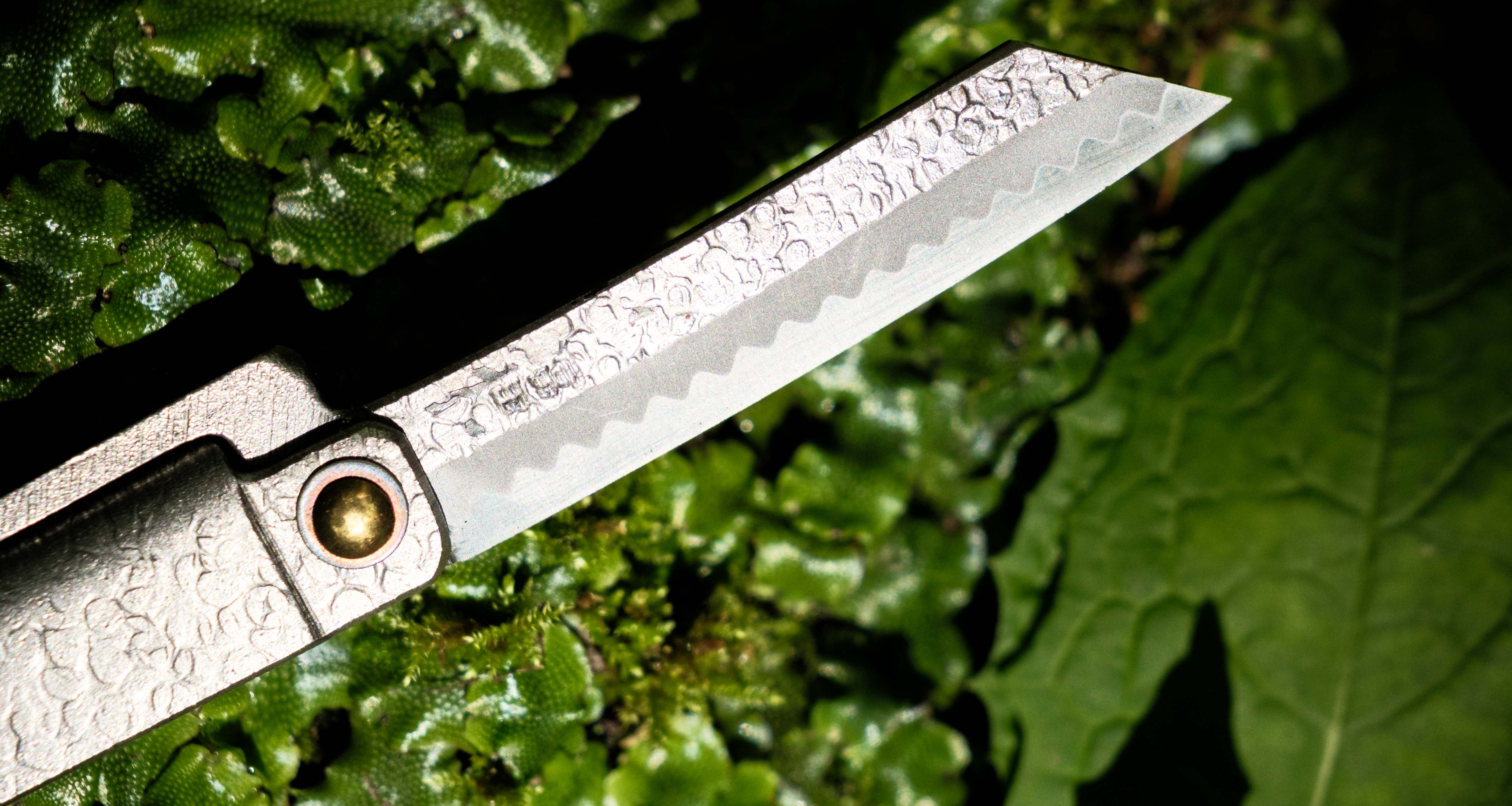
The blade has a high polish finish (also called migaki) and features a beautiful wavy line, marking a point where different layers of steel meet and seamlessly blend into each other. The subtle tsuchime hammered texture extends toward the spine, completing the aesthetic of this Higonokami.
HANDLE:
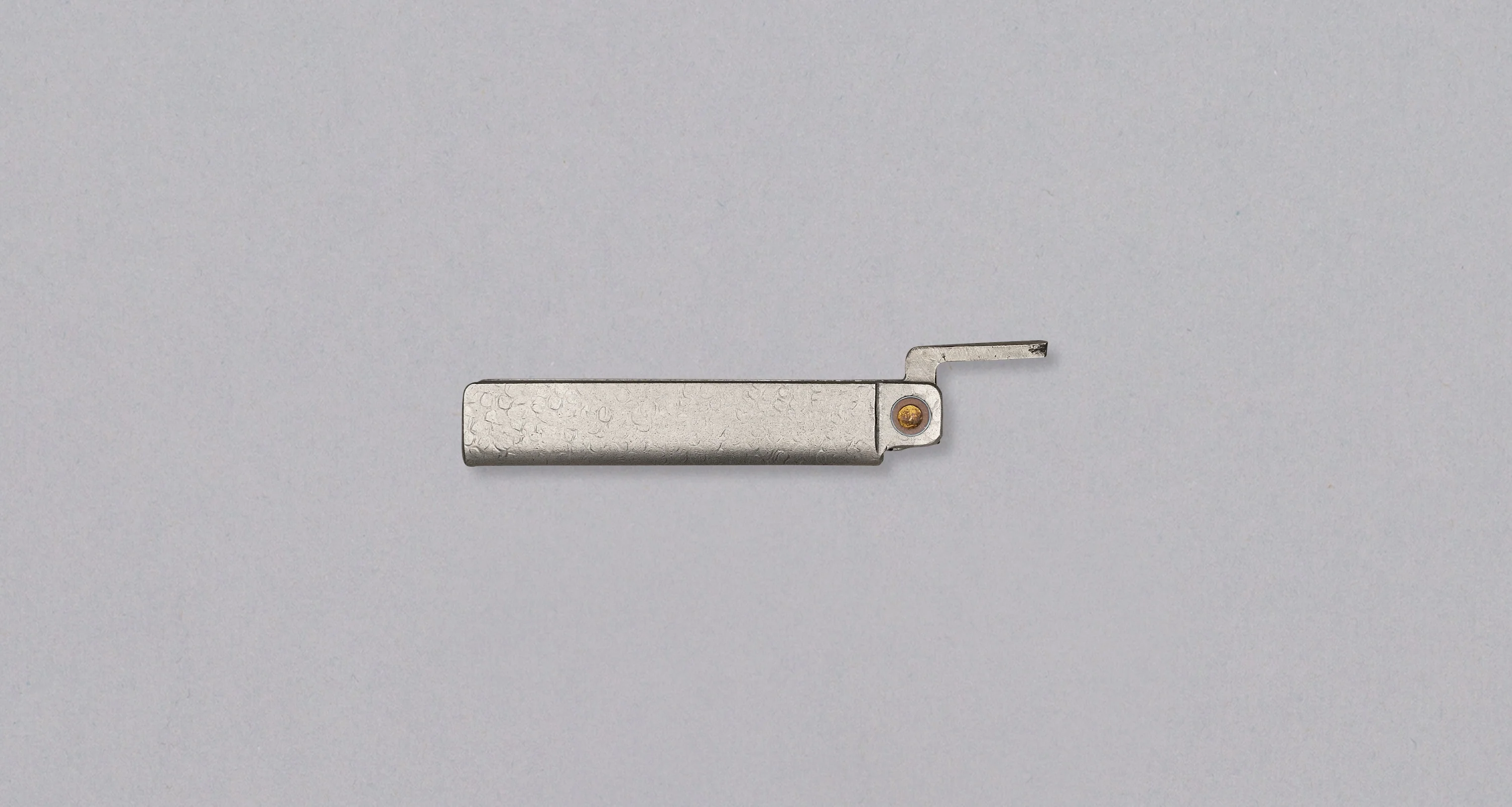
The handle of the Higonokami knife is traditionally made from folded metal, most commonly brass or steel, with no additional coverings. In Tomita Higonokami versions, deliberate hammer marks highlight the handcraftsmanship, giving each knife a unique character. The handle also features kanji characters: the larger characters spell Higonokami, while the smaller ones indicate the registered trademark and the maker’s name, Kanekoma.
LOCKING MECHANISM:
Higonokami has no locking system, it uses friction to keep the blade securely in place. The blade can be extracted from its brass handle by pushing down on the iconic level, called chikiri. During use, we should keep a thumb on the level to prevent the knife from folding.
Original: $158.14
-65%$158.14
$55.35More Images
Tomita Higonokami Shirogami #2 Tsuchime 75mm (3")
This Japanese Higonokami folding knife is all about straightforward design. The hand-hammered Tsuchime handle adds subtle texture and grip, while the Shirogami #2 steel offers easy maintenance and excellent sharpness retention.
Forged by the late Master Tomita Osamu, the knife blends traditional craftsmanship with clean, minimal form. Each piece comes in a paulownia wood box, hand-signed by the maker—a thoughtful detail that makes this knife feel extra special.
For everyday use or as a meaningful gift. It’s the kind of knife you’ll enjoy carrying with you, using for small daily tasks, or giving to someone who appreciates quality and tradition. Over time, the blade will develop a patina.
BLADE SHAPE:
Higonokami is the most famous Japanese pocket knife. It enjoys the same kind of fame in Japan as the Swiss army knife does in Switzerland and around the globe.
The shape of the Higonokami pocket knife is based on the katana, which is not a coincidence, since knife manufacturing is deeply embedded in the samurai tradition. The knife first appeared in 1896 in response to reforms in the 19th century, which banned the production of weapons, so blacksmiths began to produce knives, among others also these small pocket Higonokamis.
STEEL:
Shirogami #2 is a traditional high-carbon steel in Japanese knife manufacturing. Due to its high carbon content, it can reach a hardness of over 60 HRC, which means that blades forged from it will have excellent edge retention. The blades will sharpen easily and will be able to achieve a very fine sharpness, owing to the steel’s very pure composition. For the same reason, the steel isn’t corrosion resistant and the blade will develop a protective patina over time. Therefore, it’s recommended you wipe the blade dry between and after use and oil it regularly.
LAMINATION:
The core layer was sandwiched between 2 layers of softer steel. This technique is called san-mai and is used to protect the hard (but delicate) core from outside factors and physical impacts, which could lead to breakage.
GEOMETRY:
It has a double bevel (symmetrical) blade.
BLADE FINSIH:
The blade has a high polish finish (also called migaki) and features a beautiful wavy line, marking a point where different layers of steel meet and seamlessly blend into each other. The subtle tsuchime hammered texture extends toward the spine, completing the aesthetic of this Higonokami.
HANDLE:
The handle of the Higonokami knife is traditionally made from folded metal, most commonly brass or steel, with no additional coverings. In Tomita Higonokami versions, deliberate hammer marks highlight the handcraftsmanship, giving each knife a unique character. The handle also features kanji characters: the larger characters spell Higonokami, while the smaller ones indicate the registered trademark and the maker’s name, Kanekoma.
LOCKING MECHANISM:
Higonokami has no locking system, it uses friction to keep the blade securely in place. The blade can be extracted from its brass handle by pushing down on the iconic level, called chikiri. During use, we should keep a thumb on the level to prevent the knife from folding.
Product Information
Product Information
Shipping & Returns
Shipping & Returns
Description
This Japanese Higonokami folding knife is all about straightforward design. The hand-hammered Tsuchime handle adds subtle texture and grip, while the Shirogami #2 steel offers easy maintenance and excellent sharpness retention.
Forged by the late Master Tomita Osamu, the knife blends traditional craftsmanship with clean, minimal form. Each piece comes in a paulownia wood box, hand-signed by the maker—a thoughtful detail that makes this knife feel extra special.
For everyday use or as a meaningful gift. It’s the kind of knife you’ll enjoy carrying with you, using for small daily tasks, or giving to someone who appreciates quality and tradition. Over time, the blade will develop a patina.
BLADE SHAPE:
Higonokami is the most famous Japanese pocket knife. It enjoys the same kind of fame in Japan as the Swiss army knife does in Switzerland and around the globe.
The shape of the Higonokami pocket knife is based on the katana, which is not a coincidence, since knife manufacturing is deeply embedded in the samurai tradition. The knife first appeared in 1896 in response to reforms in the 19th century, which banned the production of weapons, so blacksmiths began to produce knives, among others also these small pocket Higonokamis.
STEEL:
Shirogami #2 is a traditional high-carbon steel in Japanese knife manufacturing. Due to its high carbon content, it can reach a hardness of over 60 HRC, which means that blades forged from it will have excellent edge retention. The blades will sharpen easily and will be able to achieve a very fine sharpness, owing to the steel’s very pure composition. For the same reason, the steel isn’t corrosion resistant and the blade will develop a protective patina over time. Therefore, it’s recommended you wipe the blade dry between and after use and oil it regularly.
LAMINATION:
The core layer was sandwiched between 2 layers of softer steel. This technique is called san-mai and is used to protect the hard (but delicate) core from outside factors and physical impacts, which could lead to breakage.
GEOMETRY:
It has a double bevel (symmetrical) blade.
BLADE FINSIH:
The blade has a high polish finish (also called migaki) and features a beautiful wavy line, marking a point where different layers of steel meet and seamlessly blend into each other. The subtle tsuchime hammered texture extends toward the spine, completing the aesthetic of this Higonokami.
HANDLE:
The handle of the Higonokami knife is traditionally made from folded metal, most commonly brass or steel, with no additional coverings. In Tomita Higonokami versions, deliberate hammer marks highlight the handcraftsmanship, giving each knife a unique character. The handle also features kanji characters: the larger characters spell Higonokami, while the smaller ones indicate the registered trademark and the maker’s name, Kanekoma.
LOCKING MECHANISM:
Higonokami has no locking system, it uses friction to keep the blade securely in place. The blade can be extracted from its brass handle by pushing down on the iconic level, called chikiri. During use, we should keep a thumb on the level to prevent the knife from folding.