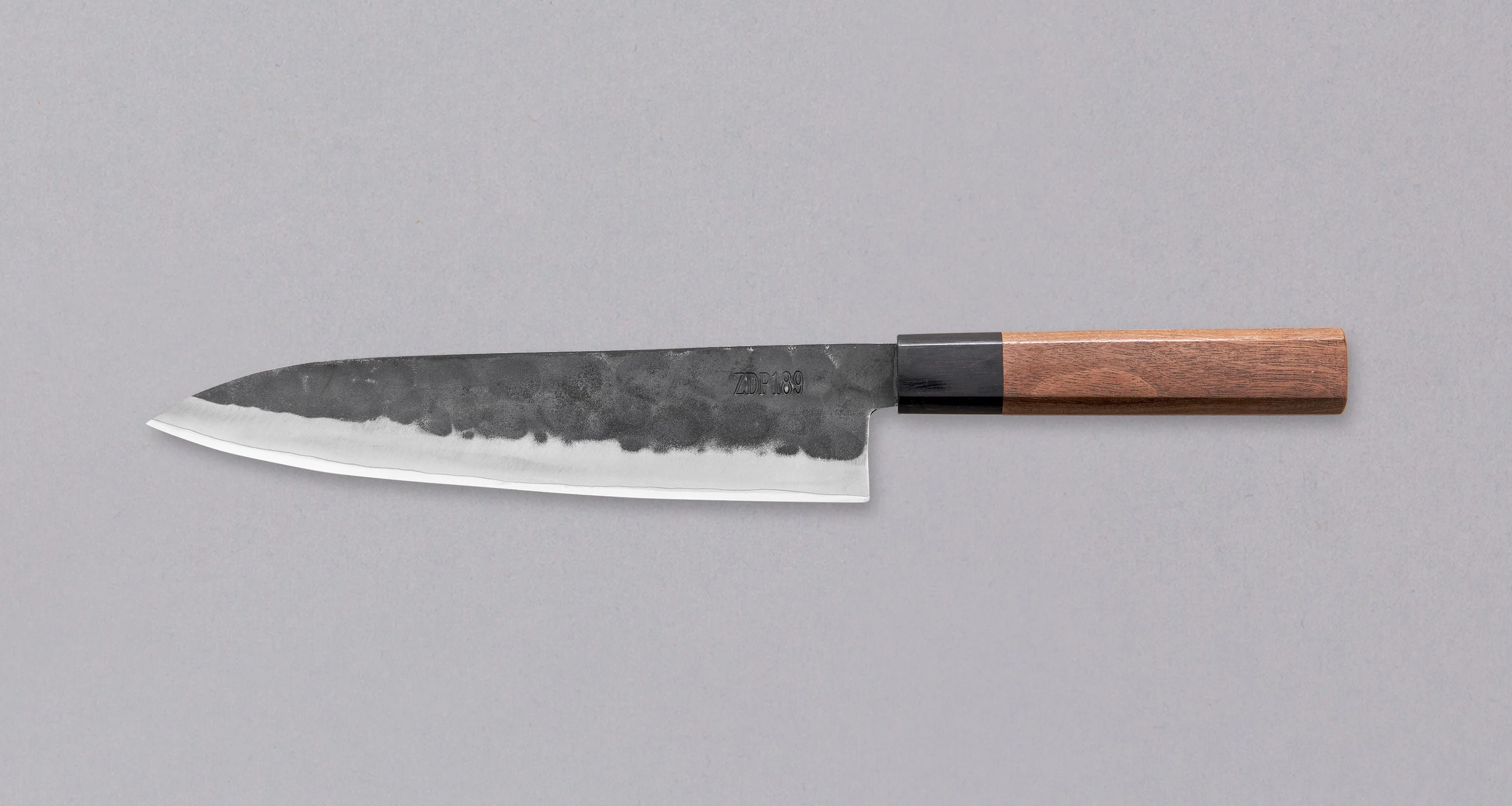
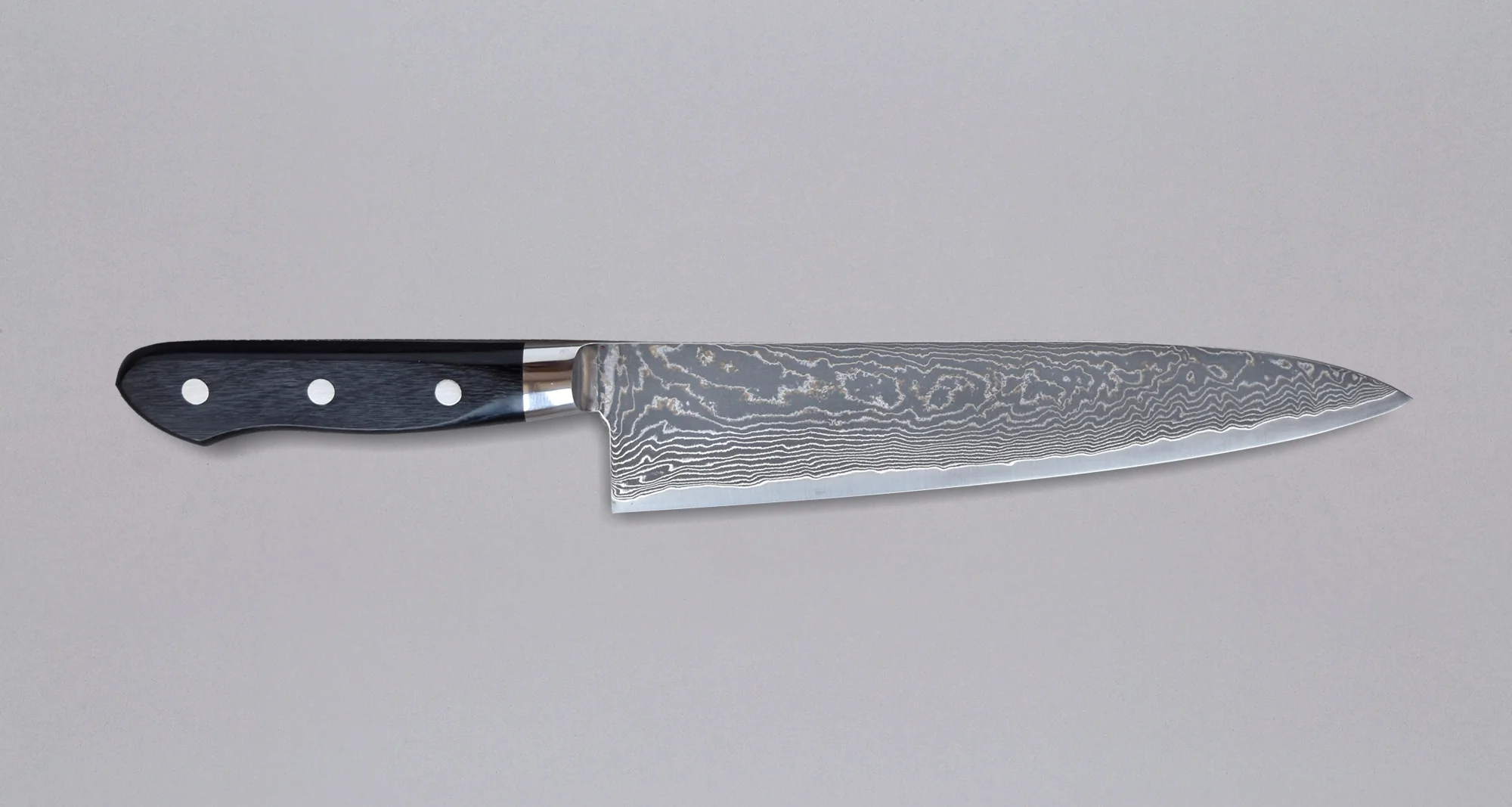
Tanaka Santoku Ginsanko Migaki 165mm (6.5")
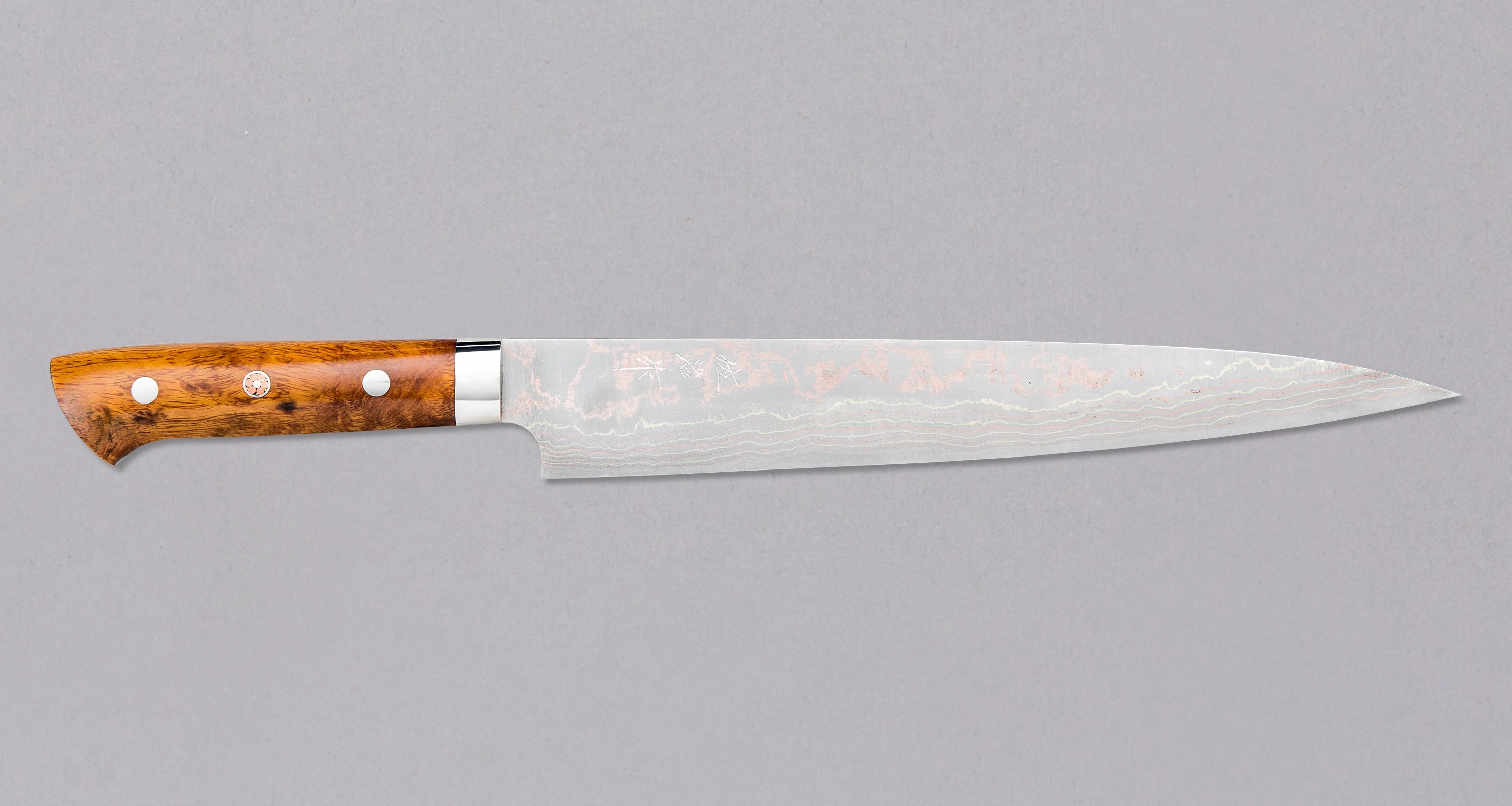
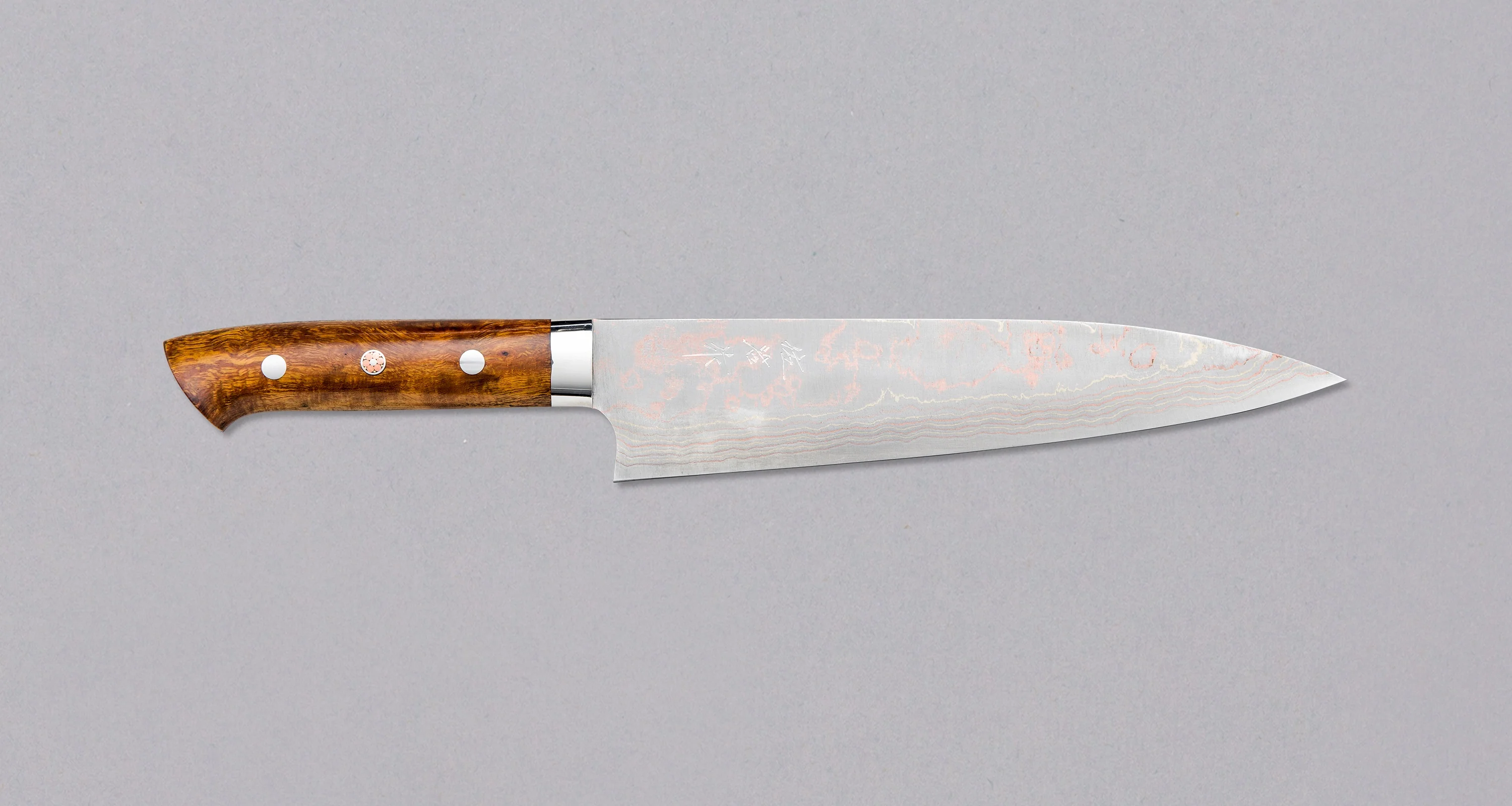
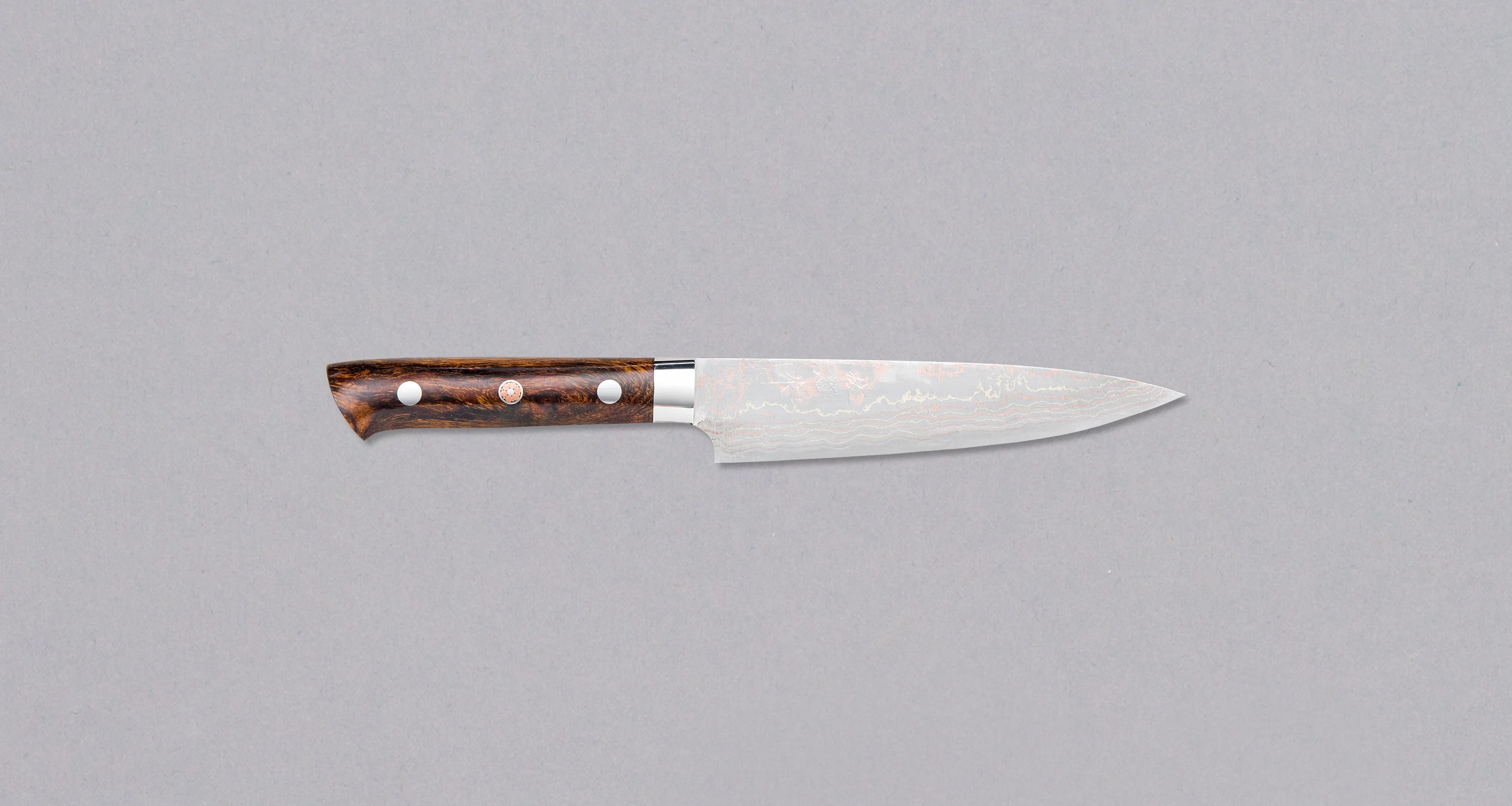
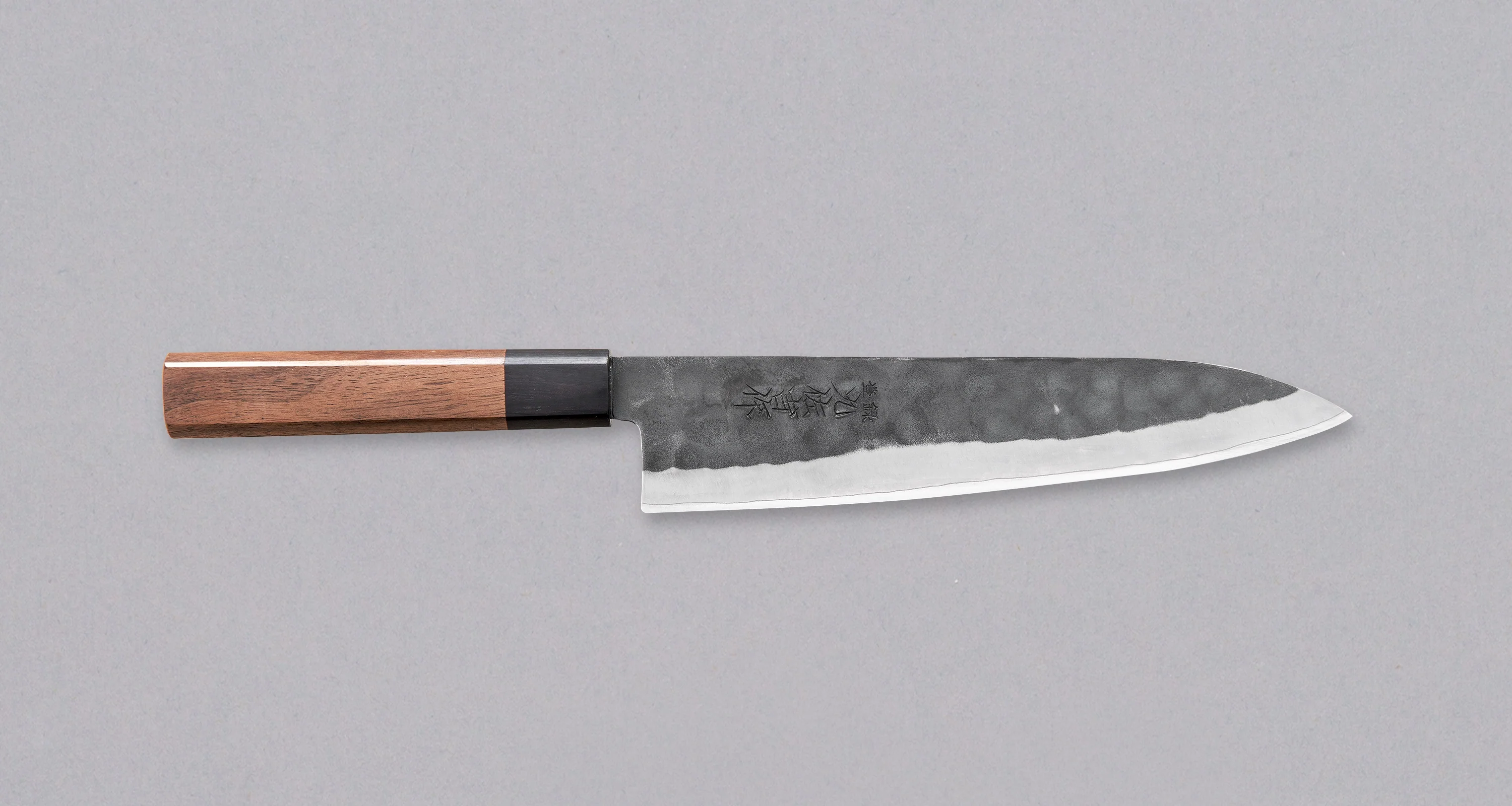
The Tanaka Santoku Ginsanko Migaki with a blade length of 165 mm is a versatile knife for preparing meat, vegetables and fish. Although it is a little shorter, it will not leave you indifferent, as it comes from the hands of master blacksmith Shigeki Tanaka.
BLADE SHAPE:
The Santoku knife, originating from Japan, is a versatile and multipurpose kitchen tool commonly found in Japanese households. It excels at various cutting and chopping tasks on the cutting board.
The name "Santoku" derives from the Japanese word "San," meaning "three," representing the knife's three virtues. It effortlessly handles three key ingredients: meat, fish, and vegetables. It is equally adept at slicing, chopping, and mincing, making it a versatile companion in the kitchen.
The Santoku knife is divided into three distinct parts. The tip is designed for intricate work, allowing for precise cuts. The cutting edge serves general cutting purposes, accommodating a range of tasks. Lastly, the heel of the knife is perfect for heavy-duty chopping.
With its rich heritage and versatile design, the Santoku knife is an indispensable tool for any kitchen, catering to a wide range of cutting needs with its three virtues.
STEEL:
Hitachi's Silver III steel, also named Ginsan steel or Ginsanko, which was hardened to around 63 HRC. Due to its high content of Chromium (Cr), Ginsan steel will resist corrosion very well. Despite it being a stainless steel, it feels and behaves very similarly to carbon steels, due to its extremely pure composition. This also means it will sharpen very well and easily.
LAMINATION:
The core layer consisting of the harder Ginsan steel was sandwiched between two layers of softer steel. This technique is called san-mai and is used to protect the hard (but delicate) core from outside factors and physical impacts, which could lead to breakage.
GEOMETRY:
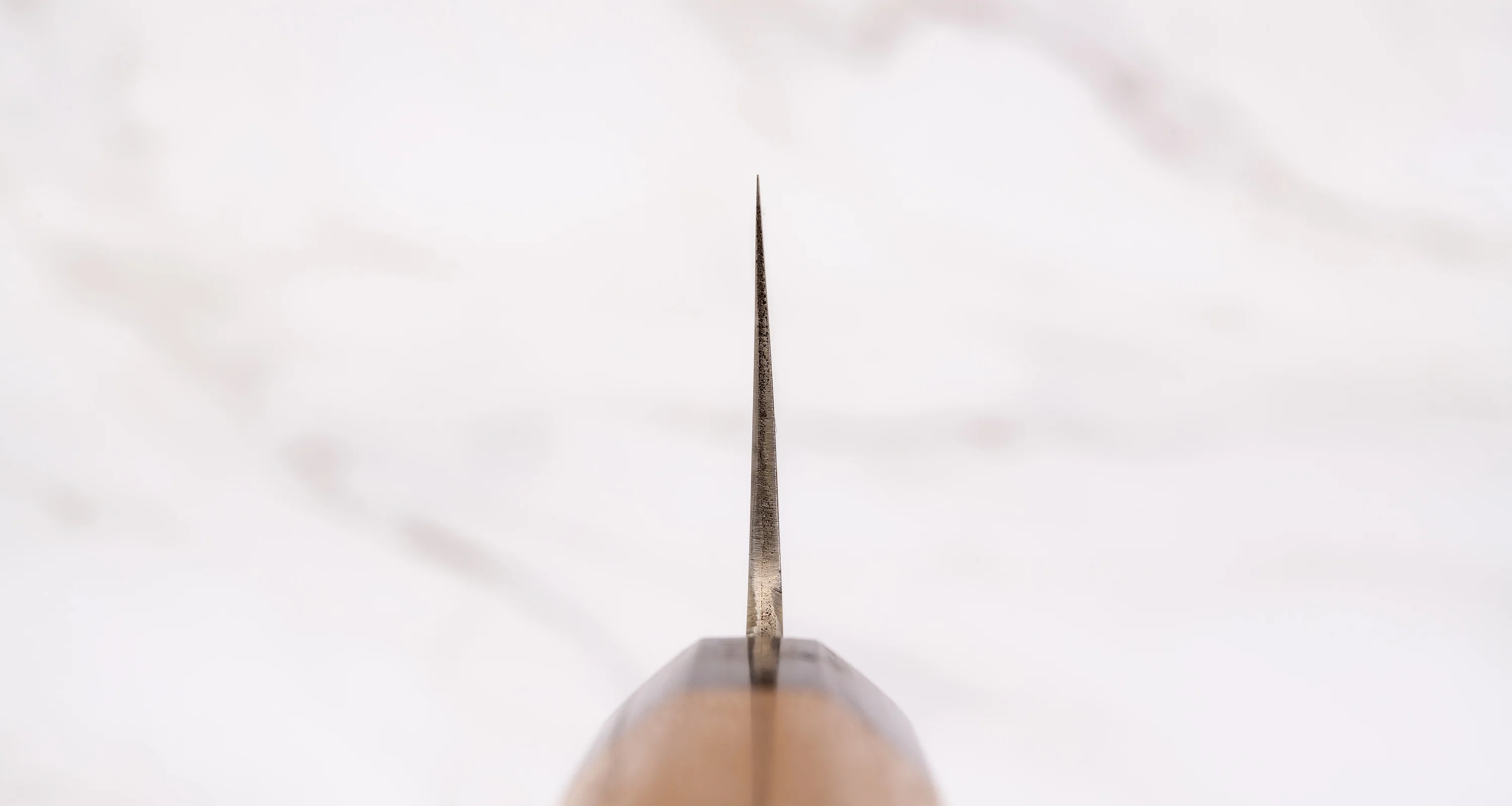
It has a double bevel (symmetrical) blade with a hamaguri grind. The blade features a slight distal taper from the handle towards the tip, allowing for precise control and effortless maneuverability.
BLADE FINISH:
Migaki is the polished finish on Japanese knives that gives them a minimalist and elegant look. The surface is thinned and polished to bring out the reflective and shiny nature of the blade. Polished finish causes the least damage to food cells during cutting and is best for the most delicate of tasks.
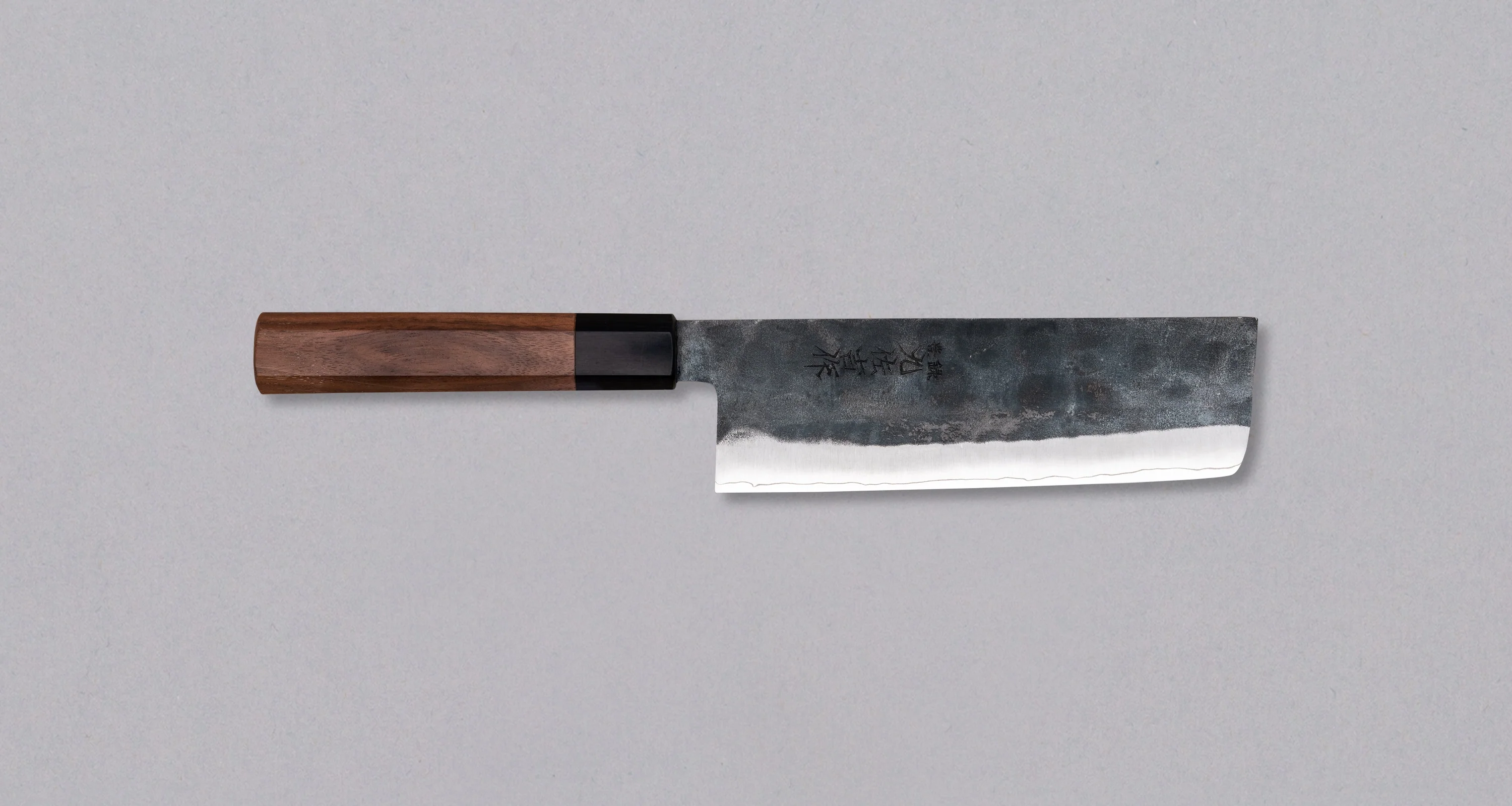
The only distinctive characteristic of the blade is a stunning, hand-carved kanji inscription: 名匠誠貴作 "Made By Master Craftsman Shigeki"
HANDLE:
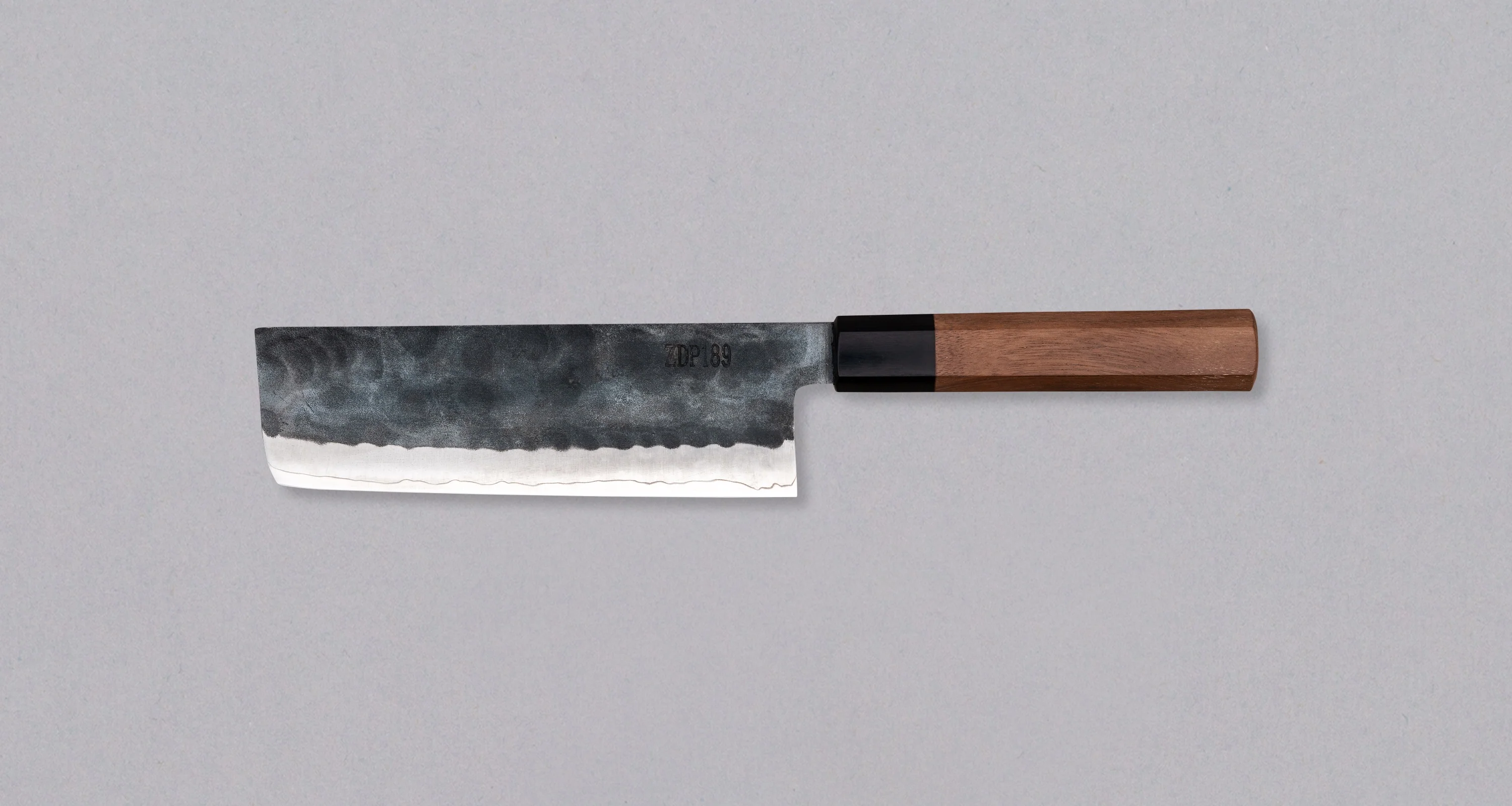
Lightweight Japanese (wa) style handle made of walnut wood has a beautiful ebony wood ferrule. Its octagonal shape ensures comfort and a tight grip for right- and left-handed cooks.
ABOUT THE BLACKSMITH:
The remarkable performance of kitchen knives may well be a synonym for Shigeki Tanaka. This young skilled craftsman that can boast with his radical design and mastery makes knives that are beloved by people all over the world. Shigeki Tanaka is the fourth generation blacksmith. Due to his excellent knife-making skills, Shigeki Tanaka is one of the most recognizable blacksmiths in the city of Miki.
Original: $281.13
-65%$281.13
$98.40More Images

Tanaka Santoku Ginsanko Migaki 165mm (6.5")
The Tanaka Santoku Ginsanko Migaki with a blade length of 165 mm is a versatile knife for preparing meat, vegetables and fish. Although it is a little shorter, it will not leave you indifferent, as it comes from the hands of master blacksmith Shigeki Tanaka.
BLADE SHAPE:
The Santoku knife, originating from Japan, is a versatile and multipurpose kitchen tool commonly found in Japanese households. It excels at various cutting and chopping tasks on the cutting board.
The name "Santoku" derives from the Japanese word "San," meaning "three," representing the knife's three virtues. It effortlessly handles three key ingredients: meat, fish, and vegetables. It is equally adept at slicing, chopping, and mincing, making it a versatile companion in the kitchen.
The Santoku knife is divided into three distinct parts. The tip is designed for intricate work, allowing for precise cuts. The cutting edge serves general cutting purposes, accommodating a range of tasks. Lastly, the heel of the knife is perfect for heavy-duty chopping.
With its rich heritage and versatile design, the Santoku knife is an indispensable tool for any kitchen, catering to a wide range of cutting needs with its three virtues.
STEEL:
Hitachi's Silver III steel, also named Ginsan steel or Ginsanko, which was hardened to around 63 HRC. Due to its high content of Chromium (Cr), Ginsan steel will resist corrosion very well. Despite it being a stainless steel, it feels and behaves very similarly to carbon steels, due to its extremely pure composition. This also means it will sharpen very well and easily.
LAMINATION:
The core layer consisting of the harder Ginsan steel was sandwiched between two layers of softer steel. This technique is called san-mai and is used to protect the hard (but delicate) core from outside factors and physical impacts, which could lead to breakage.
GEOMETRY:
It has a double bevel (symmetrical) blade with a hamaguri grind. The blade features a slight distal taper from the handle towards the tip, allowing for precise control and effortless maneuverability.
BLADE FINISH:
Migaki is the polished finish on Japanese knives that gives them a minimalist and elegant look. The surface is thinned and polished to bring out the reflective and shiny nature of the blade. Polished finish causes the least damage to food cells during cutting and is best for the most delicate of tasks.
The only distinctive characteristic of the blade is a stunning, hand-carved kanji inscription: 名匠誠貴作 "Made By Master Craftsman Shigeki"
HANDLE:
Lightweight Japanese (wa) style handle made of walnut wood has a beautiful ebony wood ferrule. Its octagonal shape ensures comfort and a tight grip for right- and left-handed cooks.
ABOUT THE BLACKSMITH:
The remarkable performance of kitchen knives may well be a synonym for Shigeki Tanaka. This young skilled craftsman that can boast with his radical design and mastery makes knives that are beloved by people all over the world. Shigeki Tanaka is the fourth generation blacksmith. Due to his excellent knife-making skills, Shigeki Tanaka is one of the most recognizable blacksmiths in the city of Miki.
Product Information
Product Information
Shipping & Returns
Shipping & Returns
Description
The Tanaka Santoku Ginsanko Migaki with a blade length of 165 mm is a versatile knife for preparing meat, vegetables and fish. Although it is a little shorter, it will not leave you indifferent, as it comes from the hands of master blacksmith Shigeki Tanaka.
BLADE SHAPE:
The Santoku knife, originating from Japan, is a versatile and multipurpose kitchen tool commonly found in Japanese households. It excels at various cutting and chopping tasks on the cutting board.
The name "Santoku" derives from the Japanese word "San," meaning "three," representing the knife's three virtues. It effortlessly handles three key ingredients: meat, fish, and vegetables. It is equally adept at slicing, chopping, and mincing, making it a versatile companion in the kitchen.
The Santoku knife is divided into three distinct parts. The tip is designed for intricate work, allowing for precise cuts. The cutting edge serves general cutting purposes, accommodating a range of tasks. Lastly, the heel of the knife is perfect for heavy-duty chopping.
With its rich heritage and versatile design, the Santoku knife is an indispensable tool for any kitchen, catering to a wide range of cutting needs with its three virtues.
STEEL:
Hitachi's Silver III steel, also named Ginsan steel or Ginsanko, which was hardened to around 63 HRC. Due to its high content of Chromium (Cr), Ginsan steel will resist corrosion very well. Despite it being a stainless steel, it feels and behaves very similarly to carbon steels, due to its extremely pure composition. This also means it will sharpen very well and easily.
LAMINATION:
The core layer consisting of the harder Ginsan steel was sandwiched between two layers of softer steel. This technique is called san-mai and is used to protect the hard (but delicate) core from outside factors and physical impacts, which could lead to breakage.
GEOMETRY:
It has a double bevel (symmetrical) blade with a hamaguri grind. The blade features a slight distal taper from the handle towards the tip, allowing for precise control and effortless maneuverability.
BLADE FINISH:
Migaki is the polished finish on Japanese knives that gives them a minimalist and elegant look. The surface is thinned and polished to bring out the reflective and shiny nature of the blade. Polished finish causes the least damage to food cells during cutting and is best for the most delicate of tasks.
The only distinctive characteristic of the blade is a stunning, hand-carved kanji inscription: 名匠誠貴作 "Made By Master Craftsman Shigeki"
HANDLE:
Lightweight Japanese (wa) style handle made of walnut wood has a beautiful ebony wood ferrule. Its octagonal shape ensures comfort and a tight grip for right- and left-handed cooks.
ABOUT THE BLACKSMITH:
The remarkable performance of kitchen knives may well be a synonym for Shigeki Tanaka. This young skilled craftsman that can boast with his radical design and mastery makes knives that are beloved by people all over the world. Shigeki Tanaka is the fourth generation blacksmith. Due to his excellent knife-making skills, Shigeki Tanaka is one of the most recognizable blacksmiths in the city of Miki.