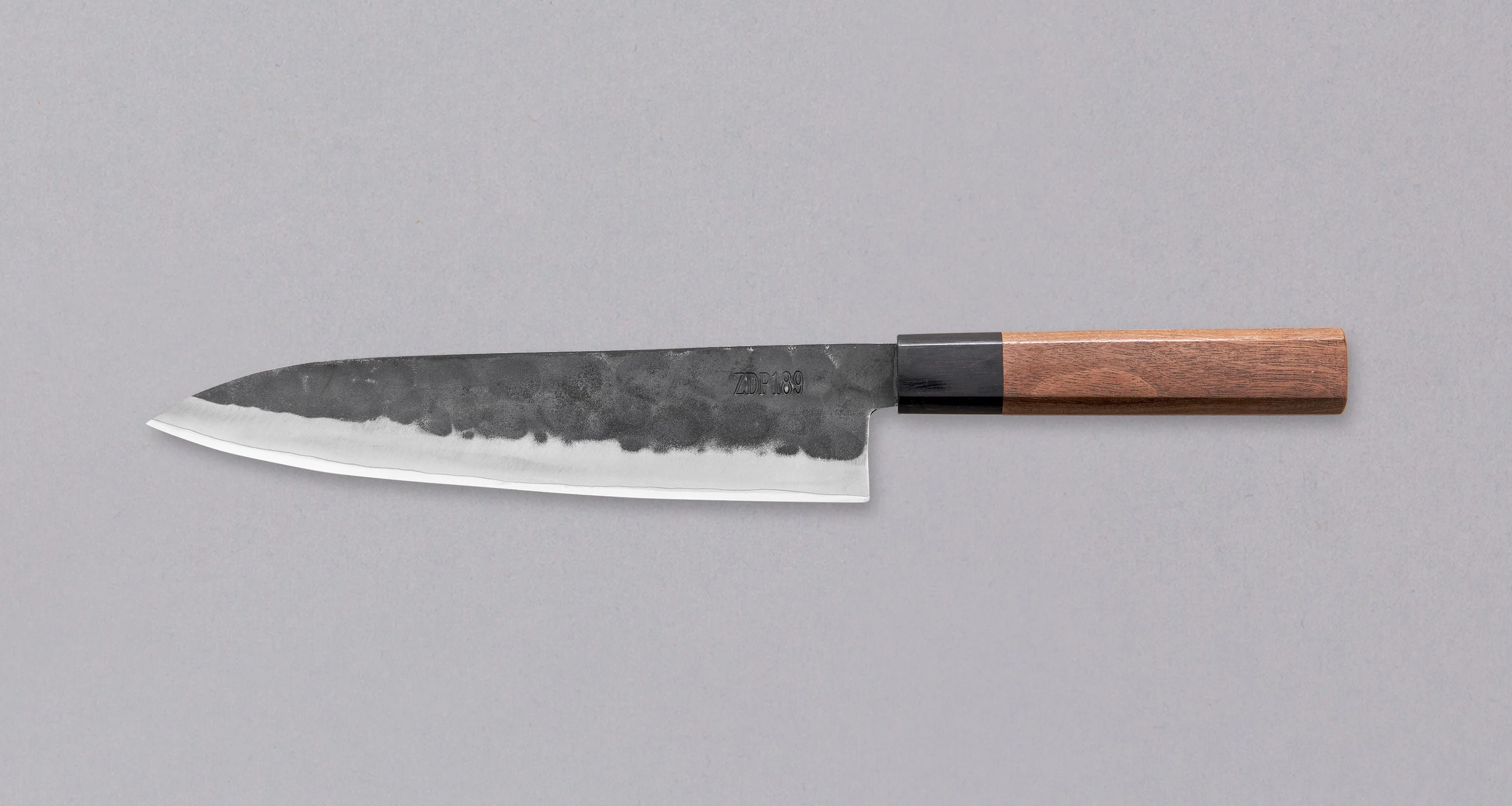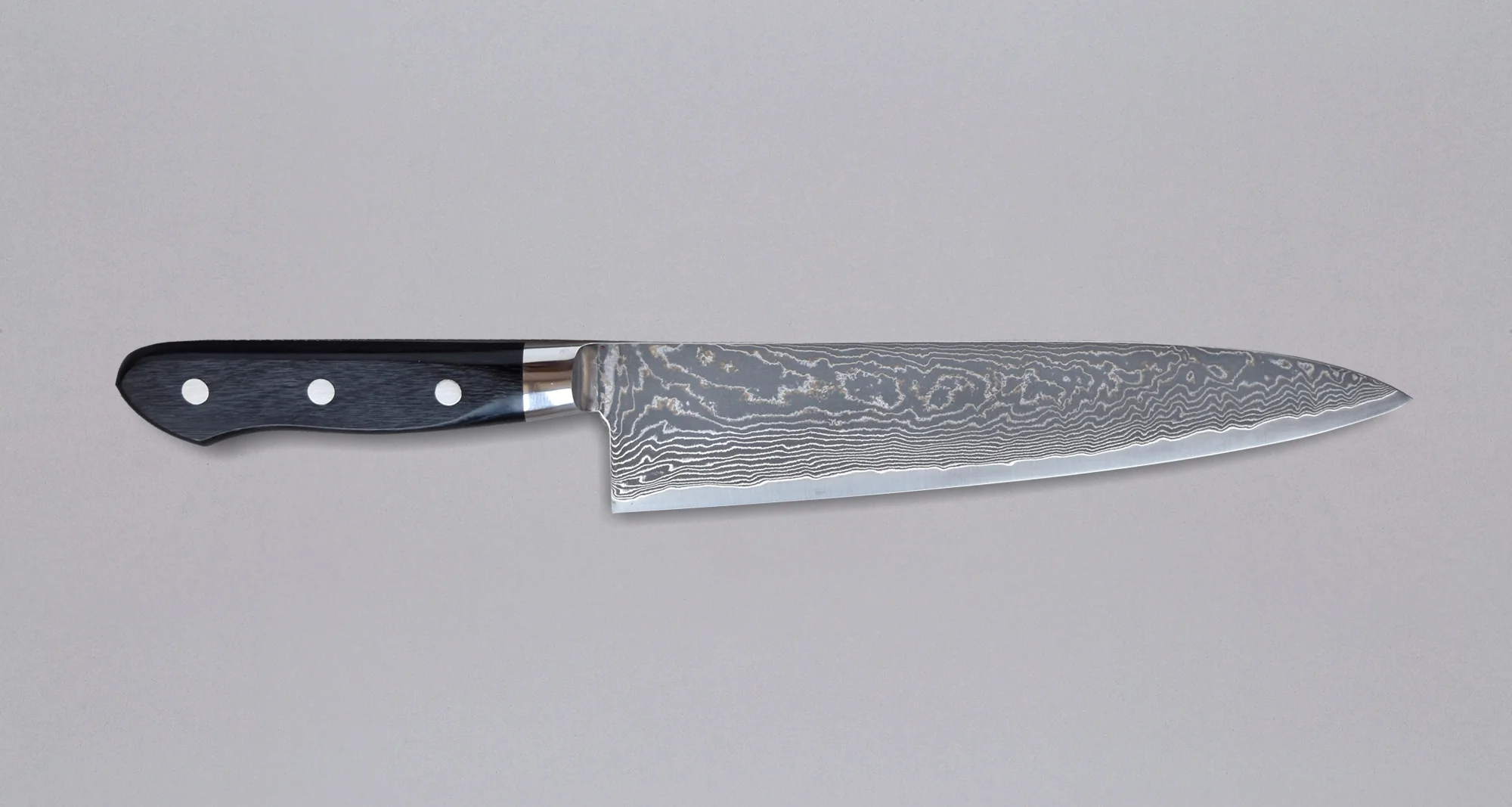
Shirasagi Kiritsuke Deba Aogami #2 Kuro-uchi 180mm (7.1")
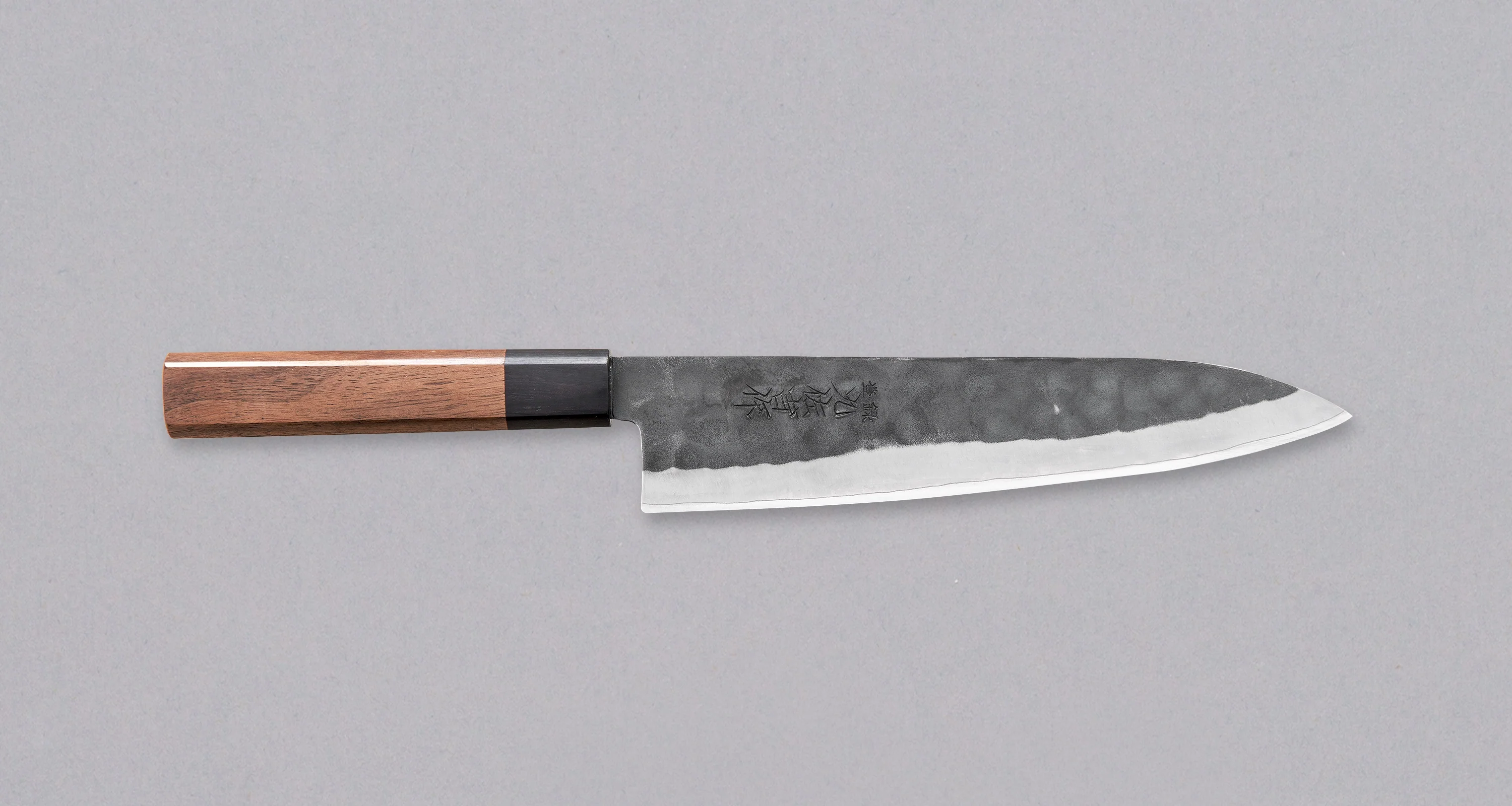
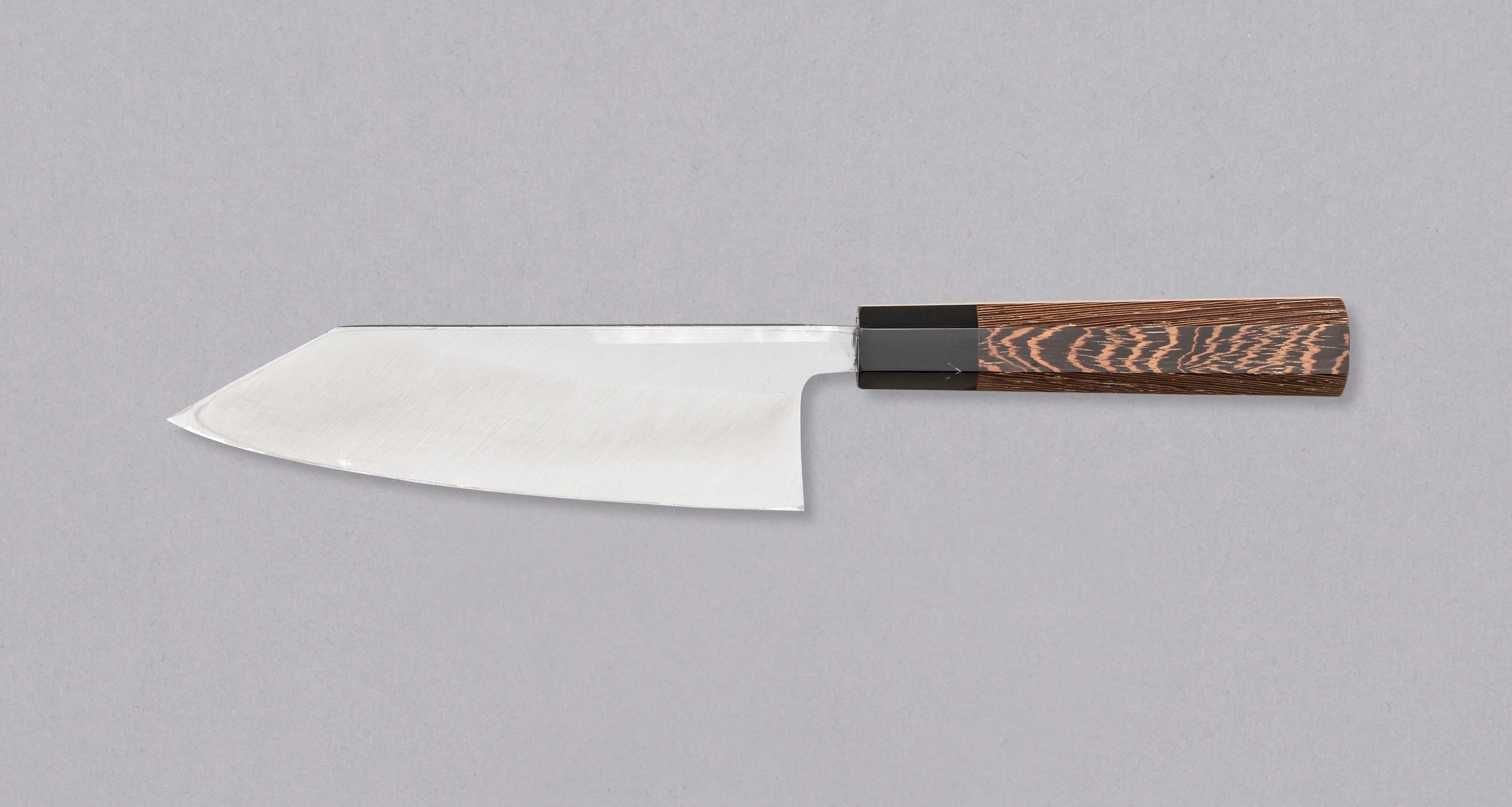
Shirasagi Kiritsuke Deba Aogami #2 Kuro-uchi 180mm is a Japanese kitchen knife designed for heavy-duty work for skilled professionals or experienced home users. Especially recommended for "big game" fishing enthusiasts!
The weight and geometry of the blade make it suited for working with larger fish, while the K-tip allows better control and visibility during filleting, making it perfect for smaller fish and deboning poultry, as well.
|
Traditional Japanese knives are made from steels high in carbon content, and this is mainly for two reasons:
Aogami #2 is one of the best in the high-carbon class, with added elements such as chromium (Cr) and tungsten (W) for improved corrosion and wear resistance, all while having an awesomely fine sharpness and being able to get resharpened easily. |
BLADE SHAPE:
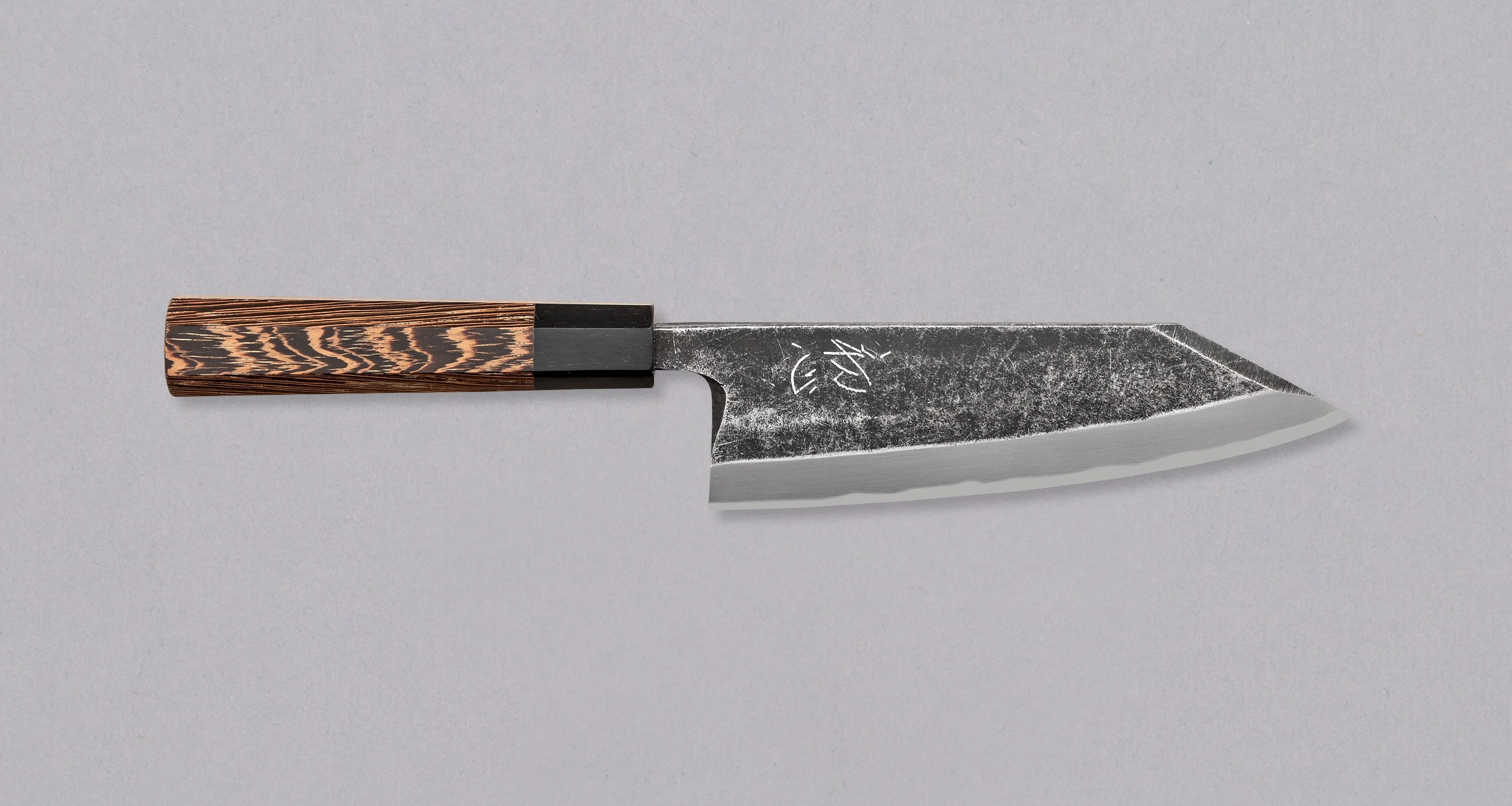
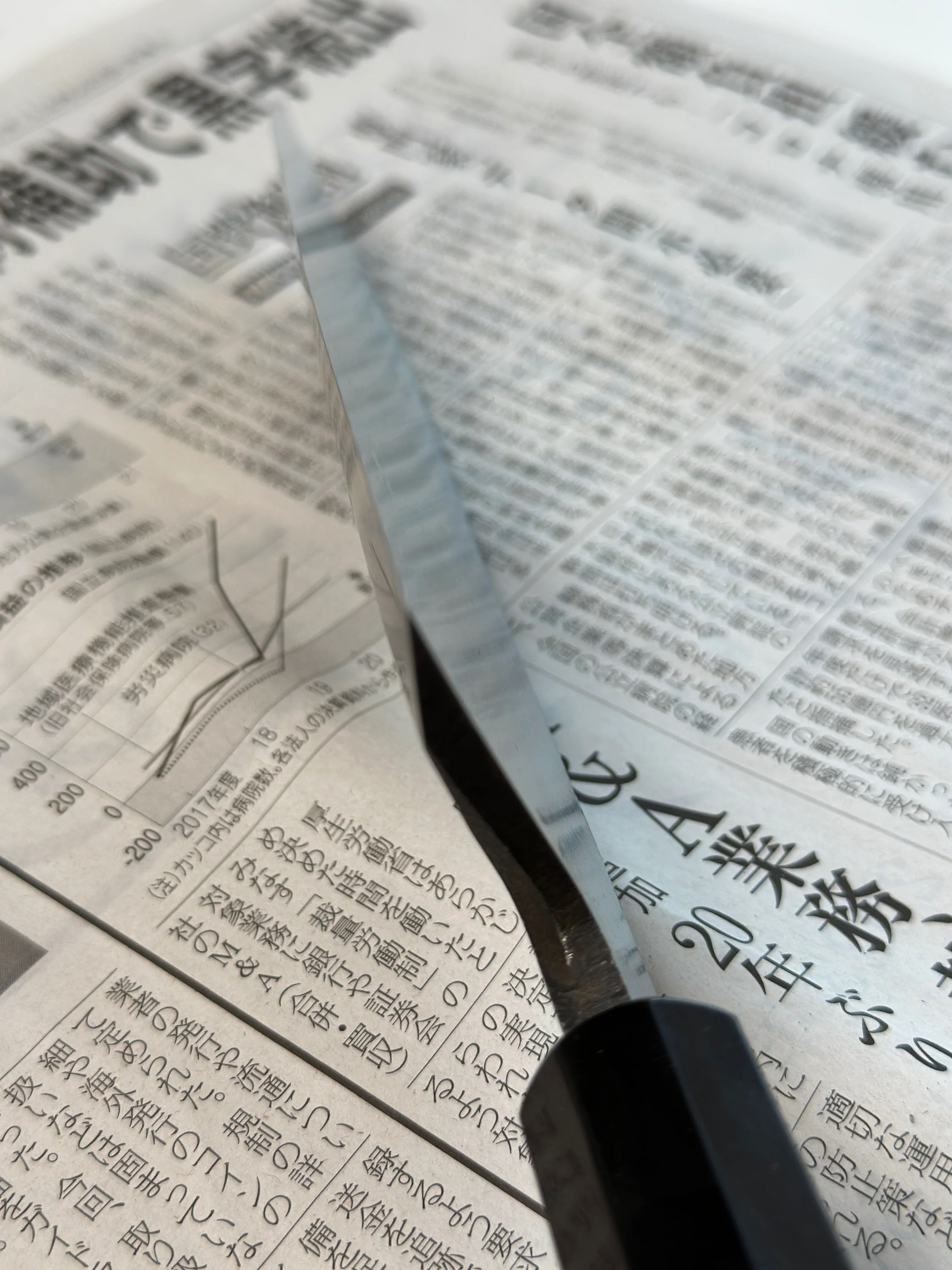
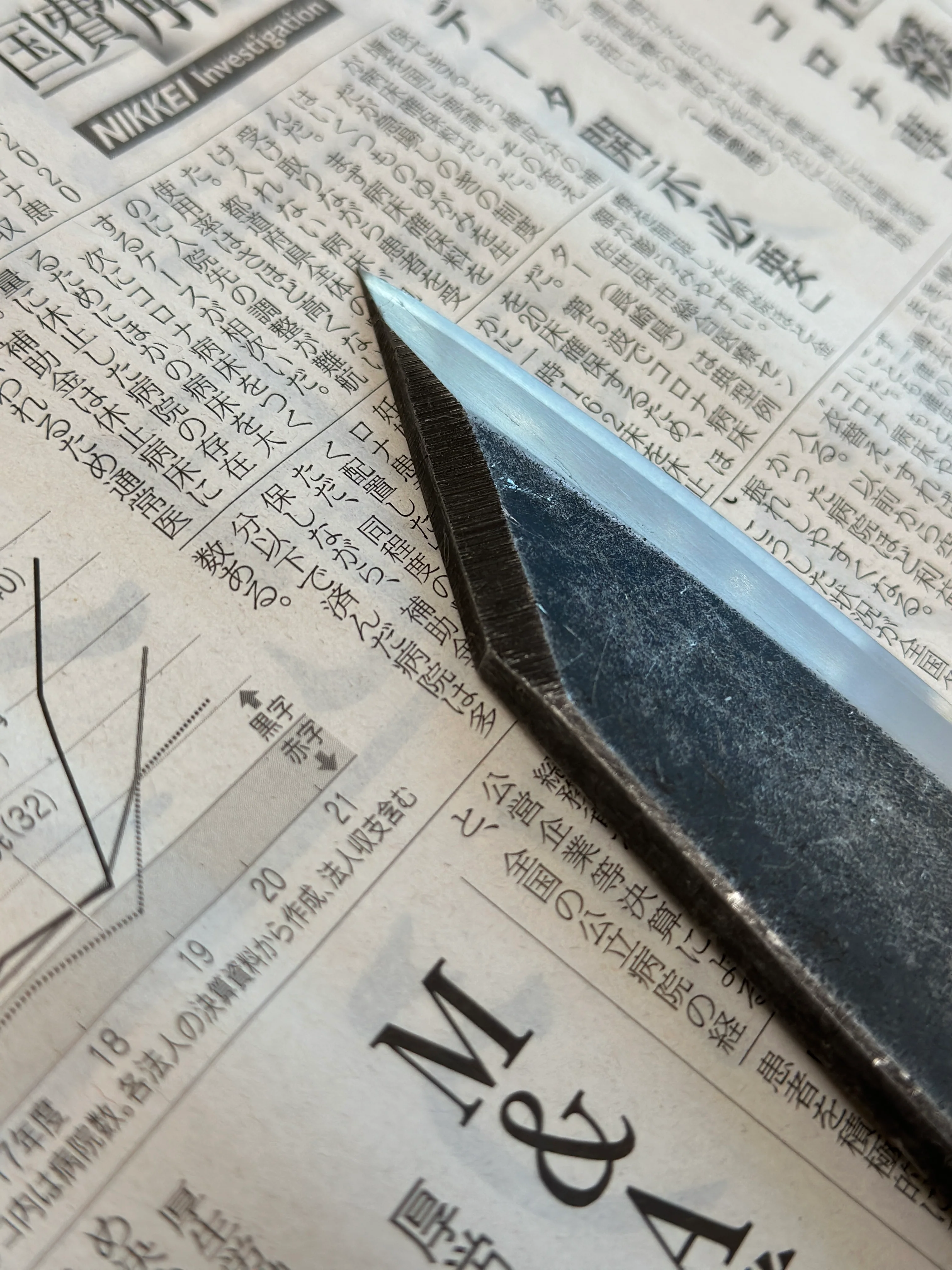
This deba has a unique look for a single-bevel knife as it has a pointed, diamond-shaped tip, also known as a K-tip, typically associated with kiritsuke knives. The shape and geometry of the blade allow the use of the knife in several ways: filleting larger fish (weighing over 3 kg), filleting smaller fish (such as sardines or mackerels), and deboning poultry.
- The Kiritsuke tip gives a better view of the tip's movement during cutting, ensuring more exact work.
- The thin and sharp front tip is also excellent for deboning chicken, where we need a clear view and guidance of the blade.
- The knife is sturdy and extremely precise - it has a heavy, strong blade at the heel and a fine, firm front tip.
- The thickness of the blade allows safe filleting without chipping the cutting edge.
STEEL:
Aogami #2 is a very popular steel in Japanese knife making and one of the finest high-carbon steels, meaning the knives forged from it will have exceptional edge retention and also sharpen very easily. At the same time, it is less resistant to corrosion, meaning the blade can develop a patina, while longer exposure to water or other corrosives could also lead to rusting. This is improved to some extent with the addition of chromium and tungsten, but it’s still a high-carbon steel that should be maintained accordingly (⚠️ read more about knife maintenance here). Aogami #2 steel is composed of carbon (C) 1.1 %, chromium (Cr) 0.5 %, manganese (Mn) 0.3%, and tungsten (W) 1.5%.
LAMINATION:
Ni-mai lamination method is used on single-bevel knives, where a sheet of softer metal is forge-welded onto the shinogi (front) side of the blade’s hard core. This reinforces the blade’s structural integrity and consequently makes it tougher.
GEOMETRY:
The knife is a single-bevel blade and is heavier and stronger at the handle and thinner and more precise at the tip. This blade shape makes the knife easier to use because it is very responsive, easily maneuverable, and nicely balanced. This type of blade design is also called distal taper - you can read more about it in the article on blade geometry.
BLADE FINISH:
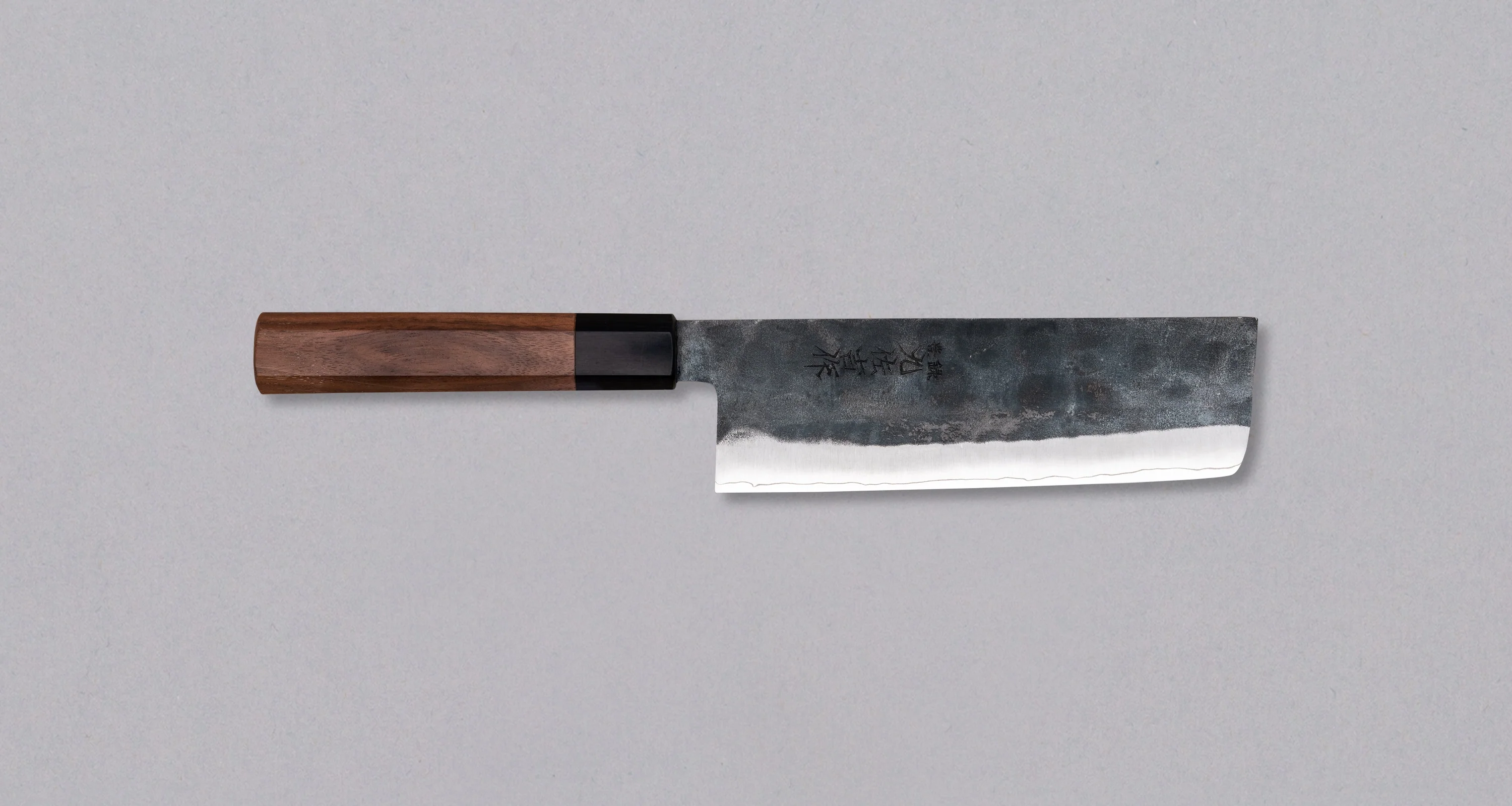
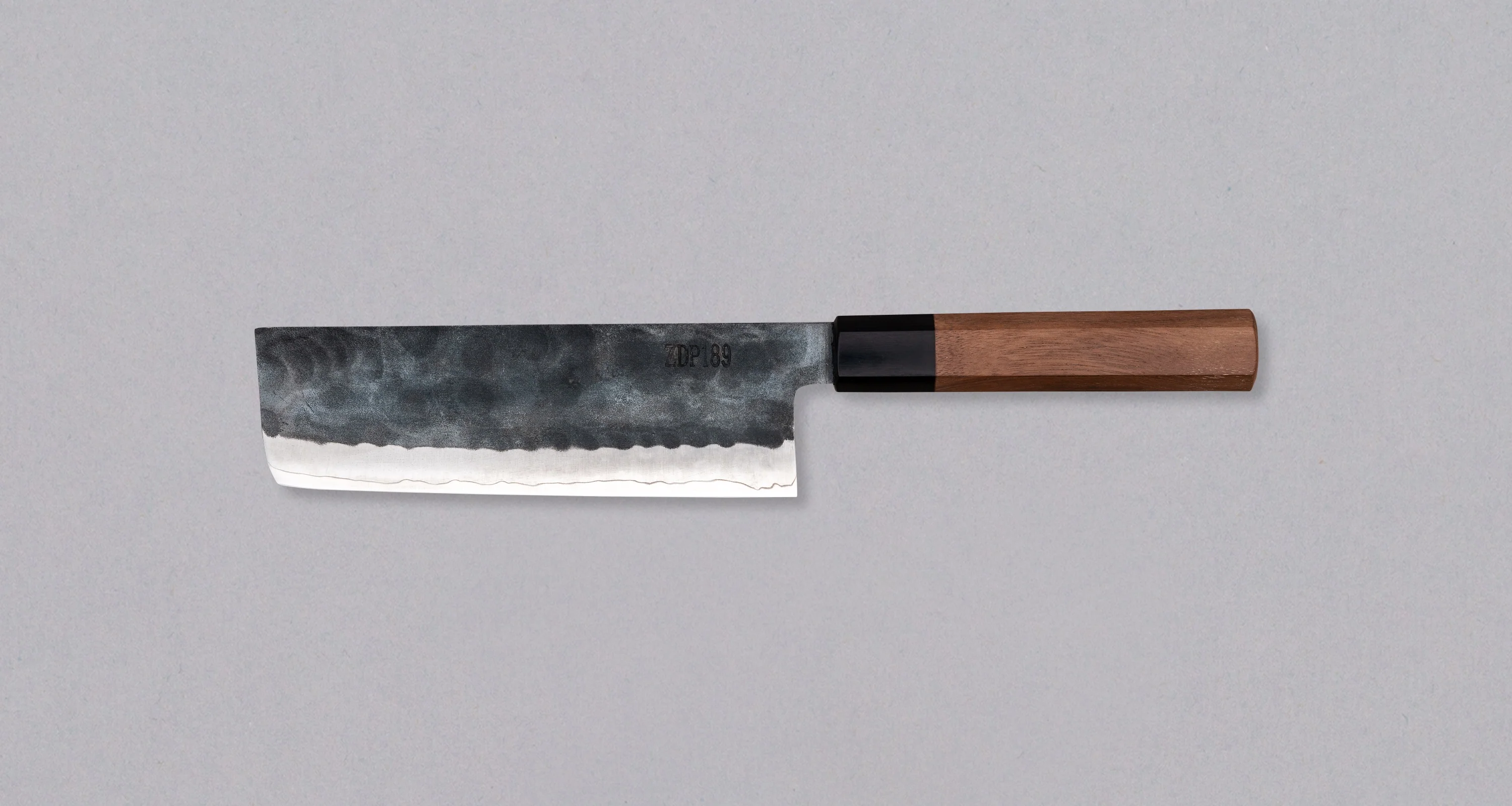
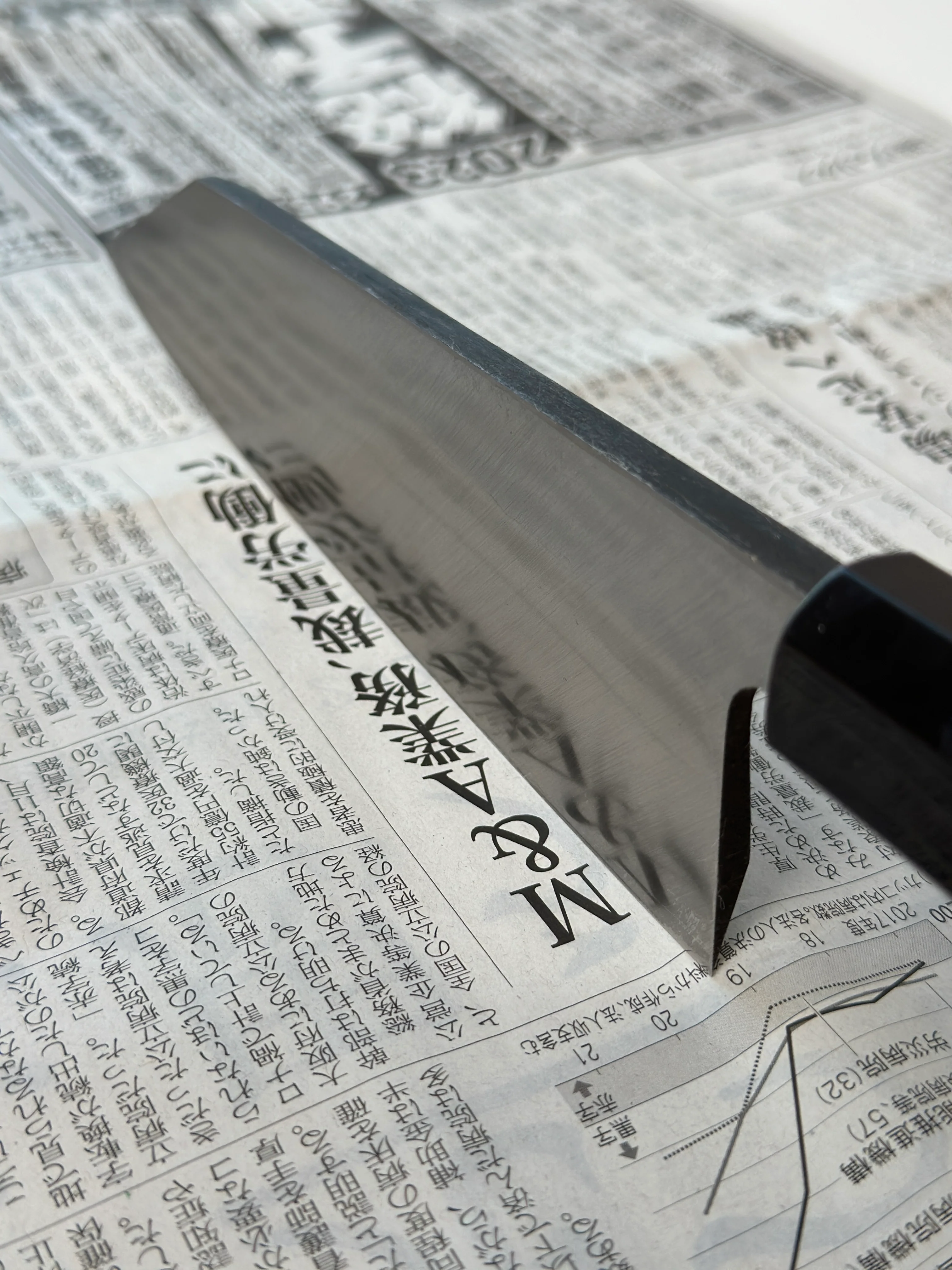
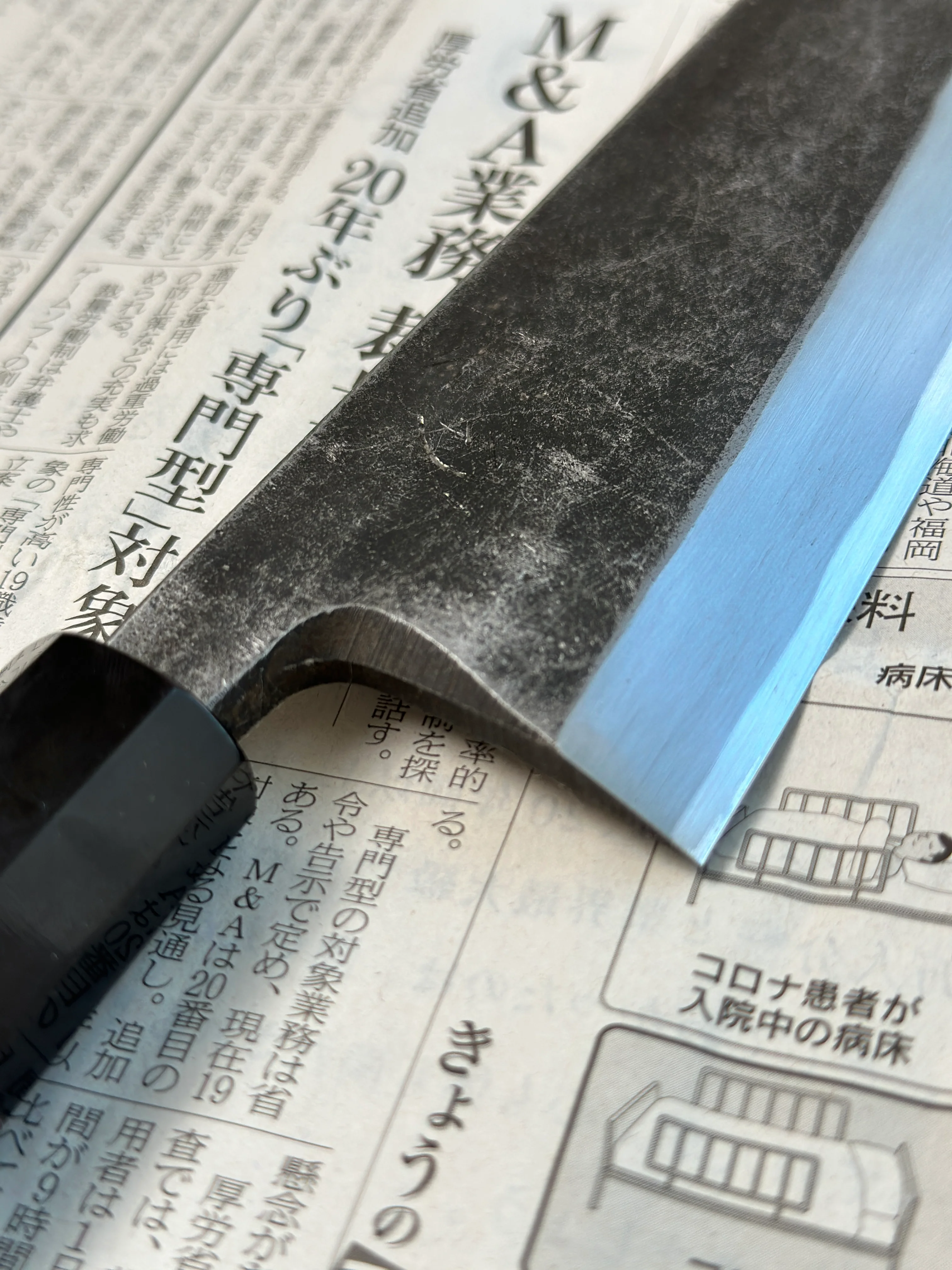
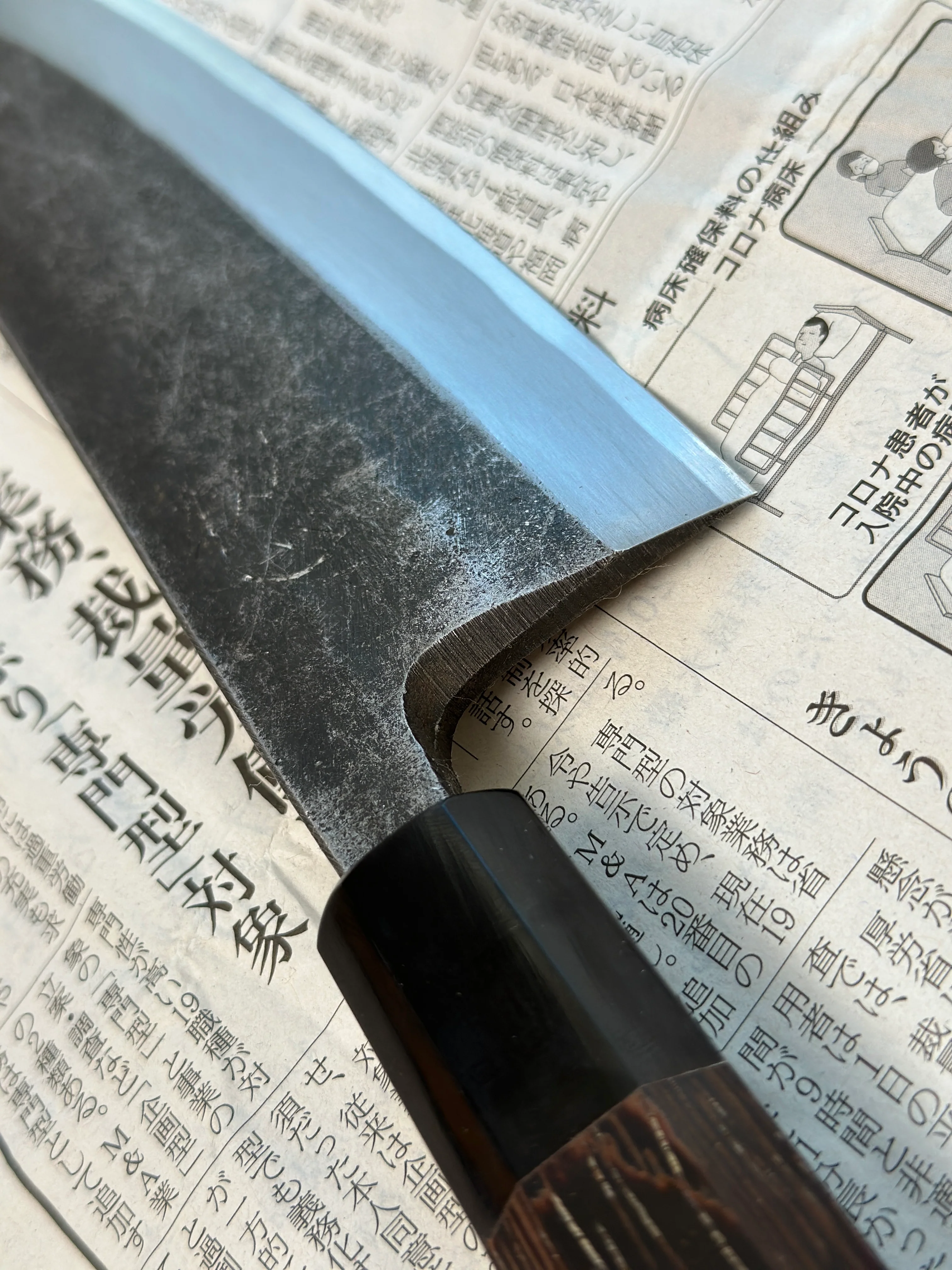
Traditional knives are usually polished to a high shine (migaki look), making this kuro-uchi deba stand out from other single-bevel knives in terms of the final look of the blade. The Kuro-uchi finish on Aogami #2 blades provides a protective layer against rust and other external elements that can damage the surface.
The upper part was left untreated – we call this a kuro-uchi finish (kuro - ‘black’), which is a layer of raw, protective patina on the outer steel. It gets a nice contrast from the kanji that bears the name of the smithy, Hatsukokoro (初心). The kireha (lower part of the blade or ‘blade road’) has a classic cloudy kasumi finish.
HANDLE:
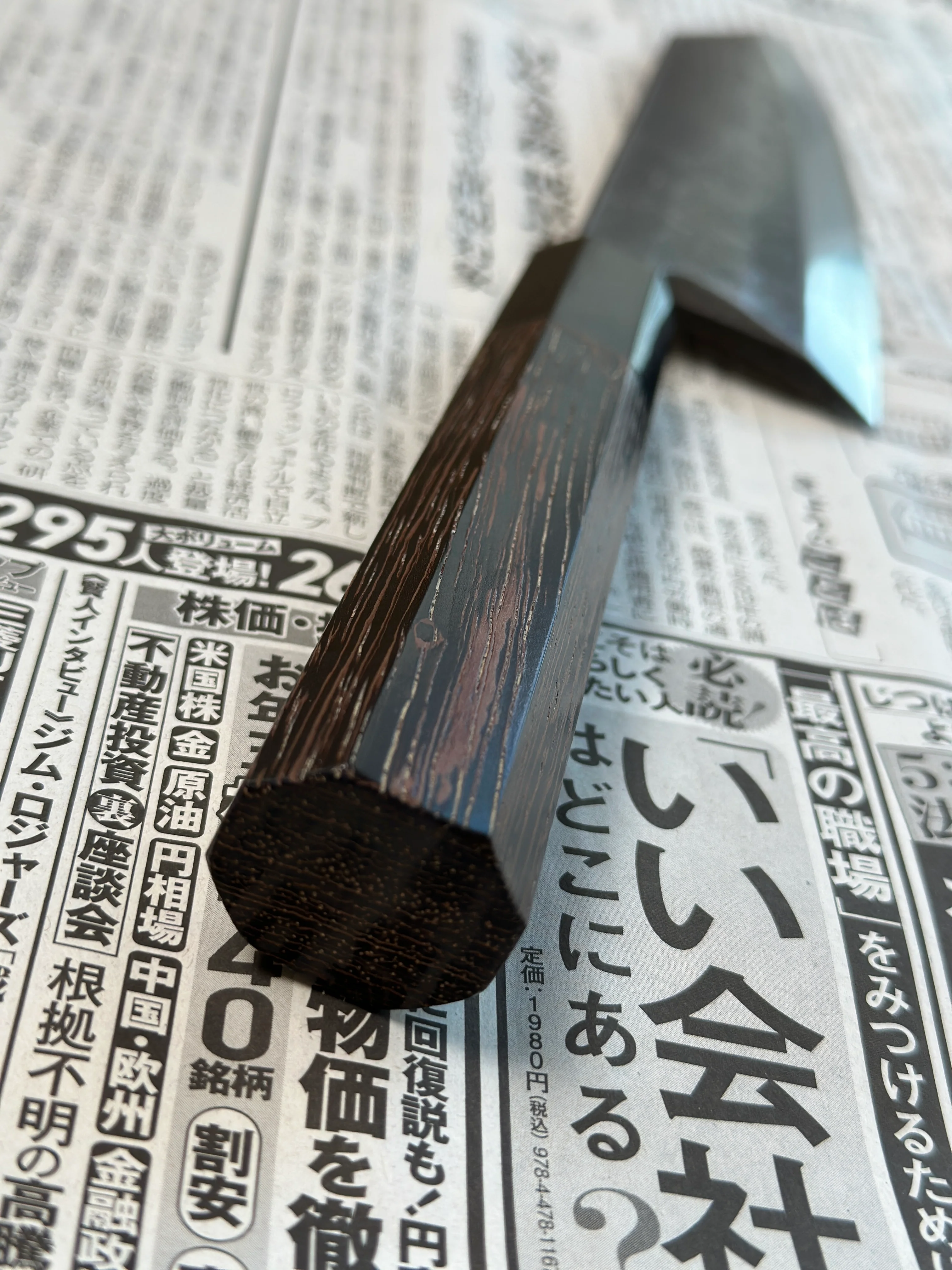
Japanese (Wa) style handle made out of wenge wood with a buffalo horn ferrule. The octagonal handle allows a compact and firm grip during the filleting process without slipping or causing any injuries, which is critical when working with raw fish.
|
A traditional feature of wooden handles is that over time the soft surface of the wood will lose its smoothness and shine, giving it an even better grip and making it even safer to use with wet hands. This extra friction of the "roughened" surface ensures that greasy, wet, and slippery palms don't slide forward on the blade during use. |
Original: $386.56
-65%$386.56
$135.30More Images
Shirasagi Kiritsuke Deba Aogami #2 Kuro-uchi 180mm (7.1")
Shirasagi Kiritsuke Deba Aogami #2 Kuro-uchi 180mm is a Japanese kitchen knife designed for heavy-duty work for skilled professionals or experienced home users. Especially recommended for "big game" fishing enthusiasts!
The weight and geometry of the blade make it suited for working with larger fish, while the K-tip allows better control and visibility during filleting, making it perfect for smaller fish and deboning poultry, as well.
|
Traditional Japanese knives are made from steels high in carbon content, and this is mainly for two reasons:
Aogami #2 is one of the best in the high-carbon class, with added elements such as chromium (Cr) and tungsten (W) for improved corrosion and wear resistance, all while having an awesomely fine sharpness and being able to get resharpened easily. |
BLADE SHAPE:
This deba has a unique look for a single-bevel knife as it has a pointed, diamond-shaped tip, also known as a K-tip, typically associated with kiritsuke knives. The shape and geometry of the blade allow the use of the knife in several ways: filleting larger fish (weighing over 3 kg), filleting smaller fish (such as sardines or mackerels), and deboning poultry.
- The Kiritsuke tip gives a better view of the tip's movement during cutting, ensuring more exact work.
- The thin and sharp front tip is also excellent for deboning chicken, where we need a clear view and guidance of the blade.
- The knife is sturdy and extremely precise - it has a heavy, strong blade at the heel and a fine, firm front tip.
- The thickness of the blade allows safe filleting without chipping the cutting edge.
STEEL:
Aogami #2 is a very popular steel in Japanese knife making and one of the finest high-carbon steels, meaning the knives forged from it will have exceptional edge retention and also sharpen very easily. At the same time, it is less resistant to corrosion, meaning the blade can develop a patina, while longer exposure to water or other corrosives could also lead to rusting. This is improved to some extent with the addition of chromium and tungsten, but it’s still a high-carbon steel that should be maintained accordingly (⚠️ read more about knife maintenance here). Aogami #2 steel is composed of carbon (C) 1.1 %, chromium (Cr) 0.5 %, manganese (Mn) 0.3%, and tungsten (W) 1.5%.
LAMINATION:
Ni-mai lamination method is used on single-bevel knives, where a sheet of softer metal is forge-welded onto the shinogi (front) side of the blade’s hard core. This reinforces the blade’s structural integrity and consequently makes it tougher.
GEOMETRY:
The knife is a single-bevel blade and is heavier and stronger at the handle and thinner and more precise at the tip. This blade shape makes the knife easier to use because it is very responsive, easily maneuverable, and nicely balanced. This type of blade design is also called distal taper - you can read more about it in the article on blade geometry.
BLADE FINISH:
Traditional knives are usually polished to a high shine (migaki look), making this kuro-uchi deba stand out from other single-bevel knives in terms of the final look of the blade. The Kuro-uchi finish on Aogami #2 blades provides a protective layer against rust and other external elements that can damage the surface.
The upper part was left untreated – we call this a kuro-uchi finish (kuro - ‘black’), which is a layer of raw, protective patina on the outer steel. It gets a nice contrast from the kanji that bears the name of the smithy, Hatsukokoro (初心). The kireha (lower part of the blade or ‘blade road’) has a classic cloudy kasumi finish.
HANDLE:
Japanese (Wa) style handle made out of wenge wood with a buffalo horn ferrule. The octagonal handle allows a compact and firm grip during the filleting process without slipping or causing any injuries, which is critical when working with raw fish.
|
A traditional feature of wooden handles is that over time the soft surface of the wood will lose its smoothness and shine, giving it an even better grip and making it even safer to use with wet hands. This extra friction of the "roughened" surface ensures that greasy, wet, and slippery palms don't slide forward on the blade during use. |
Product Information
Product Information
Shipping & Returns
Shipping & Returns
Description
Shirasagi Kiritsuke Deba Aogami #2 Kuro-uchi 180mm is a Japanese kitchen knife designed for heavy-duty work for skilled professionals or experienced home users. Especially recommended for "big game" fishing enthusiasts!
The weight and geometry of the blade make it suited for working with larger fish, while the K-tip allows better control and visibility during filleting, making it perfect for smaller fish and deboning poultry, as well.
|
Traditional Japanese knives are made from steels high in carbon content, and this is mainly for two reasons:
Aogami #2 is one of the best in the high-carbon class, with added elements such as chromium (Cr) and tungsten (W) for improved corrosion and wear resistance, all while having an awesomely fine sharpness and being able to get resharpened easily. |
BLADE SHAPE:
This deba has a unique look for a single-bevel knife as it has a pointed, diamond-shaped tip, also known as a K-tip, typically associated with kiritsuke knives. The shape and geometry of the blade allow the use of the knife in several ways: filleting larger fish (weighing over 3 kg), filleting smaller fish (such as sardines or mackerels), and deboning poultry.
- The Kiritsuke tip gives a better view of the tip's movement during cutting, ensuring more exact work.
- The thin and sharp front tip is also excellent for deboning chicken, where we need a clear view and guidance of the blade.
- The knife is sturdy and extremely precise - it has a heavy, strong blade at the heel and a fine, firm front tip.
- The thickness of the blade allows safe filleting without chipping the cutting edge.
STEEL:
Aogami #2 is a very popular steel in Japanese knife making and one of the finest high-carbon steels, meaning the knives forged from it will have exceptional edge retention and also sharpen very easily. At the same time, it is less resistant to corrosion, meaning the blade can develop a patina, while longer exposure to water or other corrosives could also lead to rusting. This is improved to some extent with the addition of chromium and tungsten, but it’s still a high-carbon steel that should be maintained accordingly (⚠️ read more about knife maintenance here). Aogami #2 steel is composed of carbon (C) 1.1 %, chromium (Cr) 0.5 %, manganese (Mn) 0.3%, and tungsten (W) 1.5%.
LAMINATION:
Ni-mai lamination method is used on single-bevel knives, where a sheet of softer metal is forge-welded onto the shinogi (front) side of the blade’s hard core. This reinforces the blade’s structural integrity and consequently makes it tougher.
GEOMETRY:
The knife is a single-bevel blade and is heavier and stronger at the handle and thinner and more precise at the tip. This blade shape makes the knife easier to use because it is very responsive, easily maneuverable, and nicely balanced. This type of blade design is also called distal taper - you can read more about it in the article on blade geometry.
BLADE FINISH:
Traditional knives are usually polished to a high shine (migaki look), making this kuro-uchi deba stand out from other single-bevel knives in terms of the final look of the blade. The Kuro-uchi finish on Aogami #2 blades provides a protective layer against rust and other external elements that can damage the surface.
The upper part was left untreated – we call this a kuro-uchi finish (kuro - ‘black’), which is a layer of raw, protective patina on the outer steel. It gets a nice contrast from the kanji that bears the name of the smithy, Hatsukokoro (初心). The kireha (lower part of the blade or ‘blade road’) has a classic cloudy kasumi finish.
HANDLE:
Japanese (Wa) style handle made out of wenge wood with a buffalo horn ferrule. The octagonal handle allows a compact and firm grip during the filleting process without slipping or causing any injuries, which is critical when working with raw fish.
|
A traditional feature of wooden handles is that over time the soft surface of the wood will lose its smoothness and shine, giving it an even better grip and making it even safer to use with wet hands. This extra friction of the "roughened" surface ensures that greasy, wet, and slippery palms don't slide forward on the blade during use. |