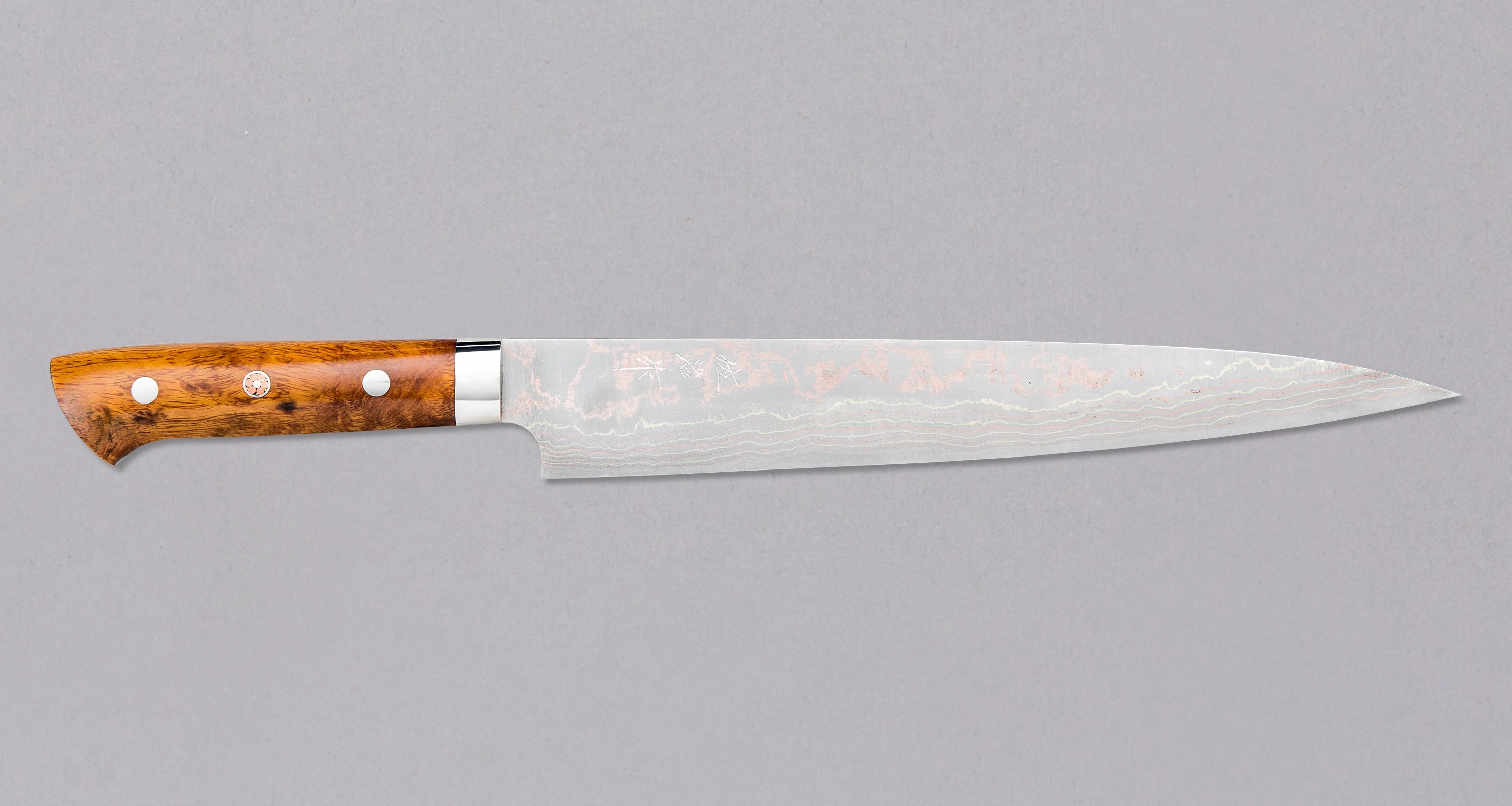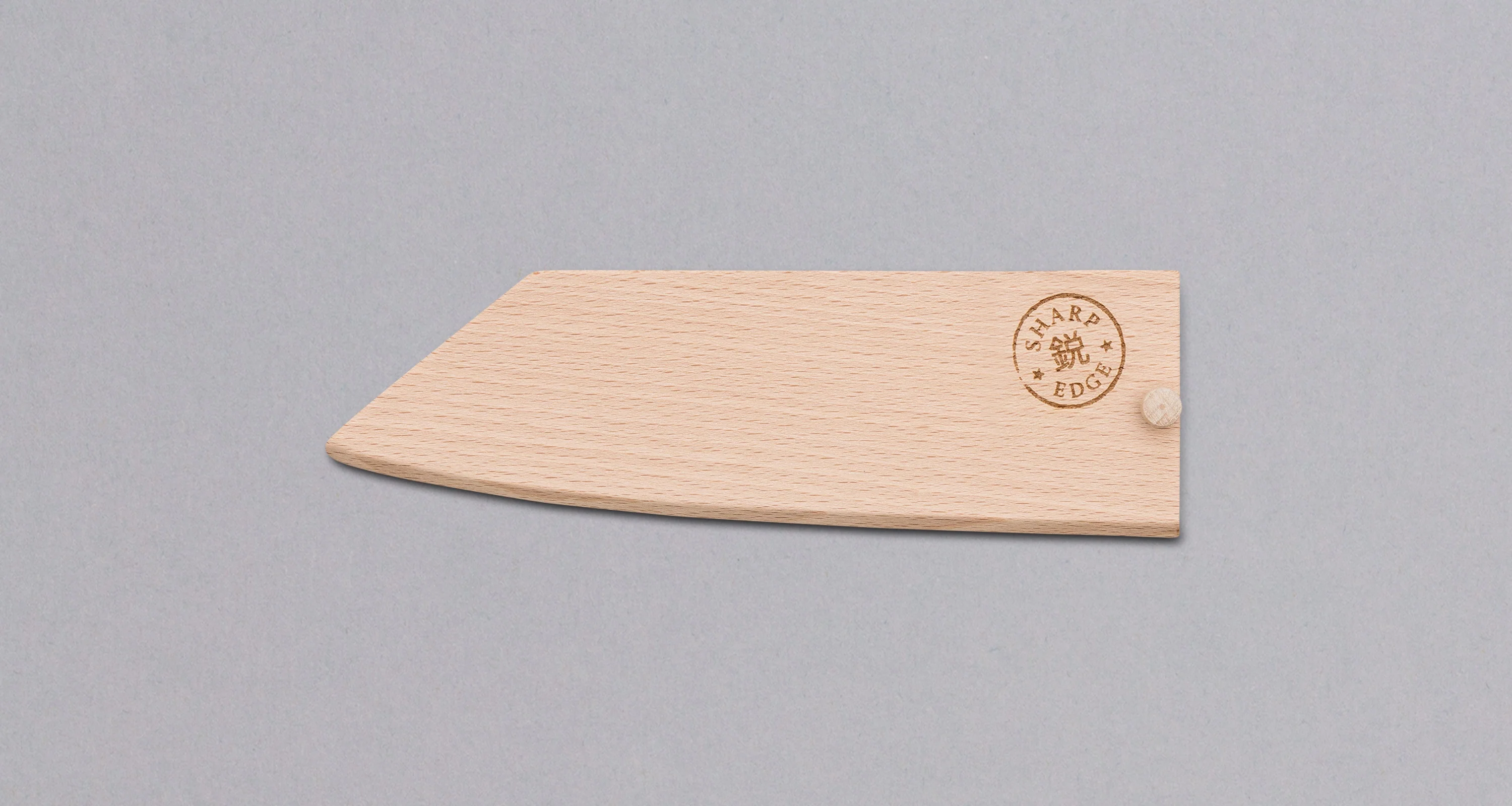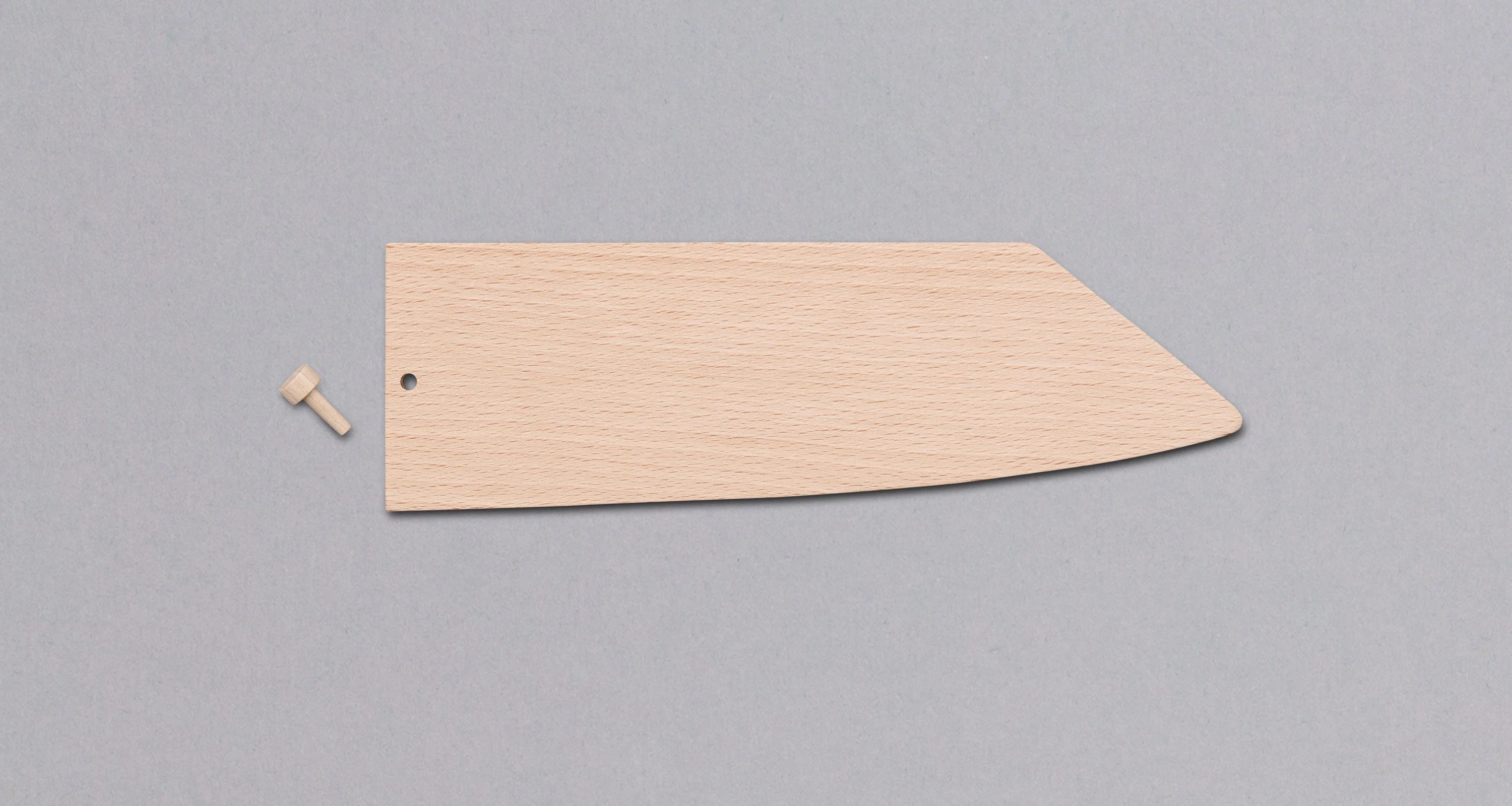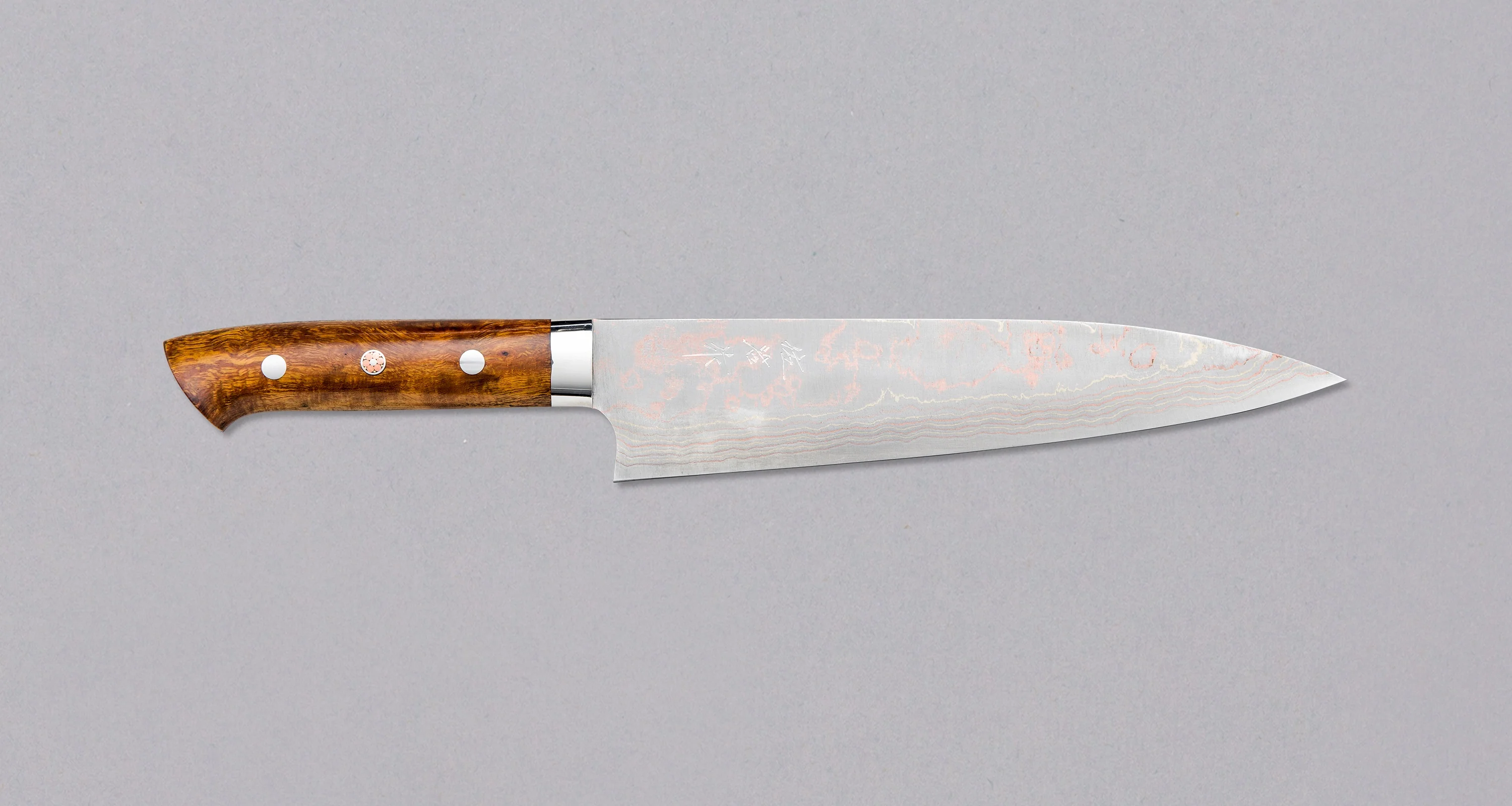
Shirasagi Deba Aogami #2 Tsuchime Kuro-uchi 180mm (7.1")
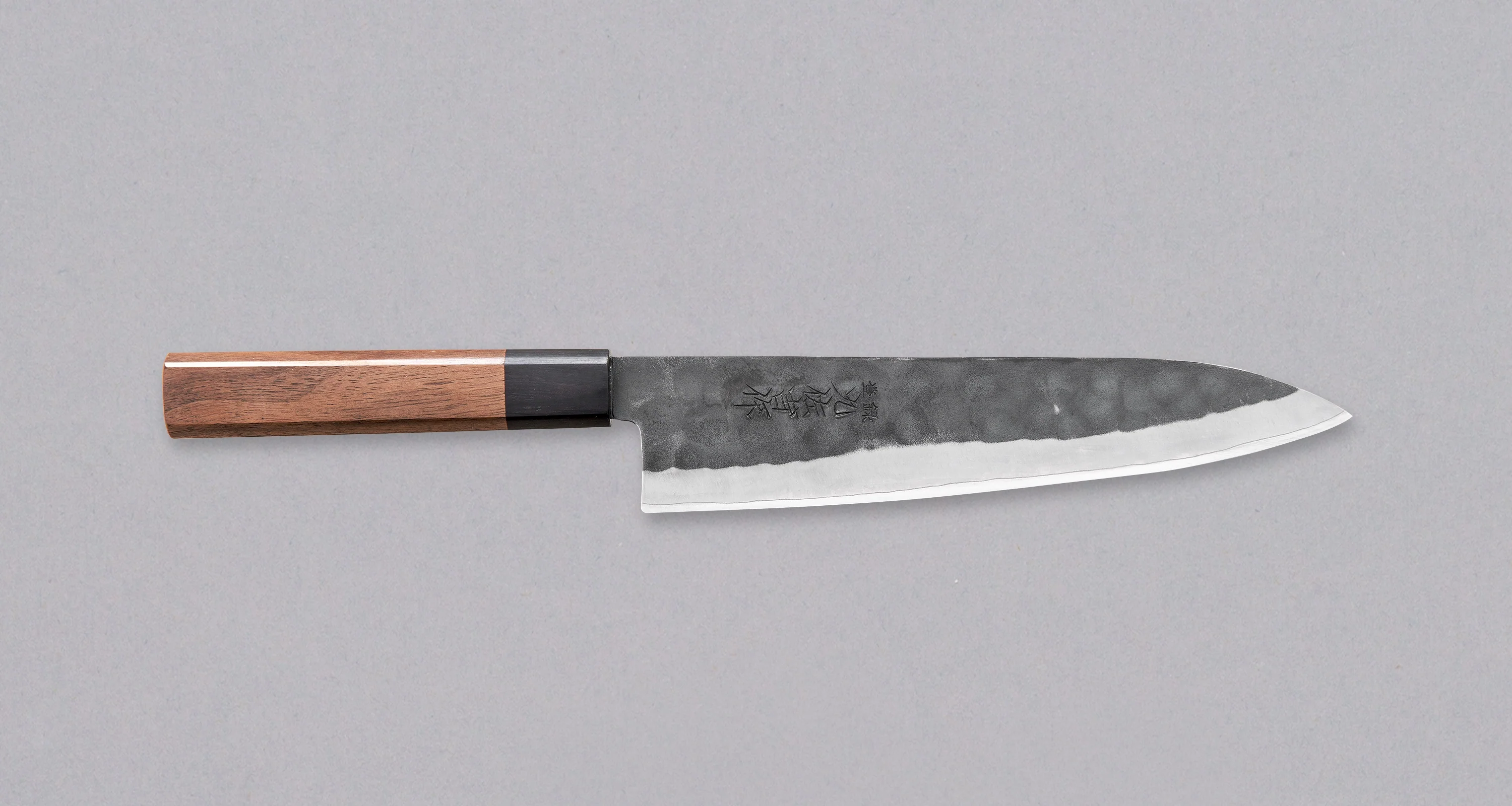
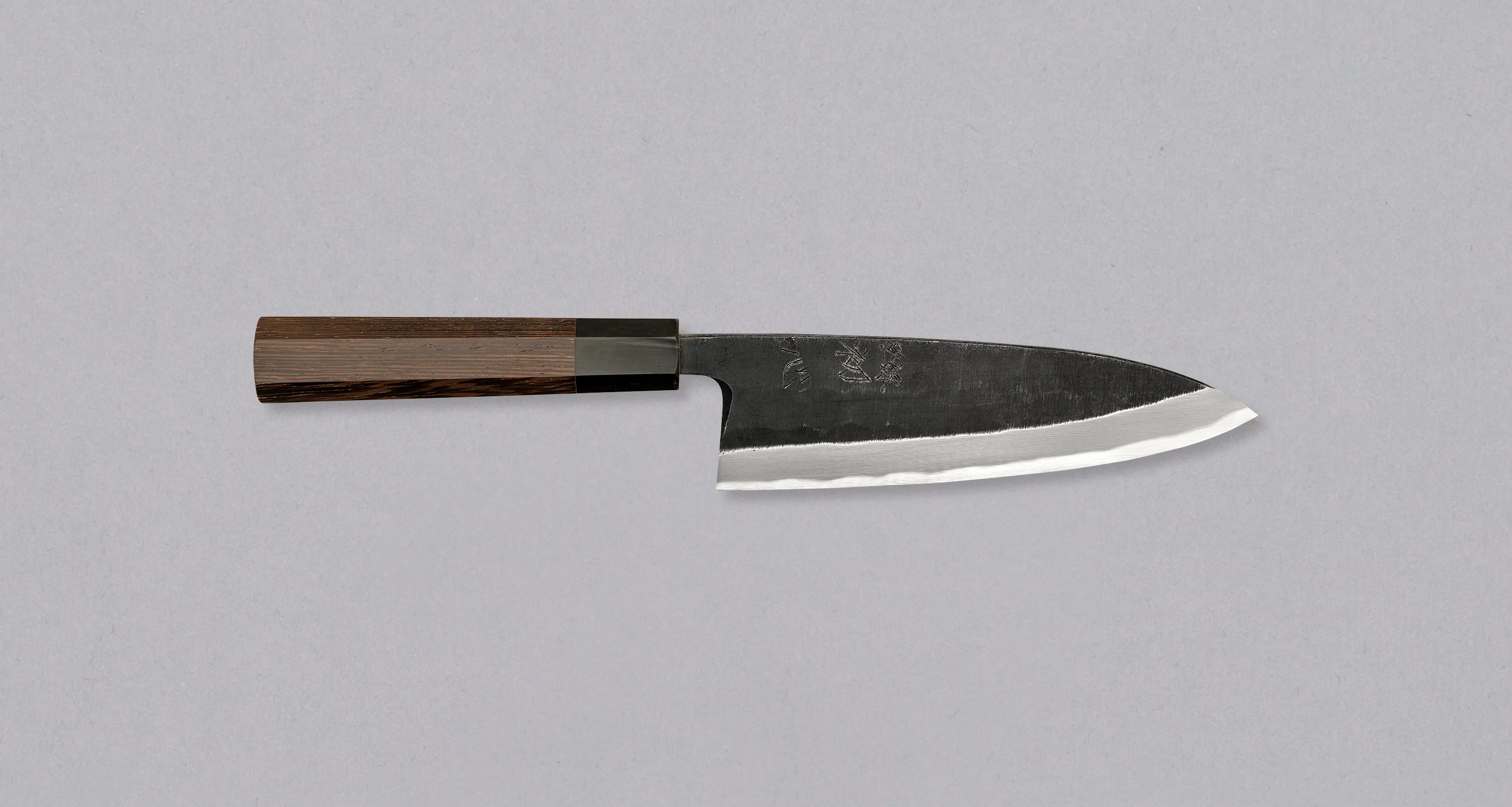
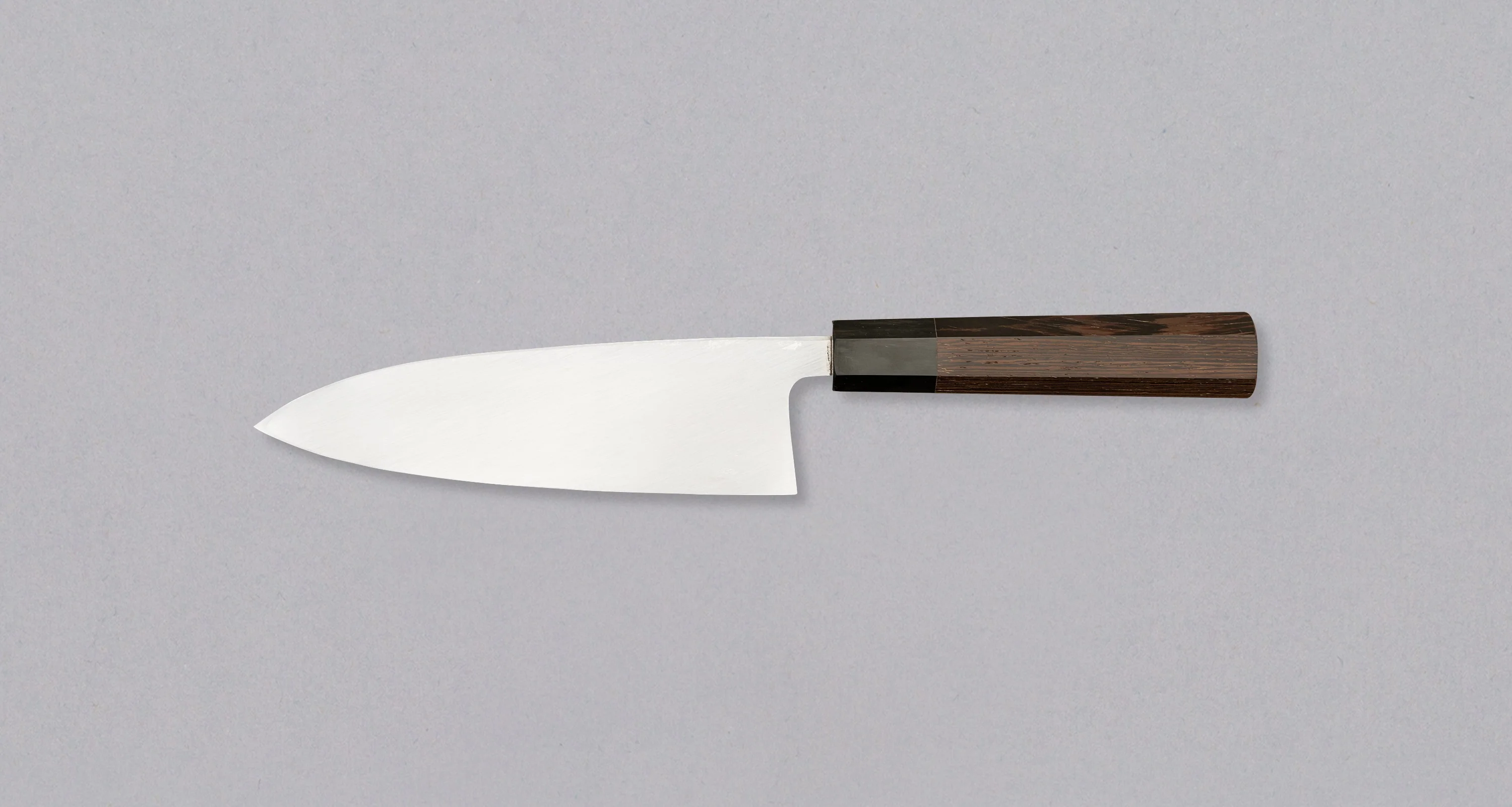
Shirasagi Deba Aogami #2 Tsuchime Kuro-uchi 180mm (7.1") is a Japanese kitchen knife designed for heavy-duty use — ideal for filleting whole fish, breaking down poultry, and handling other demanding butchery tasks.
The 180mm deba is the go-to choice for those who need maximum power and cutting length. As the largest size in the standard deba lineup, it’s built for tackling big fish like salmon, tuna, or monkfish — or for anyone who prefers more blade to work with when portioning poultry or prepping meat with bones. This is the blade for confident, experienced users seeking a traditional Japanese fish-processing knife that handles serious volume and heavier prep with ease.
Especially recommended for big game fishing enthusiasts!
BLADE SHAPE:
Deba is one of the “big three” traditional Japanese knives, alongside usuba and yanagiba. Designed specifically for preparing whole fish, the deba excels at:
- Cleaning and gutting
- Filleting with minimal flesh damage
- Portioning
- Cutting through smaller bones, fins, and heads
STEEL:
This knife’s core is forged from Aogami #2 (Blue #2) — a traditional high-carbon steel known for:
- Outstanding edge retention
- Smooth, precise sharpening
- Excellent performance under demanding use
Due to its carbon-rich composition, this steel can develop a patina over time and may rust if not dried properly. Regular maintenance is essential to keep it performing at its best. ⚠️ Read more about knife care here.
LAMINATION:
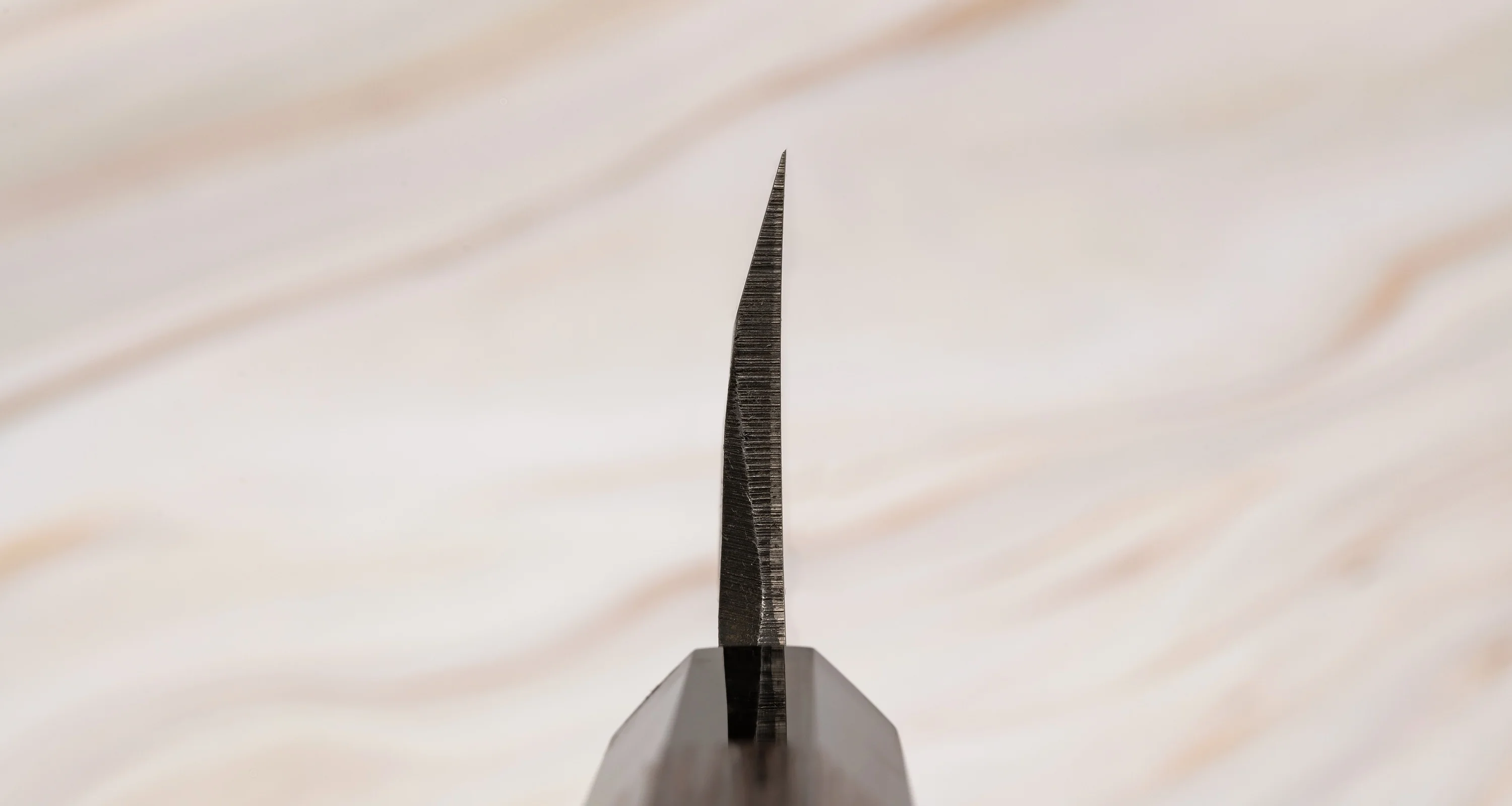
Ni-mai lamination method is used on single-bevel knives, where a sheet of softer metal is forge-welded onto the shinogi (front) side of the blade’s hard core. This reinforces the blade’s structural integrity and consequently makes it tougher.
GEOMETRY:
The knife is a single-bevel blade and is heavier and stronger at the handle and thinner and more precise at the tip. This blade shape makes the knife easier to use because it is very responsive, easily maneuverable, and nicely balanced. This type of blade design is also called distal taper - you can read more about it in the article on blade geometry.
BLADE FINISH:
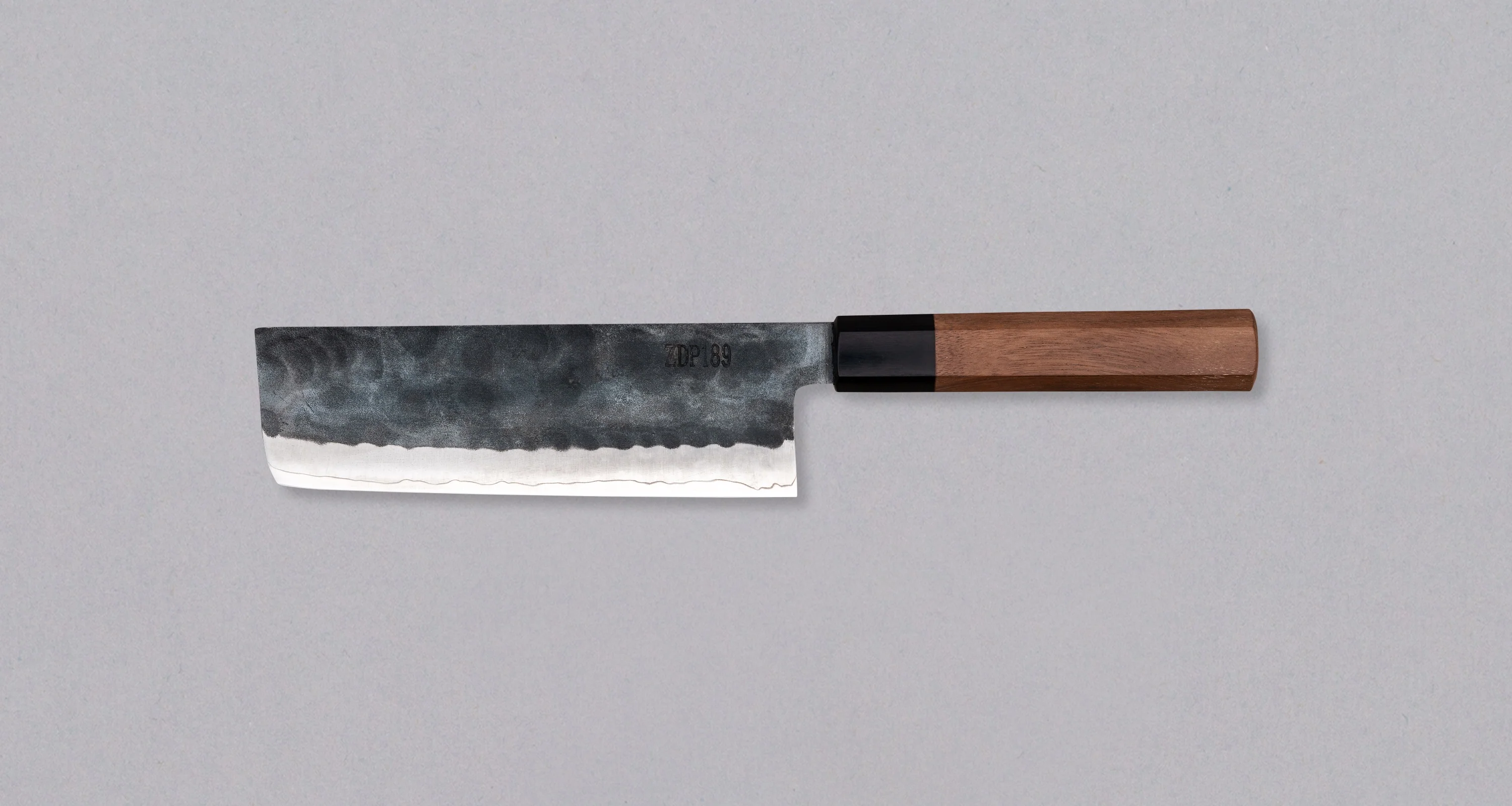
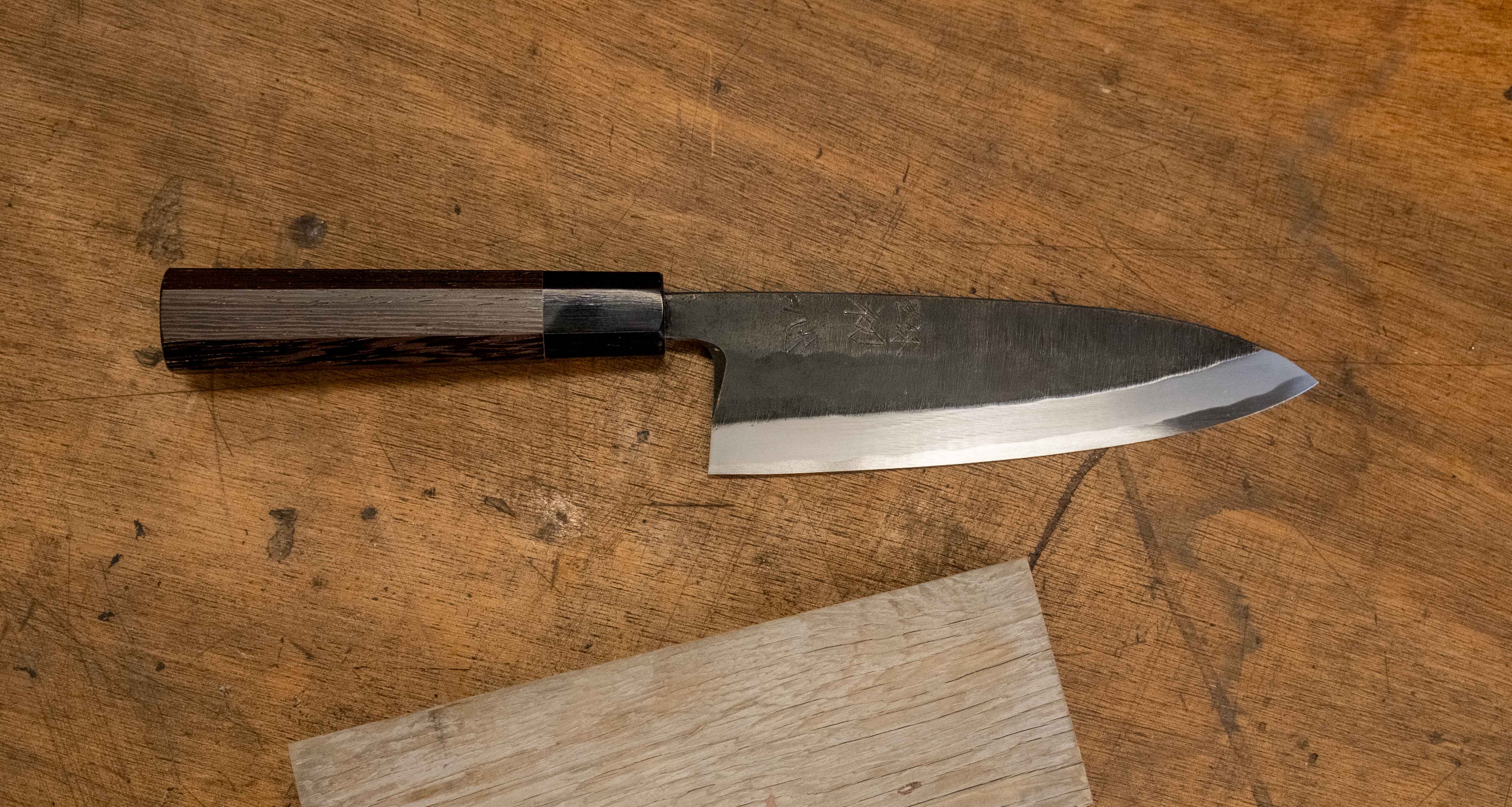
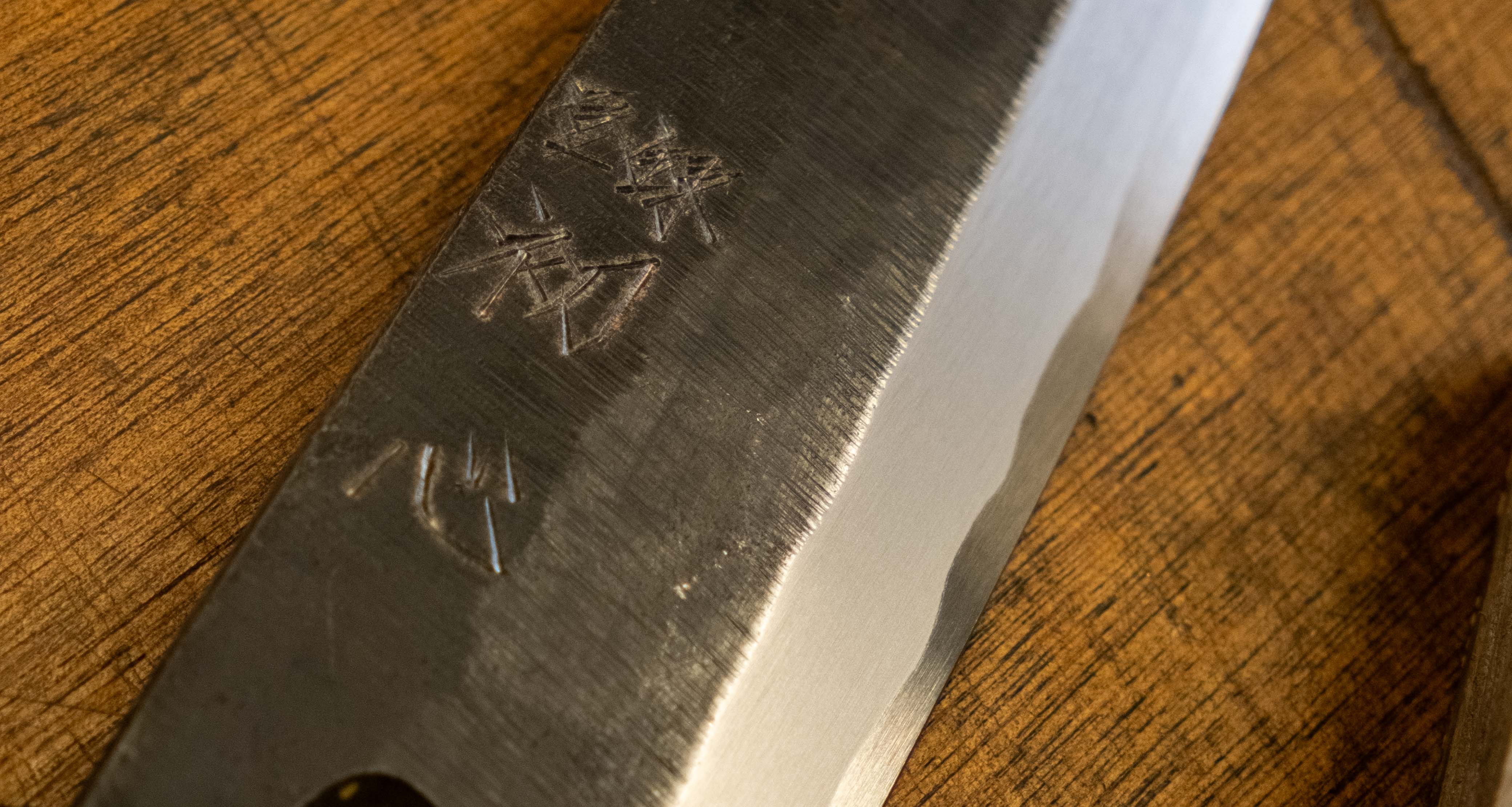
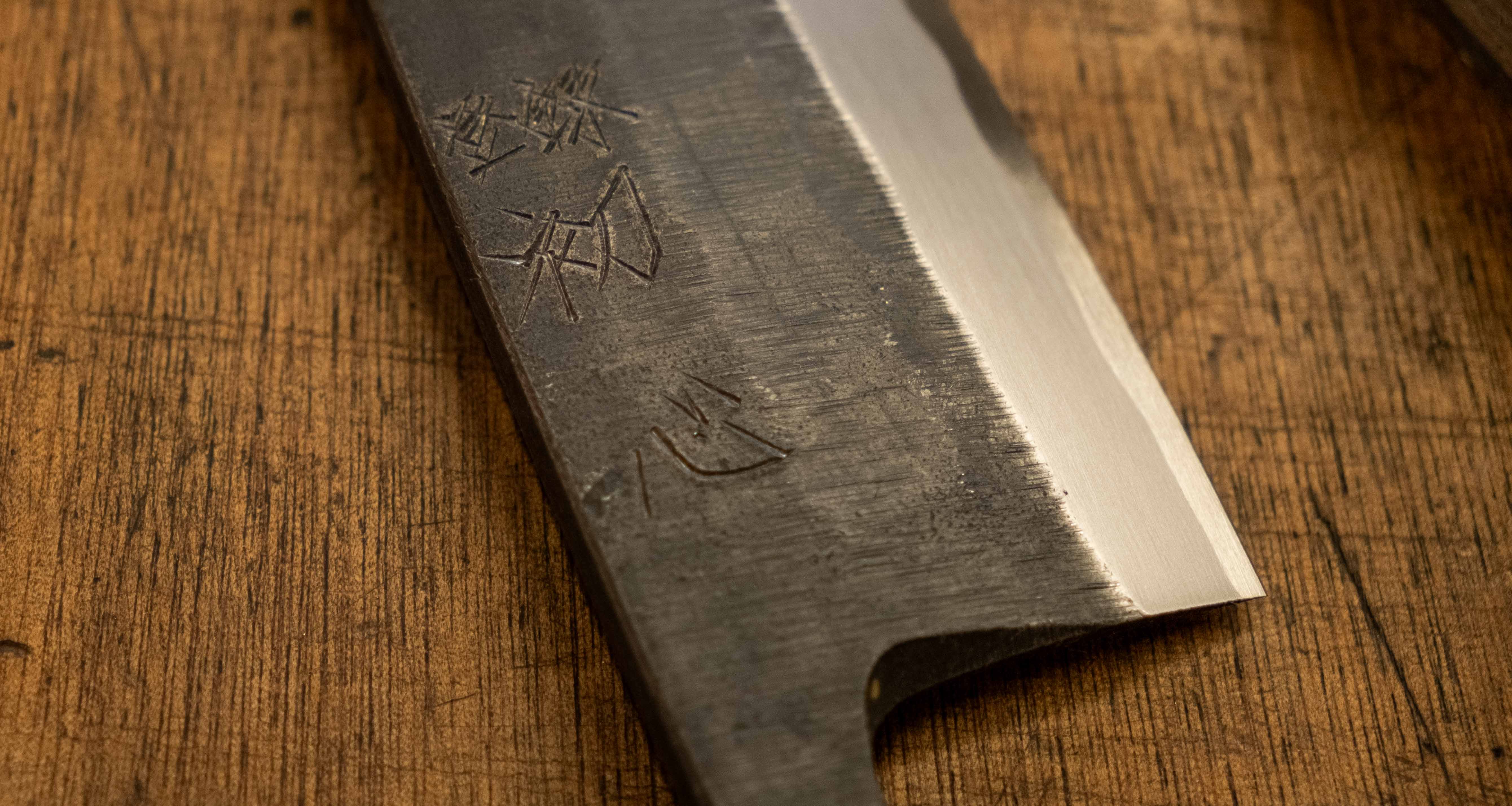
While traditional single-bevel knives are often polished to a high gloss (migaki finish), this kuro-uchi deba stands out with its more rustic appearance. The hira side (flat side of the blade) is left with a kuro-uchi finish — a layer of raw black patina that gives the knife a traditional, hand-forged character and offers protection against rust and external elements. In contrast, the urasuki side (concave back of the blade) is polished, ensuring low friction and precise, clean cuts.
HANDLE:
Japanese (Wa) style handle made out of wenge wood with a buffalo horn ferrule. The octagonal handle allows a compact and firm grip during the filleting process without slipping or causing any injuries, which is critical when working with raw fish.
|
A traditional feature of wooden handles is that over time the soft surface of the wood will lose its smoothness and shine, giving it an even better grip and making it even safer to use with wet hands. This extra friction of the "roughened" surface ensures that greasy, wet, and slippery palms don't slide forward on the blade during use. |
Original: $368.99
-65%$368.99
$129.15More Images
Shirasagi Deba Aogami #2 Tsuchime Kuro-uchi 180mm (7.1")
Shirasagi Deba Aogami #2 Tsuchime Kuro-uchi 180mm (7.1") is a Japanese kitchen knife designed for heavy-duty use — ideal for filleting whole fish, breaking down poultry, and handling other demanding butchery tasks.
The 180mm deba is the go-to choice for those who need maximum power and cutting length. As the largest size in the standard deba lineup, it’s built for tackling big fish like salmon, tuna, or monkfish — or for anyone who prefers more blade to work with when portioning poultry or prepping meat with bones. This is the blade for confident, experienced users seeking a traditional Japanese fish-processing knife that handles serious volume and heavier prep with ease.
Especially recommended for big game fishing enthusiasts!
BLADE SHAPE:
Deba is one of the “big three” traditional Japanese knives, alongside usuba and yanagiba. Designed specifically for preparing whole fish, the deba excels at:
- Cleaning and gutting
- Filleting with minimal flesh damage
- Portioning
- Cutting through smaller bones, fins, and heads
STEEL:
This knife’s core is forged from Aogami #2 (Blue #2) — a traditional high-carbon steel known for:
- Outstanding edge retention
- Smooth, precise sharpening
- Excellent performance under demanding use
Due to its carbon-rich composition, this steel can develop a patina over time and may rust if not dried properly. Regular maintenance is essential to keep it performing at its best. ⚠️ Read more about knife care here.
LAMINATION:
Ni-mai lamination method is used on single-bevel knives, where a sheet of softer metal is forge-welded onto the shinogi (front) side of the blade’s hard core. This reinforces the blade’s structural integrity and consequently makes it tougher.
GEOMETRY:
The knife is a single-bevel blade and is heavier and stronger at the handle and thinner and more precise at the tip. This blade shape makes the knife easier to use because it is very responsive, easily maneuverable, and nicely balanced. This type of blade design is also called distal taper - you can read more about it in the article on blade geometry.
BLADE FINISH:
While traditional single-bevel knives are often polished to a high gloss (migaki finish), this kuro-uchi deba stands out with its more rustic appearance. The hira side (flat side of the blade) is left with a kuro-uchi finish — a layer of raw black patina that gives the knife a traditional, hand-forged character and offers protection against rust and external elements. In contrast, the urasuki side (concave back of the blade) is polished, ensuring low friction and precise, clean cuts.
HANDLE:
Japanese (Wa) style handle made out of wenge wood with a buffalo horn ferrule. The octagonal handle allows a compact and firm grip during the filleting process without slipping or causing any injuries, which is critical when working with raw fish.
|
A traditional feature of wooden handles is that over time the soft surface of the wood will lose its smoothness and shine, giving it an even better grip and making it even safer to use with wet hands. This extra friction of the "roughened" surface ensures that greasy, wet, and slippery palms don't slide forward on the blade during use. |
Product Information
Product Information
Shipping & Returns
Shipping & Returns
Description
Shirasagi Deba Aogami #2 Tsuchime Kuro-uchi 180mm (7.1") is a Japanese kitchen knife designed for heavy-duty use — ideal for filleting whole fish, breaking down poultry, and handling other demanding butchery tasks.
The 180mm deba is the go-to choice for those who need maximum power and cutting length. As the largest size in the standard deba lineup, it’s built for tackling big fish like salmon, tuna, or monkfish — or for anyone who prefers more blade to work with when portioning poultry or prepping meat with bones. This is the blade for confident, experienced users seeking a traditional Japanese fish-processing knife that handles serious volume and heavier prep with ease.
Especially recommended for big game fishing enthusiasts!
BLADE SHAPE:
Deba is one of the “big three” traditional Japanese knives, alongside usuba and yanagiba. Designed specifically for preparing whole fish, the deba excels at:
- Cleaning and gutting
- Filleting with minimal flesh damage
- Portioning
- Cutting through smaller bones, fins, and heads
STEEL:
This knife’s core is forged from Aogami #2 (Blue #2) — a traditional high-carbon steel known for:
- Outstanding edge retention
- Smooth, precise sharpening
- Excellent performance under demanding use
Due to its carbon-rich composition, this steel can develop a patina over time and may rust if not dried properly. Regular maintenance is essential to keep it performing at its best. ⚠️ Read more about knife care here.
LAMINATION:
Ni-mai lamination method is used on single-bevel knives, where a sheet of softer metal is forge-welded onto the shinogi (front) side of the blade’s hard core. This reinforces the blade’s structural integrity and consequently makes it tougher.
GEOMETRY:
The knife is a single-bevel blade and is heavier and stronger at the handle and thinner and more precise at the tip. This blade shape makes the knife easier to use because it is very responsive, easily maneuverable, and nicely balanced. This type of blade design is also called distal taper - you can read more about it in the article on blade geometry.
BLADE FINISH:
While traditional single-bevel knives are often polished to a high gloss (migaki finish), this kuro-uchi deba stands out with its more rustic appearance. The hira side (flat side of the blade) is left with a kuro-uchi finish — a layer of raw black patina that gives the knife a traditional, hand-forged character and offers protection against rust and external elements. In contrast, the urasuki side (concave back of the blade) is polished, ensuring low friction and precise, clean cuts.
HANDLE:
Japanese (Wa) style handle made out of wenge wood with a buffalo horn ferrule. The octagonal handle allows a compact and firm grip during the filleting process without slipping or causing any injuries, which is critical when working with raw fish.
|
A traditional feature of wooden handles is that over time the soft surface of the wood will lose its smoothness and shine, giving it an even better grip and making it even safer to use with wet hands. This extra friction of the "roughened" surface ensures that greasy, wet, and slippery palms don't slide forward on the blade during use. |