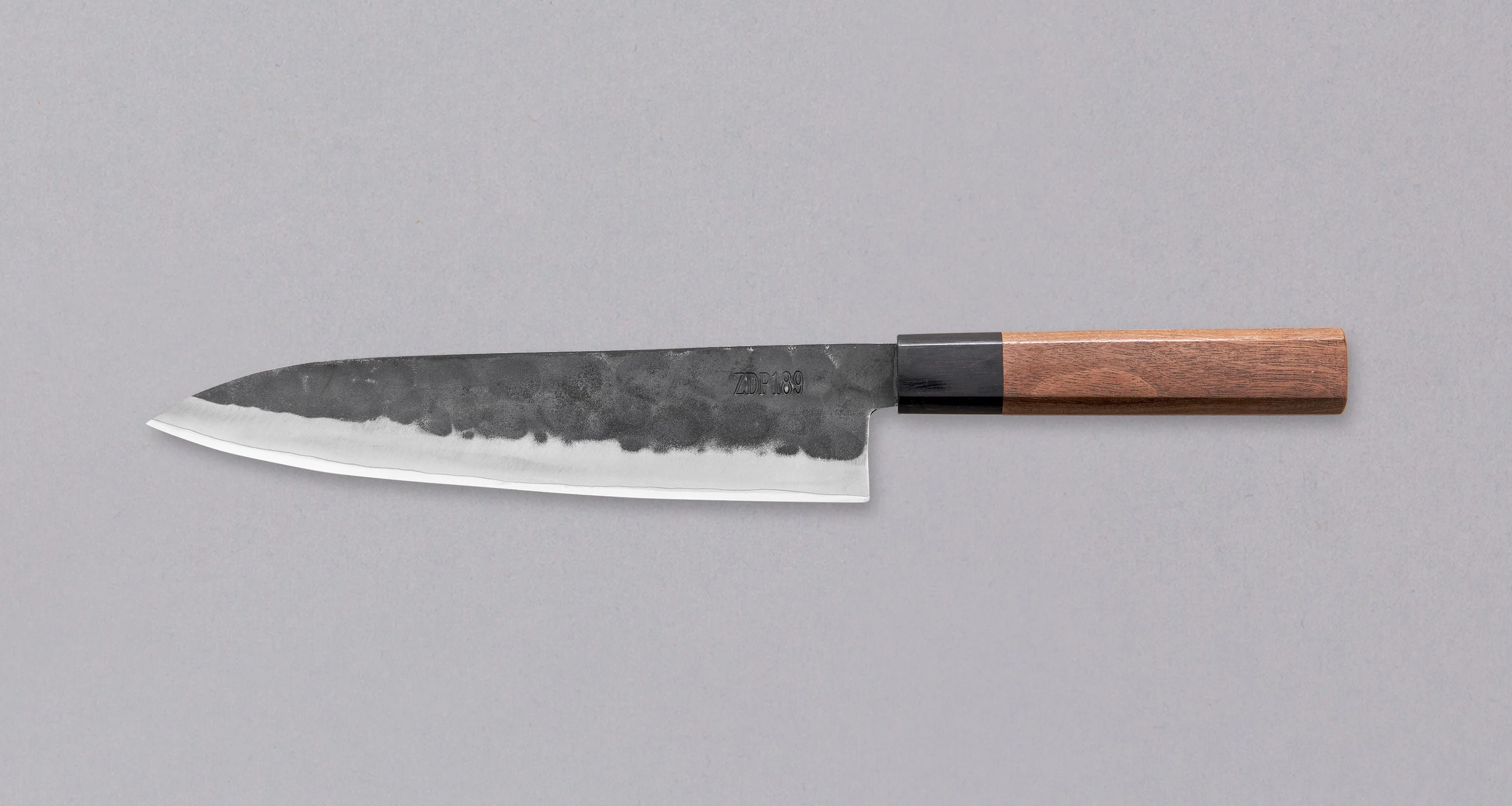
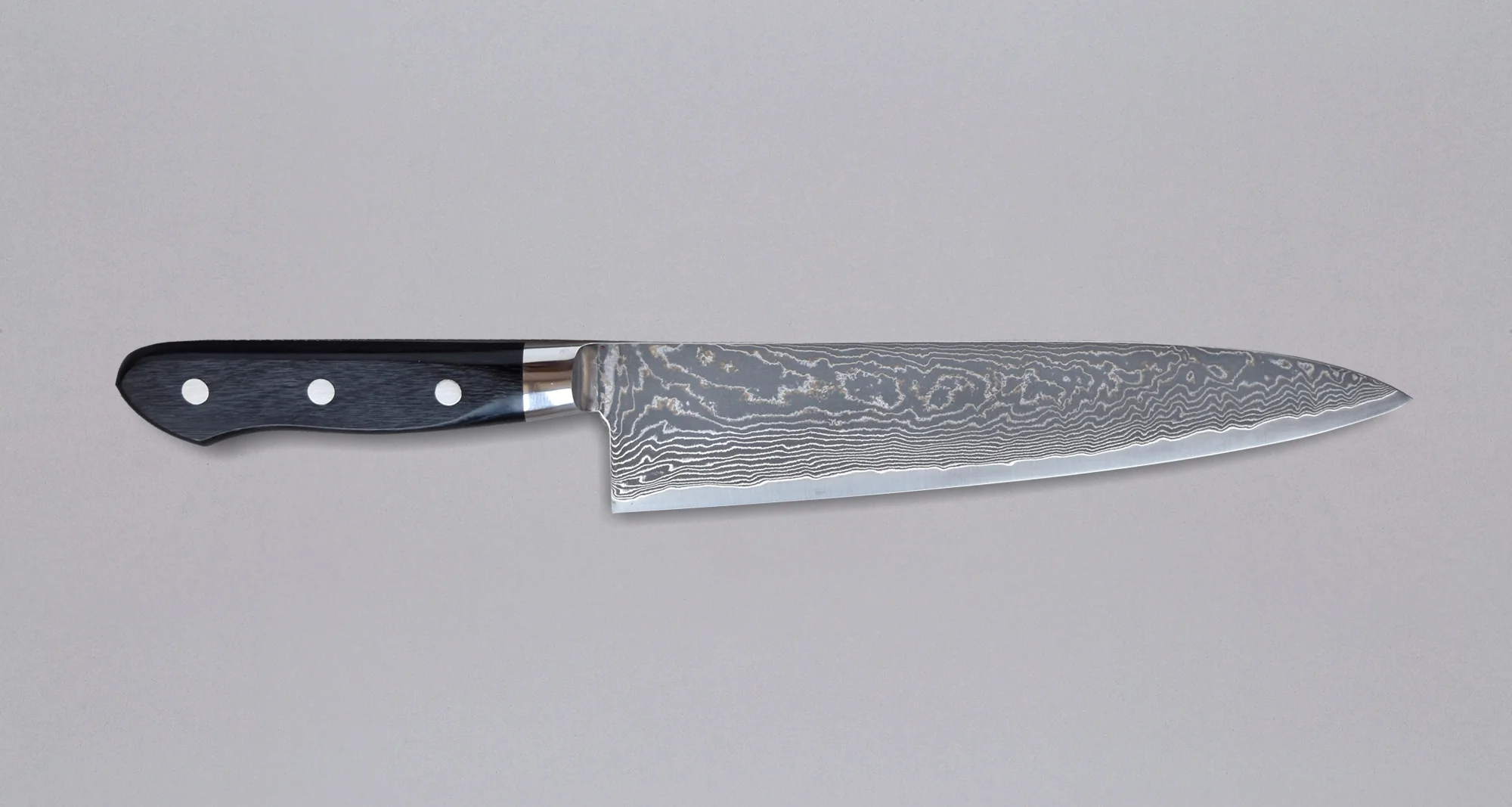
![[SET] Hokiyama Ginsanko Set [Kiritsuke + Petty]](/images/sharpedgestore.shop/images/product/set-hokiyama-ginsanko-set-kiritsuke-petty-1.jpg)
[SET] Hokiyama Ginsanko Set [Kiritsuke + Petty]
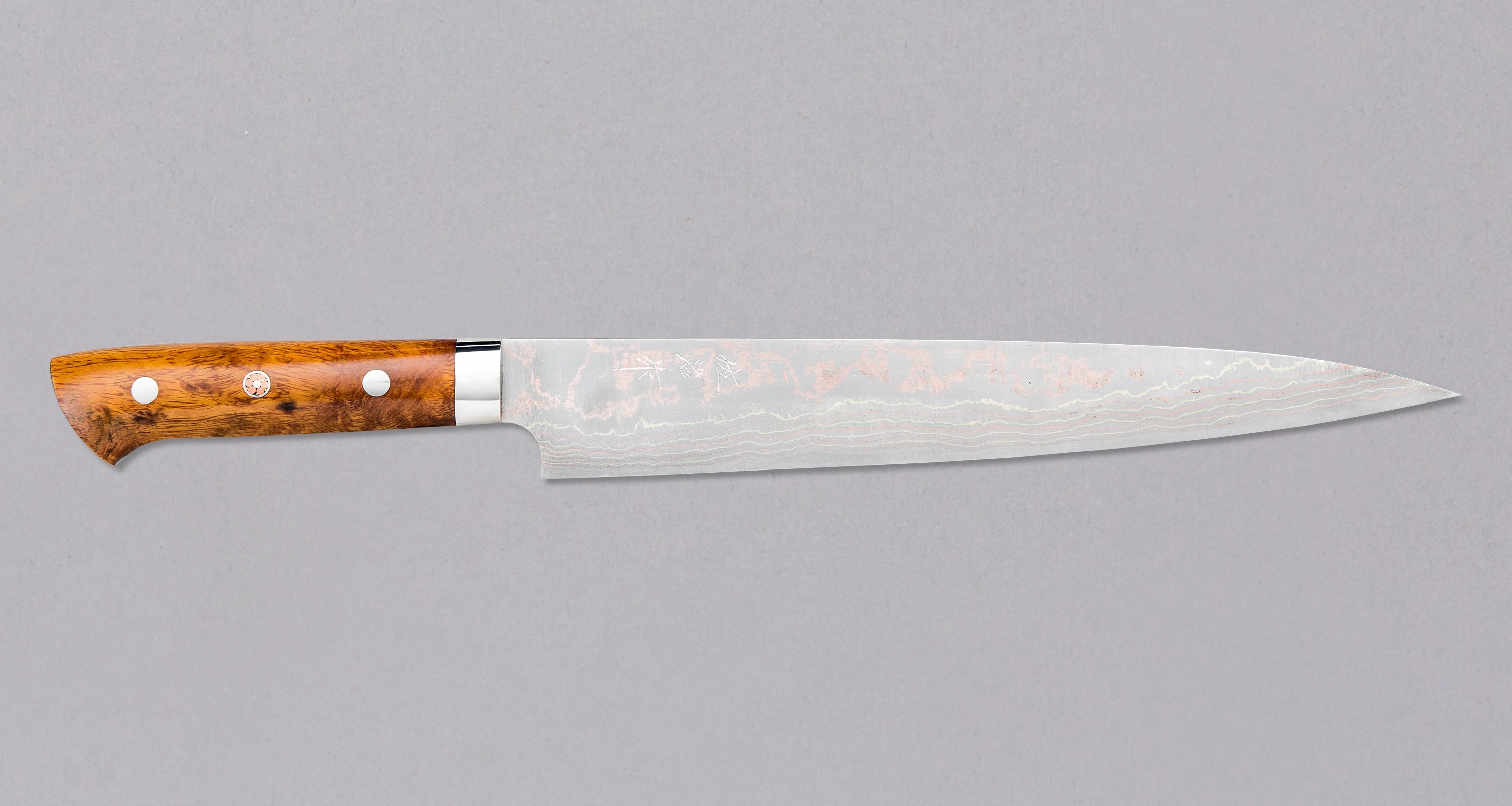
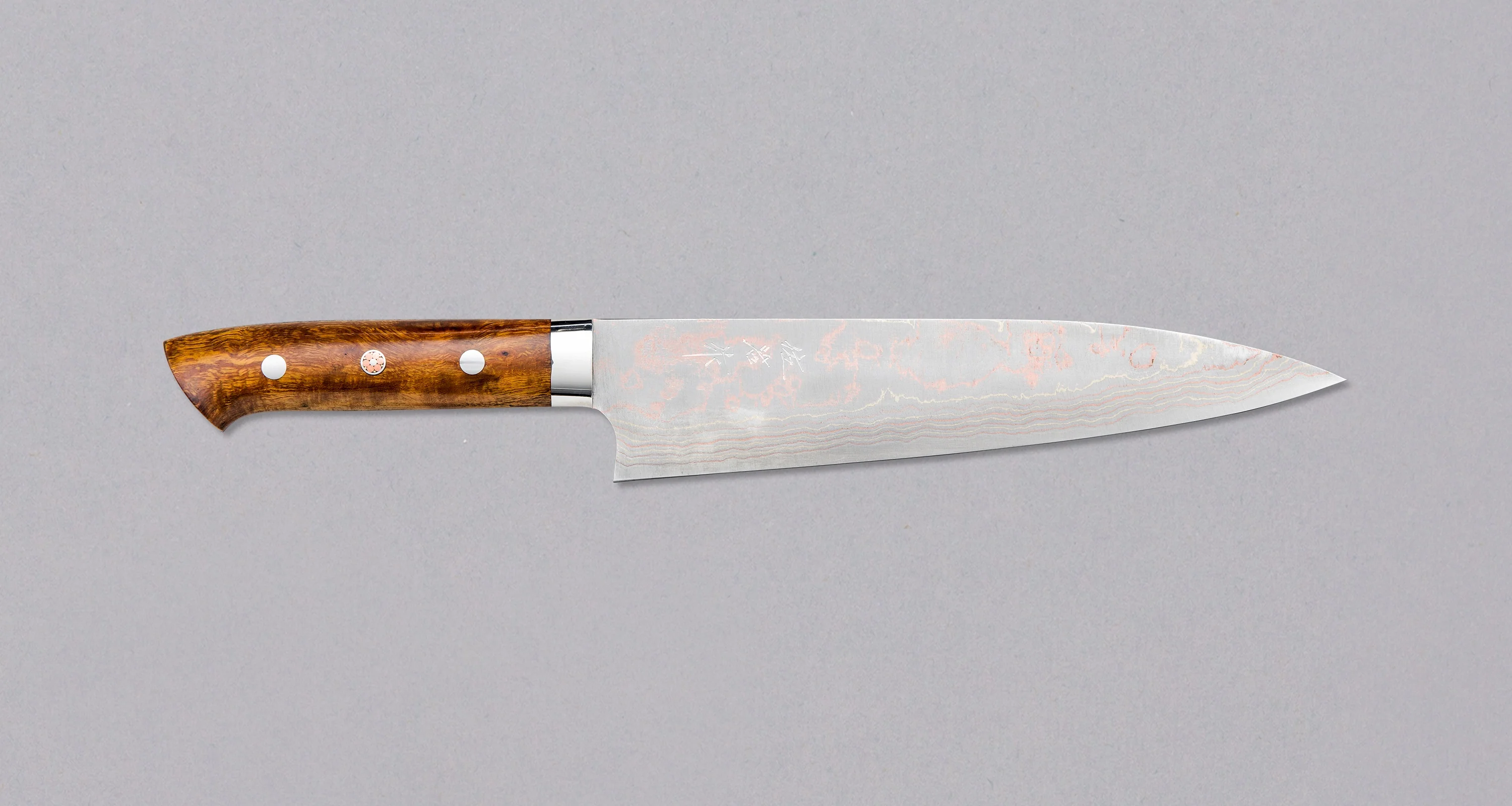
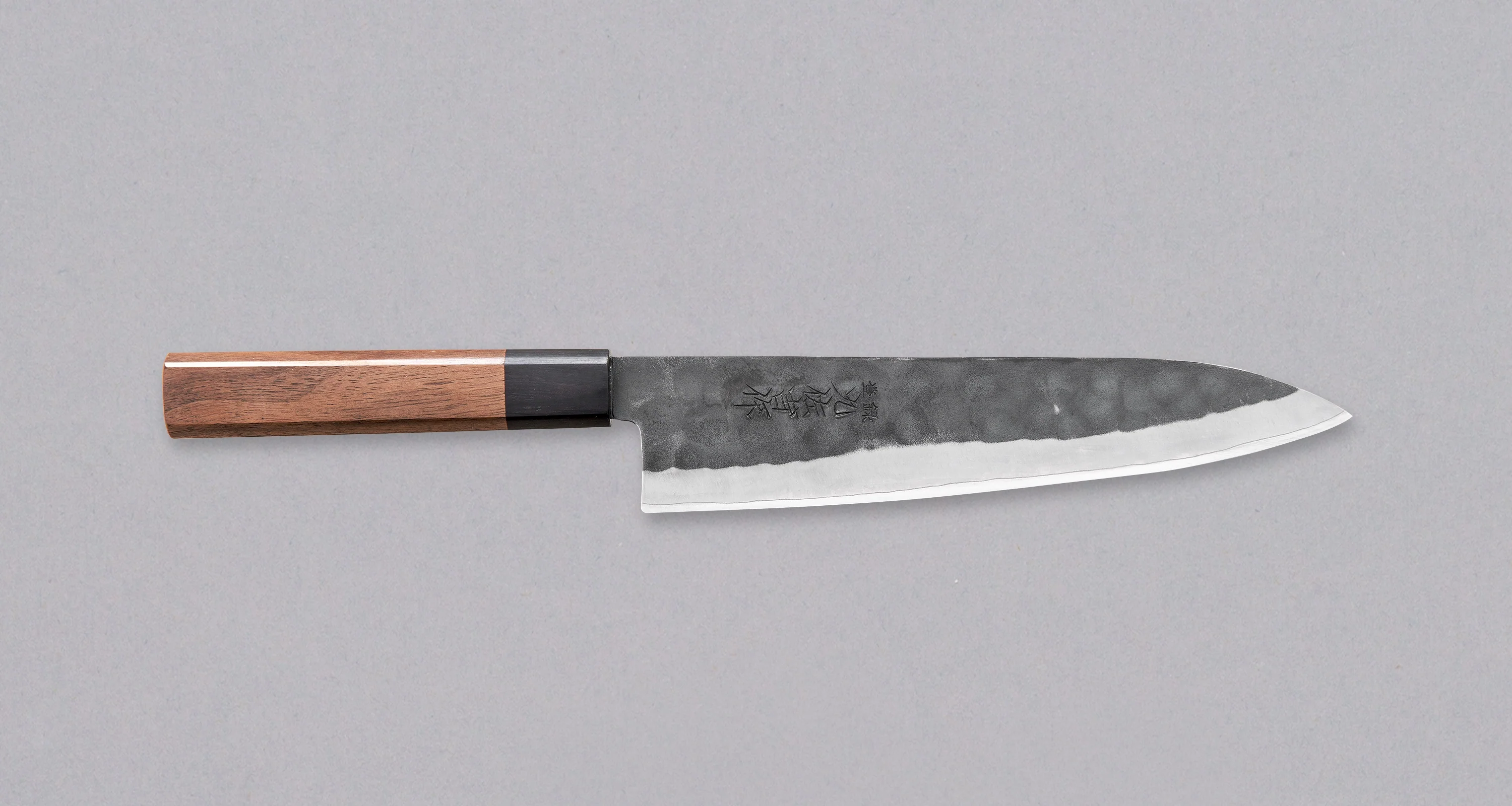
The Hokiyama smithy made these two knives just for us. We asked them to combine their proven blade shapes (kiritsuke and petty) and stainless steel (Ginsanko, hardness at 63 HRC!), then match the result with a timeless rosewood handle, known for its durability and comfortable grip. It’s a nice combo, don’t you think?
Knives in this set:
- HOKIYAMA KIRITSUKE GINSANKO 210MM (8.3")
- HOKIYAMA PETTY GINSANKO 135MM (5.3")
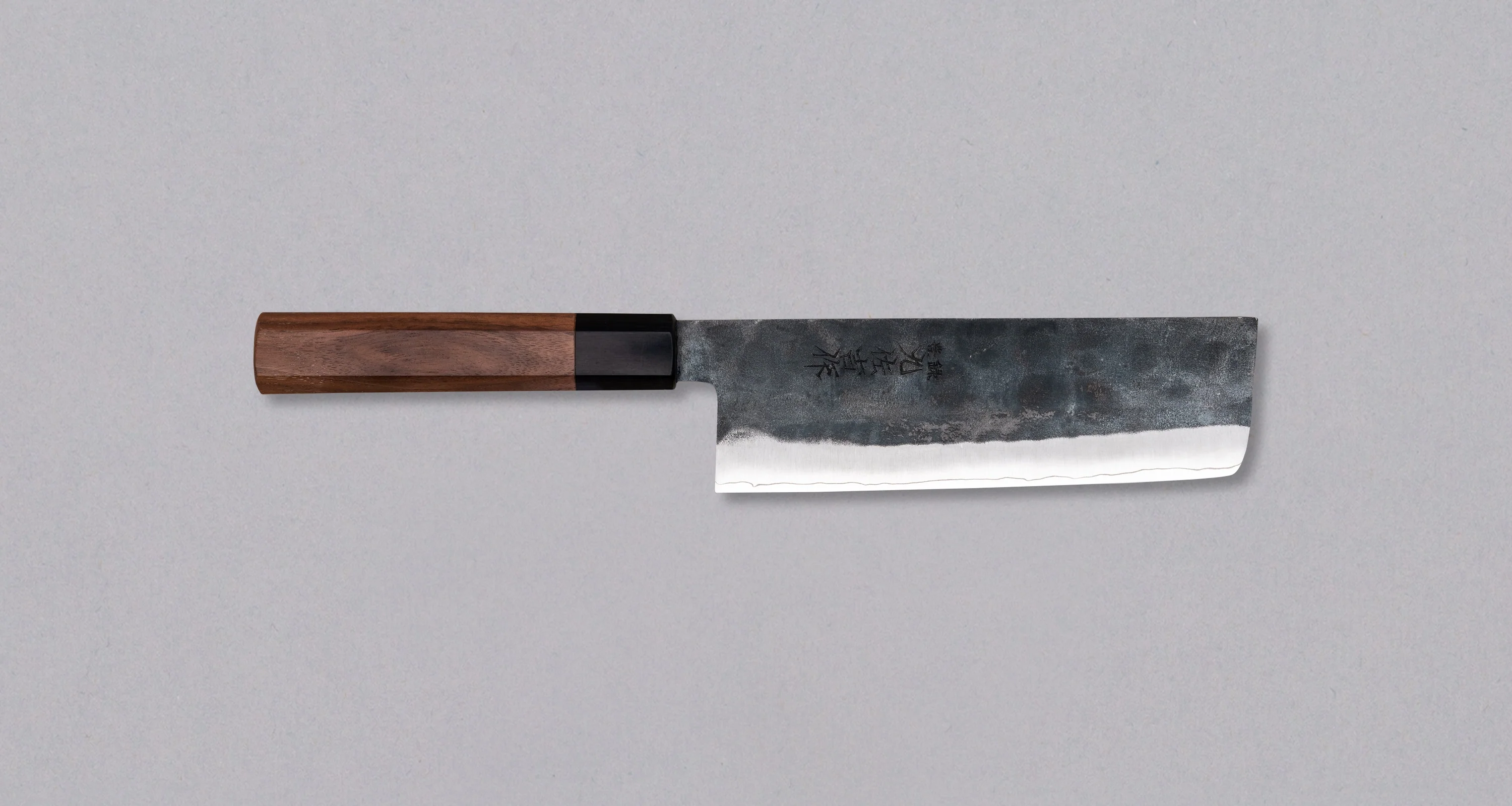
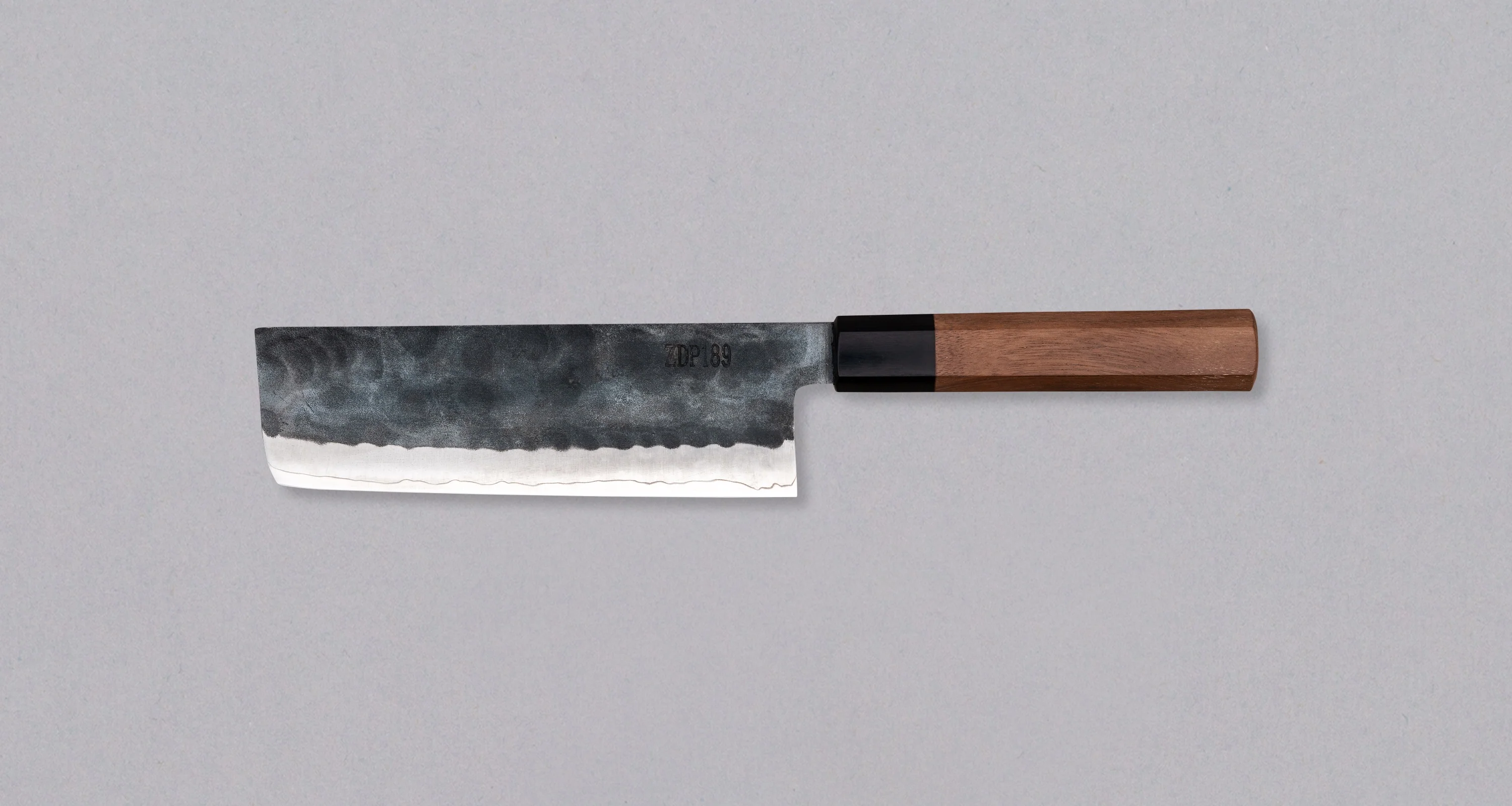
Kiritsuke knives were primarily intended only for the head sushi chef. While the blade profile is slightly flatter than in the case of gyuto knives, it is still a multifunctional knife, suitable for everyday use. The 210mm (8.3") blade length is an optimal size for chopping vegetables as well as cutting larger pieces of meat and fish.
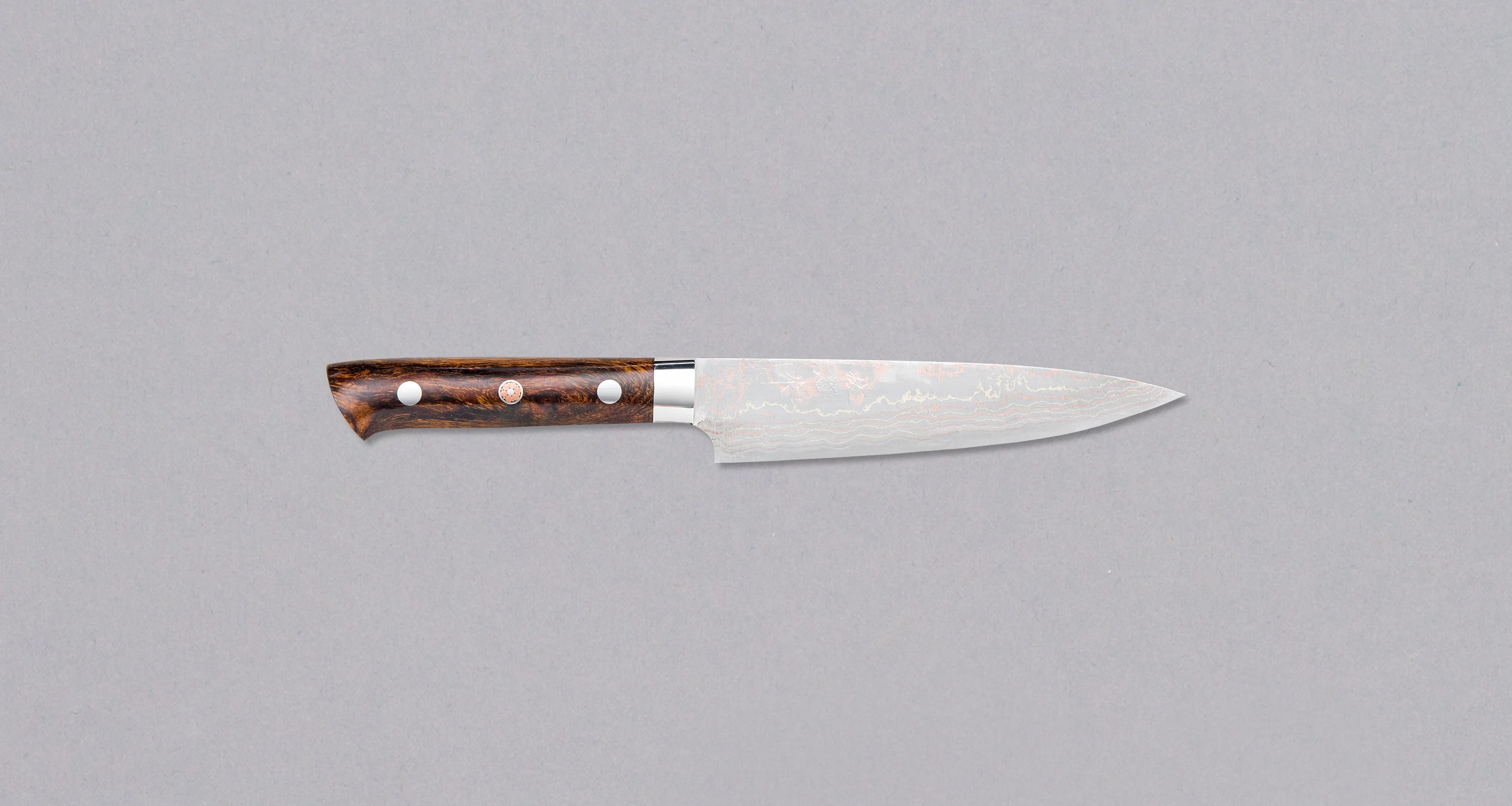
A petty knife is an essential part of every kitchen. We need a smaller knife for all those tasks where our main, larger knife is just too big and unwieldy. The 135mm (5.3”) blade length is a perfect match for a 210mm (8.3”) kiritsuke.
STEEL:
The heart of these knives is made of Hitachi's Silver III steel, also named Ginsan steel or Ginsanko, which was hardened to around 63 HRC. Due to its high content of Chromium (Cr), Ginsan steel will resist corrosion very well.
LAMINATION:
At the bottom of the blades, we can see a very pronounced, curvy line that extends along the entire length of the blade. This is the line between the core and the two softer, outer layers of steel that serve as additional protection of the core steel. This cladding of the harder core steel with softer outer steels is called san-mai clad. Most Japanese knives are made this way today. This technique, called san-mai, is used to protect the hard (but delicate) core from outside factors, such as rusting and physical impacts, which could lead to breakage.
BLADE FINISH:
The knives bear visible impressions of the hand-forging process. Beautiful and unique hammer dents were left unpolished on the top part of the blades – the blade's surface sports a beautiful hammered nashiji finish, resembling the skin of the Asian pear, which is then separated from the cutting edge by a smooth kasumi line. The nashiji finish also serves a practical purpose, preventing slices of food from sticking to the blade while cutting.
HANDLE:
Traditional Japanese (Wa) wooden handles were fitted on these beautiful knives. The handles are made of rosewood and are oval-shaped, so they are suitable for both left- and right-handed users.
About Hokiyama:
Hokiyama Hamono is a leading smithy in Kochi Prefecture, Japan. They have been making Japanese knives for more than the past 100 years (they were founded in 1919). Hokiyama Hamono is known for the excellent quality of their knives. They use traditional skills, which have been around for over 800 years, to make them. Their work reflects the handiwork and traditional craftsmanship that has been passed down from generation to generation, yet they also strive to combine this with ever-new knowledge and innovation. Their knives combine the best of both worlds – they make knives using ancient traditional methods and, at the same time, follow modern technological guidelines and innovations in the field of metallurgy, material processing, and production processes. Hokiyama, in the smithy's own words, is a fusion of tradition (土佐 一), innovation (無限), and practicality (左近).
Each knife in the workshop goes through about 50 different processes, which are performed and controlled by experienced craftsmen. Among the various steps required to make a Hokiyama knife, there is a special process called Rolling-Forging. It enables the efficient and uniform production of knives while maintaining the properties and qualities of Japanese steel.
More Images
![[SET] Hokiyama Ginsanko Set [Kiritsuke + Petty] - Image 2](/images/sharpedgestore.shop/images/product/set-hokiyama-ginsanko-set-kiritsuke-petty-2.jpg)
![[SET] Hokiyama Ginsanko Set [Kiritsuke + Petty] - Image 3](/images/sharpedgestore.shop/images/product/set-hokiyama-ginsanko-set-kiritsuke-petty-3.jpg)
![[SET] Hokiyama Ginsanko Set [Kiritsuke + Petty] - Image 4](/images/sharpedgestore.shop/images/product/set-hokiyama-ginsanko-set-kiritsuke-petty-4.jpg)
![[SET] Hokiyama Ginsanko Set [Kiritsuke + Petty] - Image 5](/images/sharpedgestore.shop/images/product/set-hokiyama-ginsanko-set-kiritsuke-petty-5.jpg)
![[SET] Hokiyama Ginsanko Set [Kiritsuke + Petty] - Image 6](/images/sharpedgestore.shop/images/product/set-hokiyama-ginsanko-set-kiritsuke-petty-6.jpg)
![[SET] Hokiyama Ginsanko Set [Kiritsuke + Petty] - Image 7](/images/sharpedgestore.shop/images/product/set-hokiyama-ginsanko-set-kiritsuke-petty-7.jpg)
![[SET] Hokiyama Ginsanko Set [Kiritsuke + Petty] - Image 8](/images/sharpedgestore.shop/images/product/set-hokiyama-ginsanko-set-kiritsuke-petty-8.jpg)
![[SET] Hokiyama Ginsanko Set [Kiritsuke + Petty] - Image 9](/images/sharpedgestore.shop/images/product/set-hokiyama-ginsanko-set-kiritsuke-petty-9.jpg)
![[SET] Hokiyama Ginsanko Set [Kiritsuke + Petty] - Image 10](/images/sharpedgestore.shop/images/product/set-hokiyama-ginsanko-set-kiritsuke-petty-10.jpg)
[SET] Hokiyama Ginsanko Set [Kiritsuke + Petty]
The Hokiyama smithy made these two knives just for us. We asked them to combine their proven blade shapes (kiritsuke and petty) and stainless steel (Ginsanko, hardness at 63 HRC!), then match the result with a timeless rosewood handle, known for its durability and comfortable grip. It’s a nice combo, don’t you think?
Knives in this set:
- HOKIYAMA KIRITSUKE GINSANKO 210MM (8.3")
- HOKIYAMA PETTY GINSANKO 135MM (5.3")
Kiritsuke knives were primarily intended only for the head sushi chef. While the blade profile is slightly flatter than in the case of gyuto knives, it is still a multifunctional knife, suitable for everyday use. The 210mm (8.3") blade length is an optimal size for chopping vegetables as well as cutting larger pieces of meat and fish.
A petty knife is an essential part of every kitchen. We need a smaller knife for all those tasks where our main, larger knife is just too big and unwieldy. The 135mm (5.3”) blade length is a perfect match for a 210mm (8.3”) kiritsuke.
STEEL:
The heart of these knives is made of Hitachi's Silver III steel, also named Ginsan steel or Ginsanko, which was hardened to around 63 HRC. Due to its high content of Chromium (Cr), Ginsan steel will resist corrosion very well.
LAMINATION:
At the bottom of the blades, we can see a very pronounced, curvy line that extends along the entire length of the blade. This is the line between the core and the two softer, outer layers of steel that serve as additional protection of the core steel. This cladding of the harder core steel with softer outer steels is called san-mai clad. Most Japanese knives are made this way today. This technique, called san-mai, is used to protect the hard (but delicate) core from outside factors, such as rusting and physical impacts, which could lead to breakage.
BLADE FINISH:
The knives bear visible impressions of the hand-forging process. Beautiful and unique hammer dents were left unpolished on the top part of the blades – the blade's surface sports a beautiful hammered nashiji finish, resembling the skin of the Asian pear, which is then separated from the cutting edge by a smooth kasumi line. The nashiji finish also serves a practical purpose, preventing slices of food from sticking to the blade while cutting.
HANDLE:
Traditional Japanese (Wa) wooden handles were fitted on these beautiful knives. The handles are made of rosewood and are oval-shaped, so they are suitable for both left- and right-handed users.
About Hokiyama:
Hokiyama Hamono is a leading smithy in Kochi Prefecture, Japan. They have been making Japanese knives for more than the past 100 years (they were founded in 1919). Hokiyama Hamono is known for the excellent quality of their knives. They use traditional skills, which have been around for over 800 years, to make them. Their work reflects the handiwork and traditional craftsmanship that has been passed down from generation to generation, yet they also strive to combine this with ever-new knowledge and innovation. Their knives combine the best of both worlds – they make knives using ancient traditional methods and, at the same time, follow modern technological guidelines and innovations in the field of metallurgy, material processing, and production processes. Hokiyama, in the smithy's own words, is a fusion of tradition (土佐 一), innovation (無限), and practicality (左近).
Each knife in the workshop goes through about 50 different processes, which are performed and controlled by experienced craftsmen. Among the various steps required to make a Hokiyama knife, there is a special process called Rolling-Forging. It enables the efficient and uniform production of knives while maintaining the properties and qualities of Japanese steel.
Product Information
Product Information
Shipping & Returns
Shipping & Returns
Description
The Hokiyama smithy made these two knives just for us. We asked them to combine their proven blade shapes (kiritsuke and petty) and stainless steel (Ginsanko, hardness at 63 HRC!), then match the result with a timeless rosewood handle, known for its durability and comfortable grip. It’s a nice combo, don’t you think?
Knives in this set:
- HOKIYAMA KIRITSUKE GINSANKO 210MM (8.3")
- HOKIYAMA PETTY GINSANKO 135MM (5.3")
Kiritsuke knives were primarily intended only for the head sushi chef. While the blade profile is slightly flatter than in the case of gyuto knives, it is still a multifunctional knife, suitable for everyday use. The 210mm (8.3") blade length is an optimal size for chopping vegetables as well as cutting larger pieces of meat and fish.
A petty knife is an essential part of every kitchen. We need a smaller knife for all those tasks where our main, larger knife is just too big and unwieldy. The 135mm (5.3”) blade length is a perfect match for a 210mm (8.3”) kiritsuke.
STEEL:
The heart of these knives is made of Hitachi's Silver III steel, also named Ginsan steel or Ginsanko, which was hardened to around 63 HRC. Due to its high content of Chromium (Cr), Ginsan steel will resist corrosion very well.
LAMINATION:
At the bottom of the blades, we can see a very pronounced, curvy line that extends along the entire length of the blade. This is the line between the core and the two softer, outer layers of steel that serve as additional protection of the core steel. This cladding of the harder core steel with softer outer steels is called san-mai clad. Most Japanese knives are made this way today. This technique, called san-mai, is used to protect the hard (but delicate) core from outside factors, such as rusting and physical impacts, which could lead to breakage.
BLADE FINISH:
The knives bear visible impressions of the hand-forging process. Beautiful and unique hammer dents were left unpolished on the top part of the blades – the blade's surface sports a beautiful hammered nashiji finish, resembling the skin of the Asian pear, which is then separated from the cutting edge by a smooth kasumi line. The nashiji finish also serves a practical purpose, preventing slices of food from sticking to the blade while cutting.
HANDLE:
Traditional Japanese (Wa) wooden handles were fitted on these beautiful knives. The handles are made of rosewood and are oval-shaped, so they are suitable for both left- and right-handed users.
About Hokiyama:
Hokiyama Hamono is a leading smithy in Kochi Prefecture, Japan. They have been making Japanese knives for more than the past 100 years (they were founded in 1919). Hokiyama Hamono is known for the excellent quality of their knives. They use traditional skills, which have been around for over 800 years, to make them. Their work reflects the handiwork and traditional craftsmanship that has been passed down from generation to generation, yet they also strive to combine this with ever-new knowledge and innovation. Their knives combine the best of both worlds – they make knives using ancient traditional methods and, at the same time, follow modern technological guidelines and innovations in the field of metallurgy, material processing, and production processes. Hokiyama, in the smithy's own words, is a fusion of tradition (土佐 一), innovation (無限), and practicality (左近).
Each knife in the workshop goes through about 50 different processes, which are performed and controlled by experienced craftsmen. Among the various steps required to make a Hokiyama knife, there is a special process called Rolling-Forging. It enables the efficient and uniform production of knives while maintaining the properties and qualities of Japanese steel.