Saji Santoku R2 Karin 180mm (7.1")
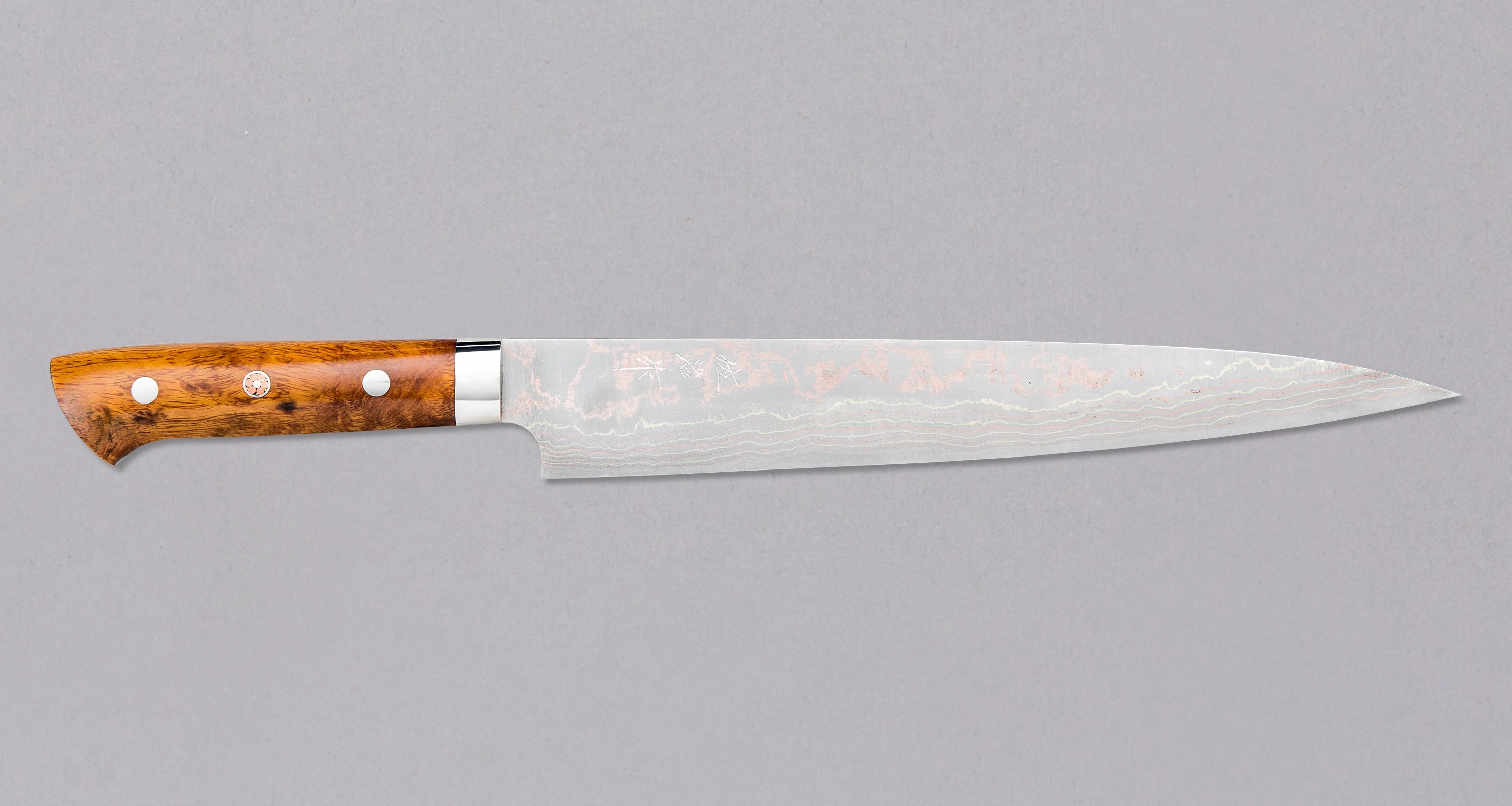
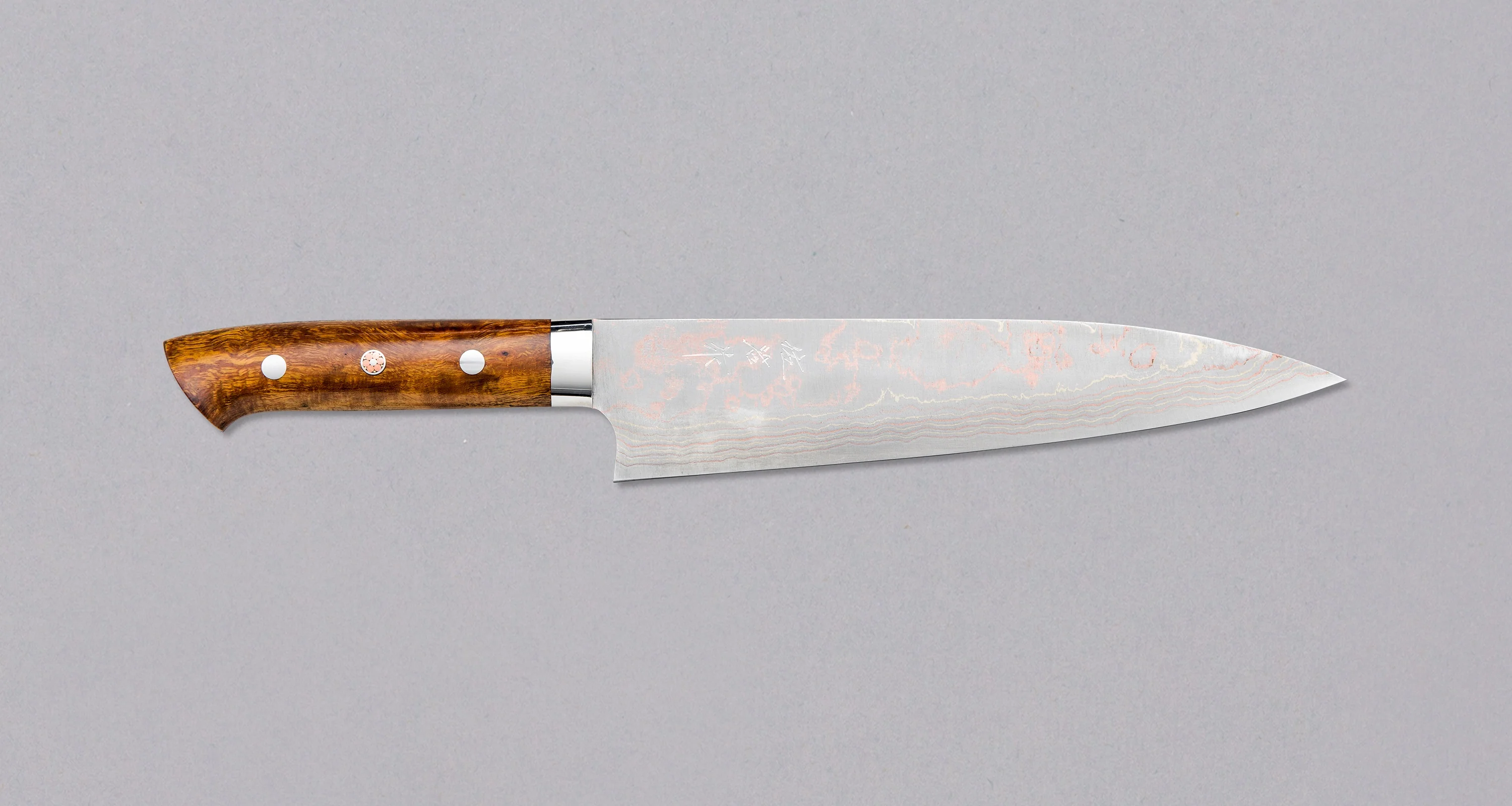
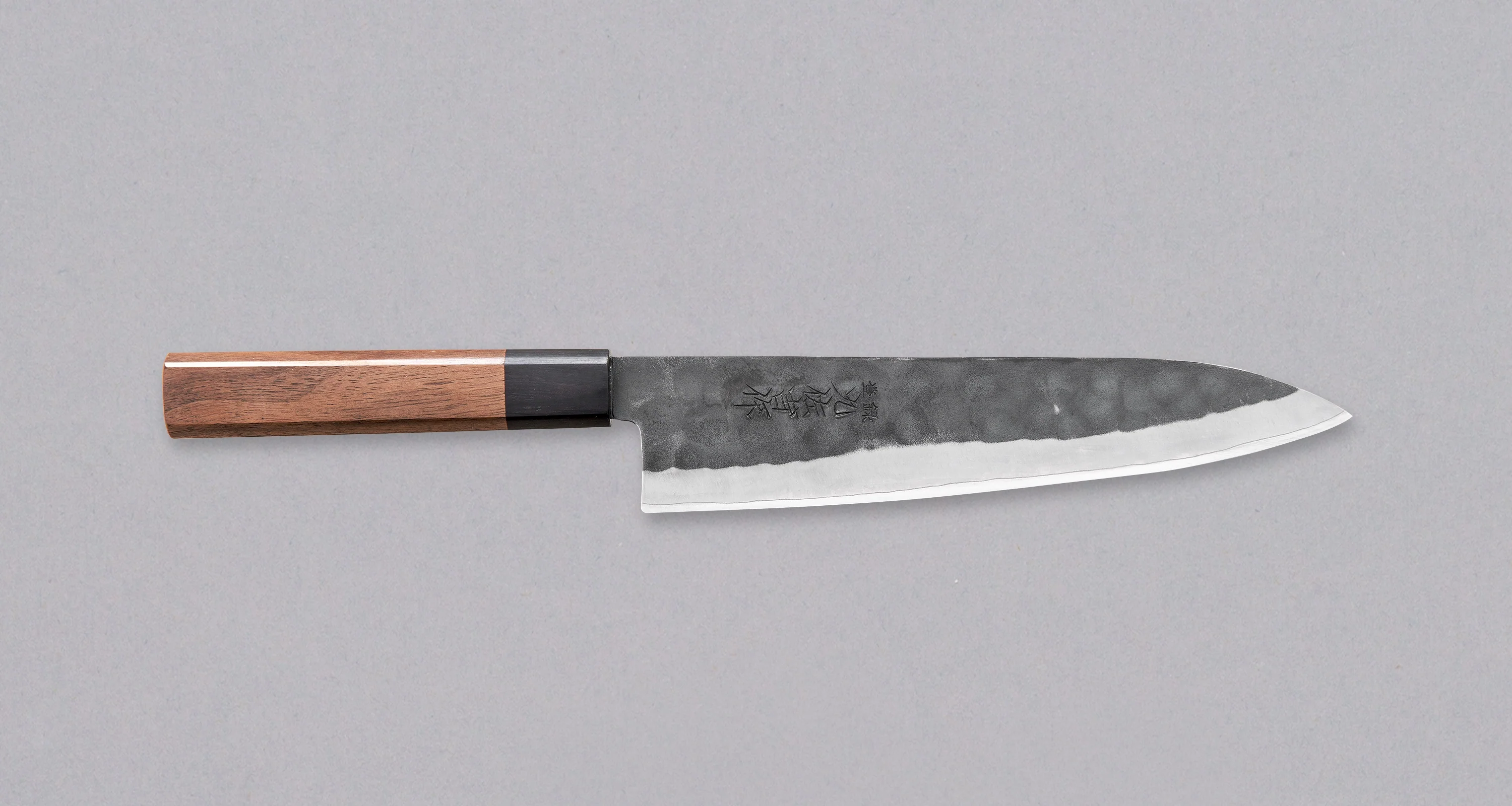
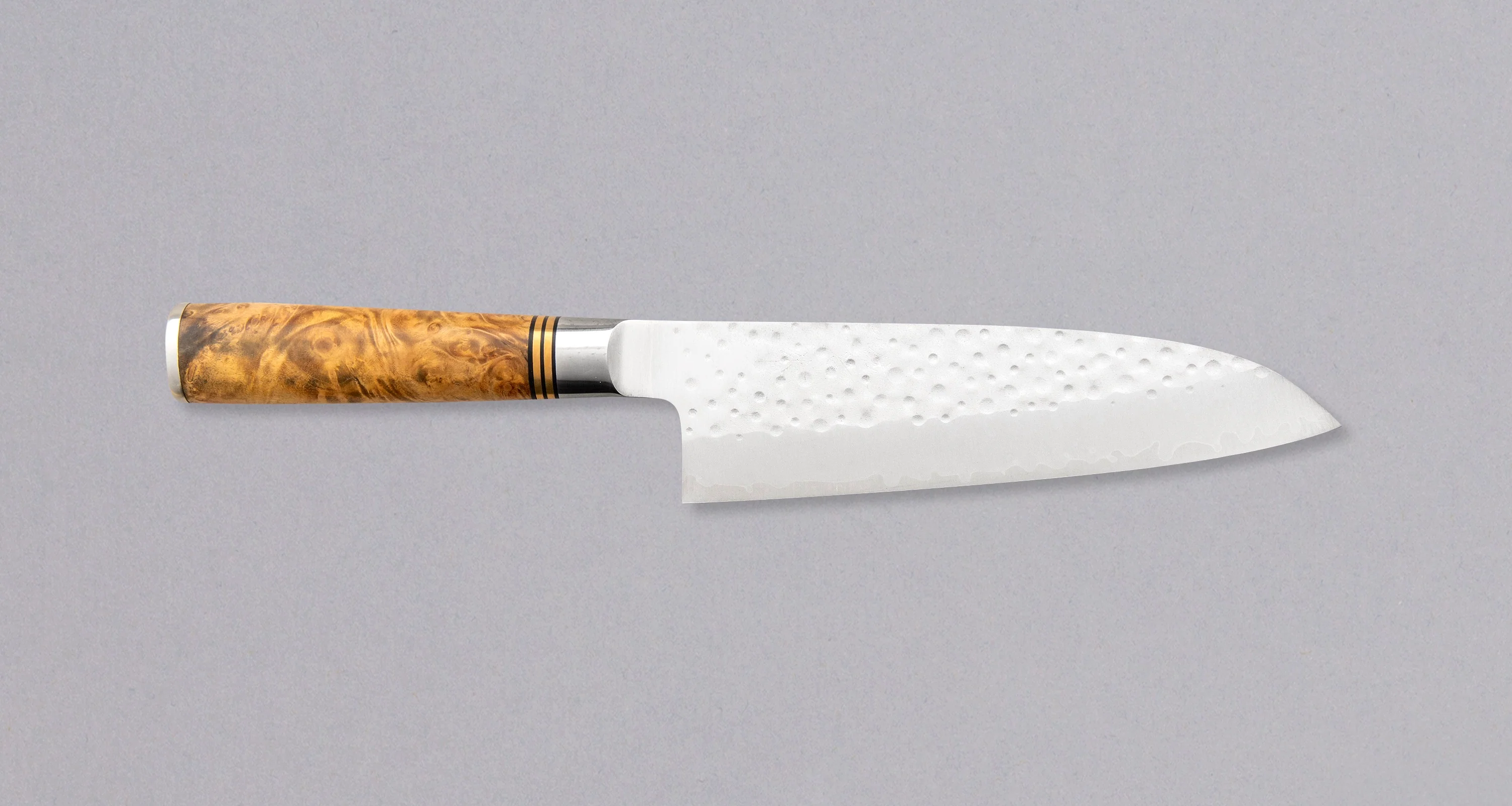
Saji Santoku R2 Karin 180mm is a multi-purpose Japanese kitchen knife, suitable for preparing meat, fish and vegetables. Santoku knives are usually shorter and flatter, which is ideal for fast chopping on the cutting board, and will therefore excel with vegetable prep. But with a blade long enough and a fine tip, it’s still great for slicing fish and meat and also finer mincing and precise work. R2/SG2 is a steel without compromises – high hardness of around 64 HRC, great corrosion resistance and easy sharpening. Plus Takeshi Saji's magic touch. What more could you ask for?
BLADE SHAPE:
Santoku is a multi-purpose Japanese kitchen knife and will serve all those looking for an agile knife with a slight emphasis on vegetable preparation, due to its flatter blade. Santoku knives are the most commonly used knives in Japanese home kitchens and have in recent years conquered the rest of the world too.
STEEL:
R2 (also called SG2) steel is a powder steel, renowned for its hardness and subsequent edge retention—due to a high carbon (C) content of 1.5%. The steel is also high in chromium (Cr)—around 15%, which adds to corrosion resistance and Molybdenum (Mo) that improves the blade’s wear resistance. R2 steel blades will be able to achieve a fine sharpness due to the fine microstructure of the steel and will keep it—without having to worry about maintenance and corrosion.
LAMINATION:
A high hardness of around 63 HRC means that the blade won’t be very tough, so the blade’s core was laminated using the san-mai method to improve its structural integrity and subsequent ability to withstand impacts and prevent chipping. San-mai translates to “three layers” in Japanese, referring to a blade that is composed of a primary, inner layer of harder steel (hagane) and of two secondary, outer layers of softer steel (jigane) that protect the prior.
GEOMETRY:
It has a double bevel (symmetrical) blade.
BLADE FINISH:
The blade is dotted with miniscule circular hammer imprints. This isn’t just a cosmetic feature, as the imprints also help form tiny pockets of air between the blade and the food, which helps with easier separation and therefore less annoying sticking occurs when preparing our meal.
HANDLE:
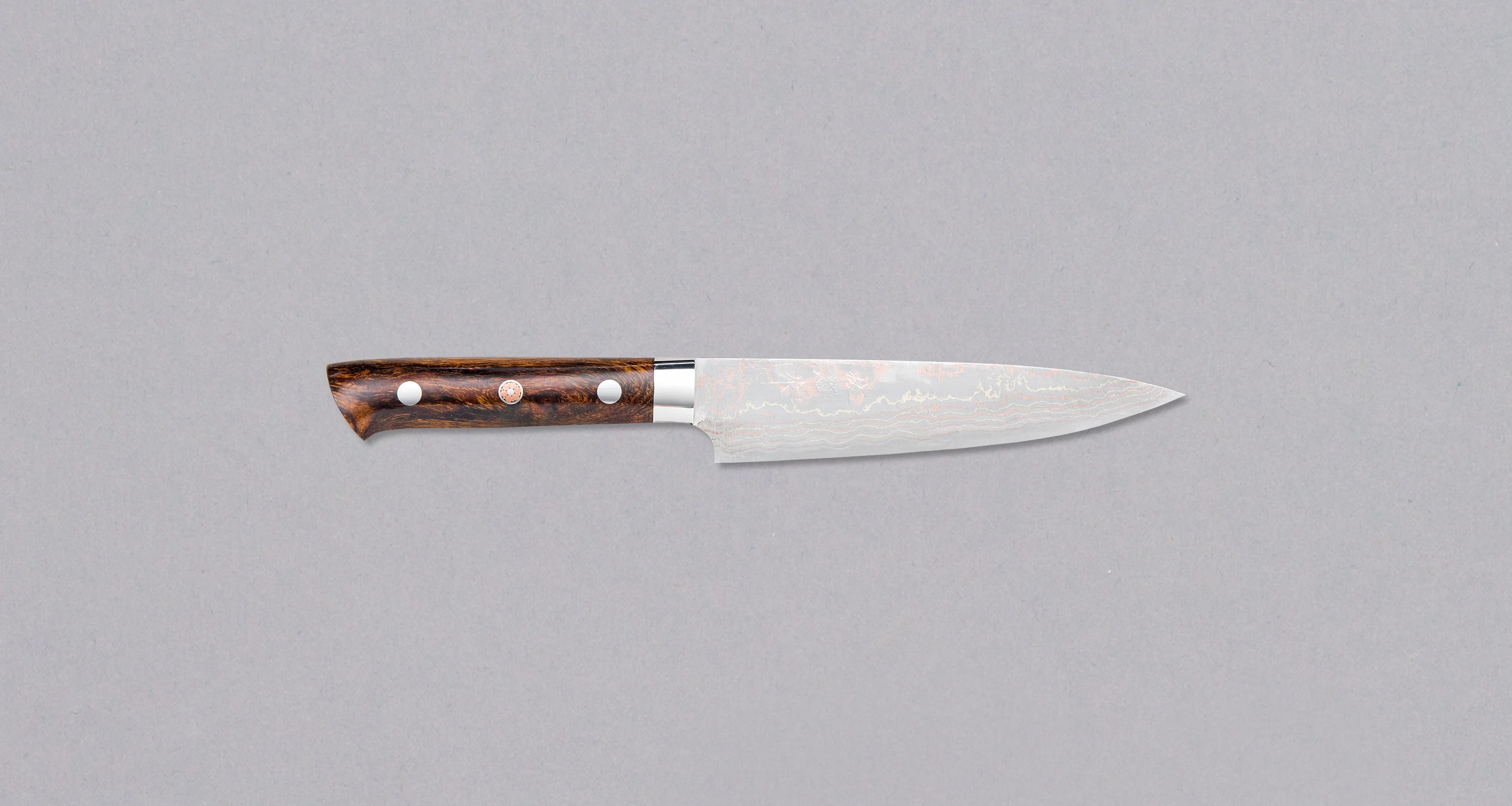
The name Karin (花梨) refers to the handle made out of Chinese quince, which is often used to make instruments, such as the traditional Japanese shamisen. The handle is round and smooth, which makes it an ideal choice for any cook, regardless of being right- or left-handed!
Original: $585.69
-65%$585.69
$204.99Saji Santoku R2 Karin 180mm (7.1")
Saji Santoku R2 Karin 180mm is a multi-purpose Japanese kitchen knife, suitable for preparing meat, fish and vegetables. Santoku knives are usually shorter and flatter, which is ideal for fast chopping on the cutting board, and will therefore excel with vegetable prep. But with a blade long enough and a fine tip, it’s still great for slicing fish and meat and also finer mincing and precise work. R2/SG2 is a steel without compromises – high hardness of around 64 HRC, great corrosion resistance and easy sharpening. Plus Takeshi Saji's magic touch. What more could you ask for?
BLADE SHAPE:
Santoku is a multi-purpose Japanese kitchen knife and will serve all those looking for an agile knife with a slight emphasis on vegetable preparation, due to its flatter blade. Santoku knives are the most commonly used knives in Japanese home kitchens and have in recent years conquered the rest of the world too.
STEEL:
R2 (also called SG2) steel is a powder steel, renowned for its hardness and subsequent edge retention—due to a high carbon (C) content of 1.5%. The steel is also high in chromium (Cr)—around 15%, which adds to corrosion resistance and Molybdenum (Mo) that improves the blade’s wear resistance. R2 steel blades will be able to achieve a fine sharpness due to the fine microstructure of the steel and will keep it—without having to worry about maintenance and corrosion.
LAMINATION:
A high hardness of around 63 HRC means that the blade won’t be very tough, so the blade’s core was laminated using the san-mai method to improve its structural integrity and subsequent ability to withstand impacts and prevent chipping. San-mai translates to “three layers” in Japanese, referring to a blade that is composed of a primary, inner layer of harder steel (hagane) and of two secondary, outer layers of softer steel (jigane) that protect the prior.
GEOMETRY:
It has a double bevel (symmetrical) blade.
BLADE FINISH:
The blade is dotted with miniscule circular hammer imprints. This isn’t just a cosmetic feature, as the imprints also help form tiny pockets of air between the blade and the food, which helps with easier separation and therefore less annoying sticking occurs when preparing our meal.
HANDLE:
The name Karin (花梨) refers to the handle made out of Chinese quince, which is often used to make instruments, such as the traditional Japanese shamisen. The handle is round and smooth, which makes it an ideal choice for any cook, regardless of being right- or left-handed!
Product Information
Product Information
Shipping & Returns
Shipping & Returns
Description
Saji Santoku R2 Karin 180mm is a multi-purpose Japanese kitchen knife, suitable for preparing meat, fish and vegetables. Santoku knives are usually shorter and flatter, which is ideal for fast chopping on the cutting board, and will therefore excel with vegetable prep. But with a blade long enough and a fine tip, it’s still great for slicing fish and meat and also finer mincing and precise work. R2/SG2 is a steel without compromises – high hardness of around 64 HRC, great corrosion resistance and easy sharpening. Plus Takeshi Saji's magic touch. What more could you ask for?
BLADE SHAPE:
Santoku is a multi-purpose Japanese kitchen knife and will serve all those looking for an agile knife with a slight emphasis on vegetable preparation, due to its flatter blade. Santoku knives are the most commonly used knives in Japanese home kitchens and have in recent years conquered the rest of the world too.
STEEL:
R2 (also called SG2) steel is a powder steel, renowned for its hardness and subsequent edge retention—due to a high carbon (C) content of 1.5%. The steel is also high in chromium (Cr)—around 15%, which adds to corrosion resistance and Molybdenum (Mo) that improves the blade’s wear resistance. R2 steel blades will be able to achieve a fine sharpness due to the fine microstructure of the steel and will keep it—without having to worry about maintenance and corrosion.
LAMINATION:
A high hardness of around 63 HRC means that the blade won’t be very tough, so the blade’s core was laminated using the san-mai method to improve its structural integrity and subsequent ability to withstand impacts and prevent chipping. San-mai translates to “three layers” in Japanese, referring to a blade that is composed of a primary, inner layer of harder steel (hagane) and of two secondary, outer layers of softer steel (jigane) that protect the prior.
GEOMETRY:
It has a double bevel (symmetrical) blade.
BLADE FINISH:
The blade is dotted with miniscule circular hammer imprints. This isn’t just a cosmetic feature, as the imprints also help form tiny pockets of air between the blade and the food, which helps with easier separation and therefore less annoying sticking occurs when preparing our meal.
HANDLE:
The name Karin (花梨) refers to the handle made out of Chinese quince, which is often used to make instruments, such as the traditional Japanese shamisen. The handle is round and smooth, which makes it an ideal choice for any cook, regardless of being right- or left-handed!