Saji Petty VG-10 130mm (5.1")
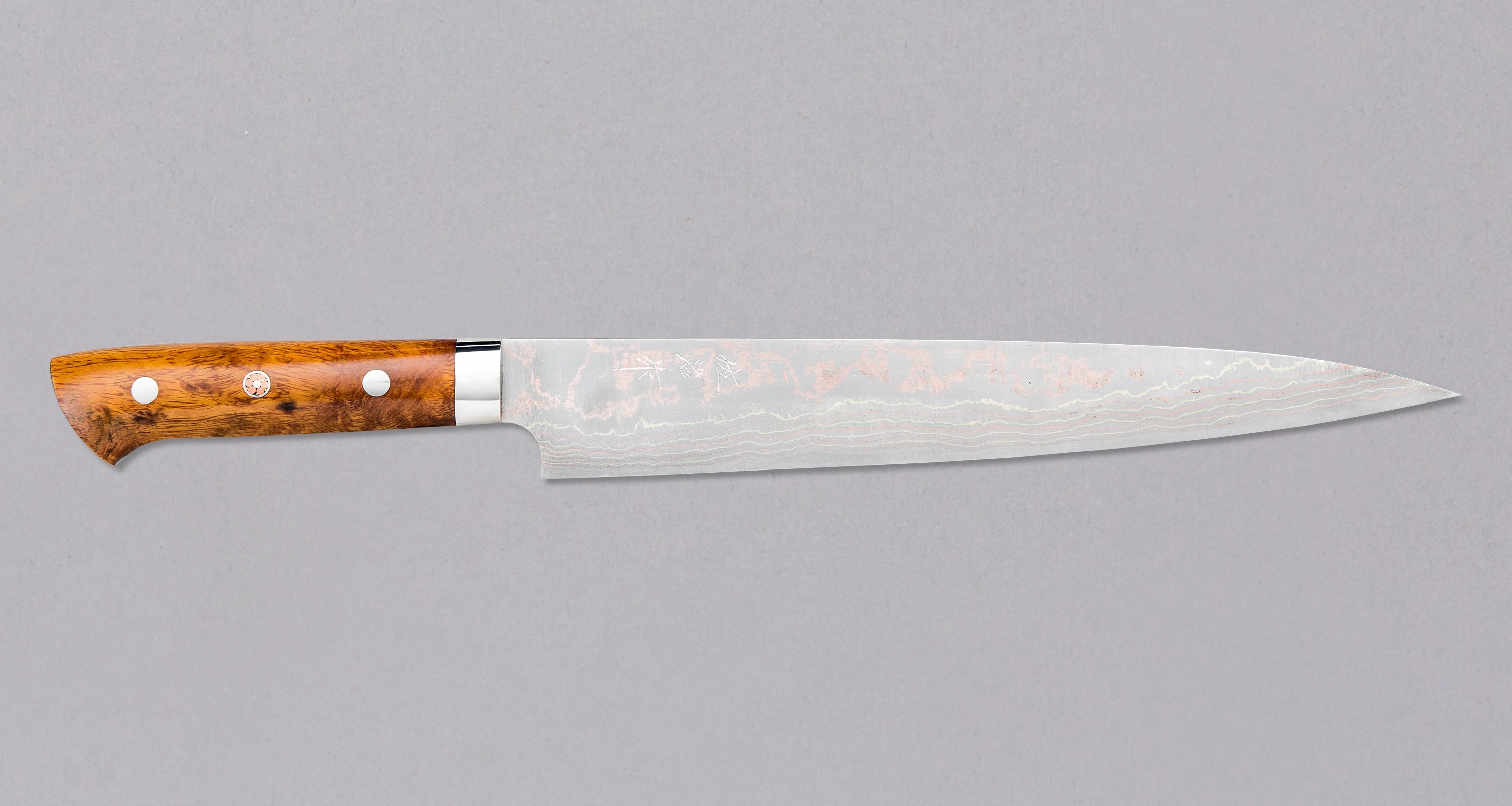
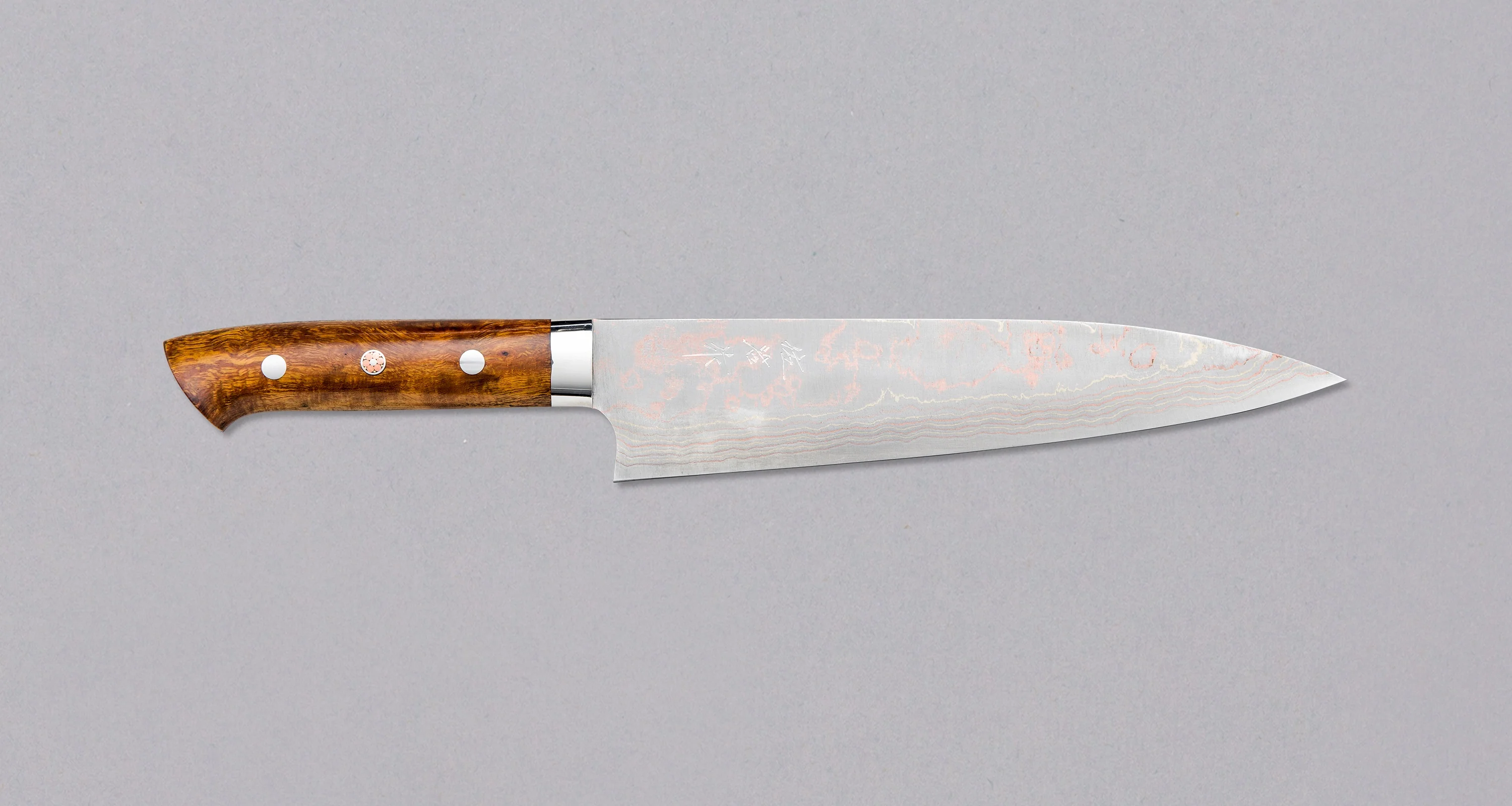
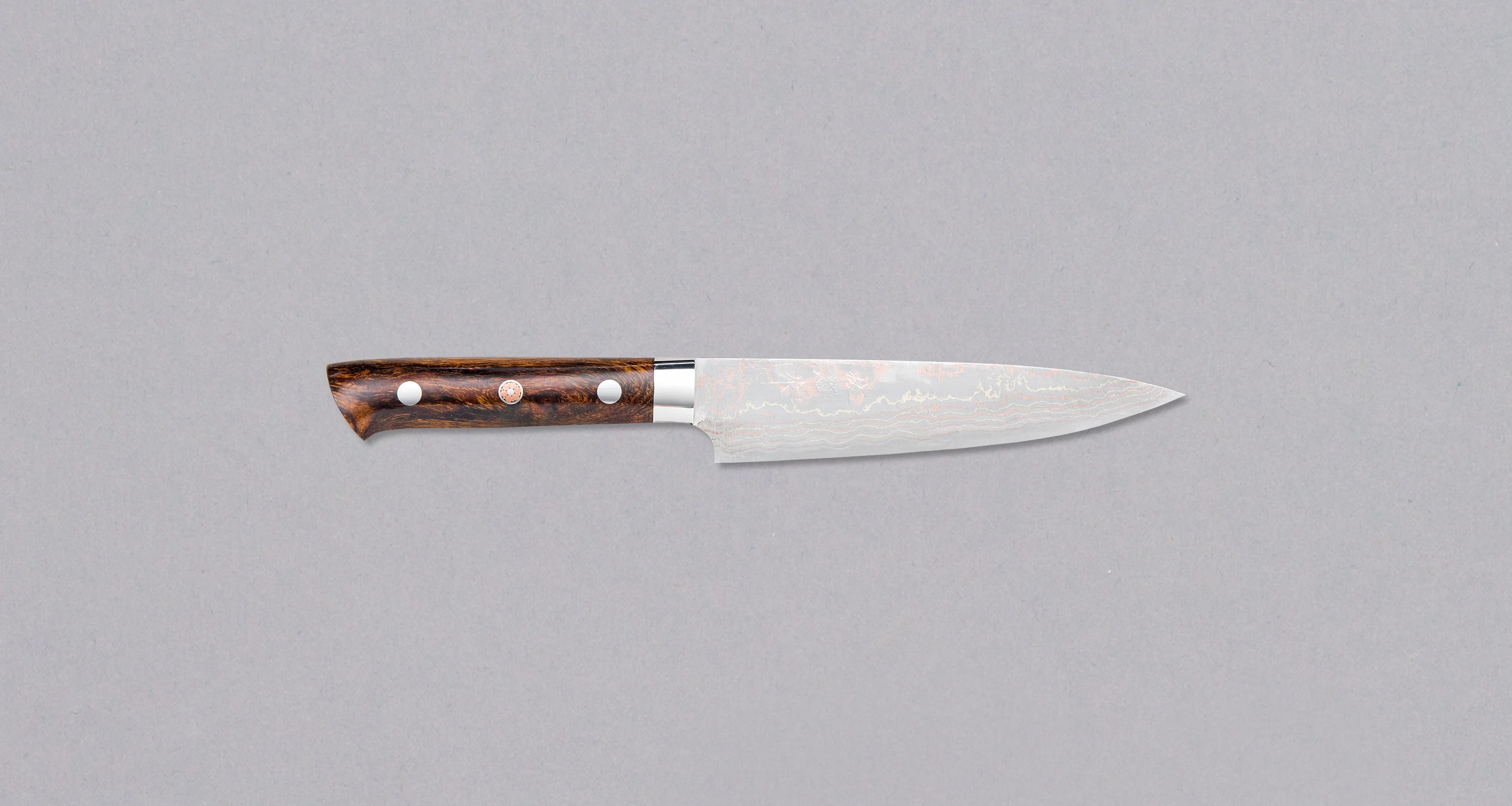
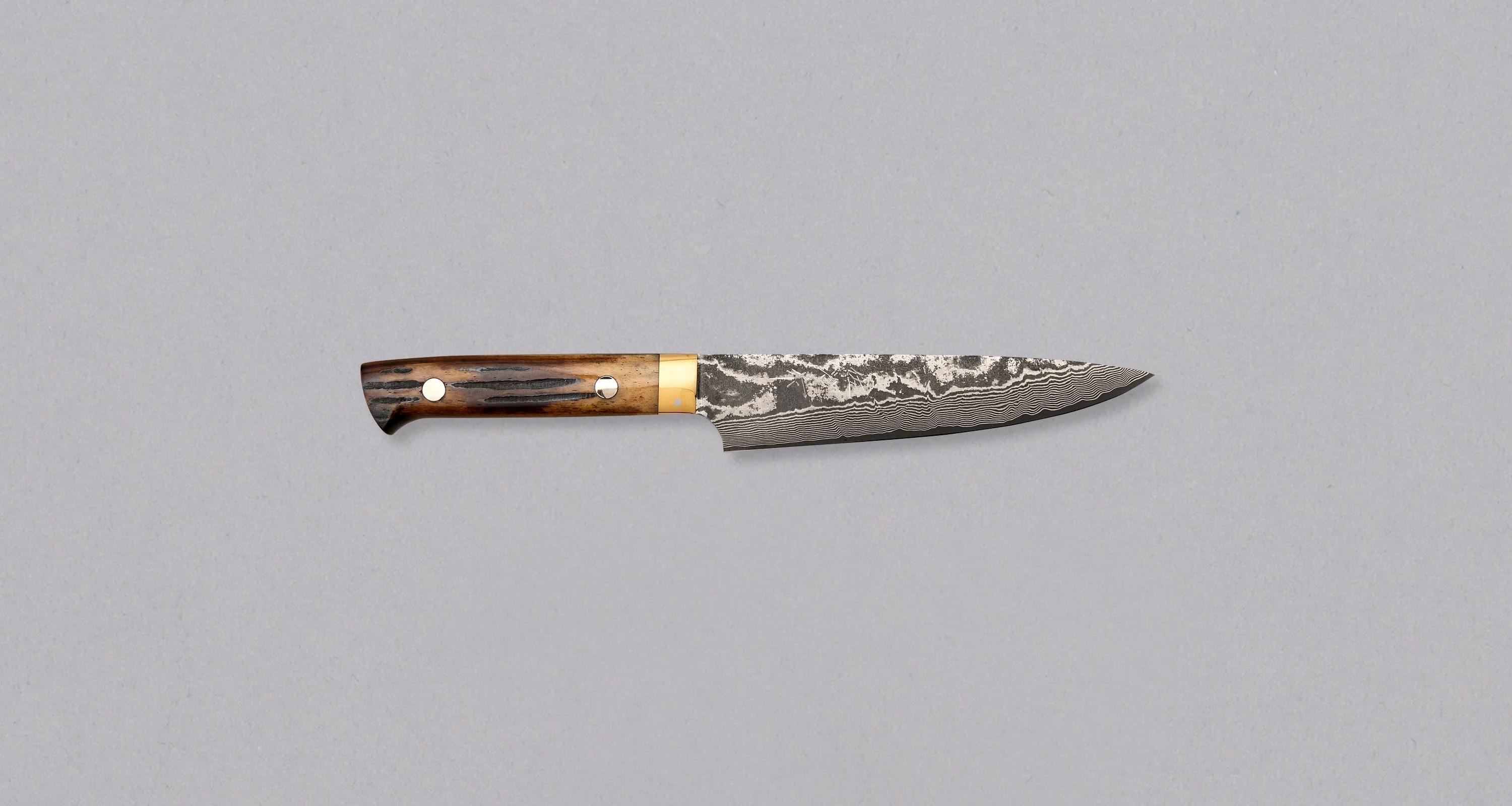
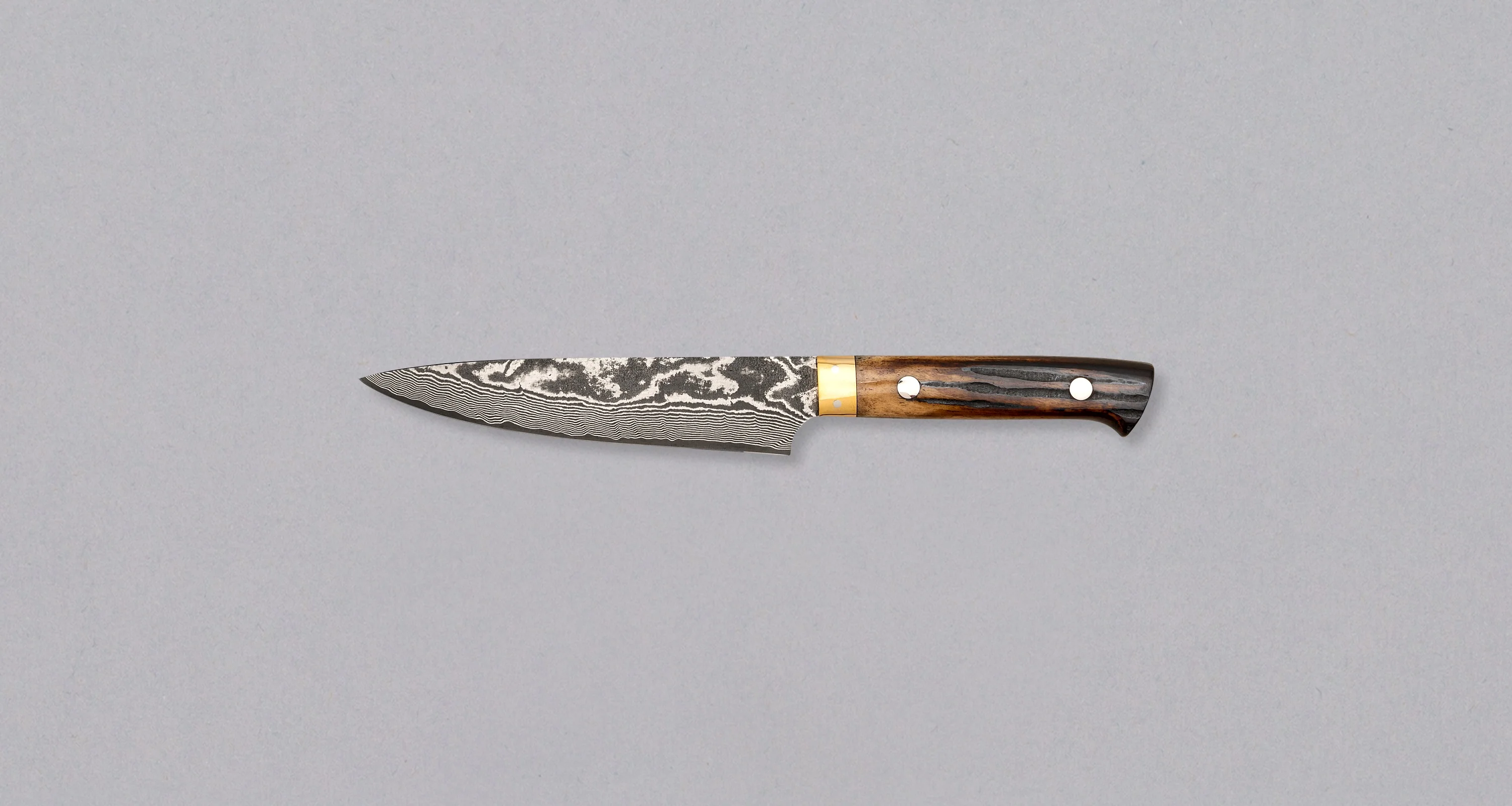
Saji Petty VG-10 130mm (5.1") is definitely not just a looker. If you check under the hood, you will find some amazing specs there too! The core of this knife is made of VG-10 steel, tempered to around 61 HRC, and clad into layers of rust-resistant stainless steel which gives this knife a one-of-a-kind damascus pattern.
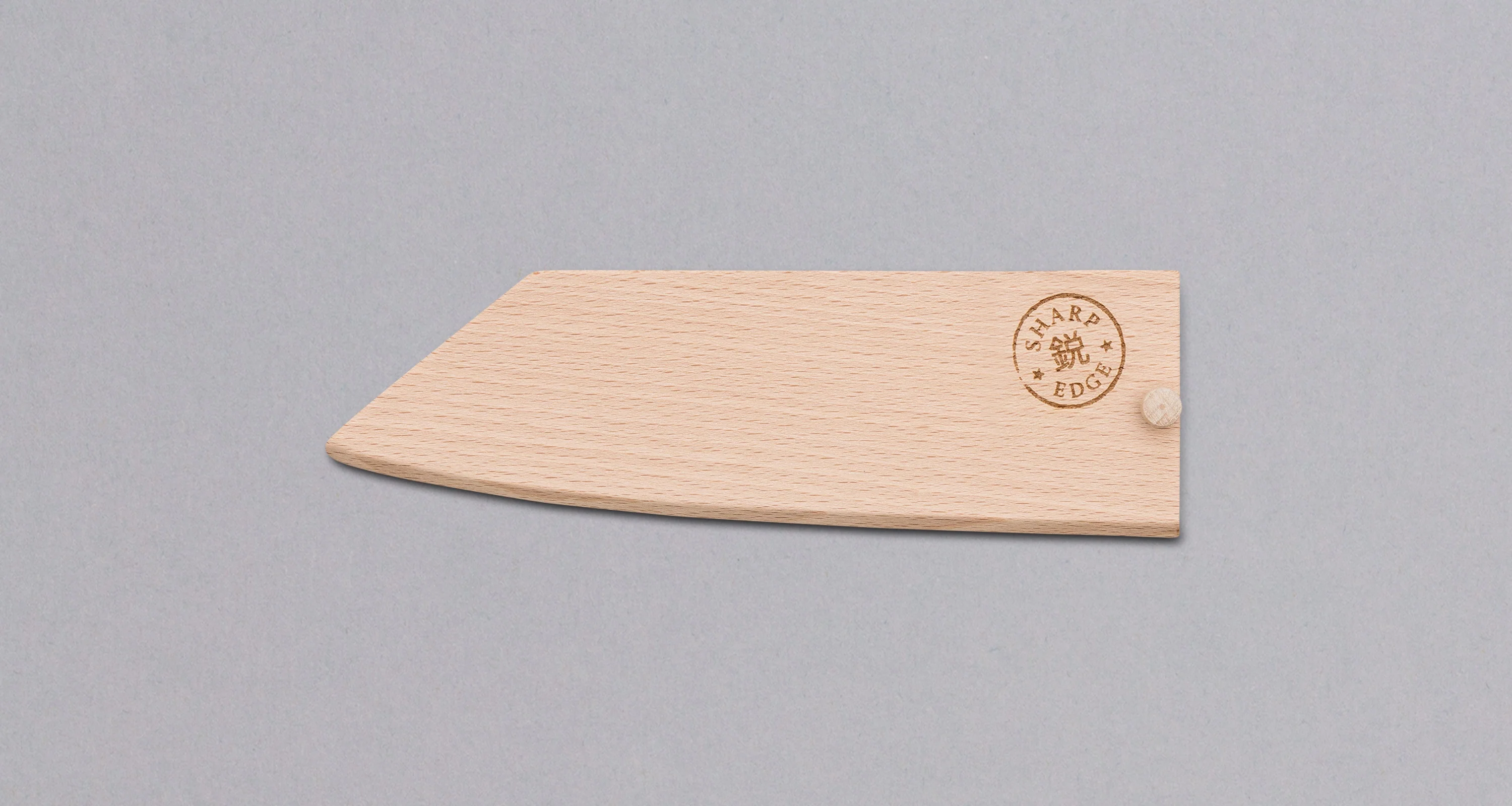
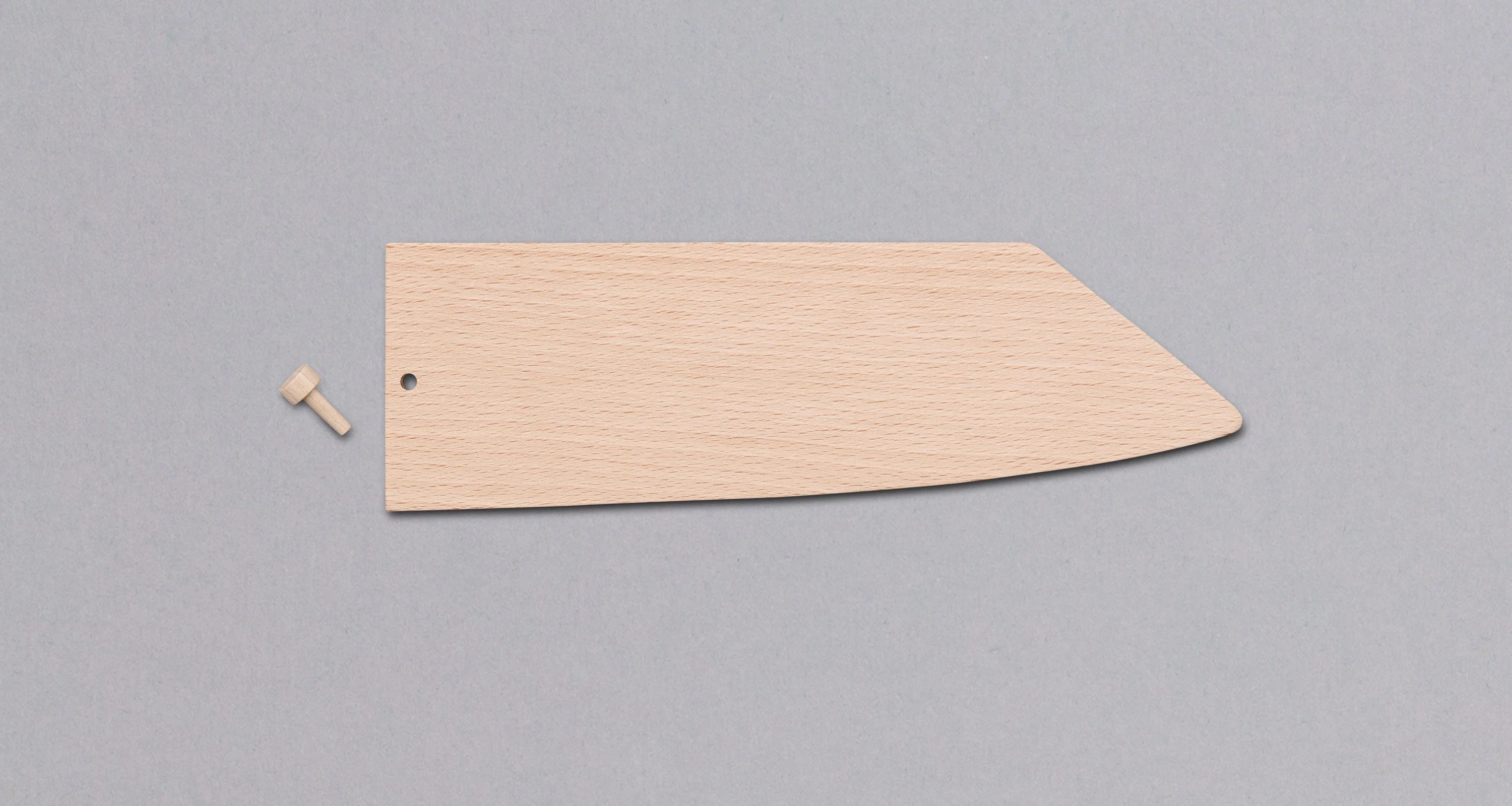
The knife is safely stored in a traditional Japanese wooden box with burned Saji trademark kanji characters on the top. In short, this knife is a great example of functional art!
BLADE SHAPE:
Petty knives are designed for smaller tasks on and off the cutting board. It's an indispensable knife in any kitchen and can be used for peeling, mincing, paring, and decorating food. Petty or utility knives are basically a smaller version of gyutos or chef's knives. Due to the length of the blade, it can also be used as a stand-alone knife if you are uncomfortable with longer blades. A must-have knife in every kitchen!
Use for: peeling, trimming, garnishing, carving, chopping herbs, chopping garlic, slicing small pieces of dried meat, trimming meat, filleting small portions of fish, and similar tasks.
STEEL:
VG-10 is currently the most popular Japanese steel. When deciding between the steels from which we want to make a knife, we consider properties such as hardness, ability to maintain sharpness, ease of maintenance, grain of the steel, ease of sharpening, and, ultimately, price and availability. VG-10 (V for Vanadium, G for "gold", denoting superior quality) is produced by Takefu Special Steel Company, a relatively small company that managed to find just the right balance between the various elements that make up today's most popular Japanese steel.
VG-10 is a relatively high (1%) carbon (C), 15% chromium (Cr), 1% molybdenum (Mo), 0.3% vanadium (V) and 1.5% cobalt (Co) stainless steel. The combination of Cr, Mo and V forms a lot of hard carbides, which gives the steel resistance to abrasion and consequently better retention of sharpness.
LAMINATION:
A high hardness of around 61 HRC means that the blade won’t be very tough, so the blade’s core was laminated using the san-mai method to improve its structural integrity and subsequent ability to withstand impacts and prevent chipping. San-mai translates to “three layers” in Japanese, referring to a blade that is composed of a primary, inner layer of harder steel (hagane) and of two secondary, outer layers of softer steel (jigane) that protect the prior.
GEOMETRY:
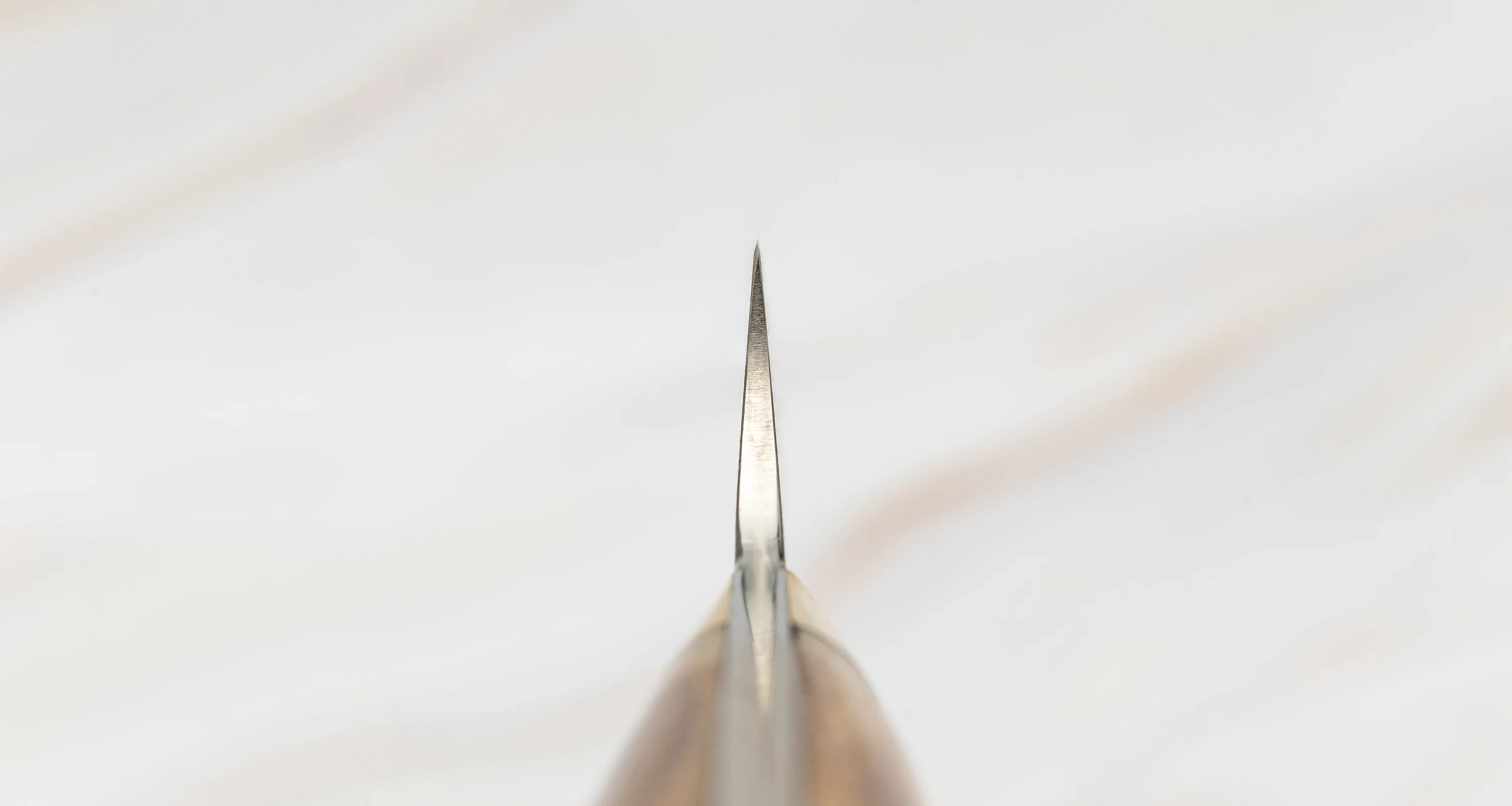
It has a double bevel (symmetrical) blade with a flat v-edge grind. The blade has a distal taper, meaning that it narrows from the handle towards the tip. At the handle, it is 2.2mm (0.08") thick, and at the tip above the shinogi line it narrows to 1.6mm (0.06"). This gives it more strength and weight at the handle (meaning we can exert more pressure with the heel) and more precision at the tip, allowing for smooth and precise cuts.
BLADE FINISH:
The blade sports a beautiful black Damascus finish.
HANDLE:
The Western-style (yo) handle is made from cow bone, artfully dyed and polished to mimic the rugged look of natural stag antler. Each piece is carefully chosen for its durability, grip, and character—offering a refined, low-maintenance alternative to traditional wood. A stainless steel bolster and two subtle rivets complete the handle with a balanced, elegant touch.
BLACKSMITH:
Takeshi Saji (1948) is one of the most distinguished blacksmith masters in Japan. In 1992, he was officially certified as a “Traditional Master Craftsman”, a prestigious title awarded only to the best craftsmen in Japan. He’s a third-generation blacksmith and his workshop is located at the Takefu Knife Village in Echizen, where he forges knives together with his two apprentices.
→ Read more on BLACKSMITH: TAKESHI SAJI
Original: $357.27
-65%$357.27
$125.04More Images
Saji Petty VG-10 130mm (5.1")
Saji Petty VG-10 130mm (5.1") is definitely not just a looker. If you check under the hood, you will find some amazing specs there too! The core of this knife is made of VG-10 steel, tempered to around 61 HRC, and clad into layers of rust-resistant stainless steel which gives this knife a one-of-a-kind damascus pattern.
The knife is safely stored in a traditional Japanese wooden box with burned Saji trademark kanji characters on the top. In short, this knife is a great example of functional art!
BLADE SHAPE:
Petty knives are designed for smaller tasks on and off the cutting board. It's an indispensable knife in any kitchen and can be used for peeling, mincing, paring, and decorating food. Petty or utility knives are basically a smaller version of gyutos or chef's knives. Due to the length of the blade, it can also be used as a stand-alone knife if you are uncomfortable with longer blades. A must-have knife in every kitchen!
Use for: peeling, trimming, garnishing, carving, chopping herbs, chopping garlic, slicing small pieces of dried meat, trimming meat, filleting small portions of fish, and similar tasks.
STEEL:
VG-10 is currently the most popular Japanese steel. When deciding between the steels from which we want to make a knife, we consider properties such as hardness, ability to maintain sharpness, ease of maintenance, grain of the steel, ease of sharpening, and, ultimately, price and availability. VG-10 (V for Vanadium, G for "gold", denoting superior quality) is produced by Takefu Special Steel Company, a relatively small company that managed to find just the right balance between the various elements that make up today's most popular Japanese steel.
VG-10 is a relatively high (1%) carbon (C), 15% chromium (Cr), 1% molybdenum (Mo), 0.3% vanadium (V) and 1.5% cobalt (Co) stainless steel. The combination of Cr, Mo and V forms a lot of hard carbides, which gives the steel resistance to abrasion and consequently better retention of sharpness.
LAMINATION:
A high hardness of around 61 HRC means that the blade won’t be very tough, so the blade’s core was laminated using the san-mai method to improve its structural integrity and subsequent ability to withstand impacts and prevent chipping. San-mai translates to “three layers” in Japanese, referring to a blade that is composed of a primary, inner layer of harder steel (hagane) and of two secondary, outer layers of softer steel (jigane) that protect the prior.
GEOMETRY:
It has a double bevel (symmetrical) blade with a flat v-edge grind. The blade has a distal taper, meaning that it narrows from the handle towards the tip. At the handle, it is 2.2mm (0.08") thick, and at the tip above the shinogi line it narrows to 1.6mm (0.06"). This gives it more strength and weight at the handle (meaning we can exert more pressure with the heel) and more precision at the tip, allowing for smooth and precise cuts.
BLADE FINISH:
The blade sports a beautiful black Damascus finish.
HANDLE:
The Western-style (yo) handle is made from cow bone, artfully dyed and polished to mimic the rugged look of natural stag antler. Each piece is carefully chosen for its durability, grip, and character—offering a refined, low-maintenance alternative to traditional wood. A stainless steel bolster and two subtle rivets complete the handle with a balanced, elegant touch.
BLACKSMITH:
Takeshi Saji (1948) is one of the most distinguished blacksmith masters in Japan. In 1992, he was officially certified as a “Traditional Master Craftsman”, a prestigious title awarded only to the best craftsmen in Japan. He’s a third-generation blacksmith and his workshop is located at the Takefu Knife Village in Echizen, where he forges knives together with his two apprentices.
→ Read more on BLACKSMITH: TAKESHI SAJI
Product Information
Product Information
Shipping & Returns
Shipping & Returns
Description
Saji Petty VG-10 130mm (5.1") is definitely not just a looker. If you check under the hood, you will find some amazing specs there too! The core of this knife is made of VG-10 steel, tempered to around 61 HRC, and clad into layers of rust-resistant stainless steel which gives this knife a one-of-a-kind damascus pattern.
The knife is safely stored in a traditional Japanese wooden box with burned Saji trademark kanji characters on the top. In short, this knife is a great example of functional art!
BLADE SHAPE:
Petty knives are designed for smaller tasks on and off the cutting board. It's an indispensable knife in any kitchen and can be used for peeling, mincing, paring, and decorating food. Petty or utility knives are basically a smaller version of gyutos or chef's knives. Due to the length of the blade, it can also be used as a stand-alone knife if you are uncomfortable with longer blades. A must-have knife in every kitchen!
Use for: peeling, trimming, garnishing, carving, chopping herbs, chopping garlic, slicing small pieces of dried meat, trimming meat, filleting small portions of fish, and similar tasks.
STEEL:
VG-10 is currently the most popular Japanese steel. When deciding between the steels from which we want to make a knife, we consider properties such as hardness, ability to maintain sharpness, ease of maintenance, grain of the steel, ease of sharpening, and, ultimately, price and availability. VG-10 (V for Vanadium, G for "gold", denoting superior quality) is produced by Takefu Special Steel Company, a relatively small company that managed to find just the right balance between the various elements that make up today's most popular Japanese steel.
VG-10 is a relatively high (1%) carbon (C), 15% chromium (Cr), 1% molybdenum (Mo), 0.3% vanadium (V) and 1.5% cobalt (Co) stainless steel. The combination of Cr, Mo and V forms a lot of hard carbides, which gives the steel resistance to abrasion and consequently better retention of sharpness.
LAMINATION:
A high hardness of around 61 HRC means that the blade won’t be very tough, so the blade’s core was laminated using the san-mai method to improve its structural integrity and subsequent ability to withstand impacts and prevent chipping. San-mai translates to “three layers” in Japanese, referring to a blade that is composed of a primary, inner layer of harder steel (hagane) and of two secondary, outer layers of softer steel (jigane) that protect the prior.
GEOMETRY:
It has a double bevel (symmetrical) blade with a flat v-edge grind. The blade has a distal taper, meaning that it narrows from the handle towards the tip. At the handle, it is 2.2mm (0.08") thick, and at the tip above the shinogi line it narrows to 1.6mm (0.06"). This gives it more strength and weight at the handle (meaning we can exert more pressure with the heel) and more precision at the tip, allowing for smooth and precise cuts.
BLADE FINISH:
The blade sports a beautiful black Damascus finish.
HANDLE:
The Western-style (yo) handle is made from cow bone, artfully dyed and polished to mimic the rugged look of natural stag antler. Each piece is carefully chosen for its durability, grip, and character—offering a refined, low-maintenance alternative to traditional wood. A stainless steel bolster and two subtle rivets complete the handle with a balanced, elegant touch.
BLACKSMITH:
Takeshi Saji (1948) is one of the most distinguished blacksmith masters in Japan. In 1992, he was officially certified as a “Traditional Master Craftsman”, a prestigious title awarded only to the best craftsmen in Japan. He’s a third-generation blacksmith and his workshop is located at the Takefu Knife Village in Echizen, where he forges knives together with his two apprentices.
→ Read more on BLACKSMITH: TAKESHI SAJI