Nigara Santoku VG-XEOS 170mm (6.7") - BLADE
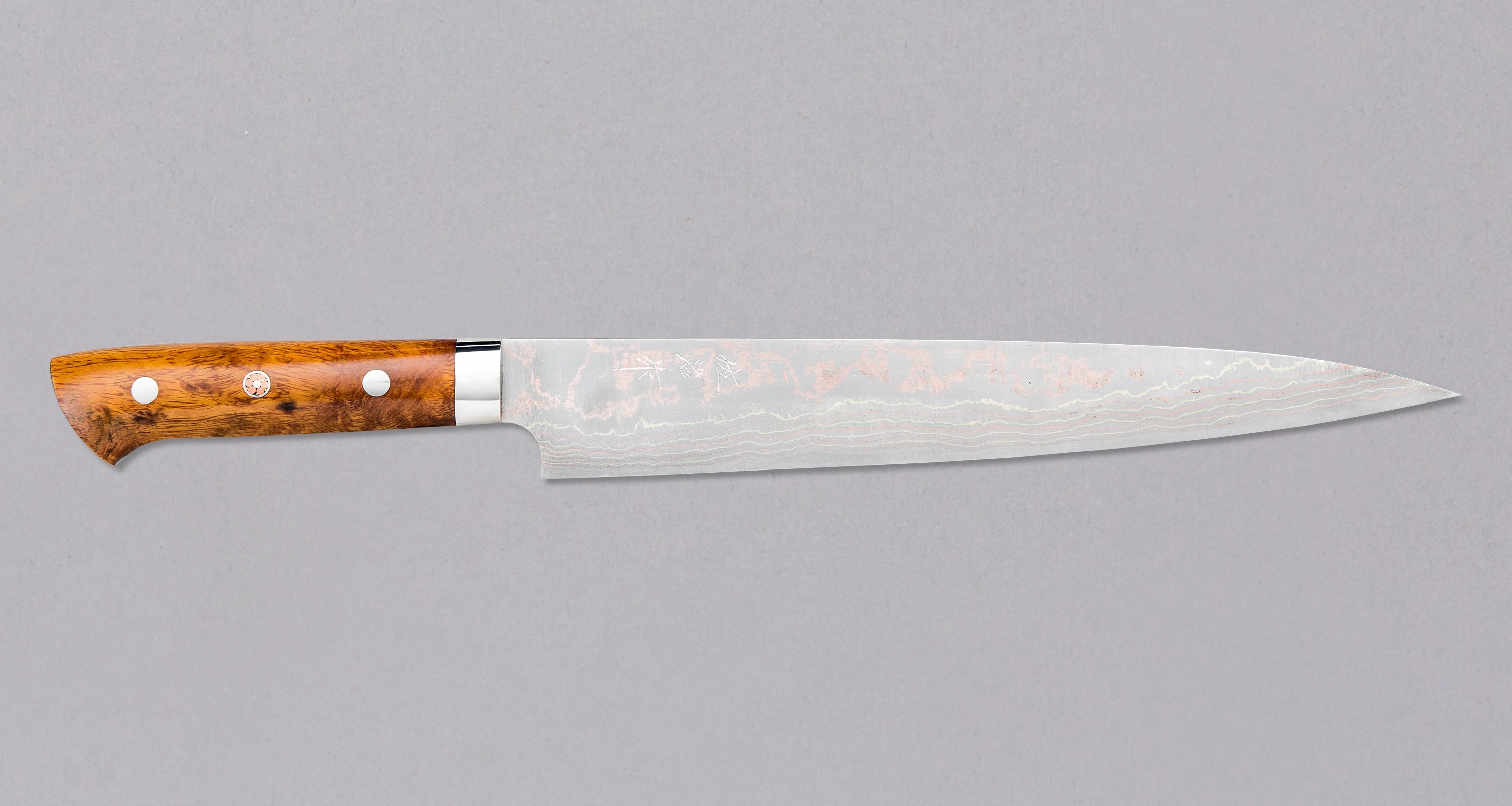
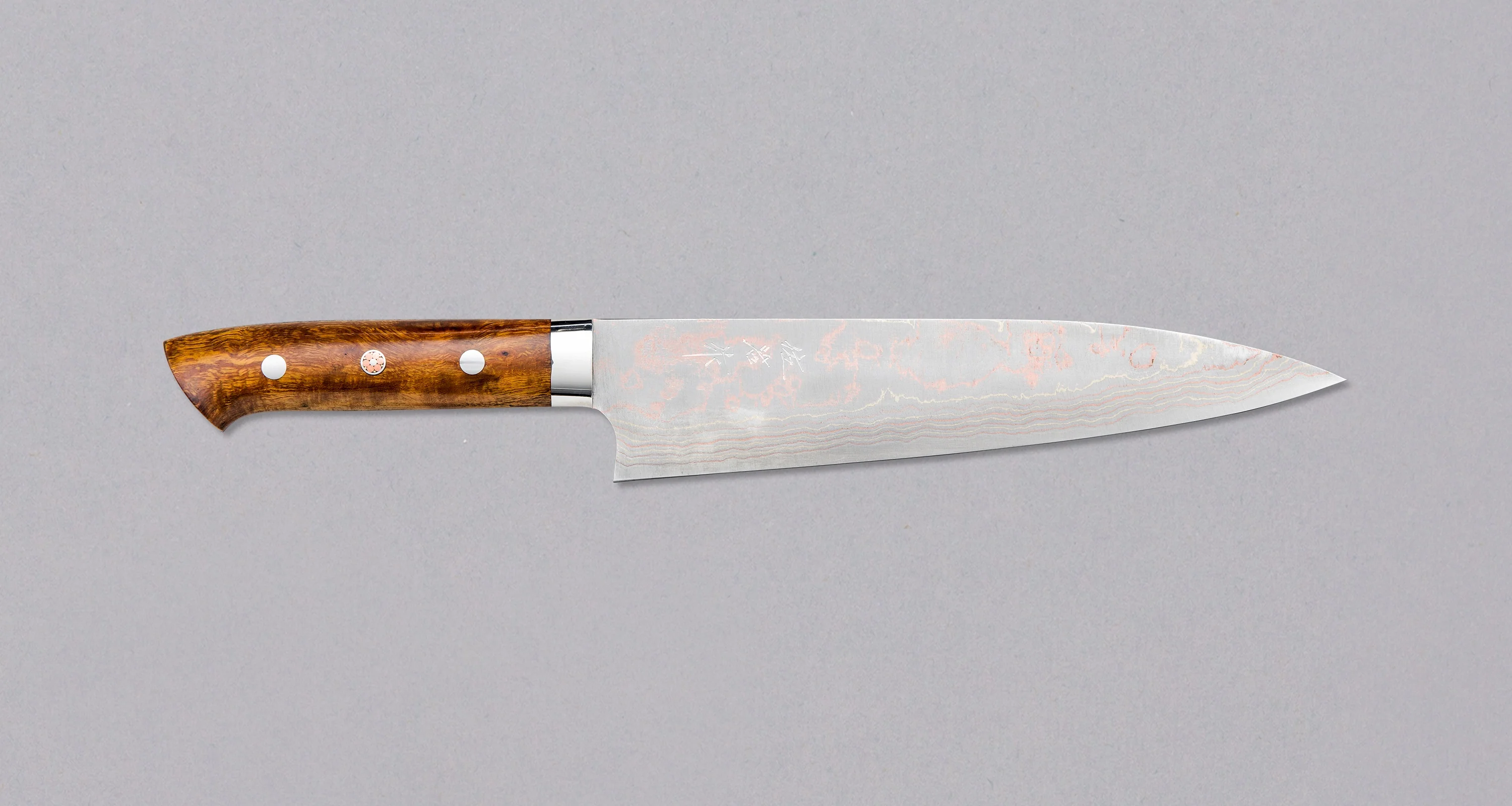
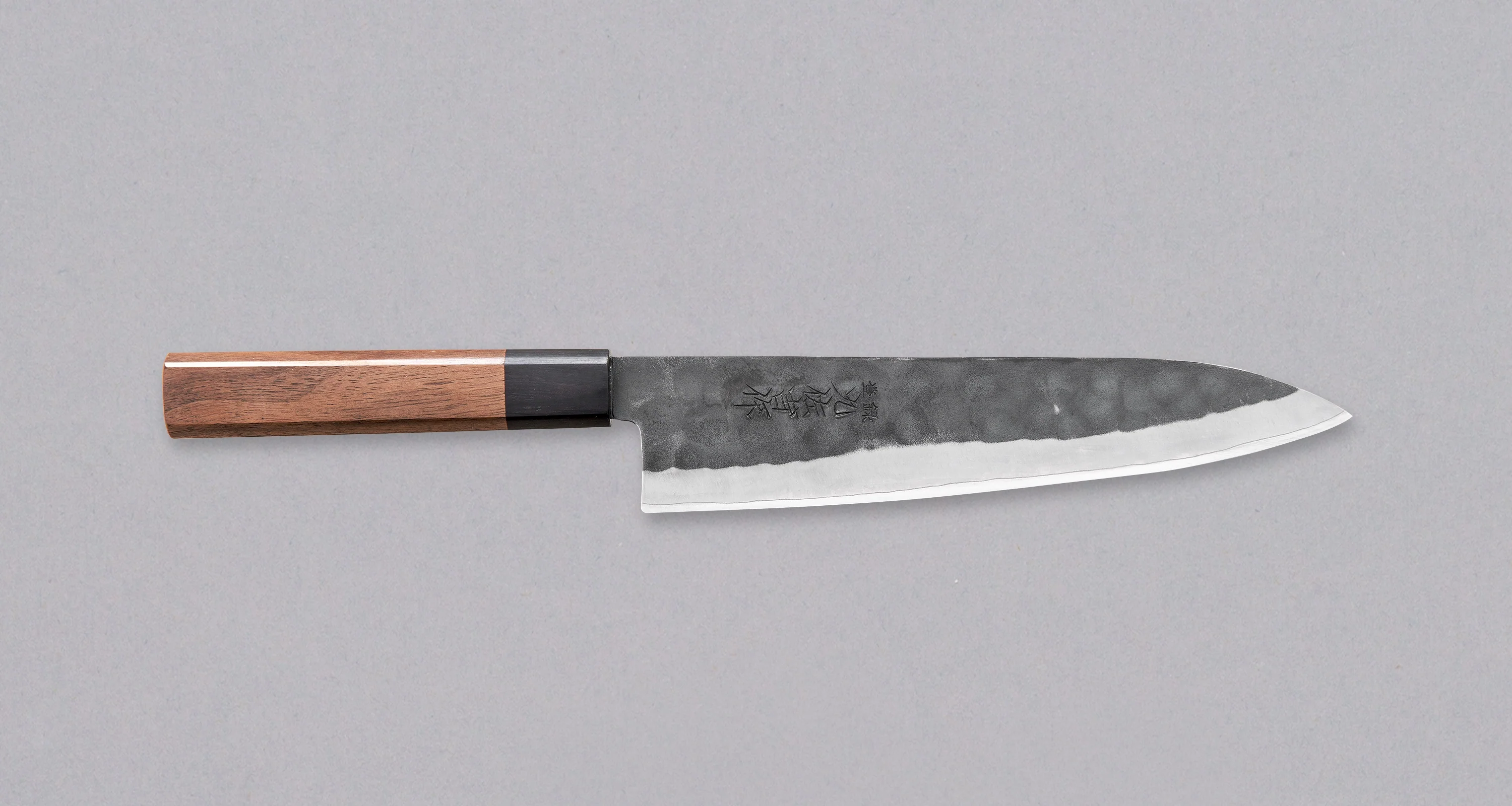
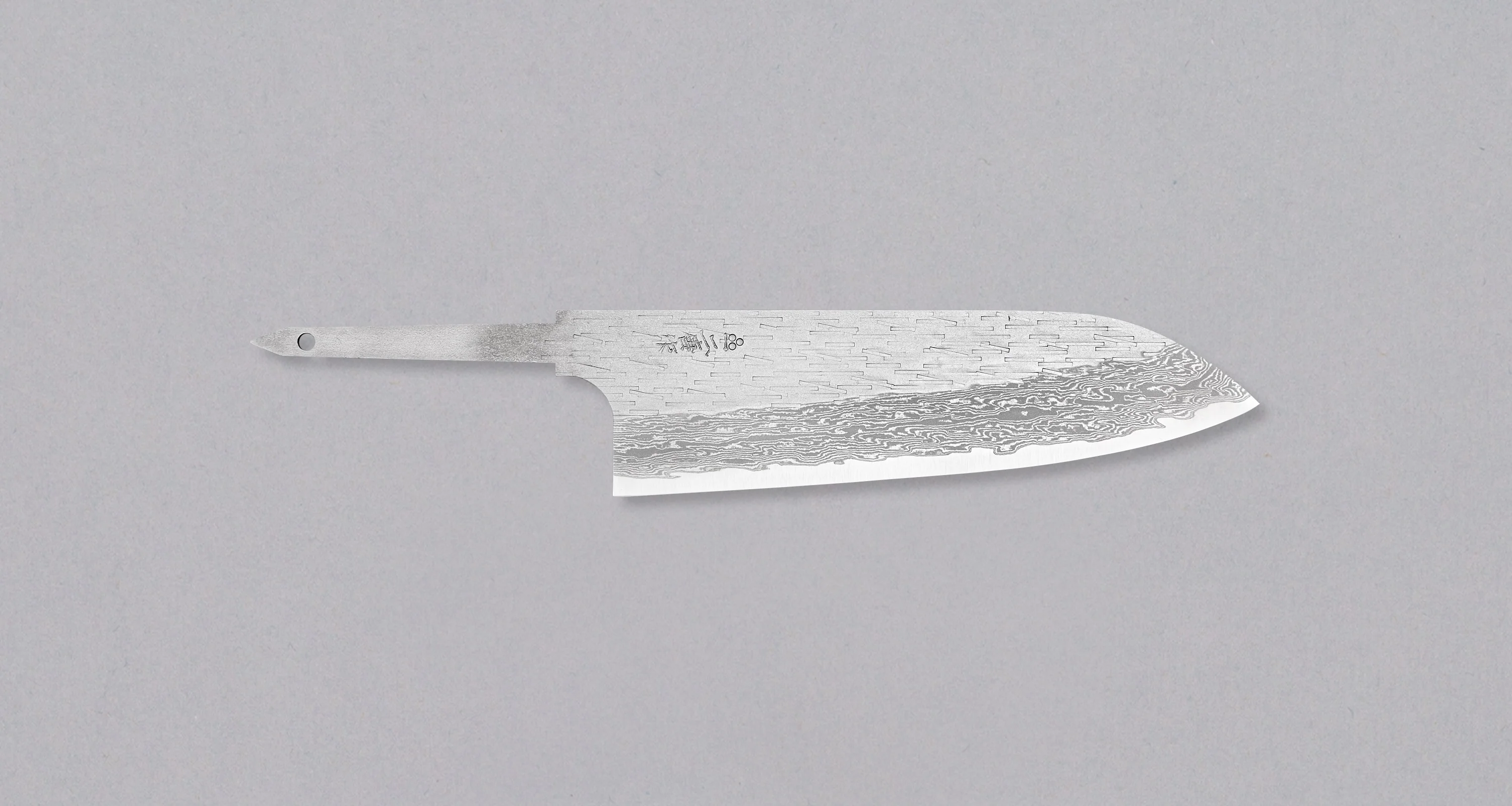
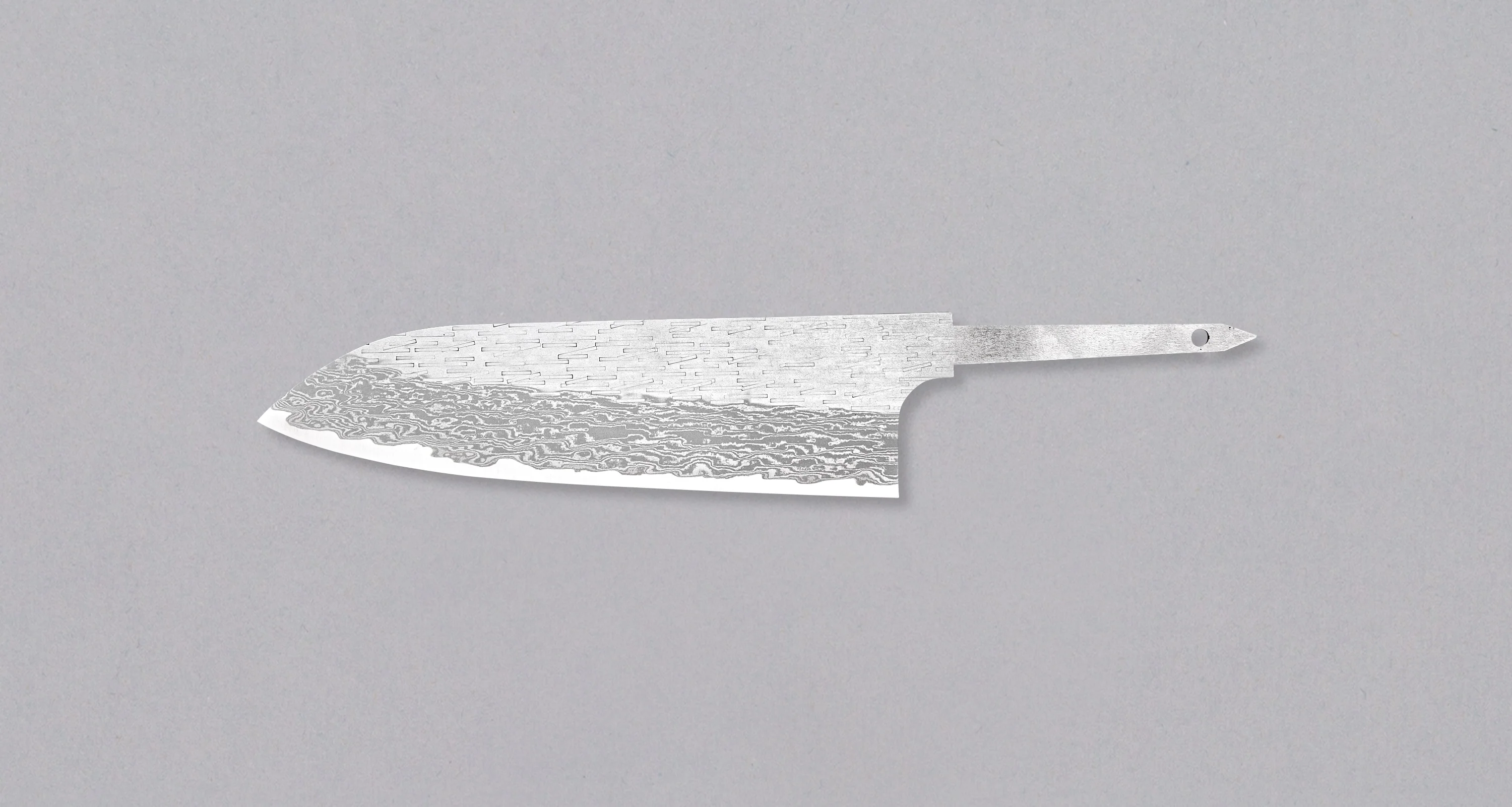
Looking for a knife that will impress you both in functionality and looks? Look no further. The look and feel of these knives will leave no one indifferent. Finished with a stunning damascus pattern and a hammered tsuchime texture, this Santoku is a striking example of Japanese craftsmanship and a testament to modern steel innovation.
Available without a handle, this knife lets you craft a custom look—or choose a handle separately—to create a one-of-a-kind tool tailored to your style and needs.
BLADE SHAPE:
The Santoku knife, originating from Japan, is a versatile and multipurpose kitchen tool commonly found in Japanese households. It excels at various cutting and chopping tasks on the cutting board.
The name "Santoku" derives from the Japanese word "San," meaning "three," representing the knife's three virtues. It effortlessly handles three key ingredients: meat, fish, and vegetables. It is equally adept at slicing, chopping, and mincing, making it a versatile companion in the kitchen.
The Santoku knife is divided into three distinct parts. The tip is designed for intricate work, allowing for precise cuts. The cutting edge serves general cutting purposes, accommodating a range of tasks. Lastly, the heel of the knife is perfect for heavy-duty chopping.
STEEL:
VG-XEOS is a high-quality stainless steel produced by Takefu Special Steel, known for steels such as VG-10 and VG-5. It is an alloy that combines strong corrosion resistance with high hardness and wear durability. The blade hardness is approximately 62 HRC. The fine microstructure is achieved through a special melting method that improves wear resistance, strength, and quenching properties.
VG-XEOS is designed for high-performance cutting tools, delivering excellent sharpness, good edge retention, and corrosion resistance.
LAMINATION:
The core layer consisting is sandwiched between layers of softer, stainless steel in a technique called san-mai - it is used to improve the blade's structural integrity and subsequent ability to withstand impacts and to prevent chipping. San-mai translates to “three layers” in Japanese, referring to a blade that is composed of a primary, inner layer of harder steel (hagane) and two secondary, outer layers of softer steel (jigane) that protect the prior.
GEOMETRY:
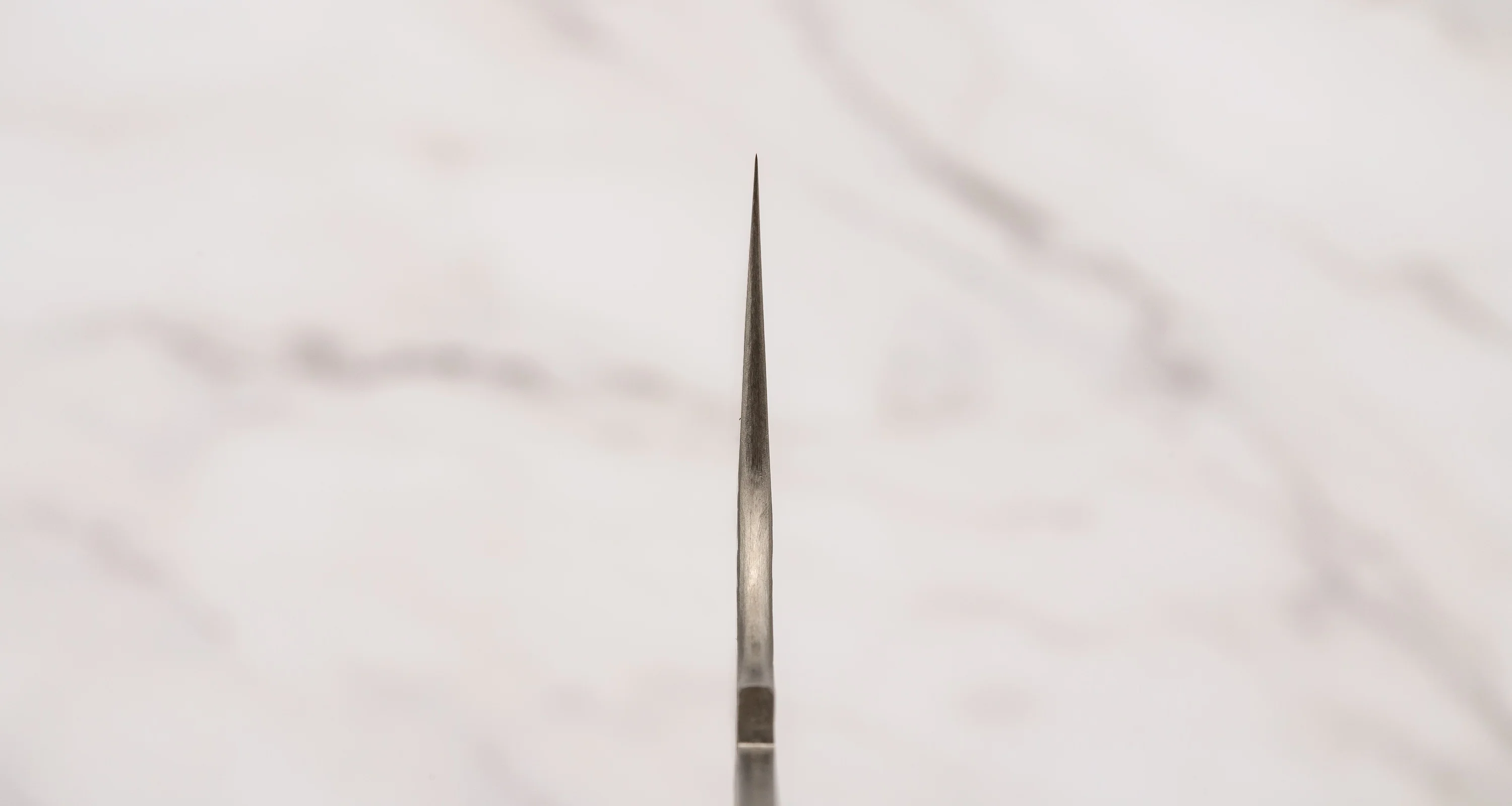
It has a double bevel (symmetrical) blade, so it is suitable for both left- and right-handed users. Based on the ratio between the surfaces (the location of the angle change), this knife's profile is classified as a flat V-edge type, which makes it less brittle and easier to resharpen.
BLADE FINISH:
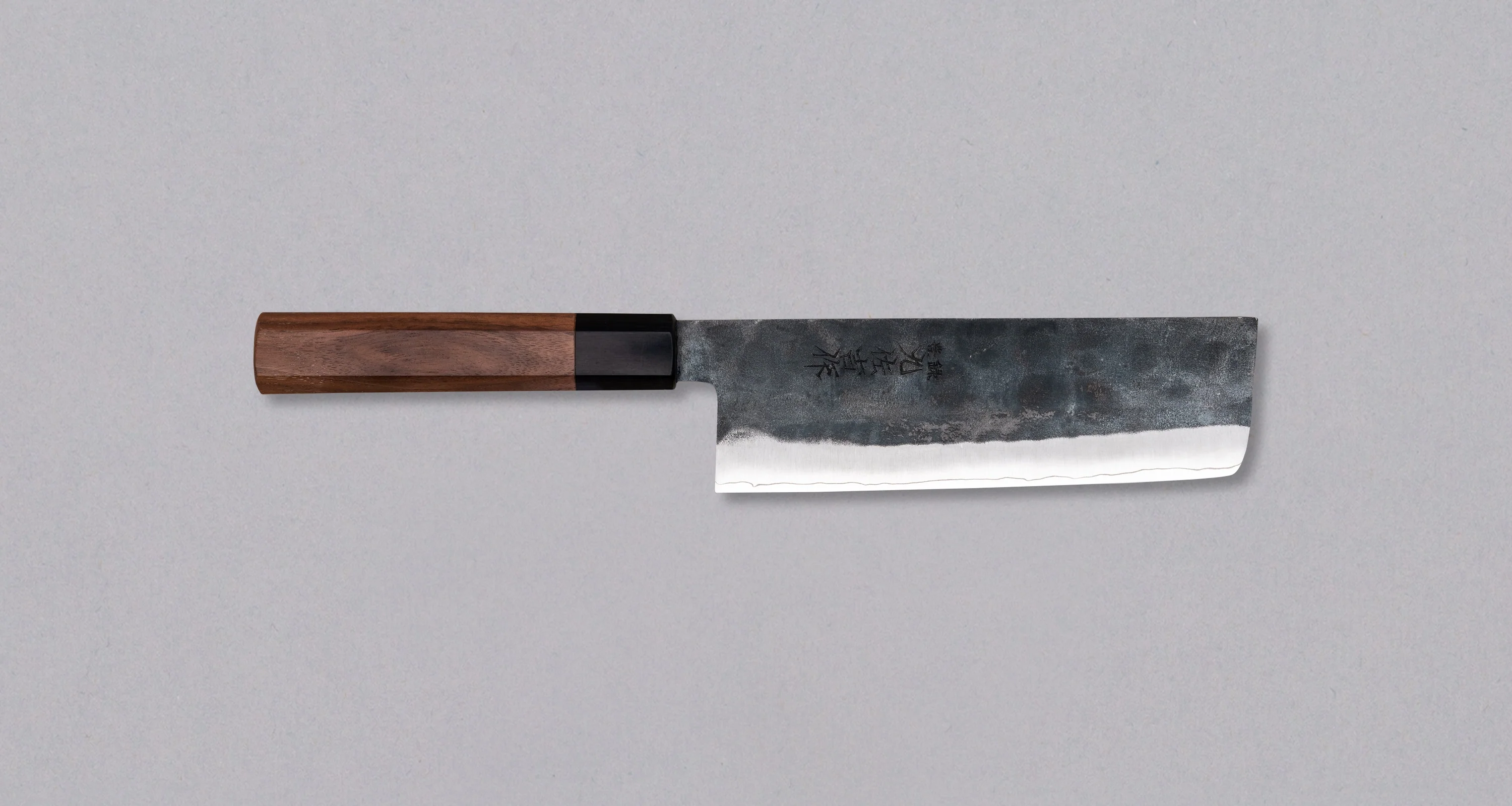
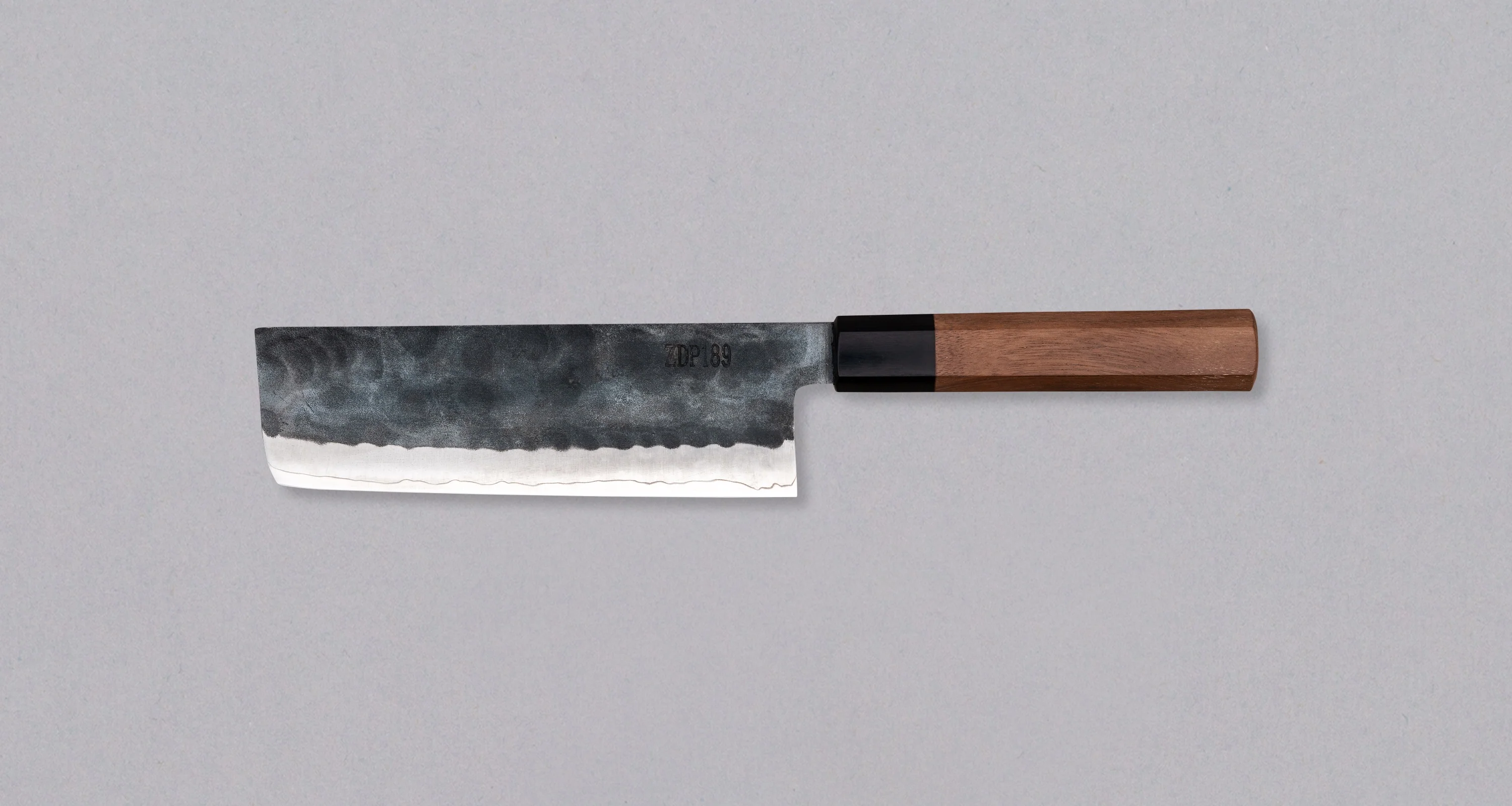
The blade finish of the knife is a unique fusion of tsuchime hammer indentations, and a complex wavy damascus pattern. The surface of the blade was treated with a special textured hammer. It is a stunning technique that involves skillfully hammering the blade's surface to create captivating indentations, which—aside from the purely aesthetic—also has a distinct practical function of reducing friction and creating air pockets that diminish the sticking of food to the blade during cutting. The tsuchime indentations seamlessly blend into the damascus pattern, which flawlessly transitions into a glossy cutting edge.
BLACKSMITH:
Nigara Hamono is a historic smithy with a 350-year tradition. It has been active in the city of Hirosaki since the early Edo Period, when it started making swords for the Tsugaru clan. With over a hundred forging shops in the region during that era, Nigara Forging stands as a testament to Tsugaru Uchihamono's rich history and artistry.
Original: $380.70
-65%$380.70
$133.24More Images
Nigara Santoku VG-XEOS 170mm (6.7") - BLADE
Looking for a knife that will impress you both in functionality and looks? Look no further. The look and feel of these knives will leave no one indifferent. Finished with a stunning damascus pattern and a hammered tsuchime texture, this Santoku is a striking example of Japanese craftsmanship and a testament to modern steel innovation.
Available without a handle, this knife lets you craft a custom look—or choose a handle separately—to create a one-of-a-kind tool tailored to your style and needs.
BLADE SHAPE:
The Santoku knife, originating from Japan, is a versatile and multipurpose kitchen tool commonly found in Japanese households. It excels at various cutting and chopping tasks on the cutting board.
The name "Santoku" derives from the Japanese word "San," meaning "three," representing the knife's three virtues. It effortlessly handles three key ingredients: meat, fish, and vegetables. It is equally adept at slicing, chopping, and mincing, making it a versatile companion in the kitchen.
The Santoku knife is divided into three distinct parts. The tip is designed for intricate work, allowing for precise cuts. The cutting edge serves general cutting purposes, accommodating a range of tasks. Lastly, the heel of the knife is perfect for heavy-duty chopping.
STEEL:
VG-XEOS is a high-quality stainless steel produced by Takefu Special Steel, known for steels such as VG-10 and VG-5. It is an alloy that combines strong corrosion resistance with high hardness and wear durability. The blade hardness is approximately 62 HRC. The fine microstructure is achieved through a special melting method that improves wear resistance, strength, and quenching properties.
VG-XEOS is designed for high-performance cutting tools, delivering excellent sharpness, good edge retention, and corrosion resistance.
LAMINATION:
The core layer consisting is sandwiched between layers of softer, stainless steel in a technique called san-mai - it is used to improve the blade's structural integrity and subsequent ability to withstand impacts and to prevent chipping. San-mai translates to “three layers” in Japanese, referring to a blade that is composed of a primary, inner layer of harder steel (hagane) and two secondary, outer layers of softer steel (jigane) that protect the prior.
GEOMETRY:
It has a double bevel (symmetrical) blade, so it is suitable for both left- and right-handed users. Based on the ratio between the surfaces (the location of the angle change), this knife's profile is classified as a flat V-edge type, which makes it less brittle and easier to resharpen.
BLADE FINISH:
The blade finish of the knife is a unique fusion of tsuchime hammer indentations, and a complex wavy damascus pattern. The surface of the blade was treated with a special textured hammer. It is a stunning technique that involves skillfully hammering the blade's surface to create captivating indentations, which—aside from the purely aesthetic—also has a distinct practical function of reducing friction and creating air pockets that diminish the sticking of food to the blade during cutting. The tsuchime indentations seamlessly blend into the damascus pattern, which flawlessly transitions into a glossy cutting edge.
BLACKSMITH:
Nigara Hamono is a historic smithy with a 350-year tradition. It has been active in the city of Hirosaki since the early Edo Period, when it started making swords for the Tsugaru clan. With over a hundred forging shops in the region during that era, Nigara Forging stands as a testament to Tsugaru Uchihamono's rich history and artistry.
Product Information
Product Information
Shipping & Returns
Shipping & Returns
Description
Looking for a knife that will impress you both in functionality and looks? Look no further. The look and feel of these knives will leave no one indifferent. Finished with a stunning damascus pattern and a hammered tsuchime texture, this Santoku is a striking example of Japanese craftsmanship and a testament to modern steel innovation.
Available without a handle, this knife lets you craft a custom look—or choose a handle separately—to create a one-of-a-kind tool tailored to your style and needs.
BLADE SHAPE:
The Santoku knife, originating from Japan, is a versatile and multipurpose kitchen tool commonly found in Japanese households. It excels at various cutting and chopping tasks on the cutting board.
The name "Santoku" derives from the Japanese word "San," meaning "three," representing the knife's three virtues. It effortlessly handles three key ingredients: meat, fish, and vegetables. It is equally adept at slicing, chopping, and mincing, making it a versatile companion in the kitchen.
The Santoku knife is divided into three distinct parts. The tip is designed for intricate work, allowing for precise cuts. The cutting edge serves general cutting purposes, accommodating a range of tasks. Lastly, the heel of the knife is perfect for heavy-duty chopping.
STEEL:
VG-XEOS is a high-quality stainless steel produced by Takefu Special Steel, known for steels such as VG-10 and VG-5. It is an alloy that combines strong corrosion resistance with high hardness and wear durability. The blade hardness is approximately 62 HRC. The fine microstructure is achieved through a special melting method that improves wear resistance, strength, and quenching properties.
VG-XEOS is designed for high-performance cutting tools, delivering excellent sharpness, good edge retention, and corrosion resistance.
LAMINATION:
The core layer consisting is sandwiched between layers of softer, stainless steel in a technique called san-mai - it is used to improve the blade's structural integrity and subsequent ability to withstand impacts and to prevent chipping. San-mai translates to “three layers” in Japanese, referring to a blade that is composed of a primary, inner layer of harder steel (hagane) and two secondary, outer layers of softer steel (jigane) that protect the prior.
GEOMETRY:
It has a double bevel (symmetrical) blade, so it is suitable for both left- and right-handed users. Based on the ratio between the surfaces (the location of the angle change), this knife's profile is classified as a flat V-edge type, which makes it less brittle and easier to resharpen.
BLADE FINISH:
The blade finish of the knife is a unique fusion of tsuchime hammer indentations, and a complex wavy damascus pattern. The surface of the blade was treated with a special textured hammer. It is a stunning technique that involves skillfully hammering the blade's surface to create captivating indentations, which—aside from the purely aesthetic—also has a distinct practical function of reducing friction and creating air pockets that diminish the sticking of food to the blade during cutting. The tsuchime indentations seamlessly blend into the damascus pattern, which flawlessly transitions into a glossy cutting edge.
BLACKSMITH:
Nigara Hamono is a historic smithy with a 350-year tradition. It has been active in the city of Hirosaki since the early Edo Period, when it started making swords for the Tsugaru clan. With over a hundred forging shops in the region during that era, Nigara Forging stands as a testament to Tsugaru Uchihamono's rich history and artistry.