Mujun Mt. Fuji Higonokami Pocket Knife 80mm (3.1")
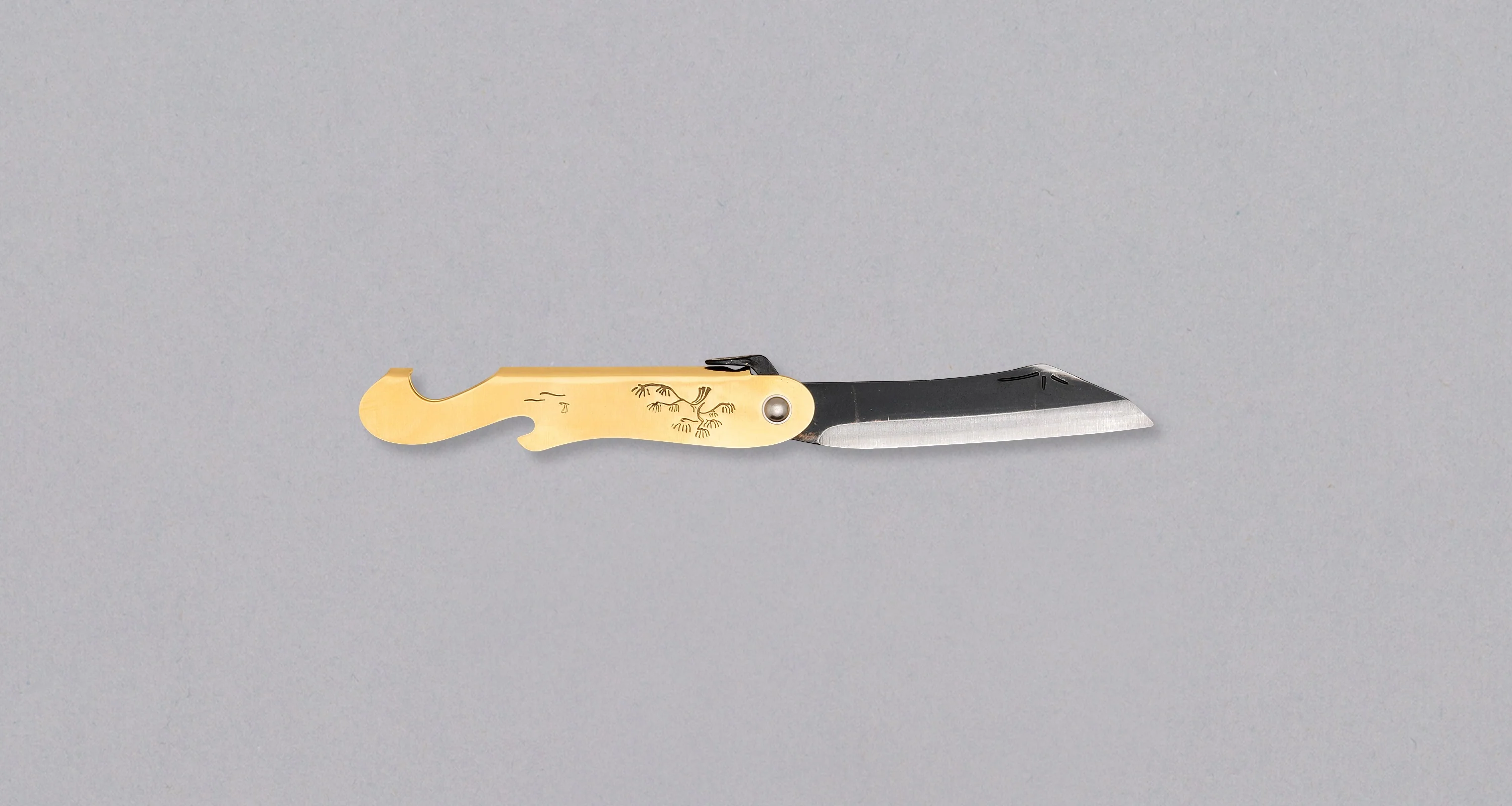
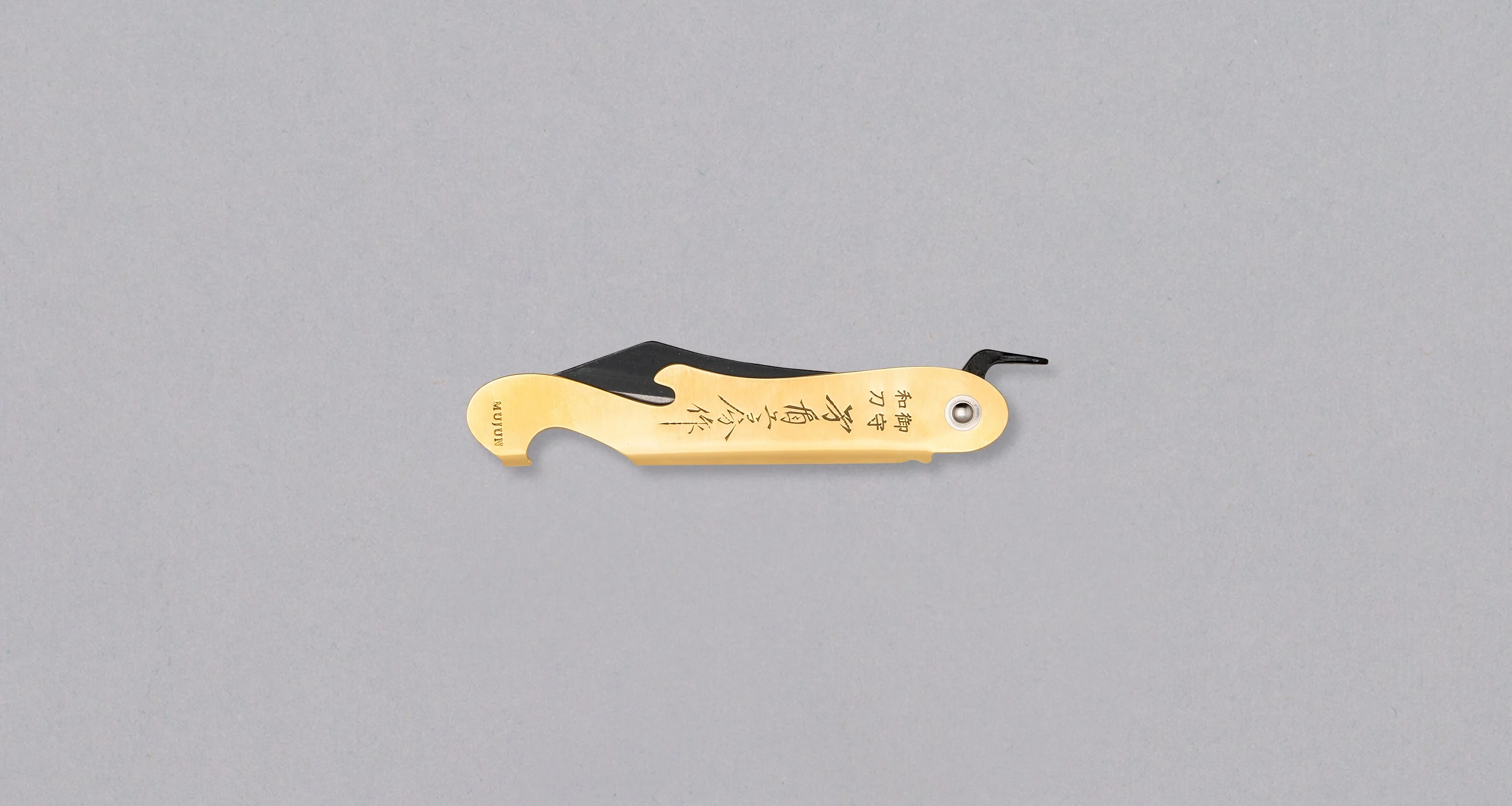
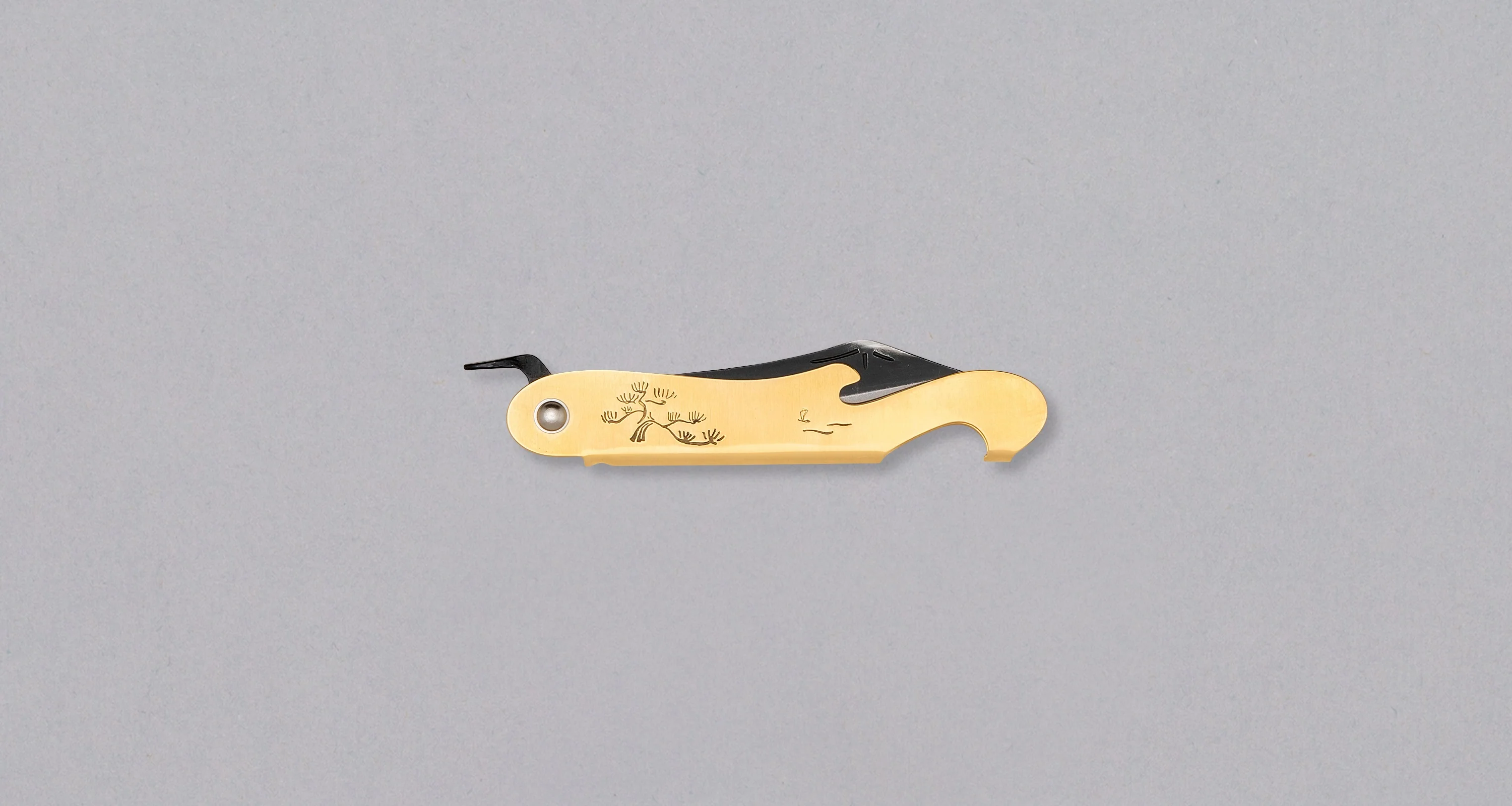
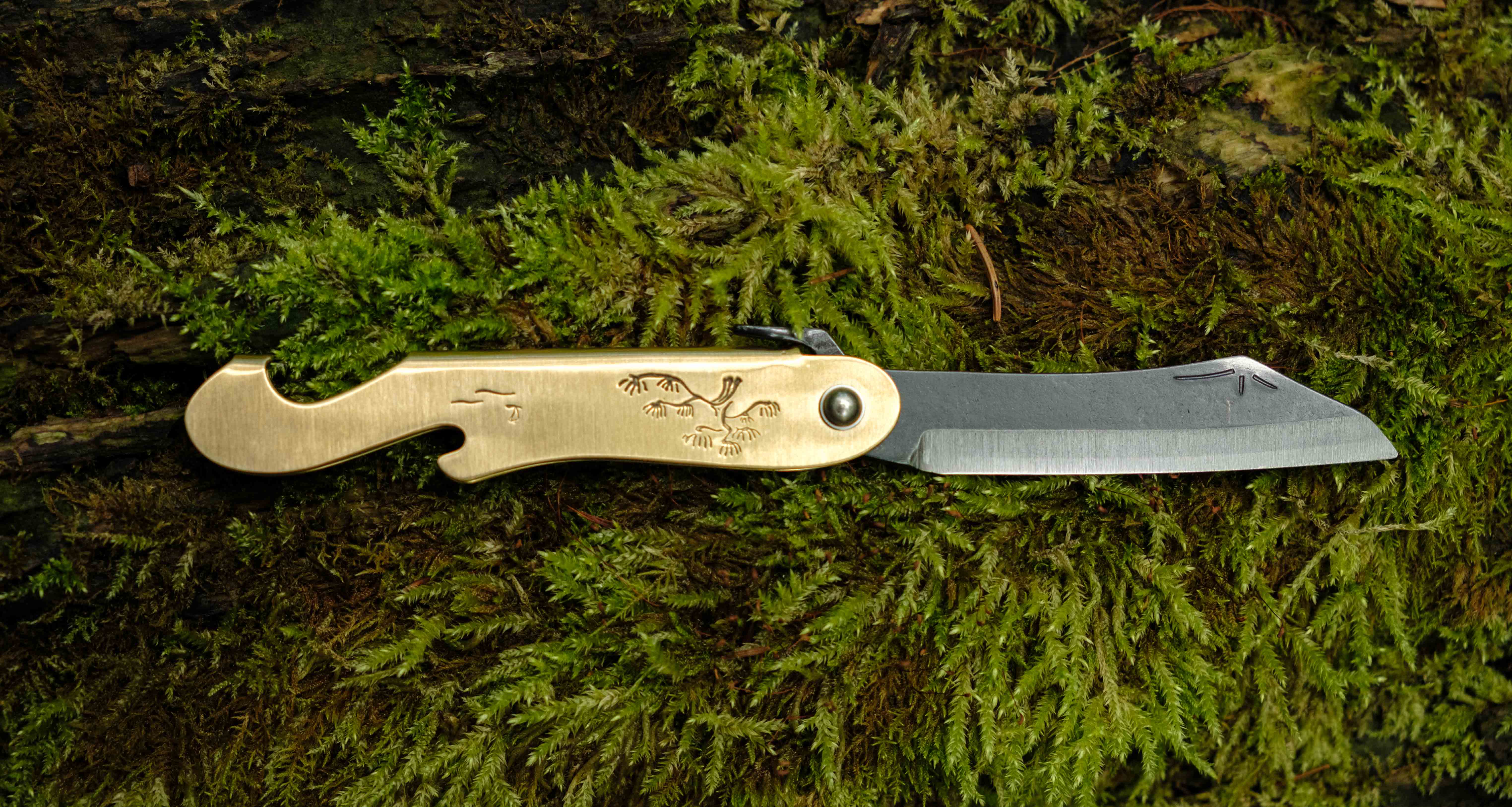
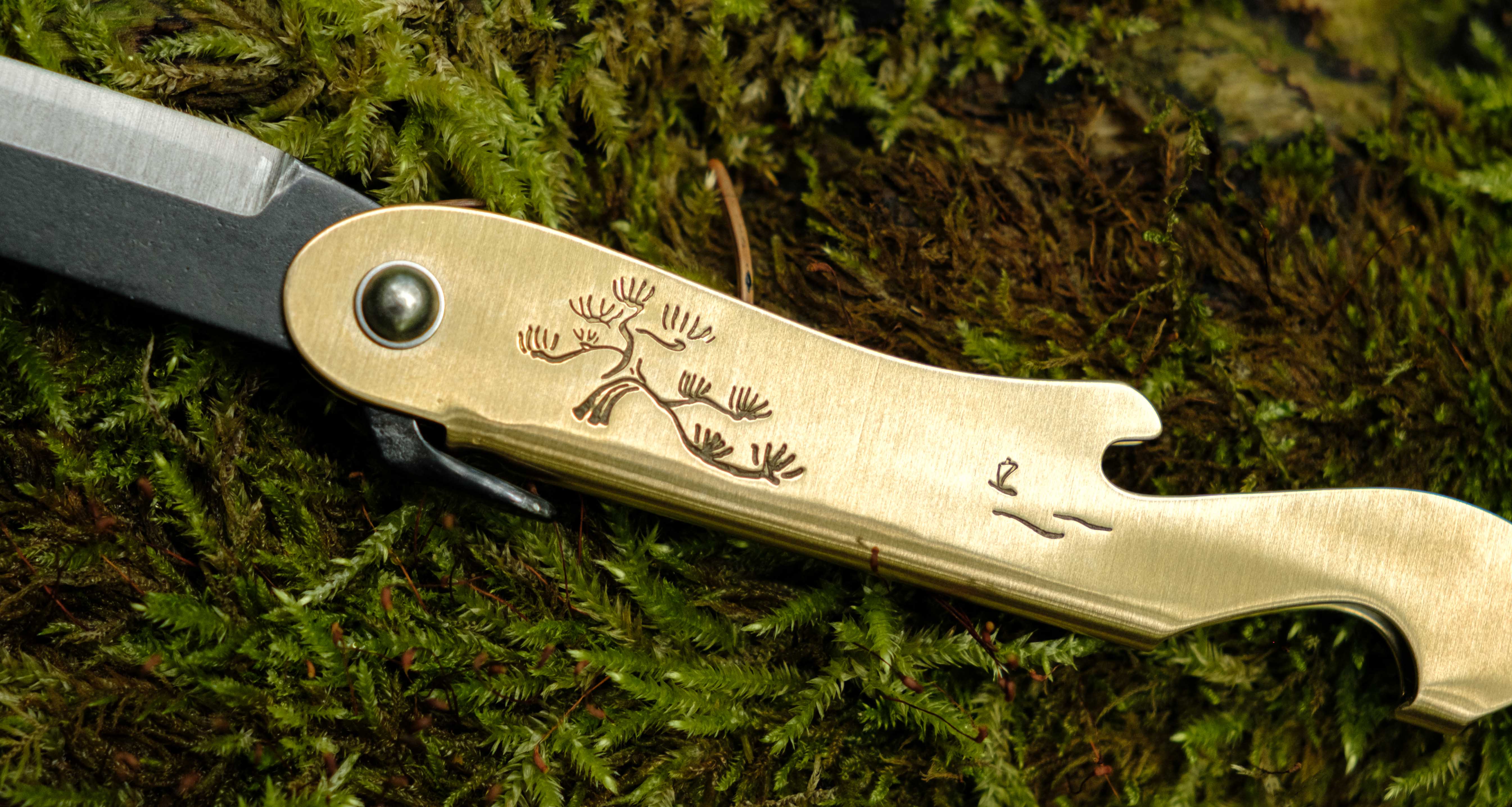
A knife with a view—literally. When closed, the Fuji Knife transforms into a miniature landscape, with the blade forming Mt. Fuji and the brass handle depicting the iconic pine grove of Miho no Matsubara in Shizuoka. More than just a knife, it's a conversation piece, a collector’s item, and a testament to thoughtful Japanese design.
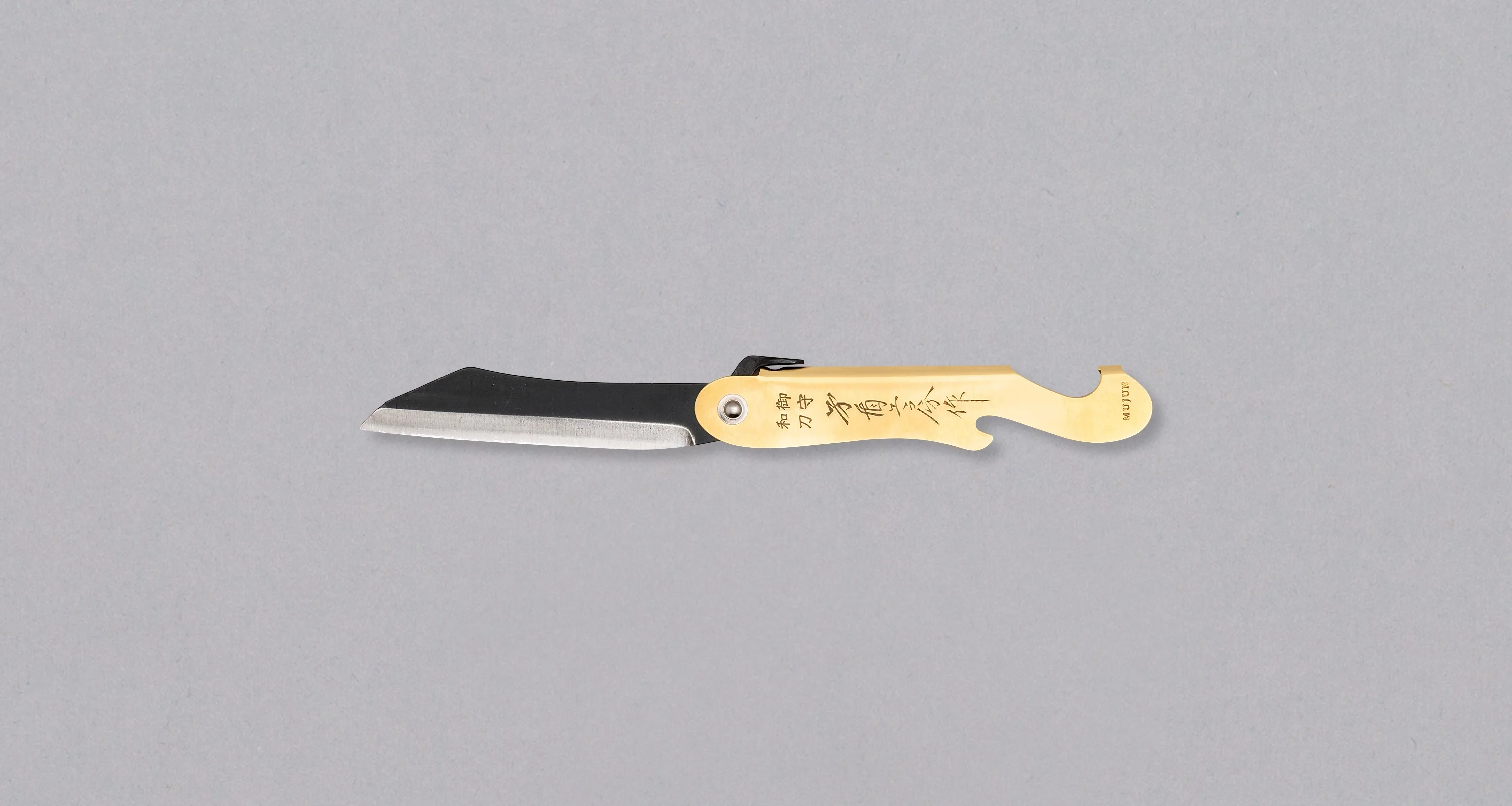
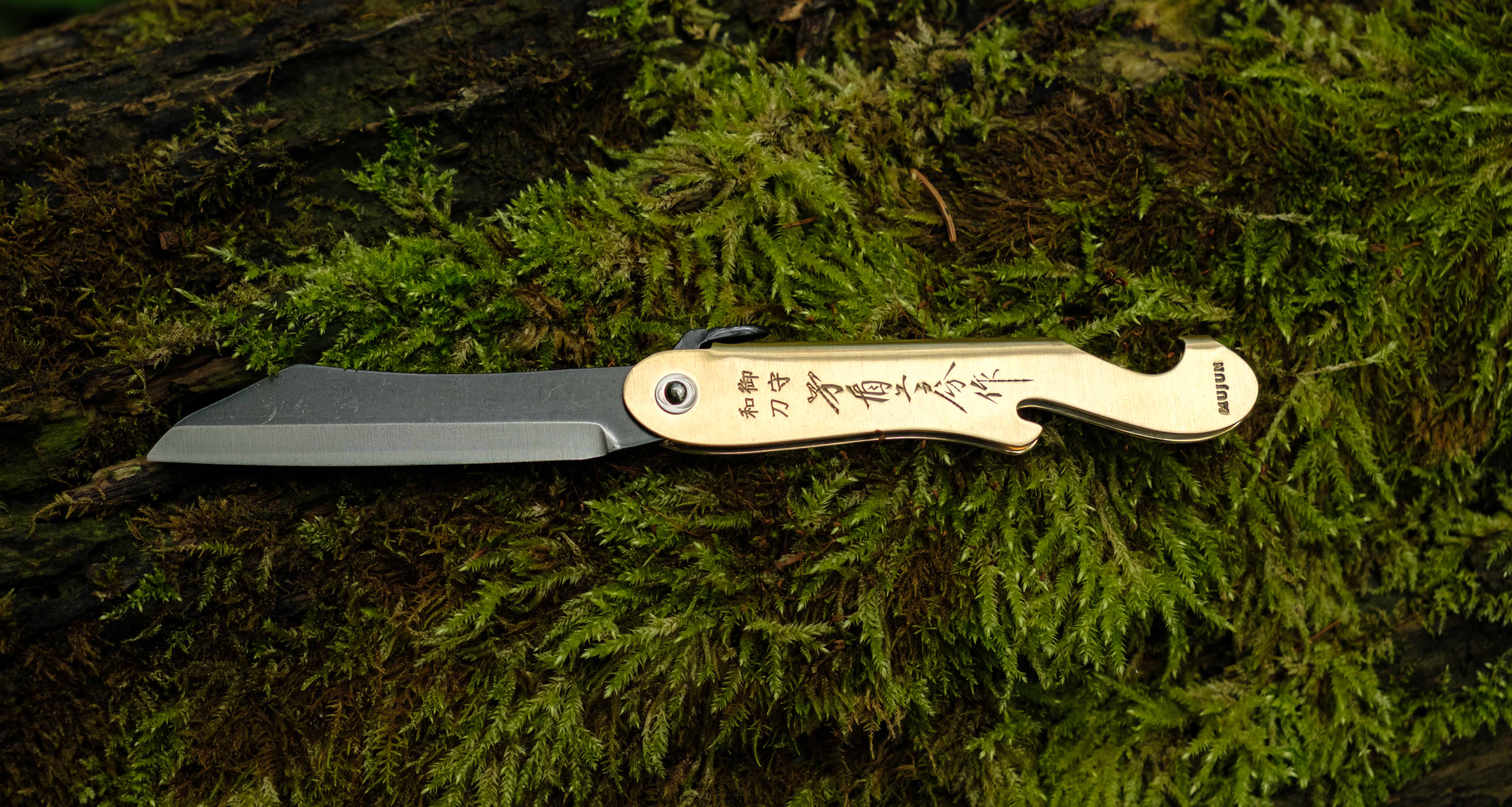
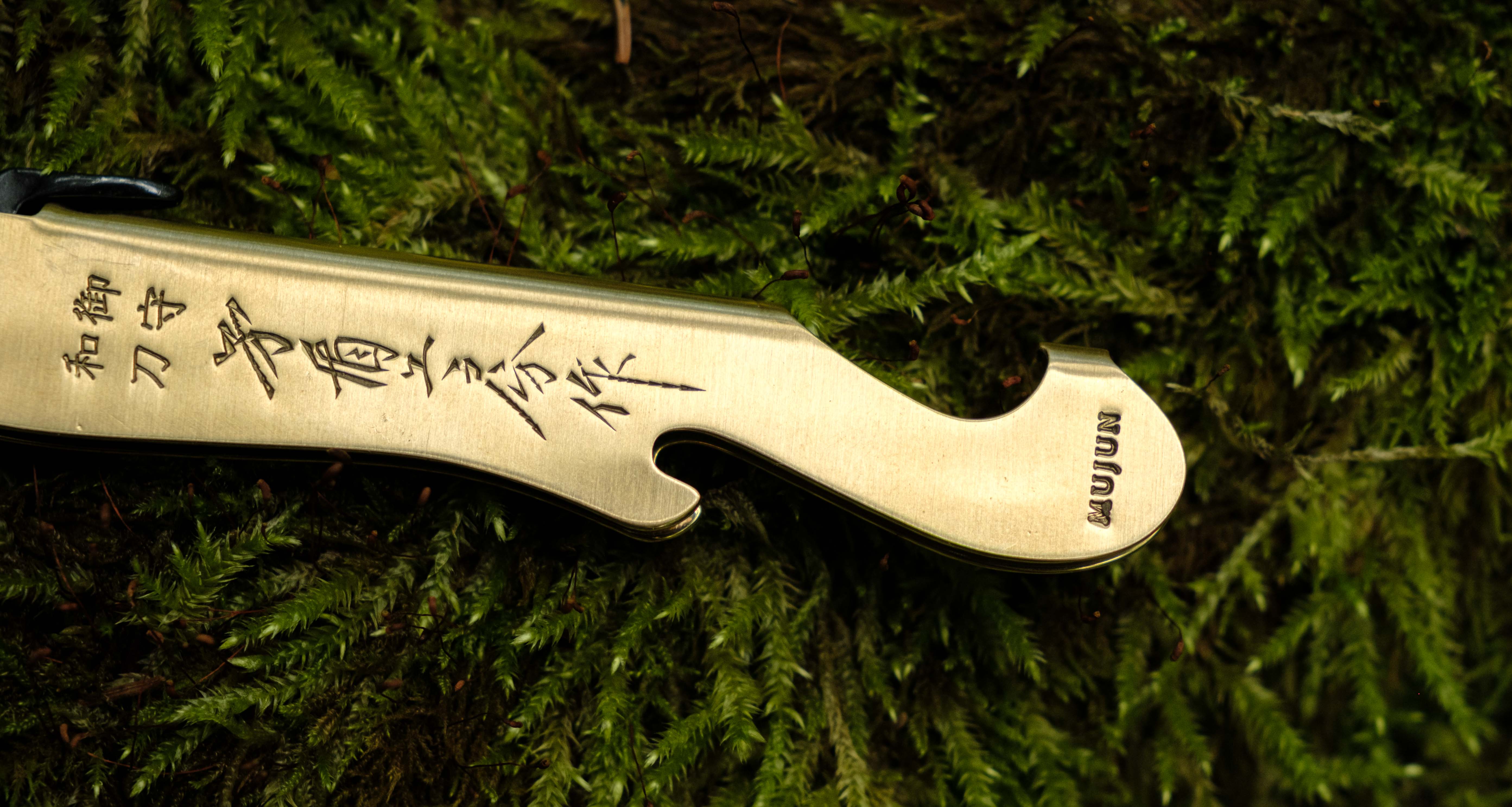
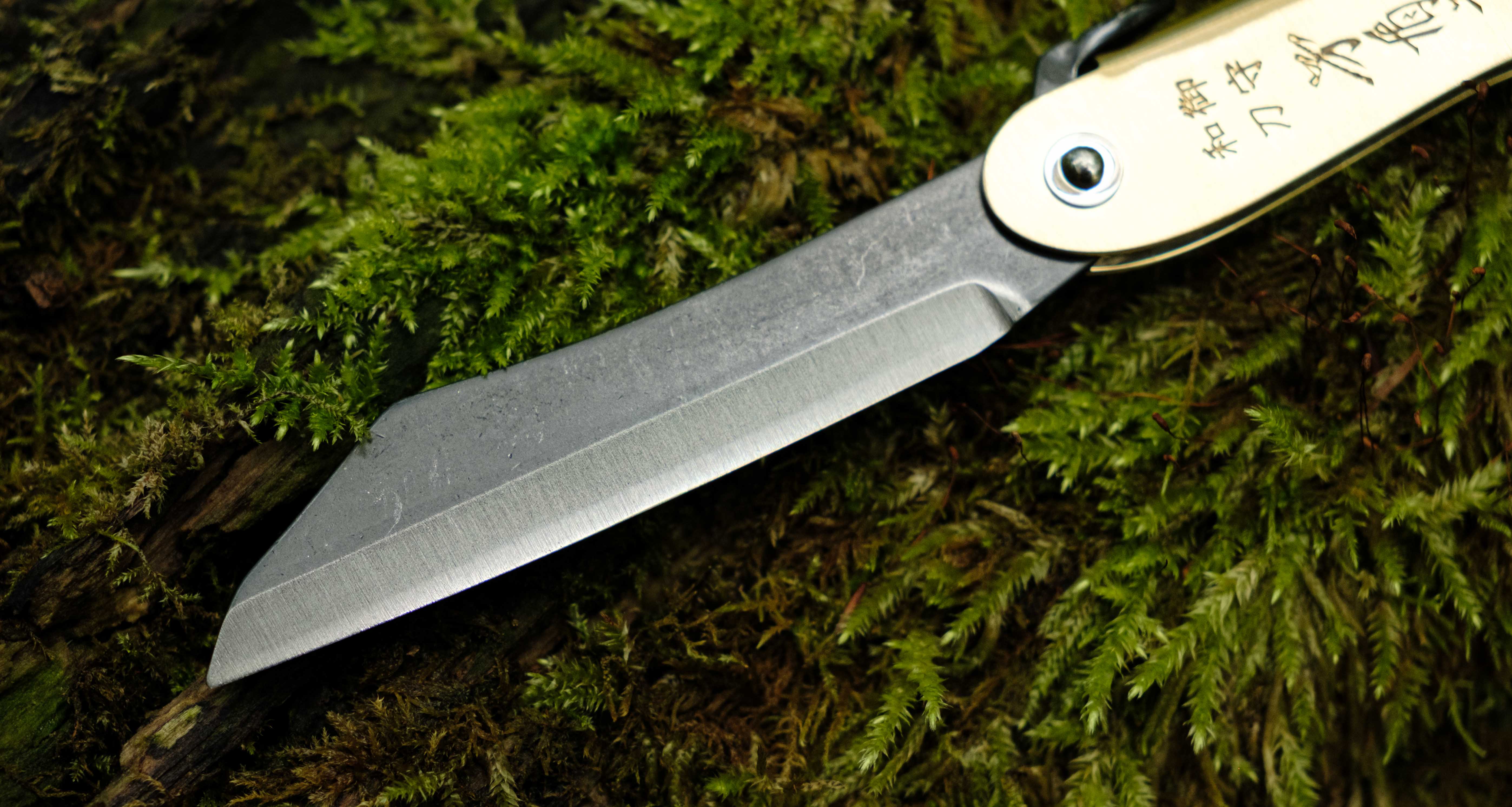
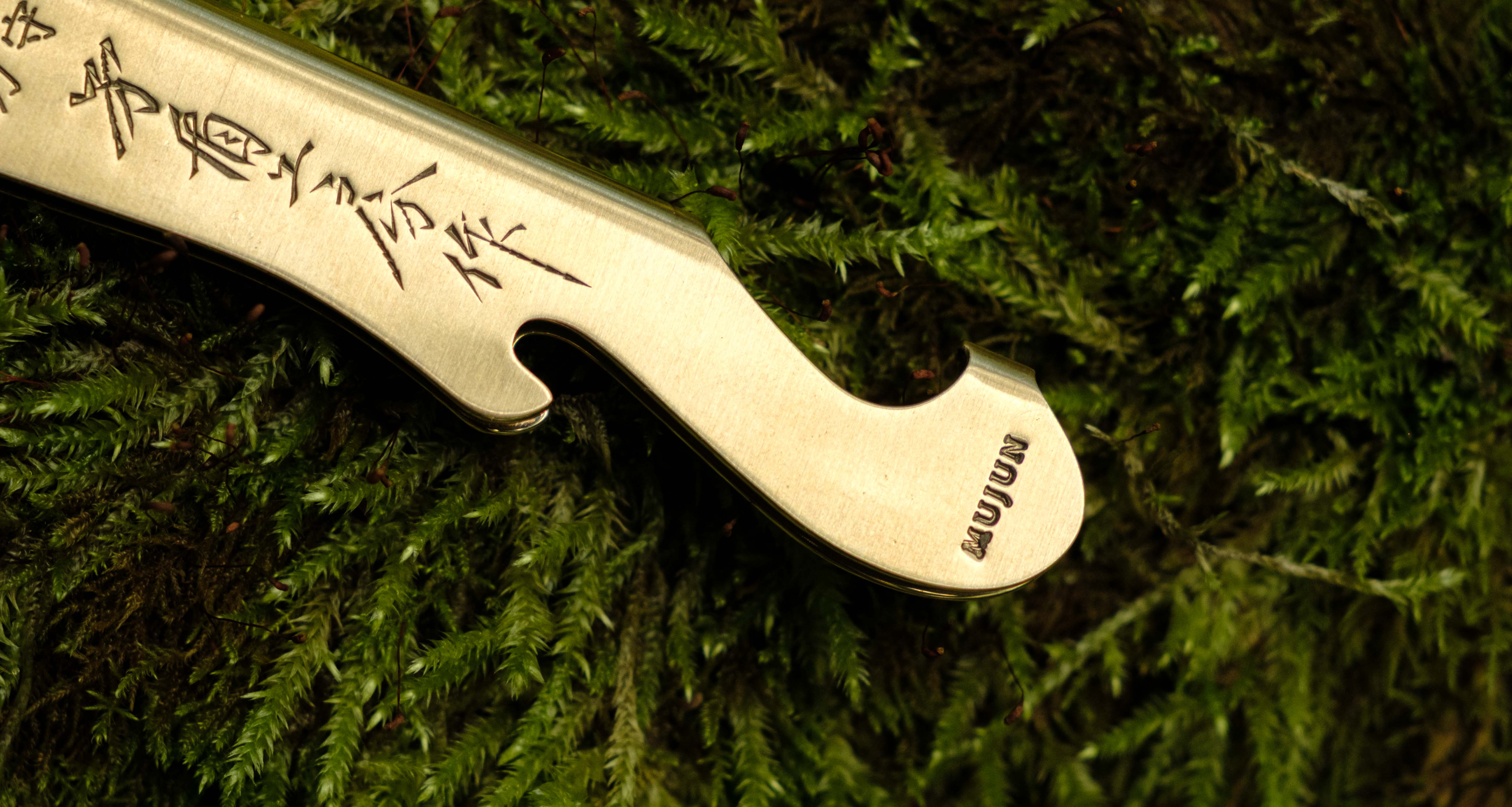
The double-edged blade, made from Shirogami #2 carbon steel and clad in soft iron, ensures excellent sharpness and long-lasting edge retention. The solid brass handle acquires a natural patina over time, adding depth and character through continued use. A built-in bottle opener at the end of the handle adds practical utility.
Searching for a gift that is truly unique? The Fuji Knife is an unforgettable present for the collector, the traveler, or anyone who appreciates exceptional design. It’s a gift that says 'I see the beauty in every detail.' Perfect for birthdays, holidays, or as a symbol of your admiration for Japanese craftsmanship. Give a gift that is both beautiful to behold and a pleasure to use.
BLADE SHAPE:
Higonokami is the most famous Japanese pocket knife. It enjoys the same kind of fame in Japan as the Swiss army knife does in Switzerland and around the globe. Compact and well-crafted, the Fuji Knife is ideal for slicing fruit, opening packaging, or gifting to those who value thoughtful design and traditional craftsmanship.
The shape of the Higonokami pocket knife is based on the katana, which is not a coincidence, since knife manufacturing is deeply embedded in the samurai tradition. The knife first appeared in 1896 in response to reforms in the 19th century, which banned the production of weapons, so blacksmiths began to produce knives, among others also these small pocket Higonokamis.
STEEL:
The blade is forged from Shirogami #2, a traditional high-carbon Japanese steel. Due to its balanced composition, it can achieve a hardness of over 60 HRC, resulting in a long-lasting and incredibly sharp edge. This steel is not stainless and will develop a unique protective patina over time. To maintain its performance, simply wipe the blade dry after use and apply oil regularly.
LAMINATION:
The core layer is sandwiched between two layers of softer steel This technique is called warikomi and is used to protect the hard (but delicate) core from outside factors and physical impacts, which could lead to breakage.
GEOMETRY:
It has a double bevel (symmetrical) blade.
BLADE FINSIH:
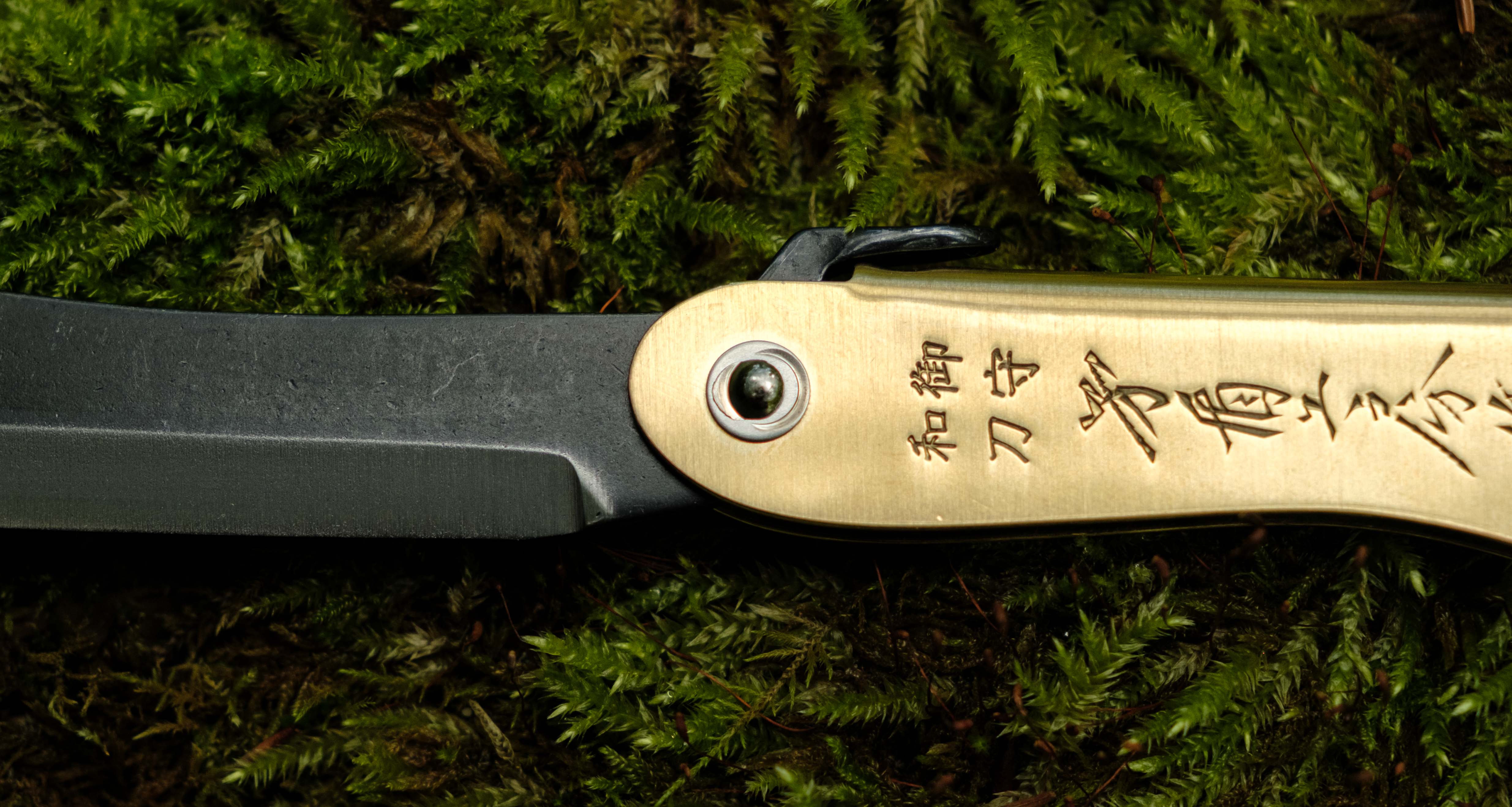
The blade has kuro-uchi finish and features a beautiful wavy line, marking a point where different layers of steel meet and seamlessly blend into each other.
HANDLE:
The handle is made of brass with engraved decorative elements. When closed, the Fuji Knife transforms into a miniature landscape: Mt. Fuji is carved into the blade, surrounded by the pine grove of Miho no Matsubara. This refined detail is full of symbolism.
The Higonokami is a friction folder, meaning it doesn't have a locking mechanism. It uses the friction of the blade and handle to stay closed. The blade is opened by pushing down on the lever, called a chikiri. For safety during use, keep your thumb on the chikiri to prevent the blade from closing.
The handle also features a built-in bottle opener for added utility.
BLACKSMITH:
The Fuji Knife is created by Mujun, a design collective based in Miki, Hyogo—one of Japan’s historic blacksmithing towns. Founded by a team of young designers, Mujun works to reintroduce traditional Japanese craftsmanship to modern audiences through thoughtful, functional objects rooted in regional heritage.
More Images
Mujun Mt. Fuji Higonokami Pocket Knife 80mm (3.1")
A knife with a view—literally. When closed, the Fuji Knife transforms into a miniature landscape, with the blade forming Mt. Fuji and the brass handle depicting the iconic pine grove of Miho no Matsubara in Shizuoka. More than just a knife, it's a conversation piece, a collector’s item, and a testament to thoughtful Japanese design.
The double-edged blade, made from Shirogami #2 carbon steel and clad in soft iron, ensures excellent sharpness and long-lasting edge retention. The solid brass handle acquires a natural patina over time, adding depth and character through continued use. A built-in bottle opener at the end of the handle adds practical utility.
Searching for a gift that is truly unique? The Fuji Knife is an unforgettable present for the collector, the traveler, or anyone who appreciates exceptional design. It’s a gift that says 'I see the beauty in every detail.' Perfect for birthdays, holidays, or as a symbol of your admiration for Japanese craftsmanship. Give a gift that is both beautiful to behold and a pleasure to use.
BLADE SHAPE:
Higonokami is the most famous Japanese pocket knife. It enjoys the same kind of fame in Japan as the Swiss army knife does in Switzerland and around the globe. Compact and well-crafted, the Fuji Knife is ideal for slicing fruit, opening packaging, or gifting to those who value thoughtful design and traditional craftsmanship.
The shape of the Higonokami pocket knife is based on the katana, which is not a coincidence, since knife manufacturing is deeply embedded in the samurai tradition. The knife first appeared in 1896 in response to reforms in the 19th century, which banned the production of weapons, so blacksmiths began to produce knives, among others also these small pocket Higonokamis.
STEEL:
The blade is forged from Shirogami #2, a traditional high-carbon Japanese steel. Due to its balanced composition, it can achieve a hardness of over 60 HRC, resulting in a long-lasting and incredibly sharp edge. This steel is not stainless and will develop a unique protective patina over time. To maintain its performance, simply wipe the blade dry after use and apply oil regularly.
LAMINATION:
The core layer is sandwiched between two layers of softer steel This technique is called warikomi and is used to protect the hard (but delicate) core from outside factors and physical impacts, which could lead to breakage.
GEOMETRY:
It has a double bevel (symmetrical) blade.
BLADE FINSIH:
The blade has kuro-uchi finish and features a beautiful wavy line, marking a point where different layers of steel meet and seamlessly blend into each other.
HANDLE:
The handle is made of brass with engraved decorative elements. When closed, the Fuji Knife transforms into a miniature landscape: Mt. Fuji is carved into the blade, surrounded by the pine grove of Miho no Matsubara. This refined detail is full of symbolism.
The Higonokami is a friction folder, meaning it doesn't have a locking mechanism. It uses the friction of the blade and handle to stay closed. The blade is opened by pushing down on the lever, called a chikiri. For safety during use, keep your thumb on the chikiri to prevent the blade from closing.
The handle also features a built-in bottle opener for added utility.
BLACKSMITH:
The Fuji Knife is created by Mujun, a design collective based in Miki, Hyogo—one of Japan’s historic blacksmithing towns. Founded by a team of young designers, Mujun works to reintroduce traditional Japanese craftsmanship to modern audiences through thoughtful, functional objects rooted in regional heritage.
Product Information
Product Information
Shipping & Returns
Shipping & Returns
Description
A knife with a view—literally. When closed, the Fuji Knife transforms into a miniature landscape, with the blade forming Mt. Fuji and the brass handle depicting the iconic pine grove of Miho no Matsubara in Shizuoka. More than just a knife, it's a conversation piece, a collector’s item, and a testament to thoughtful Japanese design.
The double-edged blade, made from Shirogami #2 carbon steel and clad in soft iron, ensures excellent sharpness and long-lasting edge retention. The solid brass handle acquires a natural patina over time, adding depth and character through continued use. A built-in bottle opener at the end of the handle adds practical utility.
Searching for a gift that is truly unique? The Fuji Knife is an unforgettable present for the collector, the traveler, or anyone who appreciates exceptional design. It’s a gift that says 'I see the beauty in every detail.' Perfect for birthdays, holidays, or as a symbol of your admiration for Japanese craftsmanship. Give a gift that is both beautiful to behold and a pleasure to use.
BLADE SHAPE:
Higonokami is the most famous Japanese pocket knife. It enjoys the same kind of fame in Japan as the Swiss army knife does in Switzerland and around the globe. Compact and well-crafted, the Fuji Knife is ideal for slicing fruit, opening packaging, or gifting to those who value thoughtful design and traditional craftsmanship.
The shape of the Higonokami pocket knife is based on the katana, which is not a coincidence, since knife manufacturing is deeply embedded in the samurai tradition. The knife first appeared in 1896 in response to reforms in the 19th century, which banned the production of weapons, so blacksmiths began to produce knives, among others also these small pocket Higonokamis.
STEEL:
The blade is forged from Shirogami #2, a traditional high-carbon Japanese steel. Due to its balanced composition, it can achieve a hardness of over 60 HRC, resulting in a long-lasting and incredibly sharp edge. This steel is not stainless and will develop a unique protective patina over time. To maintain its performance, simply wipe the blade dry after use and apply oil regularly.
LAMINATION:
The core layer is sandwiched between two layers of softer steel This technique is called warikomi and is used to protect the hard (but delicate) core from outside factors and physical impacts, which could lead to breakage.
GEOMETRY:
It has a double bevel (symmetrical) blade.
BLADE FINSIH:
The blade has kuro-uchi finish and features a beautiful wavy line, marking a point where different layers of steel meet and seamlessly blend into each other.
HANDLE:
The handle is made of brass with engraved decorative elements. When closed, the Fuji Knife transforms into a miniature landscape: Mt. Fuji is carved into the blade, surrounded by the pine grove of Miho no Matsubara. This refined detail is full of symbolism.
The Higonokami is a friction folder, meaning it doesn't have a locking mechanism. It uses the friction of the blade and handle to stay closed. The blade is opened by pushing down on the lever, called a chikiri. For safety during use, keep your thumb on the chikiri to prevent the blade from closing.
The handle also features a built-in bottle opener for added utility.
BLACKSMITH:
The Fuji Knife is created by Mujun, a design collective based in Miki, Hyogo—one of Japan’s historic blacksmithing towns. Founded by a team of young designers, Mujun works to reintroduce traditional Japanese craftsmanship to modern audiences through thoughtful, functional objects rooted in regional heritage.