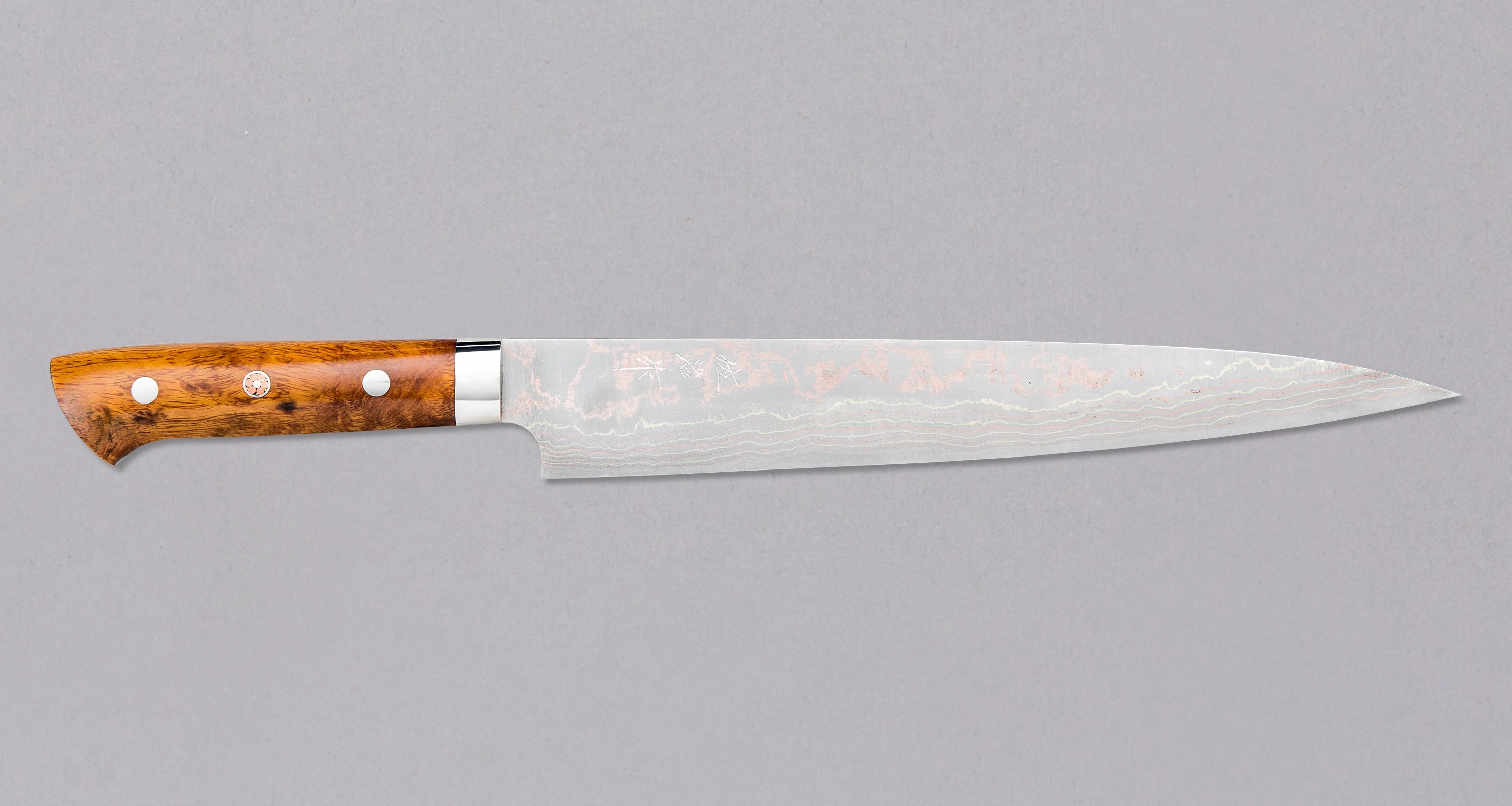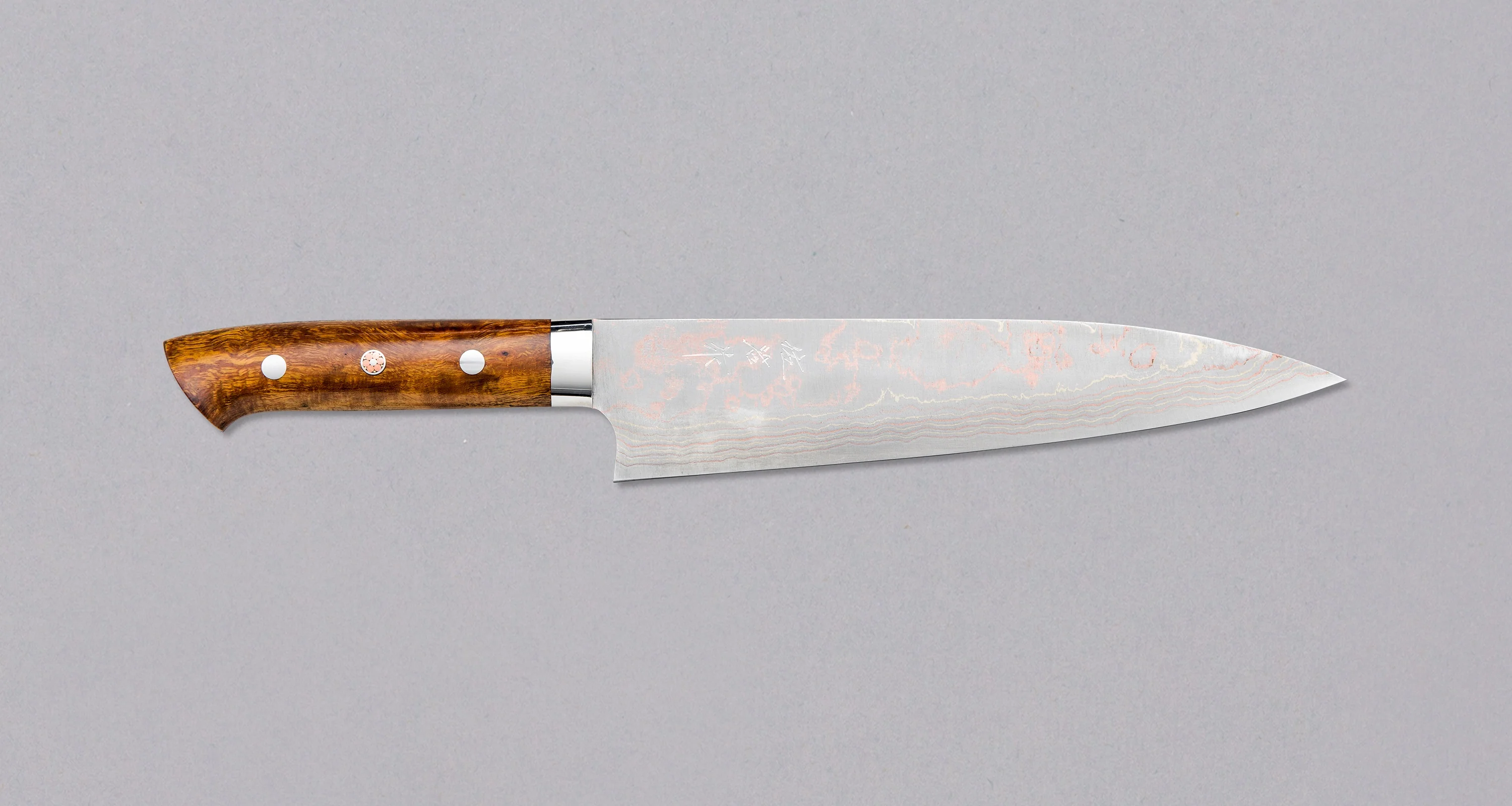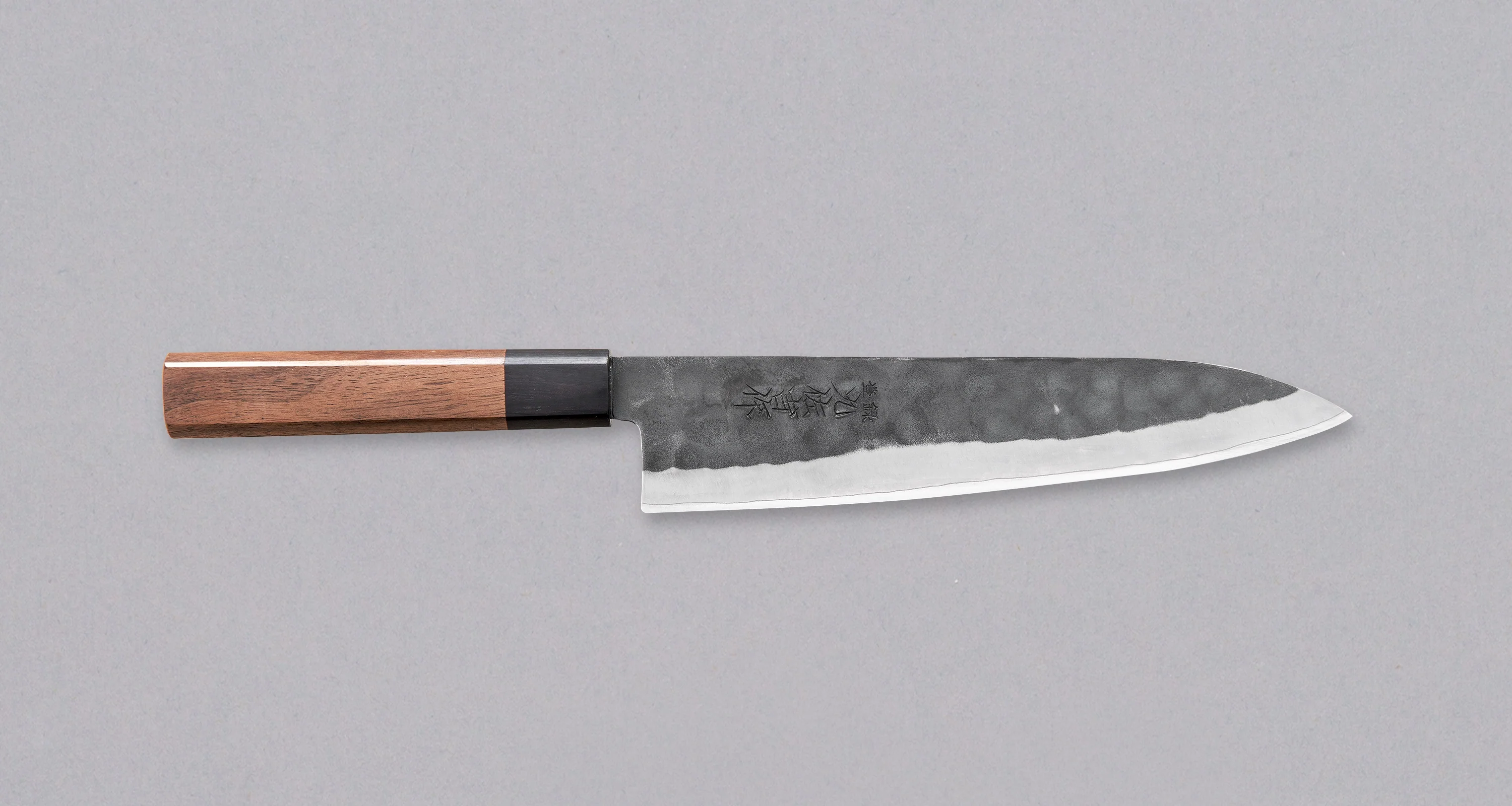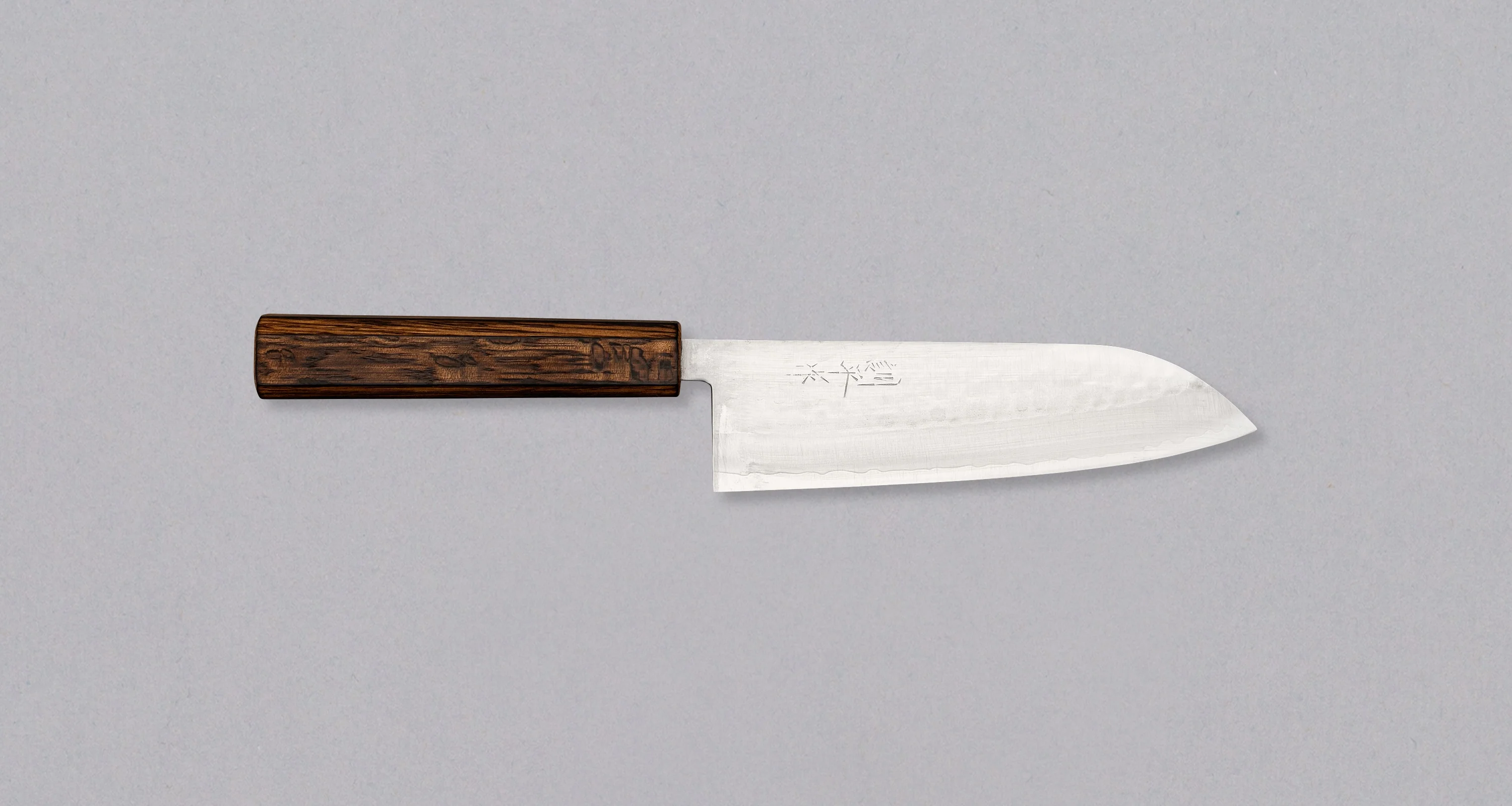
Masutani Santoku VG-1 Tsuchime Wa 170mm (6.7")
Blacksmith Masutani is widely respected for his sharpening skills—and his knives reflect that precision. With a spine thickness of just around 1.8 mm, they glide through food effortlessly. These knives are ideal for aspiring chefs and make excellent gifts (just don’t forget to include a coin for good luck!).
BLADE SHAPE:
The Japanese word santoku means “knife of three virtues,” referring either to the ingredients it handles—meat, fish, and vegetables—or the techniques it masters—slicing, chopping, and dicing. In short: it’s made to do it all.
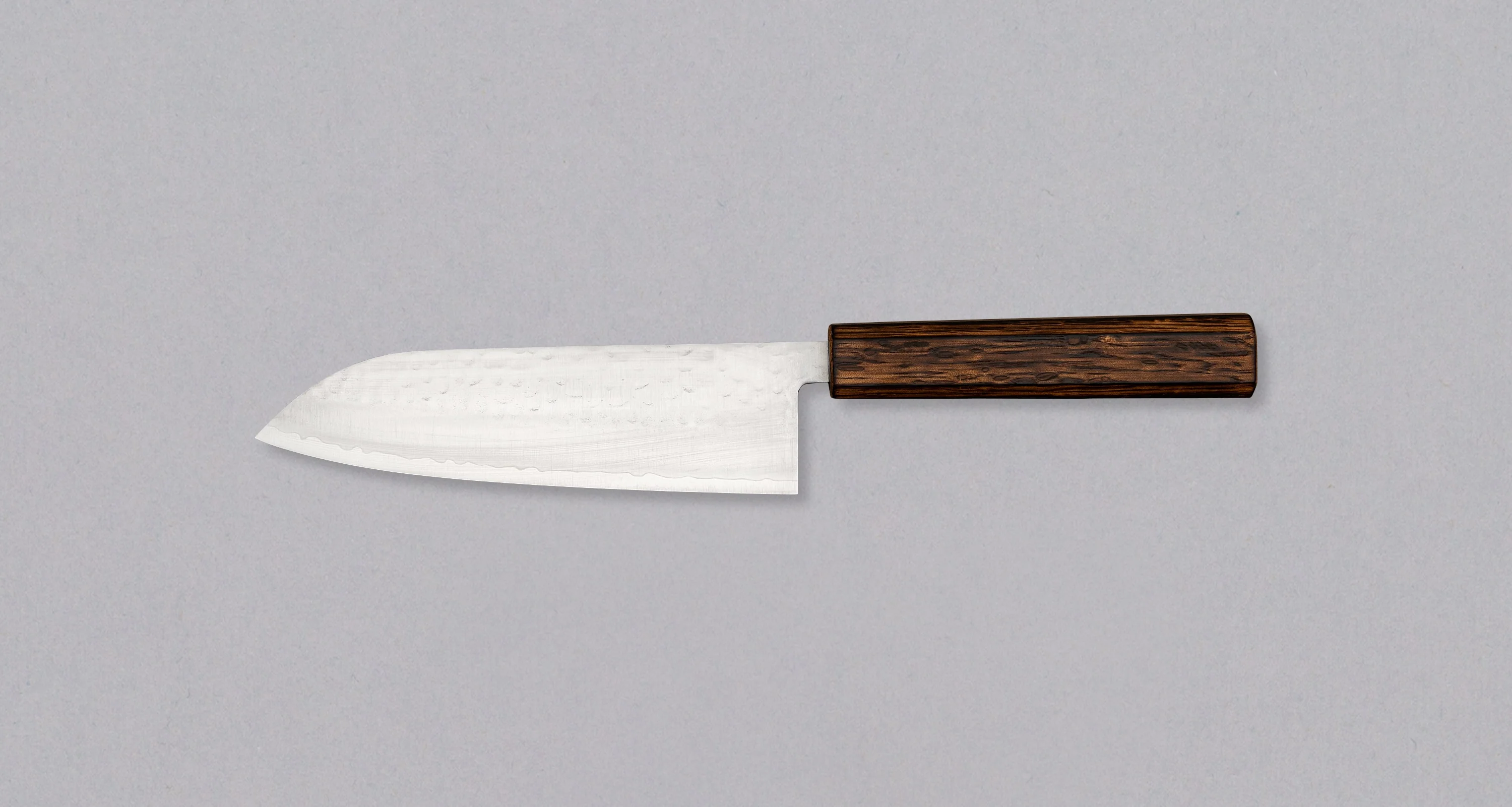
The Masutani Santoku VG-1 Tsuchime is a true all-rounder. With its slightly shorter and wider blade and a gently curved edge, it excels at slicing vegetables, chopping herbs, and cutting meat or fish.
STEEL AND LAMINATION:
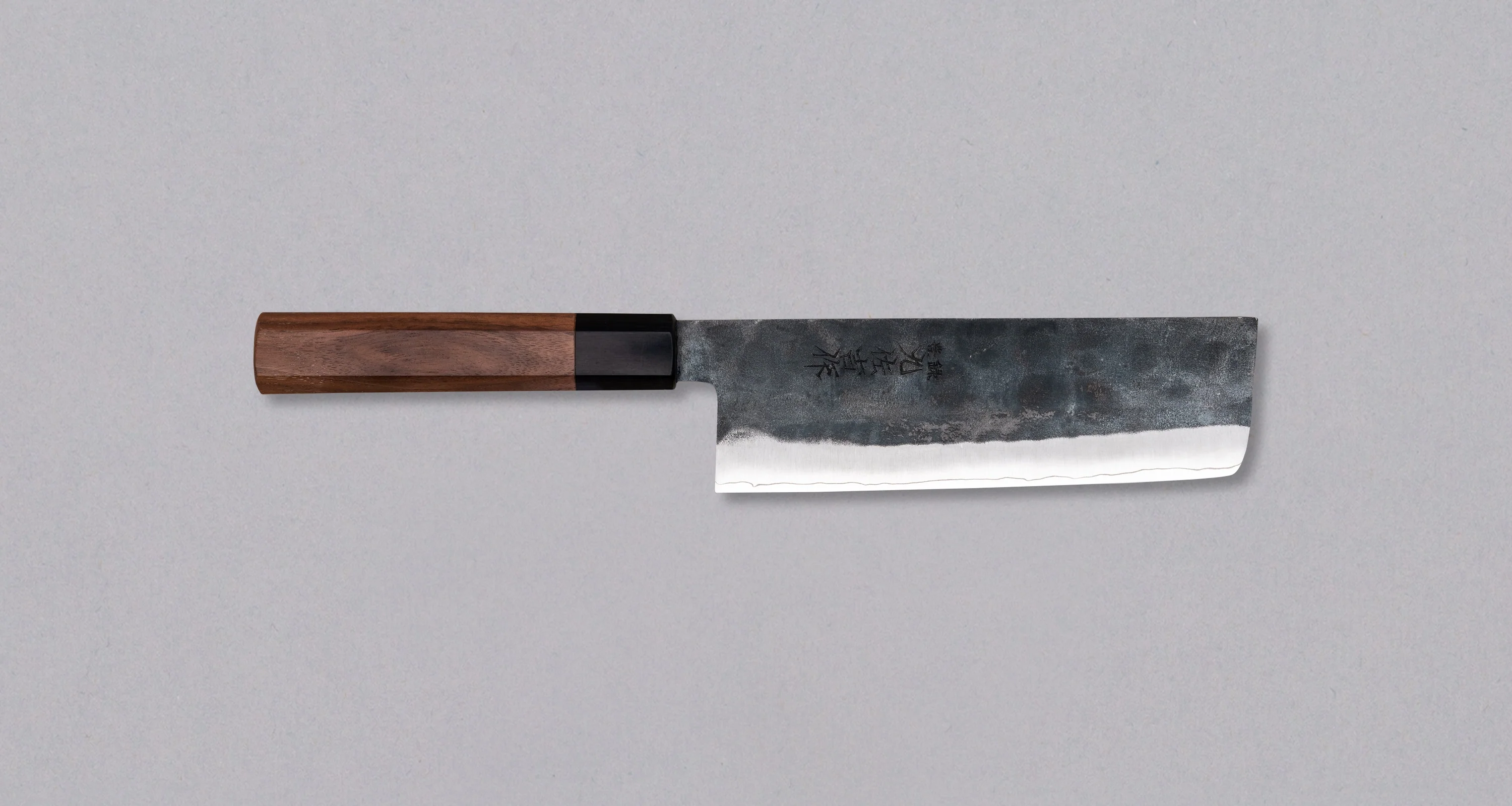
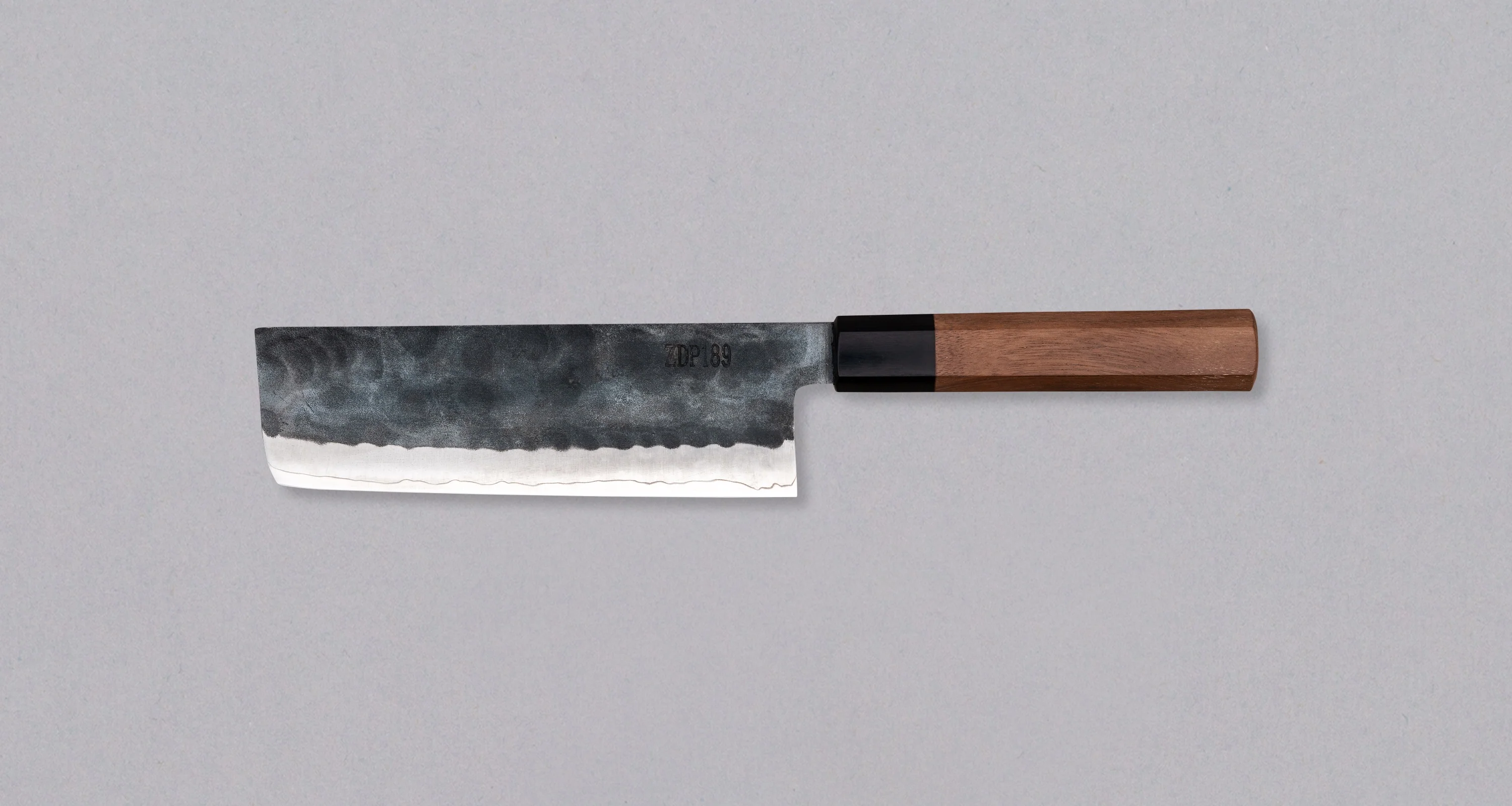
The blade core is made of VG-1 stainless steel – a tougher, slightly less wear-resistant cousin of VG-10. It’s clad in softer steel with a tsuchime (hammered) finish for a unique look and reduced food sticking. Less surface contact means less friction, so slicing is smoother and easier. The exposed VG-1 edge follows a curvy, hamon-like line. At around 60 HRC, it balances sharpness, edge retention, and easy maintenance.
GEOMETRY:
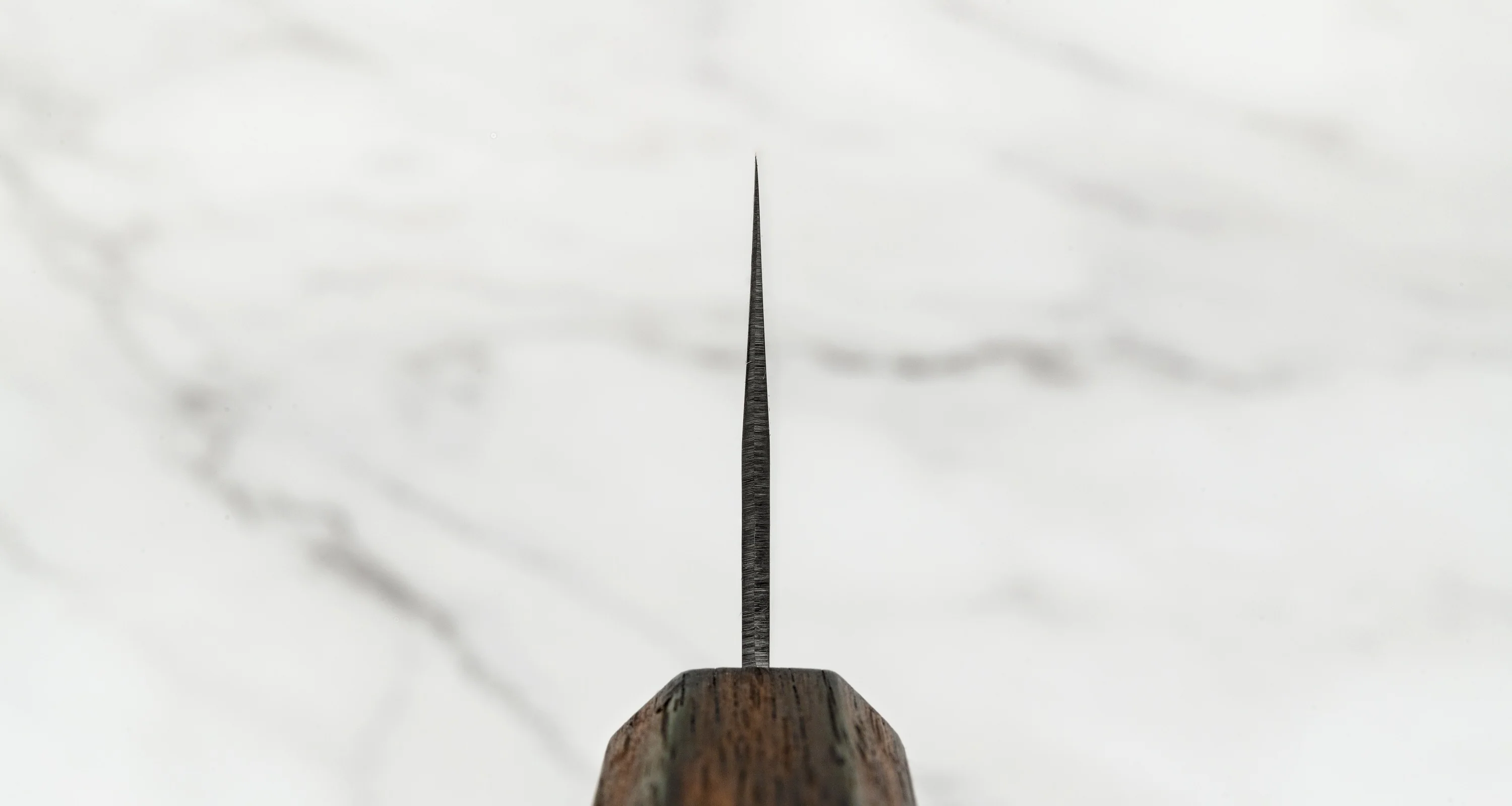
It has a symmetrical double bevel blade with a flat V-edge grind.
HANDLE:
The handle is made from durable Japanese oak, shaped into a traditional octagonal (wa) form for a comfortable grip in both left and right hands. It’s treated with a Baikoku (梅黒, “black plum”) finish—a traditional Japanese technique that gives the wood a deep, dark tone and enhances its resistance to moisture and wear. Stylish, lightweight, and built to last.
ABOUT THE BLACKSMITH:
Born in 1944 in Echizen, Japan, Kunio Masutani began his knifemaking journey under his father's guidance and launched his own forge at the age of 30. He insists on only making three blade shapes: gyuto, santoku, and nakiri, with a maximum length of 180mm (7.1”).
Knives from Masutani-san offer a stunning price-performance ratio. They are a great choice for passionate home cooks who are starting to explore the beautiful world of Japanese knives.
More Images
Masutani Santoku VG-1 Tsuchime Wa 170mm (6.7")
Blacksmith Masutani is widely respected for his sharpening skills—and his knives reflect that precision. With a spine thickness of just around 1.8 mm, they glide through food effortlessly. These knives are ideal for aspiring chefs and make excellent gifts (just don’t forget to include a coin for good luck!).
BLADE SHAPE:
The Japanese word santoku means “knife of three virtues,” referring either to the ingredients it handles—meat, fish, and vegetables—or the techniques it masters—slicing, chopping, and dicing. In short: it’s made to do it all.
The Masutani Santoku VG-1 Tsuchime is a true all-rounder. With its slightly shorter and wider blade and a gently curved edge, it excels at slicing vegetables, chopping herbs, and cutting meat or fish.
STEEL AND LAMINATION:
The blade core is made of VG-1 stainless steel – a tougher, slightly less wear-resistant cousin of VG-10. It’s clad in softer steel with a tsuchime (hammered) finish for a unique look and reduced food sticking. Less surface contact means less friction, so slicing is smoother and easier. The exposed VG-1 edge follows a curvy, hamon-like line. At around 60 HRC, it balances sharpness, edge retention, and easy maintenance.
GEOMETRY:
It has a symmetrical double bevel blade with a flat V-edge grind.
HANDLE:
The handle is made from durable Japanese oak, shaped into a traditional octagonal (wa) form for a comfortable grip in both left and right hands. It’s treated with a Baikoku (梅黒, “black plum”) finish—a traditional Japanese technique that gives the wood a deep, dark tone and enhances its resistance to moisture and wear. Stylish, lightweight, and built to last.
ABOUT THE BLACKSMITH:
Born in 1944 in Echizen, Japan, Kunio Masutani began his knifemaking journey under his father's guidance and launched his own forge at the age of 30. He insists on only making three blade shapes: gyuto, santoku, and nakiri, with a maximum length of 180mm (7.1”).
Knives from Masutani-san offer a stunning price-performance ratio. They are a great choice for passionate home cooks who are starting to explore the beautiful world of Japanese knives.
Product Information
Product Information
Shipping & Returns
Shipping & Returns
Description
Blacksmith Masutani is widely respected for his sharpening skills—and his knives reflect that precision. With a spine thickness of just around 1.8 mm, they glide through food effortlessly. These knives are ideal for aspiring chefs and make excellent gifts (just don’t forget to include a coin for good luck!).
BLADE SHAPE:
The Japanese word santoku means “knife of three virtues,” referring either to the ingredients it handles—meat, fish, and vegetables—or the techniques it masters—slicing, chopping, and dicing. In short: it’s made to do it all.
The Masutani Santoku VG-1 Tsuchime is a true all-rounder. With its slightly shorter and wider blade and a gently curved edge, it excels at slicing vegetables, chopping herbs, and cutting meat or fish.
STEEL AND LAMINATION:
The blade core is made of VG-1 stainless steel – a tougher, slightly less wear-resistant cousin of VG-10. It’s clad in softer steel with a tsuchime (hammered) finish for a unique look and reduced food sticking. Less surface contact means less friction, so slicing is smoother and easier. The exposed VG-1 edge follows a curvy, hamon-like line. At around 60 HRC, it balances sharpness, edge retention, and easy maintenance.
GEOMETRY:
It has a symmetrical double bevel blade with a flat V-edge grind.
HANDLE:
The handle is made from durable Japanese oak, shaped into a traditional octagonal (wa) form for a comfortable grip in both left and right hands. It’s treated with a Baikoku (梅黒, “black plum”) finish—a traditional Japanese technique that gives the wood a deep, dark tone and enhances its resistance to moisture and wear. Stylish, lightweight, and built to last.
ABOUT THE BLACKSMITH:
Born in 1944 in Echizen, Japan, Kunio Masutani began his knifemaking journey under his father's guidance and launched his own forge at the age of 30. He insists on only making three blade shapes: gyuto, santoku, and nakiri, with a maximum length of 180mm (7.1”).
Knives from Masutani-san offer a stunning price-performance ratio. They are a great choice for passionate home cooks who are starting to explore the beautiful world of Japanese knives.