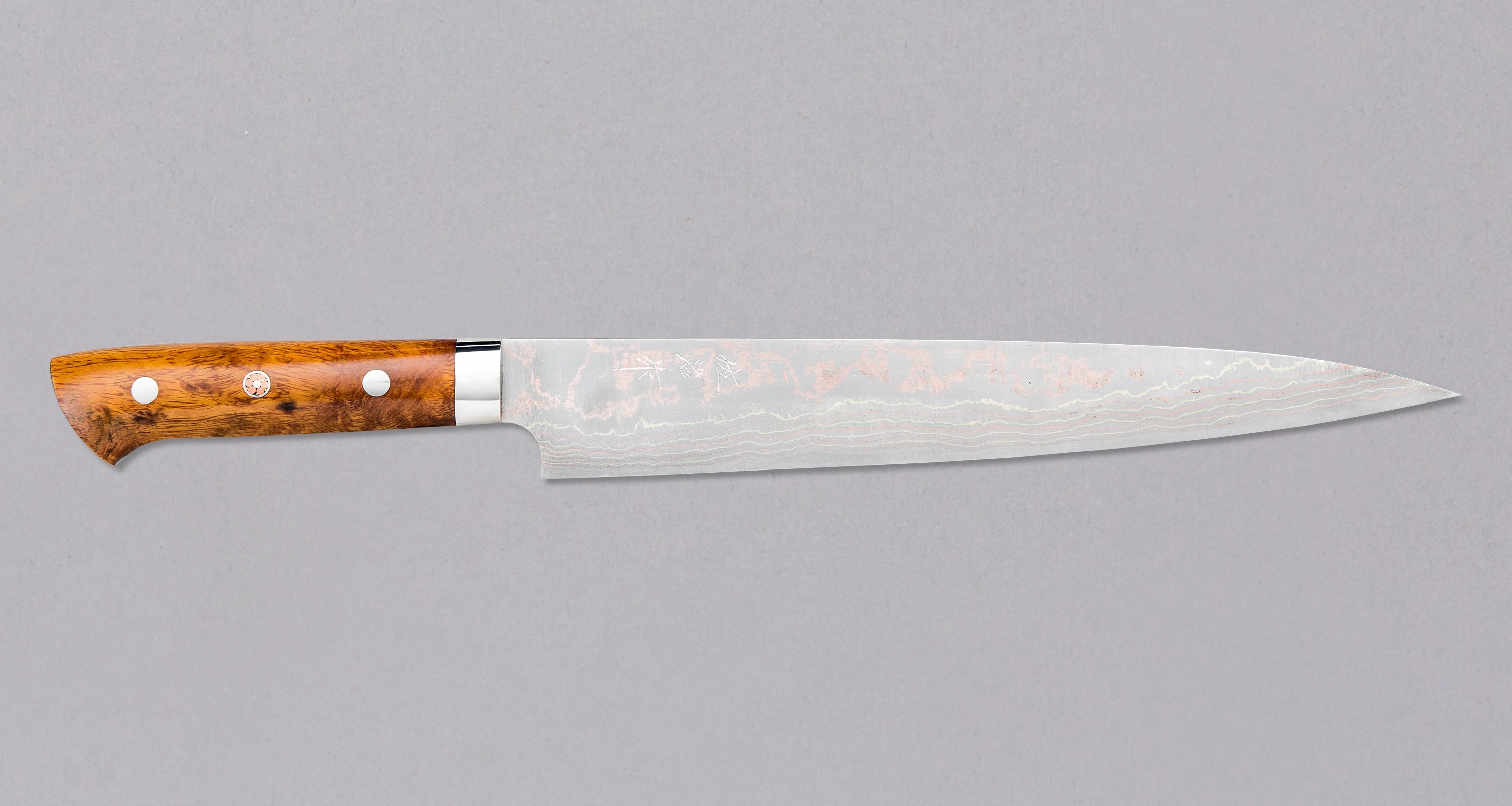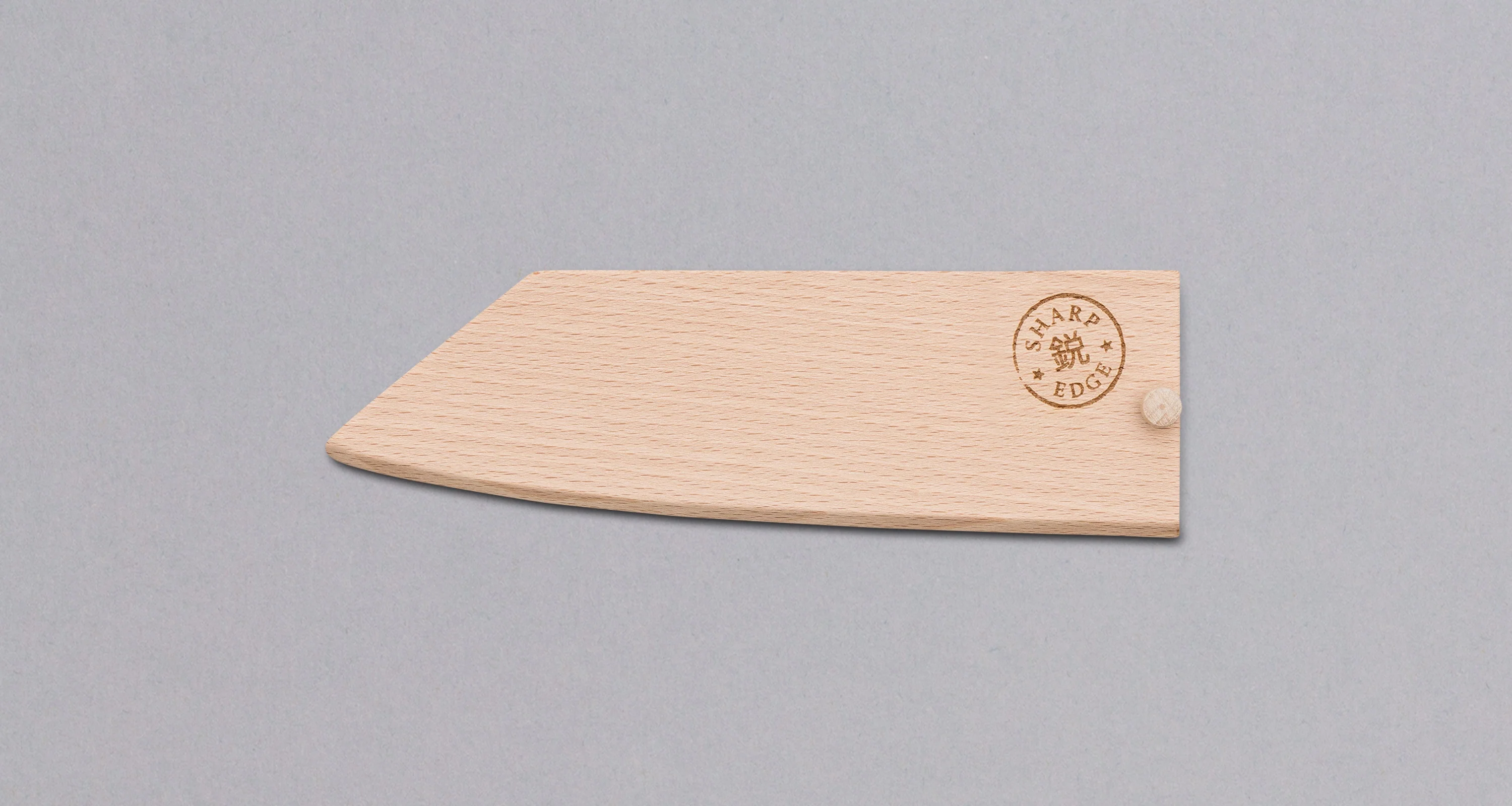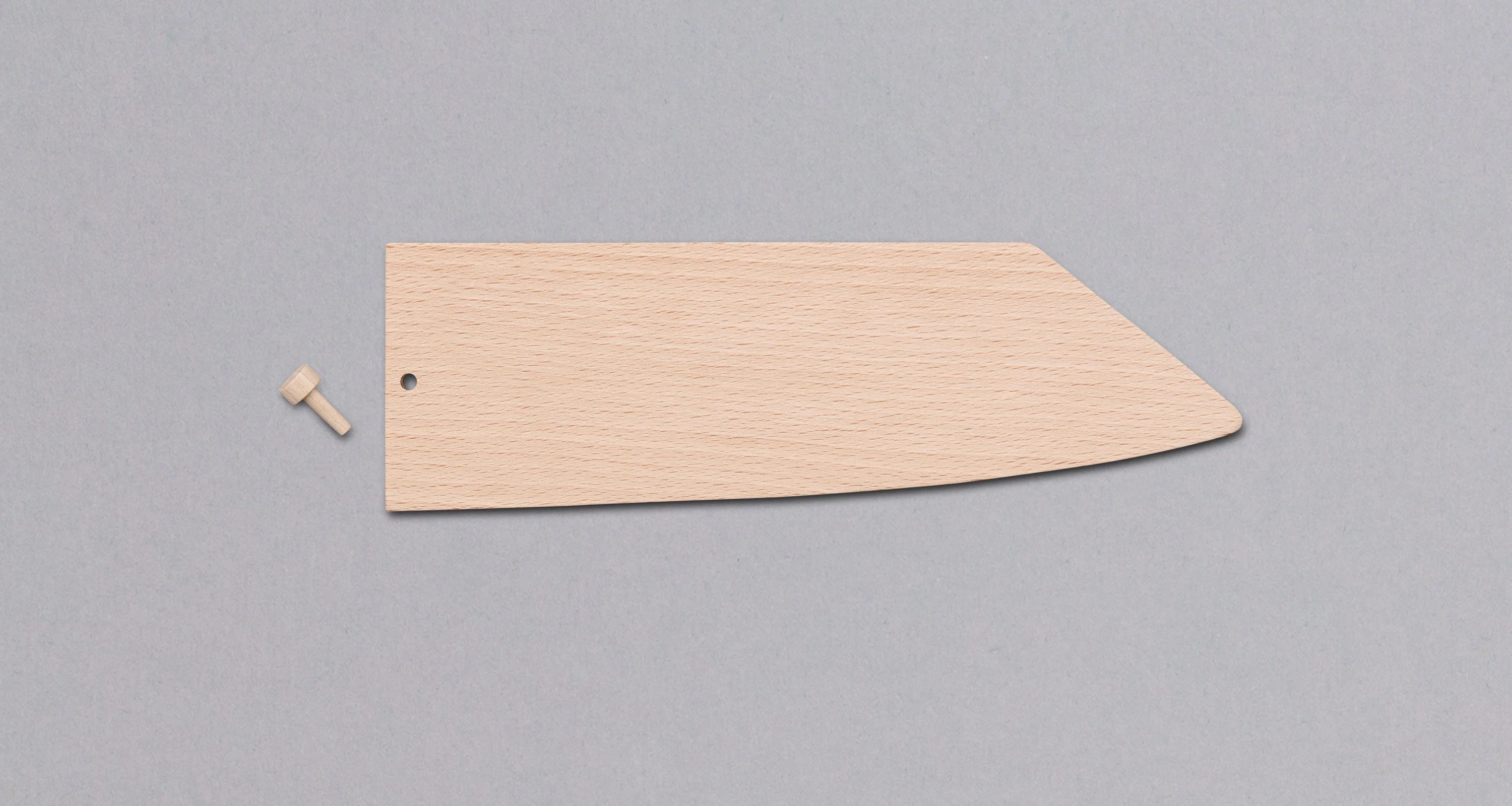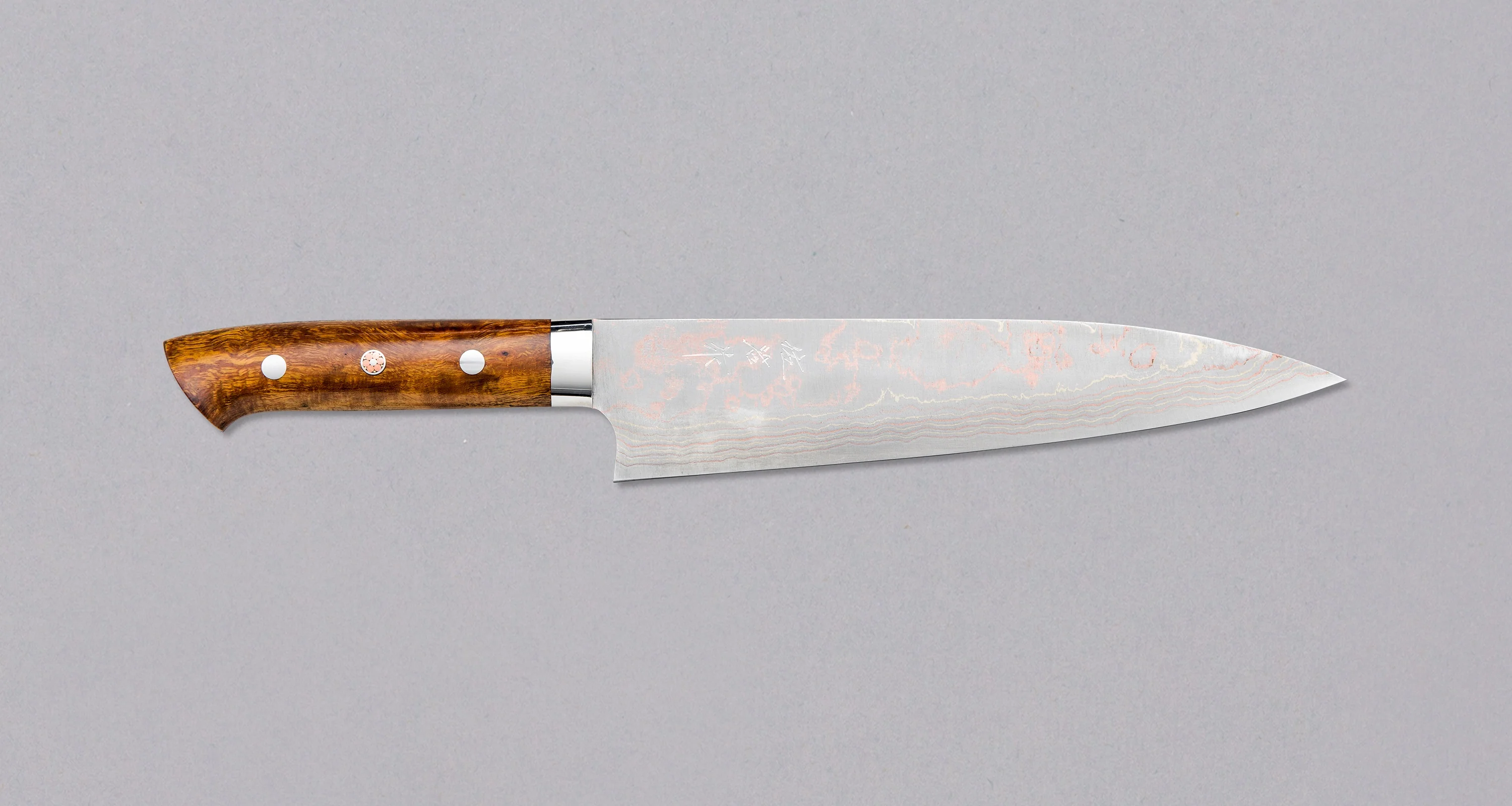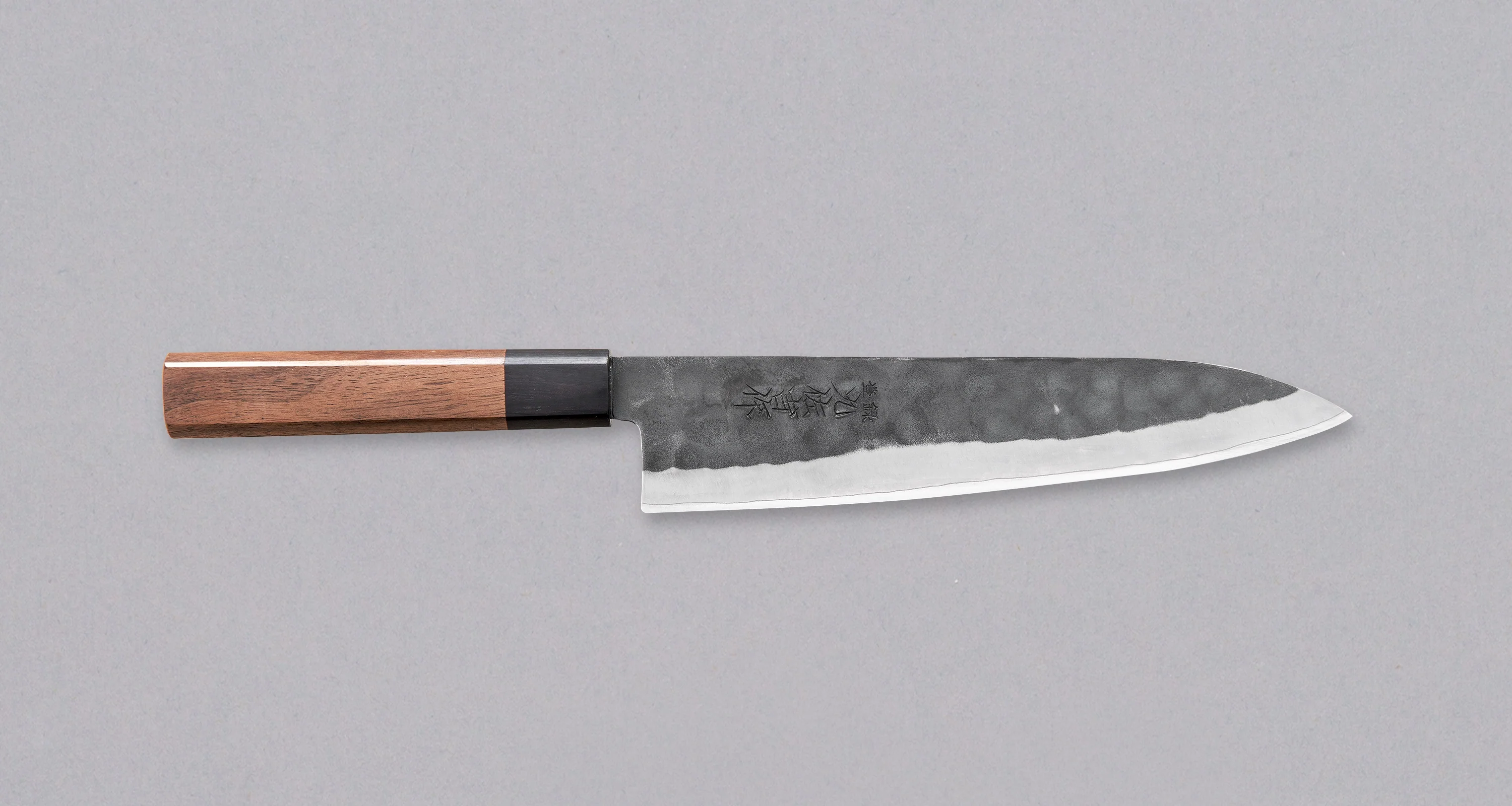
Makoto Kurosaki Santoku VG-10 Kodama Keyaki 165mm (6.5")
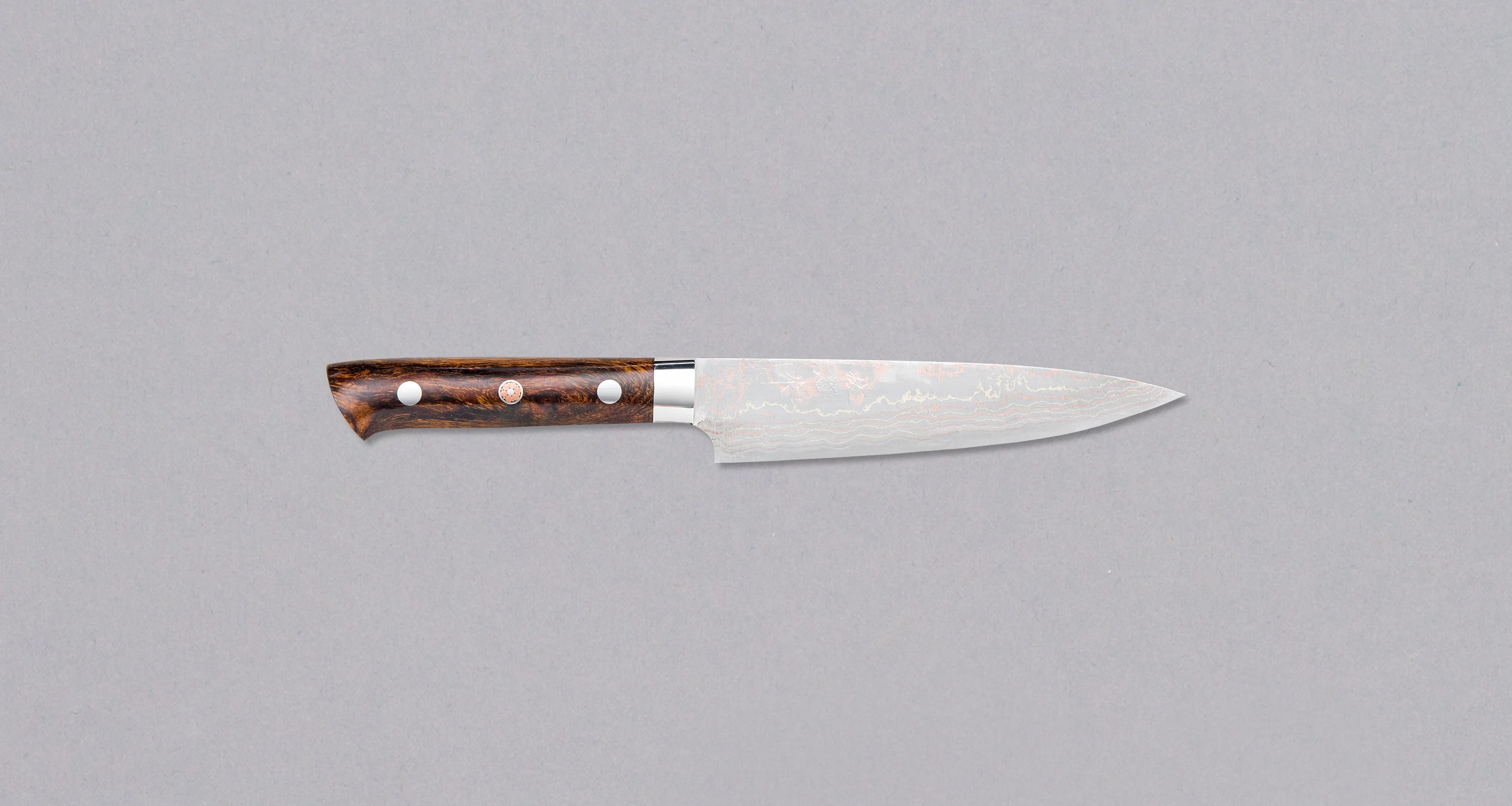
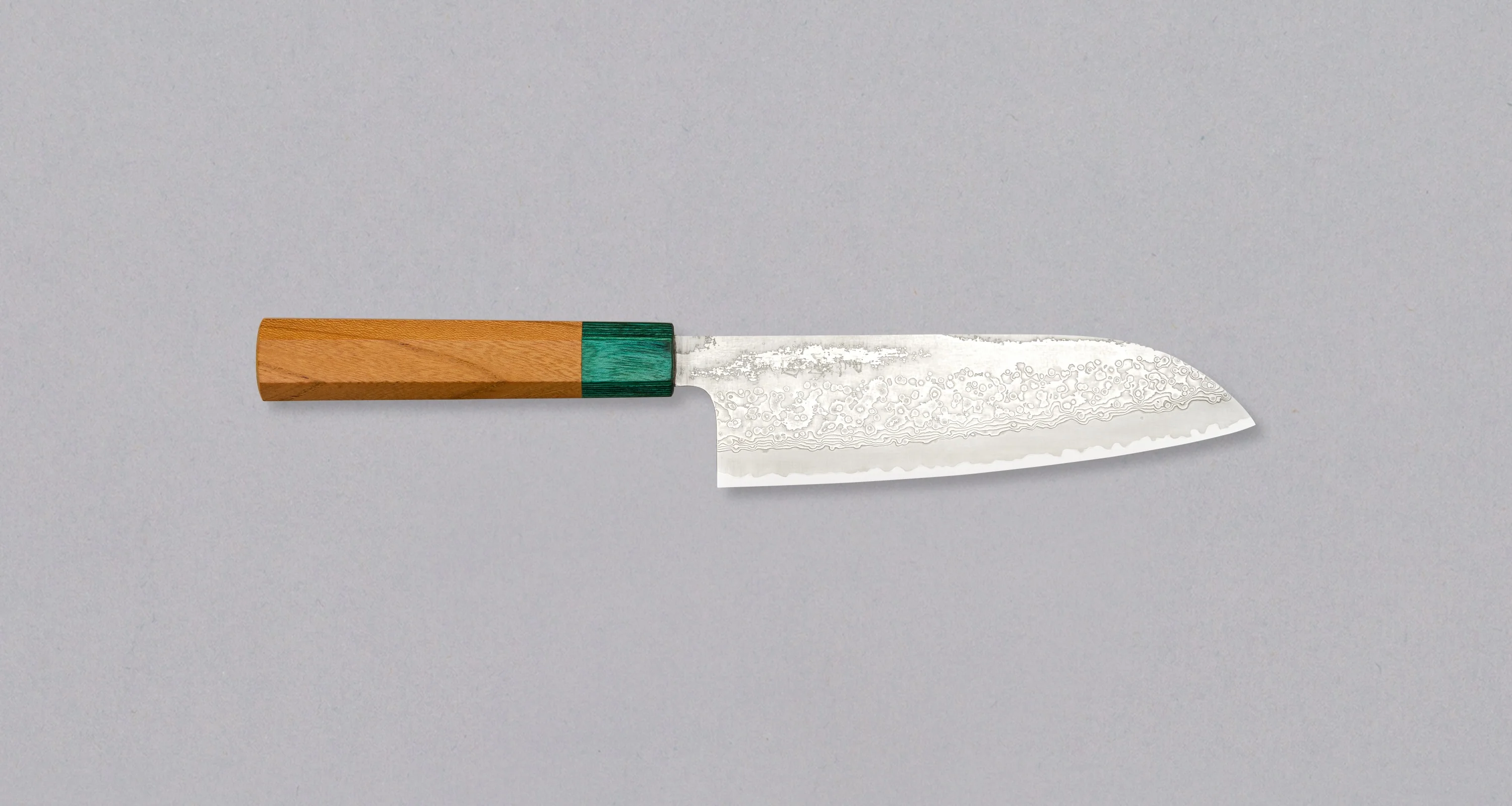
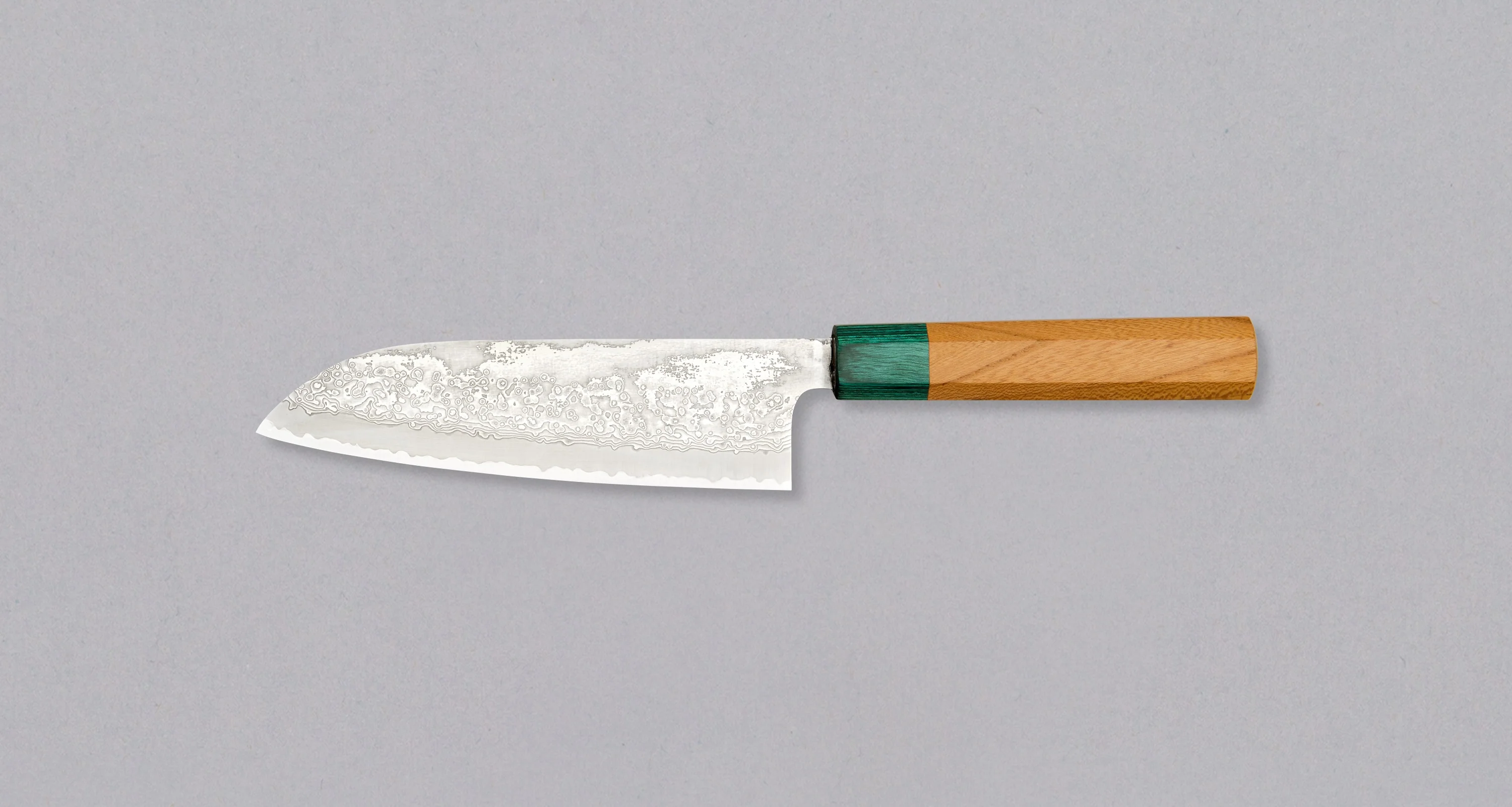
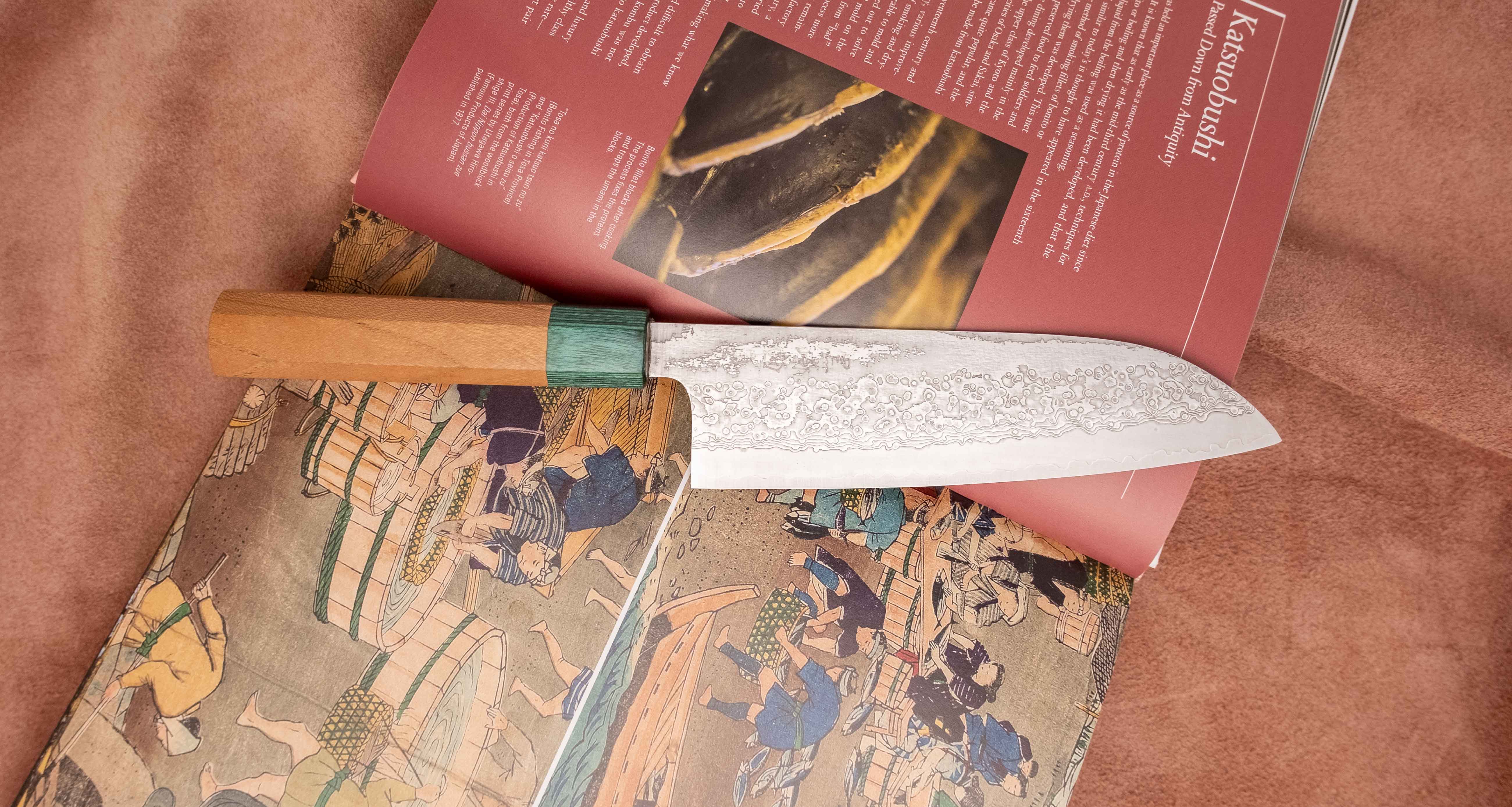
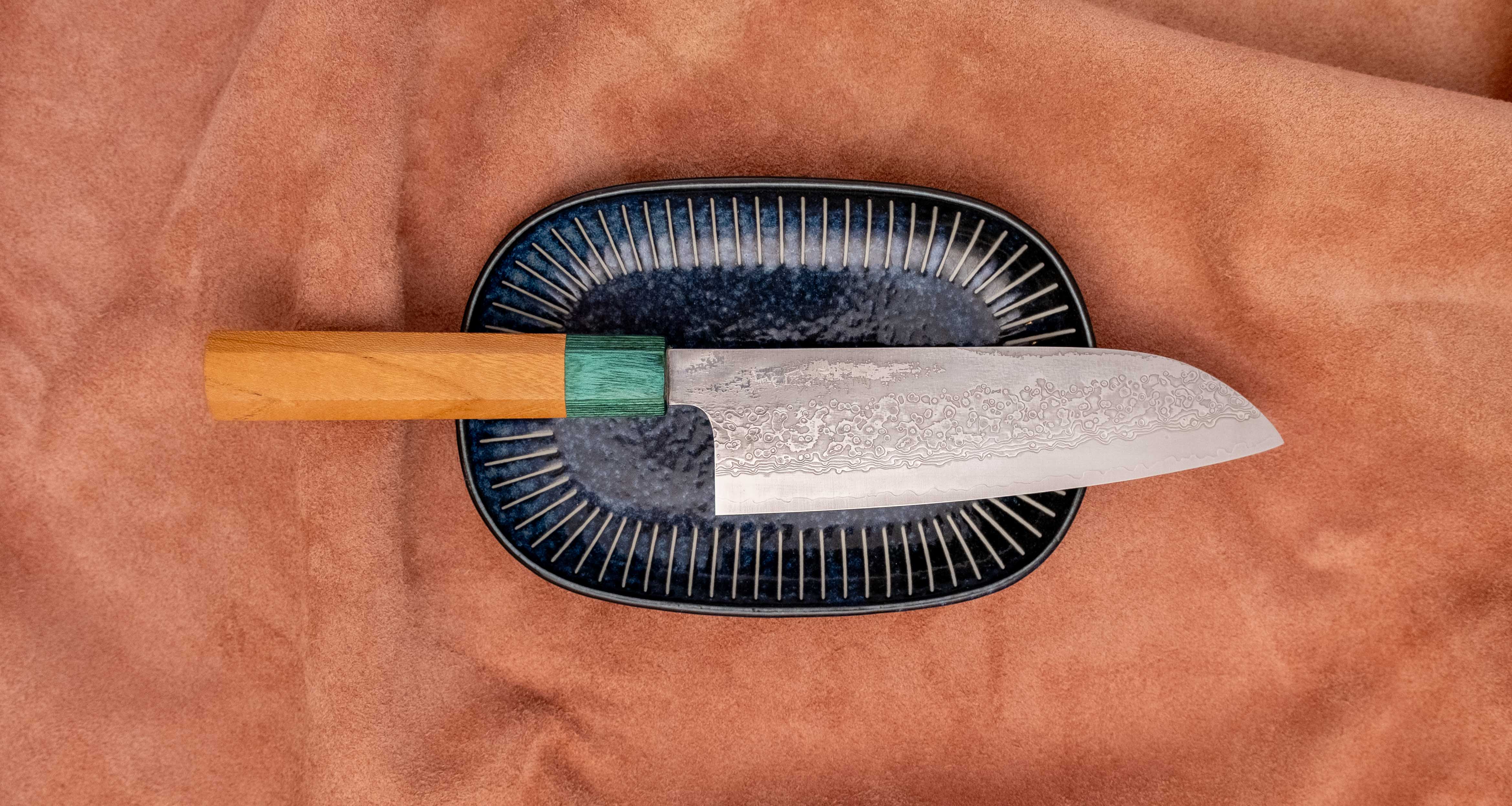
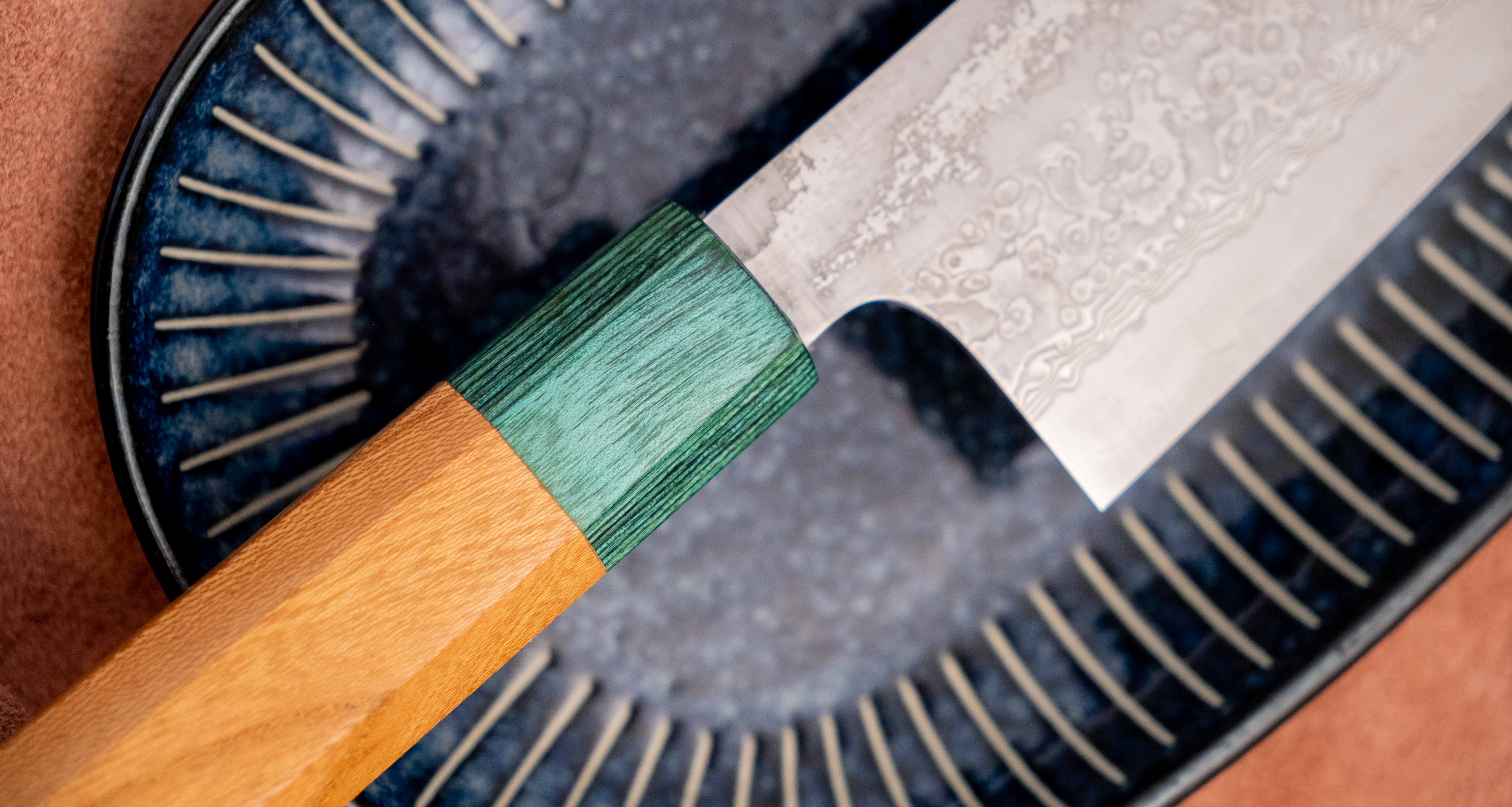
Makoto Kurosaki’s masterpiece is a stunning blend of artistry and precision. This knife captivates chefs and collectors with its fascinating damascus steel pattern. The vibrant green pakkawood ferrule perfectly matches the warm keyaki wood handle for a unique and elegant look that will stand out in any kitchen. This versatile knife with its slim, balanced profile is perfect for slicing, dicing, and intricate prep work - an essential tool for both home cooks and professional chefs looking for unparalleled performance and style.
BLADE SHAPE:
Santoku is a universal knife that excels at all types of cutting and chopping tasks on a cutting board. The Japanese word santoku roughly translates to “knife of three virtues” (san means “three”) and may refer to the wide array of ingredients that the knife can handle (meat, fish and vegetables) or to the tasks it can perform (slicing, chopping and dicing).
🚩 Due to the thinness of the blade, we recommend using the correct cutting techniques and a suitable cutting board (wooden or Hasegawa) to prevent damage to the knife.
STEEL:
VG-10 (V for Vanadium, G for "gold" as in "gold standard") is made by Takefu Special Steel Company, a relatively small steel company that around 60 years ago managed to find just the right balance of different elements to create the most popular Japanese knife making steel today. VG-10 steel is stainless steel with relatively high Carbon (C) content (1%), 15% Chromium (Cr), 1% Molybdenum (Mo), 0.3% Vanadium (V) and 1.5% Cobalt (Co). The combination of Cr, Mo, and V forms a lot of hard carbides, making the steel abrasion resistant which translates to long-lasting, smooth sharpness.
LAMINATION:
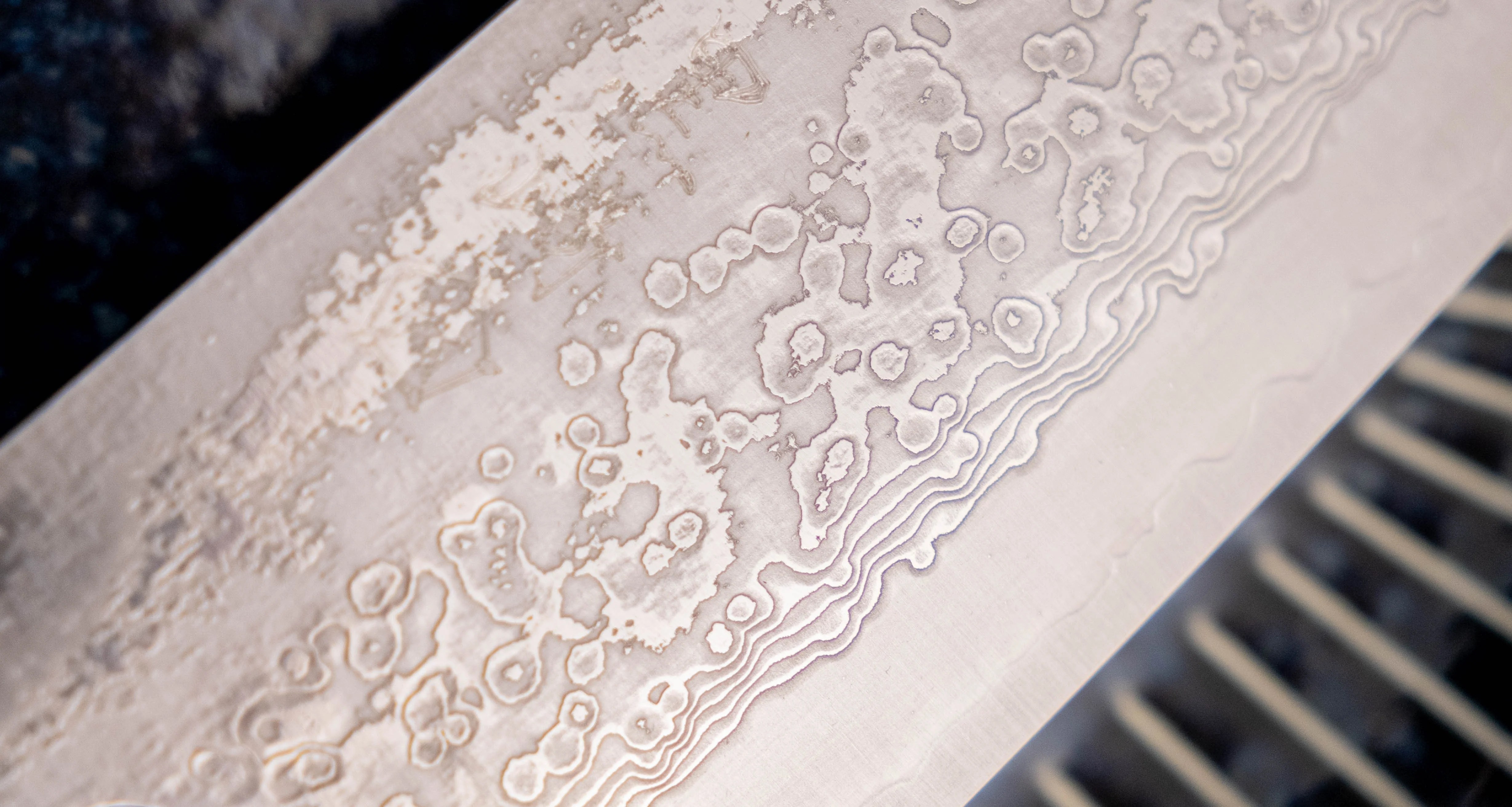
The core layer consisting of VG-10 steel was sandwiched between layers of softer, pliable steel that had been forged together to create a rippling damascus pattern. This technique is called san-mai and is used to protect the hard (but delicate) core from outside factors and physical impacts, which could lead to breakage.
GEOMETRY:
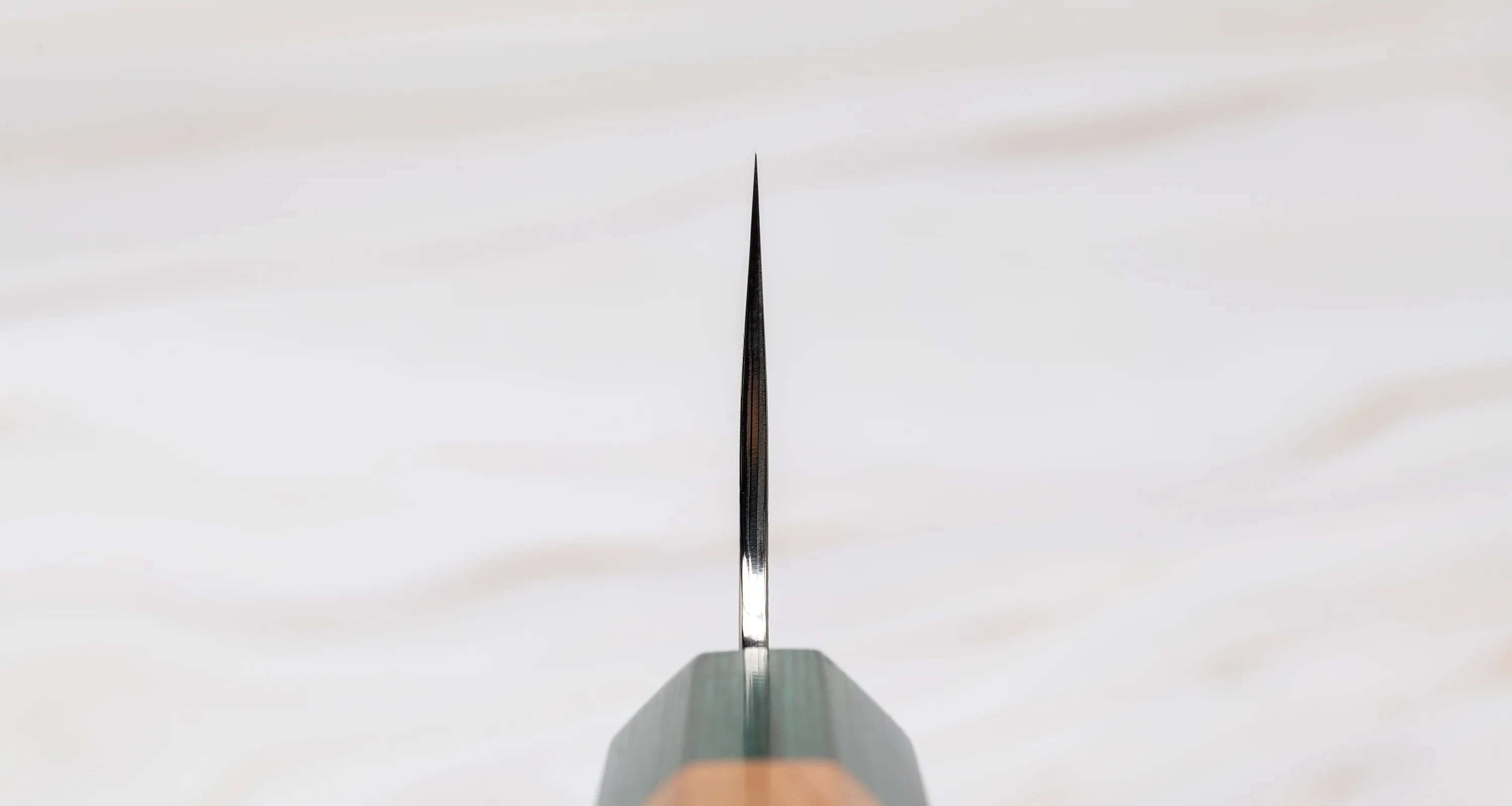
It has a double bevel (symmetrical) blade.
BLADE FINISH:
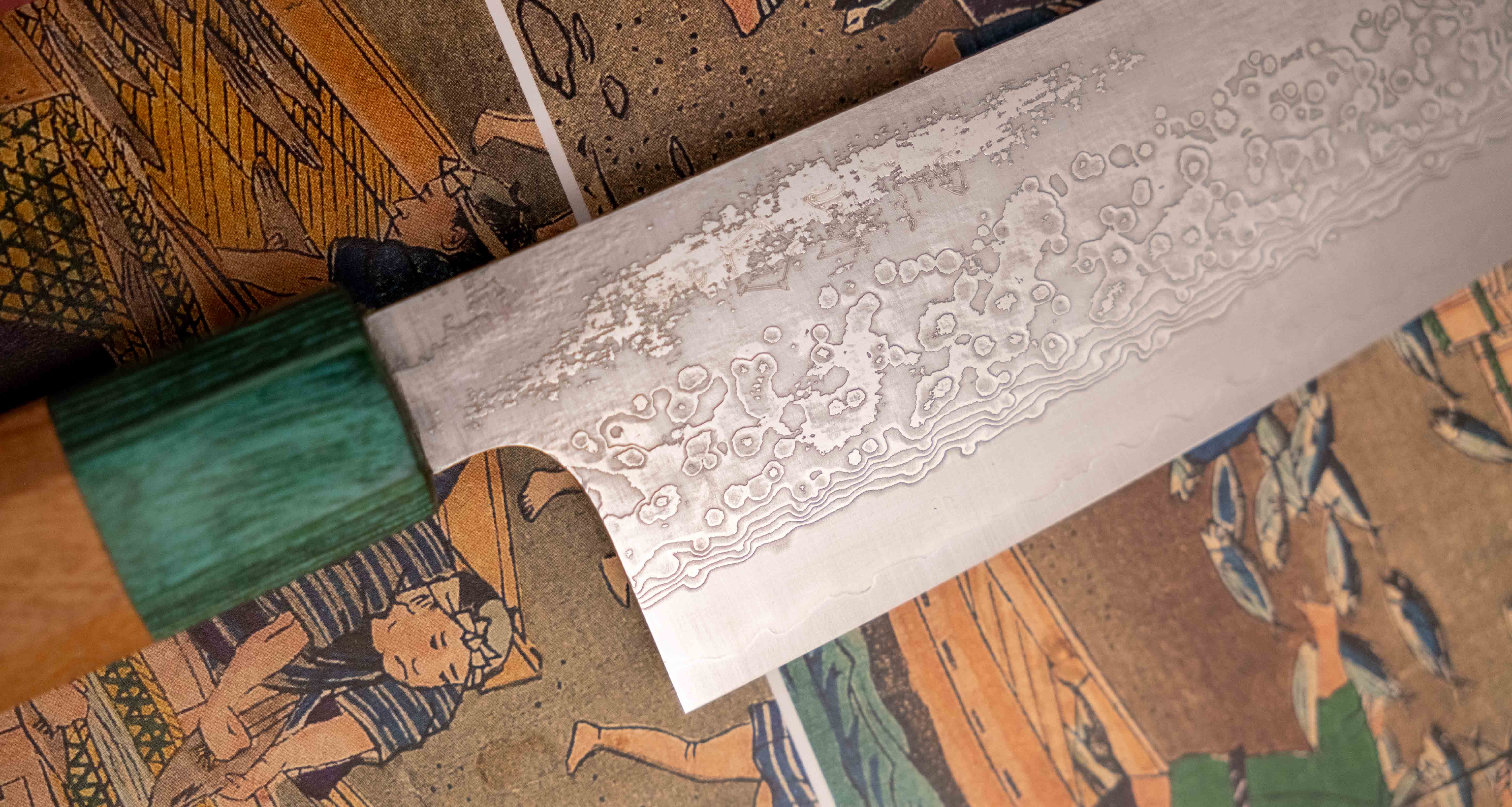
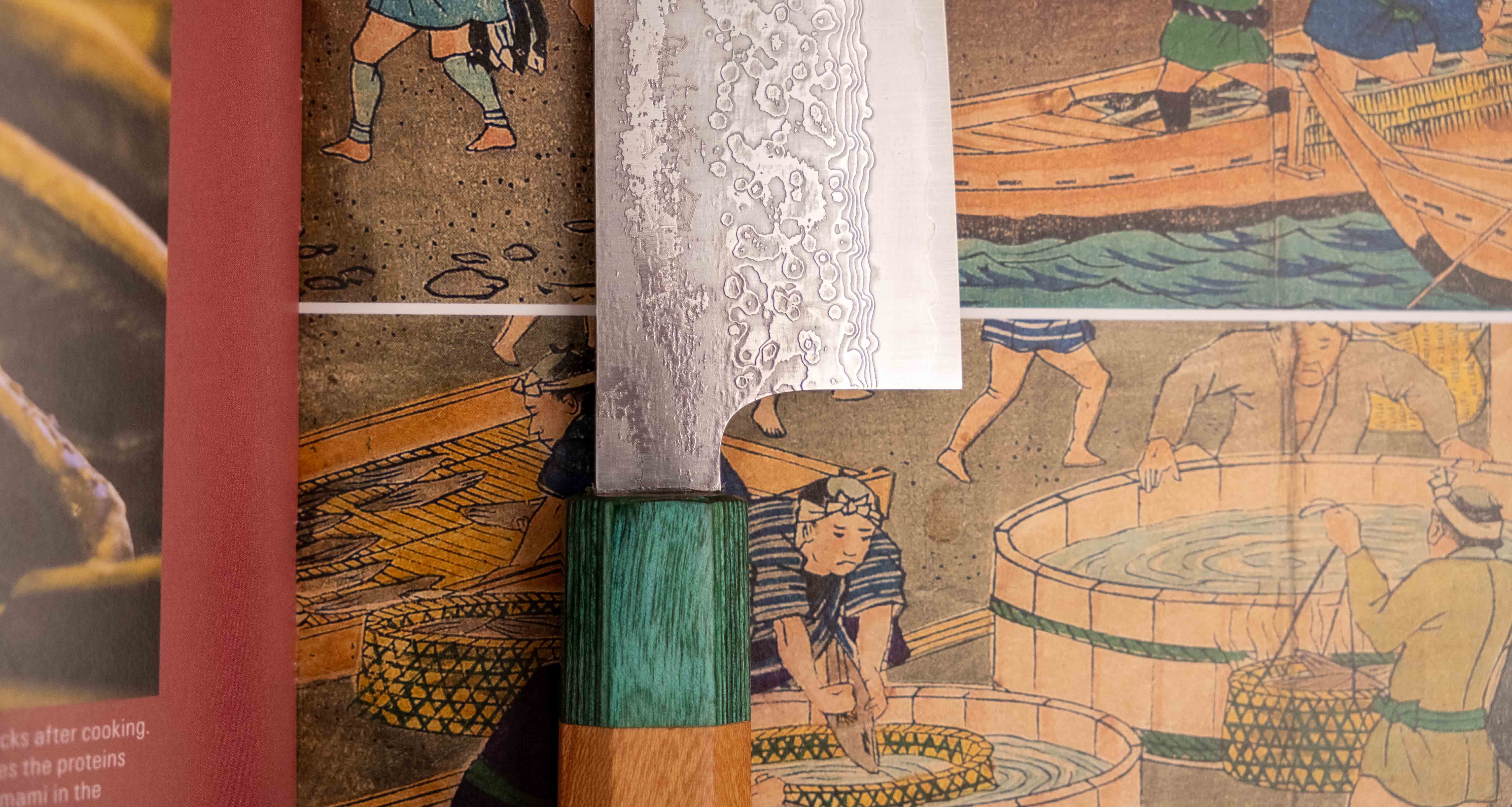
The blade features a unique damascus pattern inspired by waves crashing on the shore — flowing lines near the shinogi dissolve into raindrop-like swirls along the spine. Also interesting is the fact that the damascus pattern doesn’t stretch all the way to the spine or below the shinogi line. The blacksmiths usually accomplish this by laminating different thicknesses of single damascus layers, then grinding and etching the blade at precise angles to reveal a striking 3D finish. Each pattern is truly one of a kind.
HANDLE:
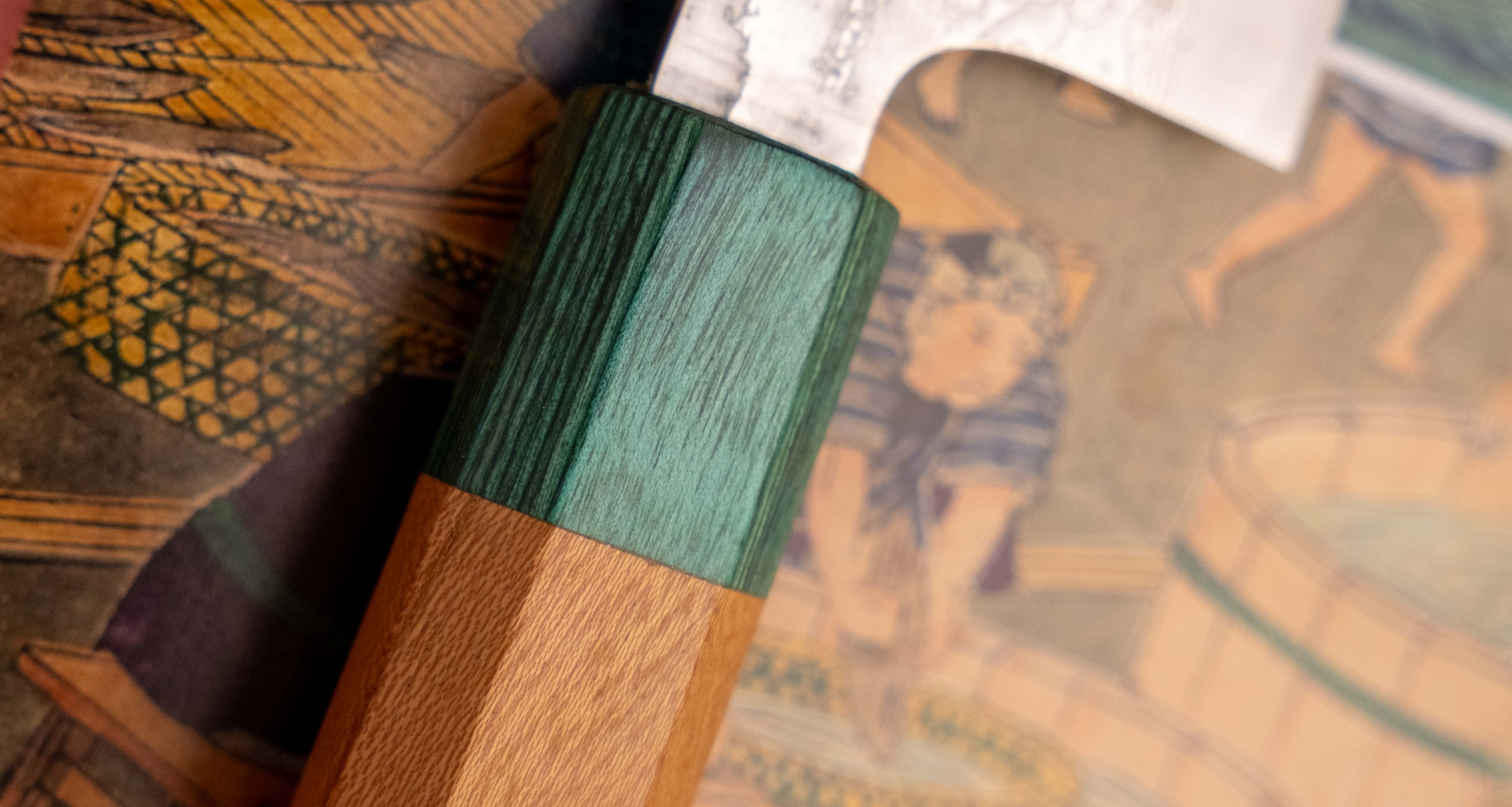
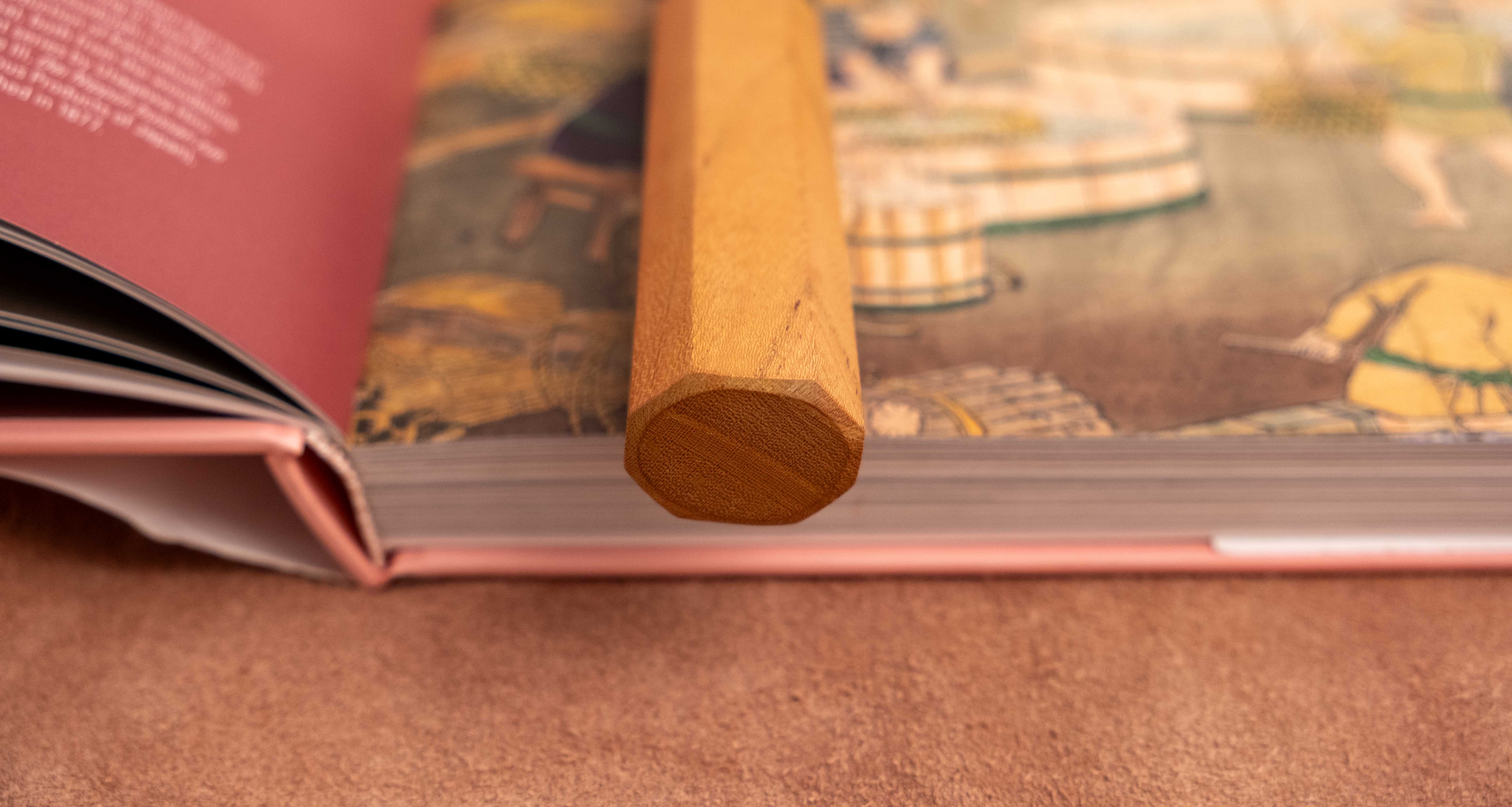
Japanese (Wa) style handle is octagonal and made out of light colored keyaki wood with an eye-catching green pakka wood ferrule. It is symmetrical and therefore suitable for both left and right-handed users.
ABOUT THE BLACKSMITH:
Makoto Kurosaki trained under masters like Hiroshi Kato at Takefu Knife Village in Echizen. While he began forging like his brother, Makoto chose to specialize in sharpening and design. Today, he collaborates with local blacksmiths — including Yu — who forge blades to his specifications, which he then grinds and finishes to perfection under his own brand.
Original: $392.42
-65%$392.42
$137.35More Images
Makoto Kurosaki Santoku VG-10 Kodama Keyaki 165mm (6.5")
Makoto Kurosaki’s masterpiece is a stunning blend of artistry and precision. This knife captivates chefs and collectors with its fascinating damascus steel pattern. The vibrant green pakkawood ferrule perfectly matches the warm keyaki wood handle for a unique and elegant look that will stand out in any kitchen. This versatile knife with its slim, balanced profile is perfect for slicing, dicing, and intricate prep work - an essential tool for both home cooks and professional chefs looking for unparalleled performance and style.
BLADE SHAPE:
Santoku is a universal knife that excels at all types of cutting and chopping tasks on a cutting board. The Japanese word santoku roughly translates to “knife of three virtues” (san means “three”) and may refer to the wide array of ingredients that the knife can handle (meat, fish and vegetables) or to the tasks it can perform (slicing, chopping and dicing).
🚩 Due to the thinness of the blade, we recommend using the correct cutting techniques and a suitable cutting board (wooden or Hasegawa) to prevent damage to the knife.
STEEL:
VG-10 (V for Vanadium, G for "gold" as in "gold standard") is made by Takefu Special Steel Company, a relatively small steel company that around 60 years ago managed to find just the right balance of different elements to create the most popular Japanese knife making steel today. VG-10 steel is stainless steel with relatively high Carbon (C) content (1%), 15% Chromium (Cr), 1% Molybdenum (Mo), 0.3% Vanadium (V) and 1.5% Cobalt (Co). The combination of Cr, Mo, and V forms a lot of hard carbides, making the steel abrasion resistant which translates to long-lasting, smooth sharpness.
LAMINATION:
The core layer consisting of VG-10 steel was sandwiched between layers of softer, pliable steel that had been forged together to create a rippling damascus pattern. This technique is called san-mai and is used to protect the hard (but delicate) core from outside factors and physical impacts, which could lead to breakage.
GEOMETRY:
It has a double bevel (symmetrical) blade.
BLADE FINISH:
The blade features a unique damascus pattern inspired by waves crashing on the shore — flowing lines near the shinogi dissolve into raindrop-like swirls along the spine. Also interesting is the fact that the damascus pattern doesn’t stretch all the way to the spine or below the shinogi line. The blacksmiths usually accomplish this by laminating different thicknesses of single damascus layers, then grinding and etching the blade at precise angles to reveal a striking 3D finish. Each pattern is truly one of a kind.
HANDLE:
Japanese (Wa) style handle is octagonal and made out of light colored keyaki wood with an eye-catching green pakka wood ferrule. It is symmetrical and therefore suitable for both left and right-handed users.
ABOUT THE BLACKSMITH:
Makoto Kurosaki trained under masters like Hiroshi Kato at Takefu Knife Village in Echizen. While he began forging like his brother, Makoto chose to specialize in sharpening and design. Today, he collaborates with local blacksmiths — including Yu — who forge blades to his specifications, which he then grinds and finishes to perfection under his own brand.
Product Information
Product Information
Shipping & Returns
Shipping & Returns
Description
Makoto Kurosaki’s masterpiece is a stunning blend of artistry and precision. This knife captivates chefs and collectors with its fascinating damascus steel pattern. The vibrant green pakkawood ferrule perfectly matches the warm keyaki wood handle for a unique and elegant look that will stand out in any kitchen. This versatile knife with its slim, balanced profile is perfect for slicing, dicing, and intricate prep work - an essential tool for both home cooks and professional chefs looking for unparalleled performance and style.
BLADE SHAPE:
Santoku is a universal knife that excels at all types of cutting and chopping tasks on a cutting board. The Japanese word santoku roughly translates to “knife of three virtues” (san means “three”) and may refer to the wide array of ingredients that the knife can handle (meat, fish and vegetables) or to the tasks it can perform (slicing, chopping and dicing).
🚩 Due to the thinness of the blade, we recommend using the correct cutting techniques and a suitable cutting board (wooden or Hasegawa) to prevent damage to the knife.
STEEL:
VG-10 (V for Vanadium, G for "gold" as in "gold standard") is made by Takefu Special Steel Company, a relatively small steel company that around 60 years ago managed to find just the right balance of different elements to create the most popular Japanese knife making steel today. VG-10 steel is stainless steel with relatively high Carbon (C) content (1%), 15% Chromium (Cr), 1% Molybdenum (Mo), 0.3% Vanadium (V) and 1.5% Cobalt (Co). The combination of Cr, Mo, and V forms a lot of hard carbides, making the steel abrasion resistant which translates to long-lasting, smooth sharpness.
LAMINATION:
The core layer consisting of VG-10 steel was sandwiched between layers of softer, pliable steel that had been forged together to create a rippling damascus pattern. This technique is called san-mai and is used to protect the hard (but delicate) core from outside factors and physical impacts, which could lead to breakage.
GEOMETRY:
It has a double bevel (symmetrical) blade.
BLADE FINISH:
The blade features a unique damascus pattern inspired by waves crashing on the shore — flowing lines near the shinogi dissolve into raindrop-like swirls along the spine. Also interesting is the fact that the damascus pattern doesn’t stretch all the way to the spine or below the shinogi line. The blacksmiths usually accomplish this by laminating different thicknesses of single damascus layers, then grinding and etching the blade at precise angles to reveal a striking 3D finish. Each pattern is truly one of a kind.
HANDLE:
Japanese (Wa) style handle is octagonal and made out of light colored keyaki wood with an eye-catching green pakka wood ferrule. It is symmetrical and therefore suitable for both left and right-handed users.
ABOUT THE BLACKSMITH:
Makoto Kurosaki trained under masters like Hiroshi Kato at Takefu Knife Village in Echizen. While he began forging like his brother, Makoto chose to specialize in sharpening and design. Today, he collaborates with local blacksmiths — including Yu — who forge blades to his specifications, which he then grinds and finishes to perfection under his own brand.