![Kato Nakiri VG-10 Nickel Damascus 160mm (6.3") [Rosewood]](/images/sharpedgestore.shop/images/product/kato-nakiri-vg-10-nickel-damascus-160mm-rosewood-1.jpg)
Kato Nakiri VG-10 Nickel Damascus 160mm (6.3") [Rosewood]
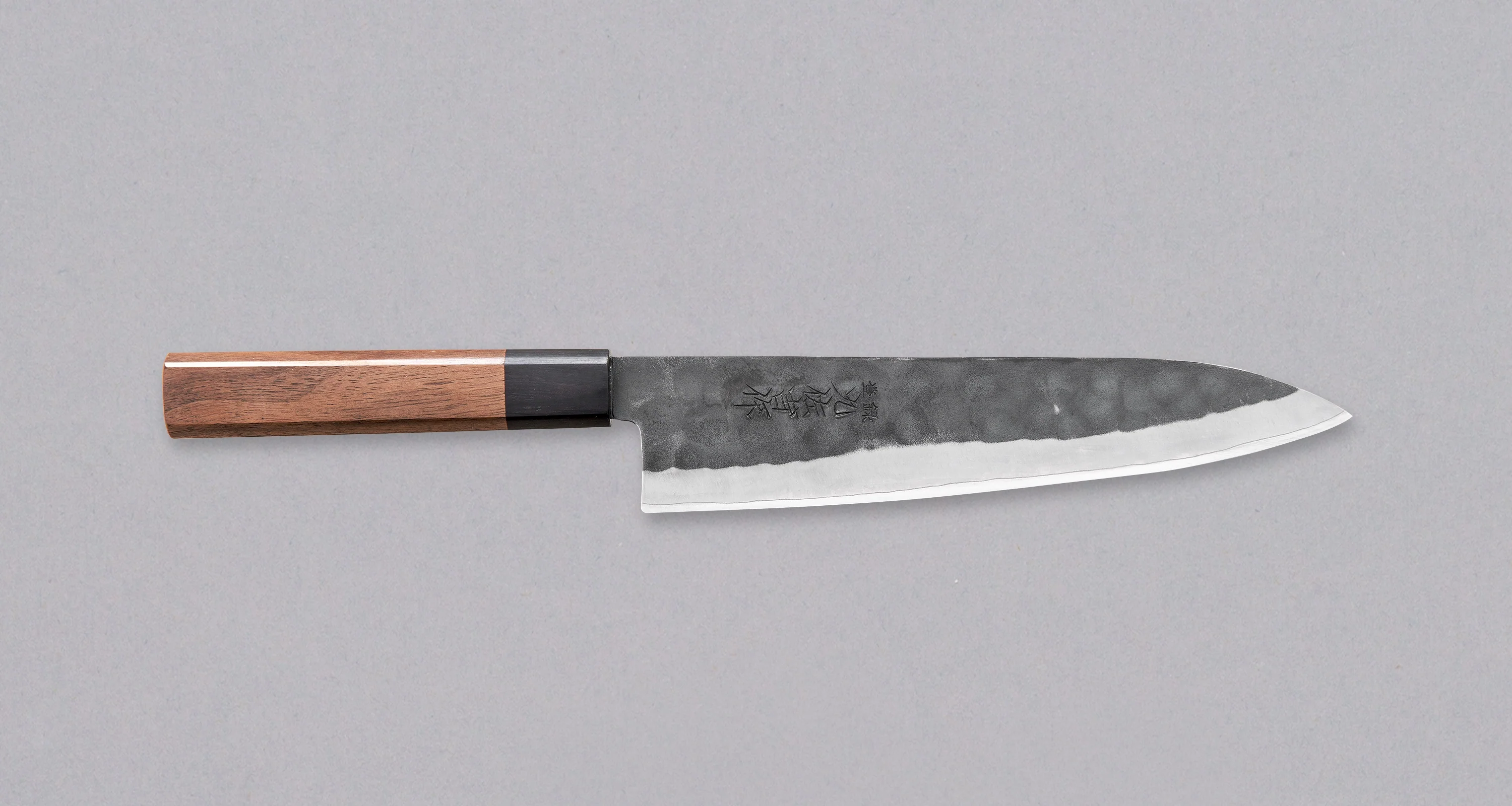
This Nakiri knife by Yoshimi Kato is more than a high-performance kitchen tool—it's a collector’s piece that blends function with visual drama. Forged from SG2 powder steel and adorned with an intensely contrasting Damascus finish, it delivers precision with every slice while catching the light in breathtaking ways.
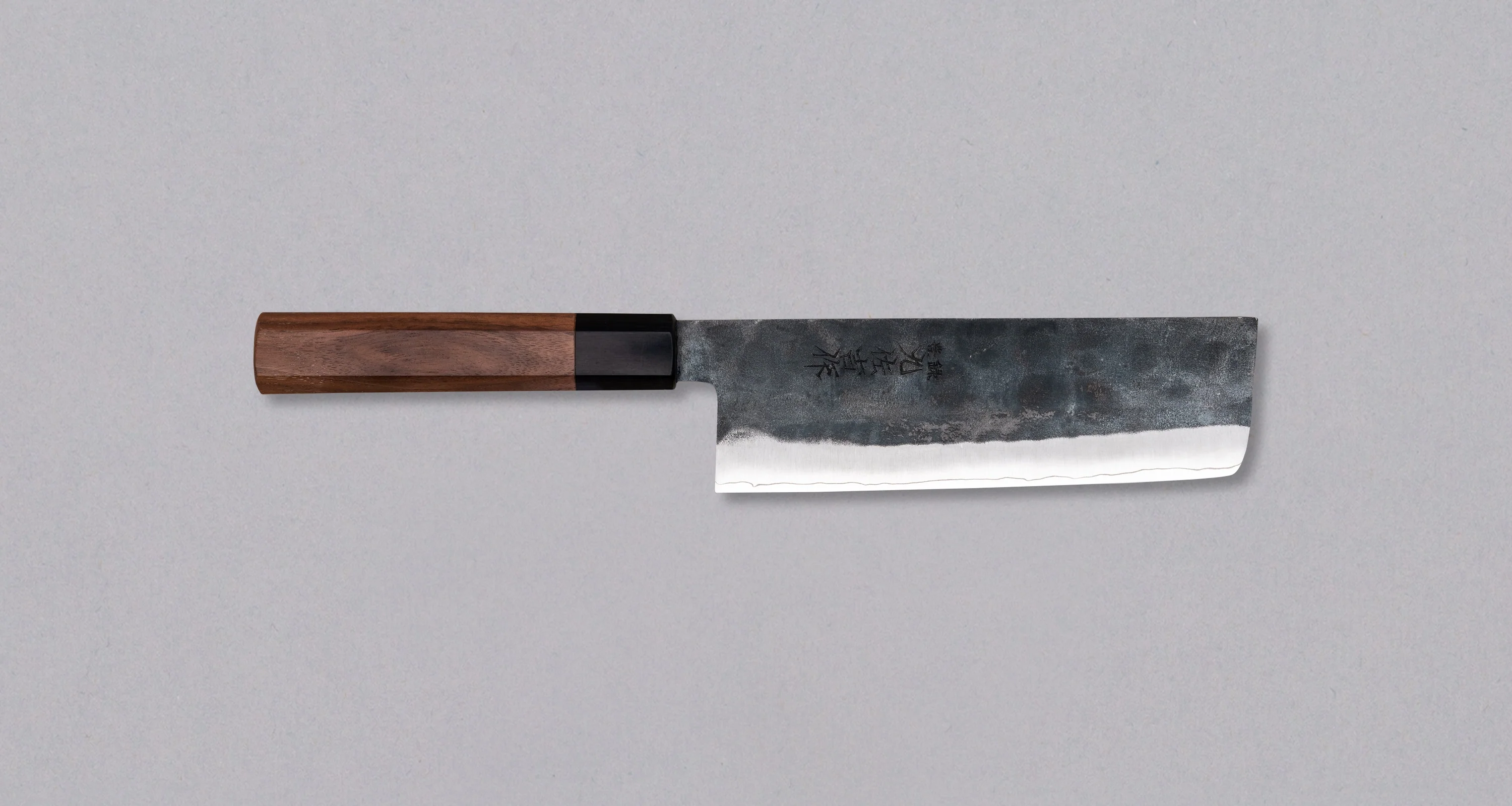
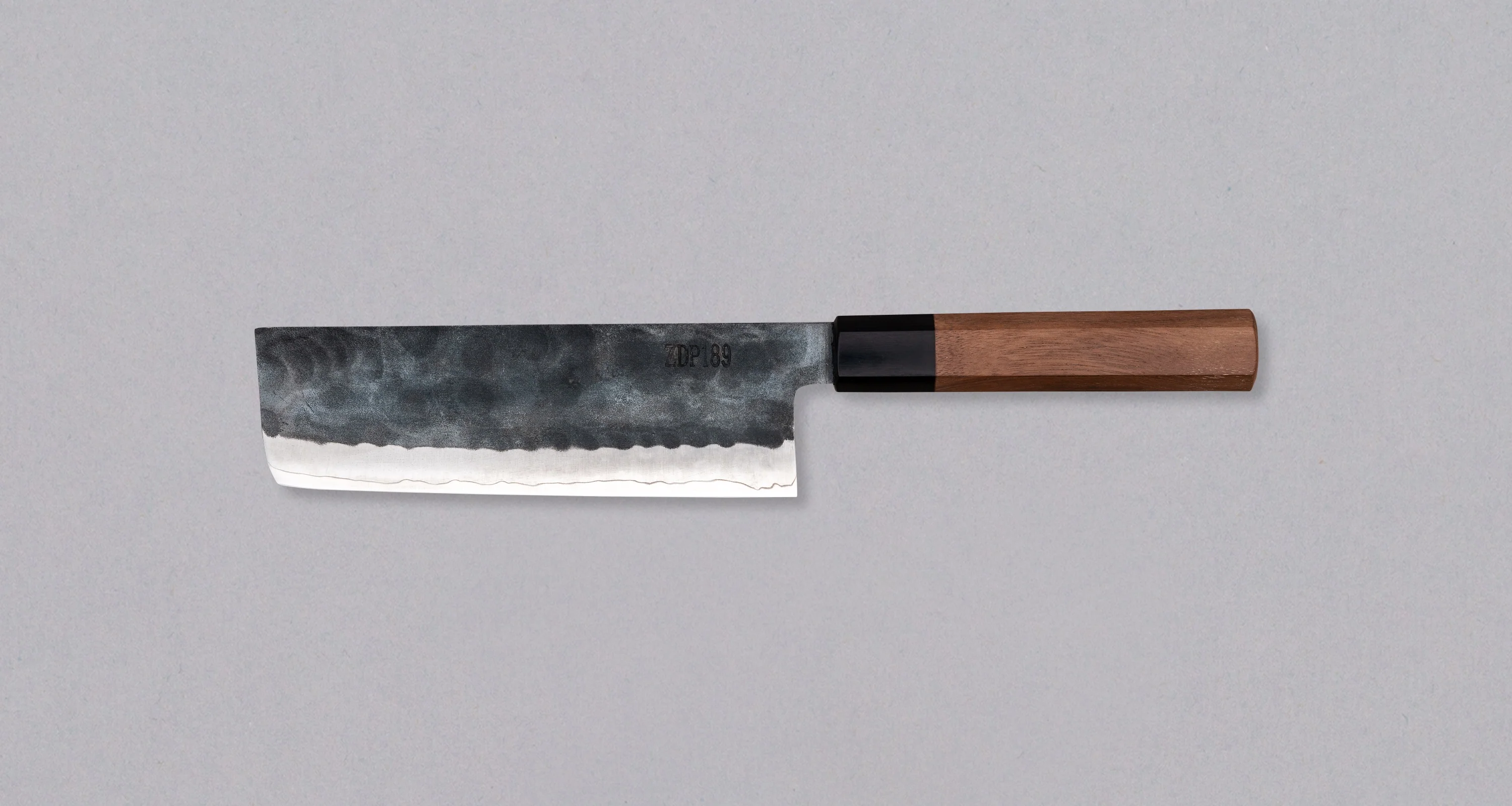
Designed for vegetables, the 160mm blade is laser-thin and balanced by an octagonal rosewood handle. Whether you’re prepping everyday meals or creating something extraordinary, this Nakiri offers razor-sharp performance, easy control, and captivating beauty—from blade to handle.
BLADE SHAPE:
The Nakiri shape was designed for cutting vegetables and is perfect for either long or short cuts, while the thin tip allows for precise work. Nakiri aka Nakiri Bocho is a traditional Japanese knife with a square, thin blade and a deep, flat belly. Since the entire flat edge of the knife touches the cutting board at once, in one clean, vertical movement, there is no need for a horizontal pull or push.
STEEL:
The VG-10 is currently the most popular Japanese steel, and when deciding which steel to use for a particular blade, one has to weigh its properties such as hardness, retaining sharpness, ease of maintenance, steel graininess, ease of sharpening, and lastly, cost and affordability. The VG-10 (V for Vanadium, G for "gold", which means top quality) is produced by Takefu Special Steel Company, a relatively small company that 60 years prior managed to find the perfect balance between elements forming this famous Japanese steel.
VG-10 is a stainless steel of relatively high carbon content - 1% (C), 15% chromium (Cr), 1% molybdenum (Mo), 0.3% vanadium (V) and 1.5% cobalt (Co). The combination of Cr, Mo and V forms many solid carbides, which gives the steel abrasion resistance and consequently better retention of sharpness.
LAMINATION:
The core of the knife is made of VG-10 steel, which is clad in several layers of intricate marbled pattern, which the blacksmith obtained by interweaving different layers of materials (Nickel damascus lamination).
BLADE GEOMETRY:
The blade edge is sharpened to 50/50 angle, and stays sharp even after hours of constant use.
BLADE FINISH:
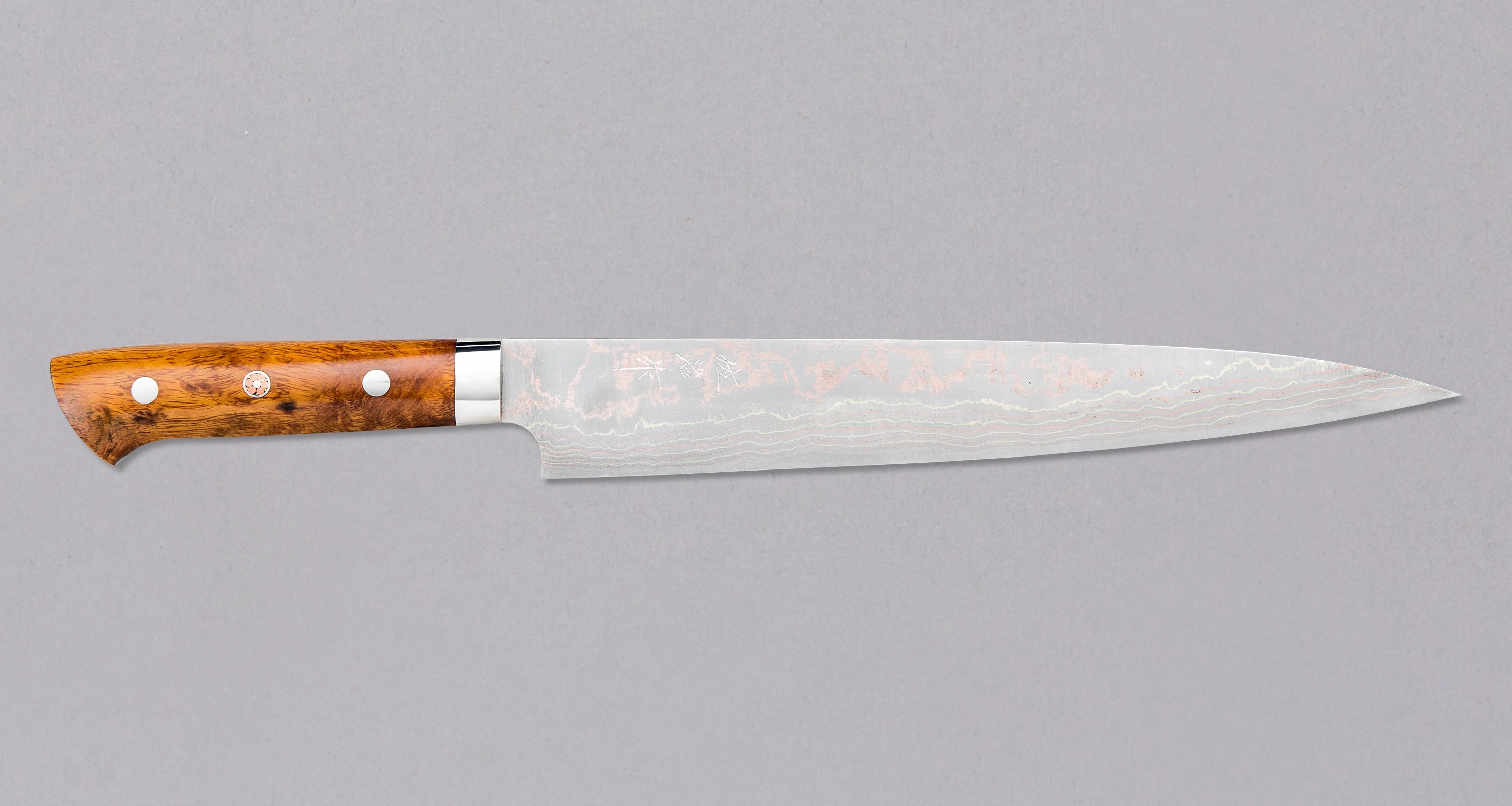
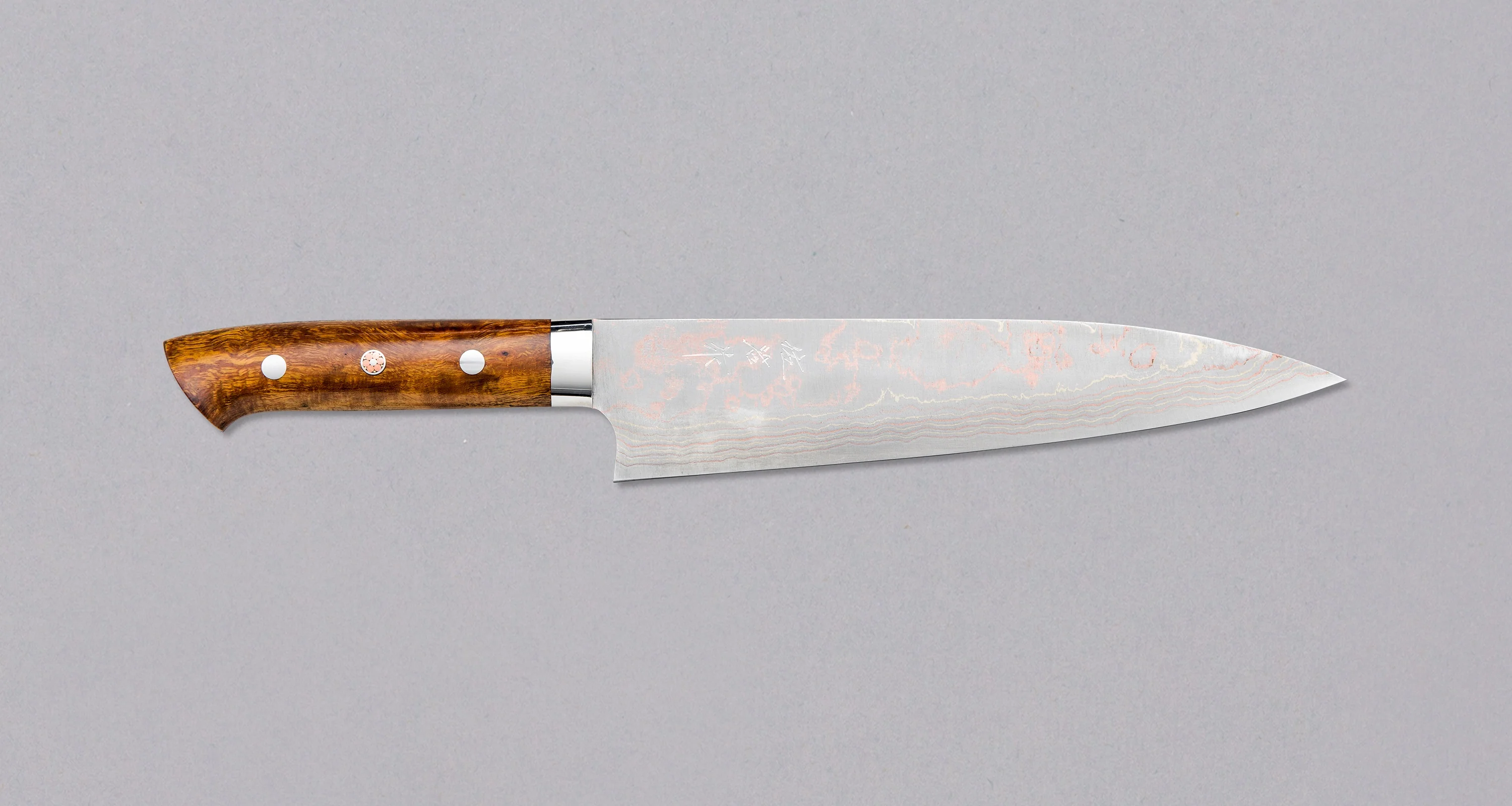
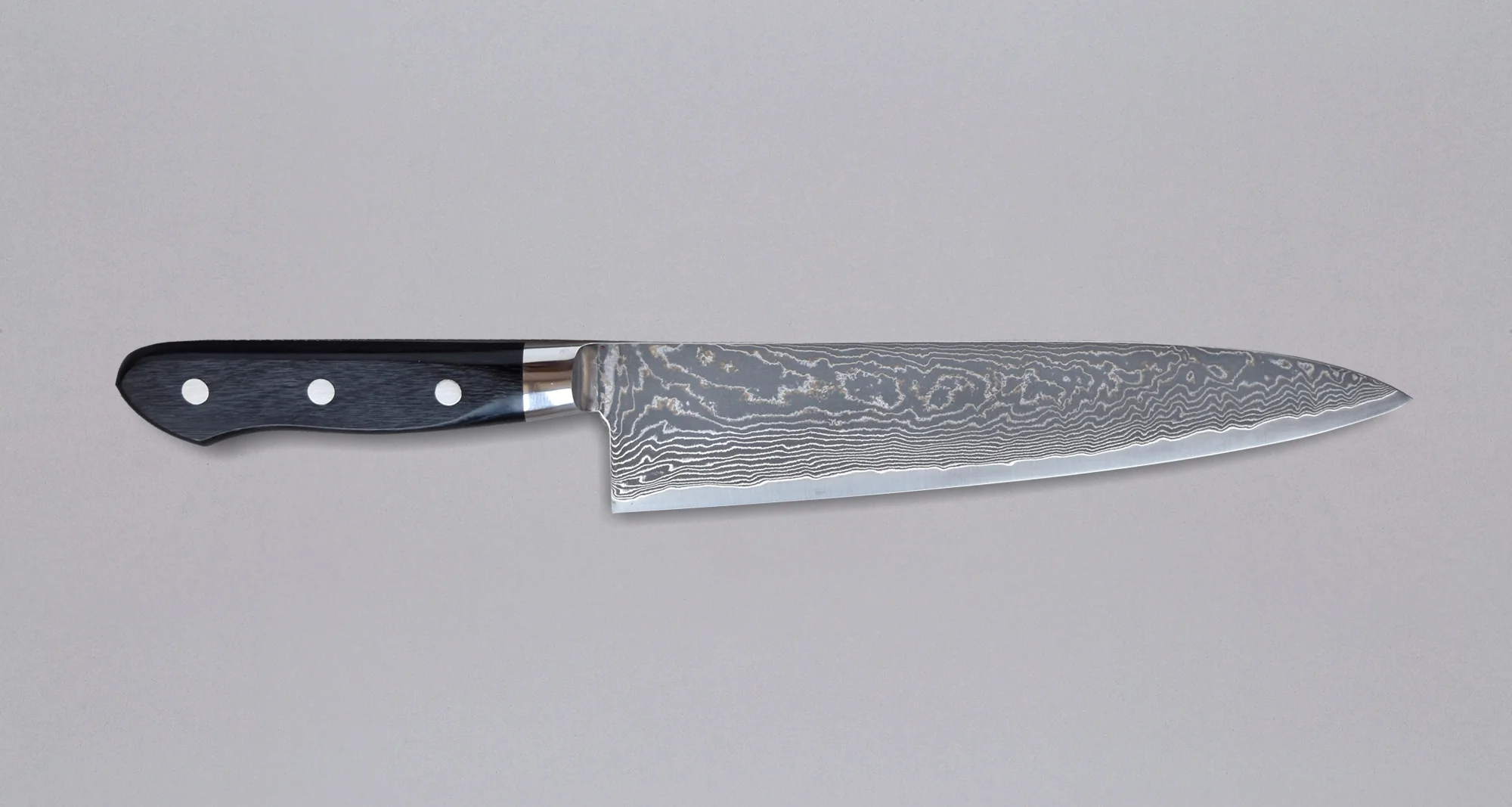
The knife's construction consists of a 63-layer damascus pattern. An additional etching process provides a strong contrast between the layers and contributes to a beautiful play of light reflecting off the different colored steel surfaces.
The blacksmith achieved the striking damascus pattern by layering different materials and further etching the blade. The etching brings a strong contrast between the layers and helps to play off the reflections of light from the different colored surfaces of the steel. The transitions between the layers are very pronounced, consisting of a glossy and a mate reflection. The mirrored part of the pattern reflects the light, giving the appearance of multidimensionality to the surface of the blade!
The beauty of damascus is remarkable and captivating. These patterns are the result of a unique forging and folding technique that has been used for centuries by Japanese swordsmiths to create some of the world's most beautiful and durable blades.
HANDLE:
The traditional Japanese (Wa) handle is made of rosewood and due to its symmetric oval shape fits perfectly in the left as well as the right palm. The distribution of weight between the handle and the blade makes it extremely comfortable to work with and easy to handle.
Original: $468.56
-65%$468.56
$164.00More Images
![Kato Nakiri VG-10 Nickel Damascus 160mm (6.3") [Rosewood] - Image 2](/images/sharpedgestore.shop/images/product/kato-nakiri-vg-10-nickel-damascus-160mm-rosewood-2.jpg)
![Kato Nakiri VG-10 Nickel Damascus 160mm (6.3") [Rosewood] - Image 3](/images/sharpedgestore.shop/images/product/kato-nakiri-vg-10-nickel-damascus-160mm-rosewood-3.jpg)
![Kato Nakiri VG-10 Nickel Damascus 160mm (6.3") [Rosewood] - Image 4](/images/sharpedgestore.shop/images/product/kato-nakiri-vg-10-nickel-damascus-160mm-rosewood-4.jpg)
![Kato Nakiri VG-10 Nickel Damascus 160mm (6.3") [Rosewood] - Image 5](/images/sharpedgestore.shop/images/product/kato-nakiri-vg-10-nickel-damascus-160mm-rosewood-5.jpg)
![Kato Nakiri VG-10 Nickel Damascus 160mm (6.3") [Rosewood] - Image 6](/images/sharpedgestore.shop/images/product/kato-nakiri-vg-10-nickel-damascus-160mm-rosewood-6.jpg)
Kato Nakiri VG-10 Nickel Damascus 160mm (6.3") [Rosewood]
This Nakiri knife by Yoshimi Kato is more than a high-performance kitchen tool—it's a collector’s piece that blends function with visual drama. Forged from SG2 powder steel and adorned with an intensely contrasting Damascus finish, it delivers precision with every slice while catching the light in breathtaking ways.
Designed for vegetables, the 160mm blade is laser-thin and balanced by an octagonal rosewood handle. Whether you’re prepping everyday meals or creating something extraordinary, this Nakiri offers razor-sharp performance, easy control, and captivating beauty—from blade to handle.
BLADE SHAPE:
The Nakiri shape was designed for cutting vegetables and is perfect for either long or short cuts, while the thin tip allows for precise work. Nakiri aka Nakiri Bocho is a traditional Japanese knife with a square, thin blade and a deep, flat belly. Since the entire flat edge of the knife touches the cutting board at once, in one clean, vertical movement, there is no need for a horizontal pull or push.
STEEL:
The VG-10 is currently the most popular Japanese steel, and when deciding which steel to use for a particular blade, one has to weigh its properties such as hardness, retaining sharpness, ease of maintenance, steel graininess, ease of sharpening, and lastly, cost and affordability. The VG-10 (V for Vanadium, G for "gold", which means top quality) is produced by Takefu Special Steel Company, a relatively small company that 60 years prior managed to find the perfect balance between elements forming this famous Japanese steel.
VG-10 is a stainless steel of relatively high carbon content - 1% (C), 15% chromium (Cr), 1% molybdenum (Mo), 0.3% vanadium (V) and 1.5% cobalt (Co). The combination of Cr, Mo and V forms many solid carbides, which gives the steel abrasion resistance and consequently better retention of sharpness.
LAMINATION:
The core of the knife is made of VG-10 steel, which is clad in several layers of intricate marbled pattern, which the blacksmith obtained by interweaving different layers of materials (Nickel damascus lamination).
BLADE GEOMETRY:
The blade edge is sharpened to 50/50 angle, and stays sharp even after hours of constant use.
BLADE FINISH:
The knife's construction consists of a 63-layer damascus pattern. An additional etching process provides a strong contrast between the layers and contributes to a beautiful play of light reflecting off the different colored steel surfaces.
The blacksmith achieved the striking damascus pattern by layering different materials and further etching the blade. The etching brings a strong contrast between the layers and helps to play off the reflections of light from the different colored surfaces of the steel. The transitions between the layers are very pronounced, consisting of a glossy and a mate reflection. The mirrored part of the pattern reflects the light, giving the appearance of multidimensionality to the surface of the blade!
The beauty of damascus is remarkable and captivating. These patterns are the result of a unique forging and folding technique that has been used for centuries by Japanese swordsmiths to create some of the world's most beautiful and durable blades.
HANDLE:
The traditional Japanese (Wa) handle is made of rosewood and due to its symmetric oval shape fits perfectly in the left as well as the right palm. The distribution of weight between the handle and the blade makes it extremely comfortable to work with and easy to handle.
Product Information
Product Information
Shipping & Returns
Shipping & Returns
Description
This Nakiri knife by Yoshimi Kato is more than a high-performance kitchen tool—it's a collector’s piece that blends function with visual drama. Forged from SG2 powder steel and adorned with an intensely contrasting Damascus finish, it delivers precision with every slice while catching the light in breathtaking ways.
Designed for vegetables, the 160mm blade is laser-thin and balanced by an octagonal rosewood handle. Whether you’re prepping everyday meals or creating something extraordinary, this Nakiri offers razor-sharp performance, easy control, and captivating beauty—from blade to handle.
BLADE SHAPE:
The Nakiri shape was designed for cutting vegetables and is perfect for either long or short cuts, while the thin tip allows for precise work. Nakiri aka Nakiri Bocho is a traditional Japanese knife with a square, thin blade and a deep, flat belly. Since the entire flat edge of the knife touches the cutting board at once, in one clean, vertical movement, there is no need for a horizontal pull or push.
STEEL:
The VG-10 is currently the most popular Japanese steel, and when deciding which steel to use for a particular blade, one has to weigh its properties such as hardness, retaining sharpness, ease of maintenance, steel graininess, ease of sharpening, and lastly, cost and affordability. The VG-10 (V for Vanadium, G for "gold", which means top quality) is produced by Takefu Special Steel Company, a relatively small company that 60 years prior managed to find the perfect balance between elements forming this famous Japanese steel.
VG-10 is a stainless steel of relatively high carbon content - 1% (C), 15% chromium (Cr), 1% molybdenum (Mo), 0.3% vanadium (V) and 1.5% cobalt (Co). The combination of Cr, Mo and V forms many solid carbides, which gives the steel abrasion resistance and consequently better retention of sharpness.
LAMINATION:
The core of the knife is made of VG-10 steel, which is clad in several layers of intricate marbled pattern, which the blacksmith obtained by interweaving different layers of materials (Nickel damascus lamination).
BLADE GEOMETRY:
The blade edge is sharpened to 50/50 angle, and stays sharp even after hours of constant use.
BLADE FINISH:
The knife's construction consists of a 63-layer damascus pattern. An additional etching process provides a strong contrast between the layers and contributes to a beautiful play of light reflecting off the different colored steel surfaces.
The blacksmith achieved the striking damascus pattern by layering different materials and further etching the blade. The etching brings a strong contrast between the layers and helps to play off the reflections of light from the different colored surfaces of the steel. The transitions between the layers are very pronounced, consisting of a glossy and a mate reflection. The mirrored part of the pattern reflects the light, giving the appearance of multidimensionality to the surface of the blade!
The beauty of damascus is remarkable and captivating. These patterns are the result of a unique forging and folding technique that has been used for centuries by Japanese swordsmiths to create some of the world's most beautiful and durable blades.
HANDLE:
The traditional Japanese (Wa) handle is made of rosewood and due to its symmetric oval shape fits perfectly in the left as well as the right palm. The distribution of weight between the handle and the blade makes it extremely comfortable to work with and easy to handle.