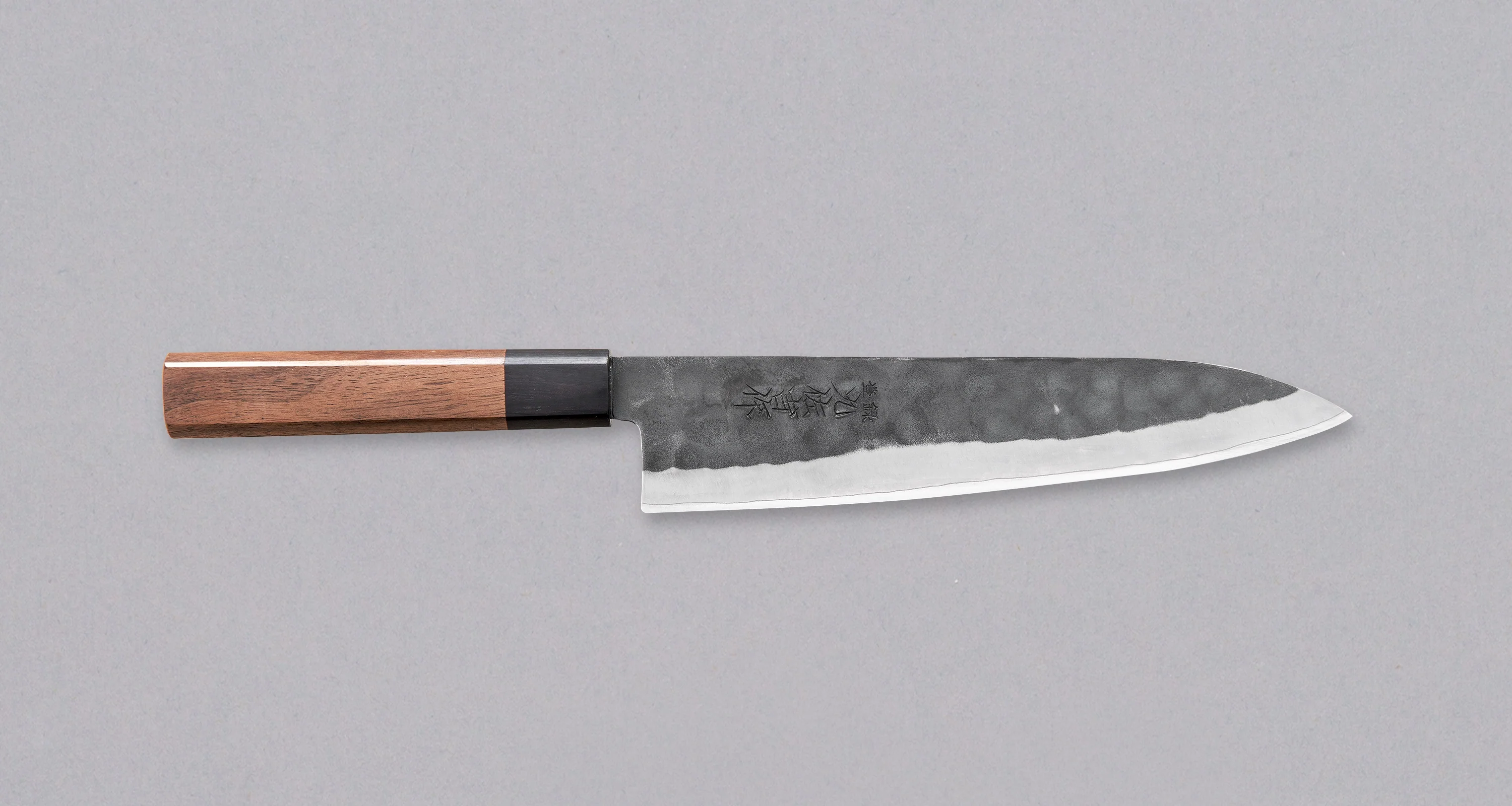
Izumiriki Honyaki Gyuto Shirogami #3 210mm (8.3")
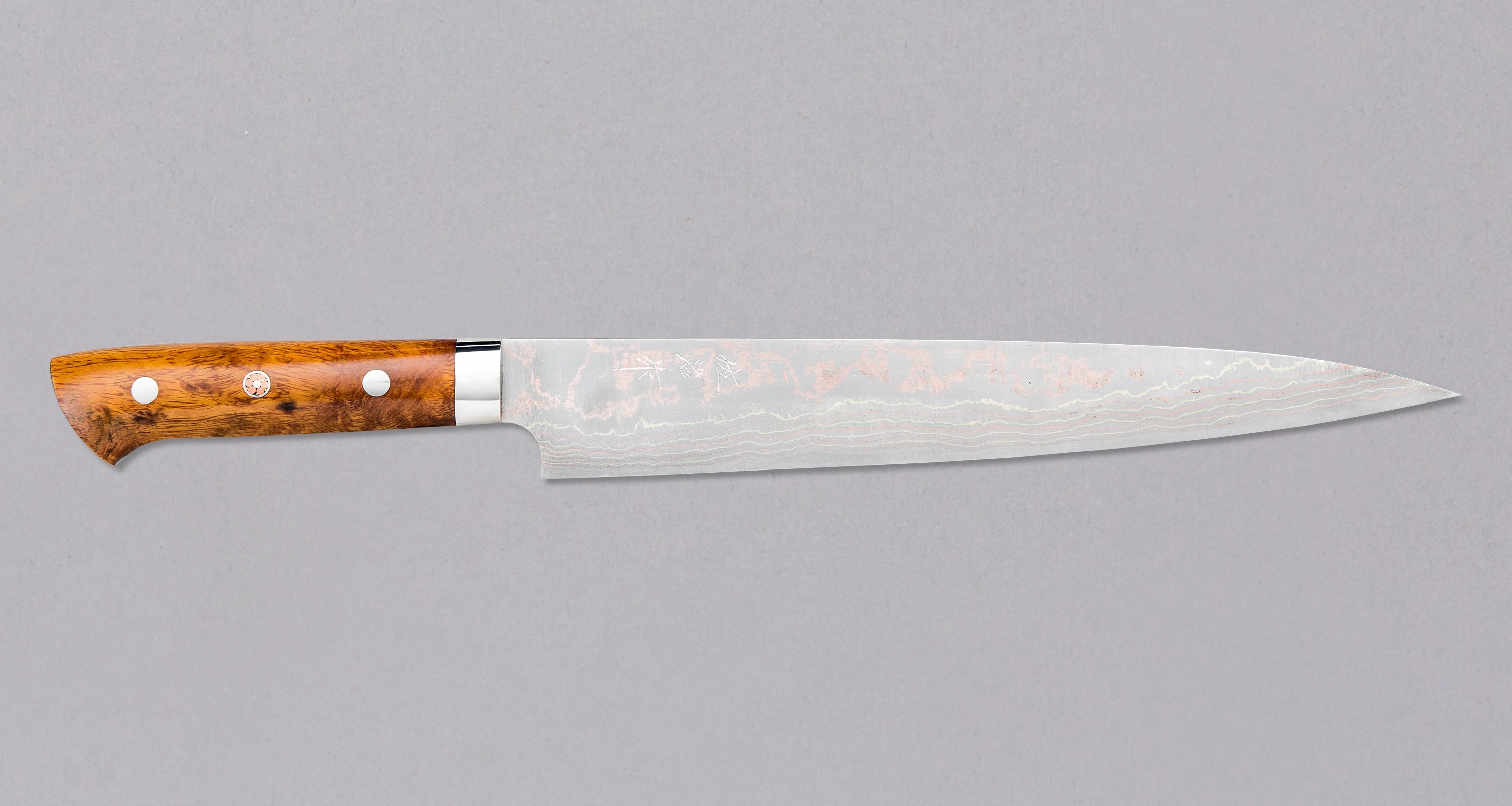
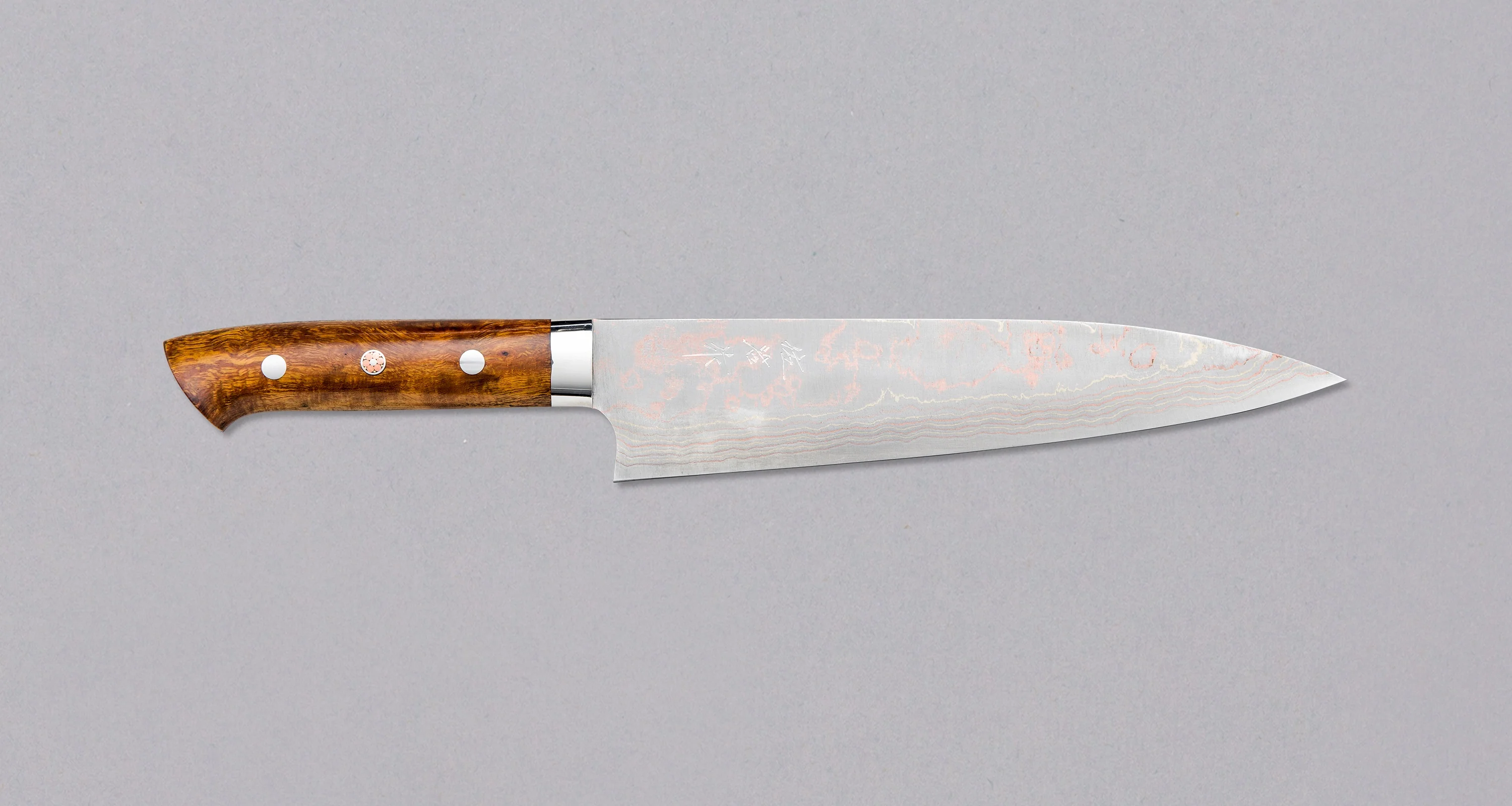
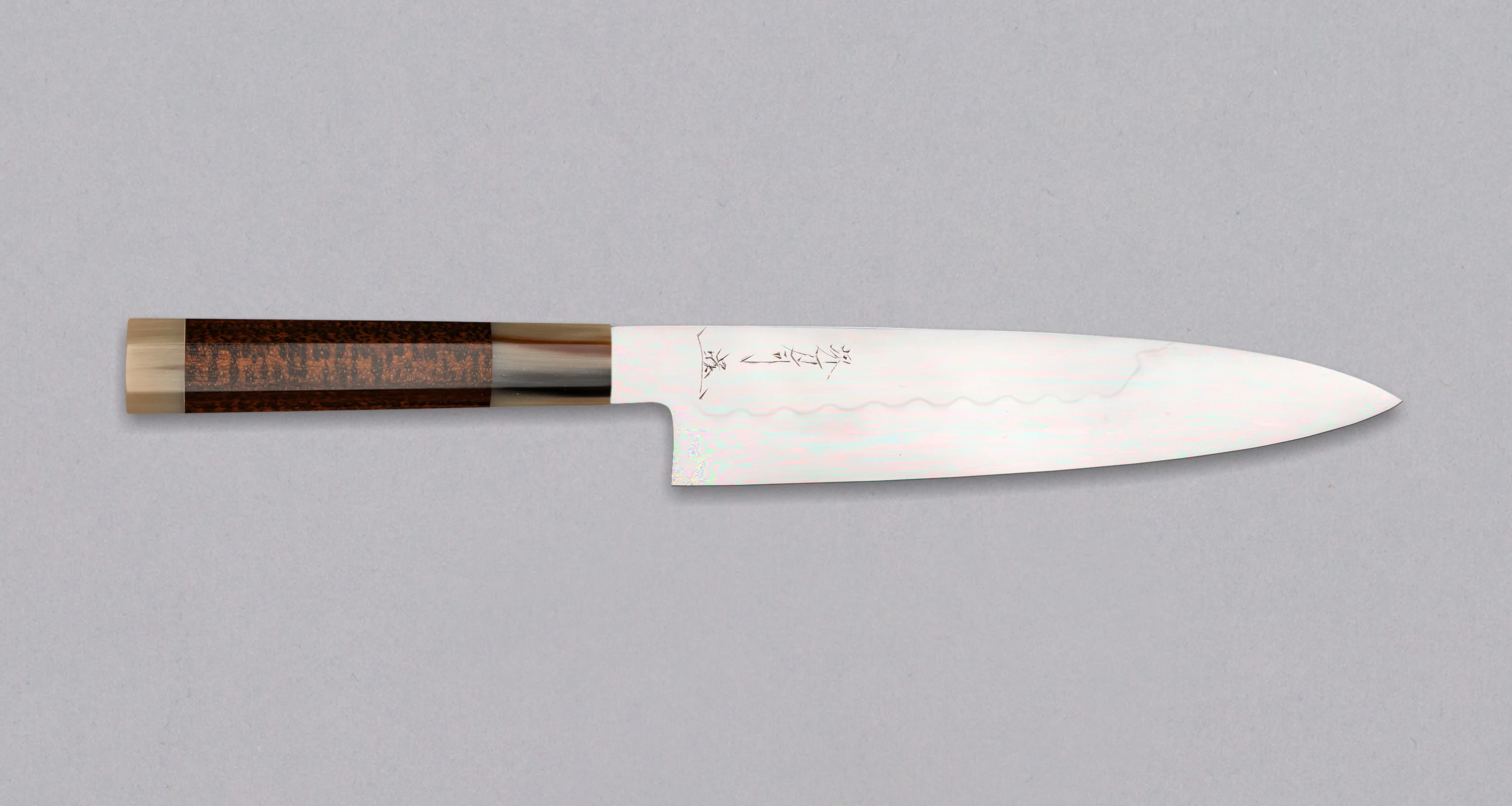
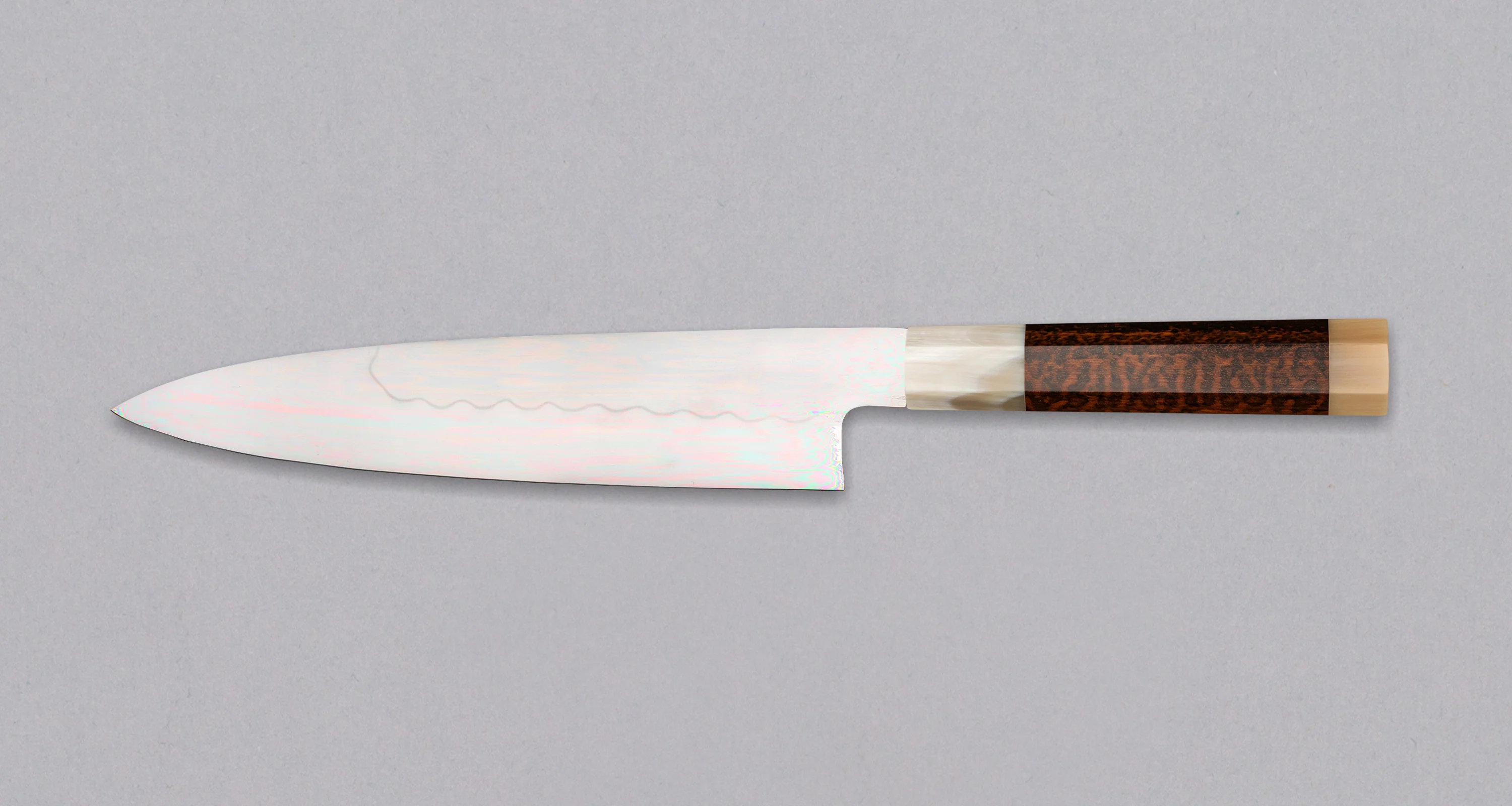
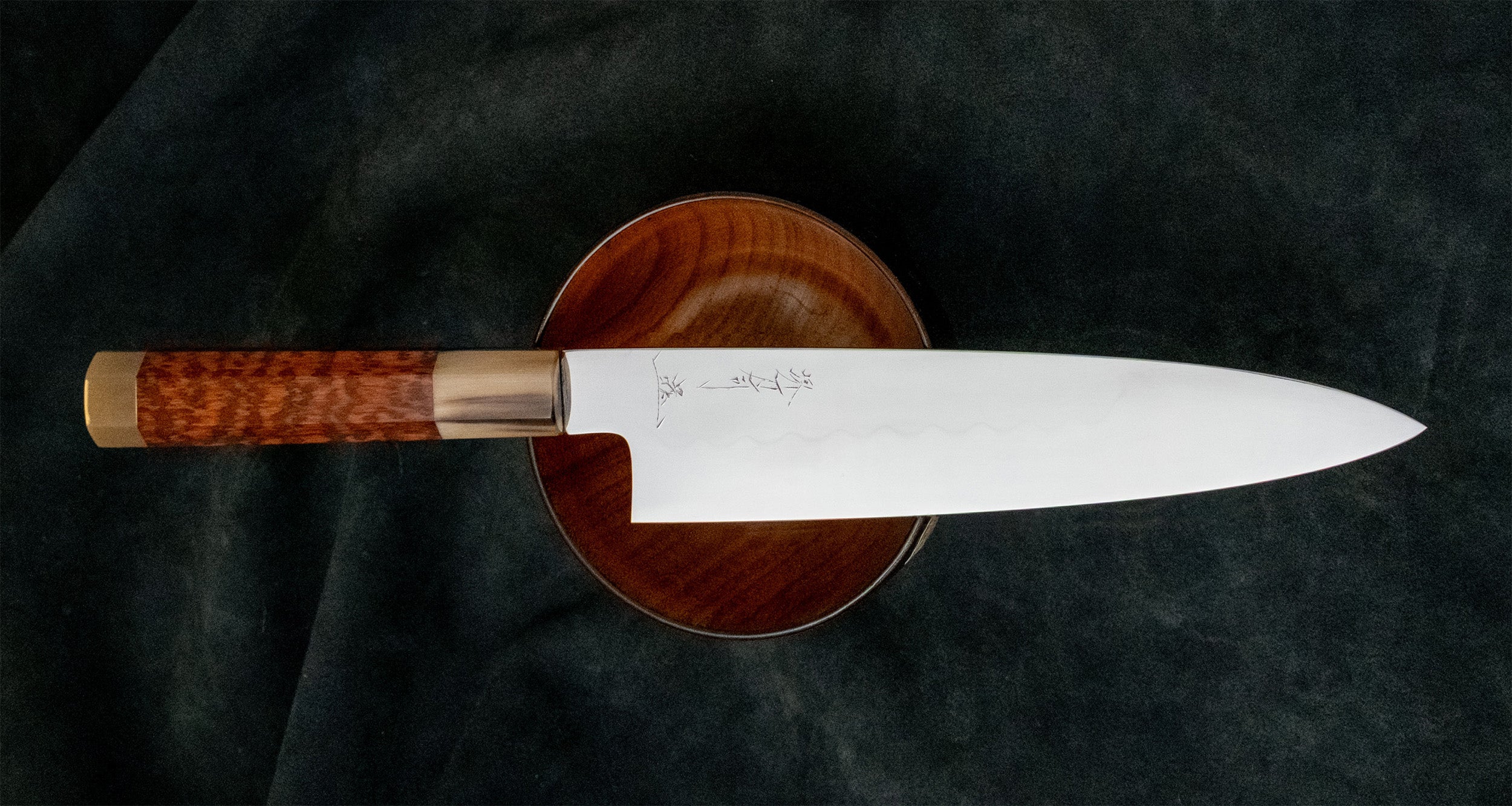
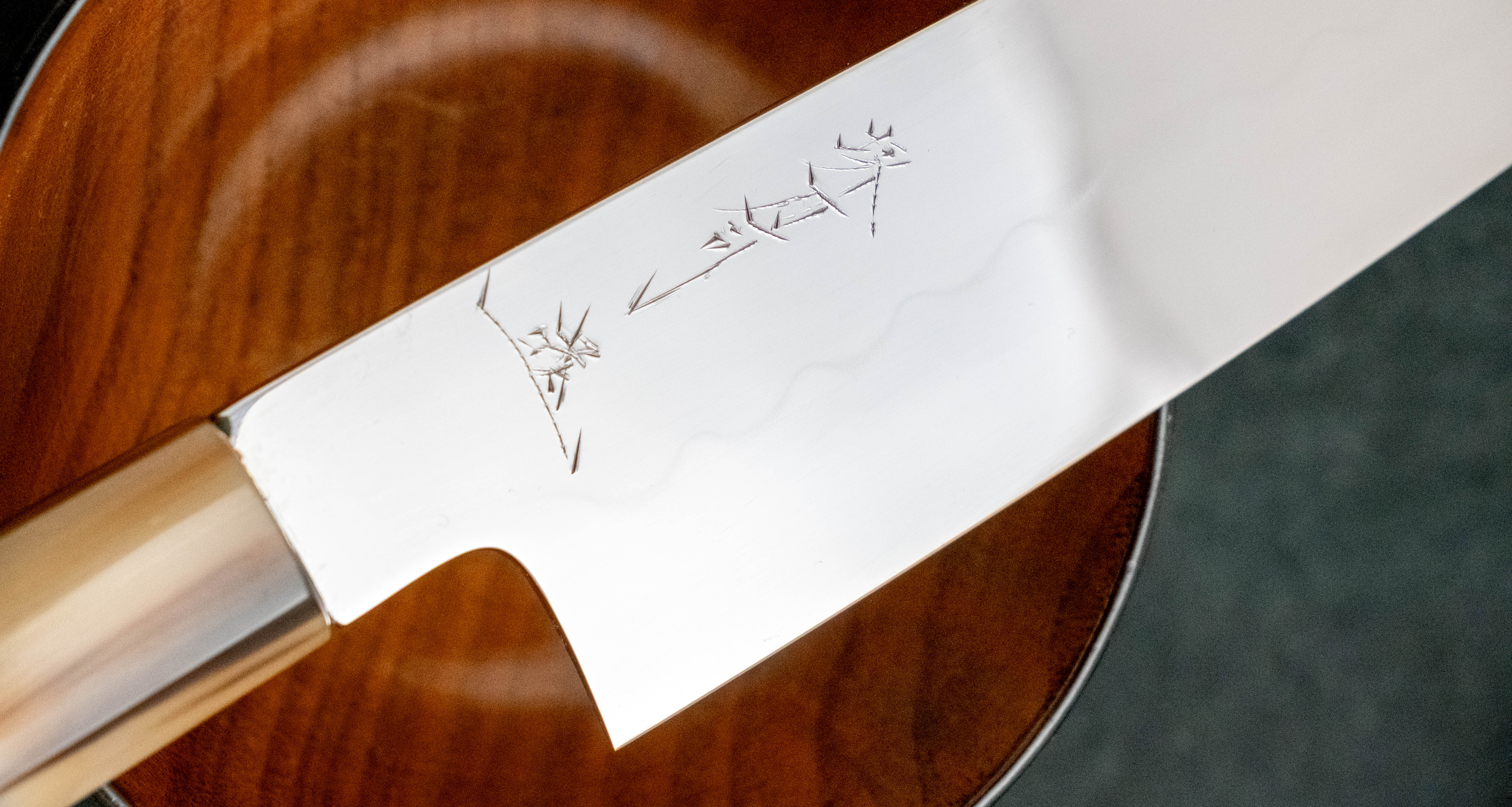
Izumiriki Honyaki Gyuto Shirogami #3 is a hand-forged masterpiece. Crafted with incredible precision, it is not simply a Japanese knife but a piece of art. A stunning collector's item, this Shirogami #3 steel honyaki blade with a rainbow sheen is forged from a single piece of high-carbon Shirogami (White Steel) #3. The mirror-polished (migaki) finish reveals the steel's pure, luminous character and showcases the smith's meticulous hand-polishing work.
Honyaki knives represent less than 1% of Japanese knife production due to the extreme difficulty of the forging process and the high rate of failure during heat treatment. This is not simply a kitchen tool—it's an heirloom piece that embodies centuries of metallurgical knowledge and artisan dedication.
|
Honyaki knives Honyaki literally means “true-fired” and this forging method reflects, in its purest form, the traditional Japanese art of sword making. These knives are extremely demanding to forge and shape, thus only the best craftsmen make them. Being exceptionally rare, expensive, and delicate, they are suitable only for highly experienced chefs. They are greatly appreciated due to their kirenaga or edge retention capabilities, maintaining sharpness for a very long time. Such knives need a different process of hardening. After the blade is forged and roughly ground, a special mixture of clay, charcoal, natural sharpening stone and water is applied to the blade in a specific pattern. The knife is then quenched in water (that's the part of the process where the katana gets its iconic curved shape). The part of the knife that was not covered in clay hardens, while the part that was covered is cooled slower and doesn't harden that much. The result is a blade made from one alloy which has two different crystalline structures. The phase line between two different structures is called hamon. It takes a lot of experience, knowledge, and equipment to "pop" the hamon. The honyaki forging method allows the hamon – a graceful temper line clearly defining the transition zone between a hard edge and soft back – to be formed upon quenching. |
The highly polished look of the blade is the result of a very unique, time-consuming polishing process. The protective coating that prevents corrosion gives the knife an iridescent, rainbow sheen.
BLADE SHAPE:
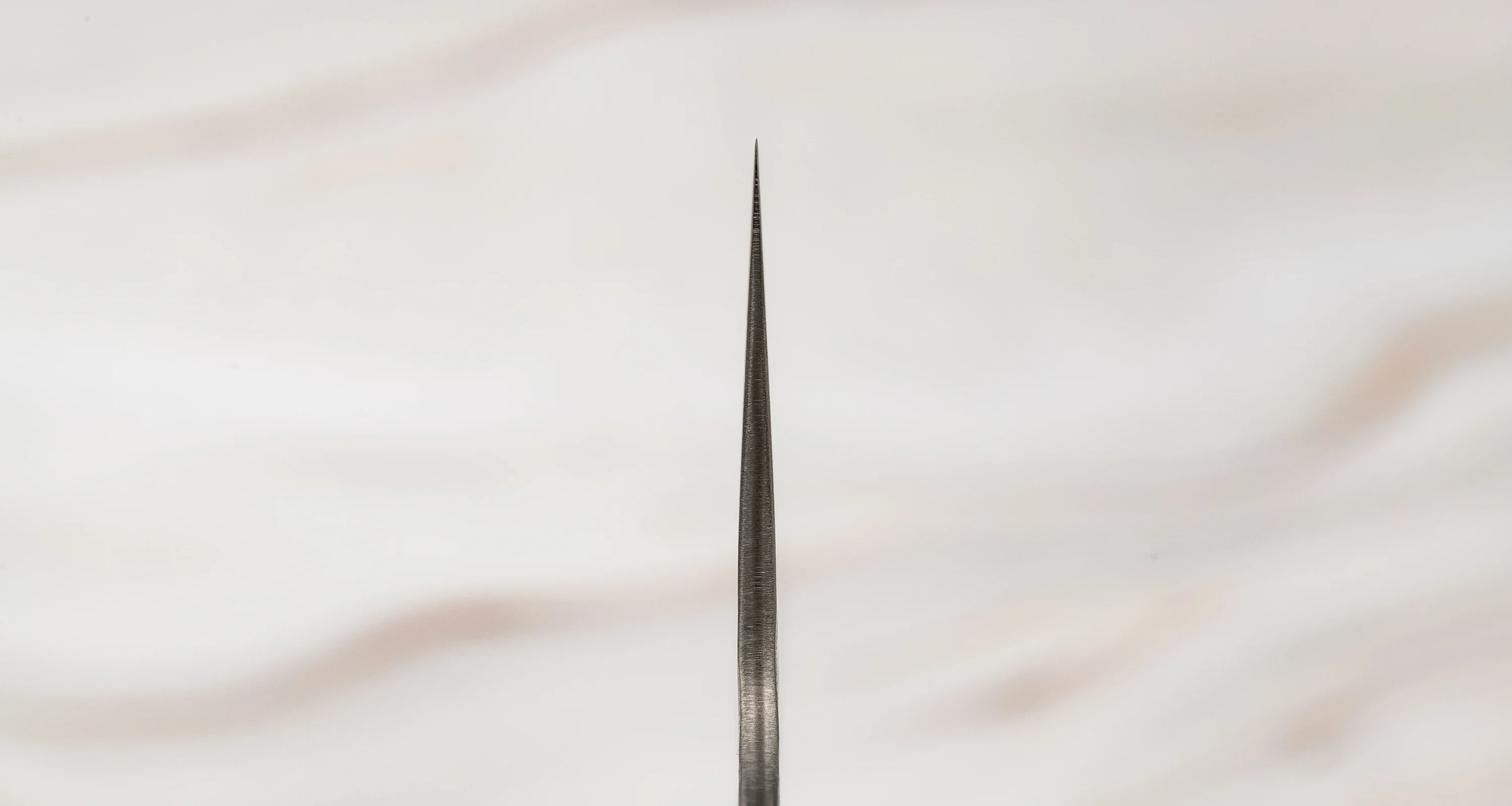
Gyuto is the most versatile and useful blade shape in the modern kitchen. It has a wide profile for easy food transfer and tends to be fairly flat towards the heel, enabling easy and fast chopping on the cutting board. A pointed tip allows piercing and precise, delicate work. A slight curve between the tip and the midsection makes the belly great for rocking the blade back and forth when cutting. It can be used for cutting meat, fish and vegetables.
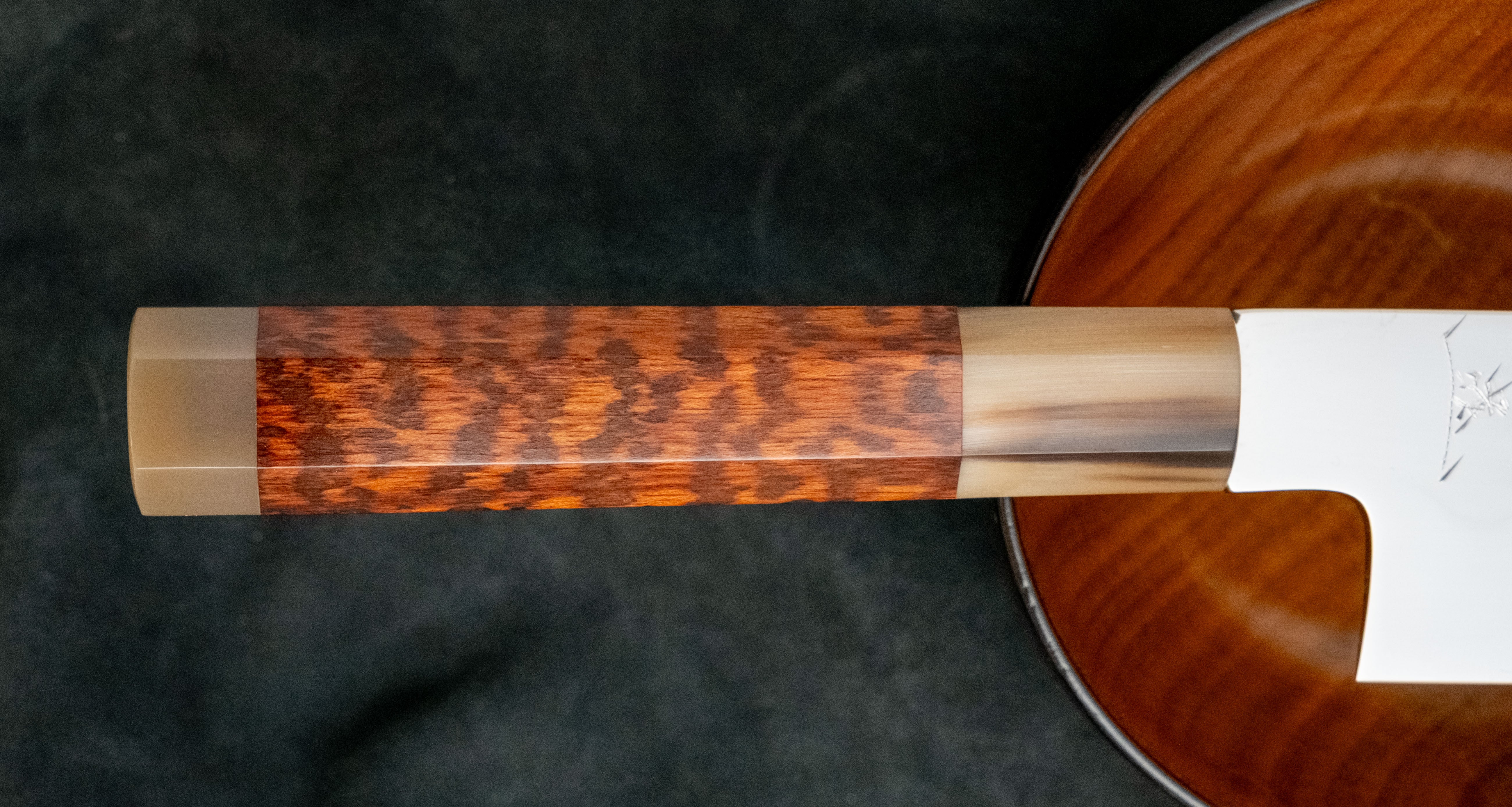
This limited edition gyuto features a traditional octagonal Japanese handle made from snakewood, paired with a blonde buffalo horn ferrule and heel. Designed for both left- and right-handed users, it offers a balanced and comfortable grip.
Snakewood is prized for its rich deep red color and unique undulating patterns resembling snakeskin. This beautiful wood not only stands out visually but is also very hard and moisture-resistant. This ensures that the handle will look good for many years.
Carbon steel knives are delicate and require special care. In addition to careful use that will prolong its sharpness, the blade should be carefully cleaned after each use and wiped with a dry cloth to prevent corrosion. If you cut vegetables or fruits that contain large amounts of acid, we suggest that you wipe the blade even while cutting. After you are finished preparing food, we recommend using oil for blade maintenance to protect the surface of the blade from corrosion. The thin and sharp blade is intended for precise work and is not suitable for cutting bones, frozen food and other food items with a hard crust or shell.
Izumiriki is a respected Japanese blacksmith workshop based in Sakai, Osaka—one of Japan’s most renowned knife-making centers with over 200 years of tradition. Sakai is synonymous with exceptional sharpness, precision, and uncompromising quality.
Following the traditional division-of-labor system, each Izumiriki knife is forged, sharpened, and fitted by specialized craftsmen, ensuring every piece is hand-finished, perfectly balanced, and unique. These are not industrial products, but knives shaped by generations of expertise, craftsmanship, and attention to detail.
Original: $1,704.37
-65%$1,704.37
$596.53More Images
Izumiriki Honyaki Gyuto Shirogami #3 210mm (8.3")
Izumiriki Honyaki Gyuto Shirogami #3 is a hand-forged masterpiece. Crafted with incredible precision, it is not simply a Japanese knife but a piece of art. A stunning collector's item, this Shirogami #3 steel honyaki blade with a rainbow sheen is forged from a single piece of high-carbon Shirogami (White Steel) #3. The mirror-polished (migaki) finish reveals the steel's pure, luminous character and showcases the smith's meticulous hand-polishing work.
Honyaki knives represent less than 1% of Japanese knife production due to the extreme difficulty of the forging process and the high rate of failure during heat treatment. This is not simply a kitchen tool—it's an heirloom piece that embodies centuries of metallurgical knowledge and artisan dedication.
|
Honyaki knives Honyaki literally means “true-fired” and this forging method reflects, in its purest form, the traditional Japanese art of sword making. These knives are extremely demanding to forge and shape, thus only the best craftsmen make them. Being exceptionally rare, expensive, and delicate, they are suitable only for highly experienced chefs. They are greatly appreciated due to their kirenaga or edge retention capabilities, maintaining sharpness for a very long time. Such knives need a different process of hardening. After the blade is forged and roughly ground, a special mixture of clay, charcoal, natural sharpening stone and water is applied to the blade in a specific pattern. The knife is then quenched in water (that's the part of the process where the katana gets its iconic curved shape). The part of the knife that was not covered in clay hardens, while the part that was covered is cooled slower and doesn't harden that much. The result is a blade made from one alloy which has two different crystalline structures. The phase line between two different structures is called hamon. It takes a lot of experience, knowledge, and equipment to "pop" the hamon. The honyaki forging method allows the hamon – a graceful temper line clearly defining the transition zone between a hard edge and soft back – to be formed upon quenching. |
The highly polished look of the blade is the result of a very unique, time-consuming polishing process. The protective coating that prevents corrosion gives the knife an iridescent, rainbow sheen.
BLADE SHAPE:
Gyuto is the most versatile and useful blade shape in the modern kitchen. It has a wide profile for easy food transfer and tends to be fairly flat towards the heel, enabling easy and fast chopping on the cutting board. A pointed tip allows piercing and precise, delicate work. A slight curve between the tip and the midsection makes the belly great for rocking the blade back and forth when cutting. It can be used for cutting meat, fish and vegetables.
This limited edition gyuto features a traditional octagonal Japanese handle made from snakewood, paired with a blonde buffalo horn ferrule and heel. Designed for both left- and right-handed users, it offers a balanced and comfortable grip.
Snakewood is prized for its rich deep red color and unique undulating patterns resembling snakeskin. This beautiful wood not only stands out visually but is also very hard and moisture-resistant. This ensures that the handle will look good for many years.
Carbon steel knives are delicate and require special care. In addition to careful use that will prolong its sharpness, the blade should be carefully cleaned after each use and wiped with a dry cloth to prevent corrosion. If you cut vegetables or fruits that contain large amounts of acid, we suggest that you wipe the blade even while cutting. After you are finished preparing food, we recommend using oil for blade maintenance to protect the surface of the blade from corrosion. The thin and sharp blade is intended for precise work and is not suitable for cutting bones, frozen food and other food items with a hard crust or shell.
Izumiriki is a respected Japanese blacksmith workshop based in Sakai, Osaka—one of Japan’s most renowned knife-making centers with over 200 years of tradition. Sakai is synonymous with exceptional sharpness, precision, and uncompromising quality.
Following the traditional division-of-labor system, each Izumiriki knife is forged, sharpened, and fitted by specialized craftsmen, ensuring every piece is hand-finished, perfectly balanced, and unique. These are not industrial products, but knives shaped by generations of expertise, craftsmanship, and attention to detail.
Product Information
Product Information
Shipping & Returns
Shipping & Returns
Description
Izumiriki Honyaki Gyuto Shirogami #3 is a hand-forged masterpiece. Crafted with incredible precision, it is not simply a Japanese knife but a piece of art. A stunning collector's item, this Shirogami #3 steel honyaki blade with a rainbow sheen is forged from a single piece of high-carbon Shirogami (White Steel) #3. The mirror-polished (migaki) finish reveals the steel's pure, luminous character and showcases the smith's meticulous hand-polishing work.
Honyaki knives represent less than 1% of Japanese knife production due to the extreme difficulty of the forging process and the high rate of failure during heat treatment. This is not simply a kitchen tool—it's an heirloom piece that embodies centuries of metallurgical knowledge and artisan dedication.
|
Honyaki knives Honyaki literally means “true-fired” and this forging method reflects, in its purest form, the traditional Japanese art of sword making. These knives are extremely demanding to forge and shape, thus only the best craftsmen make them. Being exceptionally rare, expensive, and delicate, they are suitable only for highly experienced chefs. They are greatly appreciated due to their kirenaga or edge retention capabilities, maintaining sharpness for a very long time. Such knives need a different process of hardening. After the blade is forged and roughly ground, a special mixture of clay, charcoal, natural sharpening stone and water is applied to the blade in a specific pattern. The knife is then quenched in water (that's the part of the process where the katana gets its iconic curved shape). The part of the knife that was not covered in clay hardens, while the part that was covered is cooled slower and doesn't harden that much. The result is a blade made from one alloy which has two different crystalline structures. The phase line between two different structures is called hamon. It takes a lot of experience, knowledge, and equipment to "pop" the hamon. The honyaki forging method allows the hamon – a graceful temper line clearly defining the transition zone between a hard edge and soft back – to be formed upon quenching. |
The highly polished look of the blade is the result of a very unique, time-consuming polishing process. The protective coating that prevents corrosion gives the knife an iridescent, rainbow sheen.
BLADE SHAPE:
Gyuto is the most versatile and useful blade shape in the modern kitchen. It has a wide profile for easy food transfer and tends to be fairly flat towards the heel, enabling easy and fast chopping on the cutting board. A pointed tip allows piercing and precise, delicate work. A slight curve between the tip and the midsection makes the belly great for rocking the blade back and forth when cutting. It can be used for cutting meat, fish and vegetables.
This limited edition gyuto features a traditional octagonal Japanese handle made from snakewood, paired with a blonde buffalo horn ferrule and heel. Designed for both left- and right-handed users, it offers a balanced and comfortable grip.
Snakewood is prized for its rich deep red color and unique undulating patterns resembling snakeskin. This beautiful wood not only stands out visually but is also very hard and moisture-resistant. This ensures that the handle will look good for many years.
Carbon steel knives are delicate and require special care. In addition to careful use that will prolong its sharpness, the blade should be carefully cleaned after each use and wiped with a dry cloth to prevent corrosion. If you cut vegetables or fruits that contain large amounts of acid, we suggest that you wipe the blade even while cutting. After you are finished preparing food, we recommend using oil for blade maintenance to protect the surface of the blade from corrosion. The thin and sharp blade is intended for precise work and is not suitable for cutting bones, frozen food and other food items with a hard crust or shell.
Izumiriki is a respected Japanese blacksmith workshop based in Sakai, Osaka—one of Japan’s most renowned knife-making centers with over 200 years of tradition. Sakai is synonymous with exceptional sharpness, precision, and uncompromising quality.
Following the traditional division-of-labor system, each Izumiriki knife is forged, sharpened, and fitted by specialized craftsmen, ensuring every piece is hand-finished, perfectly balanced, and unique. These are not industrial products, but knives shaped by generations of expertise, craftsmanship, and attention to detail.