Hokiyama Usuba AUS-8 180mm (7.1")
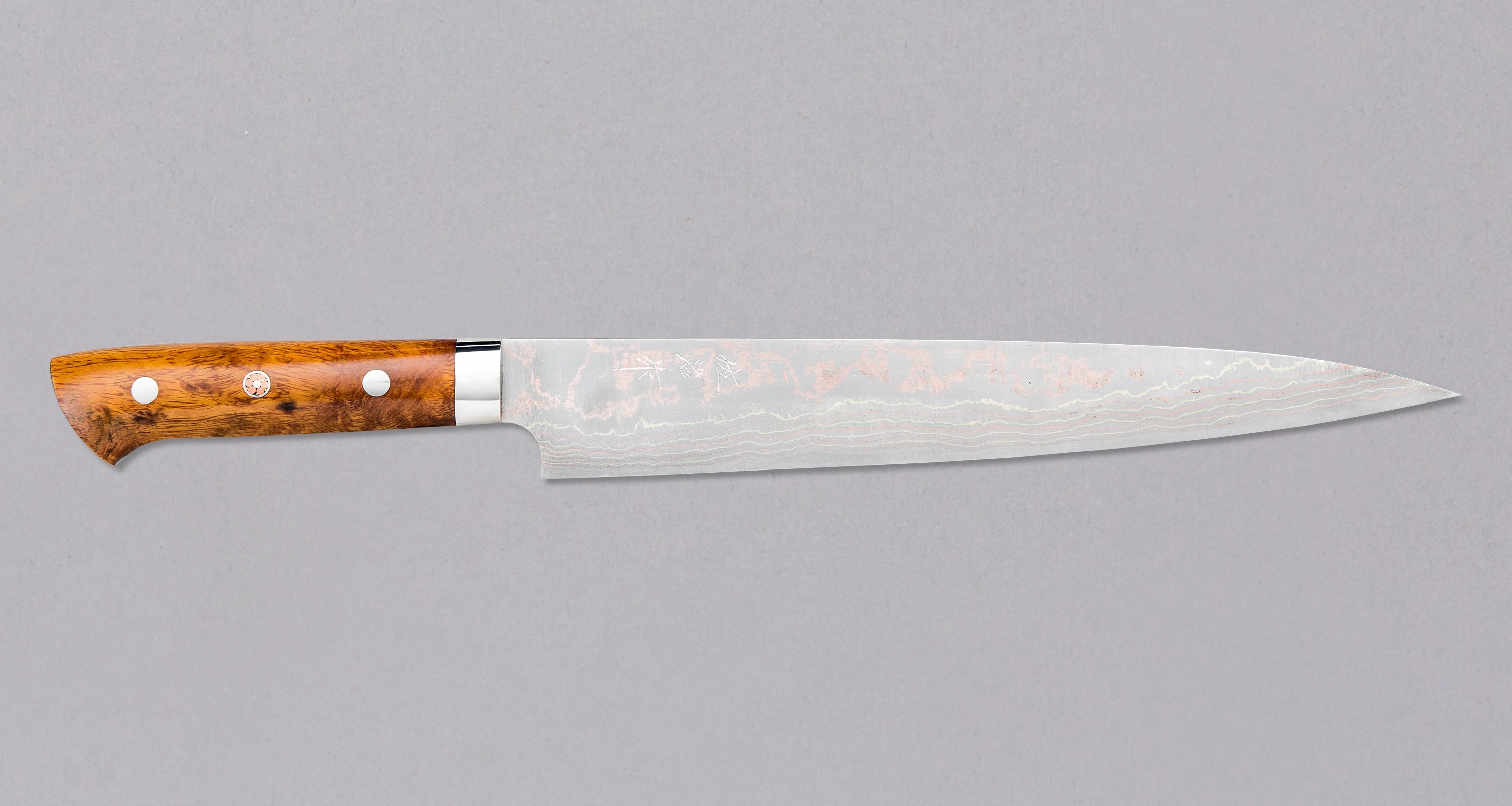
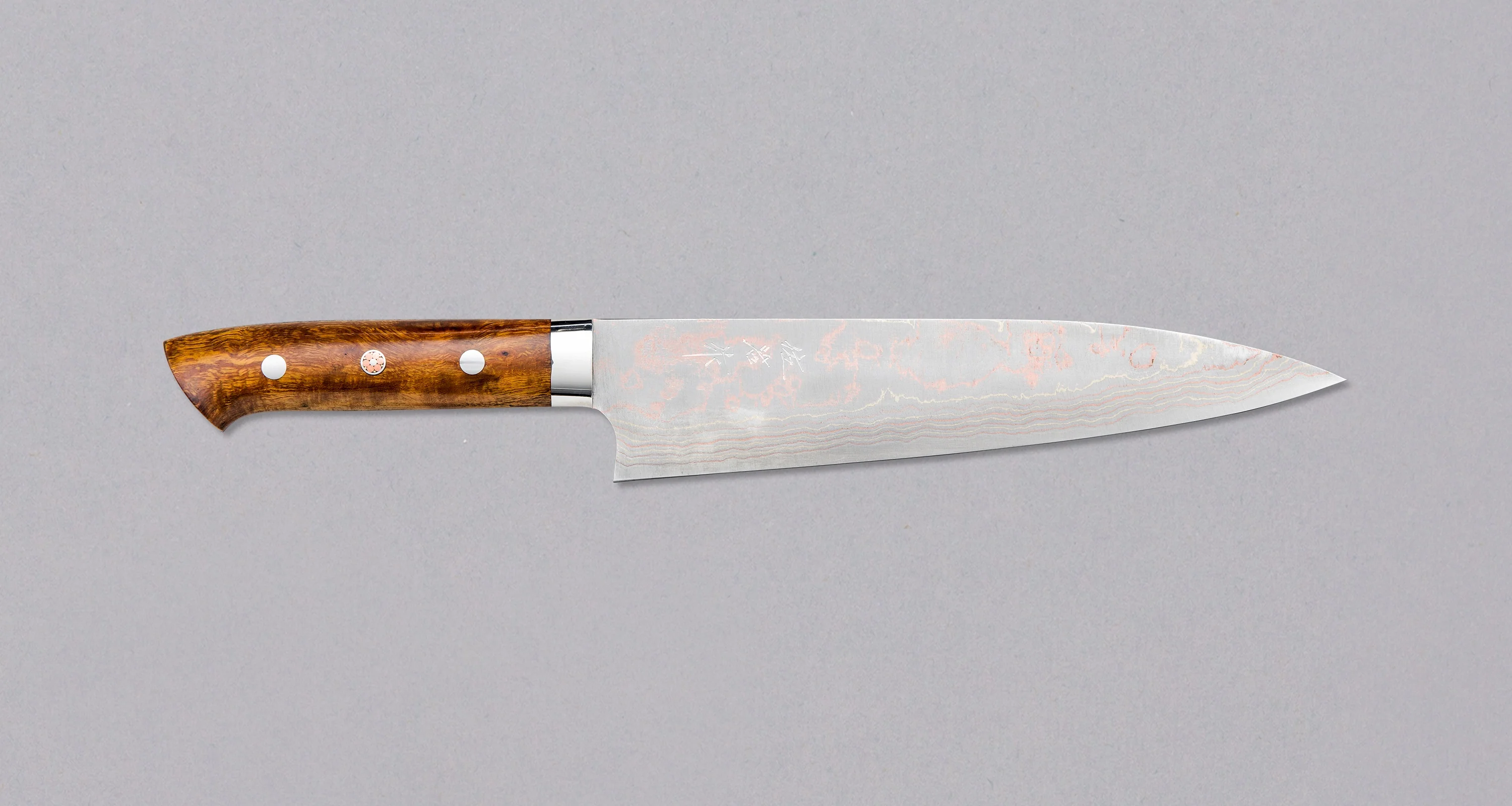
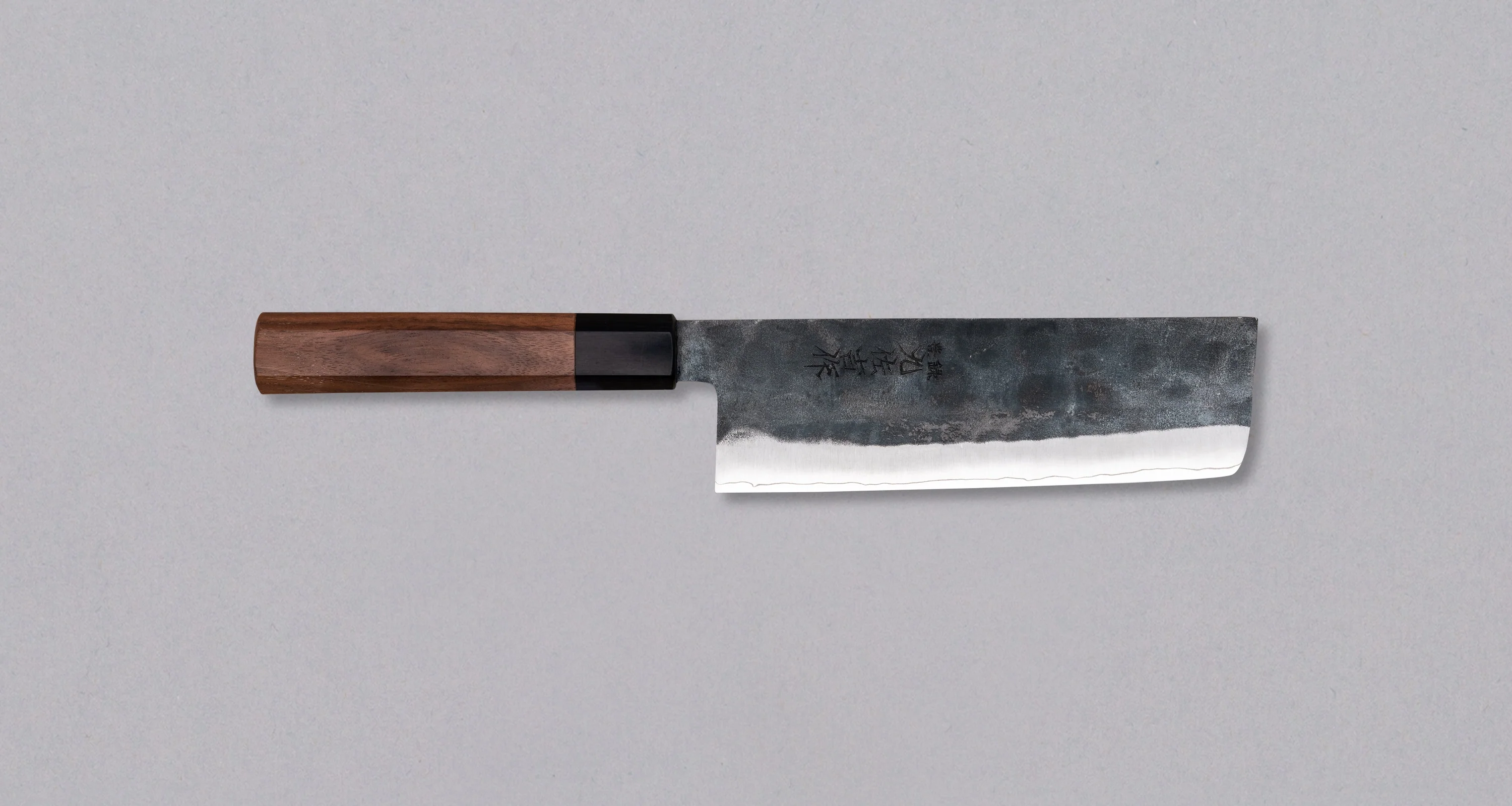
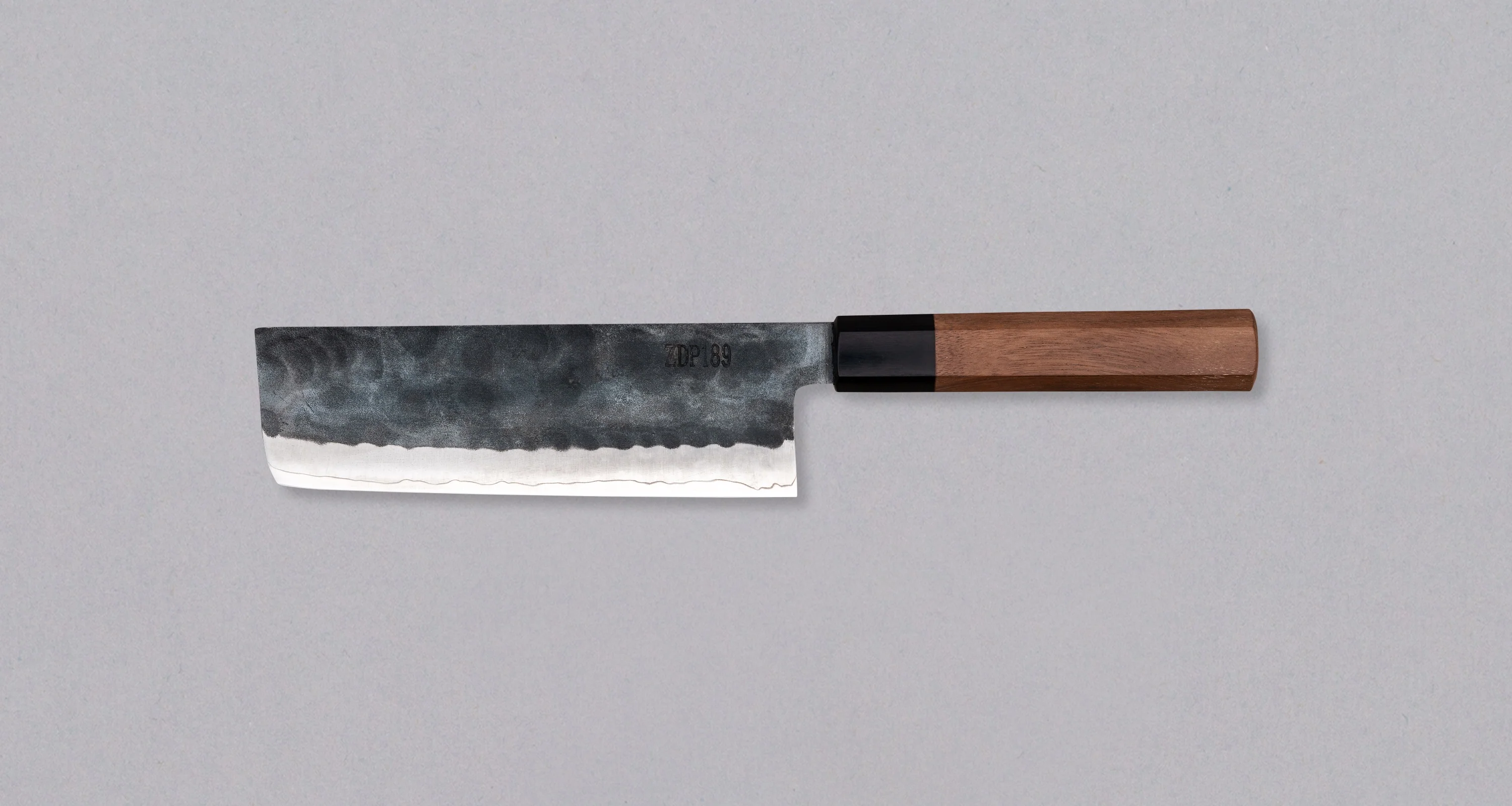
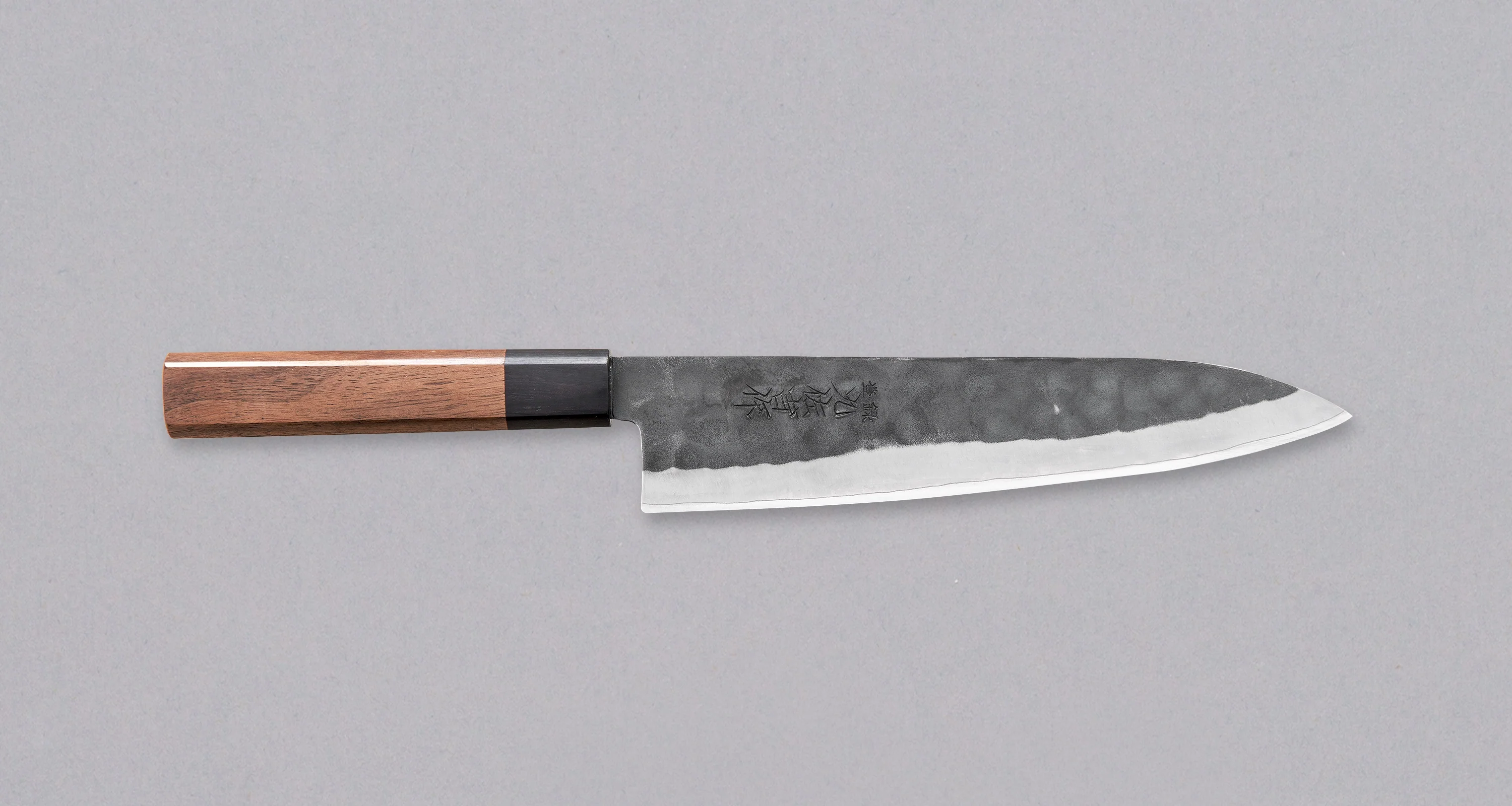
Hokiyama Usuba AUS-8 in 180mm (7.1") blade length is a dedicated knife for vegetables only. It's a single bevel knife, which means only right-handed users can wield it.
This rectangular-shaped usuba (named Kakugata in Japanese) was polished to a high (almost mirror-looking) polish. The minimalistic blade is fitted with a traditional Japanese (Wa) handle made of of dense, durable wenge wood with a darker plastic ferrule. There is a slight step between the ferrule and the handle, which might bother some users.
Where the blade meets the handle, you may notice a special feature called Machi spacing. This is a small gap between the lower part of the blade and the handle, which can be seen mostly in Yanagiba knives. It is a feature that pays tribute to Japanese swords and is typical mostly in the work of blacksmiths located in and around the Tokyo area. So don't worry, it is not a flaw in assembly of the blade and the handle, but rather a homage to Japanese forging tradition that could be displayed on a magnet right there on your kitchen wall.
The blade consists of 2 layers of steel - the harder steel AUS-8 (60 HRC) and a layer of softer stainless steel are forge welded together in what is known as "nimai" construction. AUS-8 steel is a popular Japanese steel from the Aichi steelworks that is incredibly resistant to rust, yet simple to sharpen. The steel contains high amounts of carbon (0.7-0.75%) and is also high in vanadium (0.10-0.26%) and molybdenum (0.10-0.30%). It also has a high percentage of chromium (14.5%), making the blade corrosion-resistant and increasing the hardness, durability and the tensile strength of steel mix.
This carefully balanced composition does not only endow the blade with exceptional hardness (60 HRC) but also good wear and tear and rust-resistance properties.
|
All these are essential characteristics of a superior steel for knives: → Long lasting sharpness: 60 HRC hardness and high carbon content make the blade razor-sharp and help it retain its edge for a very long time. → Rust-resistance: due to high chrome content (14%), the steel is very resistant to corrosion. Even so, you should not skip any of the steps of blade maintenance: wiping it with a dry cloth after use and storing it correctly in a dry and safe place are important steps for prolonging the service life of your knives. → Wear and tear resistance: the composition of this steel mix also makes the blade very resistant to wear and tear. |
Due to the choice of materials and precise final treatment of the blade by hand, the blade is simple to maintain, retains its edge for a very long time and is perfect for sharpening on water stones. These are essential characteristics of a traditional Japanese single bevel knife, such as Usuba.
Suitable for first-time buyers of a Japanese kitchen knife. It can also serve as a wonderful gift!
About Hokiyama:
Hokiyama Hamono is a leading smithy in Kochi Prefecture in Japan. They have recently celebrated their 100-year anniversary, founded in 1919. Hokiyama Hamono is known for their quality as they follow the tradition of hand-made blades that has been around for over 800 years. They retain the handiwork and traditional craftsmanship that is passed down from generation to generation while striving for the ever-new knowledge and innovation. Despite the fact that they make knives according to the traditional methods, they follow the modern technological guidelines in the field of metallurgy, material processing and innovations in production processes. Hokiyama, in their own words, is a fusion of tradition (土佐 一), innovation (無限) and practicality (左近).
Each knife in the smithy goes through about 50 different processes that are performed and controlled by experienced craftsmen. Among the various steps required to make a Hokiyama knife is a special process called Rolling-Forging. It enables the efficient and uniform production of knives while maintaining the properties and qualities of Japanese steel.
Original: $234.28
-65%$234.28
$82.00Hokiyama Usuba AUS-8 180mm (7.1")
Hokiyama Usuba AUS-8 in 180mm (7.1") blade length is a dedicated knife for vegetables only. It's a single bevel knife, which means only right-handed users can wield it.
This rectangular-shaped usuba (named Kakugata in Japanese) was polished to a high (almost mirror-looking) polish. The minimalistic blade is fitted with a traditional Japanese (Wa) handle made of of dense, durable wenge wood with a darker plastic ferrule. There is a slight step between the ferrule and the handle, which might bother some users.
Where the blade meets the handle, you may notice a special feature called Machi spacing. This is a small gap between the lower part of the blade and the handle, which can be seen mostly in Yanagiba knives. It is a feature that pays tribute to Japanese swords and is typical mostly in the work of blacksmiths located in and around the Tokyo area. So don't worry, it is not a flaw in assembly of the blade and the handle, but rather a homage to Japanese forging tradition that could be displayed on a magnet right there on your kitchen wall.
The blade consists of 2 layers of steel - the harder steel AUS-8 (60 HRC) and a layer of softer stainless steel are forge welded together in what is known as "nimai" construction. AUS-8 steel is a popular Japanese steel from the Aichi steelworks that is incredibly resistant to rust, yet simple to sharpen. The steel contains high amounts of carbon (0.7-0.75%) and is also high in vanadium (0.10-0.26%) and molybdenum (0.10-0.30%). It also has a high percentage of chromium (14.5%), making the blade corrosion-resistant and increasing the hardness, durability and the tensile strength of steel mix.
This carefully balanced composition does not only endow the blade with exceptional hardness (60 HRC) but also good wear and tear and rust-resistance properties.
|
All these are essential characteristics of a superior steel for knives: → Long lasting sharpness: 60 HRC hardness and high carbon content make the blade razor-sharp and help it retain its edge for a very long time. → Rust-resistance: due to high chrome content (14%), the steel is very resistant to corrosion. Even so, you should not skip any of the steps of blade maintenance: wiping it with a dry cloth after use and storing it correctly in a dry and safe place are important steps for prolonging the service life of your knives. → Wear and tear resistance: the composition of this steel mix also makes the blade very resistant to wear and tear. |
Due to the choice of materials and precise final treatment of the blade by hand, the blade is simple to maintain, retains its edge for a very long time and is perfect for sharpening on water stones. These are essential characteristics of a traditional Japanese single bevel knife, such as Usuba.
Suitable for first-time buyers of a Japanese kitchen knife. It can also serve as a wonderful gift!
About Hokiyama:
Hokiyama Hamono is a leading smithy in Kochi Prefecture in Japan. They have recently celebrated their 100-year anniversary, founded in 1919. Hokiyama Hamono is known for their quality as they follow the tradition of hand-made blades that has been around for over 800 years. They retain the handiwork and traditional craftsmanship that is passed down from generation to generation while striving for the ever-new knowledge and innovation. Despite the fact that they make knives according to the traditional methods, they follow the modern technological guidelines in the field of metallurgy, material processing and innovations in production processes. Hokiyama, in their own words, is a fusion of tradition (土佐 一), innovation (無限) and practicality (左近).
Each knife in the smithy goes through about 50 different processes that are performed and controlled by experienced craftsmen. Among the various steps required to make a Hokiyama knife is a special process called Rolling-Forging. It enables the efficient and uniform production of knives while maintaining the properties and qualities of Japanese steel.
Product Information
Product Information
Shipping & Returns
Shipping & Returns
Description
Hokiyama Usuba AUS-8 in 180mm (7.1") blade length is a dedicated knife for vegetables only. It's a single bevel knife, which means only right-handed users can wield it.
This rectangular-shaped usuba (named Kakugata in Japanese) was polished to a high (almost mirror-looking) polish. The minimalistic blade is fitted with a traditional Japanese (Wa) handle made of of dense, durable wenge wood with a darker plastic ferrule. There is a slight step between the ferrule and the handle, which might bother some users.
Where the blade meets the handle, you may notice a special feature called Machi spacing. This is a small gap between the lower part of the blade and the handle, which can be seen mostly in Yanagiba knives. It is a feature that pays tribute to Japanese swords and is typical mostly in the work of blacksmiths located in and around the Tokyo area. So don't worry, it is not a flaw in assembly of the blade and the handle, but rather a homage to Japanese forging tradition that could be displayed on a magnet right there on your kitchen wall.
The blade consists of 2 layers of steel - the harder steel AUS-8 (60 HRC) and a layer of softer stainless steel are forge welded together in what is known as "nimai" construction. AUS-8 steel is a popular Japanese steel from the Aichi steelworks that is incredibly resistant to rust, yet simple to sharpen. The steel contains high amounts of carbon (0.7-0.75%) and is also high in vanadium (0.10-0.26%) and molybdenum (0.10-0.30%). It also has a high percentage of chromium (14.5%), making the blade corrosion-resistant and increasing the hardness, durability and the tensile strength of steel mix.
This carefully balanced composition does not only endow the blade with exceptional hardness (60 HRC) but also good wear and tear and rust-resistance properties.
|
All these are essential characteristics of a superior steel for knives: → Long lasting sharpness: 60 HRC hardness and high carbon content make the blade razor-sharp and help it retain its edge for a very long time. → Rust-resistance: due to high chrome content (14%), the steel is very resistant to corrosion. Even so, you should not skip any of the steps of blade maintenance: wiping it with a dry cloth after use and storing it correctly in a dry and safe place are important steps for prolonging the service life of your knives. → Wear and tear resistance: the composition of this steel mix also makes the blade very resistant to wear and tear. |
Due to the choice of materials and precise final treatment of the blade by hand, the blade is simple to maintain, retains its edge for a very long time and is perfect for sharpening on water stones. These are essential characteristics of a traditional Japanese single bevel knife, such as Usuba.
Suitable for first-time buyers of a Japanese kitchen knife. It can also serve as a wonderful gift!
About Hokiyama:
Hokiyama Hamono is a leading smithy in Kochi Prefecture in Japan. They have recently celebrated their 100-year anniversary, founded in 1919. Hokiyama Hamono is known for their quality as they follow the tradition of hand-made blades that has been around for over 800 years. They retain the handiwork and traditional craftsmanship that is passed down from generation to generation while striving for the ever-new knowledge and innovation. Despite the fact that they make knives according to the traditional methods, they follow the modern technological guidelines in the field of metallurgy, material processing and innovations in production processes. Hokiyama, in their own words, is a fusion of tradition (土佐 一), innovation (無限) and practicality (左近).
Each knife in the smithy goes through about 50 different processes that are performed and controlled by experienced craftsmen. Among the various steps required to make a Hokiyama knife is a special process called Rolling-Forging. It enables the efficient and uniform production of knives while maintaining the properties and qualities of Japanese steel.