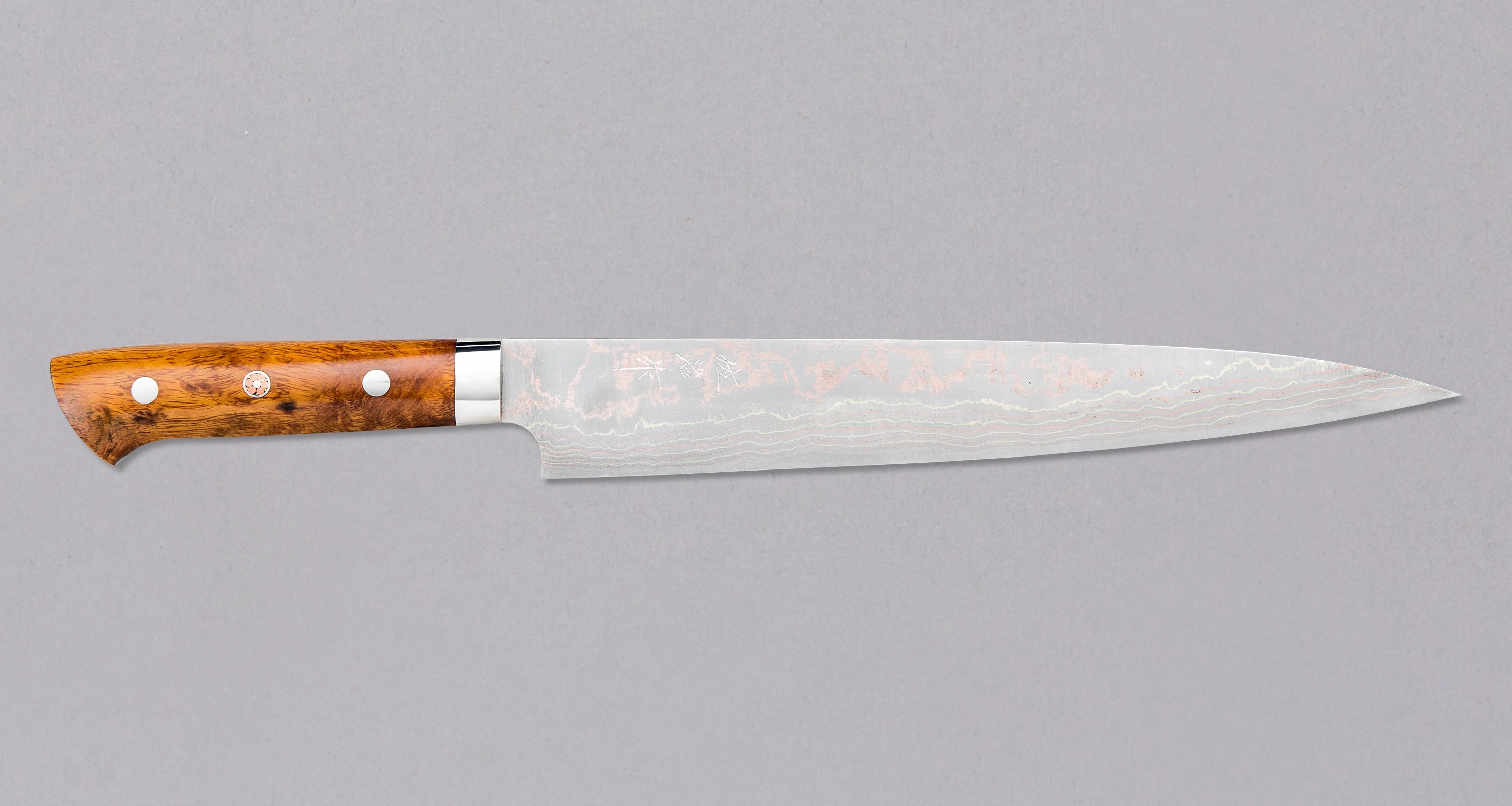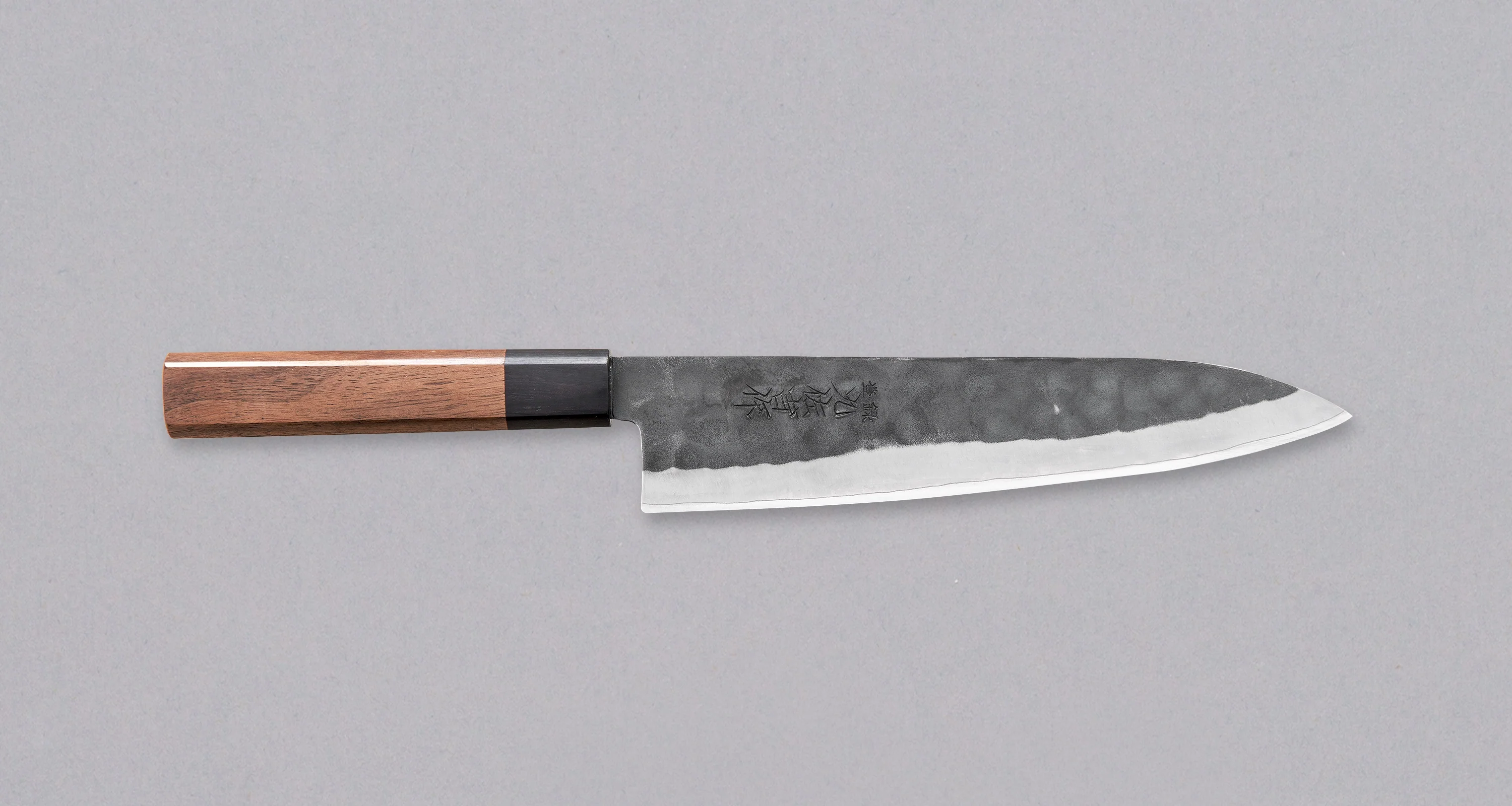
Hokiyama Kiritsuke Yanagiba Ginsanko 270mm (10.6")
Suitable for first-time buyers of a Japanese kitchen knife. It can also serve as a wonderful gift!
BLADE SHAPE:
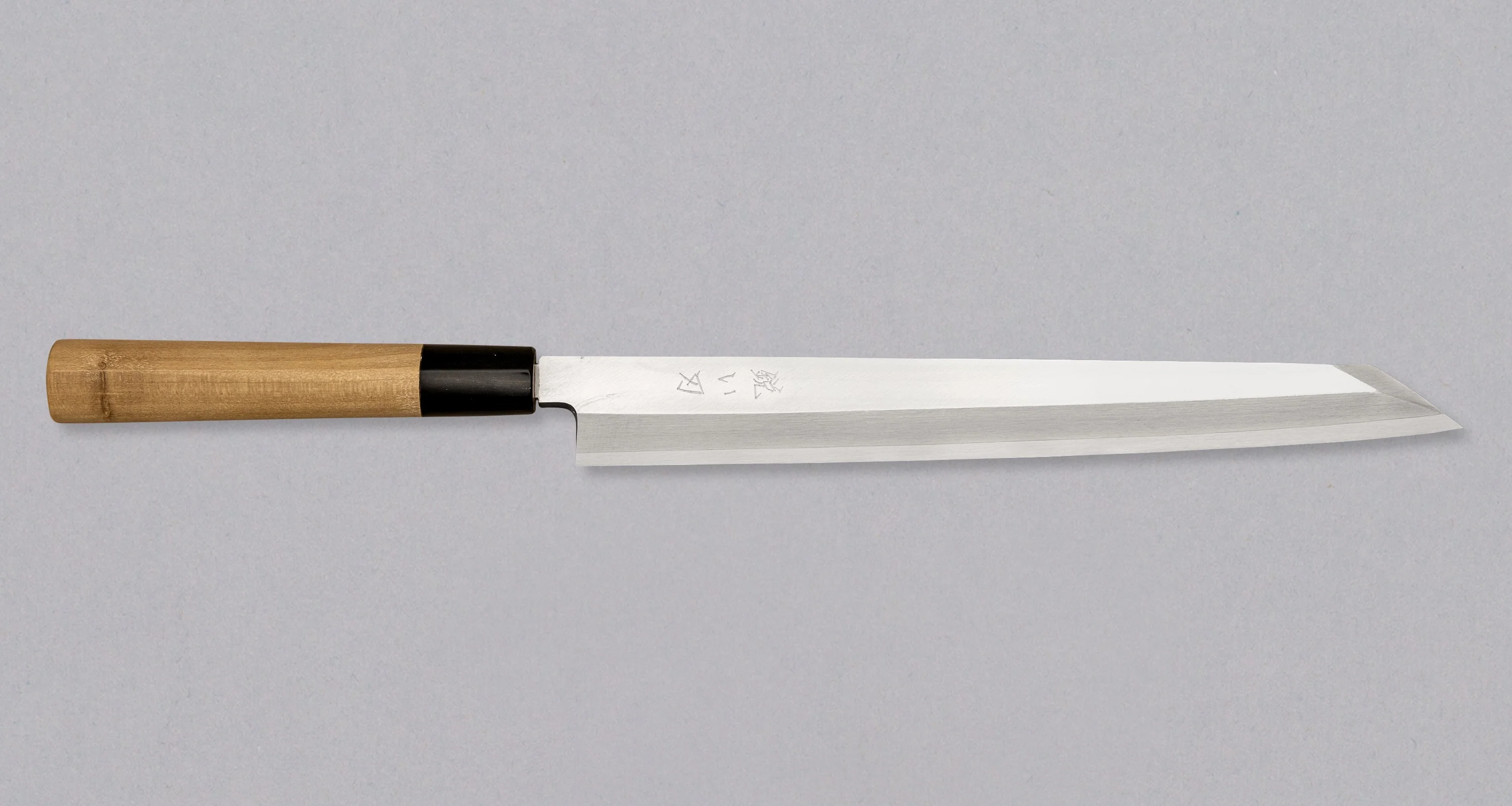
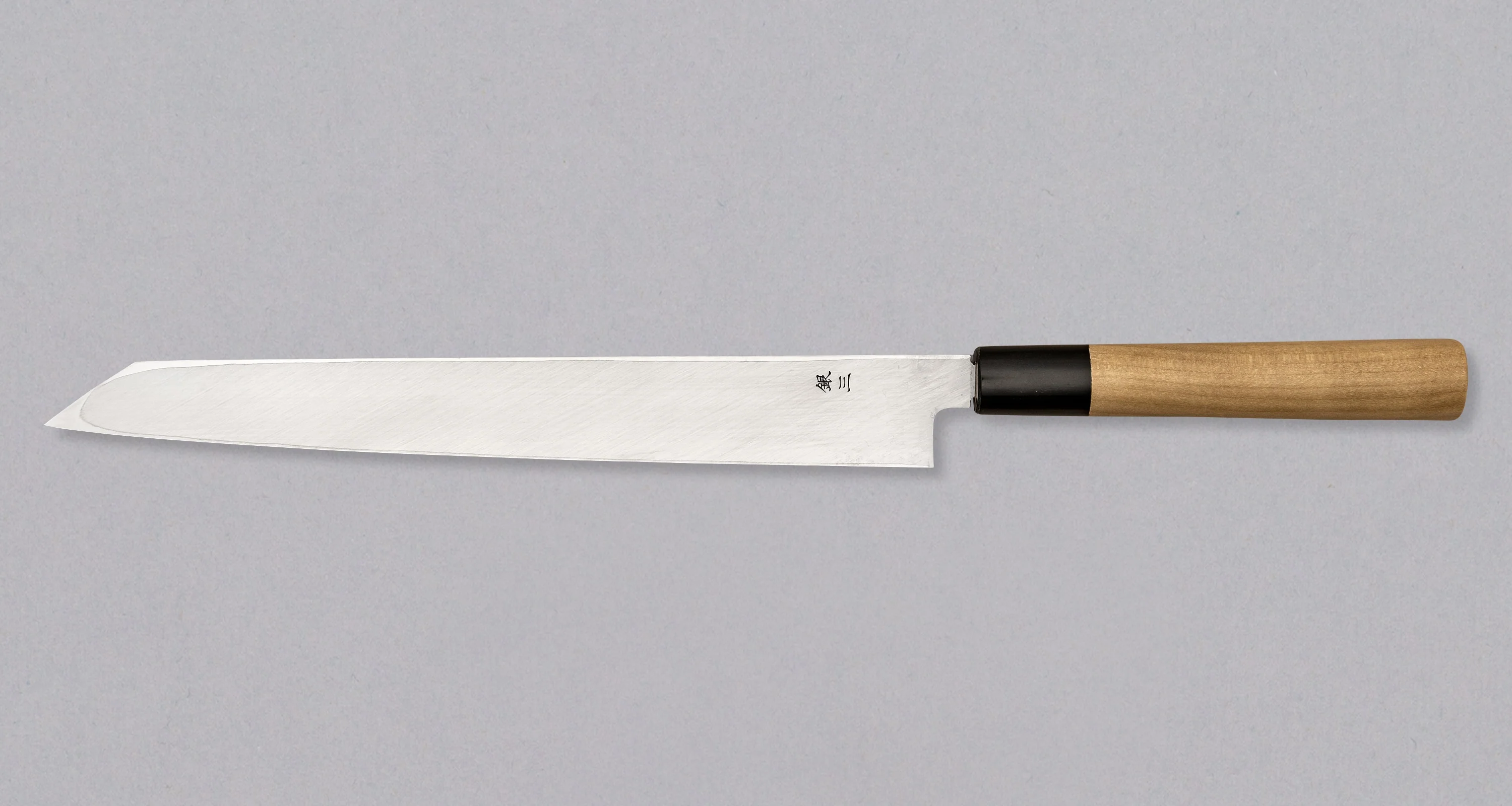
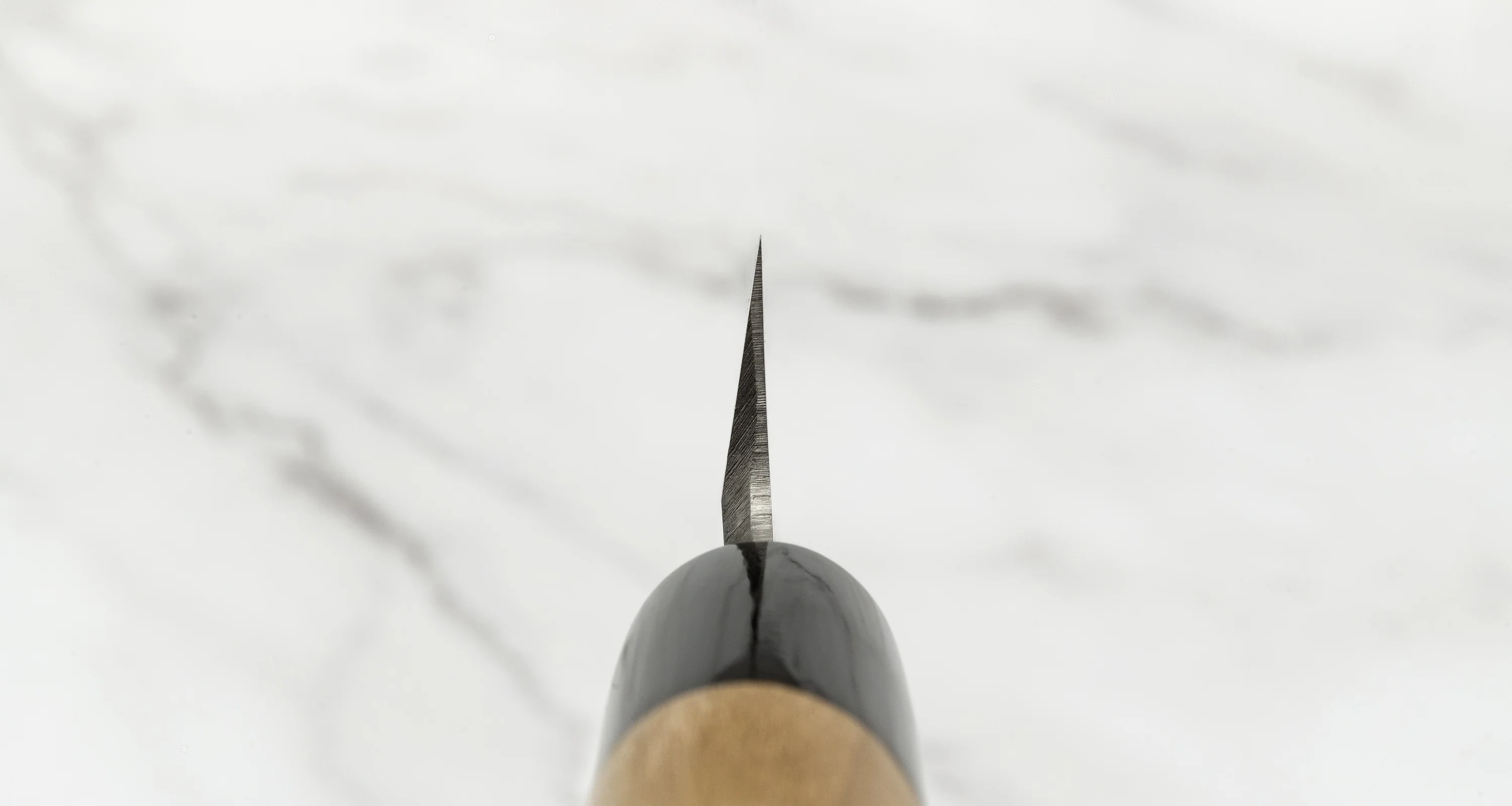
The Yanagiba has a narrow blade that is particularly suitable for cutting thin pieces of fish and meat (carpaccio) and for removing the skin from fish. The blade of the knife curves sharply downwards just before the tip (k-tip), hence the name Kiritsuke. The tip of the blade is excellent for precise cutting and allows for fine, decorative work as well as for trimming and removing skin, which is easily pierced due to the tip.
STEEL:
The heart of this knife is made of Hitachi's Silver III steel, also named Ginsan steel or Ginsanko, which was hardened to around 63 HRC. Due to its high content of Chromium (Cr), Ginsan steel will resist corrosion very well.
Due to the choice of materials and precise final treatment of the blade by hand, the blade is simple to maintain, retains its edge for a very long time and is perfect for sharpening on water stones. These are essential characteristics of a traditional Japanese single bevel knife, such as Yanagiba.
LAMINATION:
The hard core of the knife is composed of a hard core (forming the cutting edge) and a softer, external layer of soft iron, a cladding we call ni-mai lamination. The outer layer of softer steel forms a "shinogi" line along the entire edge of the blade. The shinogi line represents the border between the harder, inner steel and the outer layer of softer steel. The Ni-mai lamination method is used on single-bevel knives, where a sheet of softer metal is forge-welded onto the shinogi (front) side of the blade’s hard core. This reinforces the blade’s structural integrity and consequently makes it tougher.
BLADE FINISH:
The blade features a delicate high polish and a hand-engraved kanji signature.
HANDLE:
The handle is made of the most commonly used handle wood in Japanese knives - magnolia wood. It is the preferred wood of Japanese sushi chefs due to its antiseptic properties, and it is easy and inexpensive to rehandle as there is an abundance of magnolia handles on the market. Magnolia wood is a soft, light-colored wood that needs some extra maintenance as it can stain easily, so we recommend having clean hands before using the knife.
Where the blade meets the handle, you may notice a special feature called Machi spacing. This is a small gap between the lower part of the blade and the handle, which can be seen mostly in Yanagiba knives. It is a feature that pays tribute to Japanese swords and is typical mostly in the work of blacksmiths located in and around the Tokyo area. So don't worry, it is not a flaw in assembly of the blade and the handle, but rather a homage to Japanese forging tradition that could be displayed on a magnet right there on your kitchen wall.
SMITHY:
Hokiyama Hamono is a leading smithy in Kochi Prefecture in Japan. They have recently celebrated their 100-year anniversary, founded in 1919. Hokiyama Hamono is known for their quality as they follow the tradition of hand-made blades that has been around for over 800 years. They retain the handiwork and traditional craftsmanship that is passed down from generation to generation while striving for the ever-new knowledge and innovation.
More Images
Hokiyama Kiritsuke Yanagiba Ginsanko 270mm (10.6")
Suitable for first-time buyers of a Japanese kitchen knife. It can also serve as a wonderful gift!
BLADE SHAPE:
The Yanagiba has a narrow blade that is particularly suitable for cutting thin pieces of fish and meat (carpaccio) and for removing the skin from fish. The blade of the knife curves sharply downwards just before the tip (k-tip), hence the name Kiritsuke. The tip of the blade is excellent for precise cutting and allows for fine, decorative work as well as for trimming and removing skin, which is easily pierced due to the tip.
STEEL:
The heart of this knife is made of Hitachi's Silver III steel, also named Ginsan steel or Ginsanko, which was hardened to around 63 HRC. Due to its high content of Chromium (Cr), Ginsan steel will resist corrosion very well.
Due to the choice of materials and precise final treatment of the blade by hand, the blade is simple to maintain, retains its edge for a very long time and is perfect for sharpening on water stones. These are essential characteristics of a traditional Japanese single bevel knife, such as Yanagiba.
LAMINATION:
The hard core of the knife is composed of a hard core (forming the cutting edge) and a softer, external layer of soft iron, a cladding we call ni-mai lamination. The outer layer of softer steel forms a "shinogi" line along the entire edge of the blade. The shinogi line represents the border between the harder, inner steel and the outer layer of softer steel. The Ni-mai lamination method is used on single-bevel knives, where a sheet of softer metal is forge-welded onto the shinogi (front) side of the blade’s hard core. This reinforces the blade’s structural integrity and consequently makes it tougher.
BLADE FINISH:
The blade features a delicate high polish and a hand-engraved kanji signature.
HANDLE:
The handle is made of the most commonly used handle wood in Japanese knives - magnolia wood. It is the preferred wood of Japanese sushi chefs due to its antiseptic properties, and it is easy and inexpensive to rehandle as there is an abundance of magnolia handles on the market. Magnolia wood is a soft, light-colored wood that needs some extra maintenance as it can stain easily, so we recommend having clean hands before using the knife.
Where the blade meets the handle, you may notice a special feature called Machi spacing. This is a small gap between the lower part of the blade and the handle, which can be seen mostly in Yanagiba knives. It is a feature that pays tribute to Japanese swords and is typical mostly in the work of blacksmiths located in and around the Tokyo area. So don't worry, it is not a flaw in assembly of the blade and the handle, but rather a homage to Japanese forging tradition that could be displayed on a magnet right there on your kitchen wall.
SMITHY:
Hokiyama Hamono is a leading smithy in Kochi Prefecture in Japan. They have recently celebrated their 100-year anniversary, founded in 1919. Hokiyama Hamono is known for their quality as they follow the tradition of hand-made blades that has been around for over 800 years. They retain the handiwork and traditional craftsmanship that is passed down from generation to generation while striving for the ever-new knowledge and innovation.
Product Information
Product Information
Shipping & Returns
Shipping & Returns
Description
Suitable for first-time buyers of a Japanese kitchen knife. It can also serve as a wonderful gift!
BLADE SHAPE:
The Yanagiba has a narrow blade that is particularly suitable for cutting thin pieces of fish and meat (carpaccio) and for removing the skin from fish. The blade of the knife curves sharply downwards just before the tip (k-tip), hence the name Kiritsuke. The tip of the blade is excellent for precise cutting and allows for fine, decorative work as well as for trimming and removing skin, which is easily pierced due to the tip.
STEEL:
The heart of this knife is made of Hitachi's Silver III steel, also named Ginsan steel or Ginsanko, which was hardened to around 63 HRC. Due to its high content of Chromium (Cr), Ginsan steel will resist corrosion very well.
Due to the choice of materials and precise final treatment of the blade by hand, the blade is simple to maintain, retains its edge for a very long time and is perfect for sharpening on water stones. These are essential characteristics of a traditional Japanese single bevel knife, such as Yanagiba.
LAMINATION:
The hard core of the knife is composed of a hard core (forming the cutting edge) and a softer, external layer of soft iron, a cladding we call ni-mai lamination. The outer layer of softer steel forms a "shinogi" line along the entire edge of the blade. The shinogi line represents the border between the harder, inner steel and the outer layer of softer steel. The Ni-mai lamination method is used on single-bevel knives, where a sheet of softer metal is forge-welded onto the shinogi (front) side of the blade’s hard core. This reinforces the blade’s structural integrity and consequently makes it tougher.
BLADE FINISH:
The blade features a delicate high polish and a hand-engraved kanji signature.
HANDLE:
The handle is made of the most commonly used handle wood in Japanese knives - magnolia wood. It is the preferred wood of Japanese sushi chefs due to its antiseptic properties, and it is easy and inexpensive to rehandle as there is an abundance of magnolia handles on the market. Magnolia wood is a soft, light-colored wood that needs some extra maintenance as it can stain easily, so we recommend having clean hands before using the knife.
Where the blade meets the handle, you may notice a special feature called Machi spacing. This is a small gap between the lower part of the blade and the handle, which can be seen mostly in Yanagiba knives. It is a feature that pays tribute to Japanese swords and is typical mostly in the work of blacksmiths located in and around the Tokyo area. So don't worry, it is not a flaw in assembly of the blade and the handle, but rather a homage to Japanese forging tradition that could be displayed on a magnet right there on your kitchen wall.
SMITHY:
Hokiyama Hamono is a leading smithy in Kochi Prefecture in Japan. They have recently celebrated their 100-year anniversary, founded in 1919. Hokiyama Hamono is known for their quality as they follow the tradition of hand-made blades that has been around for over 800 years. They retain the handiwork and traditional craftsmanship that is passed down from generation to generation while striving for the ever-new knowledge and innovation.