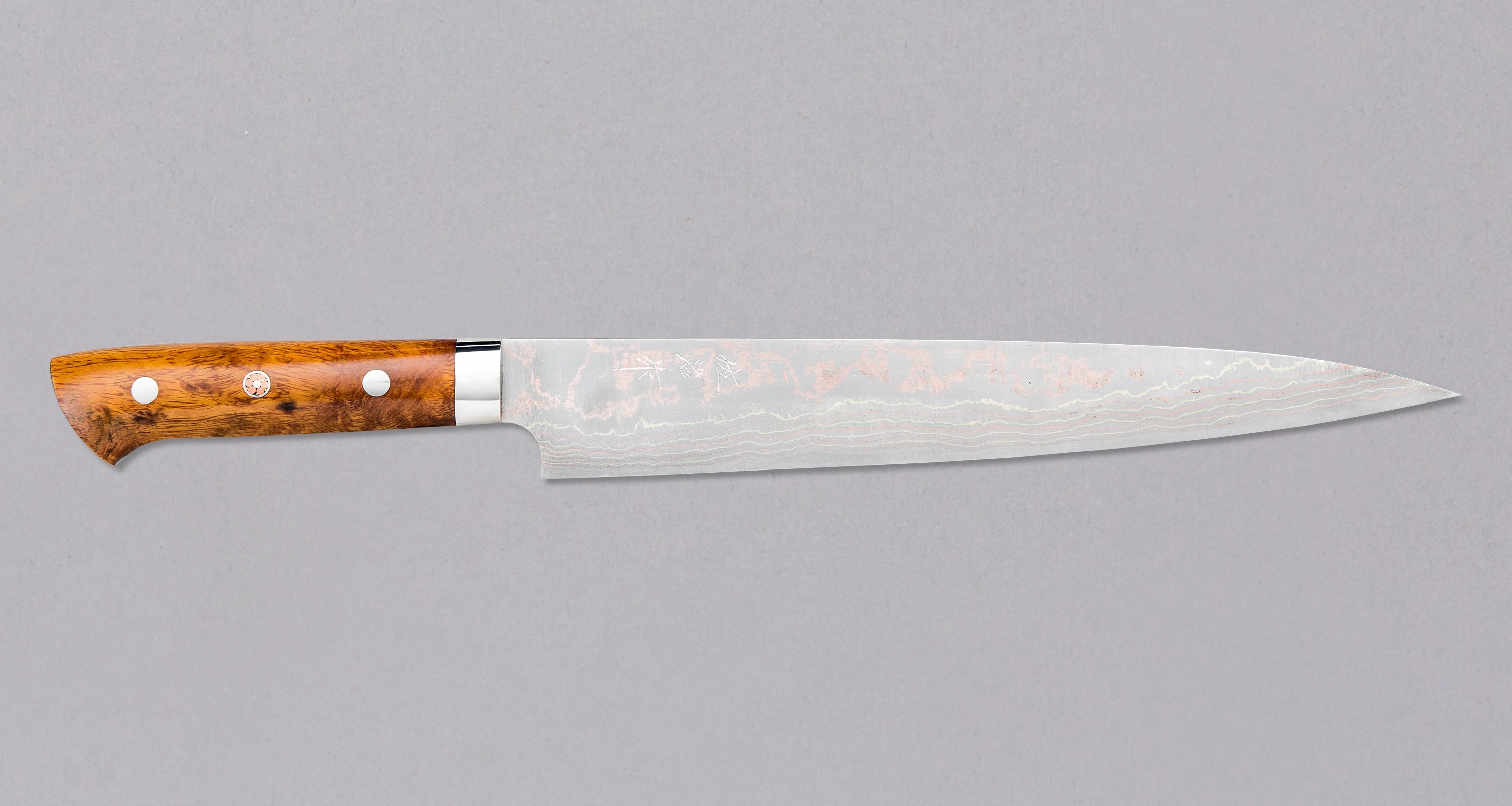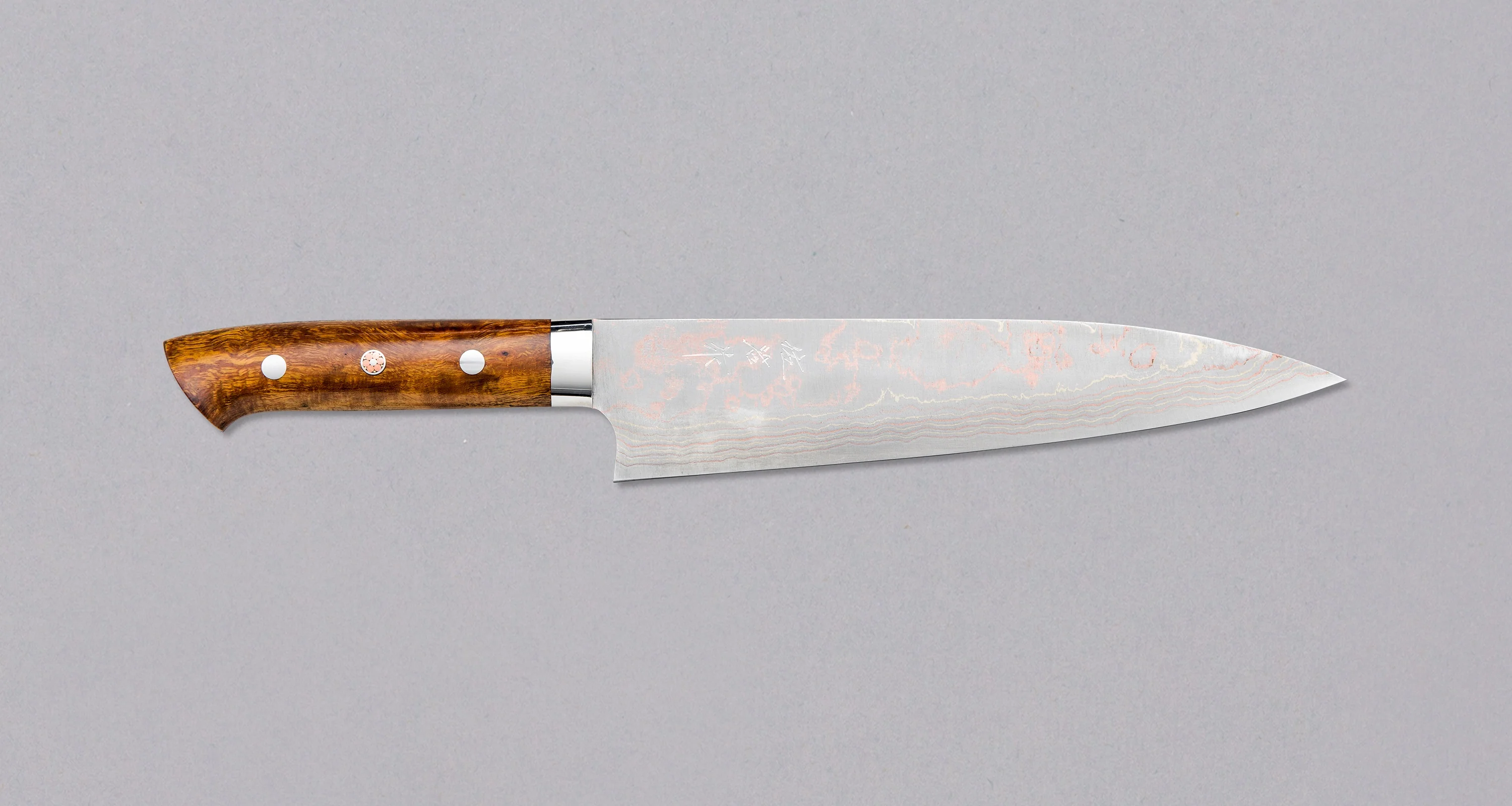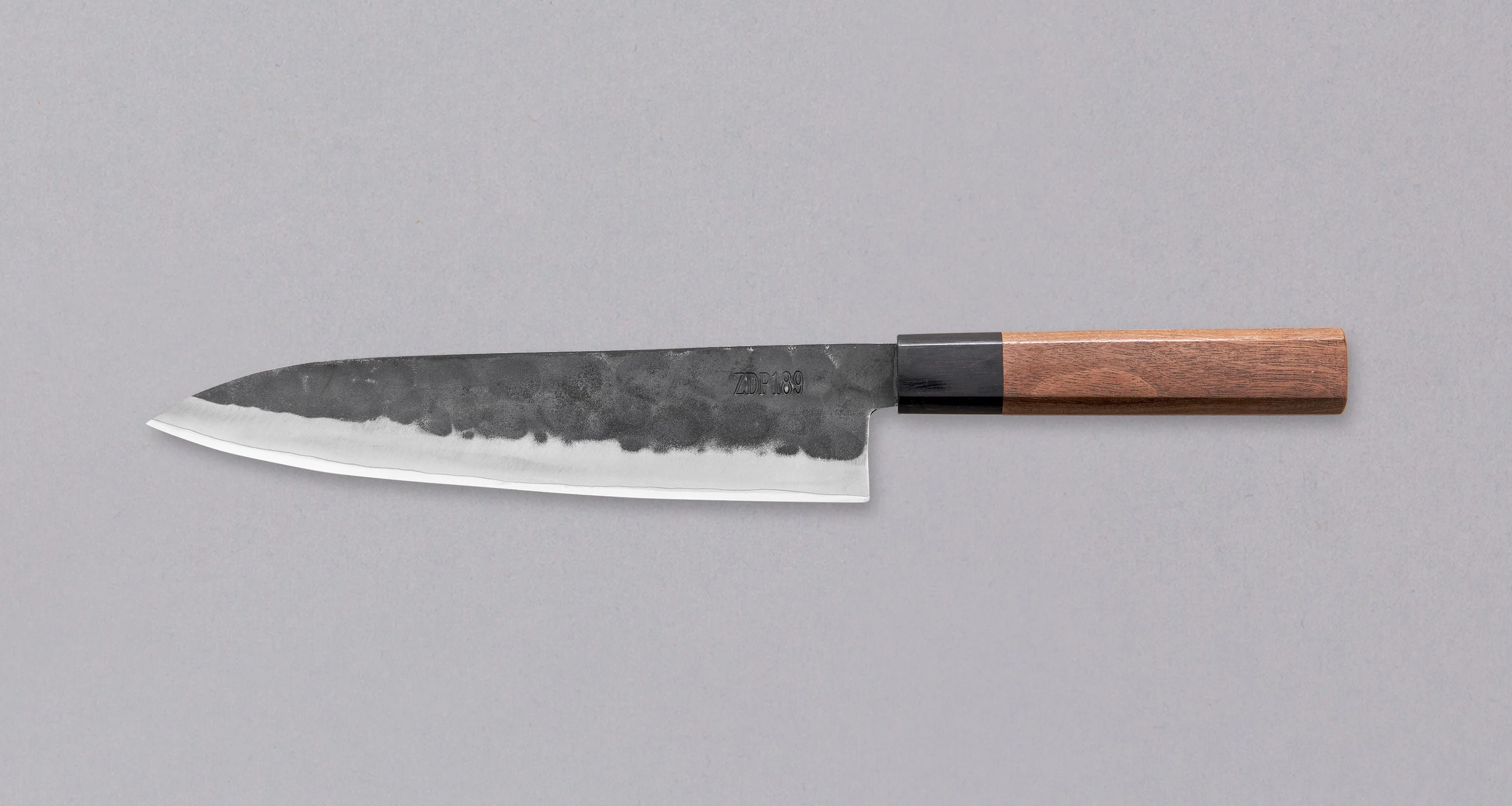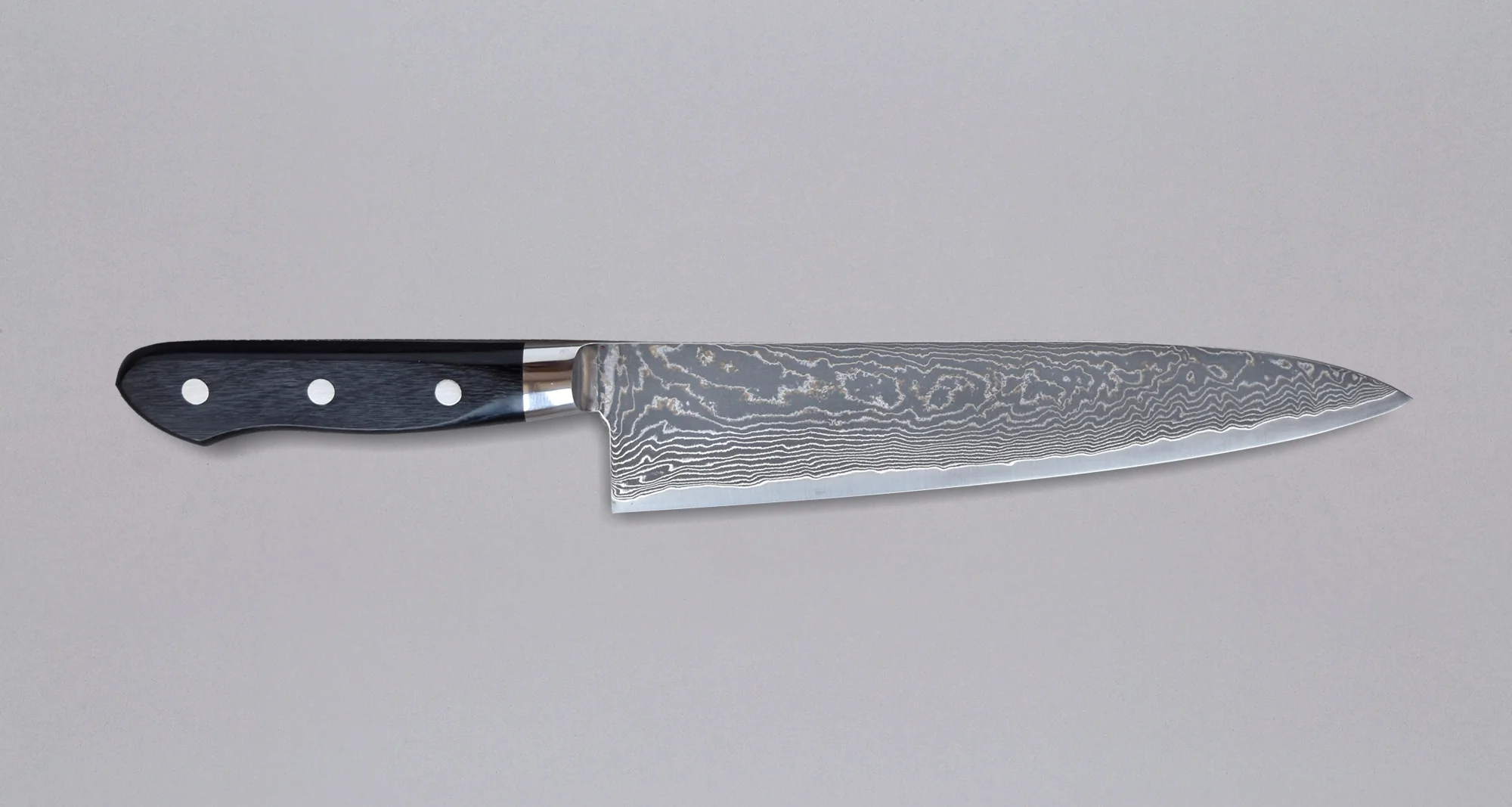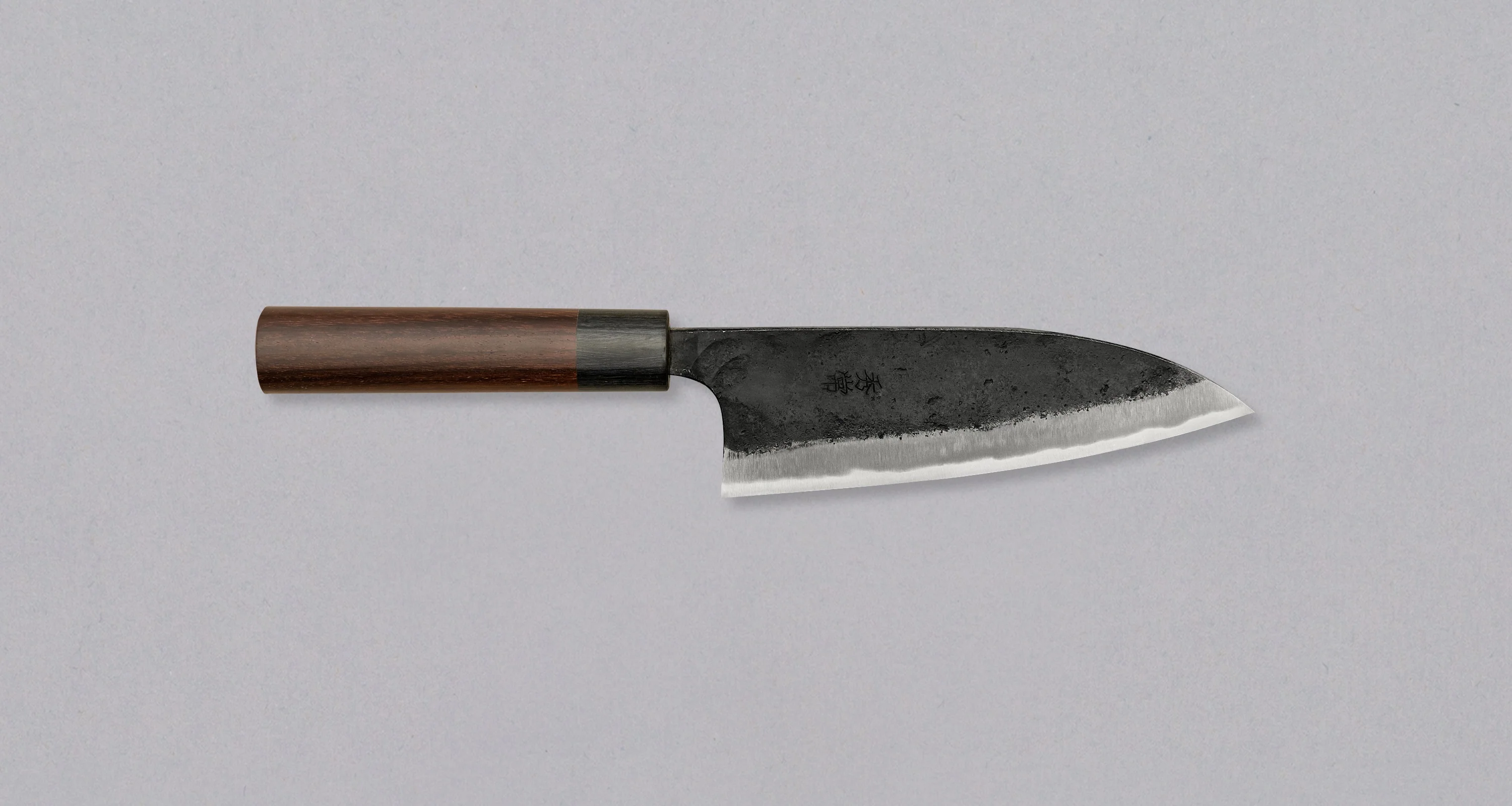
Hidetsune Ryo-Deba Aogami #2 165mm (6.5")
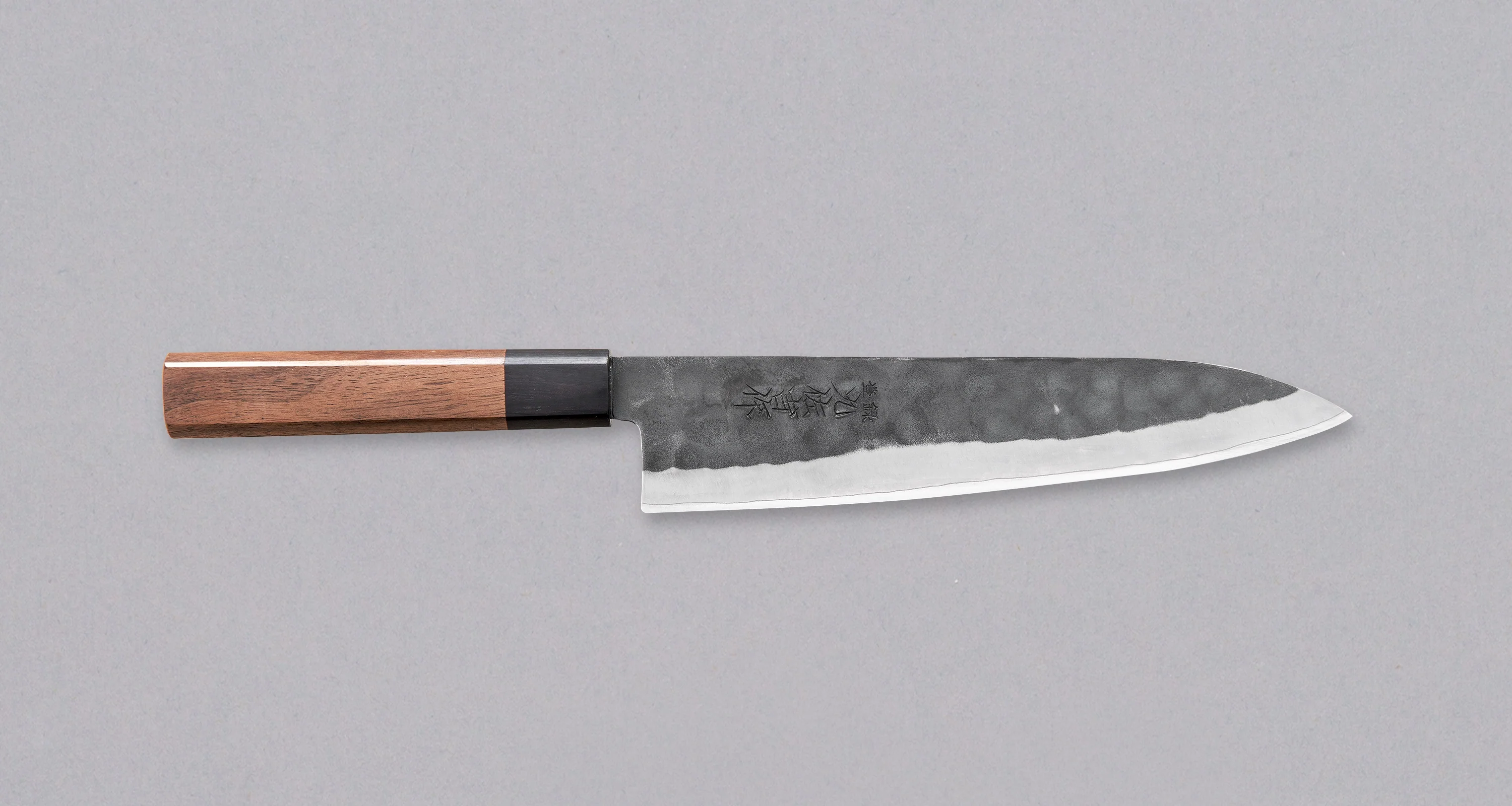
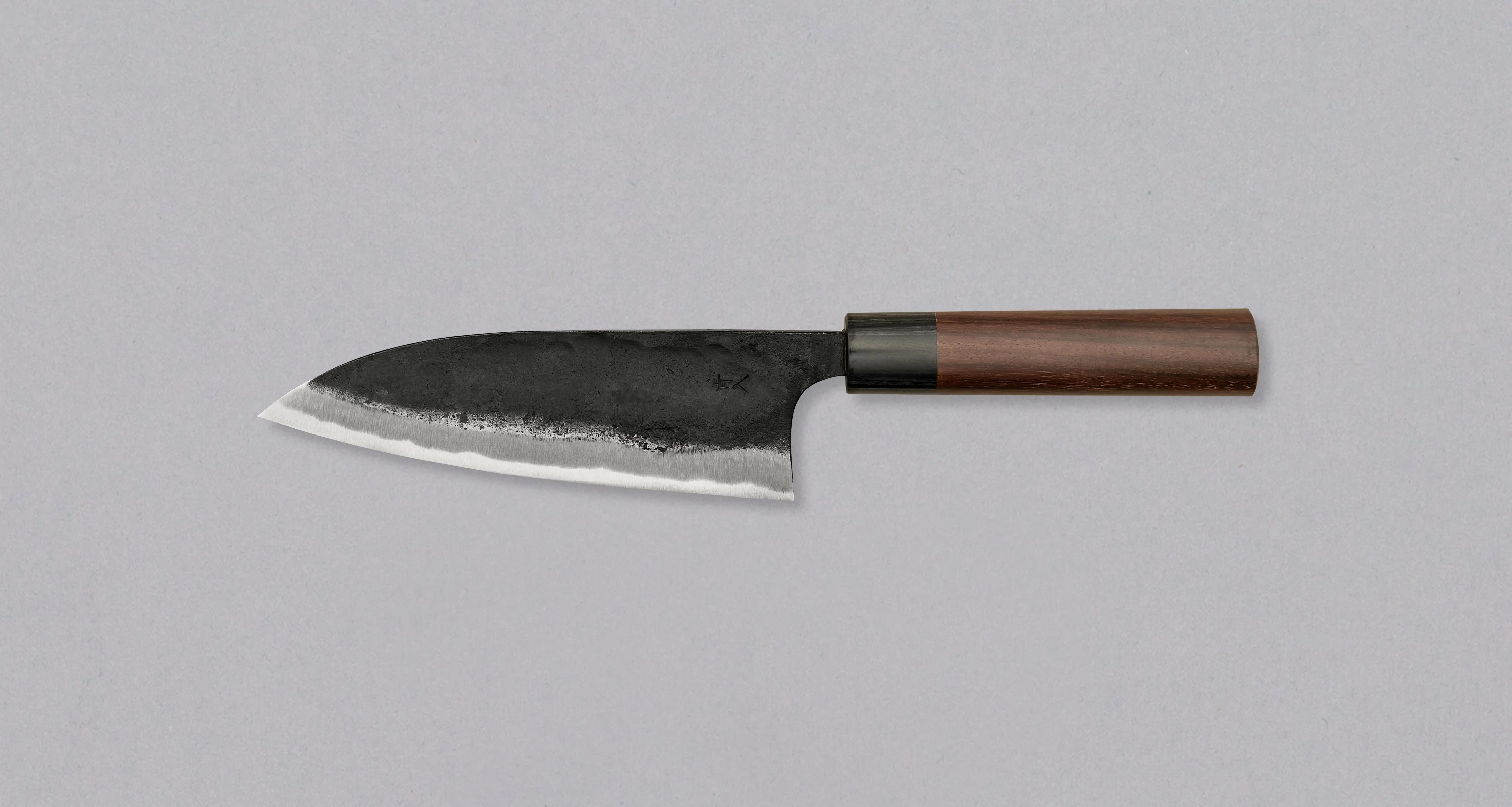
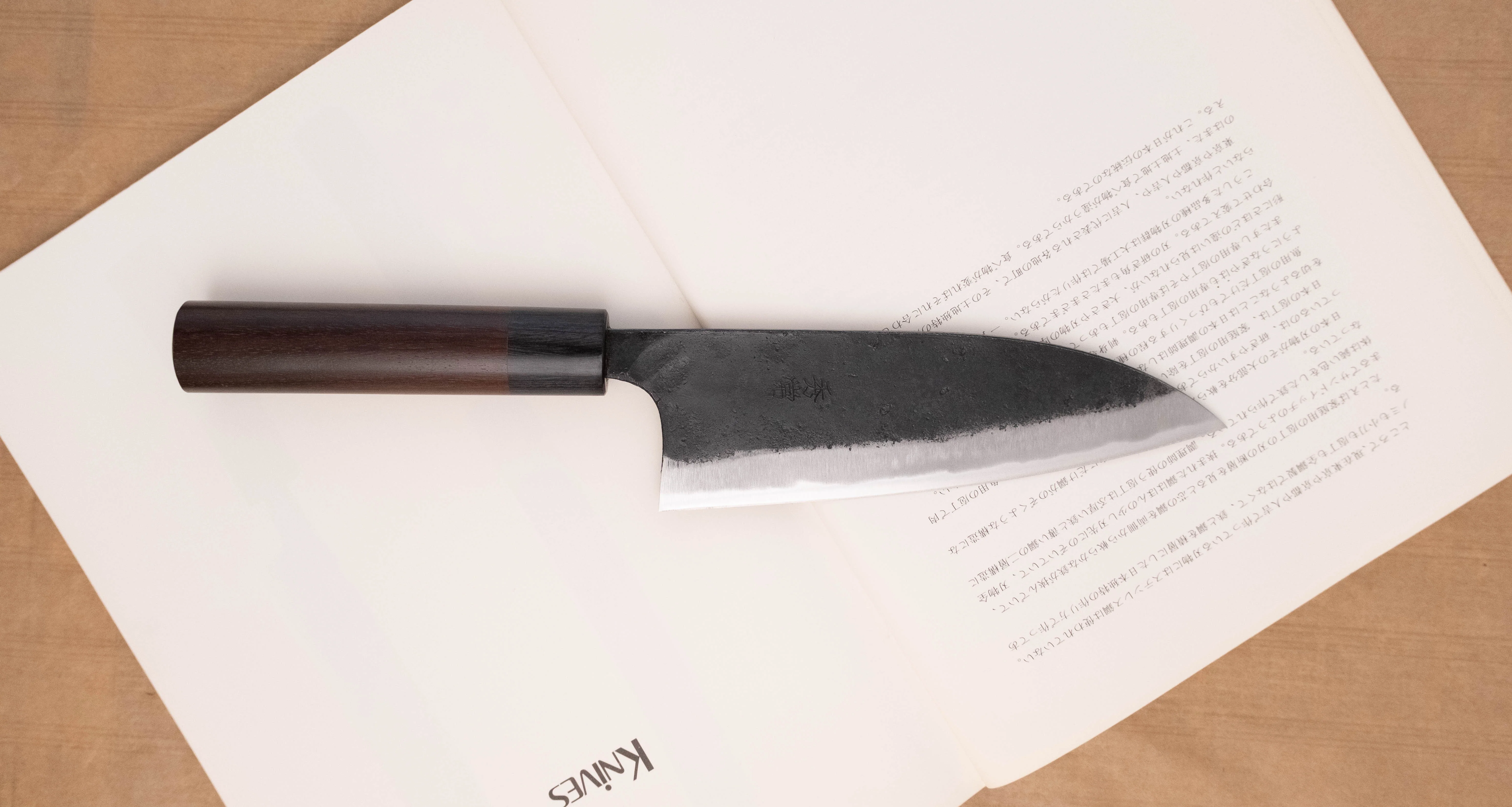
Introducing the Hidetsune Ryo-Deba Aogami #2 Kuro-uchi 165mm (6.5"), a premium Japanese knife crafted by Hidetsune, a smithy with over 100 years of tradition. Designed for professional chefs and experienced home cooks alike, the Hidetsune Ryo-Deba is perfect for those who demand reliability and versatility when preparing fish or other meats.
BLADE SHAPE:
Deba is one of the »big three« Japanese traditional kitchen knives, alongside usuba and yanagiba. They are essentials that every sushi chef needs to master.
Unlike typical single-bevel deba knives, this model features a double bevel grind—known as a Ryo-Deba—making it easier to sharpen and ideal for both right- and left-handed users. Its sturdy blade is designed for heavy-duty tasks like filleting, portioning, and cutting through the bones of large fish and poultry with ease.
STEEL:
Aogami #2 is a very popular steel in Japanese knife making and one of the finest high-carbon steels, meaning the knives forged from it will have exceptional edge retention and also sharpen very easily. ⚠️ Read about knife maintenance here.
LAMINATION:
The blade’s core was laminated using the san-mai method to improve its structural integrity and subsequent ability to withstand impacts and prevent chipping.
GEOMETRY:
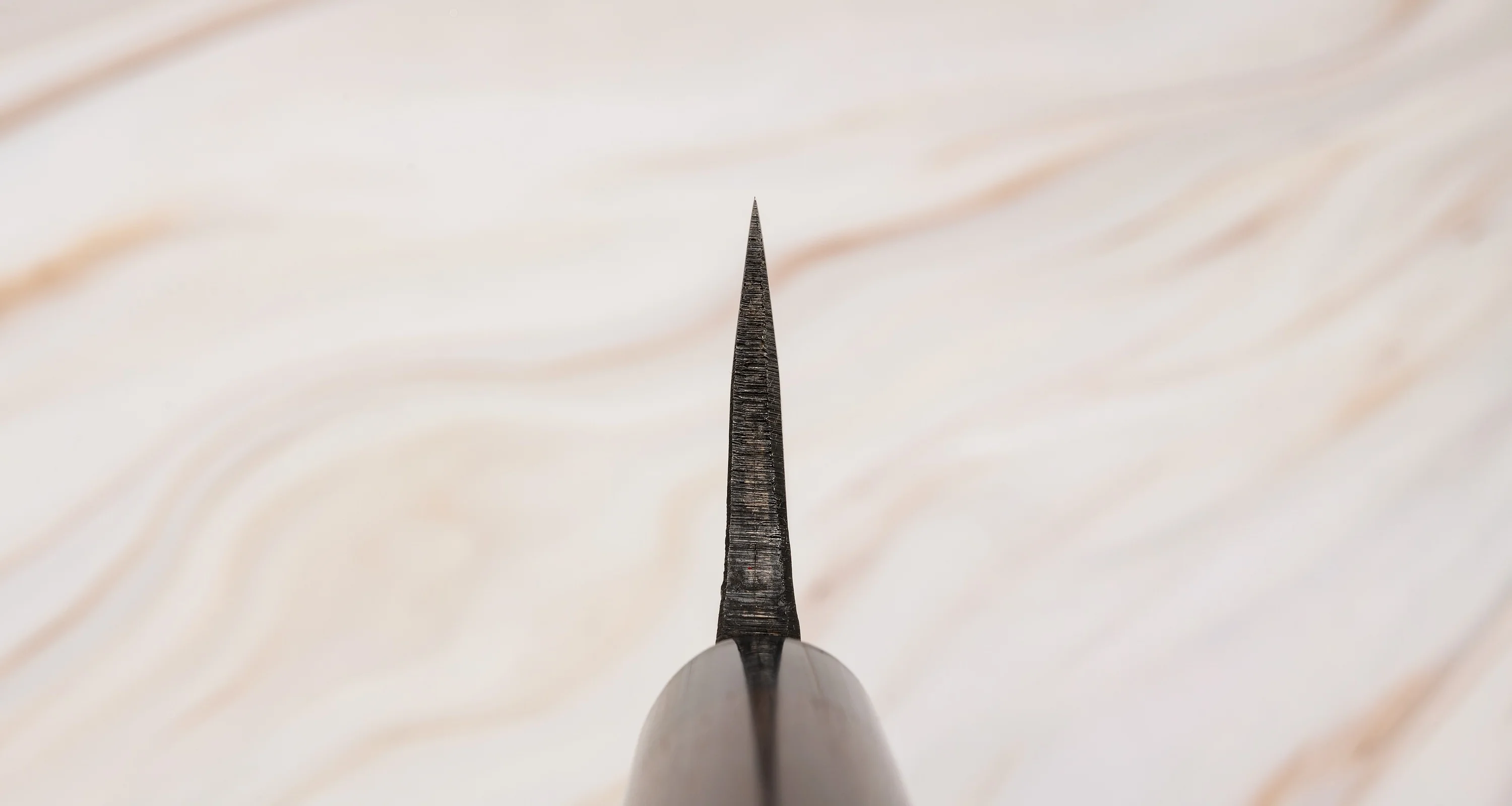
The knife features a double-bevel blade with a convex V-edge. It is heavier and stronger near the handle, tapering thinner and more precise towards the tip. This design makes the knife highly responsive, easily maneuverable, and well balanced. This blade profile is known as distal taper — you can learn more in our article on blade geometry.
BLADE FINISH:
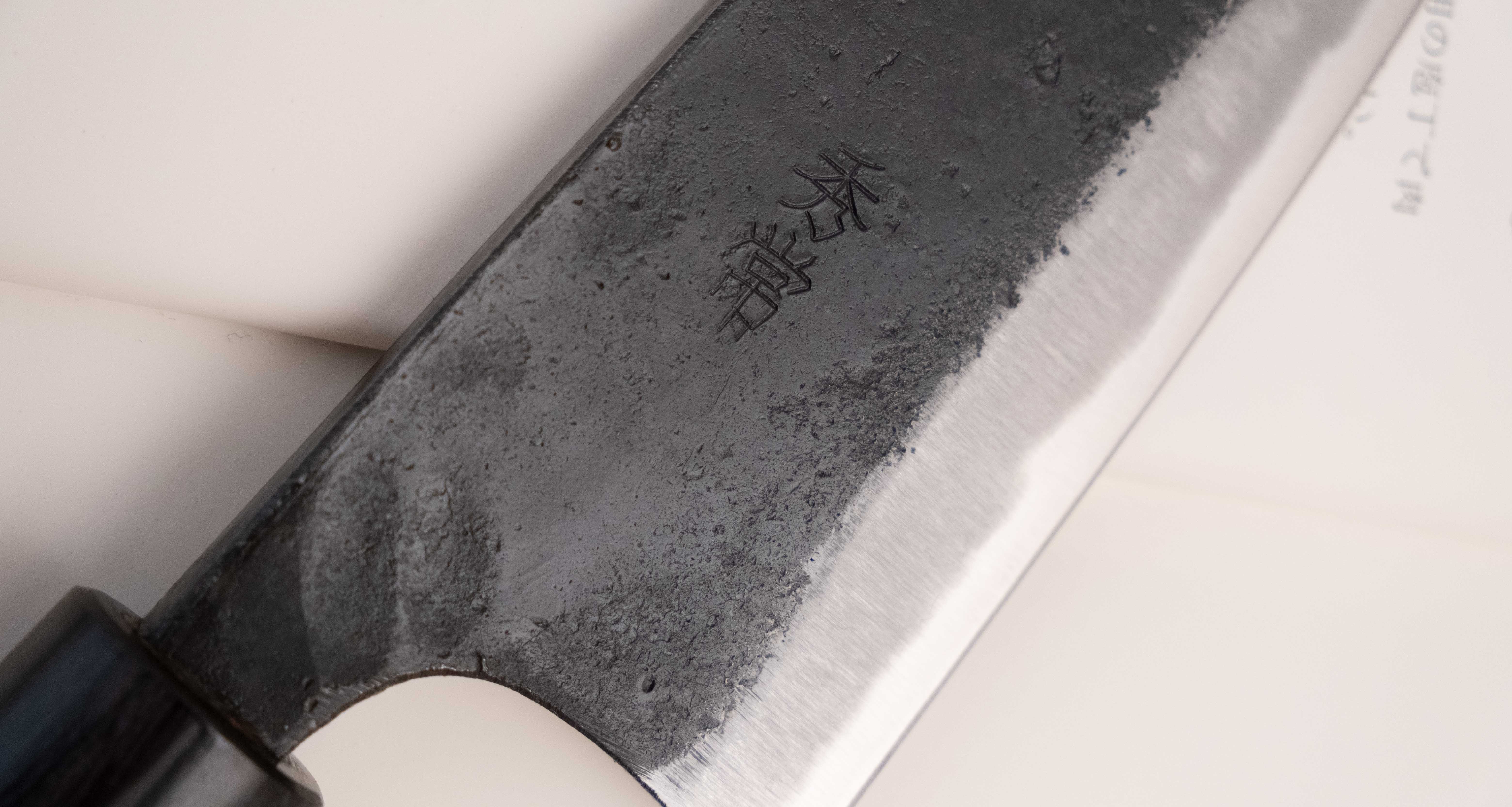
The kuro-uchi finish (kuro - ‘black’) is a layer of raw, protective patina on the outer steel. It gets a nice contrast from the hand-chiseled kanji on the blade. The kireha (lower part of the blade or ‘blade road’) has a classic cloudy kasumi finish.
HANDLE:
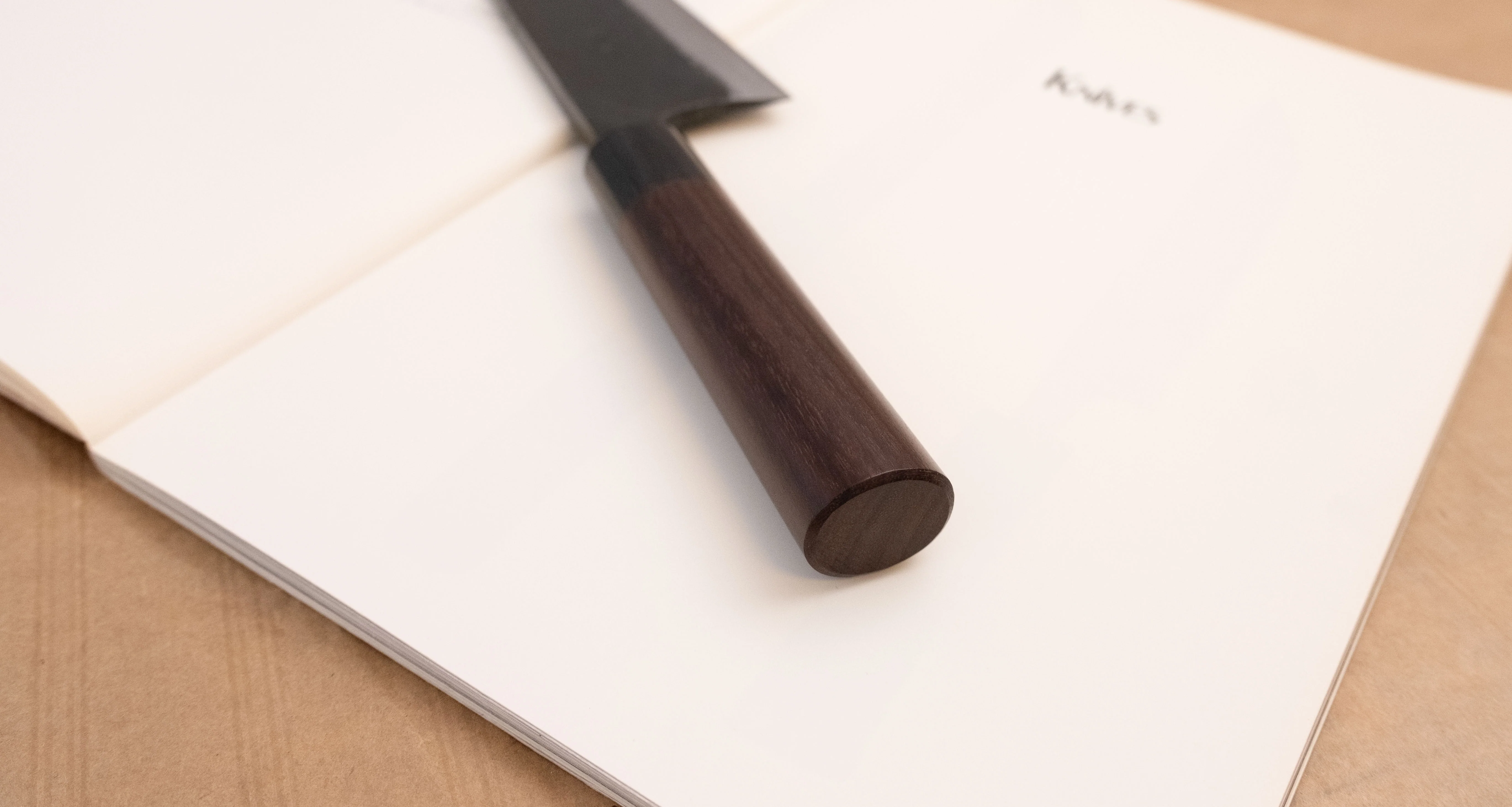
Japanese (Wa) style handle is made out of rosewood and is topped with a black pakka wood ferrule. The oval handle allows a comfortable and firm grip, suitable for both left- and right-handed users.
A traditional feature of wooden handles is that over time the soft surface of the wood will lose its smoothness and shine, giving it an even better grip and making it even safer to use with wet hands. This extra friction of the "roughened" surface ensures that greasy, wet, and slippery palms don't slide forward on the blade during use.
THE SMITHY:
Hidetsune is a legacy forged through generations — the name combines the master’s "秀" (Hide) and the founder’s own "常" (Tsune). Now in its third generation, this century-old blacksmith tradition crafts robust tools like axes, hatchets, and Deba knives, blending heritage with exceptional strength and precision.
Original: $292.85
-65%$292.85
$102.50More Images
Hidetsune Ryo-Deba Aogami #2 165mm (6.5")
Introducing the Hidetsune Ryo-Deba Aogami #2 Kuro-uchi 165mm (6.5"), a premium Japanese knife crafted by Hidetsune, a smithy with over 100 years of tradition. Designed for professional chefs and experienced home cooks alike, the Hidetsune Ryo-Deba is perfect for those who demand reliability and versatility when preparing fish or other meats.
BLADE SHAPE:
Deba is one of the »big three« Japanese traditional kitchen knives, alongside usuba and yanagiba. They are essentials that every sushi chef needs to master.
Unlike typical single-bevel deba knives, this model features a double bevel grind—known as a Ryo-Deba—making it easier to sharpen and ideal for both right- and left-handed users. Its sturdy blade is designed for heavy-duty tasks like filleting, portioning, and cutting through the bones of large fish and poultry with ease.
STEEL:
Aogami #2 is a very popular steel in Japanese knife making and one of the finest high-carbon steels, meaning the knives forged from it will have exceptional edge retention and also sharpen very easily. ⚠️ Read about knife maintenance here.
LAMINATION:
The blade’s core was laminated using the san-mai method to improve its structural integrity and subsequent ability to withstand impacts and prevent chipping.
GEOMETRY:
The knife features a double-bevel blade with a convex V-edge. It is heavier and stronger near the handle, tapering thinner and more precise towards the tip. This design makes the knife highly responsive, easily maneuverable, and well balanced. This blade profile is known as distal taper — you can learn more in our article on blade geometry.
BLADE FINISH:
The kuro-uchi finish (kuro - ‘black’) is a layer of raw, protective patina on the outer steel. It gets a nice contrast from the hand-chiseled kanji on the blade. The kireha (lower part of the blade or ‘blade road’) has a classic cloudy kasumi finish.
HANDLE:
Japanese (Wa) style handle is made out of rosewood and is topped with a black pakka wood ferrule. The oval handle allows a comfortable and firm grip, suitable for both left- and right-handed users.
A traditional feature of wooden handles is that over time the soft surface of the wood will lose its smoothness and shine, giving it an even better grip and making it even safer to use with wet hands. This extra friction of the "roughened" surface ensures that greasy, wet, and slippery palms don't slide forward on the blade during use.
THE SMITHY:
Hidetsune is a legacy forged through generations — the name combines the master’s "秀" (Hide) and the founder’s own "常" (Tsune). Now in its third generation, this century-old blacksmith tradition crafts robust tools like axes, hatchets, and Deba knives, blending heritage with exceptional strength and precision.
Product Information
Product Information
Shipping & Returns
Shipping & Returns
Description
Introducing the Hidetsune Ryo-Deba Aogami #2 Kuro-uchi 165mm (6.5"), a premium Japanese knife crafted by Hidetsune, a smithy with over 100 years of tradition. Designed for professional chefs and experienced home cooks alike, the Hidetsune Ryo-Deba is perfect for those who demand reliability and versatility when preparing fish or other meats.
BLADE SHAPE:
Deba is one of the »big three« Japanese traditional kitchen knives, alongside usuba and yanagiba. They are essentials that every sushi chef needs to master.
Unlike typical single-bevel deba knives, this model features a double bevel grind—known as a Ryo-Deba—making it easier to sharpen and ideal for both right- and left-handed users. Its sturdy blade is designed for heavy-duty tasks like filleting, portioning, and cutting through the bones of large fish and poultry with ease.
STEEL:
Aogami #2 is a very popular steel in Japanese knife making and one of the finest high-carbon steels, meaning the knives forged from it will have exceptional edge retention and also sharpen very easily. ⚠️ Read about knife maintenance here.
LAMINATION:
The blade’s core was laminated using the san-mai method to improve its structural integrity and subsequent ability to withstand impacts and prevent chipping.
GEOMETRY:
The knife features a double-bevel blade with a convex V-edge. It is heavier and stronger near the handle, tapering thinner and more precise towards the tip. This design makes the knife highly responsive, easily maneuverable, and well balanced. This blade profile is known as distal taper — you can learn more in our article on blade geometry.
BLADE FINISH:
The kuro-uchi finish (kuro - ‘black’) is a layer of raw, protective patina on the outer steel. It gets a nice contrast from the hand-chiseled kanji on the blade. The kireha (lower part of the blade or ‘blade road’) has a classic cloudy kasumi finish.
HANDLE:
Japanese (Wa) style handle is made out of rosewood and is topped with a black pakka wood ferrule. The oval handle allows a comfortable and firm grip, suitable for both left- and right-handed users.
A traditional feature of wooden handles is that over time the soft surface of the wood will lose its smoothness and shine, giving it an even better grip and making it even safer to use with wet hands. This extra friction of the "roughened" surface ensures that greasy, wet, and slippery palms don't slide forward on the blade during use.
THE SMITHY:
Hidetsune is a legacy forged through generations — the name combines the master’s "秀" (Hide) and the founder’s own "常" (Tsune). Now in its third generation, this century-old blacksmith tradition crafts robust tools like axes, hatchets, and Deba knives, blending heritage with exceptional strength and precision.