Hatsukokoro Ginrei Santoku Ginsanko Nashiji Ebony 170mm (6.7")
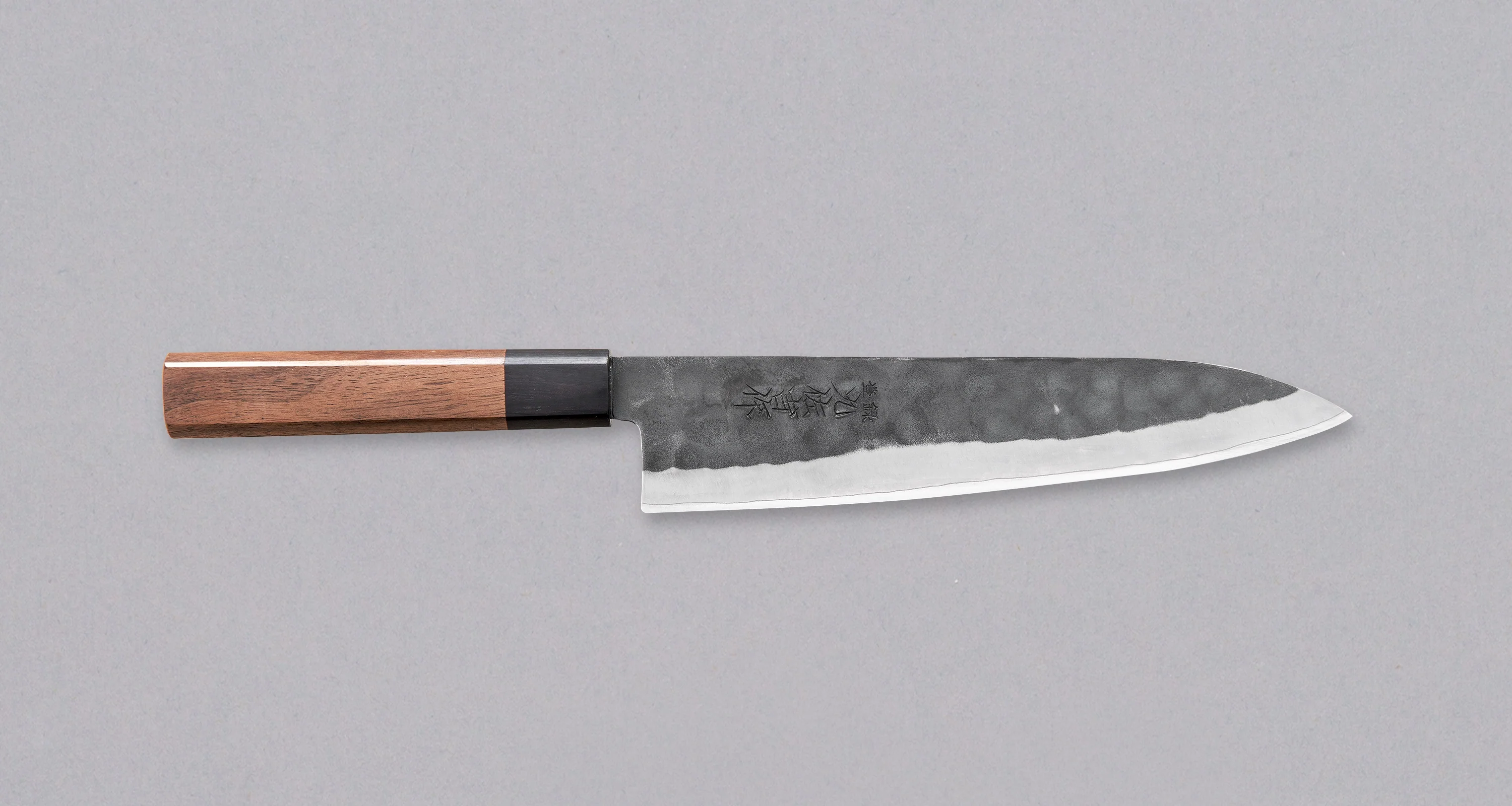
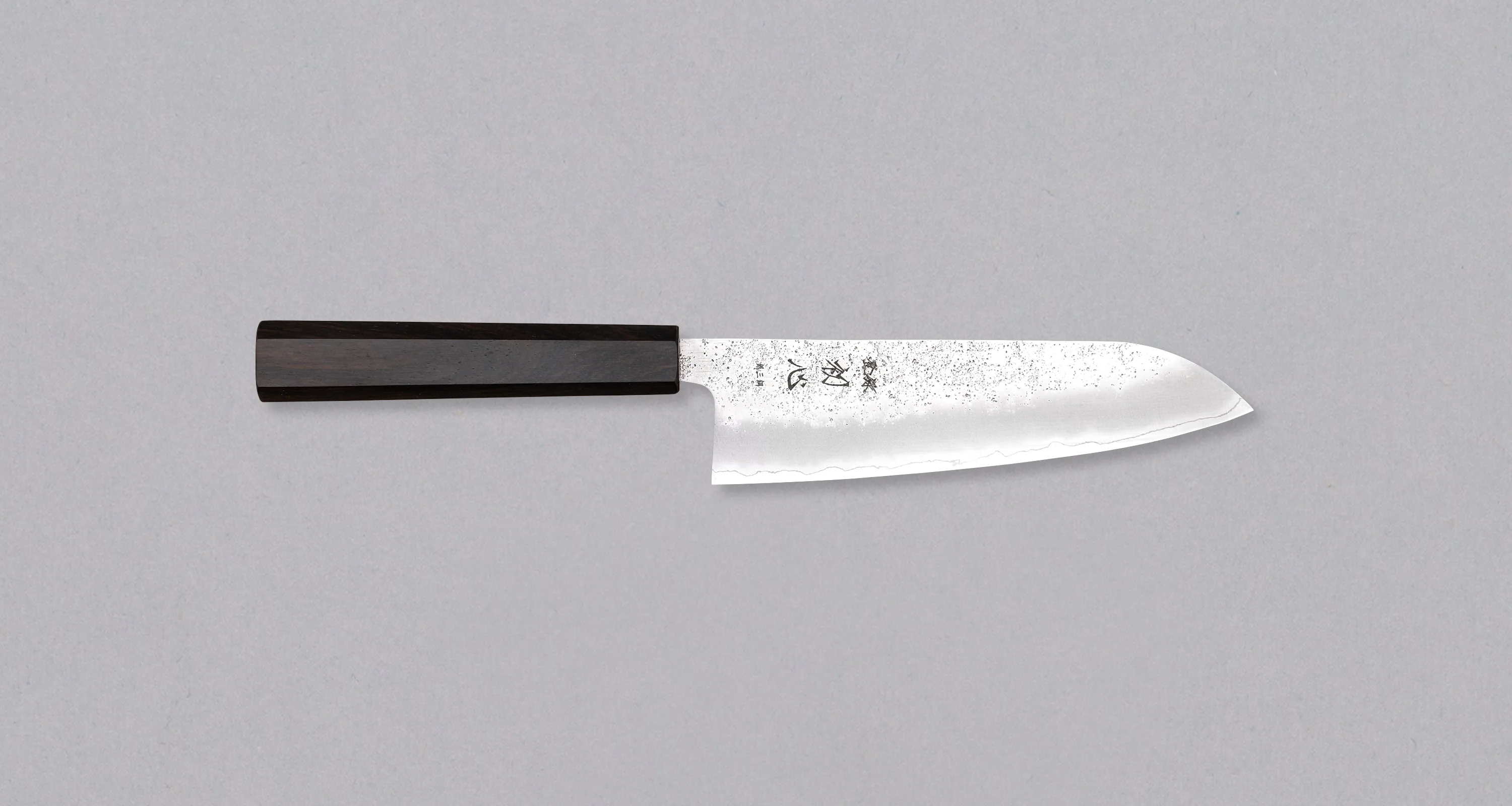
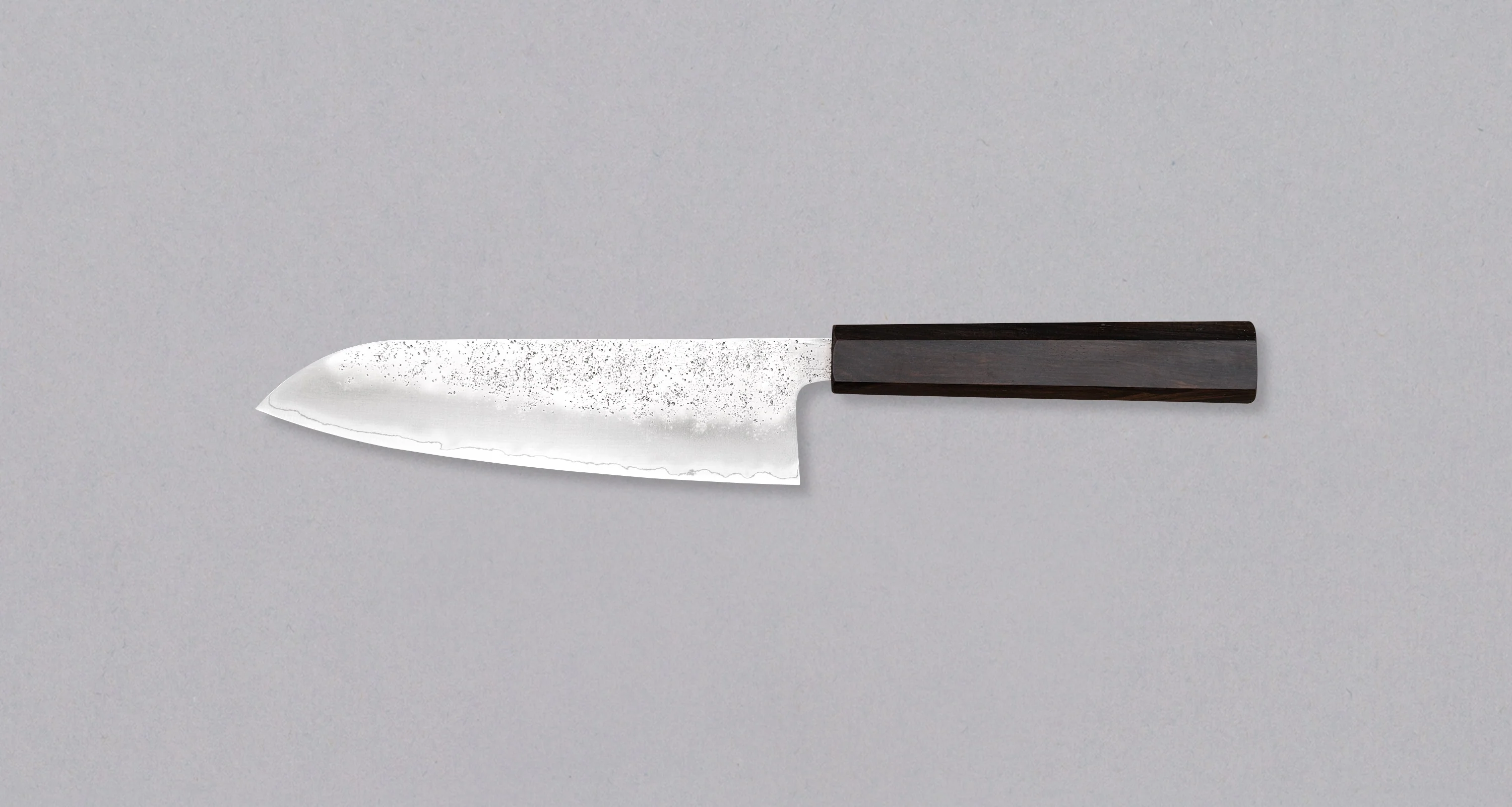
The Hatsukokoro Ginrei Santoku Ginsanko Nashiji Ebony 170mm is a versatile Japanese kitchen knife designed for preparing meat, fish, and vegetables. The main advantage of this steel is its excellent rust resistance, easy maintenance, and exceptional edge retention, ensuring a knife that remains sharp over time.
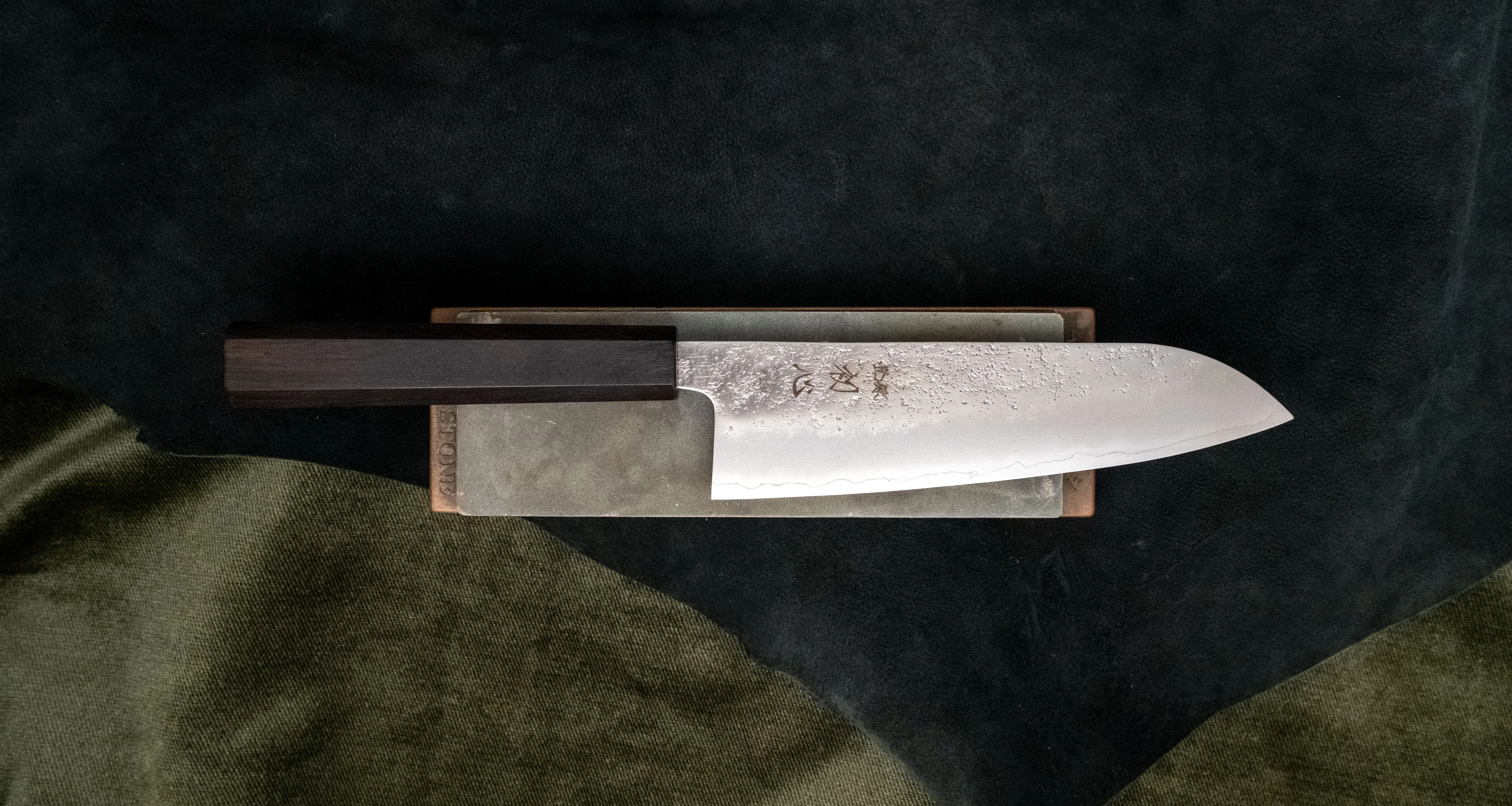
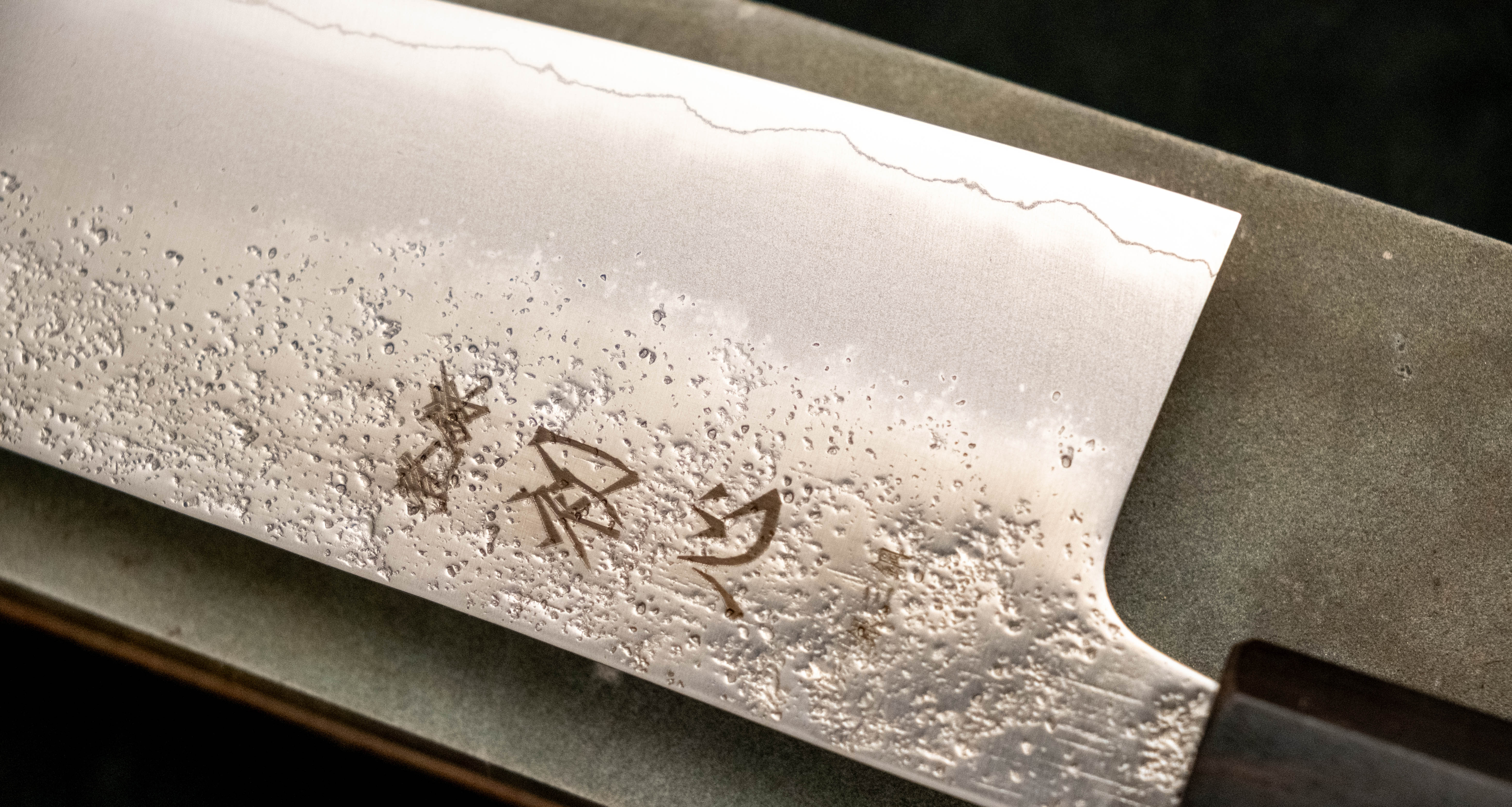
The Ginrei series proves that great Japanese knives don’t have to be complicated. At the core lies ginsanko stainless steel (63 HRC) in san-mai construction — known for its carbon-like sharpness, excellent rust resistance, and easy sharpening. The blade features a traditional nashiji finish, whose subtle pear-skin texture was historically introduced by blacksmiths to visually connect classic carbon steels with newer stainless steels like ginsanko.
BLADE SHAPE:
Santoku is one of the most versatile and efficient blade shapes in the kitchen, perfect for slicing, dicing, and chopping meat, fish, and vegetables. Its wide blade makes it easy to scoop and transfer ingredients, while the relatively flat edge excels at straight-down chopping and push-cutting on the cutting board. The slightly curved belly allows for gentle rocking, and the rounded tip adds precision for more delicate prep work.
STEEL:
Hitachi's Silver III steel, also named Ginsan steel or Ginsanko, was hardened to around 63 HRC. Due to its high content of Chromium (Cr), Ginsan steel will resist corrosion very well. Despite it being a stainless steel, it feels and behaves very similarly to carbon steels, due to its extremely pure composition.
LAMINATION:
The core layer consisting of the harder Ginsan steel was sandwiched between two layers of softer steel. This technique is called san-mai and is used to protect the hard (but delicate) core from outside factors and physical impacts, which could lead to breakage.
GEOMETRY:
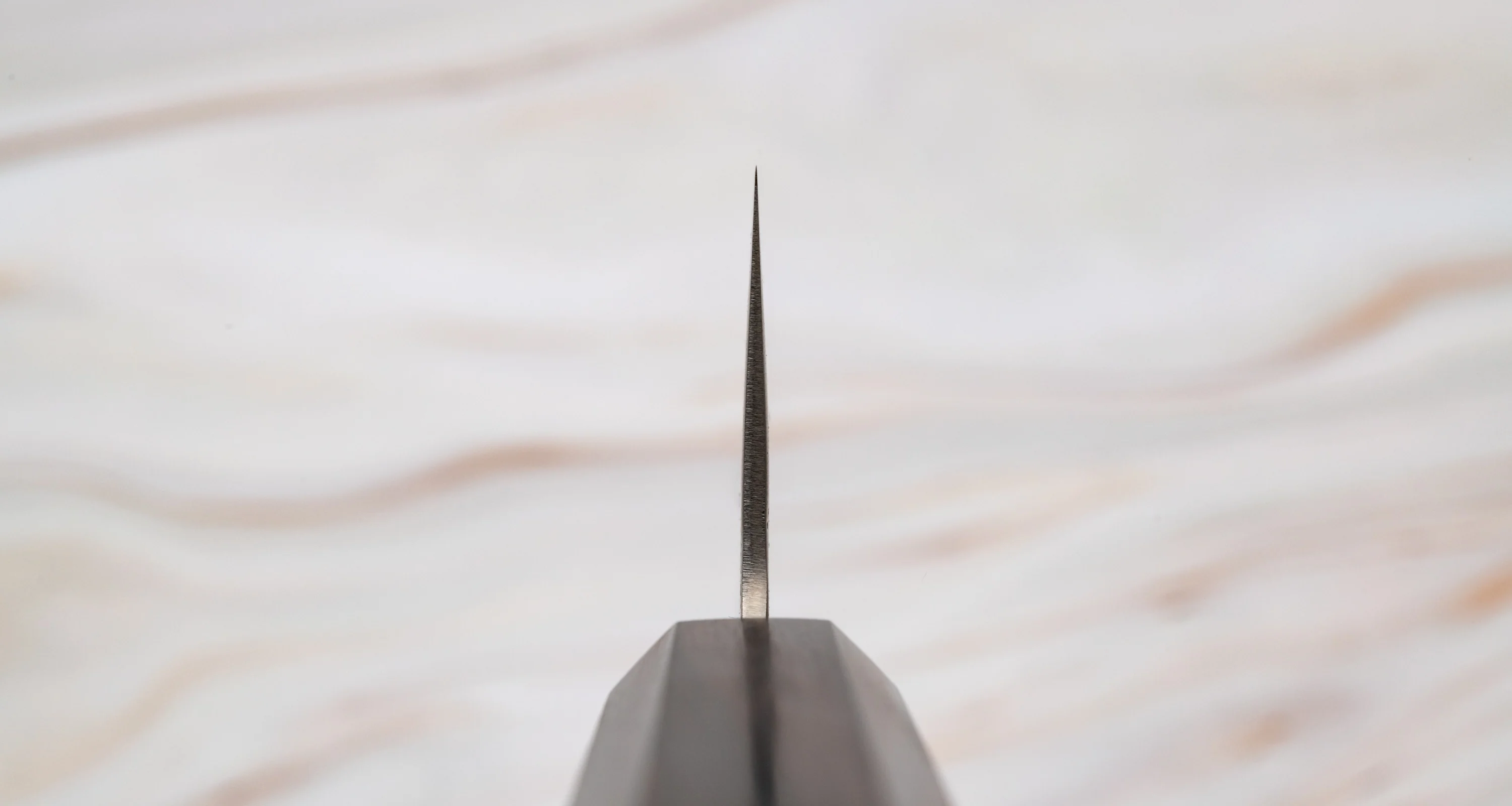
It has a double bevel (symmetrical) blade. The cutting edge is sharpened to a 50/50 angle and stays sharp even after hours of constant use.
BLADE FINISH:
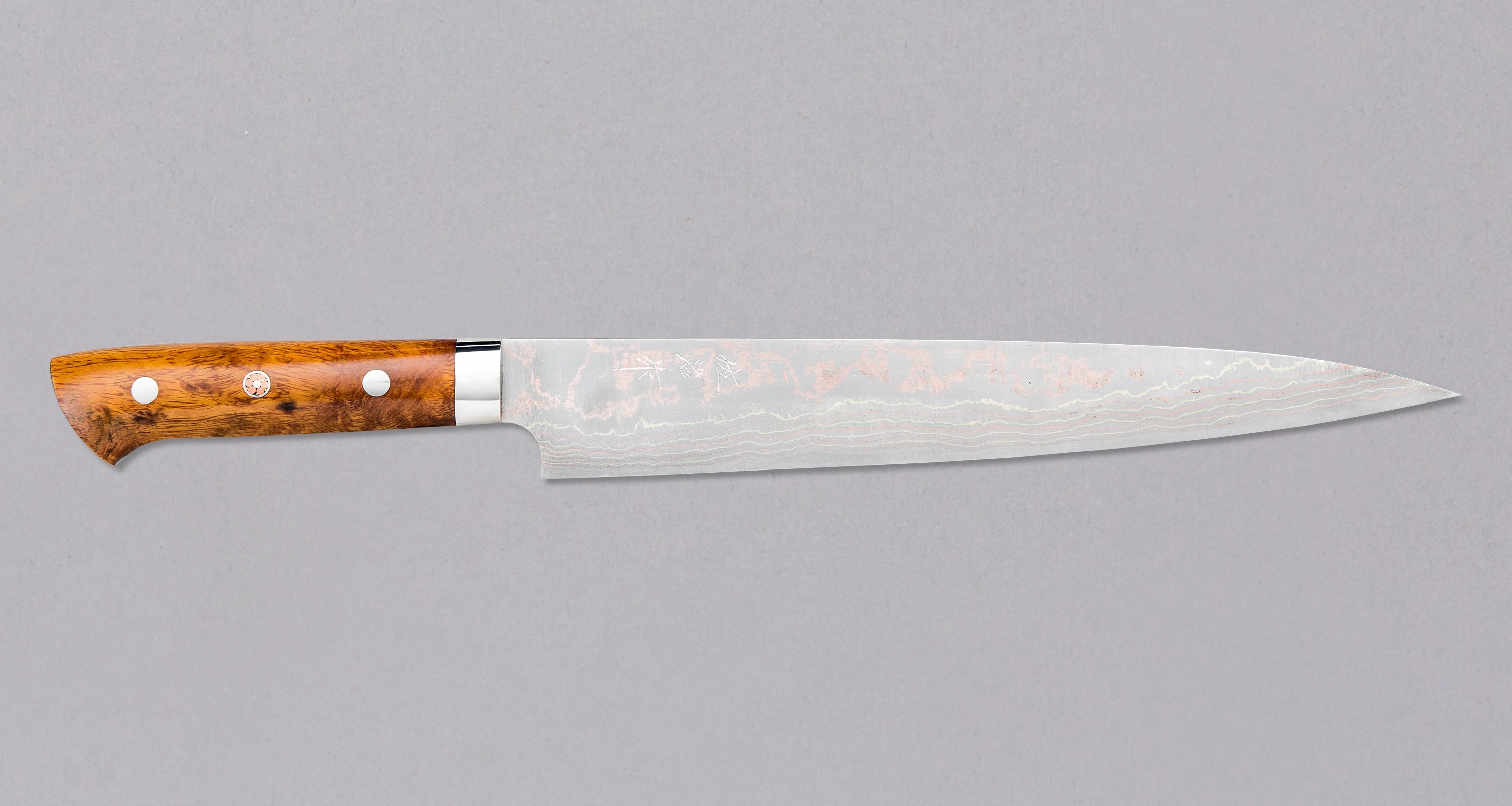
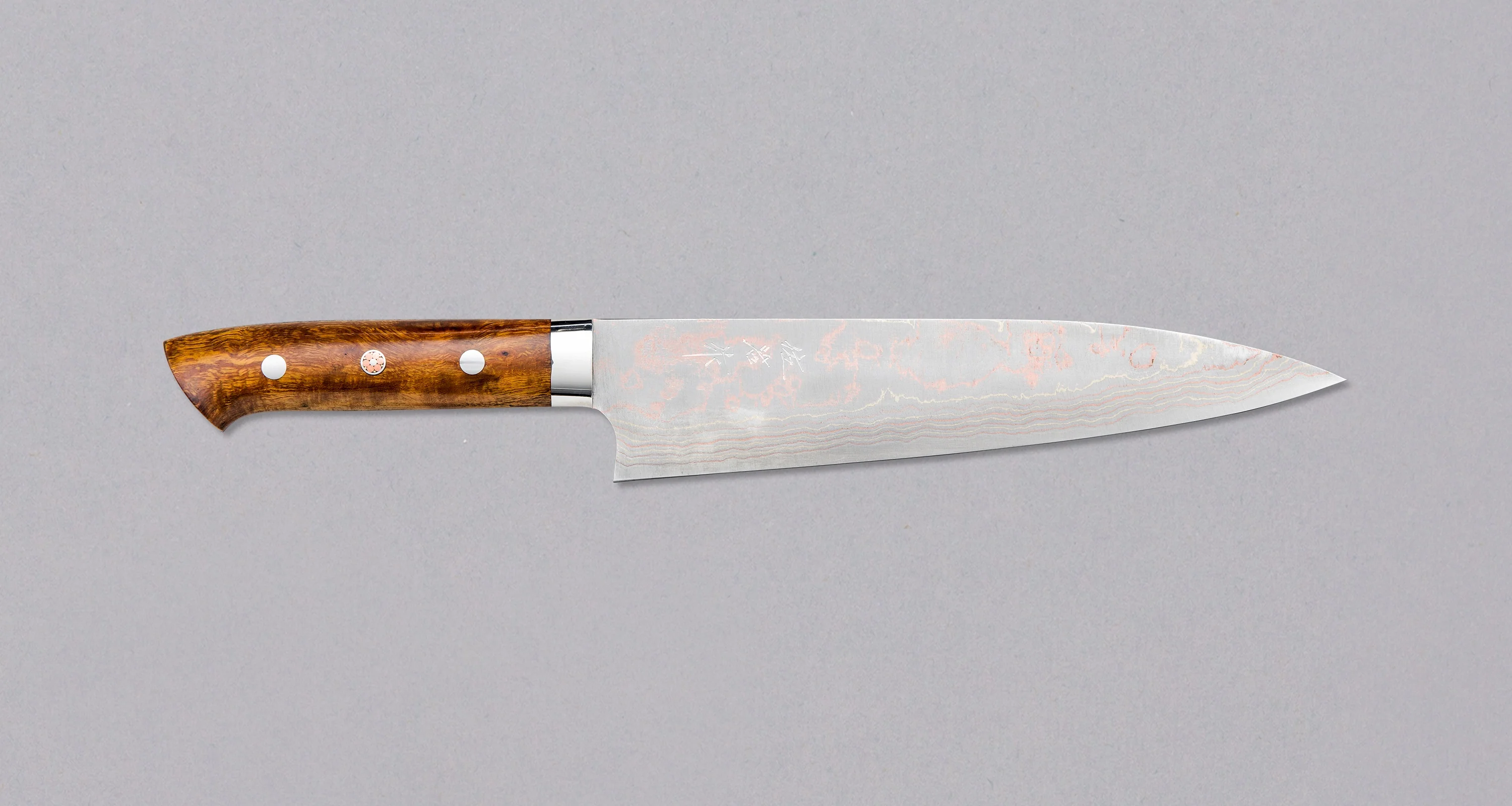
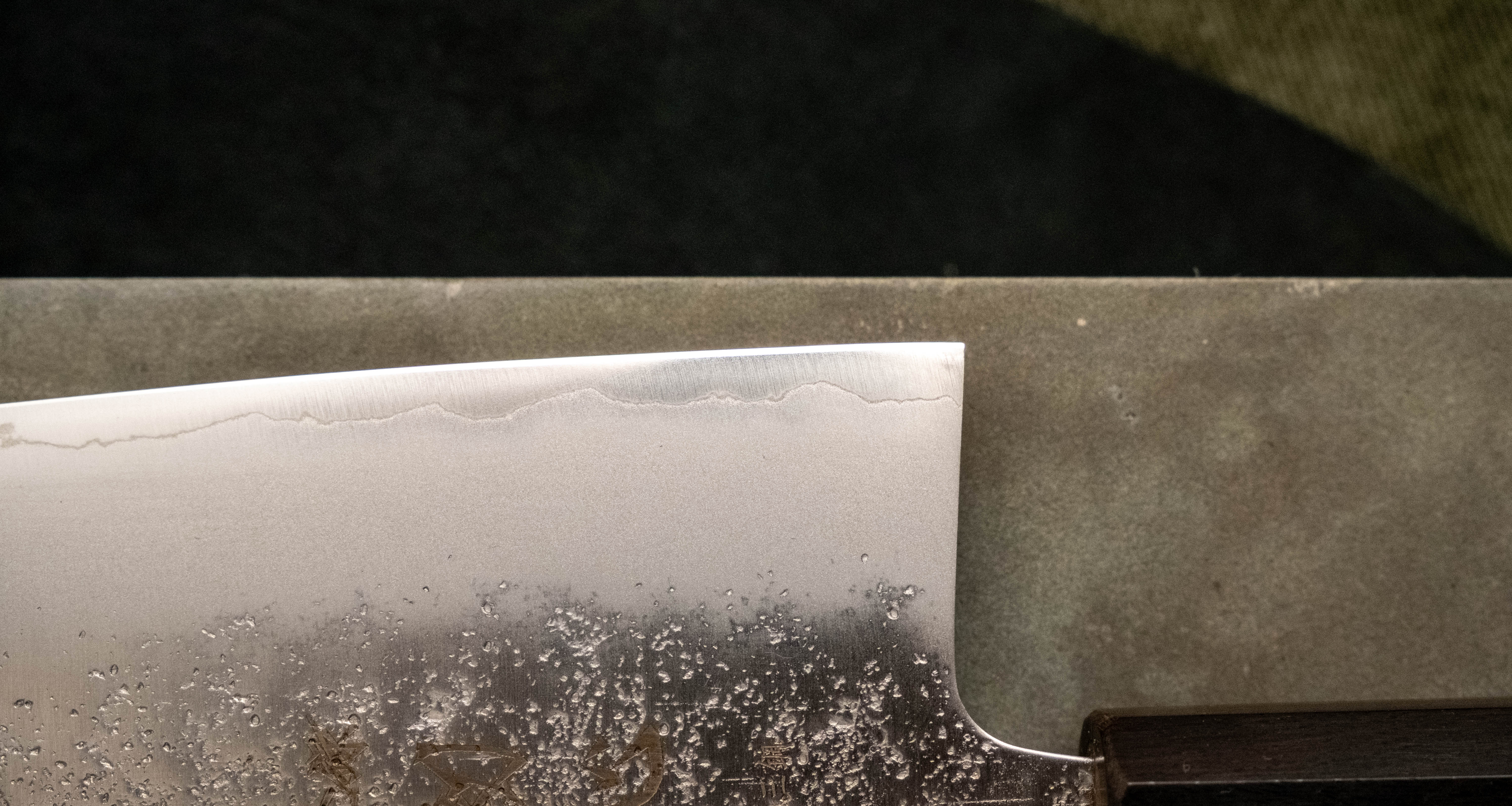
A pear‑skin (nashiji) texture on the stainless cladding contrasts beautifully with the polished ginsanko core, separated by a soft kasumi line that highlights the blade’s layered construction. The etched kanji on the right side adds an extra touch of character. The textured surface also hides small scratches that appear with regular use, keeping the knife looking great over time.
The choil and spine have been carefully smoothed, providing a comfortable grip and easy handling during extended use.
HANDLE:
The knife features an octagon Japanese (Wa) style handle made out of ebony wood. The octagon shape of the handle provides a comfortable and secure grip, allowing for precise control during use.
Original: $199.14
-65%$199.14
$69.70More Images
Hatsukokoro Ginrei Santoku Ginsanko Nashiji Ebony 170mm (6.7")
The Hatsukokoro Ginrei Santoku Ginsanko Nashiji Ebony 170mm is a versatile Japanese kitchen knife designed for preparing meat, fish, and vegetables. The main advantage of this steel is its excellent rust resistance, easy maintenance, and exceptional edge retention, ensuring a knife that remains sharp over time.
The Ginrei series proves that great Japanese knives don’t have to be complicated. At the core lies ginsanko stainless steel (63 HRC) in san-mai construction — known for its carbon-like sharpness, excellent rust resistance, and easy sharpening. The blade features a traditional nashiji finish, whose subtle pear-skin texture was historically introduced by blacksmiths to visually connect classic carbon steels with newer stainless steels like ginsanko.
BLADE SHAPE:
Santoku is one of the most versatile and efficient blade shapes in the kitchen, perfect for slicing, dicing, and chopping meat, fish, and vegetables. Its wide blade makes it easy to scoop and transfer ingredients, while the relatively flat edge excels at straight-down chopping and push-cutting on the cutting board. The slightly curved belly allows for gentle rocking, and the rounded tip adds precision for more delicate prep work.
STEEL:
Hitachi's Silver III steel, also named Ginsan steel or Ginsanko, was hardened to around 63 HRC. Due to its high content of Chromium (Cr), Ginsan steel will resist corrosion very well. Despite it being a stainless steel, it feels and behaves very similarly to carbon steels, due to its extremely pure composition.
LAMINATION:
The core layer consisting of the harder Ginsan steel was sandwiched between two layers of softer steel. This technique is called san-mai and is used to protect the hard (but delicate) core from outside factors and physical impacts, which could lead to breakage.
GEOMETRY:
It has a double bevel (symmetrical) blade. The cutting edge is sharpened to a 50/50 angle and stays sharp even after hours of constant use.
BLADE FINISH:
A pear‑skin (nashiji) texture on the stainless cladding contrasts beautifully with the polished ginsanko core, separated by a soft kasumi line that highlights the blade’s layered construction. The etched kanji on the right side adds an extra touch of character. The textured surface also hides small scratches that appear with regular use, keeping the knife looking great over time.
The choil and spine have been carefully smoothed, providing a comfortable grip and easy handling during extended use.
HANDLE:
The knife features an octagon Japanese (Wa) style handle made out of ebony wood. The octagon shape of the handle provides a comfortable and secure grip, allowing for precise control during use.
Product Information
Product Information
Shipping & Returns
Shipping & Returns
Description
The Hatsukokoro Ginrei Santoku Ginsanko Nashiji Ebony 170mm is a versatile Japanese kitchen knife designed for preparing meat, fish, and vegetables. The main advantage of this steel is its excellent rust resistance, easy maintenance, and exceptional edge retention, ensuring a knife that remains sharp over time.
The Ginrei series proves that great Japanese knives don’t have to be complicated. At the core lies ginsanko stainless steel (63 HRC) in san-mai construction — known for its carbon-like sharpness, excellent rust resistance, and easy sharpening. The blade features a traditional nashiji finish, whose subtle pear-skin texture was historically introduced by blacksmiths to visually connect classic carbon steels with newer stainless steels like ginsanko.
BLADE SHAPE:
Santoku is one of the most versatile and efficient blade shapes in the kitchen, perfect for slicing, dicing, and chopping meat, fish, and vegetables. Its wide blade makes it easy to scoop and transfer ingredients, while the relatively flat edge excels at straight-down chopping and push-cutting on the cutting board. The slightly curved belly allows for gentle rocking, and the rounded tip adds precision for more delicate prep work.
STEEL:
Hitachi's Silver III steel, also named Ginsan steel or Ginsanko, was hardened to around 63 HRC. Due to its high content of Chromium (Cr), Ginsan steel will resist corrosion very well. Despite it being a stainless steel, it feels and behaves very similarly to carbon steels, due to its extremely pure composition.
LAMINATION:
The core layer consisting of the harder Ginsan steel was sandwiched between two layers of softer steel. This technique is called san-mai and is used to protect the hard (but delicate) core from outside factors and physical impacts, which could lead to breakage.
GEOMETRY:
It has a double bevel (symmetrical) blade. The cutting edge is sharpened to a 50/50 angle and stays sharp even after hours of constant use.
BLADE FINISH:
A pear‑skin (nashiji) texture on the stainless cladding contrasts beautifully with the polished ginsanko core, separated by a soft kasumi line that highlights the blade’s layered construction. The etched kanji on the right side adds an extra touch of character. The textured surface also hides small scratches that appear with regular use, keeping the knife looking great over time.
The choil and spine have been carefully smoothed, providing a comfortable grip and easy handling during extended use.
HANDLE:
The knife features an octagon Japanese (Wa) style handle made out of ebony wood. The octagon shape of the handle provides a comfortable and secure grip, allowing for precise control during use.